Clutch Kit Skoda Manufacturer China: Sourcing Guide
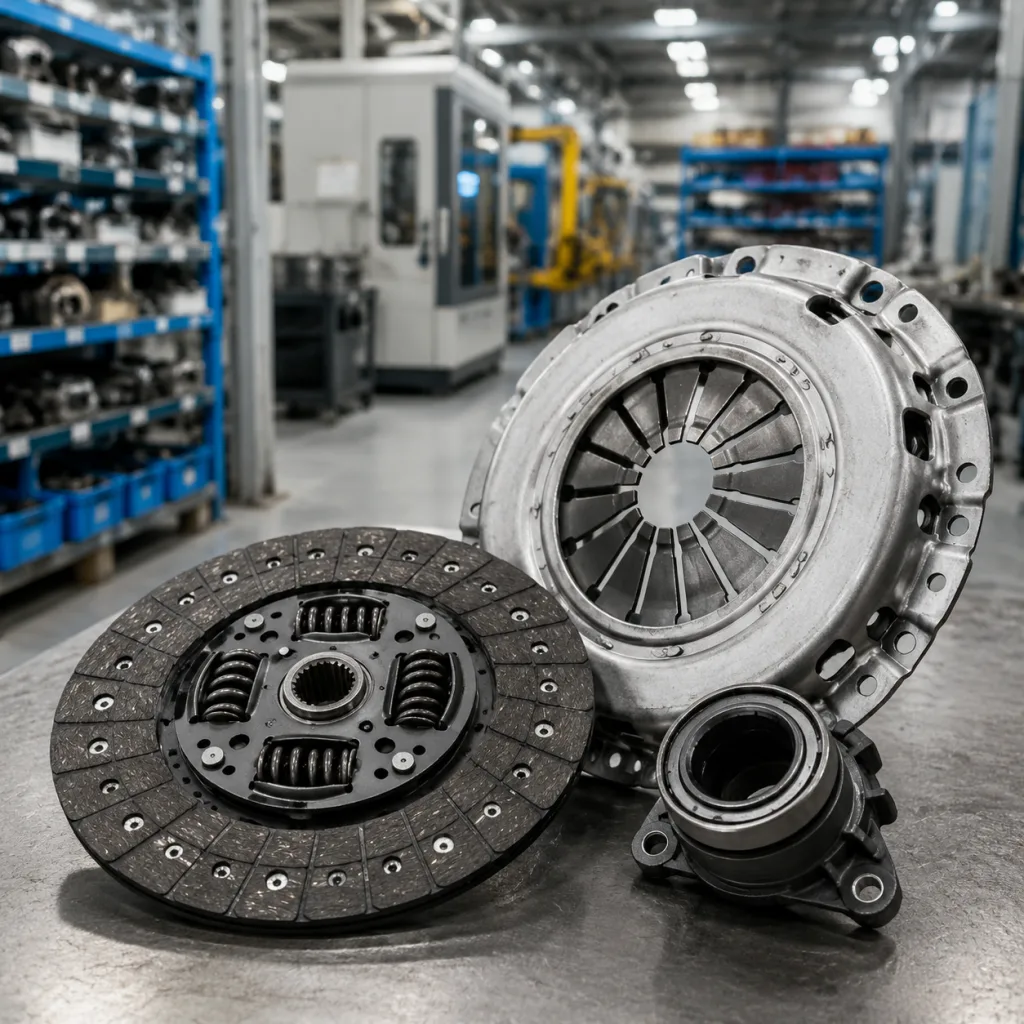
For procurement teams evaluating a clutch kit Skoda manufacturer China option, the priorities are fitment control, repeatable quality, and dependable export supply. A clutch kit is not a single part; it is a matched set that typically includes the clutch disc, pressure plate, release bearing, and, in some programmes, the alignment tool or fasteners. If the geometry, clamp load, friction material, or release bearing specification is off, installation time rises and warranty risk follows. Driventus supplies clutch components from Taizhou, Zhejiang, with export experience in 60+ countries and manufacturing systems aligned with IATF 16949:2016 and ISO 9001:2015. Driventus is an independent aftermarket manufacturer; brand names are referenced for fitment only. This guide explains what buyers should verify before placing a purchase order, how to compare suppliers, and which documents to request during audit and sample approval.
What buyers should verify before sourcing
For Skoda applications, procurement should confirm the exact vehicle platform, engine code, transmission code, and OE reference used for fitment. A clutch kit may look interchangeable across model years, but disc diameter, spline count, cover height, clamp load, and release system can differ in ways that are not visible from a basic catalogue listing.
Minimum buyer checklist
- OE cross-reference: confirm the target OE number and any supersessions
- Disc diameter: verify the exact size, commonly 190 mm, 200 mm, 210 mm, 215 mm, 220 mm, or 228 mm depending on platform
- Disc thickness and wear window: request nominal new thickness and end-of-life limit, with tolerance bands stated on the drawing
- Spline count and hub form: verify against transmission input shaft data, including major/minor diameter where available
- Cover assembly height and mounting pitch: inspect against the original sample and confirm dimensional tolerance, not just visual similarity
- Release bearing type: guide sleeve, hydraulic concentric slave, or conventional bearing, plus required stroke range
- Friction lining material: organic, semi-metallic, or low-copper formulation depending on duty cycle and torque target
- Clamp load and pedal feel targets: match OE-style performance and ask for a load curve, not only a nominal number
For the sample request, ask for a technical sheet that states disc OD, spline specification, hub offset, pressure plate lift, clamp load range, and runout limits. A practical tolerance request is ±0.2 mm on critical matching dimensions, with runout and flatness limits clearly stated by part number rather than by product family. If the programme includes OE 06A107065-style references, cross-check the full part string before sampling and verify any suffix changes. Do not rely on a single catalogue image or a generic vehicle family description. For multi-market supply, ask for packing confirmation by language, barcode standard, carton count, carton drop-test standard, and whether master cartons are built for retail or bulk distribution.
Why factory capability matters for clutch kits
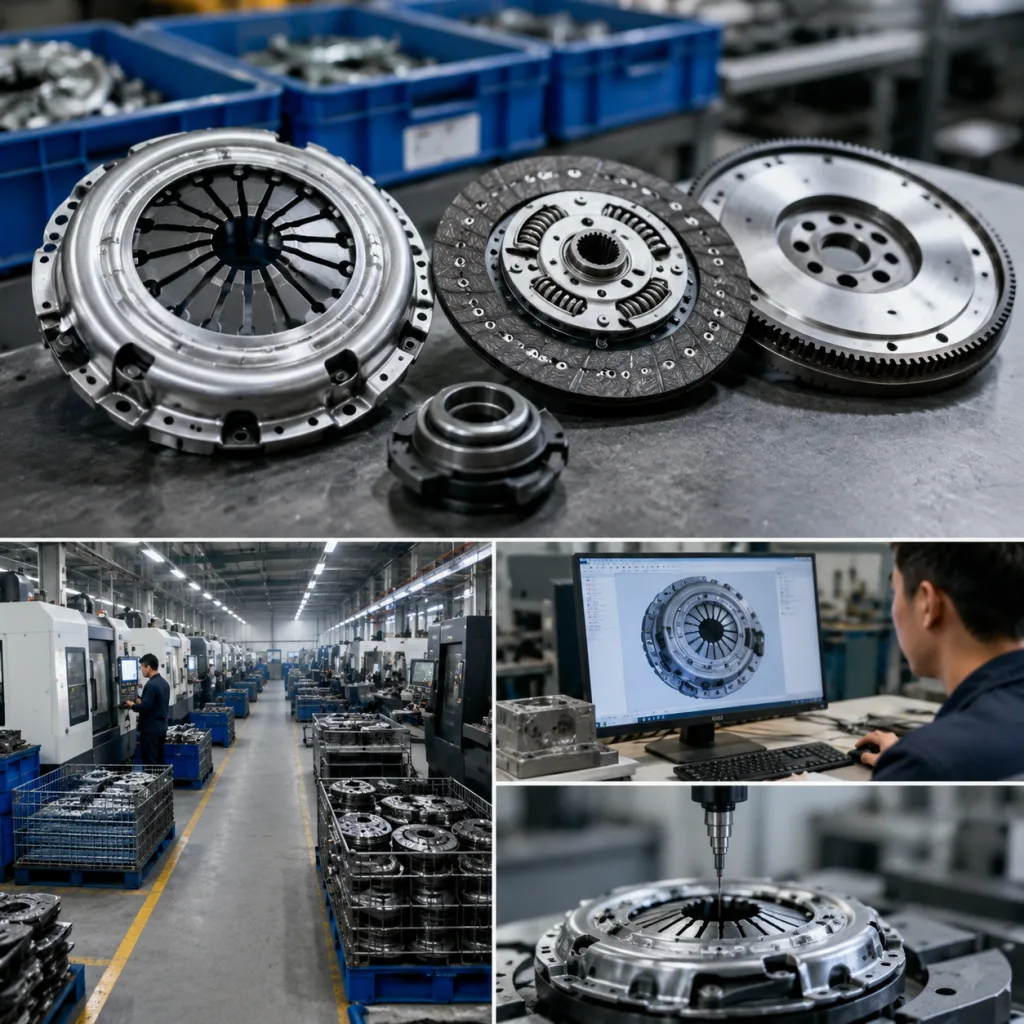
A clutch kit supplier should control the full production chain: stamping or machining, diaphragm spring heat treatment, friction lining bonding, balancing, and final assembly. That matters because a kit fails at the system level, not only at the component level.
Driventus operates as a vertically integrated manufacturer in Taizhou, Zhejiang, which reduces hand-offs between sub-suppliers and improves traceability from raw material to packed kit. For buyers, the practical benefit is more stable dimensional control and easier root-cause analysis when a sample fails validation or a field complaint needs to be isolated.
Supplier-side capabilities to request
- Material certificates for steel, castings, and friction materials, tied to batch numbers
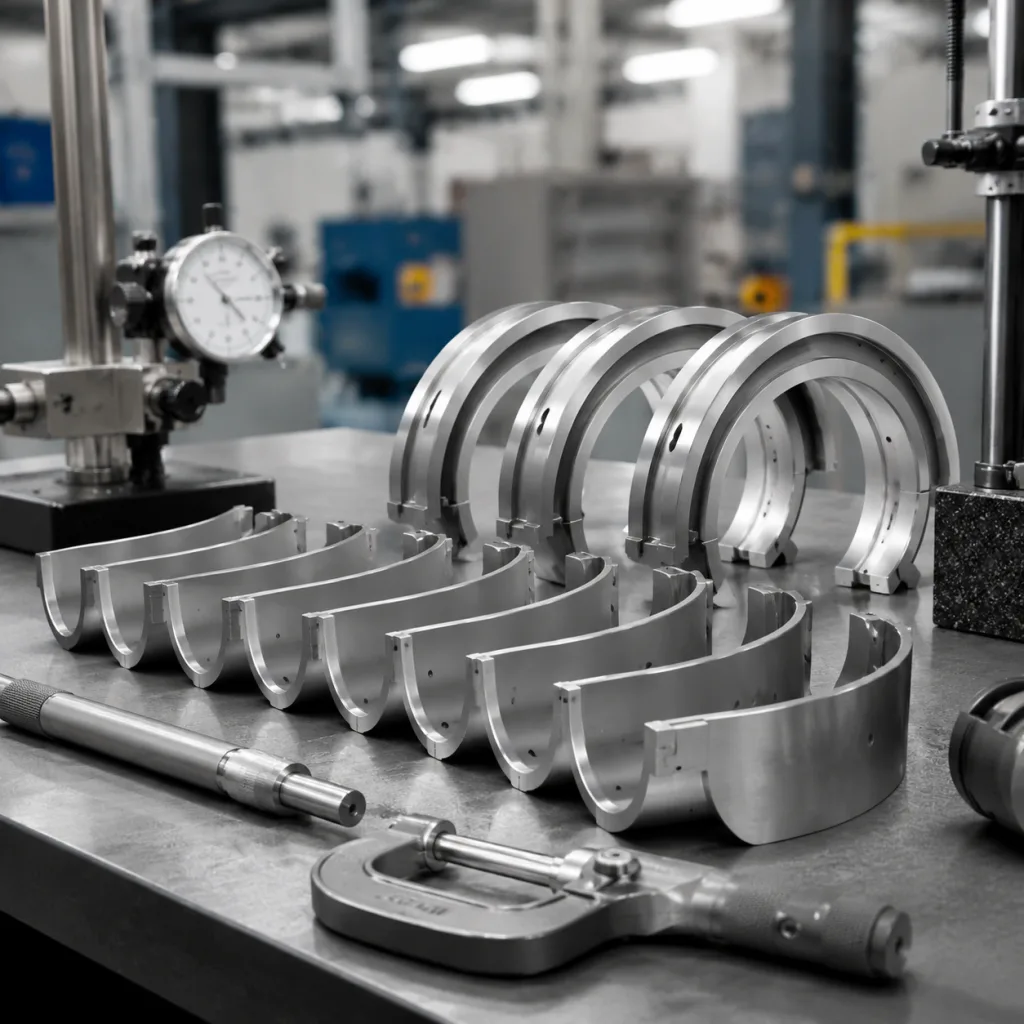
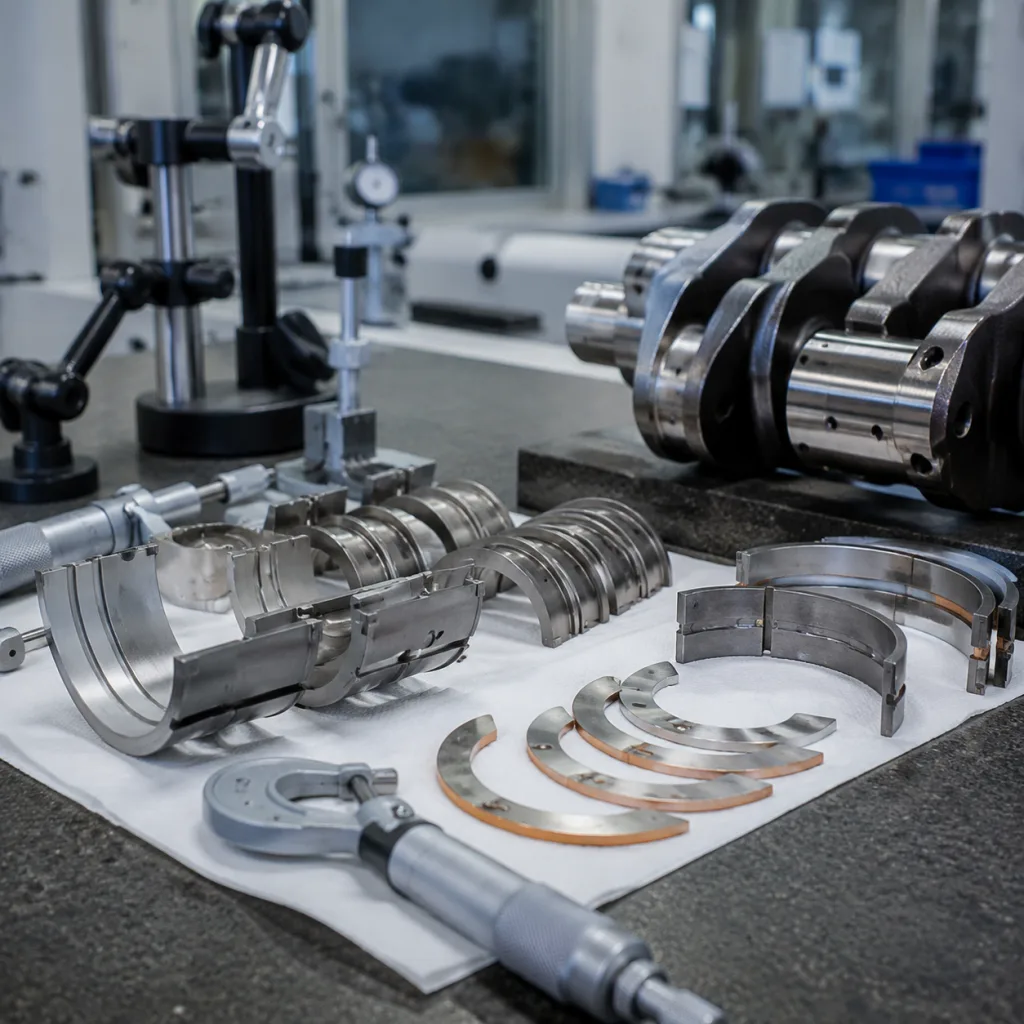
- Runout and balance inspection records for rotating elements, with measured values and acceptance limits
- Diaphragm spring load curves by batch, including nominal clamp load and permissible variation
- Release bearing noise and life-test results, including test duration or cycle count
- Packaging drop-test evidence for export cartons, with carton size, drop height, and pass/fail criteria
- Process flow and control plan, showing where inspection occurs at incoming, in-process, and final stages
When a supplier cannot show process control records, the risk is not just cosmetic defects. It can lead to uneven clamp force, chatter, premature wear, inconsistent pedal feel, or installation complaints from workshops and repair chains. Buyers should also ask how many final assembly stations are dedicated to each application family, because mixed tooling and excessive changeover can increase dimensional variation. A dependable supplier should be able to explain how torque transfer, spring rate, and lining wear are monitored from first article through mass production.
Comparison table: what distinguishes a reliable source
| Evaluation point | What procurement should ask for | Why it matters |
|---|---|---|
| Fitment data | OE cross-reference, vehicle application list, transmission code, supersessions, and drawing revision | Reduces catalogue errors and returns |
| Manufacturing control | IATF 16949:2016, ISO 9001:2015, process flow, control plan, inspection records | Improves repeatability and traceability |
| Validation | Torque capacity, thermal cycling, engagement test, noise assessment, pedal-force trend | Confirms field performance |
| Export readiness | Carton spec, palletisation, HS code support, lead time, shipping mark standard | Lowers shipment delays |
| Customisation | Private label, packing, application labelling, barcode format | Supports distributor programmes |
| Compliance | REACH (EC) No 1907/2006 declaration where applicable, material declaration, SDS support | Supports EU import requirements |
| Commercial terms | MOQ, sample charge, price breaks, tooling or artwork fees, payment terms | Clarifies true landed cost |