Procurement teams sourcing engine blocks for Alfa Romeo fitment need more than a casting supplier. The buying decision usually involves dimensional interchangeability, metallurgy control, machining capability, packaging for sea freight, batch traceability, and the supplier’s ability to support repeat orders without quality drift. Driventus Auto Parts manufactures engine and powertrain components in Taizhou, Zhejiang, for aftermarket distributors, OEM/Tier-1 programmes, and multi-location repair networks. For engine block Alfa Romeo wholesale enquiries, our focus is on fitment-led development, controlled casting and CNC machining, documented inspection, and practical export support. Driventus is an independent aftermarket manufacturer; brand names are referenced for fitment only. This article outlines what import managers and sourcing engineers should confirm before placing wholesale orders, including MOQ, lead-time, audit readiness, standards alignment, and documentation needed for regulated markets in the EU, UK, US, Canada, Australia, and Brazil.
Wholesale fitment scope and sourcing model
Engine block sourcing for Alfa Romeo applications should start with the vehicle parc, engine code range, and rebuild demand in your market. Buyers often need a mix of replacement blocks for older petrol applications and newer downsized turbocharged platforms, but the risk profile changes by family. Casting wall thickness, deck flatness, cylinder bore geometry, oil gallery alignment, and main bearing housing accuracy all affect field reliability.
Driventus supports B2B customers through three typical supply routes:
Catalog-based wholesale supply: Existing aftermarket part families listed in our catalog and related engine components.
Sample-to-production development: Reverse engineering from customer-supplied samples, drawings, or agreed OE cross-reference conventions where applicable.
Programme-based manufacturing: Long-term supply using agreed inspection plans, packaging specifications, and forecast schedules through custom manufacturing.
For any Alfa Romeo-related enquiry, brand names and model names are used only to identify vehicle fitment. Driventus does not claim approval, authorisation, or endorsement by any vehicle manufacturer.
What to specify before requesting pricing
A reliable quotation requires more than an engine description. Procurement teams should provide enough technical and commercial information to avoid mismatched castings, rework at arrival, or incorrect packaging for the destination market.
Requirement
What the buyer should provide
Why it matters
Fitment scope
Engine code, displacement, model years, market region
Prevents confusion between visually similar blocks
Reference data
Sample, drawing, photos, or existing aftermarket reference
Supports dimensional comparison and tooling review
Material expectation
Cast iron or aluminium alloy requirement
Affects casting process, heat treatment, and machining
Machining level
Rough casting, semi-finished, or fully machined block
Determines price, inspection scope, and lead time
Order profile
Trial quantity, annual volume, reorder frequency
Supports MOQ planning and inventory strategy
Packaging
Unit carton, plywood case, pallet, corrosion protection
Reduces freight damage and warehouse handling issues
Compliance needs
Destination market and importer documentation
Helps prepare invoices, packing lists, and material declarations
</tr></thead><tbody> </tbody></table>Where an OE-style reference is supplied by the buyer, it should be treated as a fitment cross-reference only, for example OE 06A… or OE 11251… if already used in the customer’s system. Driventus does not create or claim brand-owned part numbers.
MOQ, lead time, and production planning
MOQ depends on the casting route, machining content, inventory status, and whether the block is already within an active production family. For wholesale sourcing, buyers should separate trial orders from regular replenishment orders.
Typical planning ranges for engine block programmes are:
Existing stocked or scheduled items: MOQ normally starts from pallet-level quantities, subject to current inventory and export packing.
Existing tooling with new machining variant: MOQ is usually higher because CNC fixtures, gauges, and inspection plans must be confirmed.
New tooling development: MOQ and amortisation depend on casting complexity, expected annual volume, and validation requirements.
Private-label packaging: Additional MOQ may apply for printed cartons, labels, and market-specific documentation.
Indicative lead-time structure:
1. Technical review: 3-7 working days after receiving samples, drawings, or reference data. 2. Quotation and commercial confirmation: 2-5 working days depending on scope. 3. Sampling or first article production: Often 30-60 days for existing tooling; longer for new tooling. 4. Batch production: Usually planned after sample approval and deposit confirmation. 5. Export preparation: Packing, booking, and documentation depend on route and destination port.
For engine block Alfa Romeo wholesale sourcing, buyers should ask whether the quoted lead time includes casting, heat treatment if applicable, CNC machining, washing, inspection, preservation oil, packaging, and inland transport to port. A short quoted production time is not useful if inspection or export packing is excluded.
Quality controls expected by B2B importers
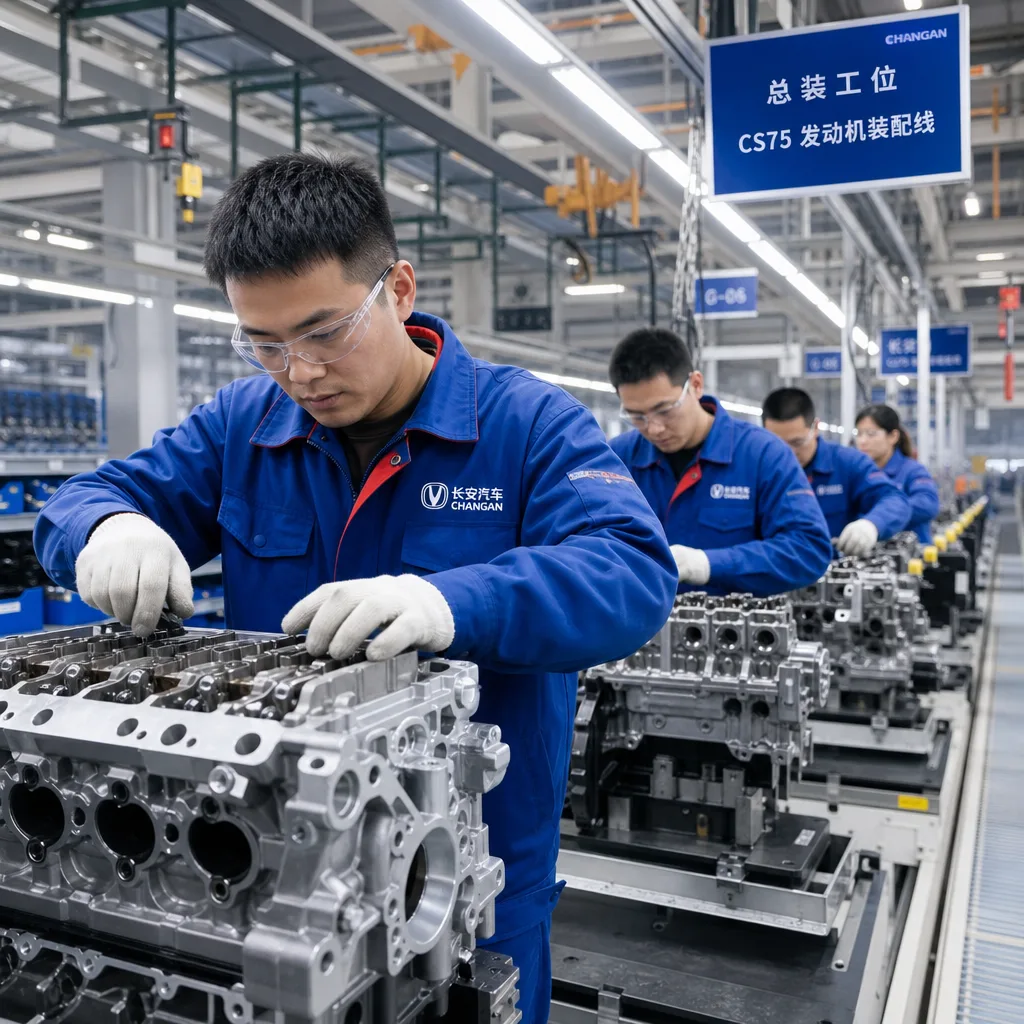
Engine blocks are high-risk components because defects may not be visible during receiving inspection. Procurement teams should audit whether the supplier controls the complete process from incoming material to final packing. Driventus operates under IATF 16949:2016 and ISO 9001:2015 principles through its documented quality system, with batch traceability and inspection records aligned to customer requirements.
Core controls for wholesale engine block supply include:
Material verification: Chemical composition checks for cast iron or aluminium alloy batches according to agreed specifications.
Casting inspection: Visual checks for shrinkage, porosity, cold shuts, sand inclusion, and core shift.
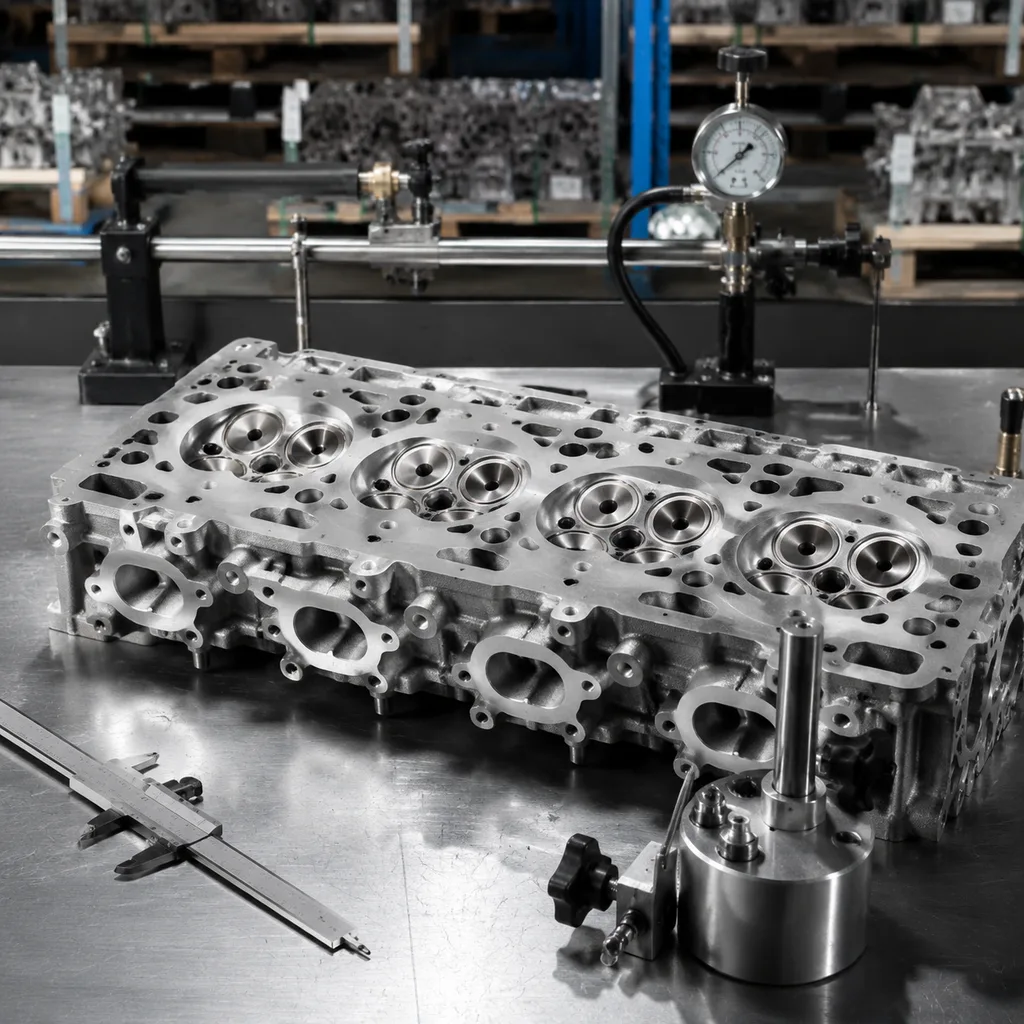
Dimensional inspection: CMM or dedicated gauge checks for deck height, bore location, main bearing alignment, bolt-hole position, and oil/water passage features.
Leak or pressure testing: Applied where the block design and customer specification require water jacket or oil gallery verification.
Cleaning and preservation: Removal of chips and residue, followed by rust prevention and sealed packing for export.
Traceability: Batch number, production date, inspection status, and packing list linkage.
Material declarations may be required for importers selling into the EU and UK. For relevant shipments, buyers may request information supporting REACH (EC) No 1907/2006 obligations. The exact documentation should be agreed before order confirmation.
Factory audit points for engine block suppliers
A desktop review is useful, but engine block sourcing benefits from a structured factory audit. Buyers should check whether the supplier’s actual production flow matches the quotation and whether subcontracted processes are controlled.
Recommended audit checklist:
Does the supplier control casting, machining, washing, inspection, and packaging under one documented workflow?
Are incoming material certificates reviewed and linked to production batches?
Are CNC fixtures identified, maintained, and protected against unauthorised modification?
Are critical dimensions defined on control plans and inspection instructions?
Are nonconforming castings physically segregated and recorded?
Are pressure test parameters, if required, documented and repeatable?
Are export packages tested or specified for weight, moisture, and stacking conditions?
Are corrective actions recorded using structured methods such as 8D or equivalent?
Can the supplier provide sample inspection reports before mass production approval?
For customers who cannot travel, Driventus can support remote audit preparation with company documents, process photos, inspection examples, packaging references, and live video review where appropriate. For larger programmes, buyers may appoint a third-party inspection company for pre-shipment inspection.
Commercial terms, documentation, and risk reduction
The lowest unit price is rarely the lowest landed cost. Engine blocks are heavy, dimensionally sensitive, and costly to replace after import. Buyers should compare quotations using total procurement cost, including inspection, packaging, freight utilisation, claims process, and reorder stability.
Key commercial points to define before purchase order release:
Incoterms: EXW, FOB, CIF, or DAP should be stated clearly, including named port or destination.
Payment terms: Trial orders often use deposit and balance before shipment; established customers may discuss scheduled terms.
Inspection release: Define whether shipment is released by Driventus inspection, customer inspection, or third-party inspection.
Warranty handling: Agree evidence requirements, such as installation report, photos, serial or batch number, and failure analysis steps.
Spare stock planning: Keep safety stock for slow sea freight lanes and seasonal rebuild demand.
Label control: Confirm neutral, private-label, or distributor label requirements before packing.
For wholesale importers, one practical approach is to approve a small pilot lot, inspect arrival condition, validate machining compatibility with local rebuilders, then move to scheduled orders. This reduces inventory risk while allowing the supplier to stabilise packaging and replenishment planning.
Frequently asked questions
Yes, private-label packing can be discussed for wholesale orders, subject to MOQ, artwork confirmation, and destination-market labelling requirements. Brand names are used only for fitment identification, not as manufacturer endorsement.
Typical documents include commercial invoice, packing list, inspection report, batch traceability information, and agreed material or compliance declarations where applicable. Exact requirements should be confirmed before order placement.
Yes. For new or higher-risk applications, Driventus recommends sample or first article approval before batch production. Sampling scope depends on existing tooling, machining level, and inspection requirements.
If you are comparing suppliers for engine block Alfa Romeo wholesale supply, send your fitment list, target volumes, and packaging requirements. Driventus can review feasibility and provide a structured quotation at [request a quote](/contact.html).