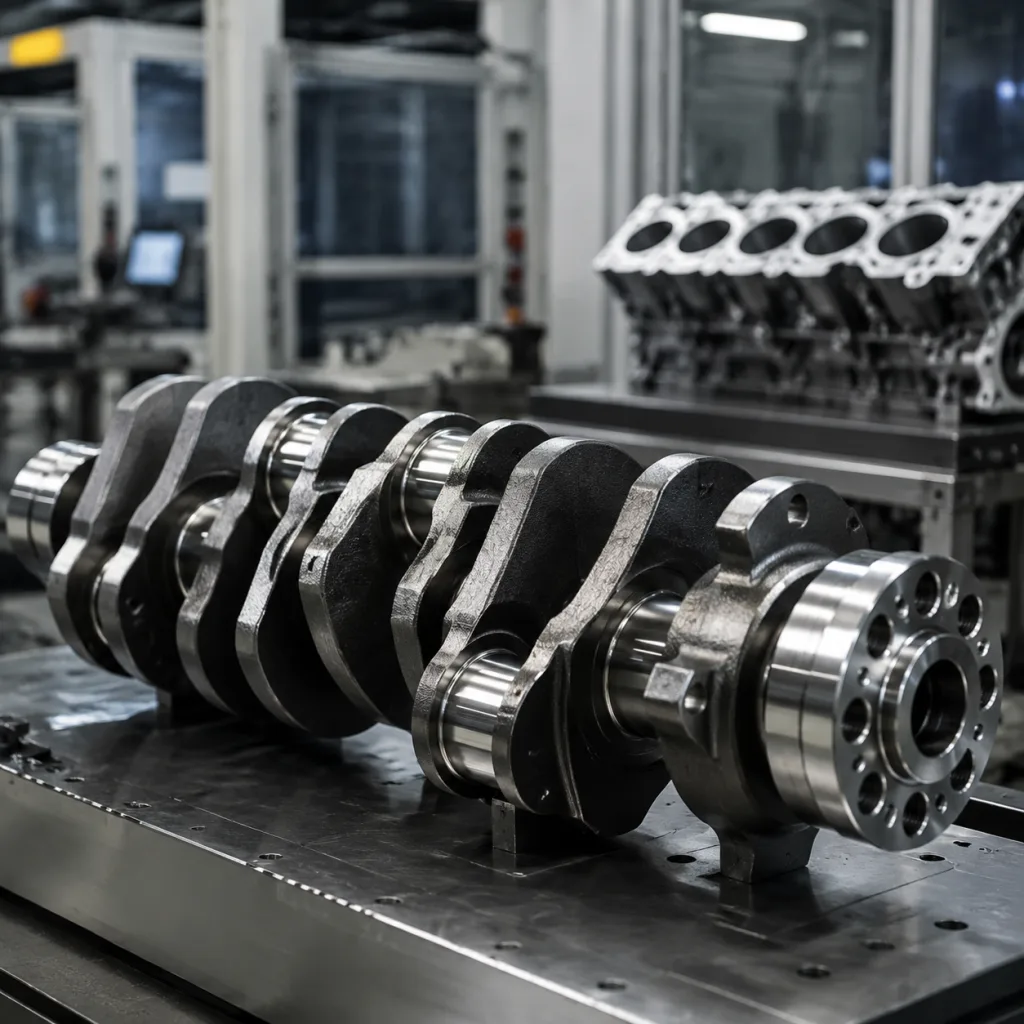
Toyota engine bearing sourcing is usually a procurement exercise, not a consumer replacement job. Buyers need the correct alloy, shell geometry, coating, and clearance range, plus stable supply across multiple engine codes. For wholesale programs, the main risks are dimensional mismatch, inconsistent backing hardness, and poor lot traceability. Driventus supplies engine bearings from Taizhou, Zhejiang as an independent aftermarket manufacturer. Driventus is an independent aftermarket manufacturer; brand names are referenced for fitment only. We work to IATF 16949:2016 and ISO 9001:2015 systems, with export documentation prepared for buyers in the EU, UK, US, Canada, Australia, and Brazil. This article explains what to verify before placing a wholesale order, how to compare supplier capabilities, and which purchase conditions matter most when you are qualifying a new bearing source.
Start with fitment, not part names
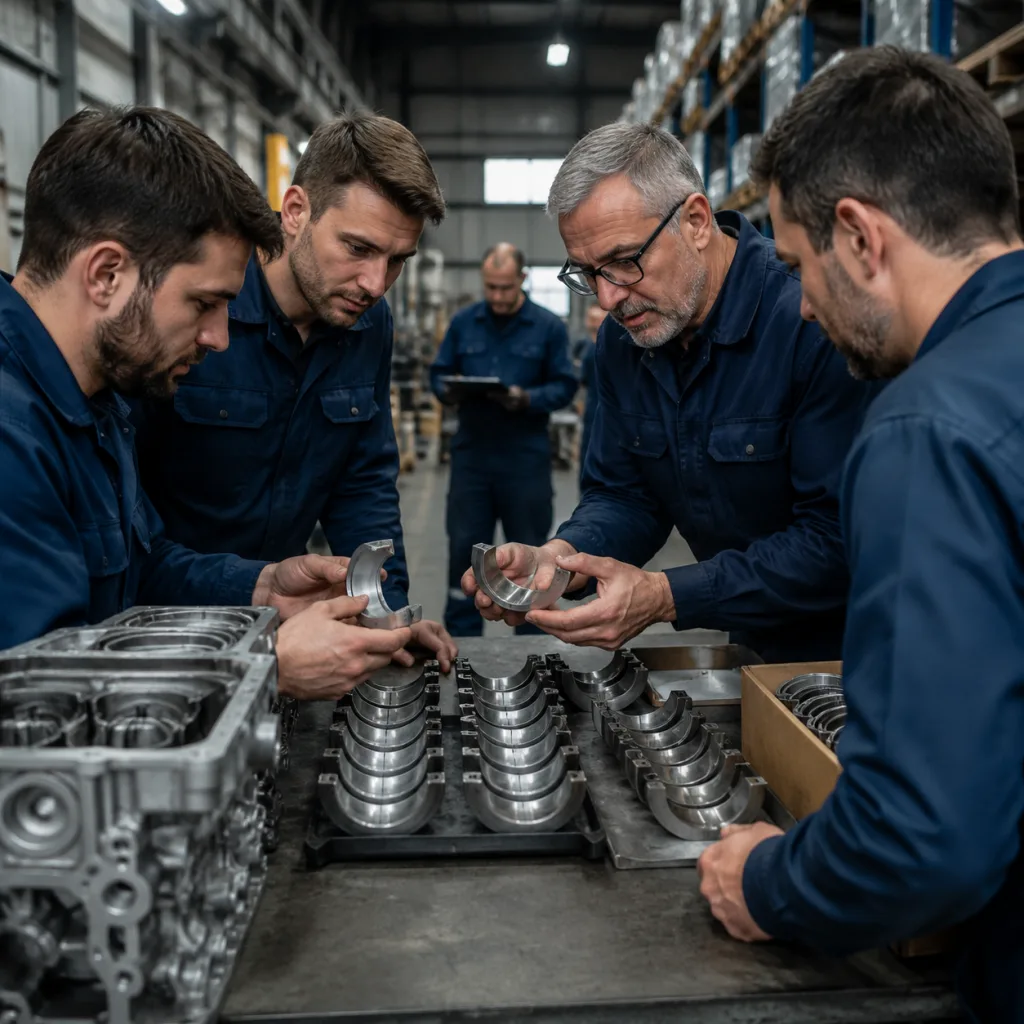
When a buyer searches for engine bearing Toyota wholesale, the first question is not price. It is whether the bearing actually matches the engine code, journal size, and bearing type.
Main bearings and connecting rod bearings are not interchangeable. Even within one Toyota model line, the thrust location, flange design, and journal diameter can change by displacement, drivetrain, or production year.
Before you sample or place a PO, ask for:
OE cross-reference and exact engine-code coverage
Bearing type: main, rod, thrust, or flanged
Standard, oversize, or undersize status
Journal diameter and target clearance band
Shell material, lining alloy, and coating type
Pack count per set and carton quantity
Lot traceability, including batch number and production date
If you are building a wider program, start with our catalog and the broader engine components range. For quoting, share the engine list and annual forecast early. The same Toyota platform can use different bearings across market variants, and that is where most wholesale mistakes begin.
Spec checks that separate good suppliers from risky ones
A generic part name tells you almost nothing. Wholesale sourcing works better when you compare measurable specifications side by side.
Item
What to confirm
Why it matters
Backing material
Steel-backed or bimetal, with confirmed backing thickness and crush profile
Affects support, crush, and heat transfer
Lining material
Aluminium-tin, copper-lead, or polymer-coated, with alloy details where available
Affects load capacity and wear behaviour
Wall thickness
Match to OE drawing or sample, checked at multiple points
Controls running clearance
Radial clearance
Confirm the approved clearance band in mm or inch
Too tight risks seizure; too loose raises knock and oil loss
Oil hole / groove
Full groove, half groove, or plain, plus groove alignment
Affects oil feed and load area
Thrust face
Present or absent, plus thrust width and location
Required on specific crank layouts
Coating
Tin, polymer, or anti-scuff layer, with thickness if specified
Helps during cold start and marginal lubrication
Surface finish
Ra or customer surface requirement
Impacts bedding-in and friction
Hardness
Backing and lining hardness range, if applicable
Helps verify repeatability
</tr></thead><tbody> </tbody></table>Useful documents for approval usually include one dimensional inspection sheet, one material statement, one coating confirmation, and one labeled sample photo set. Applicable standards can include IATF 16949:2016, ISO 9001:2015, REACH (EC) No 1907/2006, and customer drawings. If a supplier cannot show these basics clearly, the price advantage is usually not real.
Where wholesale programs usually fail
Most bearing issues are not dramatic. They show up as repeat warranty returns, noisy engines, and inconsistent installation results.
Common failure modes include:
Wrong engine-family mapping, especially across similar Toyota namesakes
Mixed set configuration, such as plain shells supplied where thrust parts are required
Clearance drift between batches
Poor backing hardness repeatability
Coating inconsistency that only appears in cold-start or marginal-lube conditions
Packaging damage during sea freight or long storage
Weak lot traceability when a claim needs root-cause analysis
These failures are expensive because they surface after distribution, not during receiving. That is why buyers should treat fitment, dimensional control, and traceability as one decision set. A cheap unit price does not help if the returned lot cannot be isolated quickly.
MOQ, lead time, and packaging: the commercial trade-offs
Wholesale supply is a balancing act. Lower MOQ helps cash flow, but it can also raise unit cost. Higher MOQ improves production efficiency, but it can create slow-moving inventory.
A practical sourcing model often looks like this:
Sample order: 1 to 5 sets for bench fitment and dimensional checks
Trial order: 50 to 200 sets when validating demand and packaging
Regular MOQ: often 300 to 1,000 sets per SKU, depending on alloy and carton setup
Private label: usually higher MOQ when artwork, barcode, or marking changes are required
Repeat lead time: commonly 15 to 30 days after order confirmation
New tooling or new coating program: longer lead time is normal
Questions worth asking before you commit:
Can mixed SKUs ship in one export carton?
Is neutral labelling available?
Are master cartons palletised for sea freight?
What volume breaks change the unit price?
Which Incoterms apply: EXW, FOB, or CIF?
For buyers, landed cost matters more than factory cost. Freight, duties, and packing efficiency can move the final number faster than a small unit-price reduction. If you need a multi-SKU program, request a quote with the engine code list, annual forecast, and packaging requirements. We also support custom manufacturing for private label or drawing-based supply.
QC checkpoints before you approve a lot
A credible supplier should be able to show how parts are measured, packed, and released. If the inspection story is vague, the lot risk usually is too.
Request these records before approval:
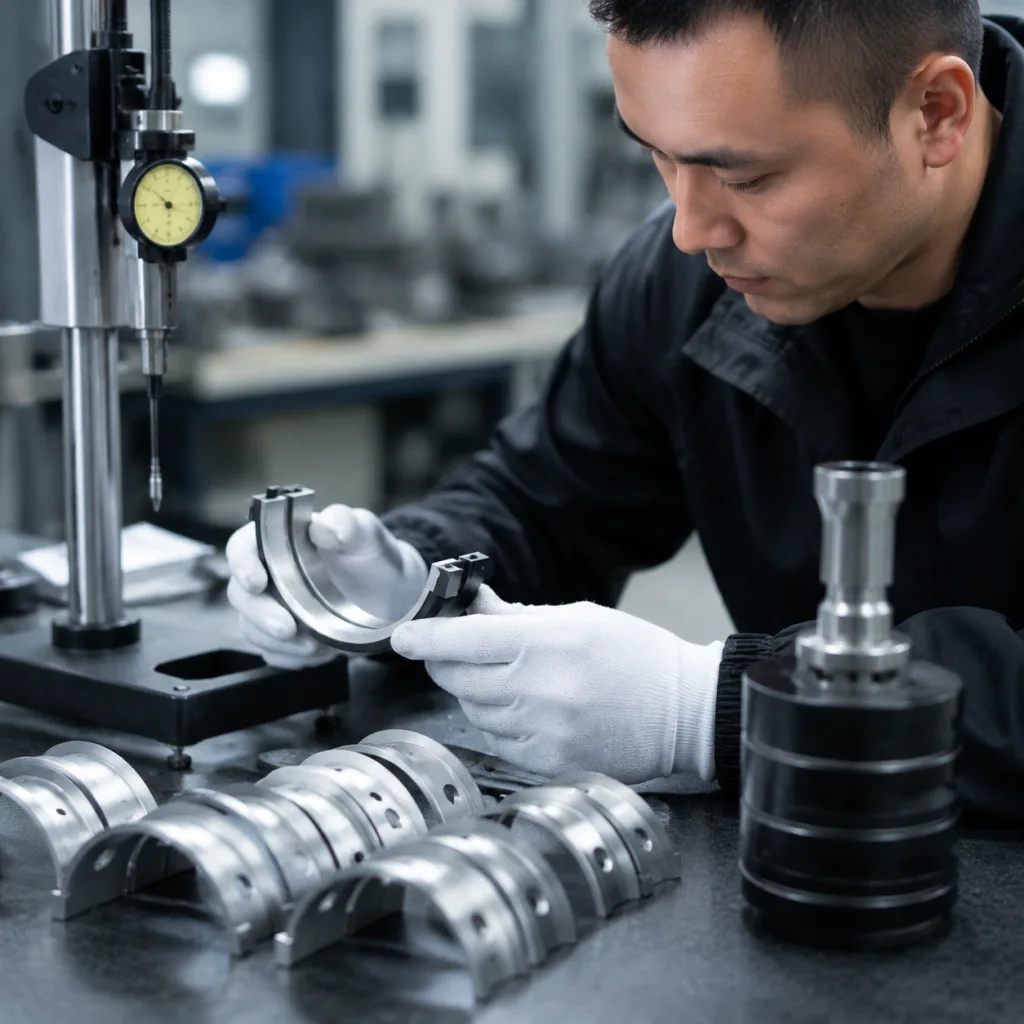
Bearing ID and OD measurement reports with gauge tolerance shown
Wall-thickness sampling by lot
Visual inspection criteria for scoring, pinholes, edge damage, and coating voids
Coating adhesion and surface-finish checks with pass/fail limits
Hardness or material confirmation for backing and lining
Packaging integrity and anti-corrosion protection for export
Lot traceability tied to production order and release date
Driventus operates under an audited quality system aligned with IATF 16949:2016 and ISO 9001:2015. That matters because repeatability matters as much as nominal fitment. A bearing that passes on one sample lot and shifts on the next creates warranty exposure for distributors. For higher-risk applications, set the release rule upfront: no volume order until the sample lot matches the clearance band, thickness, and packaging spec in a second independent check.
A simple supplier comparison method
The fastest way to compare suppliers is to strip the discussion down to three questions: can they build to spec, can they ship on time, and can they document each lot? If one answer is weak, the sourcing risk usually outweighs the quote.
Use this comparison sequence:
1. Confirm OE cross-reference or drawing match, including engine code, journal size, and bearing type. 2. Review dimensional reports or PPAP-style documents for new-to-program parts. 3. Check export history and repeat-order packing consistency. 4. Compare MOQ, lead time, and replenishment terms against your stock cover. 5. Confirm private-label support and whether label changes affect MOQ or timing. 6. Ask how out-of-tolerance parts are handled: rework, replacement, or credit.
Good aftermarket suppliers are usually clear about substitutions. They will say whether the quoted part is an OE-match equivalent, a drawing-based equivalent, or a program-specific replacement with defined differences. That kind of precision reduces disputes after receipt and makes claims easier to control.
Quick answers for sourcing teams
Do you supply bearing sets by OE cross-reference?
Yes. We work from engine codes, drawings, or OE cross-reference data where available. Brand names are used for fitment only, and final approval should always follow dimensional verification.
What quality documents can wholesale buyers request?
Buyers can request lot traceability, dimensional inspection records, material statements, coating confirmation, and export packing details. Program-specific documents can be shared during quotation and sample approval.
Can you support private label or custom packaging?
Yes. We support neutral packaging, barcode labelling, and custom manufacturing for approved wholesale programmes, subject to MOQ and technical scope.
Frequently asked questions
Yes. We work from engine codes, drawings, or OE cross-reference data where available. Brand names are used for fitment only, and final approval should always follow dimensional verification.
Buyers can request lot traceability, dimensional inspection records, material statements, coating confirmation, and export packing details. Program-specific documents can be shared during quotation and sample approval.
Yes. We support neutral packaging, barcode labelling, and custom manufacturing for approved wholesale programmes, subject to MOQ and technical scope.
If you are comparing suppliers for an engine bearing Toyota wholesale programme, send your engine list, target volume, and packaging requirements. We can review the spec and quote a supply plan at /contact.html