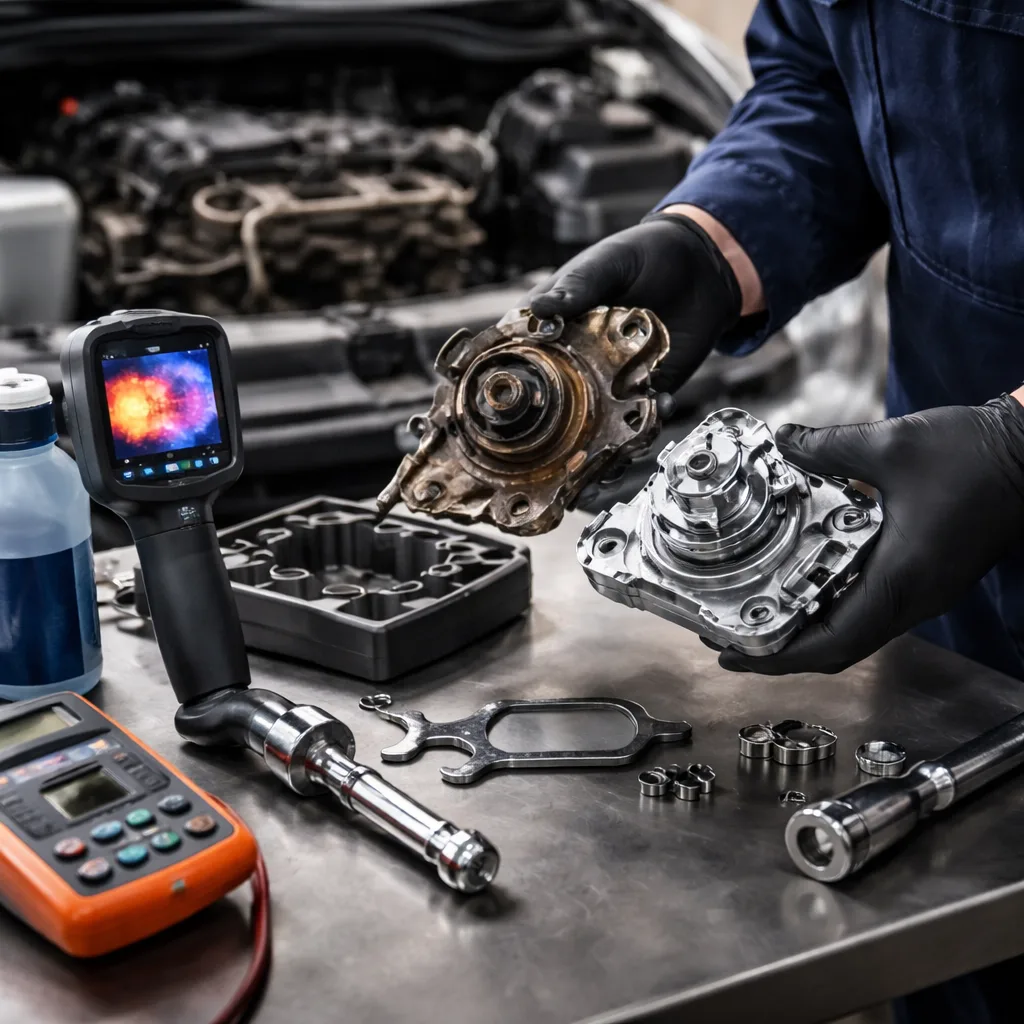
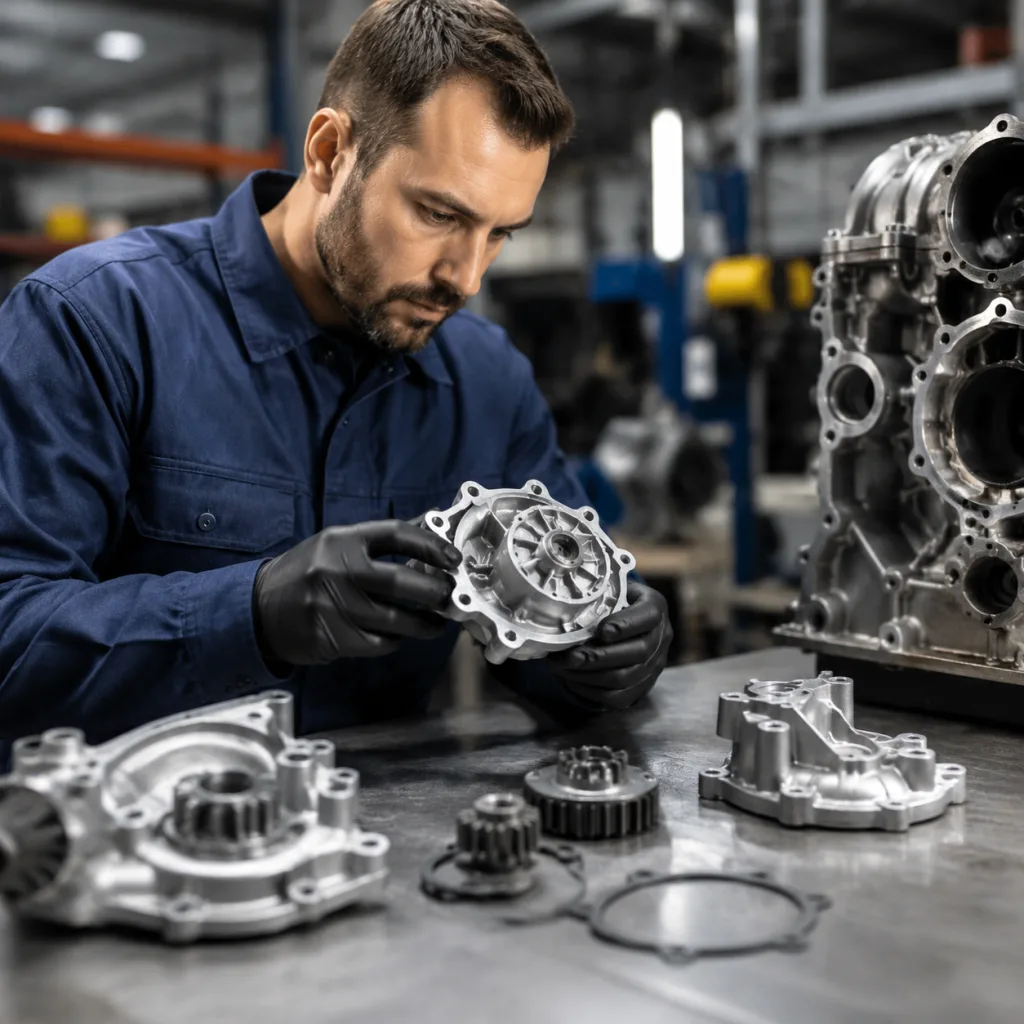
Oil Pump Failure Water Pump: Diagnosis and Replacement
When buyers search for oil pump failure water pump, they are usually dealing with a combined cooling or lubrication complaint rather than a single failed part. The vehicle may present with overheating, abnormal noise, coolant loss, oil-pressure warnings, or fluid contamination, and the visible symptom is not always the root cause. For procurement teams and repair operators, the priority is to separate the primary fault from secondary damage before ordering a replacement. A water pump may fail because of bearing wear, seal leakage, cavitation, contaminated coolant, incorrect belt tension, or installation error. An oil pump failure can also create heat indirectly by starving bearings and raising coolant temperatures. Driventus is an independent aftermarket manufacturer; brand names are referenced for fitment only. For cross-referenced programmes, check [our catalog](/products.html), review the [quality system](/quality.html), and confirm dimensional or material requirements through [custom manufacturing](/oem-services.html) when the application is not standard.
Start with the symptom pattern, not the part name
The phrase oil pump failure water pump usually appears when a vehicle shows mixed lubrication and cooling symptoms. In practice, the warning signs usually arrive as a sequence rather than a single obvious failure.
- Coolant temperature rises at idle, in traffic, or under load.
- Belt-driven accessories show chirp, wobble, or leakage at the pump weep hole.
- Oil-pressure warnings appear after hot soak, acceleration, or long idle.
- Metallic noise or bearing rumble increases as engine speed changes.
A failed water pump can create heat that accelerates oil breakdown and reduces lubricant stability. A weak oil pump can also raise engine temperature indirectly by increasing friction at bearings, cam followers, and turbocharger journals. Do not replace both parts without inspection. Confirm which system is causing the primary fault first. For a quick buyer-side triage, document coolant temperature at idle and 2,000 rpm, note whether oil pressure is below the vehicle’s service specification at hot idle, and record any visible leak rate in drops per minute or wet-area diameter around the pump housing.
Failure modes to rule out first
Start with the simplest failure modes before removing major assemblies.
1. Check coolant level and look for dried residue around the pump housing, thermostat outlet, hoses, and radiator seams. 2. Inspect belt condition, pulley alignment, and tensioner travel. Over-tension can damage pump bearings, while under-tension can reduce circulation. 3. Verify oil level, oil grade, and service interval. Sludge or extended drain intervals can damage the oil pump pickup and relief valve. 4. Look for blocked radiator fins, collapsed hoses, or air pockets after coolant service. 5. Review any overheat history. Repeated thermal cycling can damage the water pump seal and harden oil pump seals.
If the engine has suffered contamination, inspect the coolant for oil sheen and the oil for coolant traces. That helps distinguish a cooling-system failure from a lubrication-system failure. On procurement jobs, ask the workshop to photograph the failed part, note mileage or engine-hours, and confirm whether the failure was sudden or progressive; those details help separate a normal wear-out from installation error or contamination-driven damage.
What to check before you order a water pump
Use a structured inspection before ordering the replacement unit.
| Check item | What to measure | Why it matters |
|---|---|---|
| Impeller condition | Erosion, cavitation marks, broken vanes | Low flow and poor circulation |
| Bearing play | Radial or axial movement | Indicates imminent seizure |
| Seal leakage | Weep hole residue, coolant trails | Confirms seal wear |
| Mounting face | Corrosion, pitting, gasket imprint | Prevents repeat leakage |
| Drive pulley | Runout, wobble, belt tracking | Avoids premature bearing damage |