Engine Bearing Nissan Manufacturer China Sourcing Guide
Buying Nissan-fit engine bearings is not a catalogue exercise. A low quote can still fail if crush height drifts, oil holes carry burrs, overlay thickness is inconsistent, or cartons arrive with corrosion after ocean freight. Procurement teams need a supplier that can prove the part, the process, and the batch history.
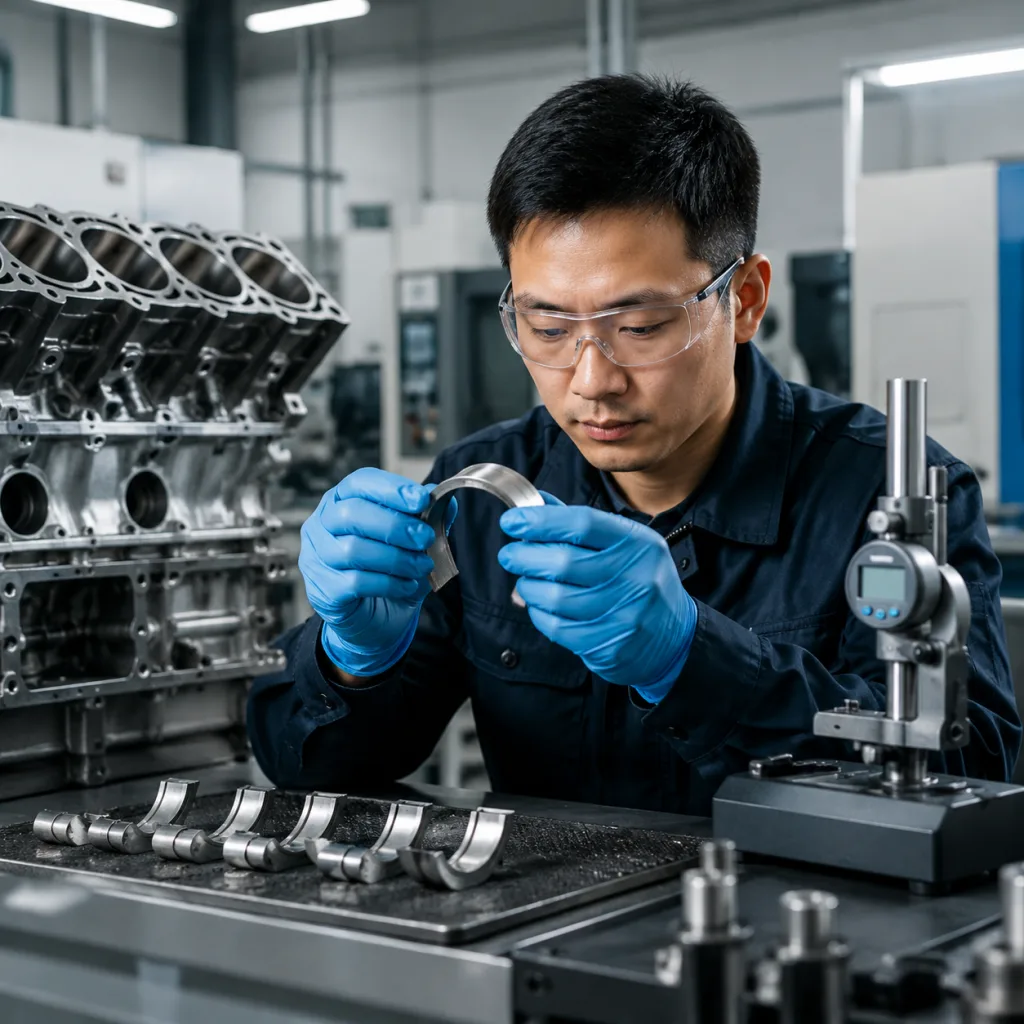
Driventus manufactures engine and powertrain components in Taizhou, Zhejiang for aftermarket distributors, OEM/Tier-1 programmes, and multi-location repair chains. For engine bearing Nissan manufacturer China enquiries, we focus on repeatable dimensional control, validated material specifications, and export-ready packaging. Our range includes main bearings, connecting rod bearings, thrust washers, and related engine components for Japanese, European, American, and other passenger and light commercial applications.
Driventus is an independent aftermarket manufacturer; brand names are referenced for fitment only. This guide is written for sourcing teams that need to qualify a China bearing factory, define technical requirements, compare commercial terms, and prepare an RFQ that does not leave critical assumptions open.
Decision framework: qualify the bearing before you chase the unit price
Engine bearings work in a hostile place: high cyclic load, cold-start boundary lubrication, mixed-film operation, idle stop-start events, towing, and sudden acceleration. A Nissan-fit bearing programme should therefore begin with application certainty and process capability, not only a price per set.
Use this qualification sequence before shortlisting suppliers:
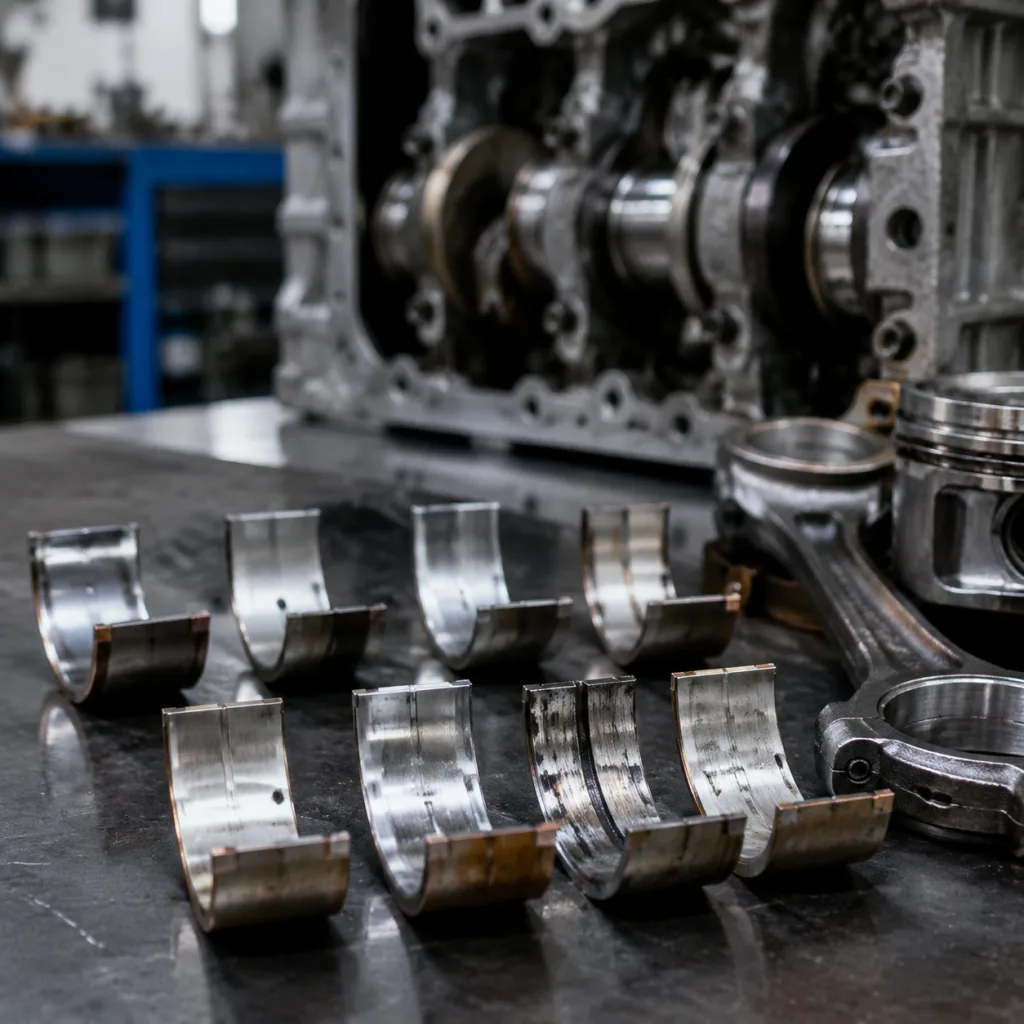
1. Confirm the application. Define whether the request is for a main bearing, connecting rod bearing, thrust washer, flange bearing, or complete overhaul kit. 2. Lock the fitment data. Provide engine code, displacement, fuel type, production years, journal count, and any OE-style cross-reference available from the buyer’s side. 3. State the size range. Standard, 0.25 mm, 0.50 mm, 0.75 mm, and 1.00 mm undersize options are common where applicable. Confirm whether the marked undersize refers to crankshaft grind reduction. 4. Set dimensional expectations. Wall thickness may be controlled in the 0.005-0.012 mm range depending on drawing. Width tolerance is often within 0.03-0.08 mm. Oil-hole position should be checked to drawing or approved master sample. 5. Choose the material system. Options include steel-backed bi-metal aluminium-tin, tri-metal copper-lead with overlay, and lead-free alternatives for markets that require them. 6. Identify critical-to-function features. Crush height, free spread, tang geometry, parting line relief, oil groove depth, chamfer, and back surface cleanliness all affect assembly and service life. 7. Inspect the running surface. Look for overlay uniformity, edge relief, clean oil holes, no exposed backing, no scoring, and no embedded abrasive particles. 8. Do not ignore packaging. Set-level identification, VCI or oiled anti-corrosion protection, barcode labels, inner-box quantity, master-carton weight, and pallet markings matter to distributor receiving systems.
Buyers can review related product families in our catalog and engine-specific lines on engine components. For private-label or drawing-controlled programmes, Driventus also supports custom manufacturing under agreed technical files, golden samples, control plans, and inspection frequency.
Spec deep-dive: what a useful Nissan-fit bearing RFQ must contain
A bearing RFQ should remove guesswork. “Quote Nissan bearing set” is not enough. The factory needs to know what is being controlled, what evidence is expected, and which market the shipment is entering.
If drawings are available, include them. If not, send sample parts and complete application data. Driventus can support reverse engineering, but production release should still be based on approved measurement reports, trial-assembly feedback, and signed samples.
Specification item
Procurement requirement
Supplier evidence to request
Backing material
Low-carbon steel strip, typically 0.8-2.5 mm depending on bearing size
Mill certificate, hardness check, incoming inspection record
Bearing alloy
Bi-metal aluminium-tin or tri-metal copper-lead, application dependent
Common tri-metal range 0.012-0.025 mm unless drawing states otherwise
XRF or metallographic thickness record
Wall thickness
Controlled to drawing tolerance, often ±0.005-0.012 mm for critical shells
Micrometer, air gauge, or CMM inspection report
Crush height
Matched to housing bore and cap clamp load
Dedicated crush fixture reading and in-process SPC record
Free spread
Controlled for assembly retention without excessive closing force
Go/no-go or fixture measurement data
Oil hole and groove
Position, width, depth, and edge finish per sample or drawing
Visual and dimensional report with burr-control check
Surface roughness
Back and running surface controlled to application need
Ra report where specified, usually on sample approval lots
Cleanliness
No chips, abrasive grit, loose plating, or foreign matter
Washing process record and final visual checklist
Corrosion protection
Export sea-freight suitable for 30-60 days typical transit/storage
VCI/oil specification, carton humidity control, packaging validation where specified
</tr></thead><tbody> </tbody></table>For bearing programmes supplied to regulated markets, buyers may also request evidence linked to IATF 16949:2016, ISO 9001:2015, and REACH (EC) No 1907/2006 substance controls. Driventus maintains a documented quality system designed for batch traceability, process control, gauge calibration, corrective action management, and customer-specific requirements.
Failure modes to audit out of the China supply base
The best factory audit is not a document collection exercise. It asks where the bearing can go wrong and whether the manufacturer has controls at that point.
Common risk points include strip variation, weak alloy bonding, shell deformation during forming, oil-hole burrs, inconsistent crush height, excessive free spread, plating defects on tri-metal designs, contamination after machining, and mixed undersize packaging. Any one of these can create assembly problems or field failures.
Driventus uses defined control plans for critical-to-function features. These normally include:
Incoming verification of steel strip thickness, lining alloy, surface condition, hardness, and supplier batch documents before release to production.
Bonding and lining control for alloy adhesion, void prevention, and strip flatness where lined material is processed.
Progressive stamping or forming control for shell curvature, parting faces, tang location, and free spread.
Machining and sizing checks for wall thickness, width, oil groove depth, chamfer, tang geometry, and oil-hole diameter.
Crush height measurement using a controlled fixture at set clamp load, with records by cavity, operator, shift, and lot.
Overlay and surface inspection where tri-metal designs are specified, including plating bath monitoring, thickness checks, and adhesion review.
Edge deburring and washing control to limit loose chips and embedded abrasive particles before final packaging.
First-piece approval at shift start and after tool adjustment, followed by patrol inspection at agreed intervals such as every 1-2 hours or per defined lot quantity.
Final sampling based on agreed AQL, typically AQL 1.0-2.5 for major dimensional and visual characteristics unless the customer requires a stricter plan.
For buyers evaluating an engine bearing Nissan manufacturer China supply base, audit evidence should cover calibration status, MSA for key gauges, non-conforming material segregation, operator training records, traceability from finished set to raw material batch, tool-change records, and change-control procedure. Driventus can provide audit documentation under NDA, including process flow diagrams, PFMEA, control plans, capability summaries, and sample inspection reports for defined programmes.
Commercial scenarios: distributor launch, repair-chain supply, or OE-style programme
The right commercial structure depends on the channel. A distributor testing a Nissan-fit line wants SKU flexibility and manageable carton quantities. A repair-chain contract needs scheduled replenishment and packaging consistency. An OEM or Tier-1 programme usually requires PPAP-style files, locked specifications, and stricter change control.
Use the following framework to align cost, timing, and risk:
Sample order: 5-20 sets per SKU is common for catalogue references. Samples are used for fitment confirmation, dimensional review, trial assembly, and packaging approval.
MOQ: Existing tooling and neutral packaging can often start from 100-300 sets per SKU. Private-label cartons usually require 300-500 sets per SKU. New-tooling or special-alloy projects may require 500-1,000 sets per SKU or an agreed tooling charge.
Price logic: Unit cost is driven by bearing type, shell count, alloy system, overlay requirement, undersize mix, packaging, documentation level, and annual volume. Tri-metal or small-batch private-label orders normally cost more than bi-metal catalogue items.
Standard lead time: Catalogue items with available material are typically 25-35 days after deposit and artwork approval. Private-label first orders often require 35-45 days. New development with sample tooling, validation, and approval may require 60-90 days.
Payment structure: Common export terms are 30% deposit and 70% before shipment for new customers. Other terms can be reviewed after order history and credit approval.
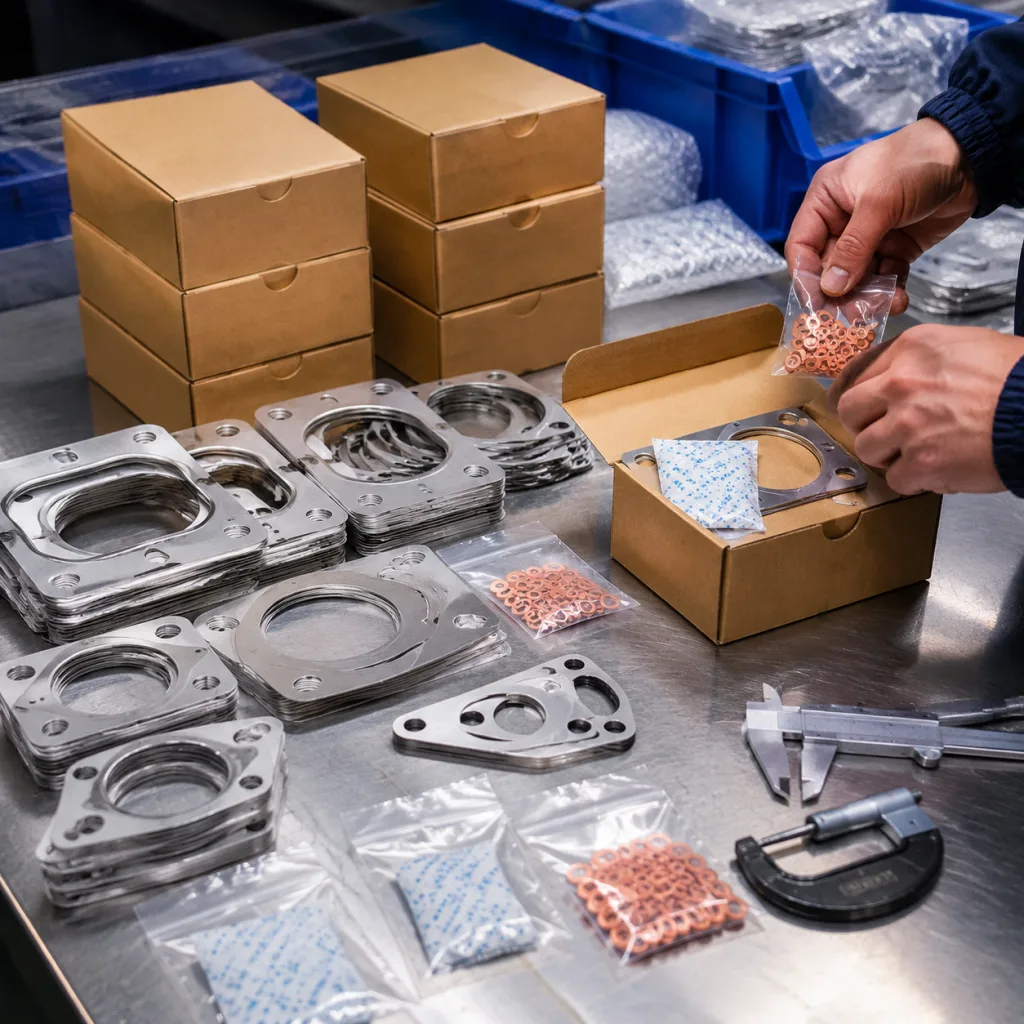
Packaging options: Neutral export carton, buyer label, private label, blister or sleeve pack, set box, or bulk service packaging. Confirm barcode type, label language, country-of-origin marking, and carton drop-test expectations.
Shipment terms: FOB Ningbo or Shanghai are common. EXW, FCA, CIF, or DAP can be reviewed by project. Sea freight is typical for production orders, while air or courier is used for samples and urgent replenishment.
Documentation: Commercial invoice, packing list, certificate of origin where required, material declaration, inspection report, compliance statement, fumigation declaration for wooden packaging if applicable, and HS code confirmation as agreed.
A clear RFQ shortens quotation cycles. For an engine bearing Nissan manufacturer China project, buyers should share target annual volume, first-order quantity, destination market, preferred Incoterms, label requirements, approval documents, and whether the order is for aftermarket distribution, OE service, or production supply.
Quality evidence: separate bearing defects from engine-build problems
Not every bearing failure starts with the bearing. Oil starvation, contamination, housing distortion, incorrect oil clearance, crankshaft roughness, misalignment, and wrong torque procedure are frequent causes. Still, procurement teams need evidence that the supplied bearing met specification before release.
Ask for records that connect the shipment to measurable controls:
Initial sample inspection report with measured dimensions against drawing or approved sample, including wall thickness, width, free spread, crush height, oil-hole location, and groove geometry.
Material composition report for backing steel and bearing alloy, with batch number matched to production records.
Hardness, bond integrity, or microstructure report where applicable to the material design.
Coating or overlay thickness inspection for tri-metal designs, with target range and minimum/maximum results identified.
Surface roughness and visual inspection records for running surface, back surface, parting line, oil holes, and edge relief.
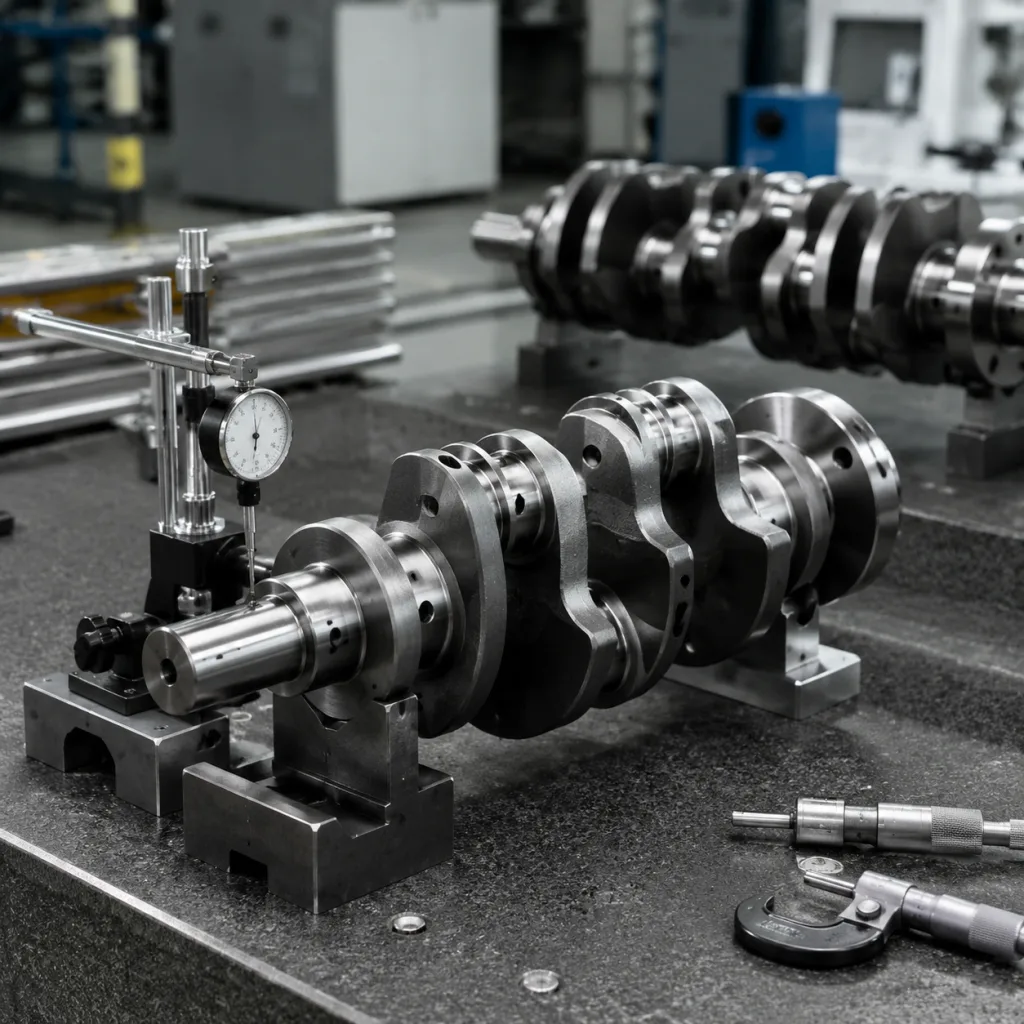
Gauge list showing calibrated micrometers, air gauges, height gauges, fixtures, and calibration validity dates.
Process capability data for critical dimensions when volume programmes require it. Cpk targets are normally agreed by drawing criticality, with 1.33 often used as a baseline for stable characteristics.
Batch traceability label showing production date, lot number, part reference, size marking, inspector code, and carton number.
Corrective action report format for warranty or field feedback, including containment, root cause, corrective action, and effectiveness check.
Driventus follows IATF 16949:2016 and ISO 9001:2015 principles for documented process control, risk management, and continuous improvement. For export to the EU and UK, substance declarations may reference REACH (EC) No 1907/2006 where relevant to materials and packaging. We do not claim approval or endorsement by any vehicle manufacturer. Driventus is an independent aftermarket manufacturer; brand names are referenced for fitment only.
Step-by-step RFQ checklist for engine bearing Nissan manufacturer China projects
A strong RFQ does two things: it helps the factory quote accurately, and it prevents later disputes over fitment, undersize variants, alloy choice, inspection scope, and packaging. Use the checklist below before requesting price.
1. Vehicle application, engine code, displacement, fuel type, year range, and market region. 2. Bearing type: main, rod, thrust washer, flange bearing, or complete set, including shell count per engine. 3. Size: standard, 0.25 mm, 0.50 mm, 0.75 mm, 1.00 mm, or other specified dimension, with the required quantity split by size. 4. Required material: bi-metal, tri-metal, lead-free, or supplier recommendation based on load and market positioning. 5. Drawing, approved sample, OE-style reference supplied by the buyer, or target dimensions for reverse engineering. 6. Quantity by SKU, first order quantity, annual forecast, and quarterly call-off plan. 7. Destination country and import compliance requirements, including REACH, RoHS, IMDS-style material data, or customer-specific declarations if needed. 8. Packaging format, label language, barcode type, carton quantity, pallet size, gross-weight limit, and any Amazon, distributor, or warehouse receiving rules. 9. Required documents: inspection report, material certificate, PPAP-style file, REACH declaration, factory audit pack, or pre-shipment inspection photos. 10. Target lead time, preferred shipment term, loading port, and whether partial shipment is acceptable. 11. Commercial terms: target price level, currency, payment terms, tooling ownership, and whether private-label artwork is supplied or must be developed.
When comparing suppliers, do not isolate the unit price. Review tooling ownership, inspection frequency, warranty response, packaging loss rate, capacity allocation, and the supplier’s ability to hold the same specification across repeat orders. A disciplined bearing manufacturer reduces total landed risk, even when the first line on the quote is not the lowest.
Frequently asked questions
Yes. Driventus can supply neutral packaging or private-label packaging for eligible programmes, subject to MOQ, artwork approval, and trademark compliance. Typical private-label MOQs start higher than neutral packaging because printed boxes, labels, and carton inventory must be controlled by SKU. We do not use protected brand marks unless the buyer provides written authorisation.
Driventus operates under IATF 16949:2016 and ISO 9001:2015 quality management principles. Buyers may request quality documentation, inspection reports, material declarations, process flow, control plan, PFMEA summary, calibration evidence, and audit files for approved sourcing projects.
Provide engine code, bearing type, size, sample or drawing, shell count, and any OE-style cross-reference available. Driventus can supply samples for dimensional checks, oil-clearance review, trial assembly, and packaging approval before mass production.
If you are qualifying an engine bearing supplier in China, send your application list, target volumes, size split, packaging rules, and documentation requirements to [request a quote](/contact.html).