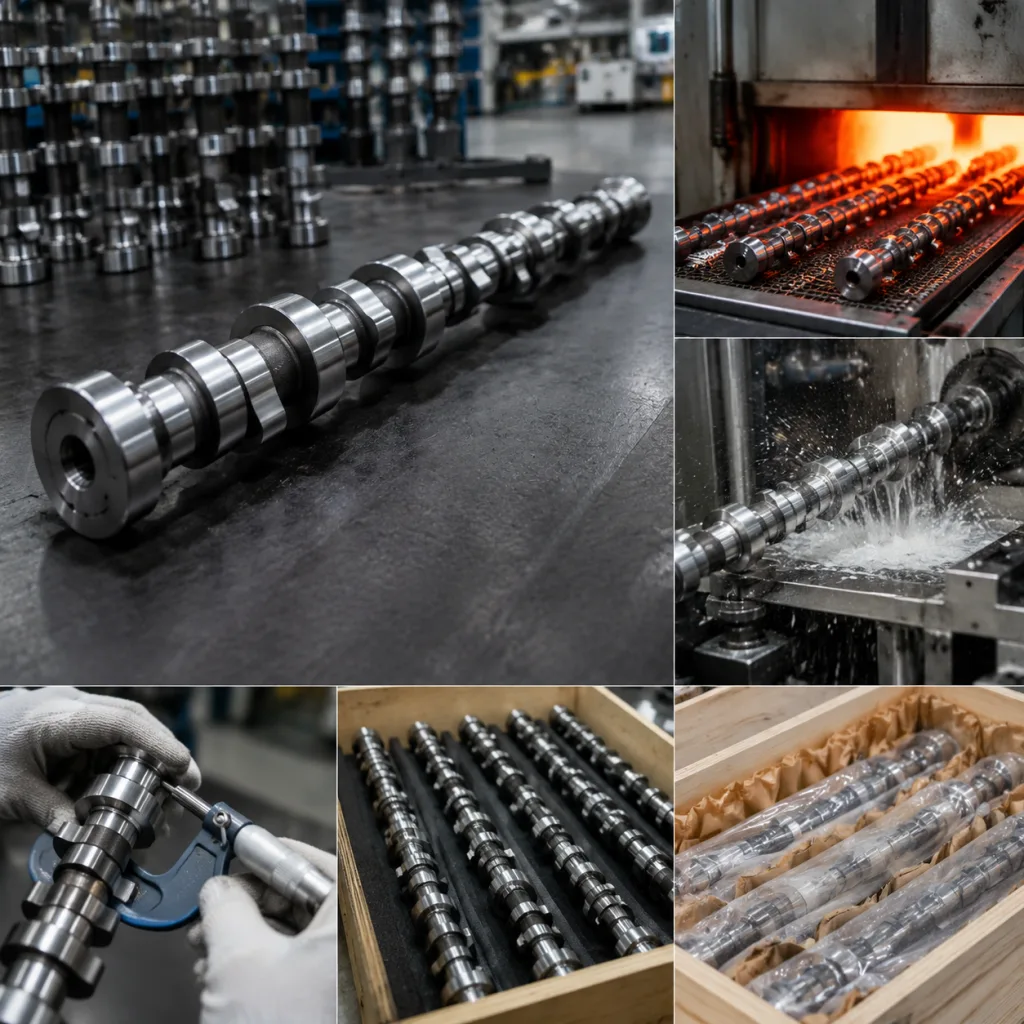
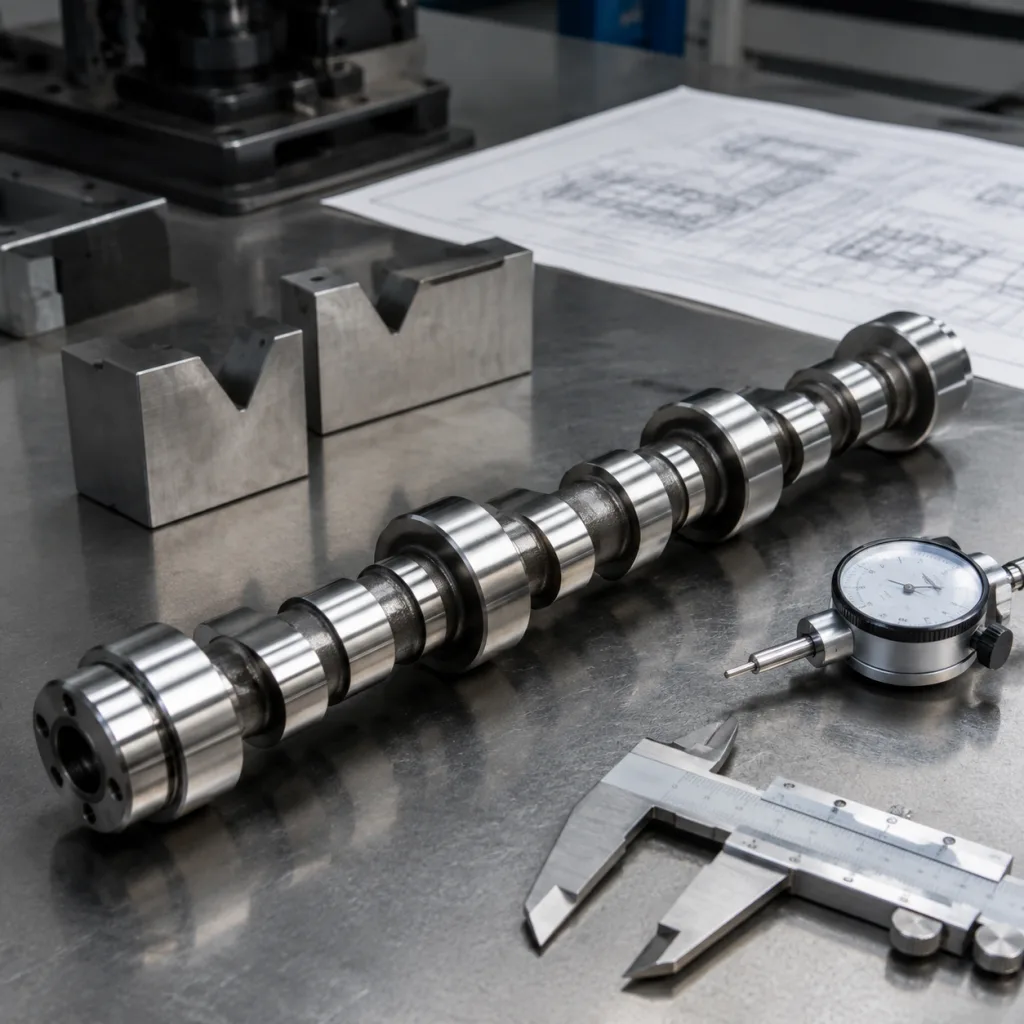
A camshaft Citroen OE equivalent is not approved by eyesight. It is approved by geometry, material behaviour, timing accuracy, surface condition, and repeatable batch control.
For distributors, repair-chain buyers, and sourcing engineers, the risk is rarely that the shaft “looks wrong.” The risk is a small error that only appears after installation: noisy valve train, unstable idle, oil-film failure, hard starting, emissions-related fault codes, rapid follower wear, or a timing-system mismatch. Base circle, lobe lift, phase angle, thrust-face finish, journal runout, oil-hole position, and transit protection all matter.
Driventus supplies aftermarket engine components for export programmes, including camshafts produced to controlled drawings, process plans, and inspection records. We focus on dimensional interchangeability, batch consistency, and documentation that importers and wholesale buyers can use in real purchasing decisions. Those decisions usually depend on confirmed application data, sample approval, annual volume, MOQ, tooling status, packing format, and inspection level.
Driventus is an independent aftermarket manufacturer. Citroen and other brand names are referenced for fitment identification only.
Decision framework: when is a Citroen camshaft truly OE-equivalent?
Treat “OE-equivalent” as a purchasing specification, not a catalogue adjective. A replacement camshaft should reproduce the functional interfaces of the original engine design so it can be installed without machining, spacer changes, timing-system rework, or calibration work beyond the normal repair process.
A useful decision framework starts with five questions:
1. Does it fit the cylinder head and timing system? Overall length, journal positions, seal diameter, thrust location, sprocket or pulley interface, sensor target, vacuum pump drive, and phaser features must match the application. 2. Does it preserve valve motion? Lobe lift, base circle, flank geometry, and angular indexing must keep valve timing and lift within the required window. 3. Does it run on the correct oil film? Journal diameter, roundness, cylindricity, surface finish, and oil-feed details control bearing clearance and lubrication stability. 4. Will it survive the duty cycle? Material grade, hardness, case depth, heat treatment, and surface finish determine wear resistance during cold starts, poor lubrication events, and high-mileage service. 5. Can the supplier repeat it by batch? One good sample is not a supply programme. The drawing, process plan, inspection method, traceability, and packing method have to be repeatable.
Typical equivalence points include:
Overall length and journal positions to maintain correct alignment in the cylinder head or cam carrier. Buyers should control axial feature positions from a single datum where possible, rather than relying on accumulated chain dimensions.
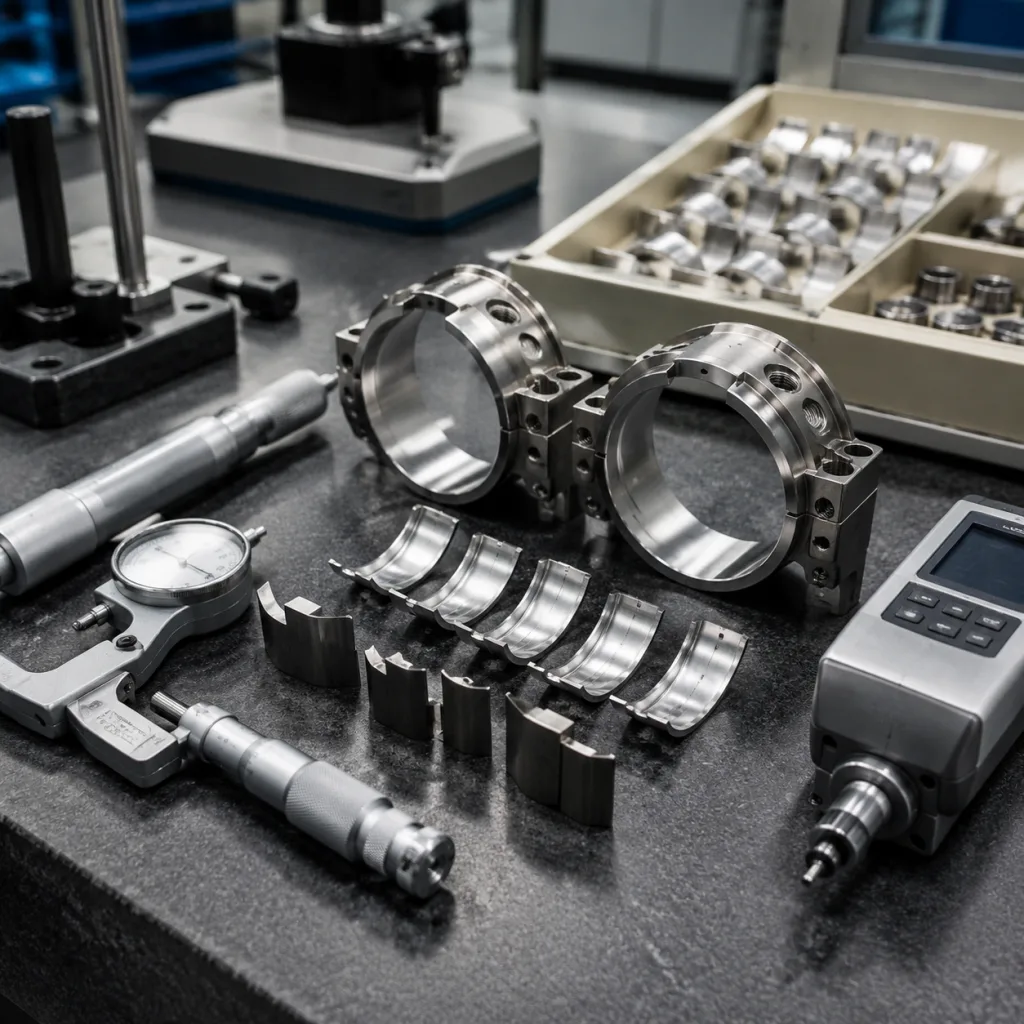
Bearing journal diameter, roundness, and cylindricity to support stable oil clearance. Depending on the application, journal diameter tolerances are commonly controlled in the ±0.005–0.015 mm range, with roundness and cylindricity often checked to 0.003–0.010 mm where bearing clearance is tight.
Lobe lift, base circle, flank geometry, and angular indexing to preserve valve timing and valve motion. Many replacement programmes define lift variation around ±0.02–0.05 mm and phase angle around ±0.5–1.0° camshaft angle, subject to the original design.
Thrust face width and finish to control end float and reduce axial wear.
Drive interface geometry for sprockets, gears, reluctor wheels, vacuum pump drives, slots, keys, taper seats, timing pulleys, or phasers where used.
Oil-feed holes and internal passages, where applicable, to maintain lubrication and avoid debris release after installation. Hole position, chamfer, burr height, and cleanliness should be controlled.
Surface hardness and effective case depth to resist scuffing under boundary lubrication.
For purchasing teams, the most useful enquiry data are engine code, fuel type, valve count, year range, camshaft position, and any existing OE-style reference format. Generic or partial references are only fitment clues until verified against drawings, catalogue application data, or measured samples. Ask the supplier which dimensions are controlled by drawing, which are verified from a sample, and which remain application assumptions.
Driventus does not claim approval, sponsorship, or endorsement by any vehicle manufacturer.
Failure modes prevented by the right dimensional controls
A camshaft is a precision rotating component. Two shafts can look identical on a bench and behave differently in an engine. Small geometry errors change valve motion, bearing loading, oil clearance, and the relationship between the camshaft and timing system.
For a camshaft Citroen OE equivalent supply project, define inspection points before production approval. Then agree what is checked at sample approval, what is checked in process, and what is checked before shipment.
Failure mode to avoid
Control item
Typical verification method
Practical target to define
Procurement relevance
Low oil pressure at cam journals, seizure, rapid bearing wear
Journal diameter
Micrometer, air gauge, or CMM
Application-specific, often ±0.005–0.015 mm
Confirms oil clearance compatibility
Localised bearing load, oil-film collapse
Journal roundness/cylindricity
Roundness tester or CMM
Often 0.003–0.010 mm
Reduces high-contact zones
Vibration, uneven wear, difficult assembly
Journal runout
V-block or centre-based dial indicator
Commonly ≤0.03–0.05 mm TIR after final machining
Controls shaft straightness and rotation quality
Reduced power, unstable idle, emissions faults
Lobe lift
Height gauge, cam measuring machine, or CMM
Often ±0.02–0.05 mm versus approved master
Maintains valve opening specification
Incorrect lash or hydraulic lifter behaviour
Base circle
Micrometer, cam gauge, or CMM
Often ±0.01–0.03 mm
Protects valve-train set-up
Timing errors, fault codes, poor combustion
Lobe phase angle
Camshaft measuring machine or CMM
Typically ±0.5–1.0° cam angle when specified
Protects timing accuracy
Scuffing, accelerated follower or journal wear
Surface roughness
Profilometer
Journals often Ra 0.2–0.4 µm; lobes commonly Ra 0.4–0.8 µm, subject to follower type
Supports lubrication film and lowers wear risk
Early lobe wear or brittle cracking
Hardness profile
Rockwell / microhardness section check
Commonly HRC 50–62 at lobes, with agreed case depth
Verifies heat-treatment stability
Excessive end float or axial wear
Thrust face width
Caliper, micrometer, or CMM
Usually controlled to drawing, often ±0.03–0.05 mm
Controls axial movement
Sprocket, pulley, pump, phaser, or sensor mismatch
Drive end features
Gauge or CMM
Spline, slot, keyway, taper, reluctor, or thread checked to mating gauge
Ensures timing and accessory compatibility
</tr></thead><tbody> </tbody></table>For serial production, Driventus links these checks to control plans, incoming material inspection, in-process measurement, and final sampling. A practical inspection split may include 100% visual and oil-hole presence check, 100% straightness or runout check for sensitive shafts where agreed, and AQL or lot-based measurement for stable machined dimensions.
For first-article approval, buyers should request a full dimensional report on at least 3–5 samples, including datum scheme and measurement equipment. For repeat batches, a shipment report can focus on critical-to-fit dimensions, hardness, roughness, runout, and packing condition.
Spec deep-dive: material route, heat treatment, finish, and export packing
Citroen replacement camshafts may use different production routes depending on engine design, target volume, follower type, and market position. Common options include chilled cast iron, ductile iron, forged steel, machined steel, and assembled camshaft structures. The correct route is the one that matches the original duty requirement. Cost matters, but it should not choose the metallurgy by itself.
Specification points that should not be left vague
Material grade aligned with the original application and supported by chemical analysis, such as carbon, silicon, manganese, chromium, molybdenum, and other alloying elements where relevant.
Controlled casting, forging, machining, or assembly process to reduce porosity, inclusions, distortion, and feature misalignment.
Heat treatment selected for the follower system and wear load, such as induction hardening, carburising, nitriding, or chilled casting characteristics where applicable.
Lobe surface hardness and effective case depth verified by batch testing at defined locations. Common programme targets may fall around HRC 50–62 at the working surface, with effective hardened depth often around 1.0–3.0 mm for induction-hardened zones depending on section size and follower load.
Straightness control after heat treatment and final machining. Heat-treatment distortion can move journal axes and drive features even when lobe form appears acceptable.
Oil-hole deburring and cleaning where applicable. Burrs should not project into oil passages or bearing interfaces.
Anti-corrosion oiling, VCI or sleeve protection, end protection, and sealed packaging for sea freight.
Surface finish is not cosmetic. A rough lobe can accelerate follower wear. An overly polished surface may reduce oil retention depending on follower design and lubrication regime. Journal finish must support hydrodynamic lubrication without tearing the oil film or creating high spots.
Typical buyer-controlled targets are:
Journals: Ra 0.2–0.4 µm.
Lobes: Ra 0.4–0.8 µm, subject to follower type.
Thrust faces: defined finish, with no grinding burn, chatter marks, sharp burrs, or rust staining.
Final cleaning should include chip removal from oil galleries, magnetic particle or visual crack checks where required, and rust-preventive oil that does not contaminate later assembly.
Export packing is part of the specification. A camshaft damaged in a mixed pallet is no longer OE-equivalent in practice. For buyers consolidating engine parts, each shaft should be isolated from crankshafts, pistons, water pumps, gasket kits, and other heavy or sharp-edged components during inland and ocean transport. A practical export pack normally uses individual sleeves or PE bags, rust inhibitor, end caps or foam blocks, inner cartons, pallet wrapping, and carton labels showing part number, batch number, quantity, gross weight, and country-of-origin information where required by the destination market.
Step-by-step validation path before a high-volume order
A replacement camshaft programme should move through gates. Skipping them saves days at the start and can create months of claims later.
1. Confirm the application
Start with engine code, displacement, fuel type, valve count, production year range, intake or exhaust position, and target market. Vehicle model name alone is not enough.
2. Compare the reference
Use an original drawing, approved master sample, or measured sample. If only a used sample is available, record wear areas and define how wear compensation will be handled.
3. Freeze the critical dimensions
Agree the datum scheme, journal dimensions, lobe lift, base circle, phase angle, thrust features, oil passages, seal diameter, and drive-end interfaces.
4. Validate material and heat treatment
Review chemical composition, heat-treatment route, hardness points, and case depth where relevant. The material route should match the load and follower type.
5. Approve pilot samples
Recommended evidence includes:
Initial sample inspection report covering all critical dimensions, normally including at least 3 sample parts and one approved reference or master sample.
Material certificate and chemical composition report, matched to heat, melt, or incoming material lot.
Heat treatment report with hardness readings at defined locations, such as lobe nose, lobe flank, base circle, journal, and thrust area where applicable.
Surface roughness report for lobes, journals, and thrust faces, using a stated cut-off length and measurement direction.
Runout and straightness records after final machining, preferably measured on centres or a defined production datum.
Lobe lift, base circle, and phase angle measurement results from a camshaft measuring machine, CMM, or agreed fixture.
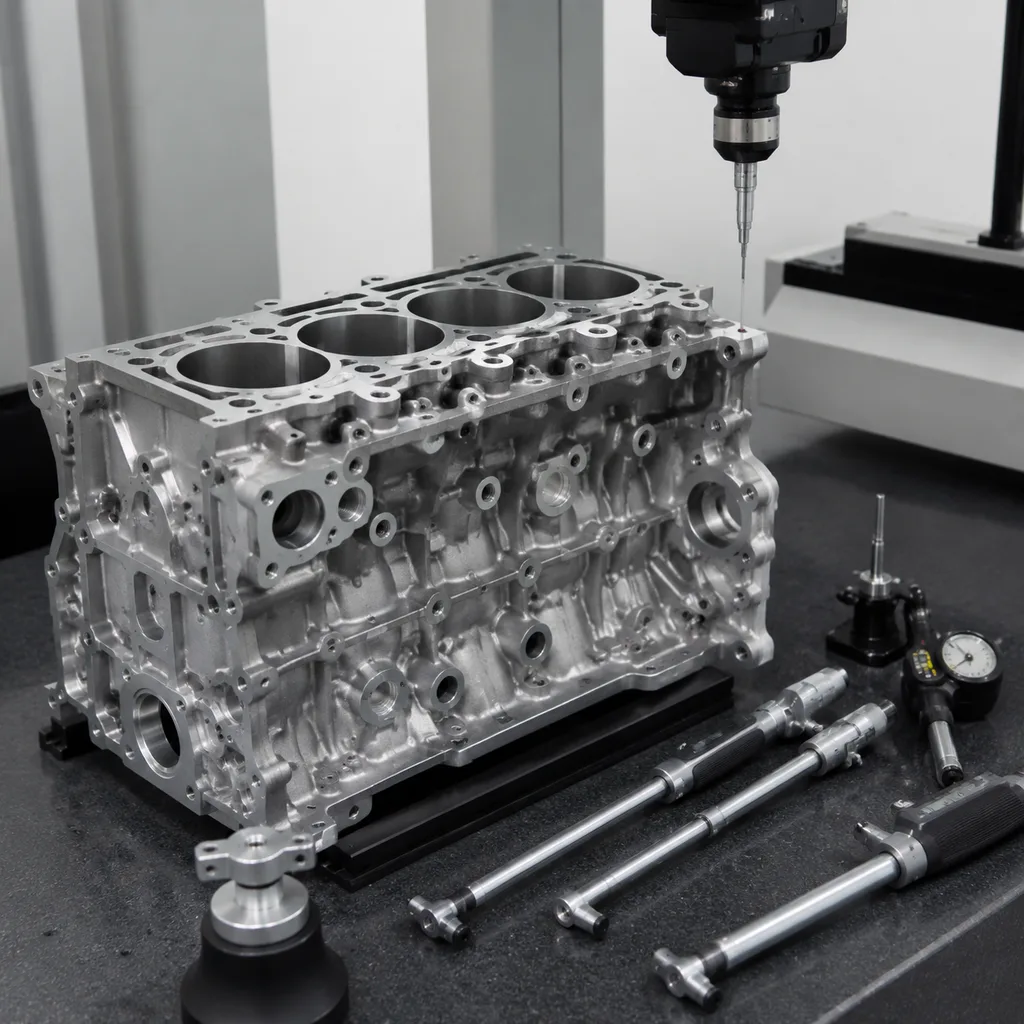
Trial assembly check with representative cylinder head, cam carrier, bearing caps, seals, sprocket, phaser, sensor wheel, or vacuum pump interface as applicable.
Cleaning and oil-passage verification where the design includes lubrication holes. Buyers may request borescope photos or air-flow/check-pin confirmation for critical passages.
Packaging drop or transport simulation review for export shipments, including checks for rust, carton crushing, end impact, and mixed-pallet contact.
6. Run the first production lot under control
The first lot should follow the approved process route. Any change to heat treatment, machining fixture, material source, or packing method should be reported before shipment when it affects agreed controls.
If no original drawing is available, the supplier should define a reverse-engineering plan and identify measurement uncertainty, sample wear compensation, and any features that need buyer confirmation through installation trial.
Where regulatory or customer requirements apply, documentation may also reference general automotive quality frameworks. Driventus operates under IATF 16949:2016 and ISO 9001:2015 based process controls. For markets affected by chemical compliance obligations, buyers may request material declarations aligned with REACH (EC) No 1907/2006. These standards do not prove fitment or vehicle manufacturer approval by themselves, but they support traceability, corrective action, and batch control. More detail is available on our quality system page.
Fitment Q&A: cross-references, engine variants, and catalogue traps
Replacement camshaft enquiries often start with incomplete data. That is normal. A distributor may have a local catalogue number, a failed sample, an engine family description, or a partial OE-style reference. The mistake is treating that starting point as final approval.
Is a vehicle model name enough?
No. The same platform can use different engines, cylinder heads, timing systems, cam phasers, sensor targets, and emissions calibrations. Always verify engine code, production year split, cam position, number of journals, lobe count, drive interface, oil-hole arrangement, sensor-wheel indexing, and seal diameter.
Is a cross-reference reliable?
It is useful, but it is not technical authority. If a catalogue cross-reference covers several variants, treat it as a sales clue until dimensional and application data confirm the match.
What should a buyer send with the enquiry?
A practical enquiry pack should include:
1. Engine code and displacement. 2. Intake or exhaust camshaft position, where applicable. 3. Fuel type, aspiration type, and valve count. 4. Model year range and target markets. 5. Photos of the drive end, sensor features, casting or forging marks, oil holes, and thrust faces. 6. Existing part label, catalogue number, or cross-reference, if available. 7. Sample part for reverse measurement when drawings are not available; two samples are better when one may be worn or damaged. 8. Expected annual demand, first order quantity, packaging preference, and any pre-shipment inspection requirements. 9. Required documents, such as dimensional report, material certificate, hardness report, surface roughness report, and packing list format. 10. Commercial terms, including Incoterms, destination port, label language, barcode need, and whether mixed-container consolidation is planned.
Why is timing accuracy so sensitive?
For emissions-sensitive applications, incorrect valve timing can affect combustion stability, exhaust temperature, fault-code behaviour, and downstream compliance. Standards such as ECE R-83 relate to vehicle emissions approval rather than aftermarket camshaft manufacturing approval, but they show why timing accuracy matters within the installed engine system.
When there is uncertainty, Driventus recommends pre-production sample installation, timing check, idle/noise evaluation, and short road or bench verification before placing a high-volume order for a camshaft Citroen OE equivalent.
Scenario planning: how Driventus handles MOQ, lead time, reports, and custom sourcing
Driventus manufactures engine and powertrain components in Taizhou, Zhejiang, for distributors, wholesalers, OEM/Tier-1 supply chains, and multi-location repair networks. For a camshaft replacement programme, we can support standard catalogue sourcing or custom manufacturing based on samples, drawings, and validated specifications.
The right sourcing route depends on the scenario.
Scenario A: active catalogue item
This is the simplest path. Tooling and process controls already exist, so trial quantities may be lower. The main work is confirming fitment, inspection level, packing format, and labelling.
Scenario B: existing item with private label or stricter inspection
The product route is known, but commercial and quality controls change. Custom carton artwork, barcode labels, special reports, or higher inspection levels can affect MOQ, lead time, and unit cost.
Scenario C: new or low-running development
This requires more engineering time. The project may include sample reverse engineering, fixture preparation, heat-treatment validation, pilot production, first-article inspection, and packaging approval. MOQ is usually higher because set-up and validation costs have to be absorbed.
B2B support can include:
Drawing review and feasibility assessment.
Sample reverse engineering for non-restricted aftermarket applications.
Material, hardness, surface finish, and dimensional control planning.
Batch traceability by production lot, heat-treatment lot, and packing lot where required.
Export packaging suitable for palletised sea freight.
Neutral packaging, customer label, barcode label, or agreed carton artwork.
Pre-shipment inspection reports when required.
Consolidation with related engine parts for mixed-container procurement.
Commercial planning around MOQ, target price, and lead time.
Unit price is normally driven by material route, machining time, lobe and journal count, heat treatment, surface finishing, inspection level, packing specification, and annual volume. A buyer asking for 100% dimensional inspection, custom labels, and individual heavy-duty export cartons should expect a different cost than a buyer ordering standard bulk export packing with lot-sampling inspection.
Lead time depends on tooling status, order volume, material availability, and test requirements. For active camshaft families, repeat orders can normally be planned around rolling forecasts and consolidated shipping schedules. For new development, buyers should allow time for sample measurement, tooling or fixture preparation, heat-treatment validation, cleaning checks, packaging confirmation, and initial sample approval. A realistic project plan is often 2–4 weeks for quotation and data confirmation, 4–8 weeks for samples or pilot production when tooling is available, longer if new tooling is required, and 30–60 days for production after approval depending on quantity and capacity.
To discuss a camshaft Citroen OE equivalent project, buyers can request a quote with fitment data, annual volume, first order quantity, target market requirements, inspection level, packing format, Incoterms, and documentation expectations.
Frequently asked questions
Provide engine code, displacement, intake or exhaust position, fuel type, valve count, year range, photos of the drive end and oil holes, and any existing cross-reference. A physical sample is useful when drawings are not available. Expected annual demand, first order quantity, packing needs, and inspection reports should also be stated at enquiry stage.
No. OE-equivalent means the replacement part is designed to match functional dimensions and performance requirements for the stated application. Driventus is an independent aftermarket manufacturer; brand names are referenced for fitment only.
Yes. Depending on the order and agreement, reports can include dimensional inspection, hardness, material composition, runout, surface roughness, lobe lift, phase angle, oil-hole checks, and packaging checks. Requirements should be confirmed before production.
For replacement camshaft sourcing, share your fitment list, samples, drawings, annual demand, target MOQ, packing format, and inspection requirements so our engineering team can review feasibility. Start a technical enquiry at /contact.html