Choosing a crankshaft Honda OEM supplier is a risk decision before it is a price decision. A low quote means little if journal geometry drifts, oil holes carry burrs, hardening depth is undocumented or cartons cannot be traced back to a heat number. For importers, distributors and Tier-1 sourcing teams, the job is to prove that the supplier can hold material control, machining accuracy, balance, packaging discipline and lot-to-lot repeatability at commercial scale.
Driventus manufactures crankshafts and related engine components in Taizhou, Zhejiang, for B2B aftermarket and contract manufacturing programmes. We export to 60+ countries and operate under IATF 16949:2016 and ISO 9001:2015 quality management systems. This article gives procurement teams a practical framework for defining RFQ data, checking failure modes, comparing MOQ and lead-time logic, locking measurable specifications and releasing Honda-fit crankshafts from China with lower sourcing risk. Driventus is an independent aftermarket manufacturer; brand names are referenced for fitment only.
RFQ Decision Framework: What Must Be Known Before Price
A crankshaft RFQ should answer one question first: what exactly is the supplier being asked to reproduce or develop? If that scope is vague, the quote will be vague too. Photos and overall length are not enough. For Honda-fit crankshafts, buyers should define the engine family, displacement, fuel type, stroke, cylinder count, main and rod journal layout, timing or reluctor features, target market and expected annual volume.
Start with the evidence you have. A complete package may include 2D drawings, 3D files, approved samples, inspection reports, OE part-number cross-references, packaging drawings and warranty return data. If an internal reference code is used, such as a generic OE-style format already present in the buyer’s ERP, send it exactly as recorded. Do not ask the supplier to infer application identity from a partial number.
For first quotation, lock the commercial and technical baseline:
Target quantity: sample lot, first order and annual forecast, such as 50 pcs for validation, 300 pcs for first order and 1,000–3,000 pcs annual demand.
Critical dimensions: main journal diameter, rod journal diameter, stroke, flange or pilot bore, oil-hole dimensions and tolerances.
Inspection level: 100% checks for journals and balance, or AQL sampling for appearance and packaging.
Commercial target: Incoterm, destination port, currency, packaging type and acceptable delivery window.
Compliance needs: REACH, material declaration, restricted-substance declaration or customer-specific quality forms.
Use the sourcing scenario to set the evidence threshold:
Sourcing scenario
Buyer objective
Evidence to request
Aftermarket replacement
Dimensional and functional equivalence
Sample inspection, fitment matrix, warranty history
Private-label distribution
Stable supply and packing control
MOQ bands, carton design, barcode process, export record
Contract manufacturing
Buyer-controlled specification
Drawing review, PPAP-style records, process capability
</tr></thead><tbody> </tbody></table>Driventus can quote from samples, buyer drawings or application data. Buyers can review our catalog for current engine component coverage and use custom manufacturing when dimensions, material, tolerances, inspection depth or packaging differ from standard aftermarket items.
Factory Audit Failure Modes to Check First
A polished workshop tour does not prove crankshaft capability. The audit should look for the points where crankshafts usually fail: uncontrolled steel grades, outsourced heat treatment without records, unstable grinding, weak oil-hole deburring, incomplete balance data and traceability gaps between finished cartons and raw material heats.
Ask whether the supplier controls the full process route or depends on subcontractors for blank preparation, heat treatment, grinding or balancing. Vertical integration can improve schedule control, but only when process parameters, calibrated gauges, operator training records and inspection gates are documented and used on real production lots.
Audit these areas before discussing volume expansion:
Material sourcing: steel grade verification, mill certificates, heat number control and incoming chemical analysis. Buyer-specified materials may include forged medium-carbon alloy steel such as 40Cr/42CrMo or equivalent grades, depending on the drawing.
Forging or casting control: blank drawing, heat number traceability, visual defect limits, ultrasonic or magnetic-particle inspection where specified and written rejection criteria.
Machining capability: CNC turning, milling, oil-hole drilling, grinding and polishing capacity, including machine model, spindle condition, fixture control and changeover records.
Heat treatment control: hardness range, case depth or induction-hardened depth where applicable, quench media, furnace charts and batch records.
Balancing: dynamic balancing equipment, correction method and residual imbalance limits matched to application and engine speed range.
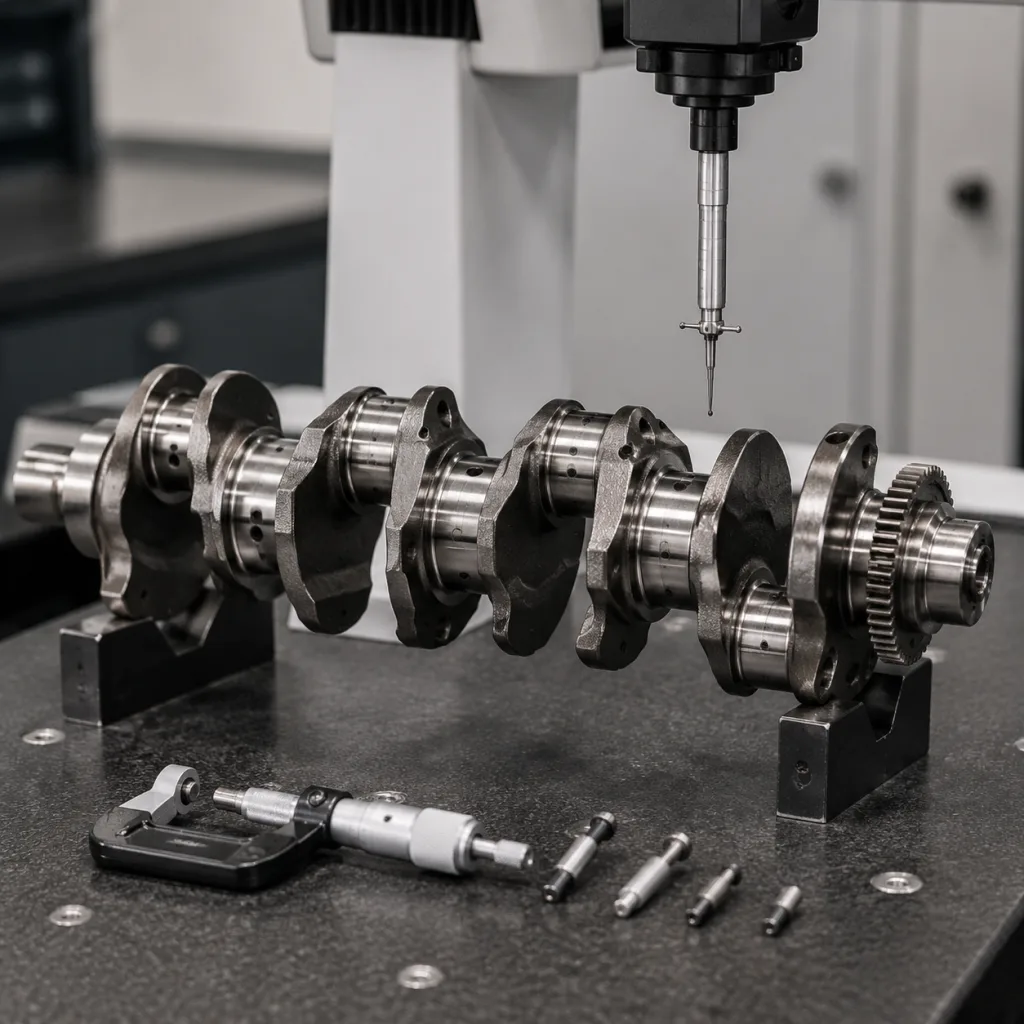
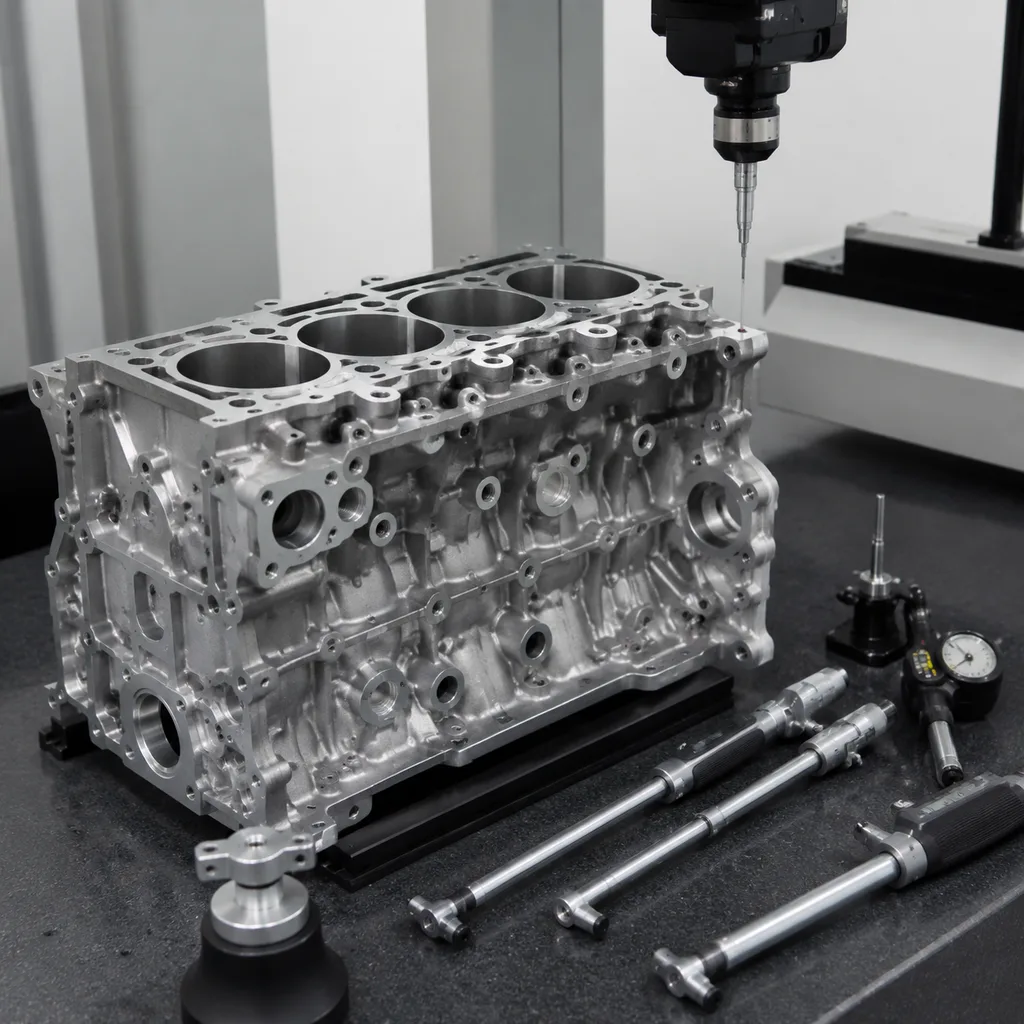
Measurement system: micrometers, air gauges, roundness testers, roughness testers, hardness testers, CMM or height gauges with valid calibration status.
Traceability: batch coding from raw material heat number through machining, heat treatment, final inspection and finished cartons.
A useful audit exercise is simple: choose one finished crankshaft carton, trace it back to raw material, then trace it forward through every operation record. Ask for the last three shipped lots, not blank templates. For critical features, request Cp/Cpk where stable mass production exists; many buyers set Cpk ≥1.33 for major journal diameters and ≥1.67 for safety-critical or customer-designated characteristics.
Driventus supports remote and on-site audit preparation with process flow charts, control plans, equipment lists, gauge lists, inspection templates and traceability examples. Our quality system is structured around IATF 16949:2016 and ISO 9001:2015, with supplier controls, corrective action records and production traceability requirements.
Specification Deep-Dive: Dimensions That Decide Engine Life
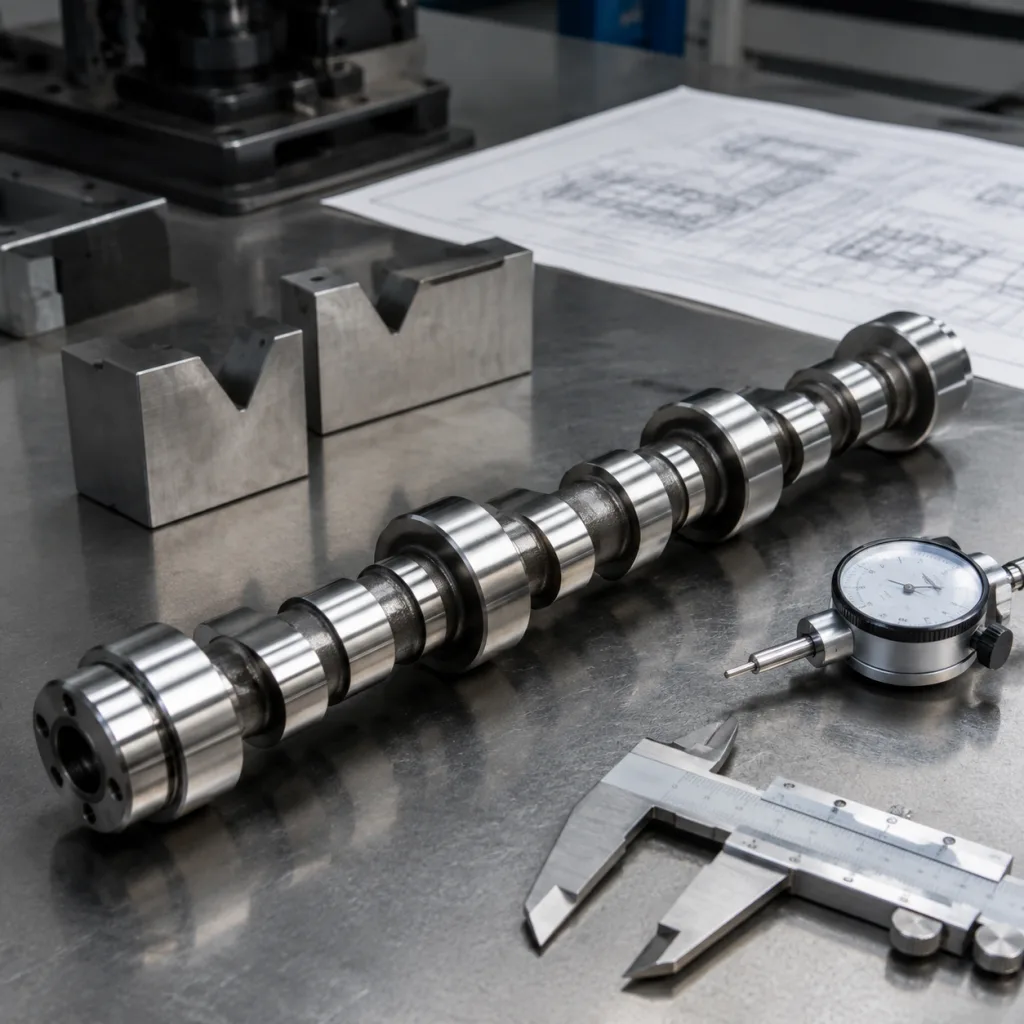
A crankshaft drawing is not paperwork. It is the control document for bearing lubrication, fatigue strength, assembly fit and warranty exposure. If drawings are unavailable, the supplier should reverse-engineer from approved samples and submit a dimensional report before bulk production. Mass production should never be released from photos, weight and overall length alone.
Typical specification items for Honda-fit crankshafts include:
Main journal diameter, tolerance, taper, ovality and roundness.
Connecting rod journal diameter, tolerance, cylindricity and crankpin width.
Stroke length, crankpin indexing and angular position between throws.
Fillet radius, undercut shape and surface transition requirements.
Oil-hole diameter, position, chamfer and deburring standard.
Keyway, flange, timing gear seat, reluctor feature and pilot bore dimensions.
Surface roughness on bearing journals, stated as Ra rather than visual finish.
Hardness range and hardened layer depth where specified.
Dynamic balance requirement, correction method and maximum residual imbalance.
Straightness and runout control across main journals.
Anti-corrosion coating, VCI protection, plastic sleeve and export packing method.
For RFQ control, insist on numeric acceptance criteria. Values vary by engine design and drawing, but common procurement targets for precision crankshafts include journal diameter tolerance in the ±0.005–0.015 mm range, journal roundness within 0.003–0.008 mm, taper within 0.005–0.010 mm, bearing journal roughness around Ra 0.2–0.4 µm, stroke tolerance around ±0.02–0.05 mm and flange or pilot bore runout commonly controlled within 0.02–0.05 mm. Fillet radius deserves special attention. Changing it to simplify grinding can create bearing edge contact or reduce fatigue strength.
Hardness requirements should state both surface hardness and depth method. For induction-hardened journals, buyers may specify a surface hardness range such as HRC 52–60 with effective hardened depth defined by the drawing or agreed standard. Oil holes should be drilled, chamfered, cleaned and verified for burr-free flow; a small burr can damage bearings during first start-up. Balance requirements should state the operating expectation, such as maximum residual imbalance per correction plane or a supplier standard validated by engine trial.
Quality systems such as IATF 16949:2016 and ISO 9001:2015 do not replace part drawings. They define management and process-control expectations. Product compliance may also involve market-specific material and chemical controls, including REACH (EC) No 1907/2006 for substances supplied into the European market. Put restricted-substance declarations, IMDS-style material data and customer-specific reports in the RFQ, not in a last-minute shipment request.
MOQ and Lead-Time Comparison: Why Quotes Differ
When buyers compare a crankshaft Honda OEM supplier shortlist, the lowest unit price often hides a different production assumption. One supplier may quote from existing blanks. Another may need new forging preparation, fixtures, gauges and packaging artwork. A third may include 100% inspection while another assumes basic sampling. Those are not equal offers.
Compare each quotation by the variables that drive cost and schedule:
Item
Procurement consideration
Risk if undefined
MOQ
Standard items may support lower trial orders; custom items need batch planning
Unit cost changes after sample approval
Sample lead time
Depends on tooling status and inspection scope
Delayed validation and listing launch
Mass-production lead time
Influenced by forging blanks, heat treatment and grinding capacity
Stock-out or airfreight pressure
Packaging
Neutral, private-label or buyer-specified export cartons
Relabelling cost and warehouse errors
Incoterms
FOB, CIF or other agreed trade terms
Landed-cost miscalculation
Documentation
Invoice, packing list, inspection report and certificates where applicable
Customs or onboarding delay
</tr></thead><tbody> </tbody></table>As a practical benchmark, catalogue or previously developed crankshafts may support trial MOQs around 50–100 pcs per SKU. New or custom programmes often need 300–500 pcs per SKU to absorb blank preparation, fixtures, inspection setup and packaging artwork. Mixed-SKU orders can reduce logistics cost, but they rarely remove the production MOQ for a new forging or machining route.
Lead time should be separated by phase. Existing-stock samples may ship in 3–7 days after payment and specification confirmation. Made-to-order samples commonly require 20–45 days depending on blank availability, heat treatment and dimensional reporting. First mass production is often 45–75 days after sample approval, packaging confirmation and deposit. Repeat orders for stable SKUs may run 30–60 days, with peak season, national holidays, special heat treatment and third-party inspection adding time.
Driventus typically separates sample pricing, mass-production pricing and tooling or fixture charges where applicable. For established items, buyers can request current MOQ bands, carton dimensions, gross weight, HS code confirmation and shipping options. For new development, engineering review comes first so that quotation reflects material, process route, tolerance level, inspection depth, packaging and documentation requirements.
Step-by-Step Release Plan from Sample to Shipment
A controlled release process prevents the most expensive argument in crankshaft sourcing: whether a shipped part was ever approved to the same specification the buyer expected. Sample approval should include dimensional verification, material confirmation, hardness checks, balance data and functional review by the buyer or nominated engine builder. Visual similarity is not interchangeability.
Use this release sequence:
1. Confirm application data, engine code, transmission or variant notes and buyer specification. 2. Review drawing or sample condition and identify critical characteristics. 3. Confirm material grade, blank route, heat treatment route and inspection plan. 4. Produce or select pre-production samples with batch identification. 5. Complete dimensional inspection on journals, stroke, flange, pilot bore, timing features and oil holes. 6. Check hardness, surface roughness, runout and balance where specified. 7. Perform buyer-side trial assembly, oil-clearance check and engine or bench validation. 8. Freeze packaging, labelling, barcode rules and inspection records before mass production.
For sample approval, request actual measured values, not pass/fail marks only. At minimum, measure all main journals and rod journals at multiple clock positions, check taper and ovality, verify stroke, inspect oil-hole deburring, record journal roughness, confirm hardness and document runout. For higher-risk programmes, add magnetic-particle inspection after grinding, metallographic hardened-depth verification and balance printout per part or per sample set.
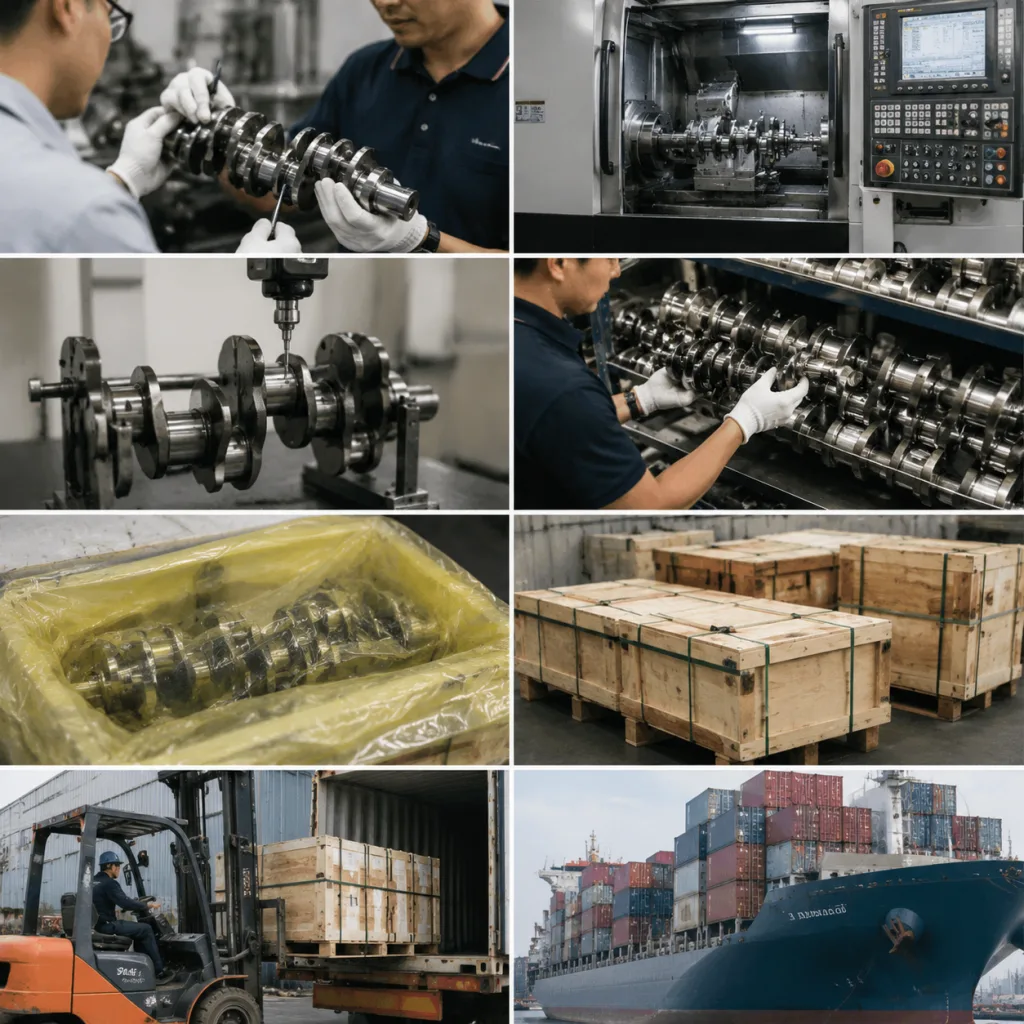
Ongoing supply needs batch inspection, not just first-article approval. Recommended controls include incoming material checks, blank inspection, in-process journal measurement, post-heat-treatment hardness verification, post-grinding inspection, oil-hole cleaning verification, dynamic balance check, final anti-rust packing inspection and carton label verification. Common release plans use 100% inspection for critical journal diameters, runout and visual damage, with AQL sampling for packaging and appearance.
For larger programmes, buyers may request PPAP-style documentation. A practical package can include process flow, control plan, FMEA, material certificate, dimensional report, capability study, gauge calibration evidence, appearance approval, packaging approval and sample parts. Agree the submission level before tooling or sample production begins.
Buyer Scenario: When Driventus Is the Right Fit
Driventus is a strong fit when the buyer needs more than a spot purchase. Typical cases include a distributor adding Honda-fit crankshafts to a private-label range, a wholesaler consolidating engine-component suppliers, a repair-chain purchasing team standardising documentation, or a contract manufacturing buyer that needs sample-based development with measurable inspection records.
Our product scope includes crankshafts, pistons, gaskets, water pumps, turbochargers and other engine and powertrain components. That wider coverage helps buyers consolidate related SKUs where quality, shipment frequency and documentation requirements align.
For Honda-fit crankshaft sourcing, Driventus supports:
Application confirmation against buyer-supplied data, including engine code, displacement, fuel type and target market.
Sample-based reverse engineering with dimensional reporting for journals, stroke, flange, oil holes and timing features.
Standard aftermarket production and buyer-specified private-label packaging with carton, label and barcode control.
MOQ and lead-time review by SKU status, including stock item, existing tooling item or new development item.
Export documentation for EU, UK, US, Canada, Australia, Brazil and other markets.
Corrective action handling with batch traceability, photo evidence, inspection records and containment steps.
To receive a useful quotation, send the application list, target annual volume, first-order quantity, destination port, preferred Incoterm, packaging type, inspection requirements and any drawings or samples available. If a tender target price is required, state whether it is FOB, CIF, DDP benchmark or warehouse landed cost so comparisons are valid.
Buyers can use our catalog and engine component pages such as /products/engine-components.html to review product families, then request a quote with target quantities, destination market and inspection requirements. Driventus does not claim approval or endorsement by any vehicle manufacturer. Driventus is an independent aftermarket manufacturer; brand names are referenced for fitment only.
Frequently asked questions
Send engine application data, annual volume, first-order quantity, target market, preferred Incoterm, packaging requirements and any drawing, sample or inspection report. If you need a specific OE cross-reference format, include it exactly as it appears in your system so the supplier can match it correctly.
Yes. Driventus can provide quality-system certificates, process flow information, equipment and gauge lists, inspection examples and traceability records for audit preparation. On-site or remote audit scope should be agreed before scheduling so the review covers the right process steps.
No. Driventus manufactures independent aftermarket and contract-manufactured crankshafts for defined fitment applications. Brand names are referenced for fitment only and do not indicate vehicle manufacturer approval.
For a sourcing review, share your application list, forecast volume, first-order quantity, destination market, packaging needs and inspection requirements. Contact Driventus to discuss crankshaft supply or development work at /contact.html