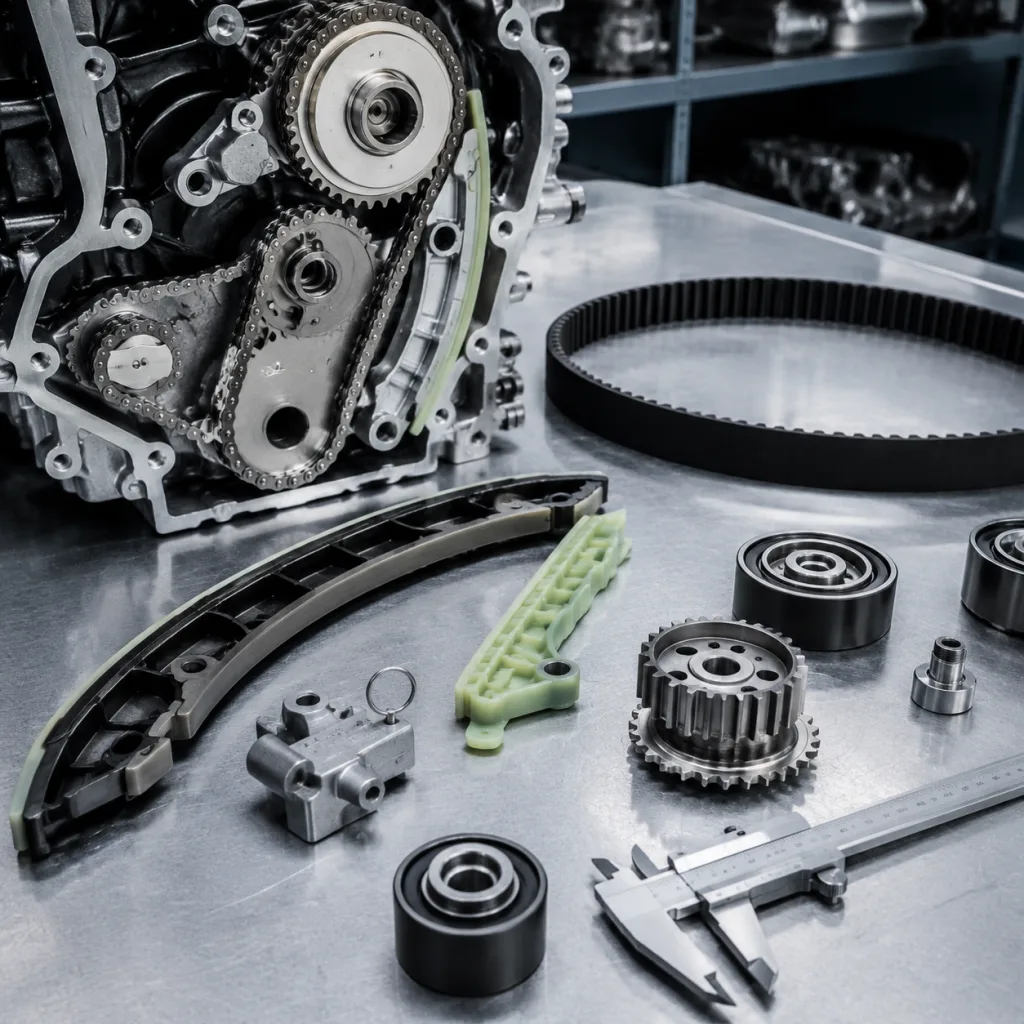
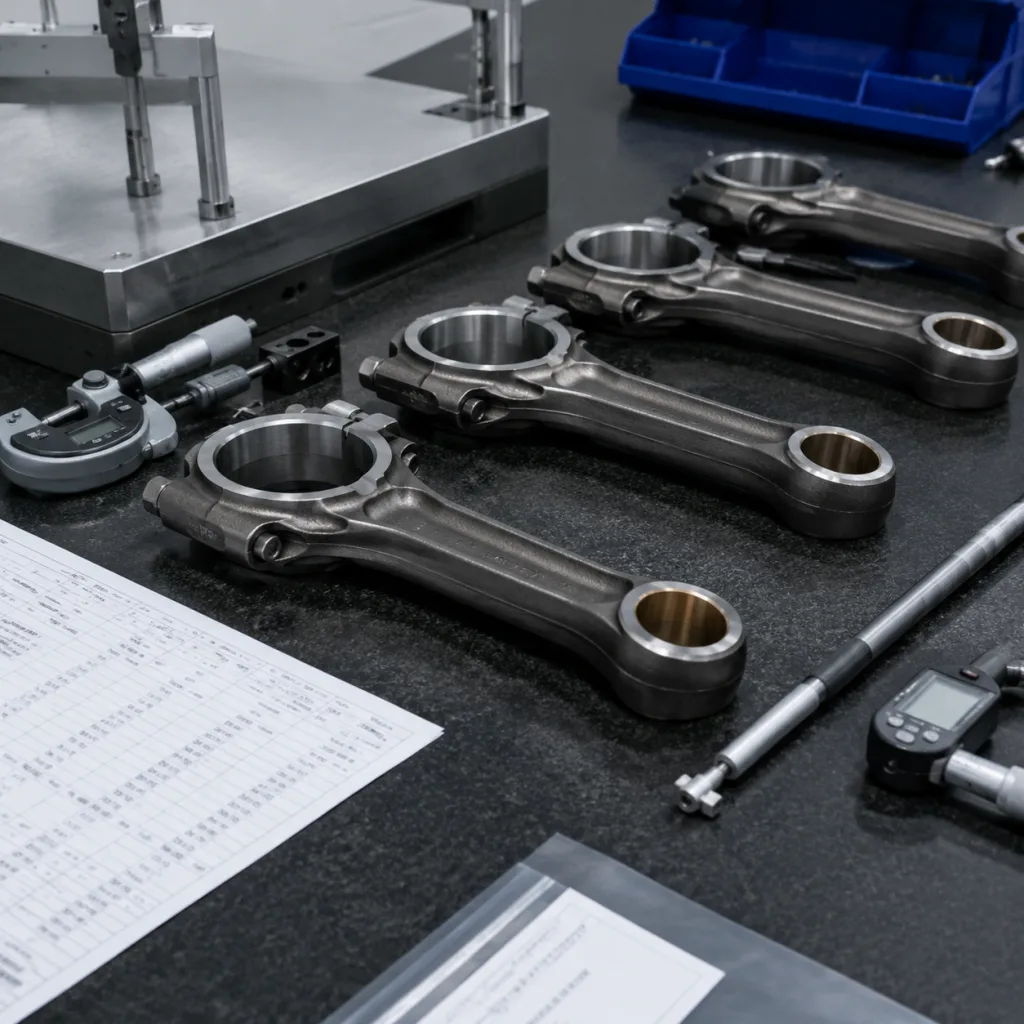
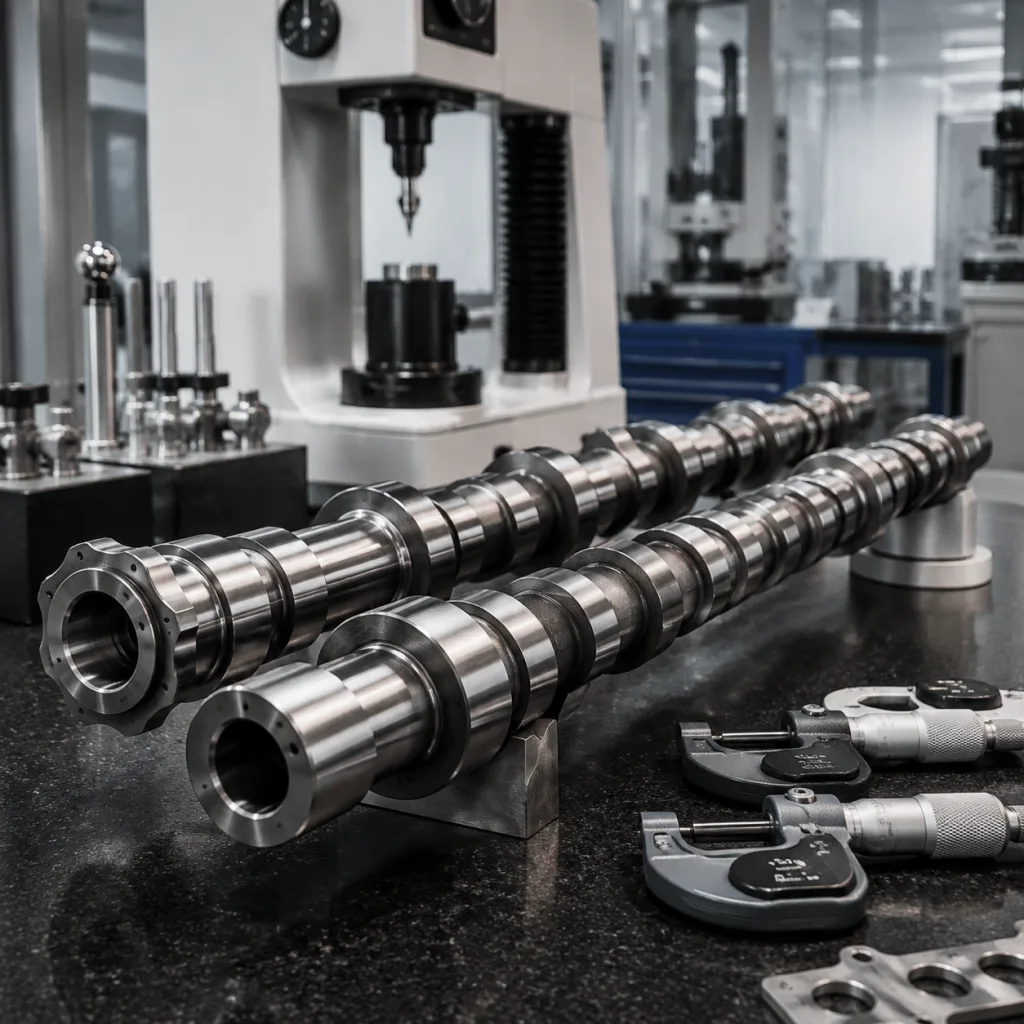
Engine Bearing Lexus OEM Supplier Sourcing Guide
A failed bearing programme rarely fails at the catalogue match. It fails when the wall thickness drifts, the oil hole is off, the undersize grade is mislabelled, or the import carton arrives with corrosion after six weeks at sea. For buyers searching for an engine bearing Lexus OEM supplier, the real question is not “Can this supplier quote the part?” It is “Can this supplier hold the specification lot after lot, document it, and ship it in a form my warehouse and warranty team can live with?”
Driventus manufactures engine and powertrain components in Taizhou, Zhejiang, and supplies B2B customers in more than 60 countries. Our engine bearing programme covers aftermarket replacement, private-label supply, and custom production where drawings or qualified samples are available. Applications may include Lexus-fit 4-, 6-, and 8-cylinder platforms, with main bearings, connecting rod bearings, thrust washers, and size grades varying by engine family, model year, crankshaft journal condition, and repair requirement.
Driventus is an independent aftermarket manufacturer. Vehicle brand names are used only to identify fitment references, not to imply endorsement or approval. This sourcing guide is written for procurement teams that need a practical framework for supplier approval, bearing specification review, audit preparation, MOQ planning, custom development, and quotation comparison.
Decision framework: approve the bearing supplier before approving the price
Engine bearings work in a narrow safety margin: high cyclic load, thin oil film, thermal cycling, and limited tolerance for dimensional error. A low quote is useful only after the buyer confirms that the supplier can control the bearing as a functional engine component, not as a generic metal shell.
For Lexus-fit applications, start the sourcing file with the exact commercial and technical intent. Is the order for catalogue replacement stock? A private-label range? A remanufacturing programme? A drawing-controlled OEM or Tier-1 project? Each path requires different evidence.
A buyer-ready RFQ should identify:
- Part number, drawing number, or physical sample reference
- Engine code, cylinder count, displacement, and model year range where known
- Bearing position: main, connecting rod, thrust washer, or complete set
- Size grade: STD, 0.25 mm, 0.50 mm, 0.75 mm, or other required undersize
- Quantity per engine set and expected annual demand
- First-order quantity and target replenishment rhythm
- Destination port, Incoterms, and required export documents
- Packaging format, including private-label needs if applicable
Then verify the controls behind the quote:
- Application coverage by engine family, displacement, and crankshaft journal size where known
- OE-style cross-reference management, using buyer-provided references only where applicable
- Material stack-up, including steel backing, intermediate layer, barrier layer, and overlay
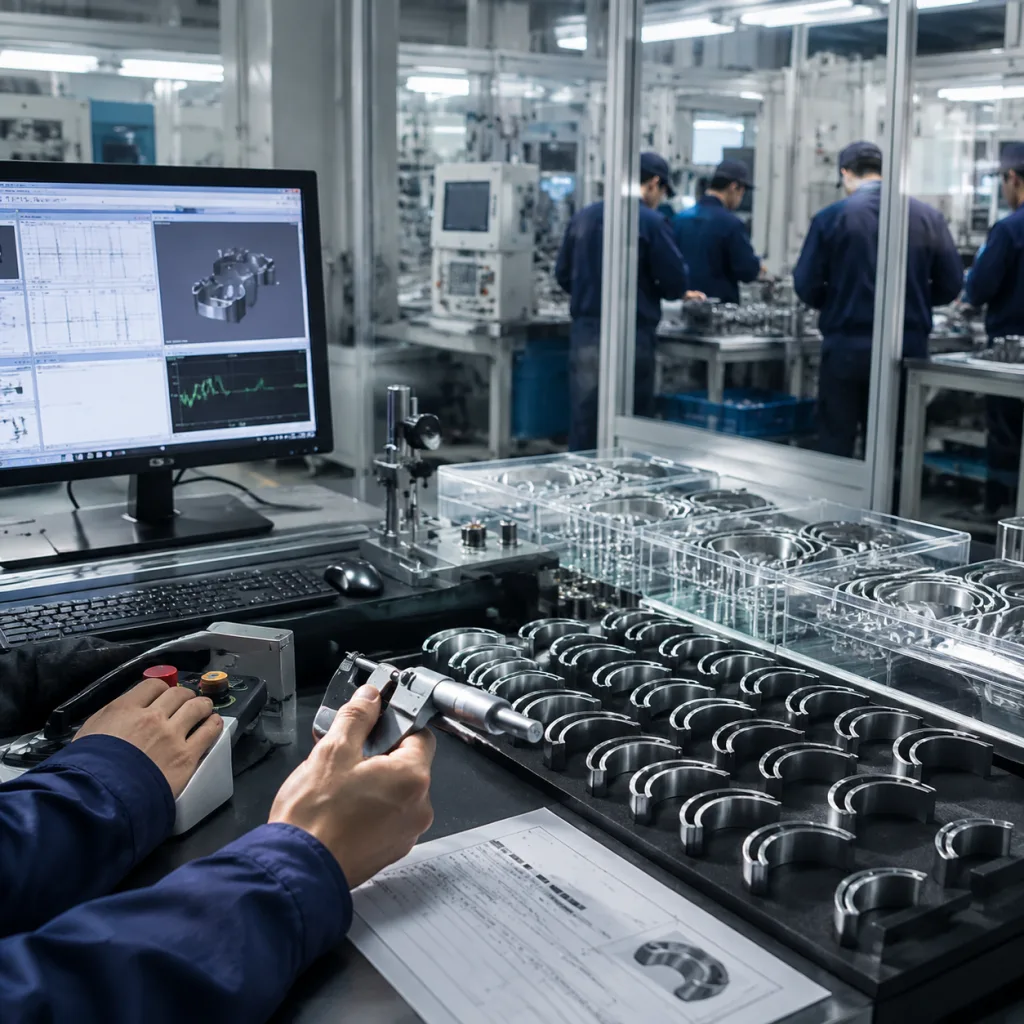
- Wall thickness, crush height, oil-hole alignment, locating tang geometry, chamfer, and burr control
- Batch traceability from incoming strip material to packed goods
- Lot code retention on inner pack, master carton, and shipping documents where required
- Rust-prevention method, carton strength, palletisation, and export handling standard
- Warranty claim intake, containment timing, root-cause analysis, and corrective-action process
Driventus supplies engine bearings through our catalog and related engine parts through engine components. For non-catalogue programmes, the quotation stage should make the target explicit: aftermarket equivalence, private-label continuity, or a customer drawing-controlled project.
If only a competitor sample is available, do not send one piece. Send 5 to 10 pieces from the same batch if possible. One sample may be worn, distorted, or unrepresentative. Multiple samples allow engineering to compare wall thickness spread, free spread, crush, oil-hole position, surface finish, locating tang shape, and marking style before feasibility is confirmed.
Spec deep-dive: the dimensions and materials that decide field performance
Broad labels such as “copper bearing” or “aluminium bearing” are not enough for procurement control. Engine bearing performance depends on the full layer system, the journal and housing relationship, and the repeatability of micron-level dimensions.
Most modern bearing programmes use multilayer construction. The correct structure depends on load, crankshaft finish, oil pressure, operating temperature, and engine design. For heavier-duty or high-load applications, an aluminium-tin system should not be swapped with a copper-lead-based system only to reduce cost unless the drawing or validation plan allows it.
| Item | Typical requirement to confirm | Why procurement should care |
|---|---|---|
| Steel backing | Strip thickness, hardness, and flatness controlled by lot | Supports crush and retention in the housing bore |
| Intermediate layer | Aluminium-tin or copper-lead-based system as specified | Affects fatigue strength, embeddability, and load capacity |
| Overlay | Often controlled in the 10–25 µm range when specified | Influences conformability, seizure resistance, and run-in behaviour |
| Wall thickness | Commonly held within ±0.006–0.010 mm depending on drawing | Directly affects oil clearance |
| Crush height | Checked with dedicated fixtures to the approved specification | Helps prevent bearing movement during operation |
| Oil holes and grooves | Position, burr height, edge finish, and groove geometry inspected | Reduces risk of lubrication restriction |
| Surface roughness | Agreed Ra target where required, often below Ra 0.4–0.8 µm on functional surfaces | Supports oil film formation and controlled running-in |
| Locating tang | Width, height, angle, and position verified | Prevents assembly interference and mislocation |
| Part marking | Grade, lot, or batch identification where agreed | Enables traceability and recall control |
| Quotation factor | Why it matters | What to request |
|---|---|---|
| Unit price by SKU and volume tier | Shows the realistic cost at forecast volume | MOQ, 100/300/500/1,000-set breaks, validity period |
| Material description | Reduces substitution risk | Layer structure, overlay range, and process notes |
| Dimensional control | Affects oil clearance and field failure risk | Wall thickness tolerance, inspection method, and sample report |
| Quality documents | Reduces incoming inspection uncertainty | Control plan, inspection report, certificates, and traceability format |
| Lead time | Determines replenishment stock | Sample time, production time, shipping window, and split-shipment option |
| Packaging | Controls corrosion and handling damage | VCI or oil-paper method, inner box, master carton, and pallet specification |
| Claims process | Limits warranty administration cost | Return rules, analysis timing, containment action, and 8D response time |