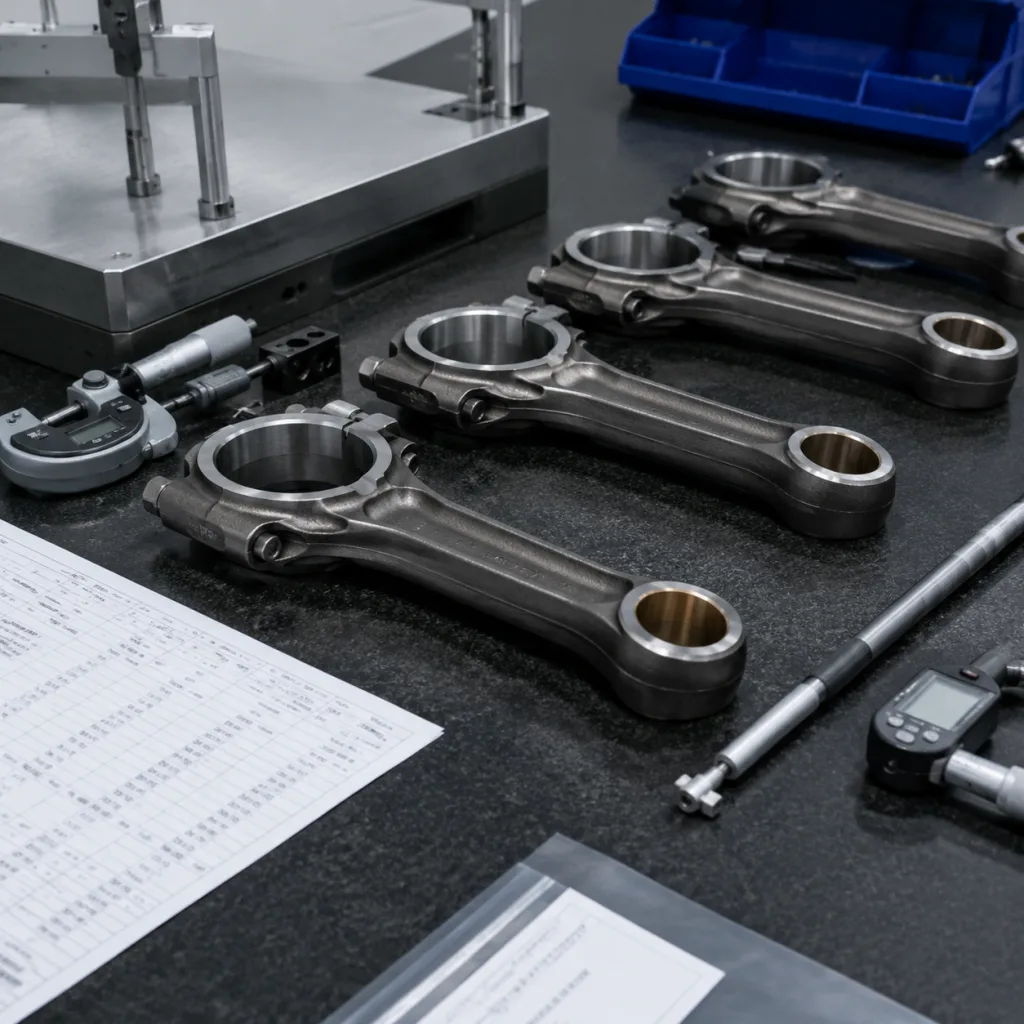
Camshaft for Lexus NX OE Equivalent: Sourcing Notes
Buying a camshaft for Lexus NX OE equivalent use is a risk-control exercise, not a catalogue lookup. The visible shape is only the start. The replacement part must match the original lobe profile, journal geometry, trigger reference, oil-feed design, surface hardness and variable-valve-timing interface closely enough to function inside the intended engine position without creating noise, wear or cam/crank correlation faults.
The danger is often small. A 0.03–0.05 mm lift error, excessive runout, a burr at an oil hole or a phaser reference angle that is slightly off can become an installation complaint after the engine is closed. For distributors, repair chains and sourcing engineers, that means the sourcing file has to connect fitment data, drawings or samples, production controls, packaging and batch records.
This article explains how Driventus approaches OE-equivalent Lexus NX camshaft projects for B2B buyers. It covers decision points, failure modes, inspection depth, material and heat-treatment choices, validation gates, MOQ planning and export documentation. Driventus is an independent aftermarket manufacturer; brand names are used only to identify vehicle fitment.
Start With the Fitment Decision, Not the Part Photo
For a replacement camshaft, OE-equivalence means the aftermarket part is engineered to fit and function in the same engine position as the original component. It does not mean vehicle manufacturer approval. The sourcing decision should therefore begin with the engine and control system, not with a visual comparison of two shafts.
For Lexus NX applications, the buyer should first lock the fitment boundary:
Engine code and production year range
Intake or exhaust position
Market-specific emission calibration where relevant
Fuel type and engine variant
Variable valve timing configuration
Sensor trigger type: separate trigger wheel, integrated reluctor feature or phaser-mounted reference
Any VIN break, supersession or interchange logic supplied by the buyer’s catalogue team
Only after that does the technical comparison become useful. A camshaft for Lexus NX OE equivalent project normally requires Driventus to check the features that control fit, timing, lubrication and durability against an approved drawing, sample or control plan:
Overall length, journal positions and thrust face width, typically controlled within drawing tolerances such as ±0.05 mm for location features when specified
Lobe lift, base circle diameter and angular indexing, with lift/profile deviations normally reviewed in the 0.01–0.03 mm range depending on the agreed drawing
Cam phaser interface, dowel or key location, bolt-hole pattern and seating face flatness, where applicable
Sensor trigger wheel, reluctor tooth or timing reference geometry, including angular position to reduce cam/crank correlation risk
Oil-feed hole position, diameter, chamfering and burr control
Surface hardness and hardened layer or chilled depth on lobes and journals
Straightness, runout and balance-related characteristics that affect bearings and noise
A practical rule for buyers: if the quotation does not clearly state the controlled application, camshaft position and reference basis, the price is not yet comparable. Related engine parts can be reviewed in our catalog, including engine components for coordinated repair programmes.
Where Camshaft Programmes Fail: The Small Errors That Create Big Claims
Most replacement camshaft problems do not come from obviously broken parts. They come from geometry, surface or traceability gaps that are easy to miss during receiving inspection. The shaft may look correct on the bench and still produce excessive valve lash, phaser noise, poor idle quality or camshaft position correlation faults after installation.
Use the inspection plan as a failure-prevention map:
Failure mode
Likely technical cause
Inspection or control point
Buyer acceptance item to define
Low power, unstable idle or valve-train noise
Lobe lift, base circle or profile deviation
Cam profile measurement, micrometer checks
Lift tolerance, base circle tolerance and profile overlay limit
Cam/crank correlation DTC
Incorrect lobe indexing or trigger reference angle
CMM, rotary encoder or dedicated angular fixture
Index tolerance, specified in degrees or minutes
Bearing distress or oil-pressure sensitivity
Journal diameter, roundness, taper or roughness issue
Micrometer, air gauge, roundness tester, profilometer
Diameter tolerance, ovality/taper limit and Ra value
Vibration, abnormal rotational load
Excessive runout or poor straightness
Dial indicator or precision V-block/bench fixture
Maximum total indicated runout at defined journals
HRC/HV range, minimum hardened depth and burn/crack criteria
Oil contamination or lubrication failure
Burrs at oil holes, poor chamfering or residual particles
Visual, pin gauge, endoscope where needed, cleaning control
Hole diameter, chamfer size and no-burr standard
Warehouse or transit rust
Weak anti-corrosion packing
VCI/oil protection review, packing inspection
Packing method and storage-life expectation
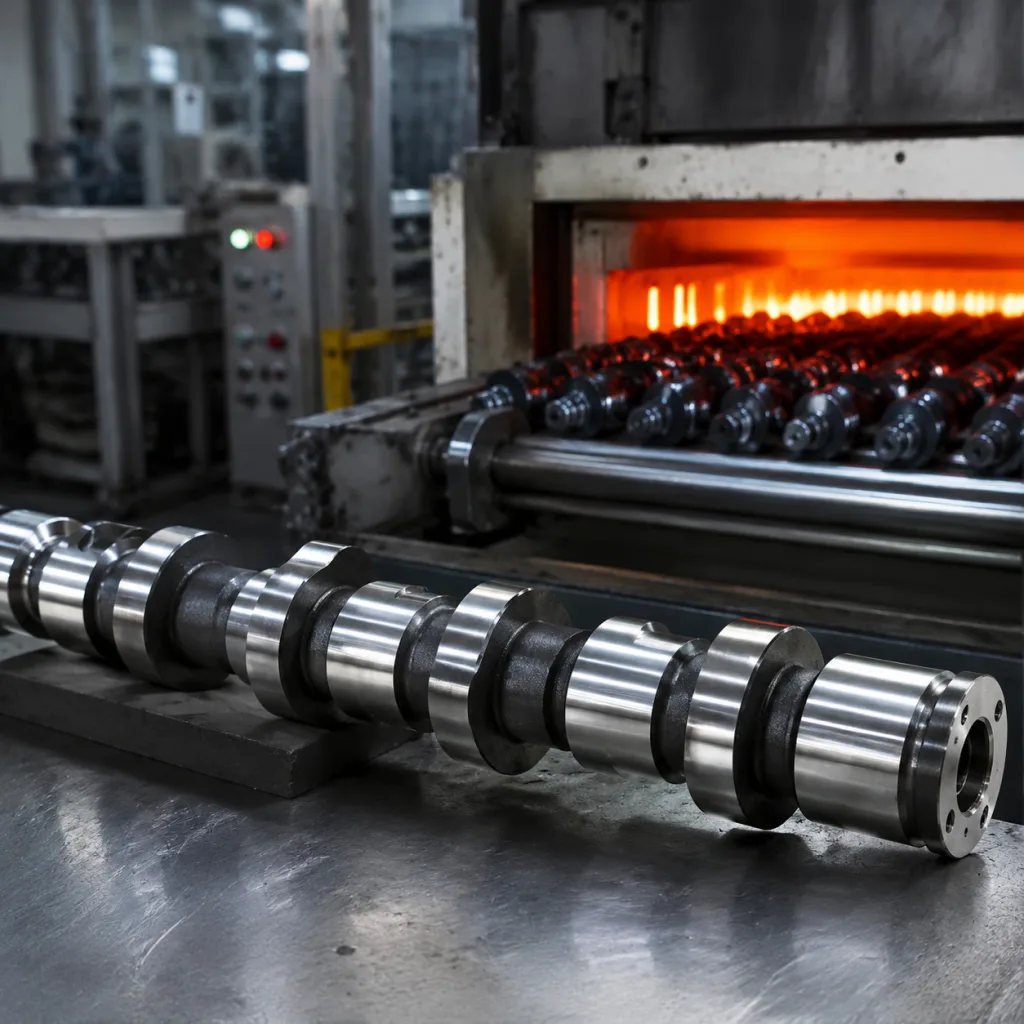
</tr></thead><tbody> </tbody></table>Driventus uses production drawings, master samples and controlled measuring procedures to verify these points. Depending on the programme, inspection reports may be agreed by drawing, buyer specification or PPAP-style control plan. Typical controls include coordinate measuring, cam profile checking, hardness testing, roughness measurement, magnetic particle checks where required and 100% visual inspection for handling damage, dents and rust.
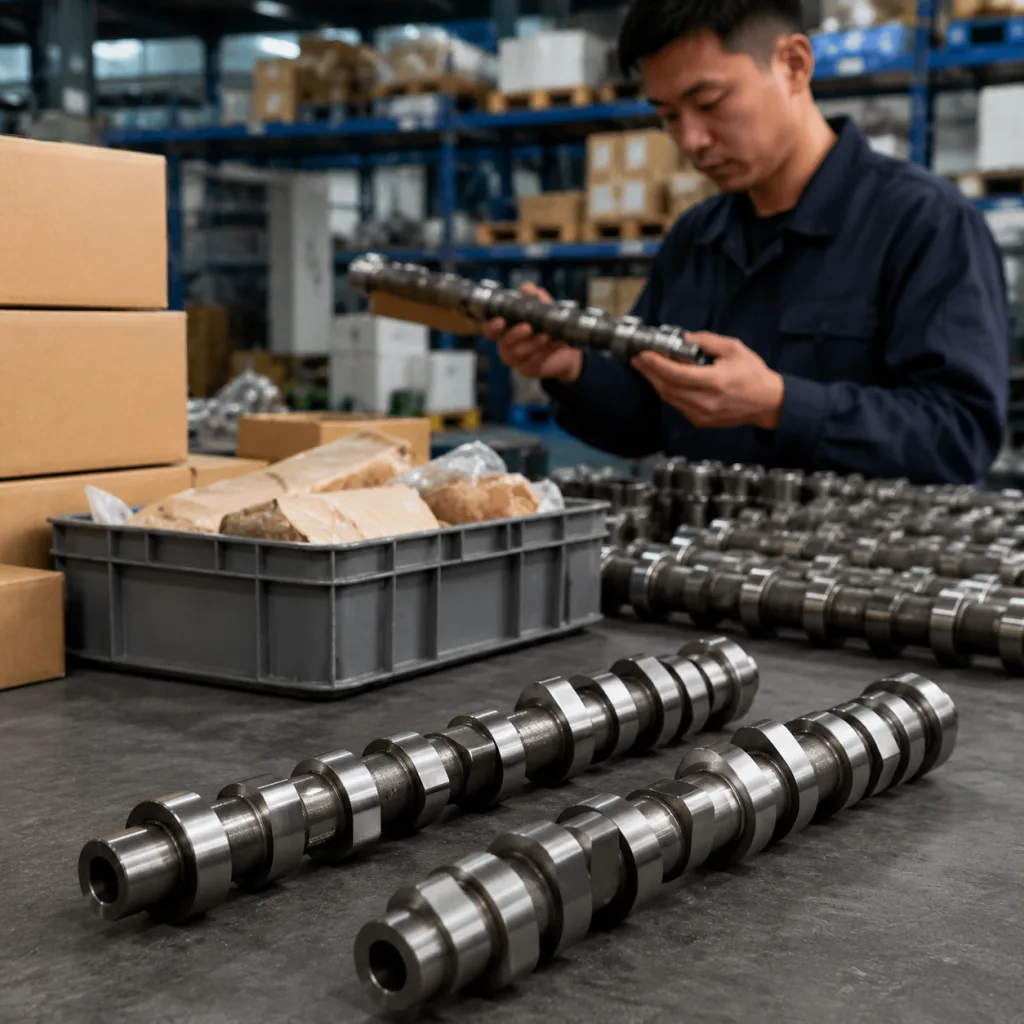
Traceability closes the loop. Carton labels, part numbers and batch codes should link back to inspection records. A workable export control is one batch number per production lot, tied to the heat-treatment record, final inspection sheet and packing list. This becomes critical when one shipment is split across warehouses, installer networks or private-label channels.
Material and Heat Treatment: Choose the Process That Matches the Engine Duty
A camshaft material choice is not a generic metal selection. It depends on the original design route and the contact stress the part will see in service. Common routes include chilled cast iron, forged steel, induction-hardened steel and assembled steel construction with pressed lobes. The right answer is application-specific and should be confirmed against the buyer’s OE-equivalent specification, not selected by price alone.
Before a volume order, procurement teams should ask for a clear position on the following:
Material grade or equivalent internal material specification, with chemical composition limits where required
Heat-treatment process, such as chilling, induction hardening, carburising/nitriding or local hardening
Target hardness range on lobes and journals
Case depth or hardened layer requirement, including both effective depth and test method
Surface roughness target on lobes and journals, including whether polishing after grinding is required
Magnetic particle or crack inspection plan after heat treatment and finish grinding, where applicable
Anti-corrosion protection for export shipping, such as VCI bag, rust-preventive oil and sealed inner wrap
Storage-life guidance for oiled or wrapped parts under dry warehouse conditions
The highest-risk areas are the lobes, journals and oil passages. Poor grinding control can leave chatter marks, edge burns, soft spots or microcracks. Burrs around oil holes can detach and move through the lubrication system. Neither problem is acceptable in a controlled engine component.
Driventus reduces these risks through controlled machining, grinding-wheel dressing, intermediate cleaning and final deburring. For higher-risk launches, buyers can request hardness mapping on representative lobes and journals, metallographic section review and retained samples from the first production lot.
Manufacturing and quality controls are managed under IATF 16949:2016 and ISO 9001:2015. Material declarations can also be coordinated for programmes requiring REACH (EC) No 1907/2006 compliance review in the European market.
Release Gates: A Step-by-Step Validation Path Before Mass Shipment
A camshaft for Lexus NX OE equivalent should not move from quotation to container shipment in one jump. First-article dimensions matter, but they are only one release gate. The part must also assemble correctly, maintain the right timing relationship and survive the mechanical and lubrication conditions expected in service.
Driventus commonly uses a staged validation path:
1. Fitment file confirmation: engine code, position, interchange basis, market coverage and buyer responsibility for supersessions are confirmed before sampling. 2. Sample verification: master sample and drawing data are compared for fitment-critical dimensions, including profile overlay, journal spacing, thrust width, oil-feed alignment and trigger feature angle. 3. Material confirmation: chemical composition, hardness, hardened layer and microstructure are checked against the agreed specification. Buyers may define sample size, such as one to three pieces per pilot lot or one piece per heat-treatment batch. 4. Functional assembly check: journal fit, gear or phaser interface, sensor reference, dowel/key engagement, bolt seating and oil-feed alignment are checked with mating components where available. 5. Process capability review: pilot-run data is reviewed for high-risk dimensions. Cp/Cpk targets can be agreed when the buyer needs statistical control rather than simple pass/fail inspection. 6. Endurance or bench testing: wear and contact pattern are assessed under defined load and lubrication conditions when required. For new references, this may include engine-fit checks, cold-start lubrication review and post-test hardness/roughness comparison. 7. Packaging validation: corrosion protection and handling are checked for ocean freight, warehouse storage and multi-drop distribution. Drop or stack review is useful when private-label cartons are weak, small or unusually shaped.
For private-label programmes, Driventus can support custom manufacturing with drawing control, sample approval and packaging specification. This does not imply approval by any vehicle manufacturer. It means the aftermarket camshaft is developed to the buyer’s technical and commercial requirements for replacement use, with release gates agreed before mass shipment.
Buyer Scenario: Importer Launching a Lexus NX Camshaft Reference
Consider a distributor preparing to add a Lexus NX camshaft reference to a regional engine-parts range. The commercial team wants a fast launch. The quality team wants fewer returns. The catalogue team is worried about supersessions. All three concerns are valid.
The launch should be handled as a controlled component programme, not a simple stock item. Before confirming the order, the buyer should verify:
Engine code, model year range, VIN break points if available and market coverage
Intake or exhaust camshaft position, if sold separately
Left/right or bank-specific logic where the engine family requires it
Agreed OE cross-reference format and interchange responsibility, including who approves supersessions
Drawing revision, approved sample status and retained master sample location
Material, hardness, case depth and surface finish requirements
Inspection report format, AQL expectations and which dimensions require 100% check versus sampling
Minimum order quantity, lead time, reorder point and safety stock plan
Neutral, private-label or customer packaging requirements, including barcode type and country-of-origin marking
Carton strength, anti-rust packing, palletisation height and container loading limits for export
Warranty handling process and required failure-analysis evidence, such as installation mileage, oil condition, DTC record and photos of mating parts
Timing also needs discipline. A new camshaft reference normally needs sample approval before production release. Buyers should allow time for drawing review, sample machining, heat treatment, inspection, packing trial and transport. For repeat references, MOQ and lead time depend on raw material availability, heat-treatment batch size and whether packaging is standard or private-label.
For multi-branch distributors, lock the item number, label format and carton quantity early. For repair chains, add installation notes, torque-reference reminders and claims forms so field feedback is useful if a problem occurs.
Driventus can provide factory background, process controls and audit support through its quality system. That allows procurement teams to compare suppliers using consistent documents rather than catalogue claims alone.
Q&A for Commercial Supply: MOQ, Packaging, Documents and Quotation Inputs
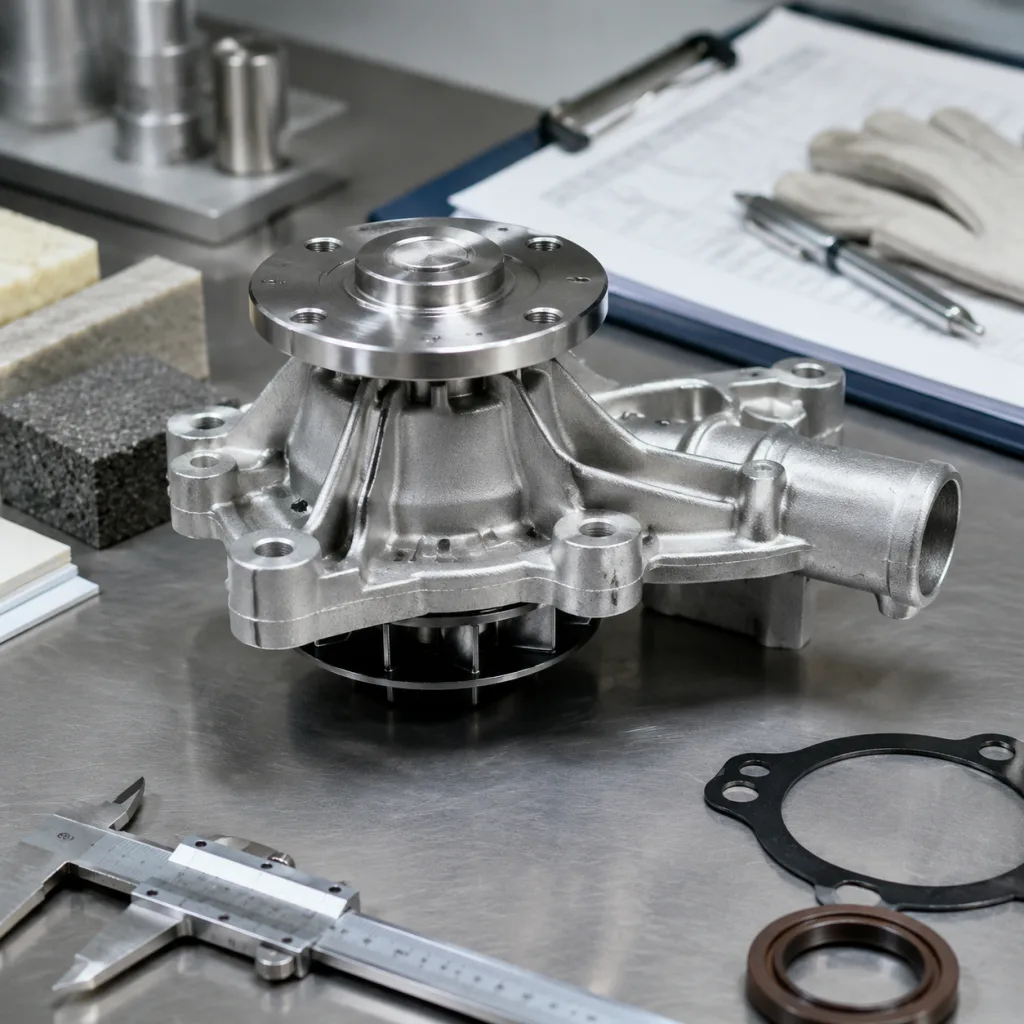
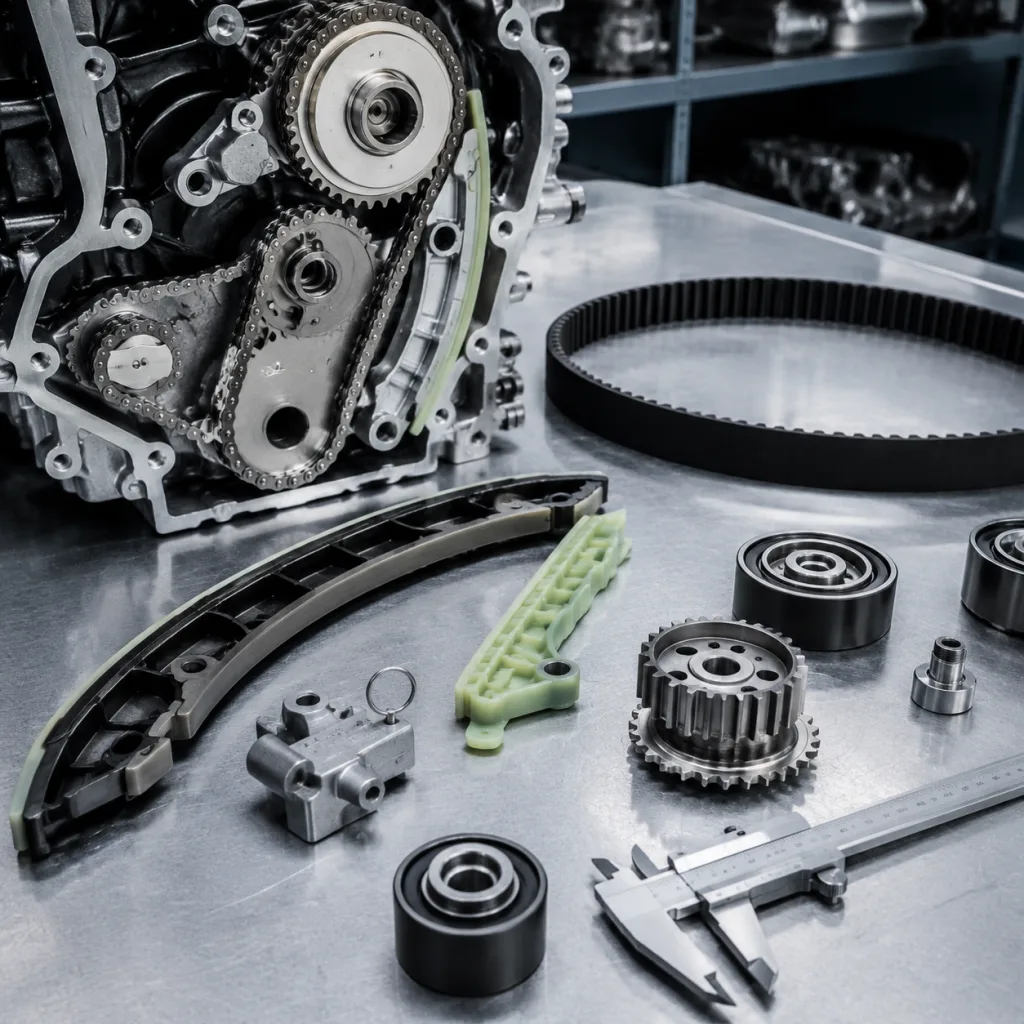
Should camshafts be sourced together with other engine parts? Often, yes. Camshafts are commonly shipped with gaskets, timing components, oil seals, valve-train parts and related repair items. Consolidation can reduce freight cost per unit and simplify follow-up. Do not merge the quality logic, though. A gasket kit may be acceptable under a visual inspection plan; a camshaft needs dimensional, heat-treatment and surface-integrity records.
Which commercial decisions should be separated during quotation? Separate tooling or sample cost, unit price, MOQ and lead time. A lower unit price may require a higher production lot because camshaft machining, heat treatment and grinding are more efficient when fixtures and furnaces are run in batches. Private-label packaging can also change the MOQ if printed cartons, labels or instruction sheets must be ordered separately.
What does Driventus normally clarify before export supply?
Topic
Buyer decision
Supplier output
Application scope
Lexus NX engine variants, target markets and interchange list
Feasibility review, sample plan and fitment notes
Order model
Trial order, annual blanket order or scheduled release
MOQ, lead time, tooling status and production plan
Price logic
Standard catalogue item, modified item or new development
Unit price, sample cost if applicable, tooling/amortisation position and validity period
Documentation
Inspection reports, material data, compliance files
Batch records, heat-treatment record, shipment documents and certificate format if required
Packaging
Neutral, private-label or repair-chain format
Label, carton, VCI/oil protection, pallet specification and barcode file
Quality response
Warranty threshold and claim evidence
8D, containment action or technical review when applicable
</tr></thead><tbody> </tbody></table>How should urgent launches be handled? A pilot order can sometimes be approved at higher cost to shorten the launch window. Once demand is proven, the buyer can move to scheduled quarterly or monthly releases. This reduces air-freight pressure and helps keep warehouse stock below overstock level.
Do IATF 16949 and ISO 9001 remove the need for part-specific checks? No. These systems provide a framework for process control, corrective action and traceability. They do not replace the need for drawings, samples, batch documents and acceptance criteria for the specific camshaft.
What should a buyer send to request a realistic quote? For a new reference, provide engine code, sample photos, current supplier drawing if available, target annual demand, first-order quantity, packaging style, destination port and required delivery date. Those details allow Driventus to assess feasibility before quoting.
Frequently asked questions
No. OE-equivalent means the aftermarket part is designed to match the fit and function requirements for replacement use. Driventus is an independent aftermarket manufacturer; brand names are referenced for fitment only.
Typical documents include dimensional inspection reports, material or hardness records, heat-treatment traceability, packaging specification, batch traceability and agreed compliance declarations where relevant. For new projects, sample approval records and a control plan are also recommended.
Yes. Driventus can discuss private-label packaging, interchange control, sample approval and scheduled production for qualified B2B buyers, subject to technical review, MOQ, lead-time confirmation and export requirements.
For application confirmation, drawings, samples or volume pricing, send your interchange list, engine code, annual demand and target first-order quantity to Driventus and [request a quote](/contact.html).