Engine Bearing Land Rover OEM Supplier: Sourcing Guide
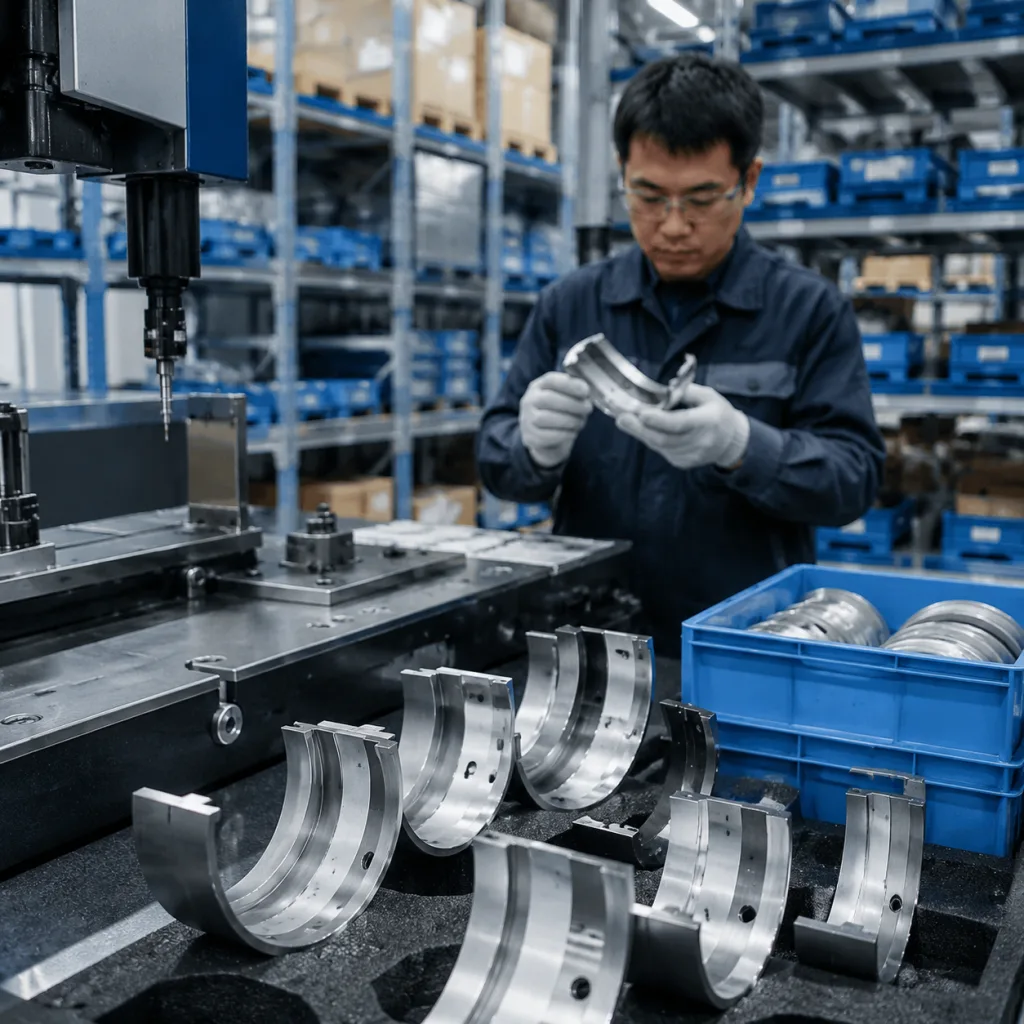
Buying engine bearings for Land Rover programmes is a sourcing and quality-control exercise, not a generic parts purchase. Buyers need consistent metallurgy, controlled shell thickness, correct crush and oil clearance, and traceable batch records across every shipment. For aftermarket distribution, workshop networks, and remanufacturing lines, the supply choice affects installation yield, warranty exposure, and inventory turns. Driventus supplies engine bearings from a vertically integrated factory in Taizhou, Zhejiang, with production controlled under IATF 16949:2016 and ISO 9001:2015. Driventus is an independent aftermarket manufacturer; brand names are referenced for fitment only. This article explains what procurement teams should verify when evaluating an engine bearing Land Rover OEM supplier, including dimensions, coating options, packaging, lead times, and validation documents. It also shows where cross-references, factory audits, and custom programmes fit into the sourcing process.
What buyers should verify first
For Land Rover engine bearing sourcing, the first checks are fitment, dimensional control, and supply traceability. The part must match the engine family and journal size, then maintain the correct clearance after installation. For procurement, the practical questions are:
Is the bearing matched to the correct OE 06A… or 11251… reference, where applicable?
Are shell thickness, width, and tang position controlled to drawing?
Is the overlay material suitable for the target duty cycle and oil quality?
Can the supplier provide batch traceability, inspection records, and packing data?
A supplier claim is not enough. Ask for dimensional inspection reports, hardness data, and process capability evidence where available. For export programmes, confirm compliance support for REACH (EC) No 1907/2006 and the destination market’s packing and labelling rules. If the bearing is for a specific programme, request validation against the customer drawing rather than a generic catalogue match. In practice, buyers should also define target journal diameter, housing bore, radial wall thickness, and required oil clearance before RFQ release, because those values determine whether the part can be approved on the first sample round.
Typical bearing specifications
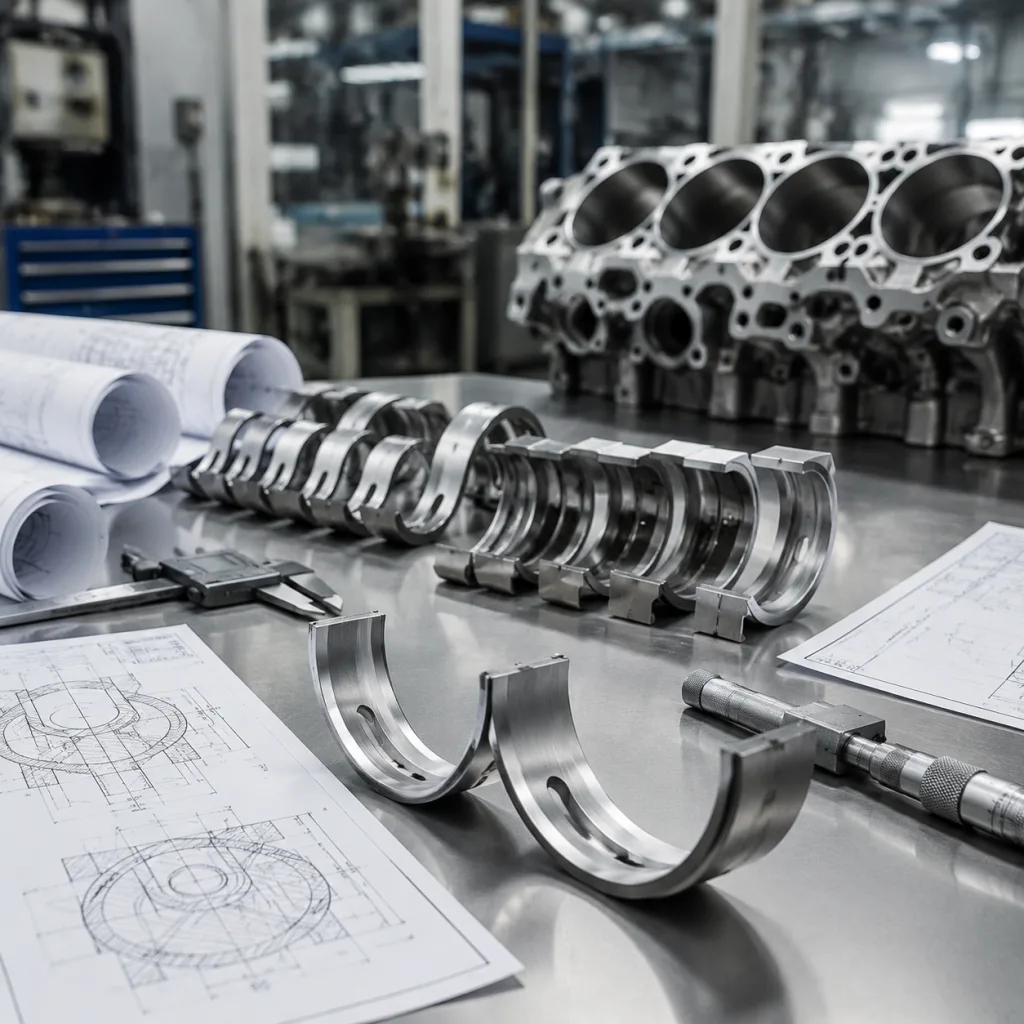
Engine bearings are usually supplied as tri-metal or bi-metal shells, depending on load, cost, and application. For procurement comparison, the table below summarises the main variables buyers should confirm before approval.
Item
Typical sourcing check
Why it matters
Material
Steel-backed tri-metal or bi-metal shell
Load capacity and seizure resistance
Coating
Lead-free overlay, polymer, or dry-film option
Start-up protection and debris tolerance
Thickness
Controlled to drawing, often within tight micron-level ranges
Oil clearance and bearing crush
Width
Matched to crankshaft journal and housing design
Prevents edge loading
Groove pattern
Full groove, half groove, or plain
Oil flow and load distribution
Packing
Set-by-set or engine kit packing
Reduces kitting error in assembly
</tr></thead><tbody> </tbody></table>If your team buys in volume, ask for a controlled specification sheet for each bearing family. This is especially important when programmes share a common platform but use different crankshaft revisions or bearing grades. Published quality systems such as IATF 16949:2016 and ISO 9001:2015 should be part of the supplier file, not only the sales pitch. Buyers should also request explicit numeric targets for shell thickness tolerance, overlay thickness, and crush range, plus the measurement method used on incoming inspection and final QA. As a sourcing baseline, many programmes expect thickness control in the low-micron range, with documented sampling at the lot level and retention of measurement records for traceability.
Lead time, MOQ, and supply stability
Procurement teams often need two supply modes: routine replenishment and programme-based production. For a bearing supplier, minimum order quantity should be aligned with the SKU count, packaging method, and inspection burden. Common commercial questions include:
1. What is the MOQ per bearing set or per part number? 2. What is the standard lead time for stocked sizes? 3. Can the factory support mixed-SKU containers for distributors? 4. Are safety stocks available for fast-moving European and North American references?
Stable delivery matters because engine bearing shortages disrupt rebuild schedules quickly. A supplier with in-house machining, surface finishing, and final inspection can usually offer better lead-time control than a trader. For buyers that support several regions, ask for carton labelling, barcoding, and pallet configuration that fits warehouse scanning and export handling. If your forecast is irregular, a vendor-managed replenishment plan may be more useful than a single large order. Commercially, a practical buying model is to quote a trial order, then a rolling forecast, then a blanket order once the first shipment passes incoming inspection. In many programmes, MOQ is driven less by raw material cost than by setup time, inspection lot size, and private-label packing; ask the supplier to separate unit price, packing surcharge, and any tooling amortisation so you can compare true landed cost. For stocked references, lead time should be stated separately for standard production and emergency replenishment, with realistic windows such as 20–35 days for repeat orders and longer for new or custom parts, depending on coating and packaging complexity.
Validation and quality documents
A credible supply file should include more than a certificate PDF. For engine bearing programmes, the usual document set includes material declarations, inspection reports, and process records tied to the shipment lot. Buyers should also request the supplier’s change-control rules so any material, coating, or tooling revision is notified before release.
Driventus operates under an integrated quality system aligned with IATF 16949:2016 and ISO 9001:2015. That matters for buyers who need repeatable shell geometry, consistent overlay performance, and documented corrective action when issues arise. For market access and audit readiness, use the supplier’s quality system to review control scope, traceability, and inspection flow. If your audit plan includes supplier development, ask for PPAP-style evidence where relevant, dimensional capability data, and packaging validation for export lanes. The most useful file normally includes Cp/Cpk data on critical dimensions, material composition confirmation, hardness results, layer thickness checks, and photo evidence of pack-out. Buyers should also define acceptance criteria up front: for example, no mixed-lot cartons, no label mismatch, and no deviation from approved coating or shell grade without written notice. That process detail reduces incoming disputes and makes warranty handling much faster.
OEM cross-reference and custom programmes
Many bearing enquiries start with an OE number, then move to fitment confirmation. That is the right sequence. The buying team should confirm journal diameter, housing bore, thrust requirement, and any special coating or material call-outs before approval. Where the application is not a direct catalogue match, Driventus can support custom manufacturing for target dimensions, packaging, and private-label needs.
For related parts families, you can review our catalog and the broader engine components range to align bearings with pistons, gaskets, and oil-pump interfaces in the same sourcing project. This is often useful for rebuild kits and distributor programmes that want one supplier file across multiple engine systems.
Driventus is an independent aftermarket manufacturer; brand names are referenced for fitment only. For custom work, buyers should provide the target bore size, journal size, thrust load direction, groove pattern, coating requirement, and packaging specification at the start of the project. A good custom programme also defines first-article sample quantity, sample approval timing, revision control, and whether the part must fit a specific engine code, model year, or crankshaft suffix. If the target is a private-label line, include carton artwork, barcode standard, master-carton count, and any region-specific language requirements so the factory can quote the full programme rather than only the bare part.
How to request a quotation
A complete RFQ improves response time and reduces back-and-forth. Include the engine code, OE reference if known, target annual volume, packaging requirement, and destination market. If the request is for a Land Rover platform, add the model year range and any known crankshaft revision data. If you need a private-label programme, specify carton print, barcode format, and pallet count.
For faster sourcing, ask for:
Part number cross-reference and application confirmation
MOQ and standard lead time
Material and coating option
Sample and inspection document availability
Incoterms and export packing details
If you are consolidating bearings with other powertrain parts, the factory can align the order into a single supply plan. Start with request a quote and attach your target references so the technical team can confirm fitment before pricing. To get a usable quote on the first reply, include the required tolerance band, preferred coating, annual forecast split by SKU, target destination, and any required test data. Buyers should also state whether they want EXW, FOB, or CIF pricing, because freight, export packing, and carton reinforcement can materially change the landed cost. If the order is split between sample and mass production, ask the supplier to quote both separately so the per-piece price and NRE or setup charges are visible before approval.
Frequently asked questions
Yes. Provide the OE reference, engine code, and journal data. The technical team checks dimensional match, coating option, and packaging before quoting. Brand names are referenced for fitment only. To speed approval, include the target shell thickness, required clearance window, and whether the application uses standard or thrust-bearing locations.
Ask for dimensional inspection records, material declarations, batch traceability, and the supplier’s quality certificates. If needed, request export packing details and revision-control confirmation for the part number. For higher-risk programmes, also request lot-specific hardness data, coating verification, and sample photos of the packed shipment so receiving can compare the goods against the approved master sample.
Yes. Custom packaging, barcode labelling, and private-label programmes are available for distributors and OEM-style projects. Share your artwork, carton spec, and forecast so the factory can confirm MOQ and lead time. If you need a commercial quote, also send your target box count per set, master-carton quantity, print language, and whether you want retail-ready or bulk-distribution packaging.
If you are sourcing bearings for a Land Rover programme, share your reference list and target volume with our technical team. Start here: /contact.html