Timing Belt Specifications: Dimensions, Materials, Tolerances
Timing belt specifications decide whether a belt runs quietly, holds cam and crank timing, and survives the intended interval. Procurement teams should look past pitch and width. Tooth profile, cord construction, rubber compound, back fabric, and tolerance control all affect fit, noise, and durability. Two belts can look interchangeable in a catalog and still behave very differently once installed. Driventus supplies timing belts for aftermarket and OEM-aligned programs from Taizhou, Zhejiang, with production controlled under IATF 16949:2016 and ISO 9001:2015. Driventus is an independent aftermarket manufacturer; brand names are referenced for fitment only. This article focuses on what to verify, where belts fail in practice, and which documents to request before approving a supplier.
Start with the engine, not the catalog
The fastest way to miss a fit issue is to start with a part number alone. Build the specification from the engine application, the pulley system, and the reference drawing.
For sourcing, verify:
Belt type: synchronous timing belt, dry or oil-resistant construction
Pitch: common automotive pitches such as 9.525 mm or 8 mm, depending on the engine family
Width: measured across the belt body, controlled to the drawing requirement
Tooth profile: trapezoidal or curvilinear, matched to pulley design
Length: pitch length, not outside length
Cord material: glass fibre, aramid, or another specified tensile member
Back fabric and rubber compound: HNBR, chloroprene, or another engine-grade elastomer
For OE 06A107065-style cross-reference programs, confirm the full dimensional set before approval. Small differences in effective length or tooth form can shift tensioner position and pulley engagement.
What comparison tables hide
Specification item
Typical buyer question
Why it matters
Pitch length
Does it match the engine timing layout?
Incorrect pitch changes cam/crank phase
Tooth count
Is the count identical to the reference part?
Affects synchronisation and tension range
Belt width
Does it meet pulley face width?
Too narrow reduces load capacity
Tooth profile
Is it trapezoidal or curvilinear?
Must match pulley geometry
Cord type
Glass fibre or aramid?
Determines stretch resistance
Rubber compound
HNBR, CR, or oil-resistant blend?
Controls heat and chemical resistance
Operating temperature
What range is validated?
Sets suitability for engine-bay conditions
Service life
What endurance data is available?
Supports maintenance planning
</tr></thead><tbody> </tbody></table>Comparison tables are useful, but they can also flatten the differences that matter most. If two belts share the same tooth count, they may still differ in profile, compound, and cord construction. That is where quote-to-quote mistakes usually start.
Inside the belt: materials that change performance
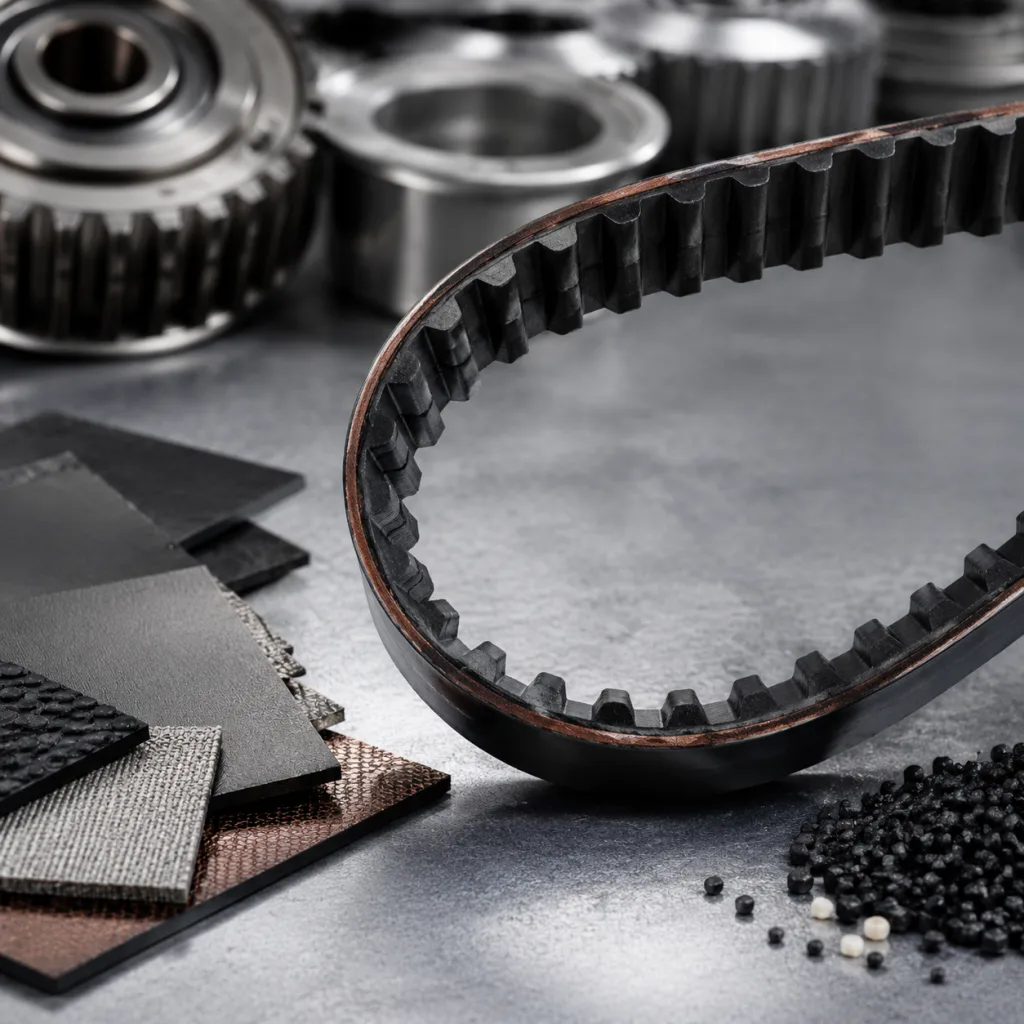
A timing belt is a composite part. Performance comes from the interaction of the rubber body, tensile cords, and tooth surface.
Common constructions
Rubber body: HNBR is widely used for higher heat and oil resistance; chloroprene still appears in some lower-demand applications.
Tensile cords: Glass fibre offers stable length control; aramid can improve strength and stretch resistance in demanding duty cycles.
Tooth facing: Woven fabric or treated surface layers reduce wear against the pulley teeth.
For timing belt specifications, ask for the compound family, cord type, and any oil-resistance or temperature-aging data. If the application uses a sealed front cover with elevated under-bonnet heat, thermal stability often matters more than a small unit-price difference.
Failure modes buyers should screen out
Most belt problems are not obvious at the RFQ stage. They show up later as noise, timing drift, or premature wear.
Watch for these failure modes:
Wrong tooth profile that does not fully mesh with the pulley
Excessive length variation that pushes tension outside the target window
Cord placement inconsistency that causes belt tracking issues
Poor rubber aging that hardens the belt before the service interval
Oil exposure that swells or softens the belt body
Weak tooth fabric that sheds under repeated engagement
A belt can pass a visual check and still fail in service. That is why dimensional control, compound selection, and validation data need to travel together.
Tolerance data buyers should demand
Specification sheets should include measurable tolerances, not only nominal dimensions. Buyers commonly request the following controls:
Width tolerance on the finished belt
Pitch length tolerance over the reference length
Tooth height and tooth spacing control
Cord placement consistency
Visual defect criteria for cracks, voids, and exposed cords
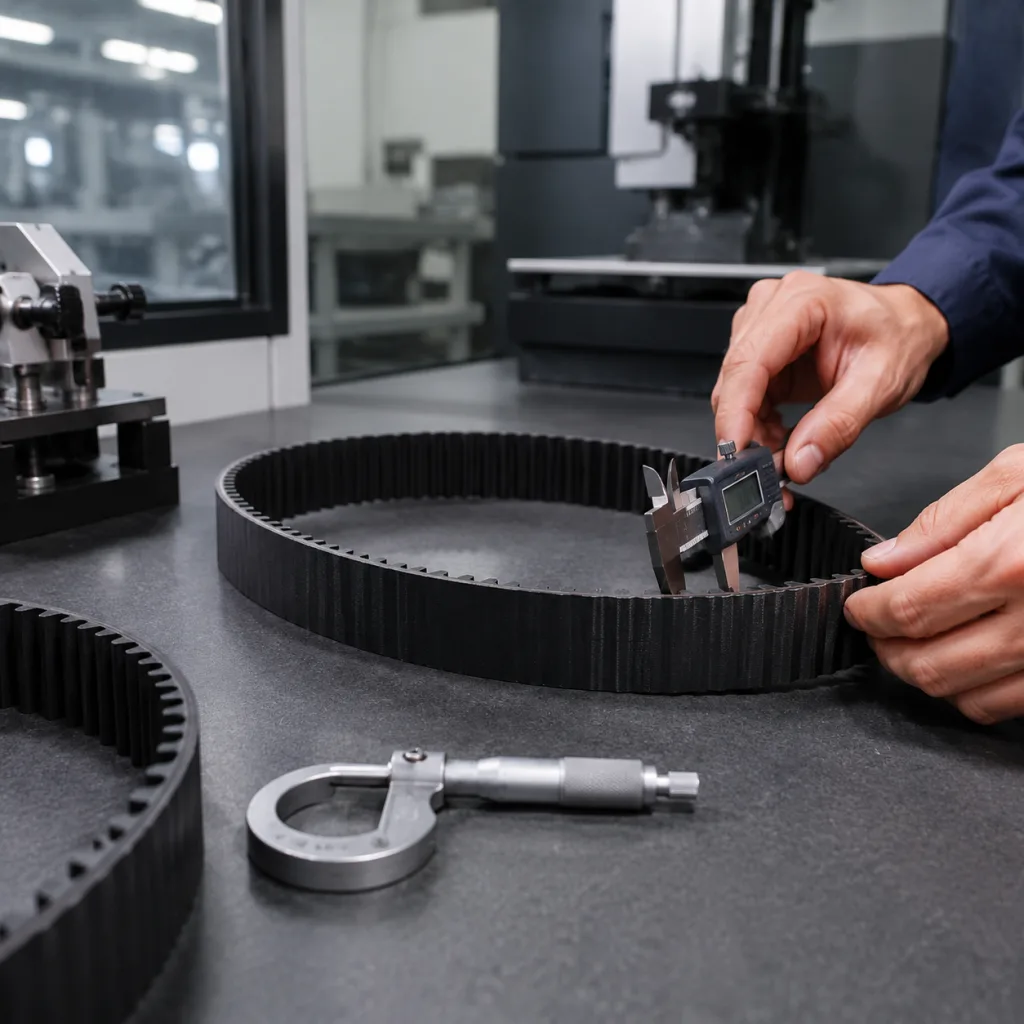
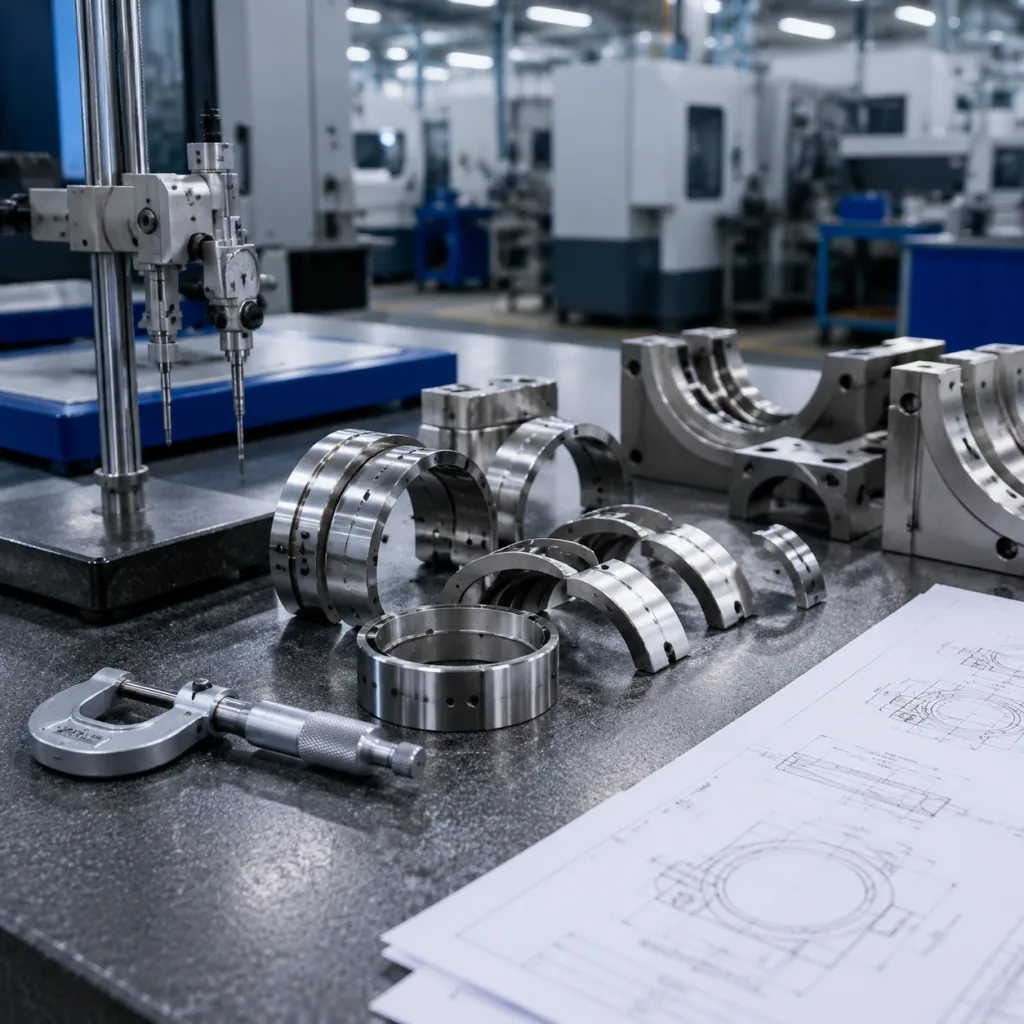
Inspection should rely on calibrated gauges and documented lot traceability. For supplier qualification, ask for incoming material control records, in-process checks, and final inspection results. Driventus operates under IATF 16949:2016 and ISO 9001:2015, which supports disciplined process control, but the purchasing file should still include the actual dimensional report for the lot being shipped.
Standards and validation: what to ask for
Published standards and test methods help buyers compare claims across suppliers. Depending on the program, relevant references may include REACH (EC) No 1907/2006 for substance compliance, SAE J2527 for environmental durability testing, and OEM-specific validation procedures where applicable. For European applications, confirm that material declarations and restricted substance records are current.
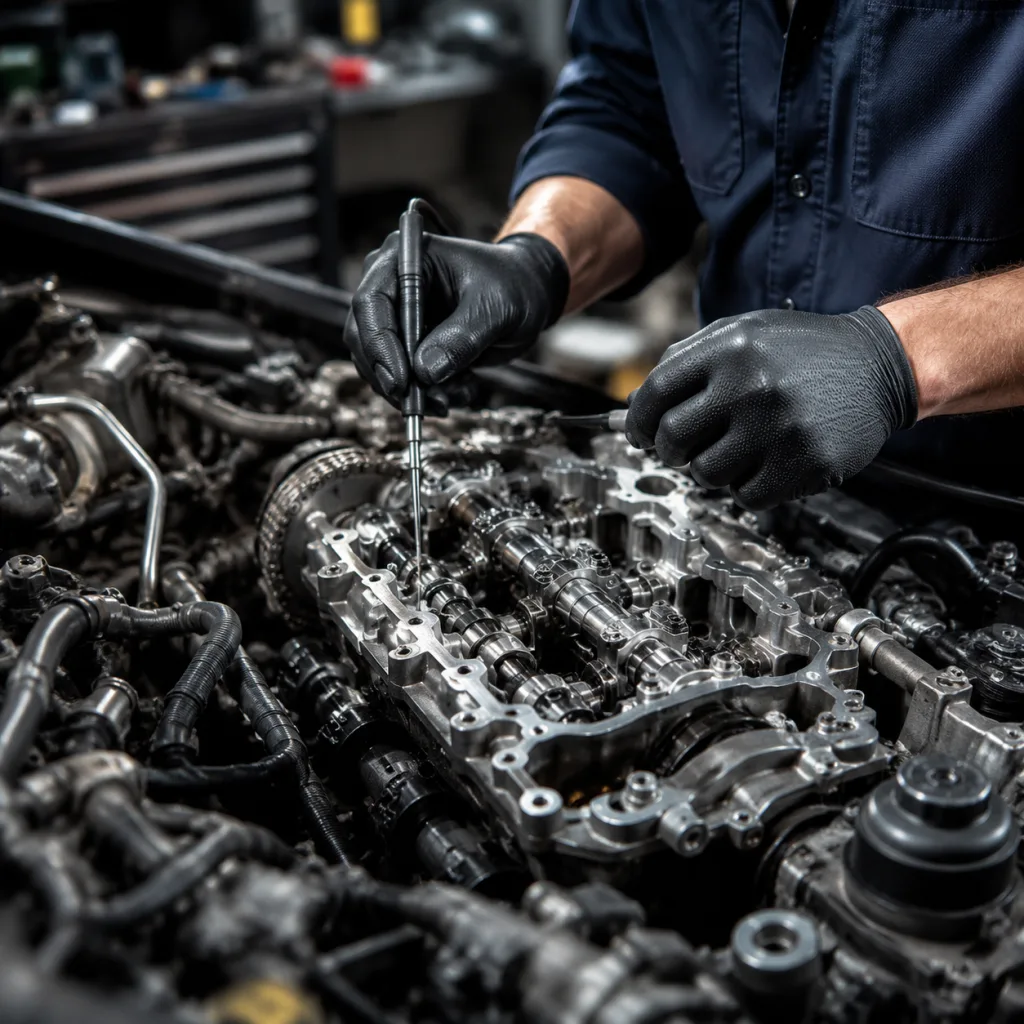
When the belt is part of a broader powertrain program, validate the complete system: belt, tensioner, idlers, water pump drive, and installation method. A correct belt with the wrong tension setting can still generate noise, tooth wear, or premature failure. For adjacent parts, see our catalog and engine components.
How Driventus fits into the sourcing process
Driventus supplies timing belts for aftermarket distributors, Tier-1 supply chains, and repair network programs. Buyers can use our quality system to review process controls and documentation depth, and custom manufacturing when a project needs a non-standard width, tooth count, or branded pack format.
For sourcing teams, the practical order file should include:
Application code or OE cross-reference
Belt pitch, width, and tooth count
Material request and temperature range
Required test reports
Packaging and label requirements
Annual volume and forecast window
If your target is a replacement program, specify dimensional match and validation evidence at the quotation stage. That shortens sampling cycles and reduces revision risk.
Frequently asked questions
Pitch length is usually the first control item, followed by tooth count, width, and tooth profile. All four must match the engine layout and pulley geometry.
Yes. They can differ in pitch length tolerance, profile shape, cord material, rubber compound, and thermal resistance. Those differences affect fit and service life.
Ask for dimensional inspection data, material declaration, lot traceability, and any validation test results. For regulated markets, also request REACH-related substance information.
If you need a specification-led quotation or a dimensional cross-check, use [request a quote](/contact.html) and send the OE reference, target dimensions, and annual volume.