engine bearing · 2026-06-19

Engine Bearing Dodge Supplier for B2B Programs

An engine bearing Dodge supplier should not be selected from a catalogue thumbnail. Bearings sit inside a tolerance stack that affects oil clearance, crankshaft support, warranty risk, and workshop trust. For distributors, rebuilders, repair chains, and Tier-1 purchasing teams, the purchase decision must cover fitment, material control, repeatability, traceability, packaging, and export documentation.

Driventus Auto Parts manufactures engine and powertrain components in Taizhou, Zhejiang, including plain bearings for aftermarket, distributor, and private-label programs. We support buyers that need controlled wall thickness, stable crush and spread, material declarations, SKU or engine-family packaging, and shipment documentation for markets including the EU, UK, US, Canada, Australia, and Brazil. Commercial offers are normally built around SKU count, size mix, annual forecast, packaging format, and whether existing tooling and gauges can be used.

Driventus is an independent aftermarket manufacturer; vehicle brand names are referenced for fitment identification only. The guide below is structured as a practical sourcing review: what can fail, what to audit, which specifications matter, how MOQ really works, what documents to request, and how to send an RFQ that prevents wrong parts from entering the program.

Decision Gate: Can This Supplier Control the Bearing, Not Just Match the Part Number?

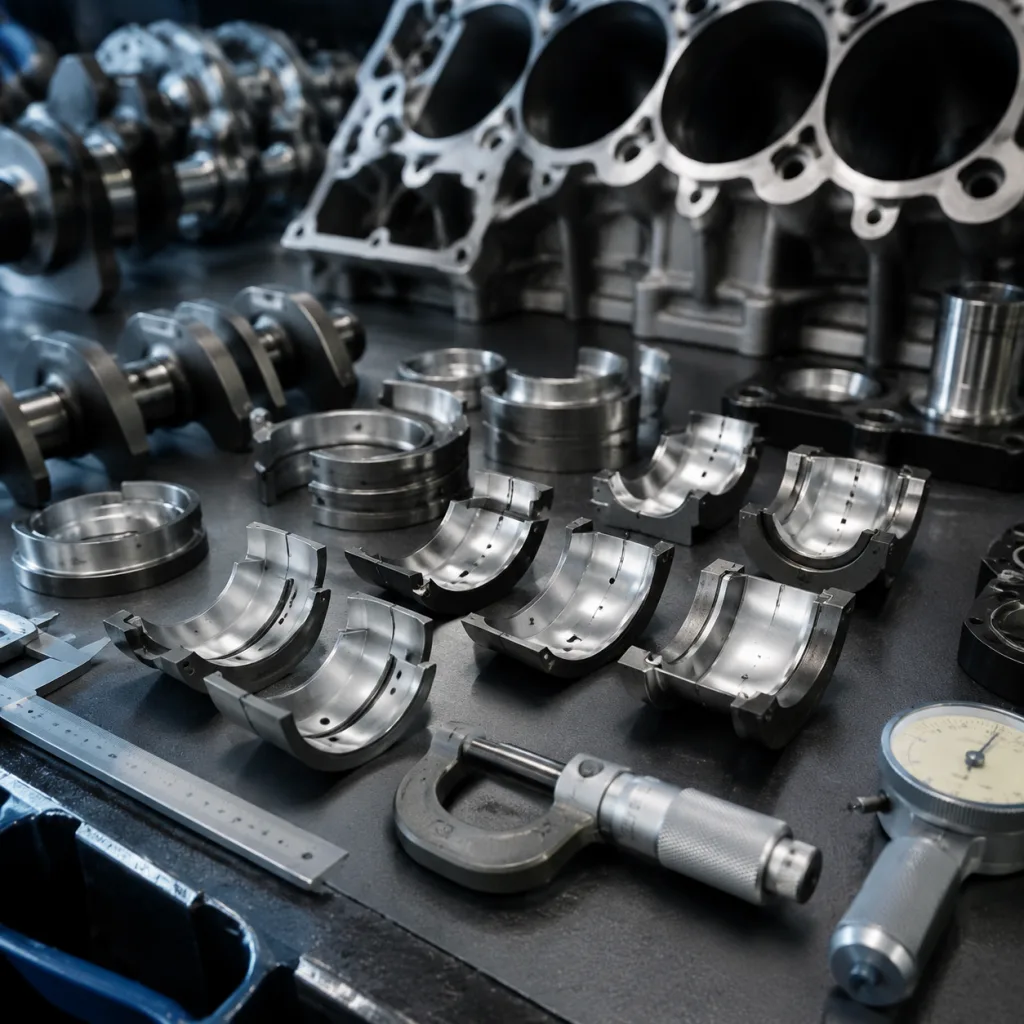
The first decision is simple: can the supplier prove control over the features that make the bearing work? Engine bearings operate through mixed and hydrodynamic lubrication. A small change in wall thickness, crush, spread, groove geometry, oil hole position, surface finish, or material bonding can change oil-film behavior and service life. Visual similarity is not enough.

During qualification, the most useful evidence is not a sales photo. It is a drawing, control plan, inspection record, or approved-sample file that identifies critical-to-quality dimensions, gauges, sampling level, and lot traceability. A capable engine bearing Dodge supplier should also explain how catalogue references are controlled, how supersessions are handled, and how fitment risks are reviewed before shipment.

For Dodge coverage, buyers usually define the range by engine family, journal dimensions, bearing position, set configuration, and undersize options. Standard size is often paired with 0.25 mm and 0.50 mm undersizes; some markets also require 0.75 mm or 1.00 mm, depending on local crankshaft regrinding practice. The supplier must understand that these are not only sales variants. Each size can require separate setup, inspection, marking, packing, and stock control.

Use these checks as a qualification gate:

  • Main bearing and connecting rod bearing availability by engine family and position count
  • Standard, 0.25 mm, 0.50 mm, and other undersize programs where applicable
  • Steel backing grade, strip thickness range, and bonding process control
  • Bearing alloy, intermediate layer, and overlay material declaration where relevant
  • Wall thickness, spread, and crush height inspection method, including gauge type and sampling frequency
  • Oil hole, groove, relief, and locating tang consistency checked against drawing or approved sample
  • Thrust face or flanged bearing configuration where required, including thrust width and face finish
  • Anti-corrosion packaging suitable for 30–60 days sea freight plus warehouse storage
  • Lot traceability from raw strip or semi-finished material to finished bearing set and export carton
  • Export carton labelling in buyer-defined SKU, barcode, language, gross weight, and country-of-origin format

If a candidate cannot answer these points, price comparisons become unreliable. Buyers can review general engine coverage through our catalog and related powertrain categories at /products/engine-components.html.

Failure-Mode Audit: Where Bearing Programs Usually Drift After Approval

Many bearing programs fail after the first acceptable sample. The first sample receives attention. The third or fourth production batch reveals the real system: material control, tool wear, operator discipline, inspection habits, cleaning, packaging, and warehouse release. That is why supplier qualification should follow the part through the plant instead of stopping at a certificate review.

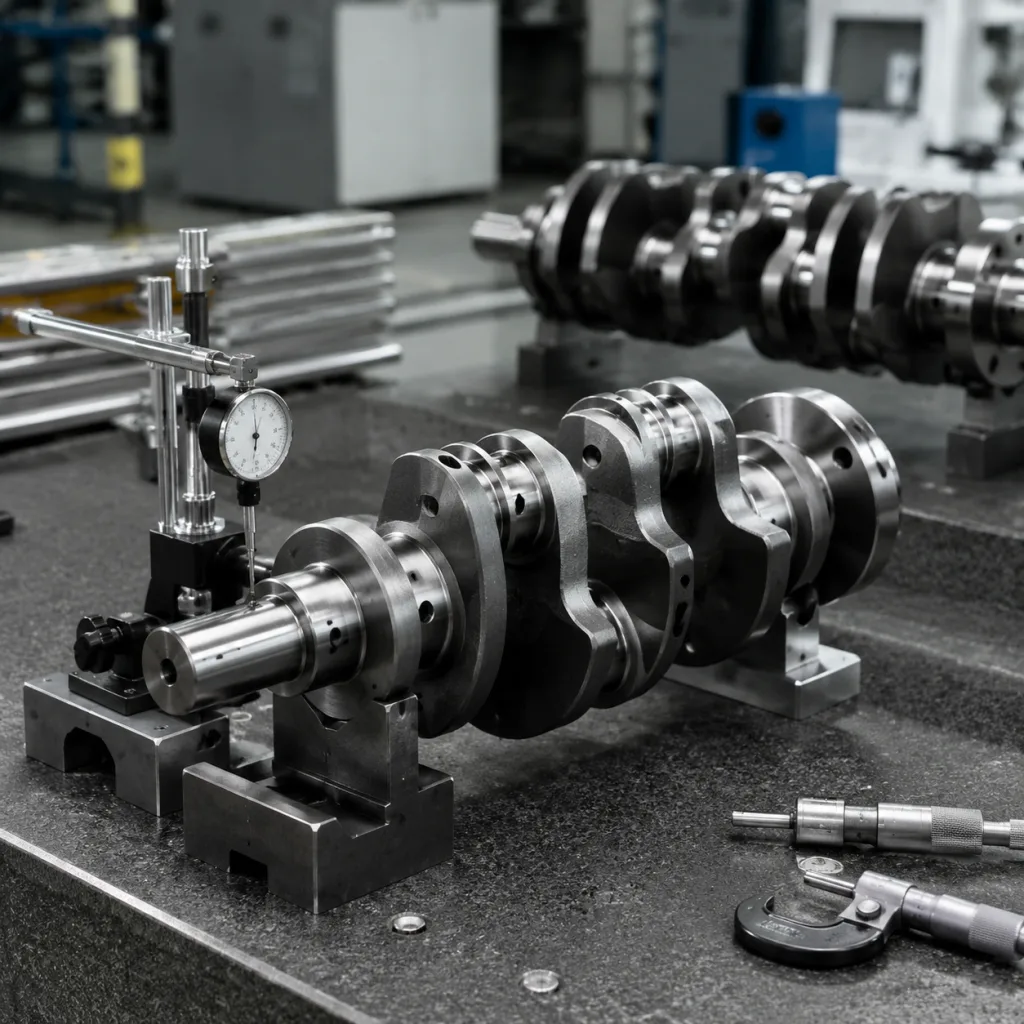
A practical audit tracks the bearing from material receipt to shipment: steel backing and bearing strip identification, forming, sizing, oil hole and groove operations, deburring, cleaning, surface protection, packing, and final release. Look for drift points. Is the coil or heat number linked to the finished lot? Are first-piece approvals recorded? Are gauges calibrated and suitable for bearing shells? Are non-conforming parts isolated quickly, or do they wait beside good stock?

Driventus operates under IATF 16949:2016 and ISO 9001:2015 management systems. These standards do not replace part validation, but they give purchasing teams a framework for process control, corrective action, change management, training, document retention, and traceability. Our quality system supports production records, inspection plans, and documentation packages for B2B customers. For repeat programs, buyers can agree on retention sample quantity, record retention period, and whether dimensional reports are supplied per batch or during scheduled audits.

A factory audit for an engine bearing Dodge supplier should normally cover:

</tr></thead><tbody> </tbody></table>For private-label or custom range development, Driventus also supports custom manufacturing based on drawings, validated samples, or buyer-supplied technical files. This connects commercial planning with engineering review before a full range launch. If a buyer requires PPAP-style documentation, the RFQ should state the submission level, required forms, sample quantity, and whether material, dimensional, and packaging approvals are needed before mass production.

Spec Deep-Dive: The Dimensions and Materials That Decide Fitment

A bearing shell is a small part with little room for vague specifications. Most modern engine bearing programs use a steel backing with an aluminium- or copper-based bearing layer, depending on load requirement, journal material, engine design, and service conditions. The overlay and surface treatment must balance conformability, embedability, fatigue resistance, corrosion resistance, and seizure resistance.

The risk is that two bearings may look identical in the box and behave differently in the engine. Material structure, wall thickness, groove profile, oil hole location, spread, crush, and tang position all matter. For B2B purchasing, the drawing or approved master sample should define which dimensions are critical, which are reference only, and which are accepted by sample comparison.

Typical technical items to specify in the RFQ include:

  • Bearing type: main, connecting rod, thrust washer, flanged main bearing, or cam bearing where applicable
  • Set structure: upper/lower shell configuration, thrust pieces, and quantity per engine set
  • Size range: standard and required undersize variants, normally expressed in mm and cross-checked against buyer catalogue convention
  • Material family: steel-backed aluminium alloy or copper-lead type, subject to application requirements and market restrictions
  • Surface condition: controlled bearing surface with no burrs at oil holes, grooves, parting edges, or locating tangs
  • Dimensional checks: wall thickness, width, spread, crush height, locating tang, oil groove geometry, and oil hole position
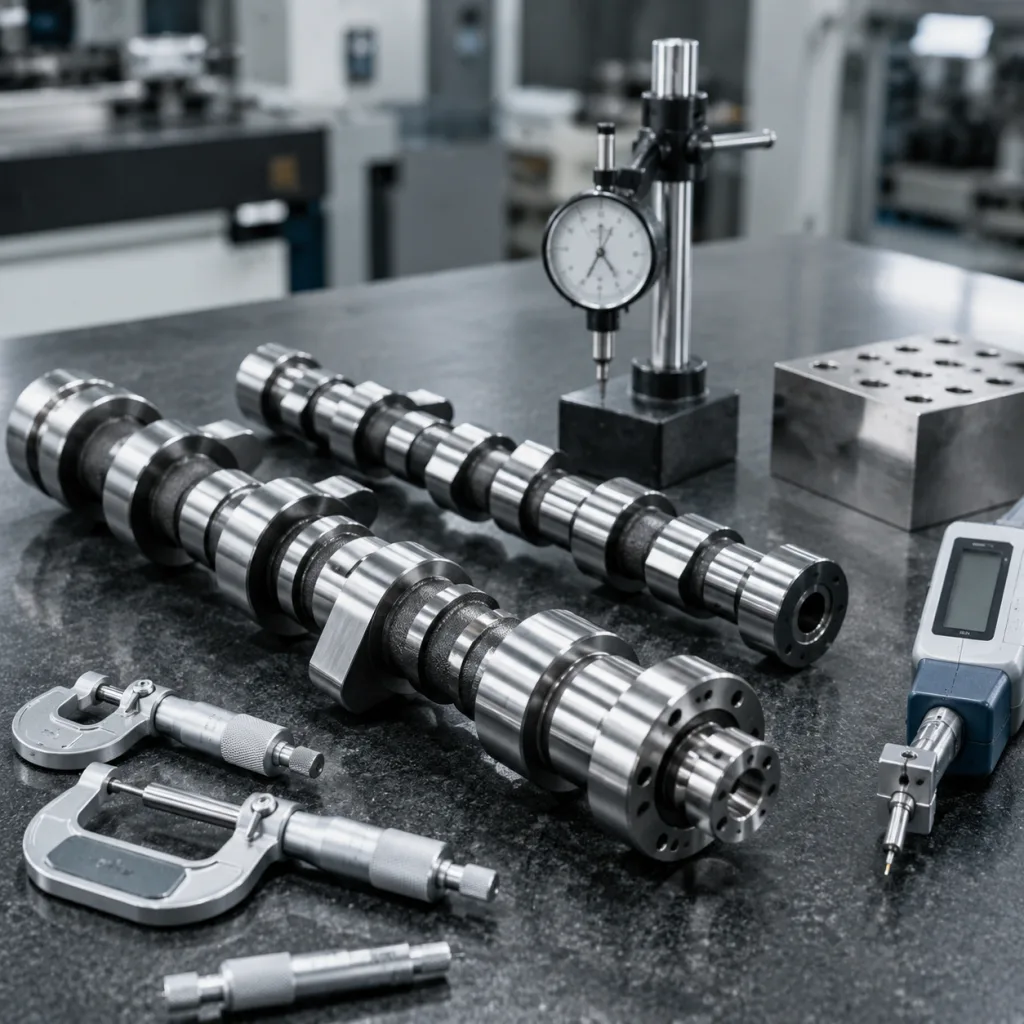
  • Inspection tools: ball micrometer or dedicated wall-thickness gauge, profile projector or vision system, plug or pin gauges, and calibrated vernier or height gauges
  • Cleanliness: washed, dried, and packed to reduce abrasive contamination and corrosion risk
  • Compliance review: REACH (EC) No 1907/2006 declarations where requested for EU market supply

For many aftermarket bearing shells, buyers control wall thickness in the micron range and treat spread, crush, oil hole location, and bearing width as fit-critical dimensions. Actual tolerances must come from the drawing or approved master sample. Avoid RFQ language such as “good quality.” Ask for measurable limits, gauge repeatability, and sampling quantity. For example, a buyer may request first-article measurement on 5 sets per SKU, followed by batch inspection under an agreed AQL or fixed sample plan for critical dimensions.

Driventus can provide inspection records with agreed sampling levels for commercial batches. Where a buyer has its own drawing, controlled specification, or validated reference sample, our engineering team reviews tolerance feasibility before confirming production. This helps avoid a common aftermarket sourcing error: ordering by application description alone while missing differences in bearing width, oil groove shape, tang position, thrust face design, or upper/lower shell configuration.

When comparing suppliers, request the same dimensional report format from each candidate. Standardizing the report exposes capability differences faster than photos, broad coverage claims, or the lowest unit price.

Spec Deep-Dive: The Dimensions and Materials That Decide Fitment

Commercial Scenario: Planning MOQ, Lead Time, and Export Without Creating Dead Stock

MOQ is not a fixed number hidden in a price list. It depends on bearing type, size range, packaging format, forecast volume, and whether tooling, fixtures, or artwork are required. Established references are usually easier to quote because strip material, tooling, and gauges may already exist. New or slow-moving references cost more to launch and inspect.

As a planning guide, repeat catalogue items are often best consolidated to 100–300 sets per SKU. New or slow-moving references may need 300–1,000 sets per SKU to absorb setup, material, inspection, and packaging costs. Final MOQ is confirmed after checking tooling, material availability, size mix, and carton requirements.

Consider a distributor launching a Dodge bearing range with main sets, rod sets, and multiple undersizes. If it orders very small quantities across many sizes, each size may still need setup, gauge confirmation, labels, cartons, and warehouse handling. Unit cost rises. Stock also becomes fragmented. A better approach is often to group high-moving standard and 0.25 mm sizes for regular replenishment, then schedule slower undersizes quarterly or against forecast.

Price logic follows the same structure. Private-label packaging adds artwork confirmation, printing plates or labels, inner box MOQ, carton marks, barcode setup, and pre-shipment packing inspection. Larger blanket orders or quarterly call-offs can reduce unit cost by improving strip material utilization, stabilizing the production schedule, and reducing repeated setup work.

A practical sourcing schedule is shown below:

Audit item What to review Why it matters
Incoming material controlSteel backing, bearing alloy strip, certificates, receiving inspection, heat or coil numberReduces variation in fatigue strength, bonding quality, and dimensional stability
Forming and sizingTool condition, press settings, in-process gauges, operator records, first-piece approvalControls roundness, spread, and crush characteristics
Surface and edge conditionOverlay appearance, scratches, corrosion, burrs, parting line condition, edge radiusHelps prevent assembly defects, debris generation, and early wear
Dimensional inspectionWall thickness, width, oil hole position, groove form, tang geometry, thrust widthSupports oil clearance consistency and correct installation
Cleaning and handlingWashing process, drying, gloves or handling rules, contamination checks, rust-prevention timingReduces abrasive residue and corrosion risk before use
TraceabilityLot coding, traveller records, retention samples, shipment mapping, non-conformance isolationEnables containment and investigation if a field issue occurs
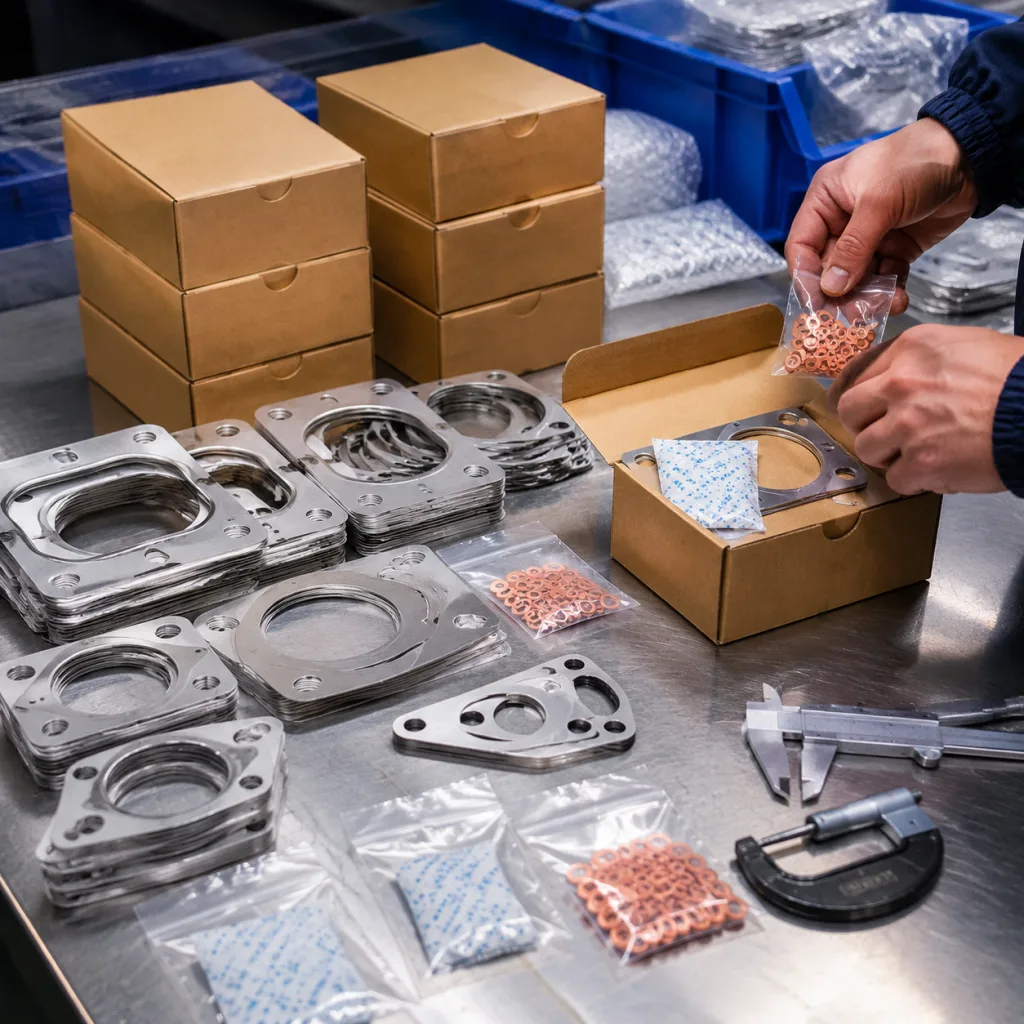
PackagingVCI paper, sleeves, inner boxes, carton strength, palletisation, drop and compression considerationsProtects precision surfaces during export freight and storage

</tr></thead><tbody> </tbody></table>Lead time is shaped by raw material availability, production queue, surface treatment capacity, inspection workload, packaging approval, and ocean or air freight route. Separate production lead time from transit time. Established SKUs may move faster than new references, while private-label cartons and mixed assortments add approval time. Ocean freight may add several weeks depending on destination port. Air freight works for samples or urgent shortage quantities, but it is rarely economical for full distributor replenishment.

For distributors serving multiple branches, Driventus can pack by SKU, bearing position, or engine set to simplify inbound receiving and reduce repacking. Export documents can include commercial invoice, packing list, certificate of origin where applicable, and buyer-specific declarations. Pallets can be arranged to reduce carton compression, protect VCI packaging, and keep lot codes visible for warehouse receiving.

Urgent demand should be shared early, not after a stock-out. This is especially important for slow-moving undersize bearings. A rolling 3–6 month forecast helps align material procurement with rebuild seasonality, container planning, and private-label carton production.

Documentation Q&A: What to Ask for Before the First Production Run

What validation level is enough? It depends on purchasing risk. A distributor may need dimensional confirmation, material declaration, packaging approval, and fitment verification. An OEM, OES, or Tier-1 program may require process flow, control plan, failure mode analysis, production trial records, and formal change control.

What should be agreed before production starts? Acceptance criteria. Define which dimensions require 100% check, which follow sampling, what AQL applies to visual defects, and how non-conforming parts will be segregated, reworked, replaced, or credited. If the rules are not written before production, claim handling becomes subjective.

Driventus supports documentation packages according to customer requirements. Common deliverables include:

  • First article inspection report with measured dimensions against drawing or approved sample
  • Batch dimensional inspection record by SKU, size, and production lot
  • Material certificate or material declaration, including bearing material family where required
  • Process flow and control plan when required
  • Packaging specification and carton marking confirmation, including barcode and label position
  • Lot traceability report linking production lot, inspection record, carton number, and shipment document
  • Corrective action report format for non-conformance handling, typically using 8D-style structure when requested
  • Compliance statement where required by the destination market

Which standards should be referenced? IATF 16949:2016 and ISO 9001:2015 are relevant for quality management, process control, traceability, document control, and corrective action systems. Chemical and market compliance requests may refer to REACH (EC) No 1907/2006. Use these references accurately. They support quality and compliance review; they are not vehicle manufacturer approvals.

What if the destination customer needs restricted-substance declarations? State the regulation, market, reporting format, and whether supplier-signed declarations or third-party test reports are expected. Do this during RFQ, not after the goods are finished.

How does documentation help after arrival? It gives receiving teams a basis for checking the shipment. It also supports claims investigation if a defect is reported and helps importers prepare for customer audits. A simple receiving check is to compare carton label, inner label, bearing marking, size designation, and batch code before the goods are released to stock.

Driventus is an independent aftermarket manufacturer; brand names are referenced for fitment only. We do not claim approval or endorsement by any vehicle manufacturer. Fitment references are used to help buyers identify the correct application coverage and avoid catalogue ambiguity.

Documentation Q&A: What to Ask for Before the First Production Run

Step-by-Step RFQ: The Information That Prevents Wrong Bearings and Slow Quotes

A clear RFQ shortens quotation time and reduces the chance of mismatched supply. Start with application scope, then add the commercial plan and inspection expectations. If available, attach drawings, sample photos, bearing markings, existing catalogue references, or current supplier part numbers for comparison. The strongest RFQs also state whether the offer should be based on a one-time buy, a 12-month forecast, or a blanket order with scheduled releases.

Use this sequence when contacting an engine bearing Dodge supplier:

1. Define the Dodge engine family or model coverage required. 2. Identify bearing type: main, rod, thrust, cam, or full engine set. 3. State the size range, including standard and undersize requirements. 4. Estimate the percentage split by size if the program includes undersizes. 5. Provide quantity by SKU and annual forecast, separating first order quantity from annual demand. 6. Confirm destination country and preferred Incoterms, such as EXW, FOB, CIF, or DDP where applicable. 7. Specify packaging: neutral, private label, bulk, sleeve, box, or kit format. 8. List required documents: inspection report, material declaration, certificate of origin, compliance statement. 9. State audit needs: remote document review, video audit, or on-site factory audit. 10. Provide target launch date, first shipment deadline, and replenishment plan. 11. Add restricted materials, labelling rules, barcode standards, language requirements, or customer-specific requirements.

For fast technical review, include clear photos of the bearing back, bearing surface, locating tang, oil groove, oil hole, thrust face if present, and all stamped markings. If a physical sample is available, send one standard-size set and one undersize set when the range includes regrind options. A useful sample package includes the bearing set, current box label, application note, and any known complaint history such as noise, low oil pressure, fitment tightness, or premature wear.

If the program involves a part family not already in the catalogue, Driventus can review samples or drawings through its custom manufacturing workflow. For active sourcing projects, buyers can request a quote with the above details and receive confirmation of feasibility, MOQ, lead time, and documentation options.

The strongest RFQs combine commercial information with technical evidence. Application data confirms fitment. Forecasts and packaging instructions make production planning realistic. Together, they give buyers a better basis for comparing quotations and building a stable Dodge engine bearing program.

Frequently asked questions

Yes. Driventus supports neutral and private-label packaging for qualified B2B orders, subject to MOQ, artwork approval, carton specification, barcode rules, and destination market requirements. Packaging can be arranged by SKU, engine set, or buyer-defined kit format.

IATF 16949:2016 and ISO 9001:2015 are relevant for quality management, process control, traceability, document control, and corrective action systems. Buyers may also request REACH (EC) No 1907/2006 declarations for EU supply where applicable.

No. Driventus is an independent aftermarket manufacturer; brand names are referenced for fitment only. We do not claim approval or endorsement by any vehicle manufacturer.

For engine bearing sourcing, share your application list, volume forecast, packaging needs, target MOQ, delivery deadline, and inspection requirements. Driventus will review feasibility, MOQ, and lead time through /contact.html

Request a Quote
Program stage Typical buyer requirement Procurement note
RFQ reviewApplication list, annual volume, target marketsInclude Dodge engine family, size mix, and preferred part structure
Sample orderDimensional report, packaging review, fitment data checkAllow 2–4 weeks when existing tooling is available; longer if new tooling or material review is required
Pilot batchLimited commercial quantityConfirm labelling, carton durability, barcode format, and warehouse handling before full launch
Regular supplyForecast or blanket orderImproves material planning, production scheduling, and lead-time stability
Range expansionAdditional undersizes, engine families, or kit formatsBest handled quarterly to reduce fragmented orders and duplicated setup