EGR Valve Specifications: Materials, Tolerances, and Fitment
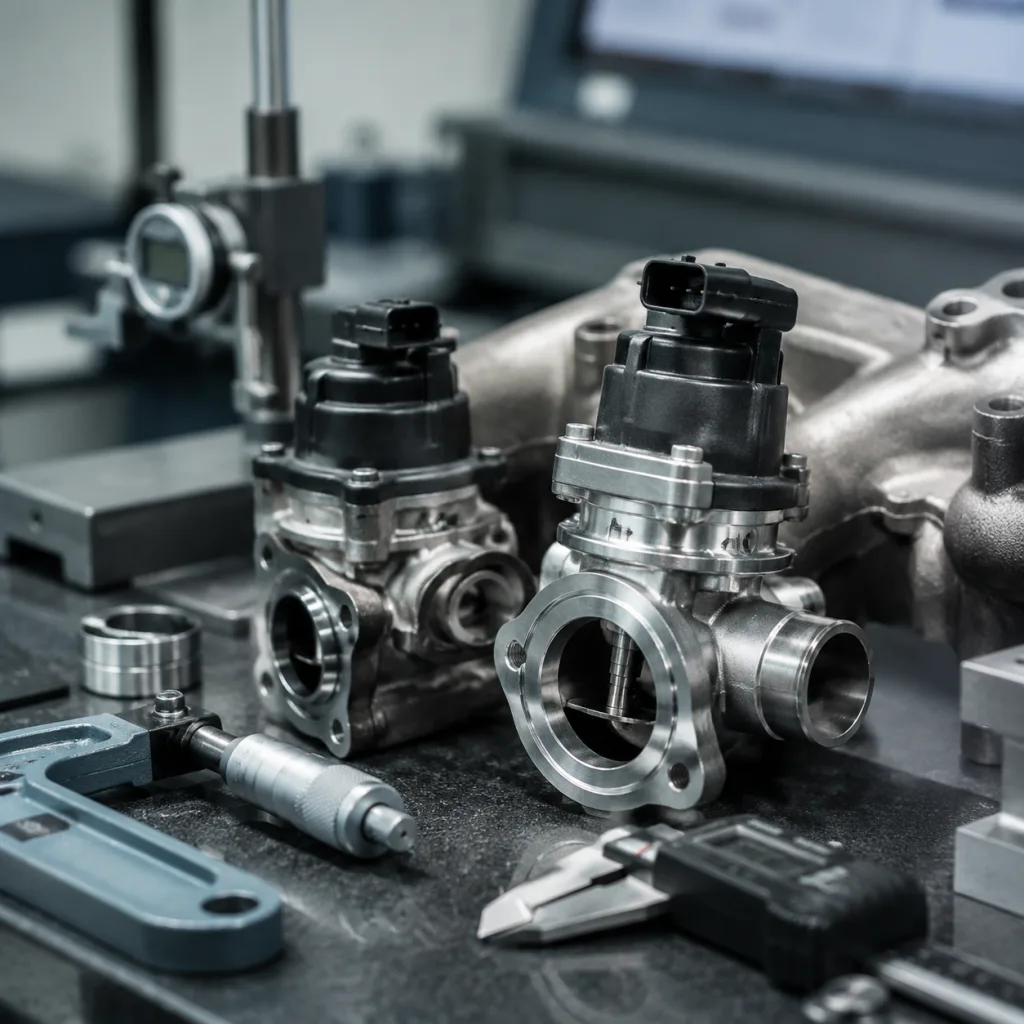
EGR valve specifications decide whether a part fits, seals, and regulates exhaust gas recirculation at the required flow rate. For procurement teams, the key details go beyond the mounting pattern and port geometry. They also include valve architecture, actuator type, materials, leak limits, and the validation standard behind the datasheet. A weak specification can lead to repeat claims, poor emissions control, and unnecessary line-side sorting. Driventus is an independent aftermarket manufacturer; brand names are referenced for fitment only. We build engine and powertrain components in Taizhou, Zhejiang for B2B buyers who need documented dimensions, controlled tolerances, and export-ready quality records. This article takes a decision-first view of the core dimensions, material choices, and inspection items that matter when sourcing an EGR valve for aftermarket distribution, OEM supply, or multi-location repair networks.
What to lock down first in EGR valve specifications
Before comparing suppliers, define the part as a working system, not just a replacement shell. The safest starting point is to separate fitment data, functional data, and compliance data.
Item
Typical requirement to confirm
Valve type
Linear, rotary, or vacuum-operated
Actuation
Electric stepper, DC motor, solenoid, or vacuum diaphragm
Body material
Aluminium alloy, stainless steel, or heat-resistant cast iron
Pintle / seat
Stainless steel with a wear-resistant seat finish
Seal material
Fluoroelastomer or an equivalent high-temperature elastomer
Mounting
Bolt pattern, flange face, and gasket interface
Flow data
Opening curve, leakage rate, and max flow at test differential
Electrical data
Connector keying, pin count, voltage, and current draw
Temperature range
Continuous and peak exhaust-side exposure
</tr></thead><tbody> </tbody></table>If the application family is broad, the simplest mistake is to approve a part on photos alone. A usable drawing package should include nominal dimensions, permitted variation, surface finish, and reference photographs of the OE layout. Buyers often review our catalog and engine components together when adjacent fitment parts need to be confirmed at the same time.
Where fitment usually fails
A part can match the OE application name and still fail at installation or on the road. In practice, most issues show up at the interfaces: flange, port, connector, and actuator envelope.
Common failure modes include:
Flange flatness drift that weakens sealing.
Bolt-hole positional error that forces the valve into alignment during tightening.
Port concentricity variation that changes restriction and leakage.
Excess overall envelope that contacts hoses, brackets, or heat shields.
Connector orientation mismatch that creates harness strain or a poor lock.
This is why buyers should ask for a dimensional report with the measured sample, the nominal value, and the tolerance band used for acceptance. For repeatability, the supplier should also state the gauge method and inspection frequency. A controlled programme normally includes first-article approval, in-process checks, and final audit sampling. If the application is linked to OE 06A107065 or another OE cross-reference, validate by measurement rather than visual similarity.
Materials and heat resistance: what actually matters
EGR valves live in a harsh thermal and contamination environment. Exhaust soot, condensate, fuel vapour residue, and repeated heat cycling all affect durability, so the material set matters as much as the nominal dimensions.
A practical specification normally includes:
Housing: aluminium alloy for weight control, or stainless steel where heat exposure is higher.
Internal moving parts: stainless steel spindle, pintle, and spring components.
Seat area: wear-resistant insert or a hard-wearing machined surface.
Gaskets and seals: materials rated for repeated thermal cycling and exhaust contamination.
Electrical components: insulated connectors and windings suited to under-bonnet conditions.
Ask for material declarations and any regulatory statements relevant to the destination market, including REACH (EC) No 1907/2006 where applicable. For programmes tied to broader emissions-related components, ECE R-83 and SAE J2527 help define the validation context even when the valve is sold in the aftermarket.
Which test data belongs on the datasheet
A useful datasheet answers one question: did this valve behave consistently under controlled conditions? Dimensions matter, but test evidence tells you whether the result is repeatable across batches.
Test item
Why it matters
Leakage at closed position
Confirms sealing performance
Opening response time
Shows actuator behaviour under load
Flow versus command position
Verifies modulation accuracy
Thermal cycling
Screens seal and actuator durability
Vibration resistance
Protects against connector and bracket failure
Salt spray or corrosion check
Relevant for coastal and winter-road markets
Electrical load test
Confirms current draw within ECU limits
</tr></thead><tbody> </tbody></table>The supplier should note sample size, test temperature, and acceptance criteria. A claim without test conditions is not useful for procurement. Driventus operates under IATF 16949:2016 and ISO 9001:2015, so quality records can be aligned with buyer audits and incoming inspection plans.
How to compare suppliers without getting fooled by appearances
Specification control is the real differentiator between suppliers. Two valves can look identical in a listing and behave very differently once installed.
Use this comparison sequence:
1. Request the dimensional drawing and revision level. 2. Confirm OE cross-reference coverage for the target application. 3. Check whether the flow map or response curve is available. 4. Ask for material declarations and compliance documents. 5. Review packaging, labelling, and traceability format. 6. Verify whether the supplier supports custom manufacturing for special programmes.
If you need a technical review before placing an order, our quality system page shows the controls behind incoming inspection, process control, and final release. For programmes that need bracket changes, connector changes, or special marking, custom manufacturing is the right route.
What a procurement file should include by buyer type
Different channels need different levels of control. Aftermarket distributors usually want catalog breadth, stable replenishment, and low complaint rates. OEM and Tier-1 buyers usually need deeper technical documentation, tighter lot control, and approved-change management. Repair-chain buyers often need both: dependable fitment and simple inventory handling.
A good sourcing file should include:
Part number and OE reference
Vehicle application range
Drawing revision and sample approval status
Packaging quantity and carton configuration
Lead time and MOQ
Certificate set, including IATF 16949:2016 and ISO 9001:2015
Driventus is an independent aftermarket manufacturer; brand names are referenced for fitment only. If the target programme needs a short-list review, you can request a quote with the OE reference, photos, and required annual volume so the engineering team can confirm the specification before sampling.
Frequently asked questions
Include valve type, actuator type, mounting dimensions, electrical connector data, materials, leak limit, response time, and validation test conditions. A drawing with tolerance bands is essential.
A matching OE reference does not guarantee sealing or harness clearance. Flange flatness, port position, and connector orientation can still cause installation or performance issues.
Yes. We support custom manufacturing for fitment changes, packaging needs, and programme-specific documentation. Share the OE reference, target market, and annual volume for review.
Send your drawing, OE reference, and target volume for a technical review, and we will confirm the specification package before sampling. Start here: /contact.html