Crankshaft Toyota Wholesale: Supplier Guide
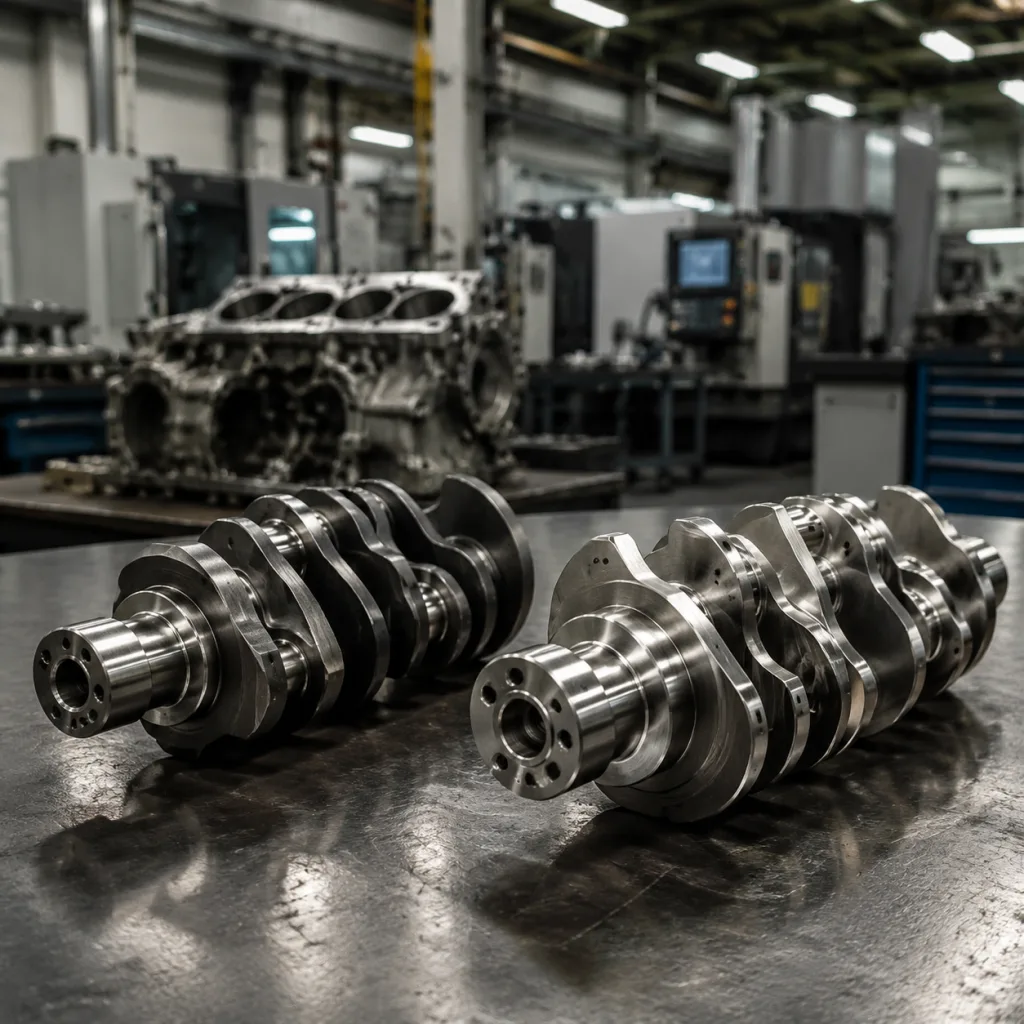
Buying a Toyota crankshaft at wholesale level is a sourcing decision, not a catalog search. Procurement teams need dimensional consistency, material traceability, repeatable balance control, and a supplier that can support audits and export documents. That matters whether the part is for aftermarket distribution, OE replacement, or a private-label programme. Driventus is an independent aftermarket manufacturer; brand names are referenced for fitment only. If you are evaluating crankshaft Toyota wholesale options, the real questions are simple: can the factory hold journal geometry, confirm hardness and runout, supply stable batches, and ship on schedule? This guide focuses on those decisions, not generic buying advice. If you need a wider range of engine parts alongside crankshafts, see [our catalog](/products.html) and [our quality system](/quality.html).
Start with the fitment decision, not the price
The first mistake in crankshaft Toyota wholesale sourcing is comparing quotes before the engine code is locked. A crankshaft can look interchangeable and still fail on journal layout, thrust face dimensions, or runout control. Start with the application, then move to specs, then to price.
For a clean RFQ, confirm the following before asking for numbers:
- Engine code and OE cross-reference, such as `1AZ-FE`, `2AR-FE`, or the listing’s OE number where applicable
- Main journal diameter and rod journal diameter
- Stroke, thrust face layout, and bearing width
- Required tolerance window on finished journals
- Whether the part is for OEM replacement, aftermarket retail, or private label
- Any packaging, marking, or documentation rules for the destination market
If the application is sensitive, ask for a dimensional report, hardness data, and balance results from a current lot. That tells you more than a catalogue description ever will. For buyers assembling a broader program, it is often efficient to source the crankshaft with related engine parts through our catalog or engine components.
What fails in the field when the spec is too loose
Wholesale buyers do not usually lose margin on the purchase order. They lose it on returns, rework, and engine failures that start with a small spec gap. The most common problems are predictable.
Watch for these failure modes:
- Journal diameter drift that passes a casual check but fails under assembly load
- Runout that is acceptable on paper but causes vibration after installation
- Inconsistent heat treatment across batches, leading to uneven wear
- Poor balance control that shows up as noise, harshness, or premature bearing wear
- Burrs, grind marks, or oil-hole debris that create avoidable damage
- Weak packaging that turns a good part into a damaged shipment
A practical buyer should ask how the supplier prevents those issues, not just whether they can inspect for them. The answer should cover blank quality, machining control, heat treatment, final balance, and corrosion protection. If the supplier cannot explain the process in sequence, the price is probably hiding risk somewhere. Buyers building private-label supply or special packaging should route those requirements through custom manufacturing so the marking, carton spec, and packing method are aligned from the start.
Spec sheet deep-dive: the numbers that matter
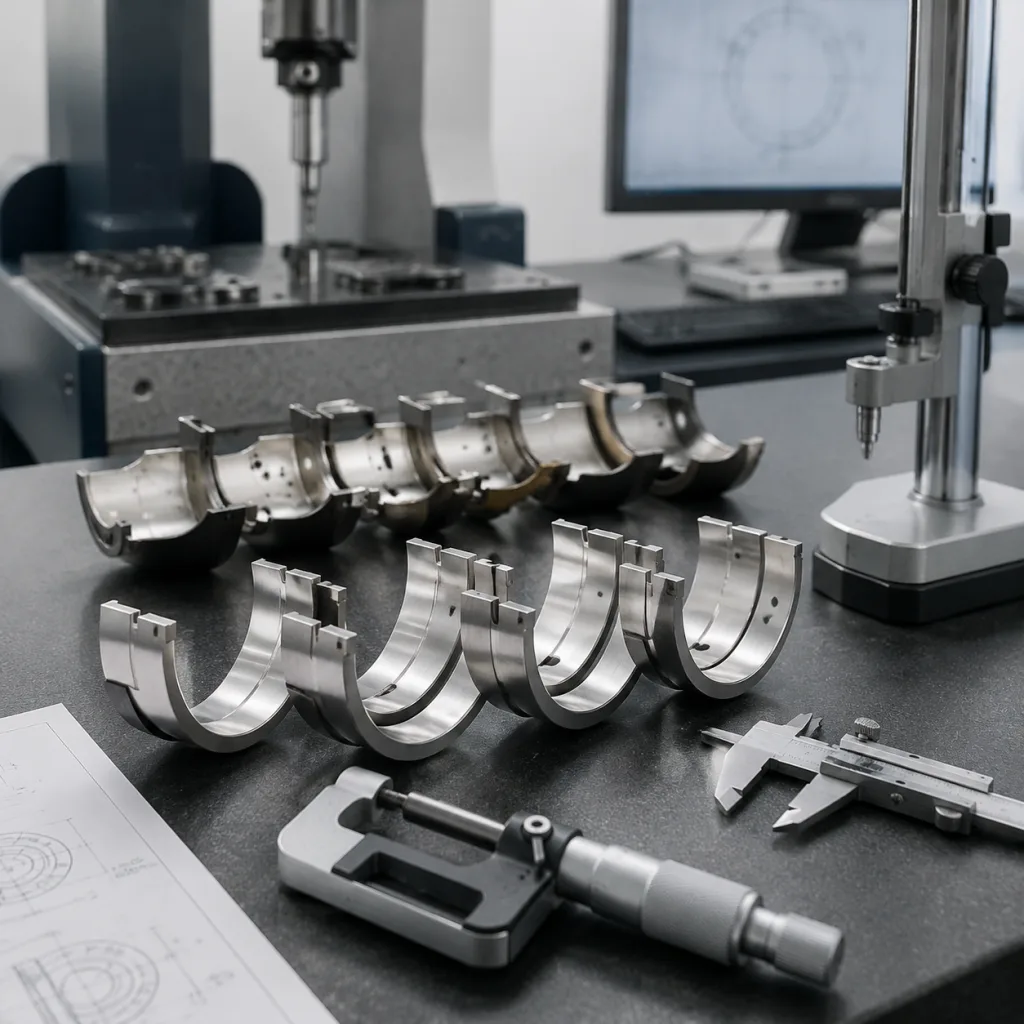
A serious wholesale spec sheet should be specific enough to support acceptance at receiving, not just quotation. For Toyota-fit aftermarket supply, the useful questions are dimensional, metallurgical, and cosmetic.
Typical buyer requests include:
- Material route stated on the batch record, such as forged steel or nodular cast iron
- Hardness target matched to the engine family, often around `HRC 52-58` for many forged applications
- Main and rod journal taper and roundness held within `≤0.01-0.02 mm`
- Runout limit commonly requested at `≤0.03 mm` total indicator reading after final machining
- Surface finish on critical bearing journals, often specified at `Ra ≤ 0.4 μm`
- Fillet radius controlled to OE match or drawing requirement
- Cleanliness standard with no burrs, dents, grind burns, or blocked oil passages
| Control point | What to check | Why it matters | |
|---|---|---|---|
| Material traceability | Heat number and batch record | Confirms the base metal used | |
| Journal geometry | Diameter, taper, roundness | Protects fitment and oil clearance | |
| Balance control | Residual imbalance data | Reduces vibration and bearing wear | |
| Heat treatment | Hardness and process route | Supports fatigue resistance | |
| Surface condition | Burrs, scoring, grind marks | Prevents avoidable damage |
| Comparison item | Supplier A | Supplier B | What to ask next |
|---|---|---|---|
| OE cross-reference | Is the fitment exact or assumed? | ||
| Material route | Is the base material documented? | ||
| Hardness report | Is it lot-based or generic? | ||
| Runout limit | Is it measured after final machining? | ||
| Packaging spec | Will transit damage be controlled? | ||
| Audit readiness | Can the plant support repeat orders? |