EGR valve · 2026-06-19

EGR Valve Skoda Wholesale Sourcing Guide

For importers and distributors, egr valve skoda wholesale buying goes wrong when it is managed as a unit-price exercise. The part is small; the risk is not. An EGR valve works in heat, soot, condensate, vibration and pressure pulsation. Temperatures near the valve can exceed 450–650°C. Shafts, seals, gears, motors and feedback sensors all have to keep moving and reporting correctly after repeated thermal cycles.

That is why the sourcing decision should be built around fitment control, validation evidence, stable repeat production and claim handling. A low quote can disappear quickly once labour claims, diagnostics time, returns processing and lost customer confidence are included. The RFQ also has to be SKU-specific. Actuator type, casting complexity, connector design, coolant passages and included gaskets can all change cost and lead time.

Driventus manufactures engine and powertrain components in Taizhou, Zhejiang, and supplies B2B customers in Europe, the UK, North America, Australia and Brazil. This article gives procurement teams a practical way to assess aftermarket EGR valve supply for Skoda applications, from RFQ data and sample checks to MOQ planning and batch-risk controls. Driventus is an independent aftermarket manufacturer; vehicle brand names are referenced for fitment identification only.

Start with the range decision, not the cheapest EGR valve

A Skoda EGR valve range should be planned around coverage, demand and technical variation before price negotiation starts. Many Skoda applications share wider European vehicle platforms, so one EGR valve family may cover several engine codes, model years and related vehicle lines. That creates useful volume, but only if catalogue data is controlled tightly.

Use this decision framework before approving a supplier list:

  • Fitment confidence: confirm engine code, emission level, connector type, actuator type, gasket interface, bolt pattern, port diameter and coolant-port layout where applicable.
  • Cross-reference discipline: treat OE references only as fitment identifiers, for example buyer-supplied references beginning with 06A… or other applicable numbers. Do not approve a part from one cross-reference alone without engine-code confirmation.
  • SKU tiering: separate fast movers from long-tail items. Many buyers classify A-items at 300–1,000+ pcs/year and C-items below 100 pcs/year.
  • MOQ logic: confirm MOQ by part number, mixed-carton options and trial-order flexibility. Common starting points are 50–100 pcs/SKU for stocked items and 200–500 pcs/SKU for private-label runs.
  • Lead-time stage: separate tooling or fixture adjustment, first-article approval, pilot batch, mass production and repeat-order production. Two quotes are not comparable unless they refer to the same stage.
  • Market compliance: request material declarations for REACH (EC) No 1907/2006 where products are sold into the EU, and check any customer-specific restrictions for rubber, plating or electronics.
  • After-sales traceability: agree defect reporting fields, sample return rules and batch identification before shipment. At minimum, use invoice number, production date, line code and carton label.

A simple rule helps: do not widen the range faster than your data can support it. For portfolio planning, buyers can review our catalog and relevant engine components before preparing an RFQ list.

Audit the factory around EGR failure modes

A general factory profile is not enough for EGR valve Skoda wholesale programmes. The audit should follow the ways these assemblies actually fail: leakage, sticking shafts, unstable actuator response, connector faults, seal degradation, corrosion, damaged packaging and inconsistent batch records.

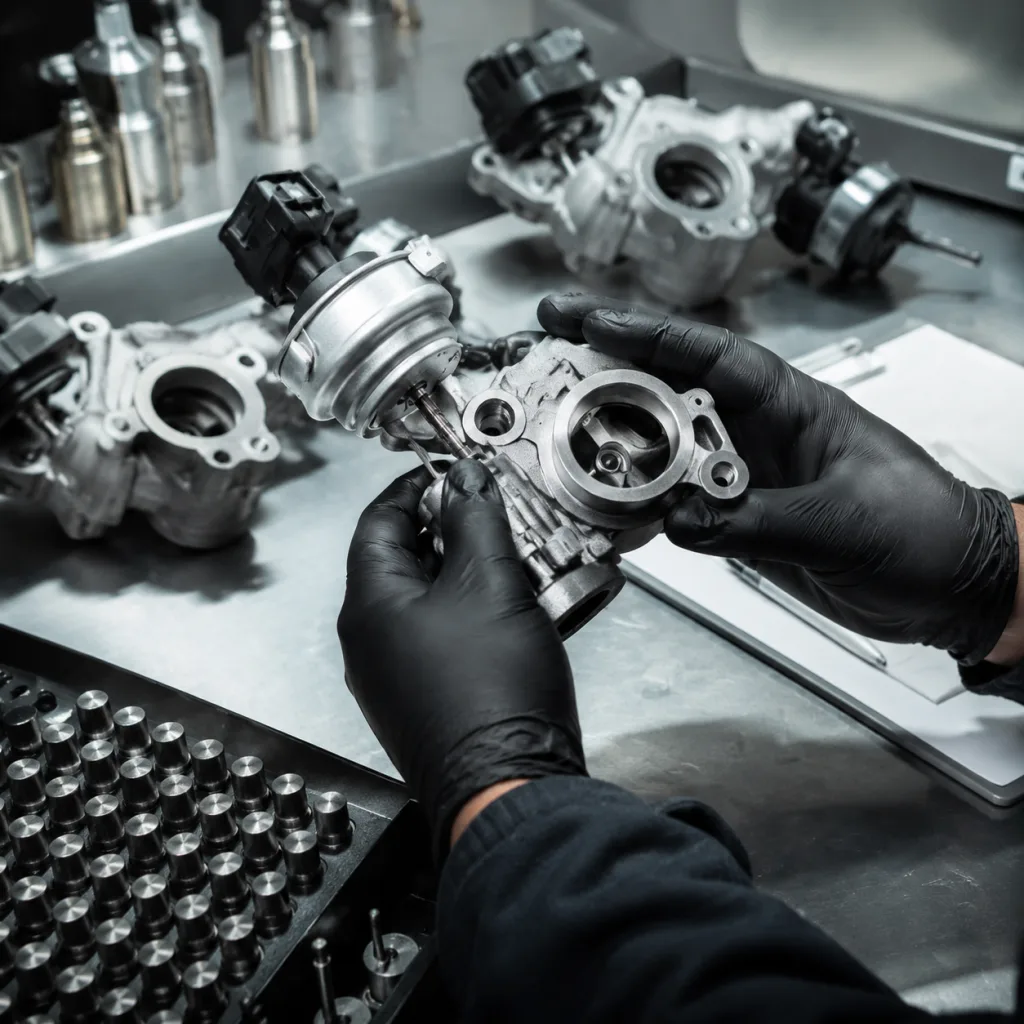
EGR assemblies may include cast or machined housings, shafts, seals, springs, position sensors, motors, gears or vacuum diaphragms. The supplier has to control both mechanical tolerances and electrical behaviour, then show repeatable inspection data.

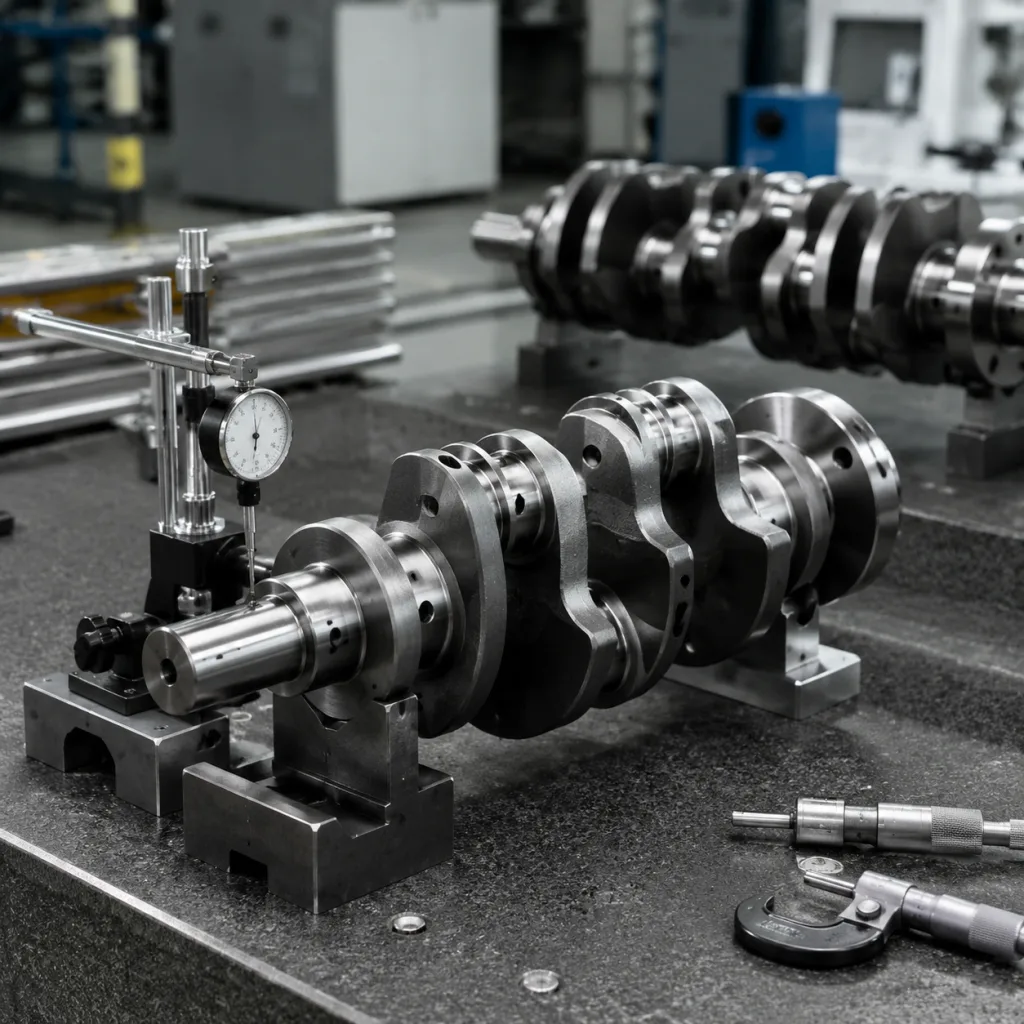
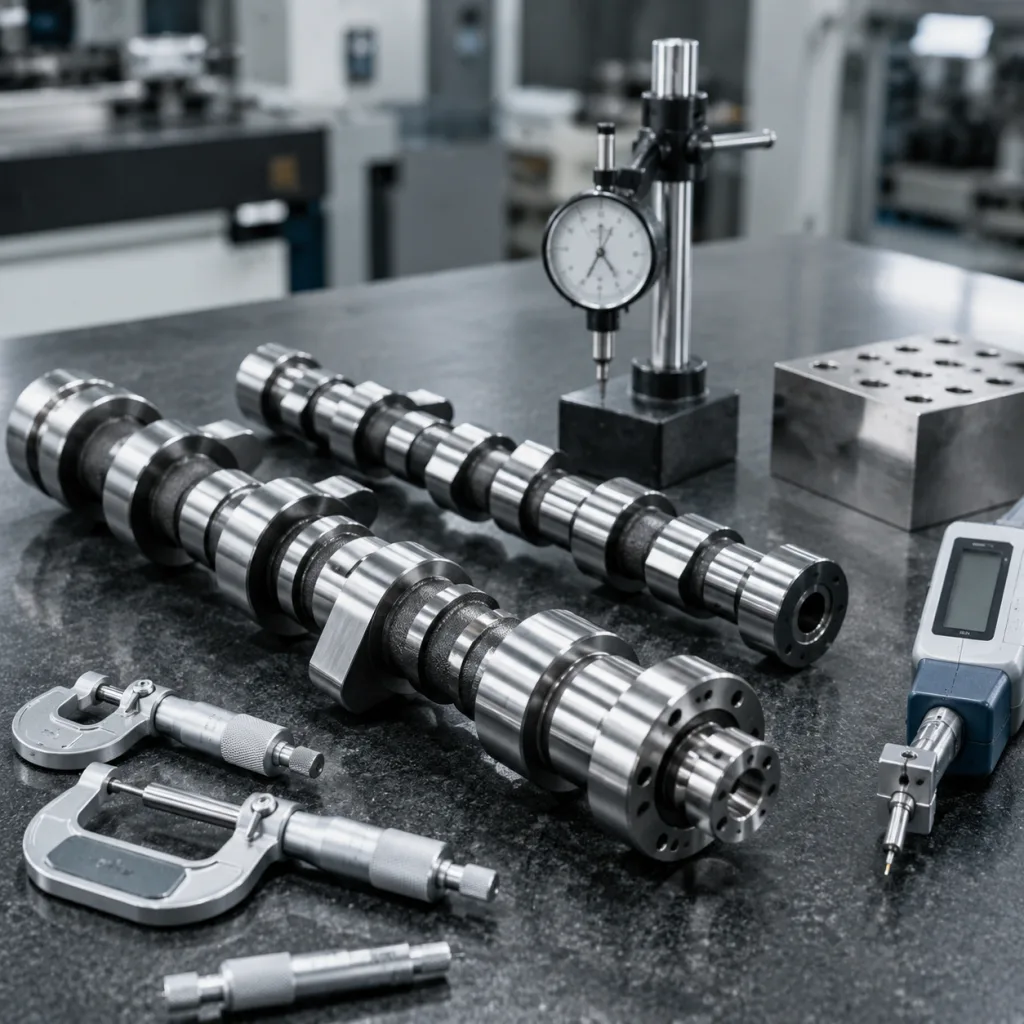
Driventus operates under IATF 16949:2016 and ISO 9001:2015 quality management frameworks. Procurement teams should still request part-specific evidence before approval: control plans, incoming inspection records, end-of-line test criteria and corrective-action workflow. Ask how critical dimensions are checked: go/no-go gauges, CMM, height gauge or digital calipers. Also confirm gauge calibration intervals, commonly 6 or 12 months depending on the tool.

</tr></thead><tbody> </tbody></table>For a remote or on-site audit, ask to see the real process flow: incoming materials, machining, assembly, final inspection and finished-goods storage. Useful evidence includes fixture photos, one completed control plan, one end-of-line test record per sampled SKU and one recent 8D or corrective-action example with confidential data removed. Documentation for the Driventus quality system can be reviewed during supplier onboarding.

Sample approval: a step-by-step technical check

A sample that looks correct can still fail in service. EGR valves must regulate exhaust gas flow under thermal cycling, soot exposure and pressure variation. Wholesale approval should therefore use measurable checks, not visual comparison alone.

Use a staged validation plan:

1. Confirm the physical interface. Check the valve body against an approved drawing, reference sample or buyer specification. Critical mounting dimensions are often controlled within ±0.05–0.15 mm depending on feature and process. 2. Inspect sealing areas. Verify mounting-hole position, gasket face flatness and port alignment. Gasket sealing faces should be free of burrs, deep machining marks and casting porosity. 3. Test the connector. Confirm connector keying, pin layout and terminal retention force. Pins should not back out after mating/unmating, and the latch should lock positively. 4. Measure actuator behaviour. Record actuator response time and feedback signal stability across open, mid and closed positions. State test voltage and sweep speed. 5. Check closed-position leakage. Use a defined pressure, for example a buyer-agreed 20–50 kPa, with a stated maximum flow or pressure-decay limit. 6. Stress the moving parts. Check shaft movement resistance before and after heat exposure. The valve should not stick after thermal soak and cooling cycles. 7. Review corrosion exposure. Agree salt-spray expectations for plated brackets, screws, shafts and other exposed metal surfaces according to market requirement. 8. Validate export packaging. Run drop and vibration checks on cartons. Inner protection must stop sensors and connectors from carrying the valve weight.

A practical sample plan is 3–5 pcs per SKU for dimensional and function checks, followed by 20–50 pcs from the pilot batch for appearance, packaging and end-of-line consistency. Define the test environment in the approval sheet: temperature, voltage, pressure, tooling, mating connector and measurement method.

If the valve includes electronics, confirm operating voltage range, connector pin assignment, resistance or signal curve, and any diagnostic response expected by the ECU. UNECE Regulation No. 83 may be relevant to the vehicle emissions context in UNECE markets, while ISO 9001:2015 and IATF 16949:2016 define management-system expectations for consistent production. For the part itself, the buyer and supplier should agree a part-specific inspection specification because EGR performance depends on the engine application, ECU strategy and operating conditions.

Driventus does not claim approval or endorsement by any vehicle manufacturer. Fitment references are used to help distributors identify aftermarket compatibility.

Sample approval: a step-by-step technical check

Compare MOQ, lead time and landed cost on the same basis

Wholesale EGR valve buying is a trade-off between catalogue breadth and stock depth. A distributor may need 20–80 active SKUs for European applications, but demand can vary sharply by engine family, market and vehicle age. MOQ should be negotiated around forecast reliability, tooling status, packaging configuration and the supplier’s ability to combine slower-moving items.

The comparison has to be like for like:

Audit item What to verify Procurement relevance
Quality certificationIATF 16949:2016 and ISO 9001:2015 certificates with valid scope and expiry dateConfirms process-based quality management
TraceabilityBatch code, production date, operator or line record, incoming lot numbers for seals and electronicsSupports claim analysis and recalls
Test equipmentLeak tester, actuator test bench, electrical signal checker, vacuum/pressure fixture where applicableReduces mixed-failure risk
Material controlSeals, castings, electronics, springs and plating records; supplier COA where availableSupports durability and compliance review
Process controlTorque setting, press-fit depth, shaft play, gasket face flatness and connector inspection recordsPrevents drift between batches
Packaging processInner bag, carton strength, pallet labelling, drop-test or compression reviewReduces transit damage and warehouse errors

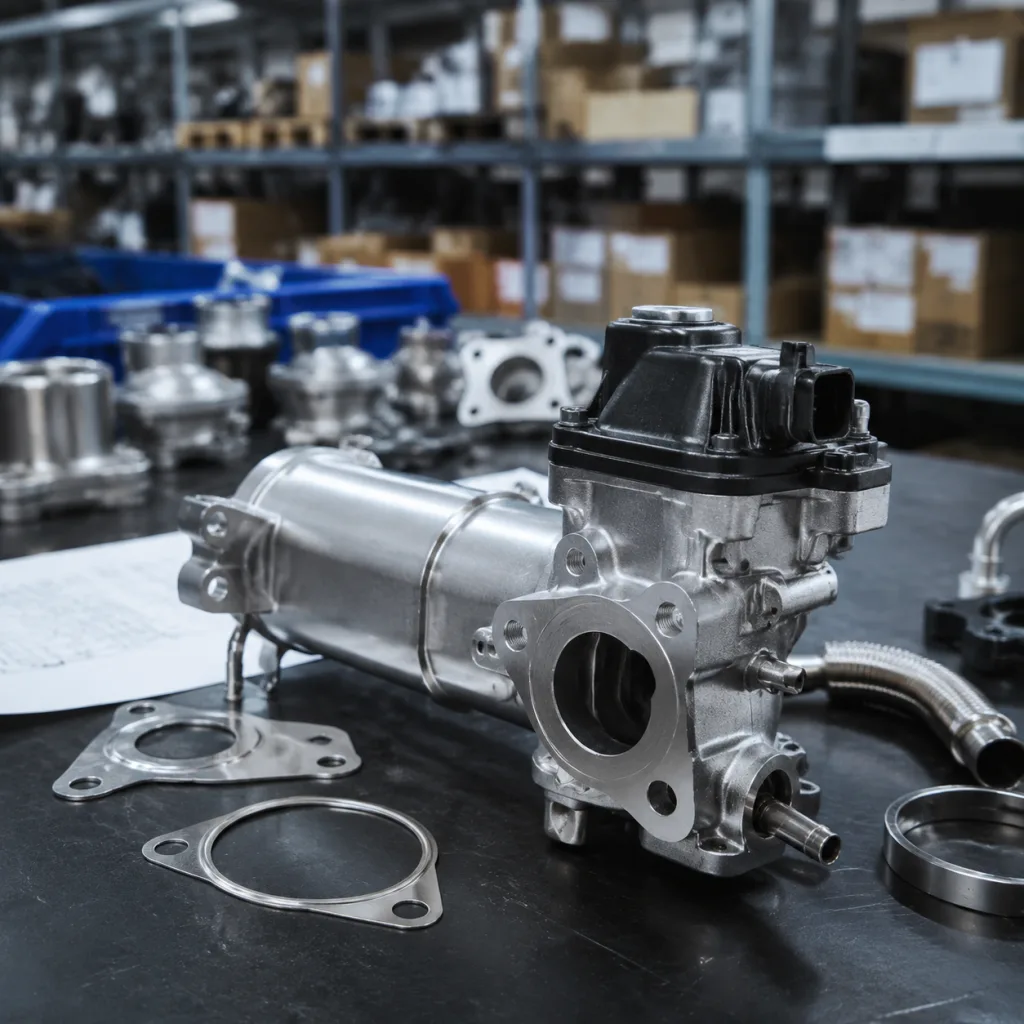
</tr></thead><tbody> </tbody></table>Price changes with configuration. Vacuum EGR valves, simple mechanical designs and mature high-volume SKUs do not cost the same as motorised valves with position feedback, water-cooled interfaces or complex castings. The quote may also move depending on gasket inclusion, surface treatment, private-label carton, inspection level and order mix.

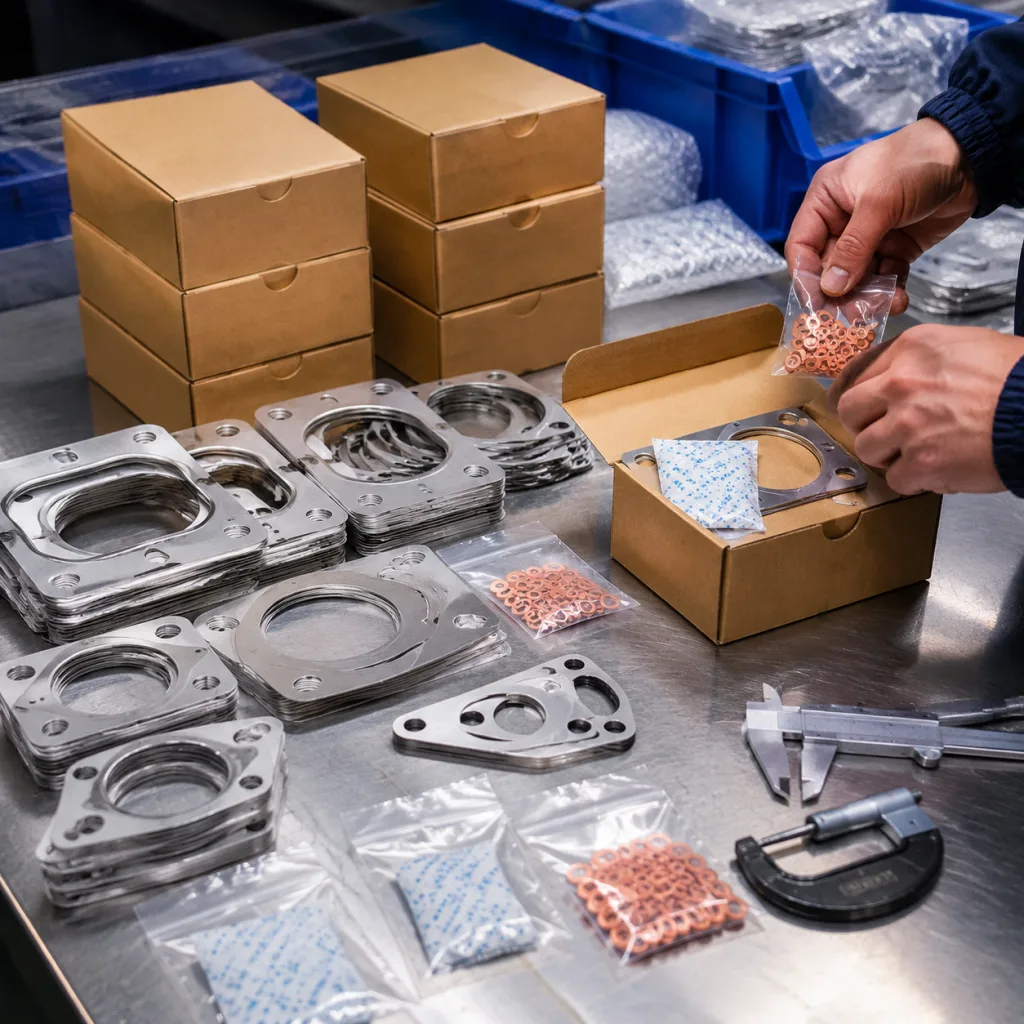
Ask every supplier to state exactly what the price includes: gasket, screws, inner bag, branded box, carton label, export carton and pallet packing. Then split lead time into engineering review, sample production, customer approval, mass production and freight. A reliable repeat lead time is worth more than an optimistic date that changes after deposit.

Before confirming landed cost, request HS code guidance, carton dimensions, gross weight, pallet loading plans and export documentation. A landed-cost sheet should include unit price, tooling or sample charge, inland freight, ocean/air freight, duty, customs brokerage, insurance, palletisation, inspection fee, exchange-rate assumption and warranty allowance.

For application gaps or private-label range development, Driventus can discuss custom manufacturing based on drawings, samples and buyer-supplied technical requirements.

What should be inside a serious RFQ?

A strong RFQ prevents two common problems: revised pricing after the first sample review, and samples that fit the wrong application. For an EGR valve Skoda wholesale enquiry, send the target vehicle coverage, annual volume estimate and any known OE cross-references. If drawings are not available, provide a physical sample and detailed photos, especially of the connector shape, flange geometry and coolant passages.

A complete RFQ should answer these questions:

  • What is the part? EGR valve, EGR cooler valve or EGR control module if applicable.
  • Which vehicles are covered? Model, year range, engine displacement, fuel type, power output if known and engine code.
  • Which references are buyer-supplied? Include identifiers such as 06A… where relevant, and mark whether each reference is confirmed or only for search guidance.
  • What are the electrical details? Connector shape, pin count, sensor type, actuator type, operating voltage and any resistance or feedback curve available.
  • What are the mechanical details? Flange pattern, bolt-hole diameter, port diameter, coolant connection, gasket interface, overall height and actuator or connector orientation.
  • What is the order plan? Target MOQ, annual forecast, launch quantity, repeat-order cadence and whether mixed-SKU consolidation is needed.
  • How should it be packed? Neutral packaging, private label, barcode, carton quantity, inner protection, country-of-origin label and pallet requirements.
  • Which documents are required? REACH (EC) No 1907/2006 declaration request, quality certificates, material statement and any customer-specific restricted-substance list.
  • What are the commercial terms? Incoterm, target currency, destination port, payment term expectation and whether samples should be invoiced or credited after a production order.

Define acceptance criteria before the sample is shipped. This may include dimensional tolerance limits, leakage limit, actuator test curve, appearance standard, label content and packaging inspection method. A concise attachment might state: “sample approval requires 5 pcs checked for fitment, connector mating, closed leakage at agreed pressure, actuator sweep, label accuracy and carton drop review.”

The goal is repeatability. Future batches should be judged against the same standard, not against a memory of one sample that passed months earlier.

What should be inside a serious RFQ?

Scenario: the first container arrives, and claims start appearing

This is the point where weak supplier controls become expensive. EGR valves are compact and easy to ship, but a functional failure can create high labour-related warranty costs for repair chains and distributors. Importers and buying groups should set claim, containment and change-control rules before the first container leaves the factory.

Build these controls into the supplier agreement:

  • First-article inspection report before mass production, covering drawings or reference dimensions, connector check, appearance and functional test results.
  • Pre-shipment inspection with random sampling by AQL level agreed by both parties; many buyers use tighter checks for critical functional failures than for minor carton defects.
  • Batch coding on product, carton and packing list, with the code linked to production date, line, operator or shift and incoming material lots where possible.
  • Retained production samples for comparison during claim review, typically at least 2–3 pcs per production batch for key SKUs.
  • Agreed response time for 8D corrective-action reports, for example initial containment within 48 hours and full root-cause response within 10 working days after receiving evidence or returned samples.
  • Written change-control process for materials, electronics, tooling, software/calibration, packaging or sub-suppliers. No substitution should occur without buyer approval.
  • Claim evidence format including vehicle details, mileage, installation date, fault code, photos, invoice number and whether the failed unit can be returned.

Do not overlook non-technical returns. Mixed labels, missing gaskets, unclear application data or incomplete carton markings can create warranty noise even when the valve itself works. For repair-chain supply, packaging consistency and installation documentation matter.

For wholesalers, the priority is a stable supply base with transparent production records, not one-off spot purchasing. Keep at least one approved master sample, one approved label file and one signed inspection standard per SKU, so warehouse, sales and warranty teams use the same reference.

Driventus supports B2B sourcing discussions for distributors, wholesalers, OEM and Tier-1 customers. Product names and vehicle brand references are used for fitment identification only; Driventus is an independent aftermarket manufacturer.

Frequently asked questions

Send the application list, engine codes, target annual volume, packaging requirements and any buyer-supplied OE cross-references if applicable. Photos or samples help confirm connector type, flange layout, coolant-port design and actuator type. For faster pricing, add target MOQ per SKU, destination port, Incoterm, gasket requirement and whether neutral or private-label packaging is required.

Yes, private-label packaging can be discussed for wholesale programmes. MOQ, artwork, barcode format, carton quantity, label content and pallet configuration should be agreed before sample approval and mass production. Buyers should also confirm print-lot MOQ, carton strength, label placement and whether batch codes must appear on both the product and box.

No. Driventus does not claim approval or endorsement by any vehicle manufacturer. Driventus is an independent aftermarket manufacturer; brand names are referenced for fitment identification only.

For a sourcing review, send your Skoda EGR valve application list, forecast volume, target MOQ, packaging requirements and any sample or cross-reference data available. You can [request a quote](/contact.html) or contact the Driventus team through the contact page.

Request a Quote
Item Typical procurement question Practical planning range
MOQ per SKUCan slow movers be combined in one order?50–100 pcs/SKU for stocked neutral items; 200–500 pcs/SKU for private label
Pilot batchIs a validation order available before full rollout?50–200 pcs total, often mixed by SKU if parts are already developed
Repeat lead timeWhat is the stable production window after approval?30–45 days for regular production; 45–60 days when electronics or castings are queued
New developmentIs tooling, fixture or validation work needed?60–120 days depending on sample quality and test requirements
Private label packagingWhat carton MOQ applies?Often 500–1,000 cartons or one print lot; confirm before artwork approval
Spare labelsCan barcode formats match warehouse systems?EAN/UPC, SKU, batch, country-of-origin and customer item code should be agreed
Warranty bufferAre replacements or credit terms agreed?Commonly handled as credit, replacement stock or a small agreed service reserve