EGR valve · 2026-06-17

EGR Valve Renault Supplier Sourcing Guide

Choosing an egr valve renault supplier is not a catalogue exercise. The buyer has to protect fitment accuracy, emissions-related function, warranty exposure, and repeat supply across many engine codes and EGR layouts. The part may look simple, but it works in soot, condensate, vibration, and repeated thermal cycles while the ECU expects the right actuator travel, position-sensor output, connector pinout, response time, and closed-valve leakage. Driventus manufactures engine and powertrain components in Taizhou, Zhejiang, and supplies B2B customers in Europe, the UK, North America, Australia, and Brazil. This guide takes a procurement view: what to verify, where failures usually start, how to control cross-references, and how to structure MOQ, lead time, packing, audit, and documentation. Driventus is an independent aftermarket manufacturer; brand names are referenced for fitment only.

Decision Framework: What Makes a Renault-Fit EGR Valve Buyable

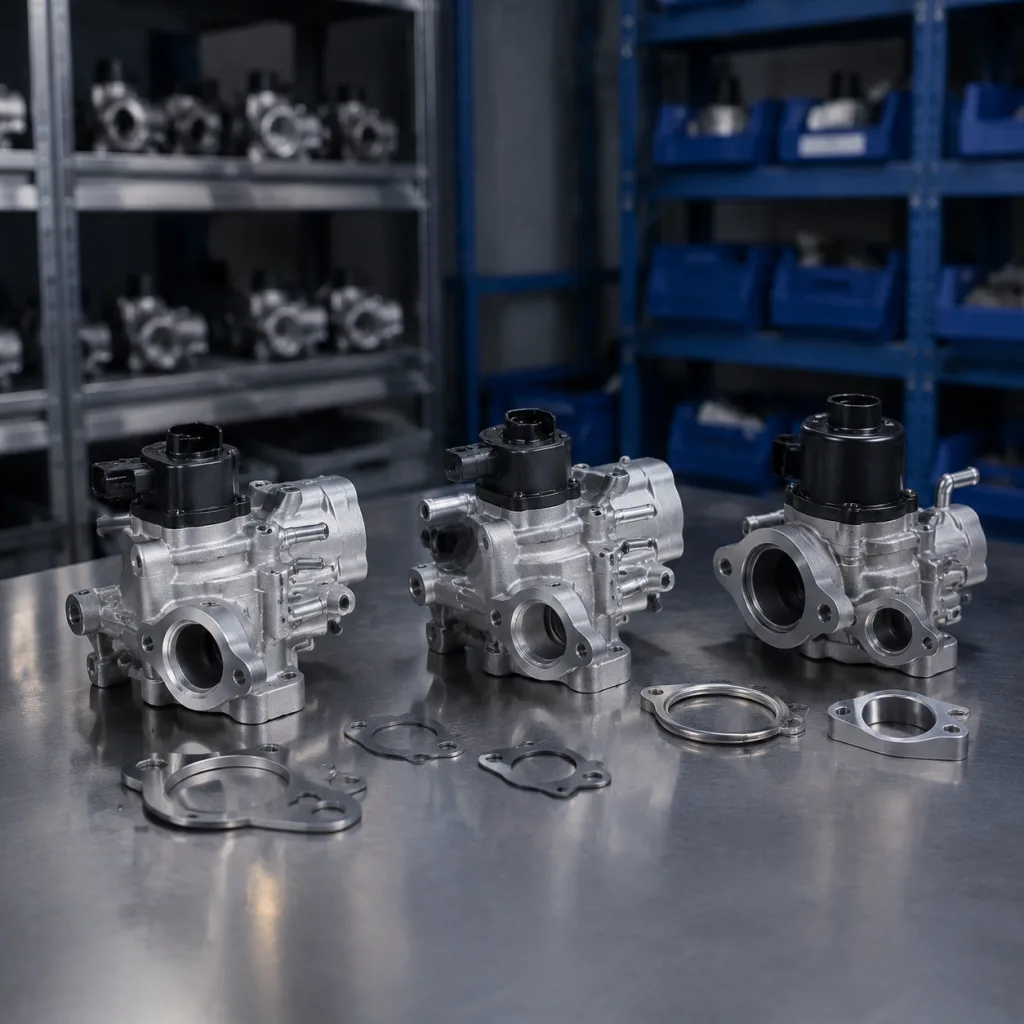
Renault applications use several EGR architectures: vacuum-actuated valves, electric linear valves, rotary electric valves, and integrated cooler-valve assemblies. A matching catalogue line is only an entry point. The part becomes buyable when the valve body, connector, actuator stroke, sealing interface, and calibration response are confirmed against the target part family.

A practical buying decision has four gates:

  • Fitment gate: mounting hole position, gasket face, pipe angle, connector keying, vacuum nipple orientation, cooler interface, and installation clearance.
  • Function gate: motor resistance, position sensor signal, valve travel, return force, response time, and closed-valve leakage at the agreed pressure.
  • Durability gate: thermal cycling, vibration, condensate corrosion, and carbon build-up around the shaft, plate, and seat.
  • Supply gate: MOQ by SKU, forecast, carton quantity, mixed-pallet plan, safety-stock target, and incoterm.

Most sourcing problems begin when one of these gates is skipped. A valve can install correctly and still trigger diagnostic faults if the actuator response is wrong. Another valve may pass a bench test but leak at the flange because the gasket face or pipe angle was copied visually instead of checked to drawing.

Driventus reduces these risks with controlled drawings, sample approval, production inspection, and batch traceability. A useful approval file includes target OE-style references supplied by the buyer, 2D critical dimensions, connector photos, gasket profile, sample test results, and the agreed packing specification.

Buyers building a wider engine-parts programme can review related components in our catalog.

Failure Modes to Control Before They Become Warranty Claims

An EGR valve operates in hot exhaust gas while exposed to soot, oil vapour, acidic condensate, and vibration. Supplier qualification should therefore test repeatability, not just the appearance of a first sample. Driventus operates under IATF 16949:2016 and ISO 9001:2015 management systems, with incoming inspection, in-process controls, final testing, and lot traceability.

Common failure modes include carbon-related sticking, actuator drift, position-sensor inconsistency, flange leakage, connector damage, shaft wear, and corrosion on exposed surfaces. Each one needs a control point. For electric valves, connector retention, pin alignment, signal output, motor movement, current draw, and leakage performance should be checked before packing when the programme requires 100% testing.

Acceptance limits should be measurable before approval. Examples include flange flatness, mounting-hole position, valve stroke, leakage at a stated pressure, motor current range, sensor output range, connector pull force, and gasket surface requirements.

</tr></thead><tbody> </tbody></table>Driventus can share documentation according to customer risk level and order structure. Buyers assessing a new egr valve renault supplier should confirm whether the factory can support both standard aftermarket references and controlled development for private-label SKUs. Details of the Driventus quality system are available for audit preparation.

Cross-Reference Control: Keep Similar Parts Separate Until Proven Equal

Renault-fit EGR cataloguing is risky because many parts look almost identical. A housing shape may match while the connector angle, software response, cooler interface, vacuum port direction, gasket profile, or pipe flange angle differs. One merged SKU can create returns across several distributors.

The rule is simple: visual similarity is not interchangeability. Driventus uses application tables, customer samples, and controlled cross-reference data to reduce catalogue errors. Brand names and model references are used only to identify vehicle fitment. Driventus does not claim approval or endorsement by any vehicle manufacturer.

For private-label distribution, buyers should decide exactly what cross-reference detail may appear on labels, cartons, and electronic data files. Driventus can support neutral packing, customer-brand packing, barcode labels, batch codes, and export carton marks. Label files should define SKU code, part description, country of origin, lot code, carton quantity, EAN/UPC or customer barcode format, and restricted wording. OE-style references should come from verified buyer records, not unverified marketplace listings. Where relevant, cross-references should be written in a controlled form, such as OE 14710… or OE 8200…, only when the buyer has supplied confirmed application information.

A safer workflow is:

1. Compare the buyer’s reference list against the Driventus application table. 2. Confirm engine code, year range, fuel type, and emissions generation. 3. Photograph or scan the sample connector, flange, gasket face, and accessory kit. 4. Approve one labelled sample with the final carton format. 5. Freeze label and carton artwork before mass production.

If a part is visually similar but not electrically identical, keep it as a separate SKU. Catalogue coverage improves only when the fitment claim is defensible.

For changes to connector sourcing, actuator calibration, packaging, or gasket kits, Driventus offers custom manufacturing after technical review, sample confirmation, and volume planning.

Cross-Reference Control: Keep Similar Parts Separate Until Proven Equal

Order Scenario: From Trial Stock to Repeat Export Supply

EGR demand is usually broad rather than deep. A distributor may need coverage across many Renault engine codes, but only moderate volume per SKU. That makes order structure as important as unit price.

A typical sourcing path starts with a controlled trial order. The buyer selects fast-moving references, confirms sample fitment, checks return patterns, and validates packing. The second order can then combine 3-month or 6-month forecast quantities, add slower references, and improve pallet efficiency. Driventus typically structures orders by combining fast-moving references with lower-volume items in mixed shipments, subject to production scheduling, tooling availability, actuator inventory, and packaging requirements.

Key planning variables:

  • MOQ: quoted per SKU and adjusted by actuator type, housing complexity, packing requirement, and the need for special castings, connectors, sensors, gaskets, or tooling.
  • Price logic: improves when the buyer groups similar actuator families, confirms annual volume, accepts standard cartons, and avoids low-quantity custom artwork changes.
  • Sample lead time: depends on stock, inspection scope, label artwork, gasket kit configuration, and branded packaging needs.
  • Mass production lead time: affected by casting, machining, actuator sourcing, 100% test capacity, packaging line capacity, and the mix of high- and low-volume SKUs.
  • Shipment format: courier for samples, air freight for launch urgency, sea freight for planned inventory, or consolidated container loading for wider engine-component programmes.
  • Documentation: commercial invoice, packing list, certificate of origin where applicable, inspection record, material declaration when requested, and label or carton approval record.

For EU and UK importers, material compliance discussions may include REACH (EC) No 1907/2006 declarations for relevant substances in articles. For emissions-related replacement parts, buyers should also consider how the valve supports vehicle conformity in markets that reference emissions frameworks such as ECE R-83, without treating an aftermarket component as a vehicle approval.

The best forecast separates launch quantity, rolling monthly demand, and safety stock. A one-time trial quantity rarely gives the supplier enough visibility to stabilise price, reserve actuator inventory, or plan mixed-SKU packing efficiently.

Audit Walkthrough: Follow One SKU Through the Factory

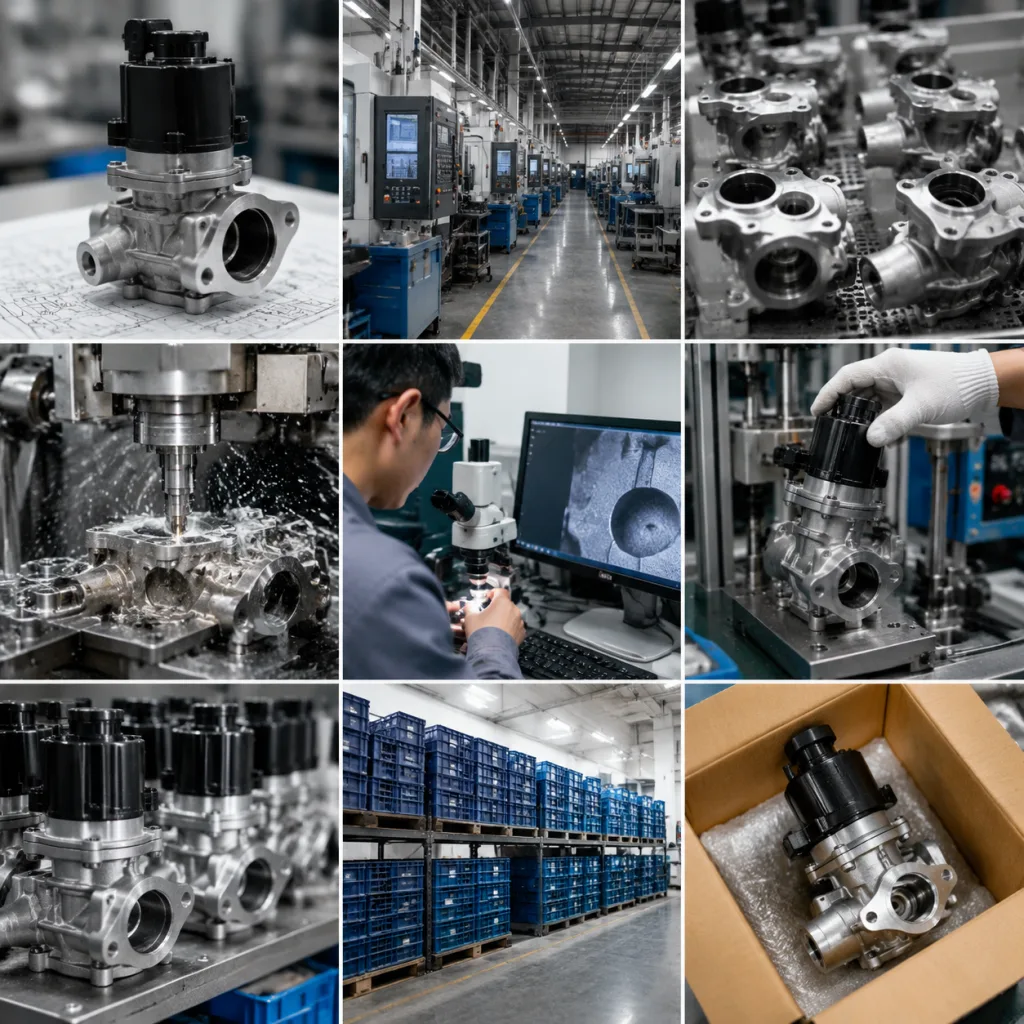
A factory audit should answer one question: can this supplier repeat the approved part at scale? For an egr valve renault supplier, the audit should follow one SKU from incoming housing or casting through machining, actuator assembly, functional testing, packing, and finished-goods traceability.

Ask to see the real production flow, not a document set in isolation. The strongest audit links drawings, samples, supplier approvals, inspection records, test data, packaging versions, and lot numbers.

Recommended audit questions:

  • Do the IATF 16949:2016 and ISO 9001:2015 certificates cover the manufacturing scope being purchased?
  • Are EGR valve drawings revision-controlled, with engineering changes linked to samples, approved suppliers, production lots, and packaging versions?
  • Which dimensions are checked on the housing, flange, shaft, valve plate, gasket face, threaded holes, pipe interface, and connector interface?
  • What tolerances or go/no-go gauges control flange flatness, shaft clearance, seat concentricity, connector keying, and gasket compression surfaces?
  • Is every electric actuator function-tested, or is testing based on sampling? What data are recorded?
  • Can test data be retrieved by lot number after shipment?
  • How are soot resistance, thermal cycling, vibration, salt spray or condensate corrosion, and leakage validated for new part families?
  • Can the factory isolate a suspect batch by lot number, production date, operator station, component supplier, assembly line, and test record?
  • What is the standard response time for 8D reports, containment, root-cause analysis, corrective action, and replacement shipment after a confirmed defect?

Driventus supports remote document review and on-site or third-party factory audits by appointment. For multi-location repair-chain supply, audit discussions should also cover carton strength, label readability, scanner compatibility, pallet height, mixed-SKU separation, and consistent kit contents.

Audit Walkthrough: Follow One SKU Through the Factory

Pre-PO Q&A: What Must Be Locked Before Quotation

Before a purchase order, procurement, quality, and sales teams should work from the same revision. The PO file should connect the approved sample, reference list, packaging artwork, inspection criteria, and quotation terms. Otherwise, a technically acceptable part can still become a commercial problem.

Failure risk Procurement impact Evidence to request
Fitment mismatchUnsellable stock or installation disputes2D drawing with critical dimensions, golden sample record, connector and flange photos
Heat or corrosion weaknessEarly field returnsMaterial declaration, supplier certificate, incoming inspection record
Seat or shaft variationLeakage, sticking, unstable flowSeat diameter, shaft clearance, flange flatness, thread gauge, CMM or fixture report
Actuator inconsistencyDiagnostic faults and repeat replacementValve travel, sensor output, response time, motor current, leakage data
Weak traceabilitySlow containment after defectsLot number, production date, operator or line record, inspection report
Poor packagingBent flanges, broken connectors, mixed SKUsDrop-test record, carton burst strength, inner separator design, pallet plan

</tr></thead><tbody> </tbody></table>For replacement programmes, Driventus can supply EGR valves with matching gaskets or installation accessories where specified. Buyers should confirm whether the kit requires only the valve body or a full assembly with cooler, pipe, seals, clamps, and fasteners. If the programme covers broader engine repairs, adjacent components can be sourced through the engine parts range linked from our catalog.

To start a controlled sourcing review, send application data, target annual volume, packing requirements, inspection requirements, and preferred incoterm. Driventus can then confirm feasibility, sample availability, MOQ, price logic, and lead time before quotation.

Frequently asked questions

Yes. Driventus can support neutral or private-label packing, subject to MOQ, artwork confirmation, label requirements, and verified fitment data. Packaging specifications should be agreed before sample approval and mass production.

Typical documents include IATF 16949:2016 and ISO 9001:2015 certificates, inspection reports, packing specifications, material declarations such as REACH (EC) No 1907/2006 where applicable, and agreed cross-reference data.

No. Driventus is an independent aftermarket manufacturer; brand names are referenced for fitment only. The parts are supplied for aftermarket replacement or customer-defined programmes, without claiming vehicle manufacturer approval or endorsement.

For a controlled quotation, send your application list, target volumes, packing requirements, and audit needs. You can [request a quote](/contact.html)

Request a Quote
Question to lock Why it matters Buyer input needed
Which applications are targeted?Avoids catalogue mismatchVehicle range, engine code, year range, fuel type, emission generation
Which references are allowed?Controls fitment claimsVerified OE-style references, TecDoc-style data if available, internal SKU mapping
What exactly was approved?Freezes the specificationGolden sample, connector photos, flange measurements, gasket and accessory list
What tests define acceptance?Prevents subjective disputesLeakage pressure, actuator travel, sensor signal, current draw, thermal cycle need
How will it be packed?Protects part and brand positionNeutral or private-label design, barcode, carton quantity, pallet limit
What demand is realistic?Stabilises unit costTrial order, quarterly demand, annual estimate, reorder trigger
What price terms apply?Prevents landed-cost surprisesCurrency, incoterm, payment term, tooling or artwork charges, validity period
What compliance file is needed?Supports import and customer reviewISO certificates, REACH declaration, inspection report, certificate of origin if needed