EGR Valve Mercedes-Benz Manufacturer China Sourcing
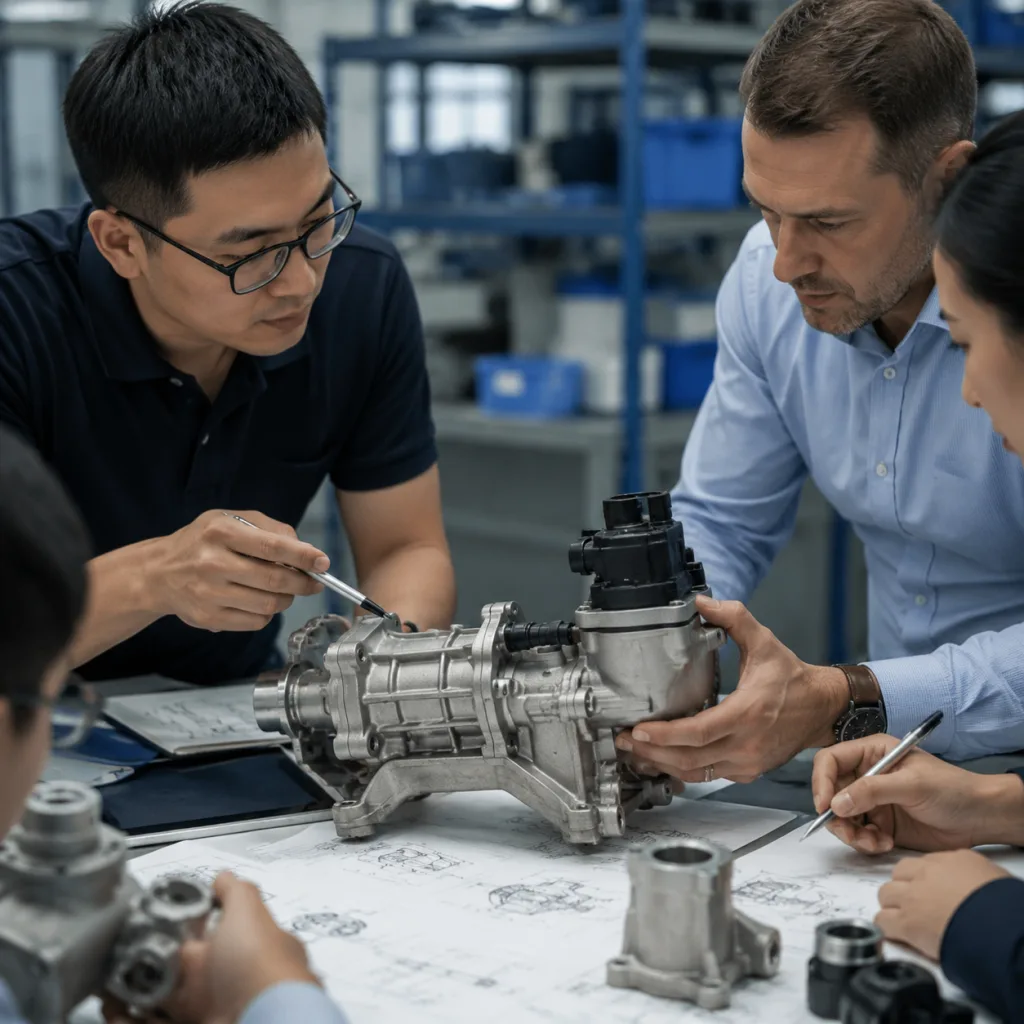
Choosing an EGR valve Mercedes-Benz manufacturer China partner is not a catalogue exercise. For importers, wholesalers, repair-chain operators, and sourcing teams, the decision affects warranty exposure, fitment accuracy, customs files, shelf availability, and how quickly a technical complaint can be traced back to a batch.
The risk is in the detail. Mercedes-Benz applications can involve diesel or petrol engines, pneumatic or electric actuation, cooled or non-cooled layouts, 2–6 pin connectors, vacuum nipples, coolant ports, and emissions strategies that change by engine code and model year. Two valves may look similar on a screen and still differ in pin layout, valve-seat geometry, flange flatness, shaft orientation, or opening profile. A dependable supplier must control machining, sealing, electronics integration, functional testing, revision records, and traceability—not only final assembly.
Driventus Auto Parts manufactures engine and powertrain components in Taizhou, Zhejiang, and exports to more than 60 countries. For EGR valve programmes, we support aftermarket distributors, OEM/Tier-1 sourcing teams, and multi-location repair chains with documentation control, sample validation, PPAP-style evidence where required, and repeatable production. Typical projects start with a reference list, photos or samples, annual volume, target price band, packaging format, and destination-market requirements. Driventus is an independent aftermarket manufacturer; brand names are referenced for fitment identification only.
Nomination decision: prove the supplier can control fitment, not just quote a price
A Mercedes-Benz EGR valve programme usually spans several part families across passenger cars, vans, and light commercial platforms. The first sourcing question is not “what is the lowest unit price?” It is: can this factory manage application data, revision control, actuator behaviour, and batch evidence well enough for your sales channel?
A strong RFQ file should include the target reference, engine code, model year range, emission level, connector photos, pin count, flange photos, gasket profile, expected annual volume, and whether the buyer needs a direct-replacement aftermarket part or a controlled engineering development.
Use this nomination screen before issuing a purchase order:
Application mapping: fitment by engine code, emission level, model year, connector type, actuator type, cooling configuration, gasket style, and left-/right-hand-drive restrictions where applicable.
OE cross-reference handling: generic references such as OE 06A… or OE 11251… should be used only when supplied by the buyer or shown in an approved catalogue file. Driventus does not claim vehicle manufacturer approval.
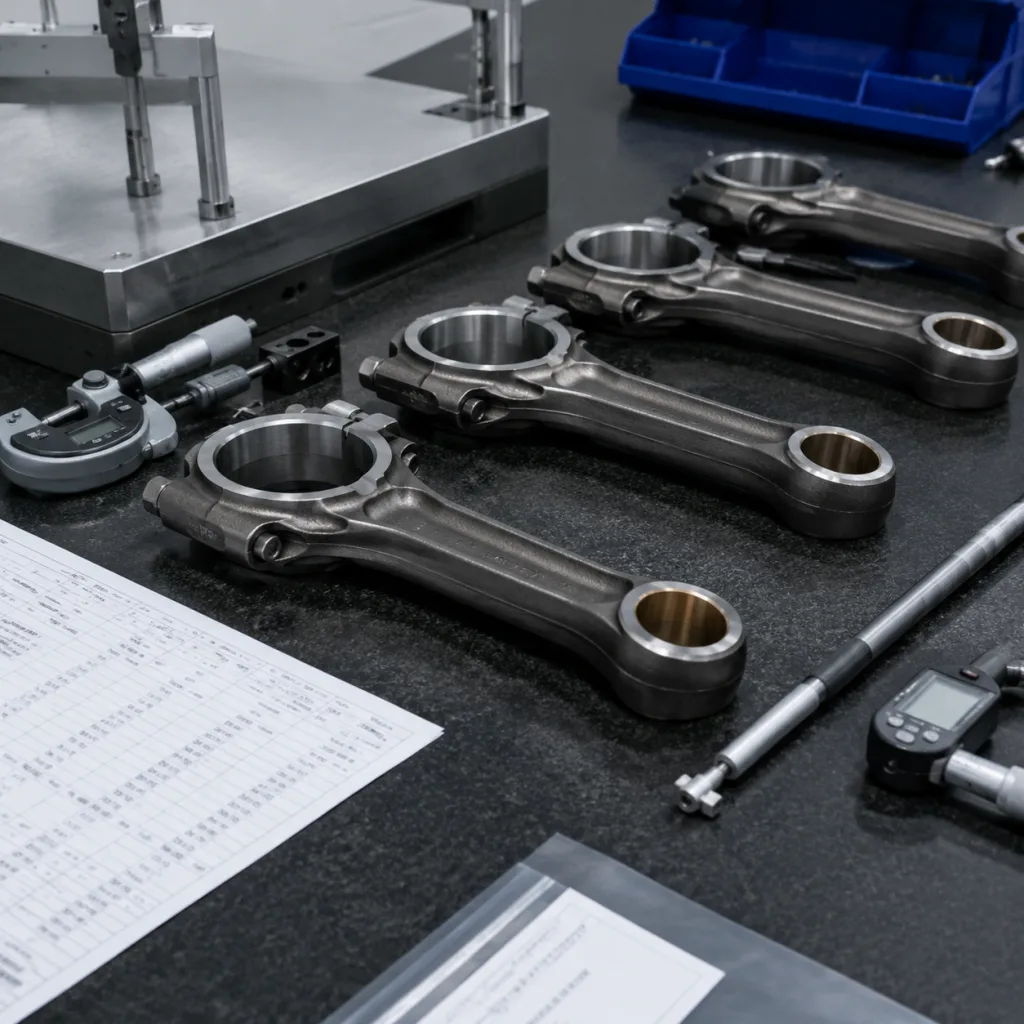
Critical dimension control: agree inspection points such as flange flatness, bolt-hole centre distance, valve-seat diameter, actuator clocking, connector orientation, cooler-port diameter, and gasket land width before sample approval.
Sample control: first articles should be identified by batch, cavity, machining route, assembly date, and inspection report number. Retained samples are normally kept for 12–24 months when agreed in the control plan.
Electrical validation: actuator response, sensor feedback, connector retention, insulation resistance, continuity checks, polarity verification, and current draw at agreed voltage levels where applicable.
Also ask the supplier to separate confirmed catalogue items from parts still under development. That line matters. It prevents sales teams from promising coverage that engineering has not validated, and it helps buyers avoid catalogue errors before launch. Buyers can review related engine products in our catalog or discuss EGR-specific development under custom manufacturing.
Architecture comparison: pneumatic, electric, and cooled EGR valves are different buying cases
EGR valves are not universal replacement parts. A low price on the wrong actuator, connector, or cooling interface quickly becomes expensive through returns, fitment disputes, and workshop support. Before comparing quotations, define the architecture.
In RFQs, attach front, rear, connector, flange, and port photos. If the old unit has installation damage or missing parts, mark the sample clearly so the factory does not copy a damaged condition.
Item for comparison
Pneumatic EGR valve
Electric EGR valve
EGR valve with cooler interface
Common demand channel
Older aftermarket range
Broad current aftermarket range
Diesel-heavy van and passenger applications
Main control element
Vacuum diaphragm
DC motor or stepper actuator
Electric or pneumatic valve plus coolant interface
</tr></thead><tbody> </tbody></table>For Mercedes-Benz fitment, external appearance is not enough. Connector keying, pin layout, bolt-hole position, bypass channel shape, valve-seat geometry, shaft orientation, and opening profile can make visually similar parts incompatible. Driventus recommends confirming dimensional drawings, approved samples, product photos, and fitment tables before tooling approval or bulk production.
For electric valves, define the benchmark. Is comparison being made against an OE-used sample, a new aftermarket sample, or a drawing package? Calibration comparison is only meaningful when the reference is controlled.
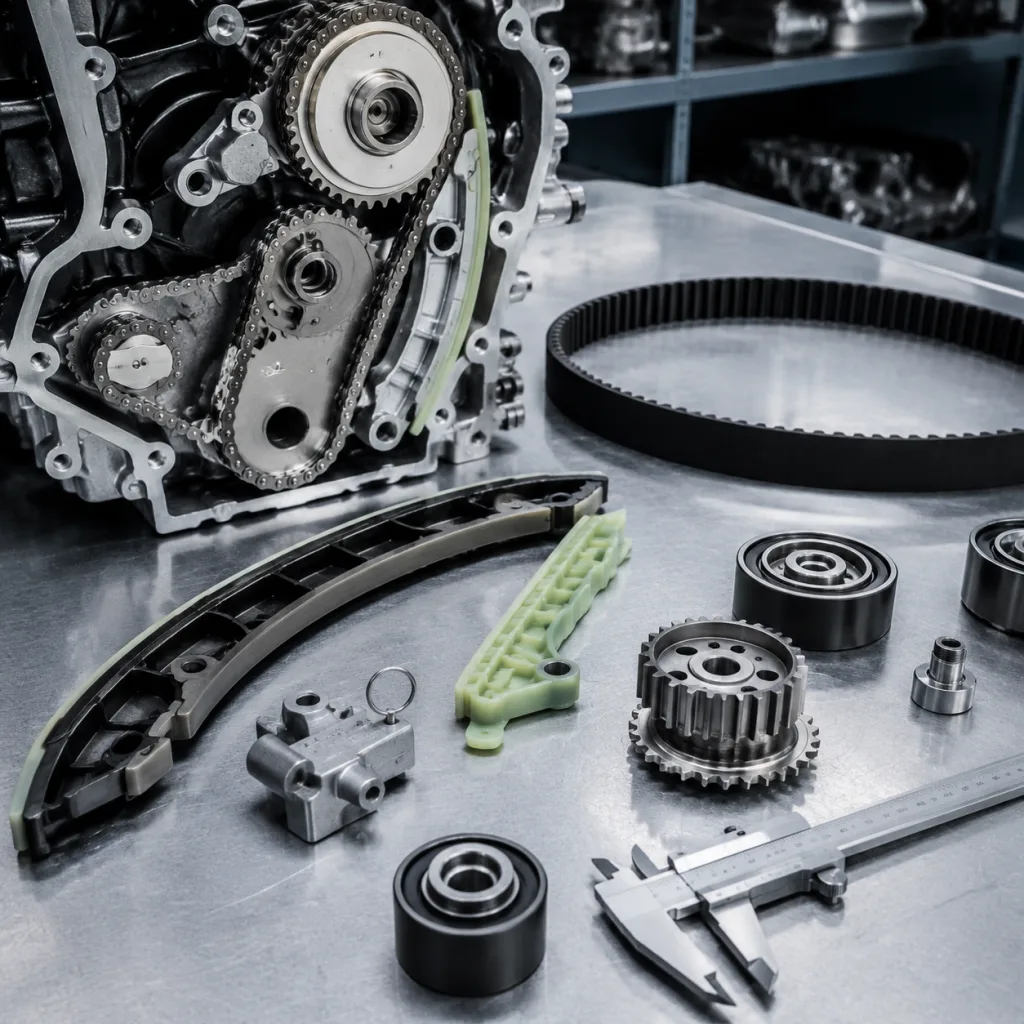
For mixed orders, one shipment may include EGR valves together with gaskets, water pumps, pistons, crankshafts, timing components, and other engine parts. Consolidated production planning can reduce carton count, simplify inbound receiving, and help distributors build a cleaner warehouse replenishment plan. A typical mixed container plan groups fast-moving EGR references at 100–300 pcs each, slow movers at 50–100 pcs where material is available, and service kits in carton quantities that match branch-level picking units.
Cost and lead-time reality check: what changes the quotation
Price differences are not random. They usually come from actuator source, casting availability, electronics complexity, test requirements, packaging, and order volume. A practical sourcing discussion should therefore cover minimum order quantity, tooling status, packaging, inspection frequency, and schedule before either side treats the quote as firm.
Typical commercial parameters for EGR valve sourcing are:
MOQ: commonly 100–300 pieces per fast-moving reference. Slow-moving references may be discussed at 50–100 pieces if castings, motors, sensors, and gaskets are already stocked.
Sample order: usually 5–20 pieces per reference for dimensional review, bench testing, workshop fitment, and functional validation. Paid samples are normally invoiced separately from bulk orders.
Indicative price logic: pneumatic valves are costed mainly by casting, diaphragm, machining, and spring specification. Electric valves add motor, gear, PCB/sensor, connector, calibration, and 100% functional testing cost.
New development lead-time: normally 45–90 days after confirmed samples, drawings, 3D data, or technical benchmarks. Complex cooled valves or new electronics may require 90–120 days including tooling and validation loops.
Repeat production lead-time: commonly 30–60 days depending on order mix, actuator inventory, machining load, test capacity, packaging format, and whether cartons require buyer-specific printing.
Packaging: neutral box, buyer brand packaging, service kit packaging, or bulk packing. Artwork approval, barcode rules, carton drop-test needs, and label language should be closed before mass production.
Traceability: production date, batch number, inspection status, operator or line code, carton-level identification, retained samples, and test records where agreed.
Payment and shipment planning: common structures include deposit plus balance before shipment, FOB Ningbo/Shanghai, EXW factory, or CIF destination by agreement. Buyers should reserve 7–14 days for booking, consolidation, inspection, and export documentation after production release.
Driventus operates as a vertically integrated manufacturer for engine and powertrain components, with process control covering machining, assembly, inspection, and export packing. For EGR valves, the degree of in-house processing depends on the part design, electronics configuration, tooling ownership, and buyer requirements. Where specialist subcomponents are used, supplier qualification, incoming inspection, and batch traceability become part of the control plan.
For supplier audits, do not stop at certificates. Review incoming material inspection, torque control records, leak-test records, actuator test results, gauge calibration status, non-conforming material handling, corrective-action records, and final inspection sampling. Useful evidence includes calibrated torque-tool lists, leak-test master checks, gauge R&R status for critical fixtures, production traveller records, and quarantine logs showing how mixed or suspect batches are contained before shipment.
Document pack deep-dive: what to request for quality and market compliance
EGR valves operate within an emissions-control system, so documentation discipline matters. Aftermarket replacement parts may not follow the same approval route in every destination market, but buyers still need evidence that the factory can control processes, preserve traceability, and respond quickly when quality issues occur.
For distributor programmes, a focused document pack is often enough. For OEM/Tier-1 or tender supply, buyers may request a PPAP-style file with more engineering evidence.
Driventus works under IATF 16949:2016 and ISO 9001:2015 quality-management principles. Buyers can review our quality system before requesting a formal audit pack. Depending on the programme, customer type, and destination market, the following documents may be relevant:
IATF 16949:2016 certificate and ISO 9001:2015 certificate scope review.
Control plan, process flow chart, work instruction, and inspection standard for selected references.
First article inspection report with critical dimensions, drawing revision, sample status, and inspector sign-off.
Material declaration and restricted-substance statement for REACH (EC) No 1907/2006 where applicable.
RoHS, PAHs, SVHC, or other restricted-substance declarations when requested by the destination market or customer contract.
IMDS or material data support when required by OEM/Tier-1 customers.
Functional test report, leakage test report, electrical inspection record, coolant pressure test record, and calibration evidence for relevant gauges.
AQL inspection plan, retained-sample record, batch traceability sheet, and corrective-action format for warranty or field returns.
Packing specification, carton label format, drop-test record, pallet layout, or transport validation record where required.
For Europe, the UK, North America, Australia, Brazil, and other regulated markets, importers should also check local emissions and replacement-part rules. ECE R-83 relates to vehicle emissions type approval in applicable markets, but it should not be treated as a universal component certificate for every aftermarket EGR valve.
Driventus can support documentation review and technical file preparation, while buyers remain responsible for confirming local regulatory obligations before sale. Buyers should also confirm whether their channel requires claims wording such as “replacement part,” “aftermarket fitment,” or “not genuine/OE.” Packaging and online listings can create compliance risk even when the part itself is correctly manufactured.
Validation sequence: seven tests before approving bulk production
When buyers search for an egr valve mercedes-benz manufacturer china supplier, validation should combine bench testing, dimensional confirmation, and practical fitment review. A valve that passes a simple open-close check may still fail in service if flow rate, response time, sealing behaviour, or thermal stability falls outside the agreed tolerance.
The validation plan should define the benchmark part, test voltage or vacuum level, test temperature, pressure condition, cycle count, acceptance criteria, and sign-off responsibility.
Recommended sequence:
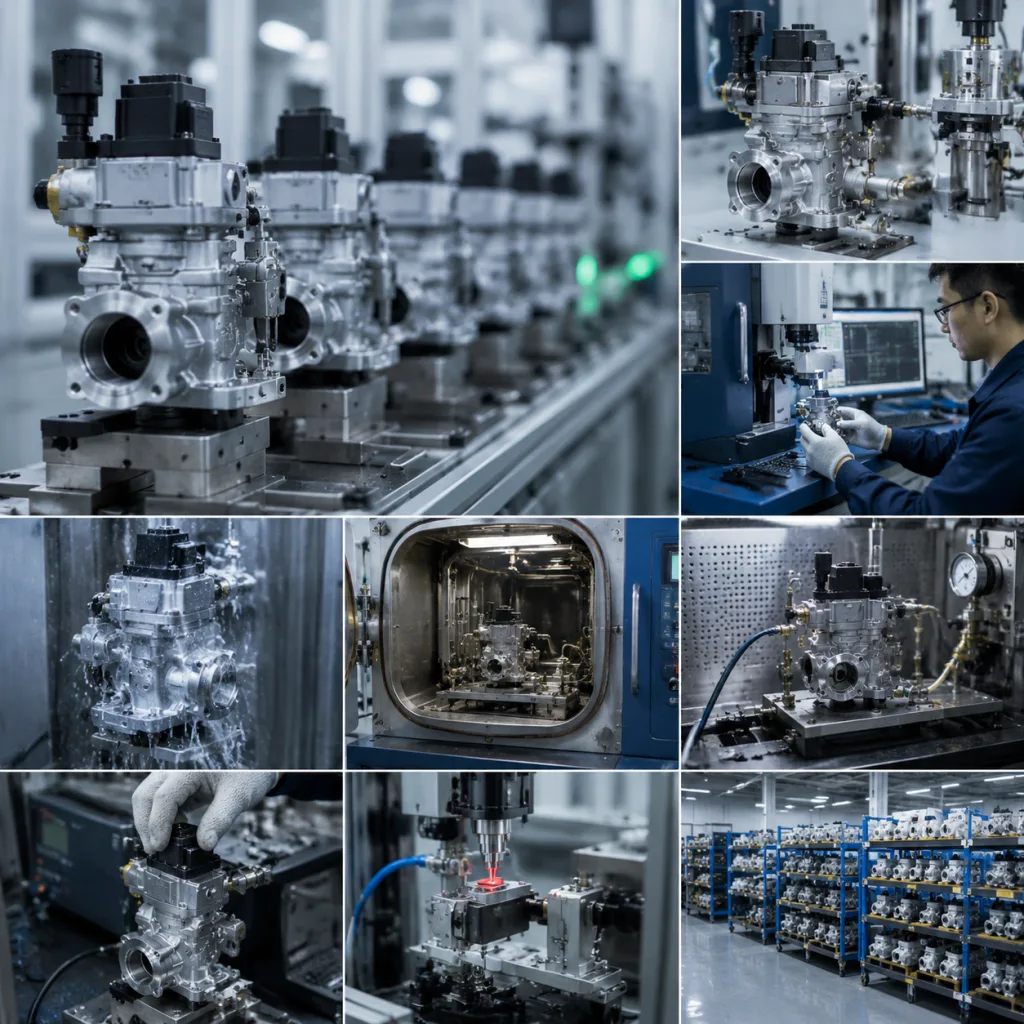
1. Dimensional inspection: confirm flange geometry, bolt-hole location, connector orientation, gasket surface, cooler interface, shaft position, and overall envelope against the drawing or approved sample. Typical agreed tolerances may include ±0.05–0.10 mm for selected machined features and tighter control for sealing faces where the drawing requires it. 2. Seat leakage test: verify leakage at the defined pressure, temperature condition, and valve position. Specify the medium, pressure, time, and maximum allowable leakage rather than accepting only “leak test passed.” 3. Actuator cycling: test repeated opening and closing under controlled voltage, duty cycle, or vacuum conditions. For electric valves, sample validation commonly includes 5,000–20,000 bench cycles before moving to extended durability testing where required. 4. Position feedback test: confirm sensor output is stable, repeatable, and within the agreed range for electric valves. The report should show closed, mid-stroke, and open-position values instead of only a pass/fail result. 5. Thermal cycling: expose the assembly to hot-cold cycles to identify binding, seal movement, material distortion, connector weakness, or coolant-port leakage. Buyers often request a range such as -30°C to 120°C for bench screening, adjusted to the agreed material specification and test equipment. 6. Flow bench test: compare flow characteristics with the approved benchmark sample across relevant operating points. Acceptance is commonly set as a percentage deviation from the approved sample at defined valve openings rather than a single maximum-flow number. 7. Packaging test: confirm that actuator housings, flanges, connectors, and gasket surfaces are protected during sea freight, pallet handling, and parcel delivery. Corrugated strength, inner separators, cap protection, desiccant needs, and carton drop height should be defined before the first branded packaging run.
For repair-chain supply, field failure analysis should be part of the contract discussion. Returned units should be examined for soot blockage, coolant leakage, electrical failure, installation damage, connector contamination, incorrect application, and packaging-related impact.
Not every returned valve is a manufacturing defect. A structured return process reduces unnecessary debit notes, improves installation guidance, and helps both parties separate product issues from service conditions. Useful return evidence includes mileage, engine code, fault code, installation date, photos before removal, and confirmation that related components such as gaskets, cooler, vacuum lines, wiring, or intake deposits were checked.
Bulk order Q&A: what must be frozen before the PO is released
Before issuing a purchase order to an egr valve mercedes-benz manufacturer china source, align engineering, purchasing, quality, and logistics requirements in one controlled file. The PO should reference the approved sample number, drawing or catalogue revision, packaging file version, Incoterm, agreed inspection level, and shipment deadline.
What application data should be locked? Confirm target references, application data, engine codes, model-year range, connector details, and any OE-style cross-reference supplied by the buyer.
Is this catalogue supply or new development? Define whether the order is for confirmed catalogue items, reverse-engineered samples, or new development. Freeze the benchmark sample before quotation.
What sample evidence is required? Approve samples before mass production, including dimensional, electrical, leakage, flow, packaging, and fitment data where applicable.
How will warranty claims be handled? State warranty terms, claim process, evidence required, debit-note rules, response time, and whether labour or consequential costs are excluded.
Which commercial terms are fixed? Confirm MOQ, unit price, tooling cost if any, Incoterms, payment terms, production lead-time, shipment window, and validity period for actuator or casting prices.
What packaging and label rules apply? Approve box artwork, carton label, pallet format, barcode requirements, country-specific marking rules, and any “independent aftermarket” wording required by the market.
Which documents must ship with the goods or remain on file? Specify documentation required for customs clearance, restricted substances, customer audits, market compliance, and private-label file records.
What inspection standard applies? Agree AQL level, inspection sampling plan, retained sample policy, pre-shipment report format, and whether buyer inspection is required before loading.
How will the shipment be packed and loaded? Define carton quantity, gross weight limit, pallet height, container loading plan, spare gasket packing, and mixed-SKU carton restrictions.
Driventus can support distributors that need stable aftermarket range coverage as well as OEM/Tier-1 buyers requiring controlled engineering communication. For multi-location repair chains, the priority is consistent fitment, low installation variation, clear identification at branch level, and a warranty process that separates product defects from application or installation problems. For wholesalers, the priority is often MOQ flexibility, repeatable carton labelling, barcode accuracy, and a replenishment schedule that avoids tying too much cash in slow-moving references.
Driventus is an independent aftermarket manufacturer; brand names are referenced for fitment identification only. We do not claim approval, endorsement, or authorisation by any vehicle manufacturer, and all brand references should be read only as application information.
Frequently asked questions
Yes. Private-label supply can include neutral packaging, buyer artwork, carton labels, barcodes, country-of-origin marking, batch codes, and agreed traceability. Packaging artwork, legal markings, market-specific claims, and barcode data must be approved before production.
Please provide target references, sample photos, connector details, engine codes, annual volume, destination market, target Incoterm, packaging requirements, and any approved benchmark samples, drawings, or 3D data. Fitment tables and buyer-supplied OE-style references help reduce quotation risk.
No. Driventus is an independent aftermarket manufacturer; brand names are referenced for fitment identification only. We do not claim approval, endorsement, or authorisation by any vehicle manufacturer.
If you are comparing suppliers or preparing an audit file for EGR valve sourcing, send your reference list, annual volume, target market, packaging requirements, and technical files. You can [request a quote](/contact.html).