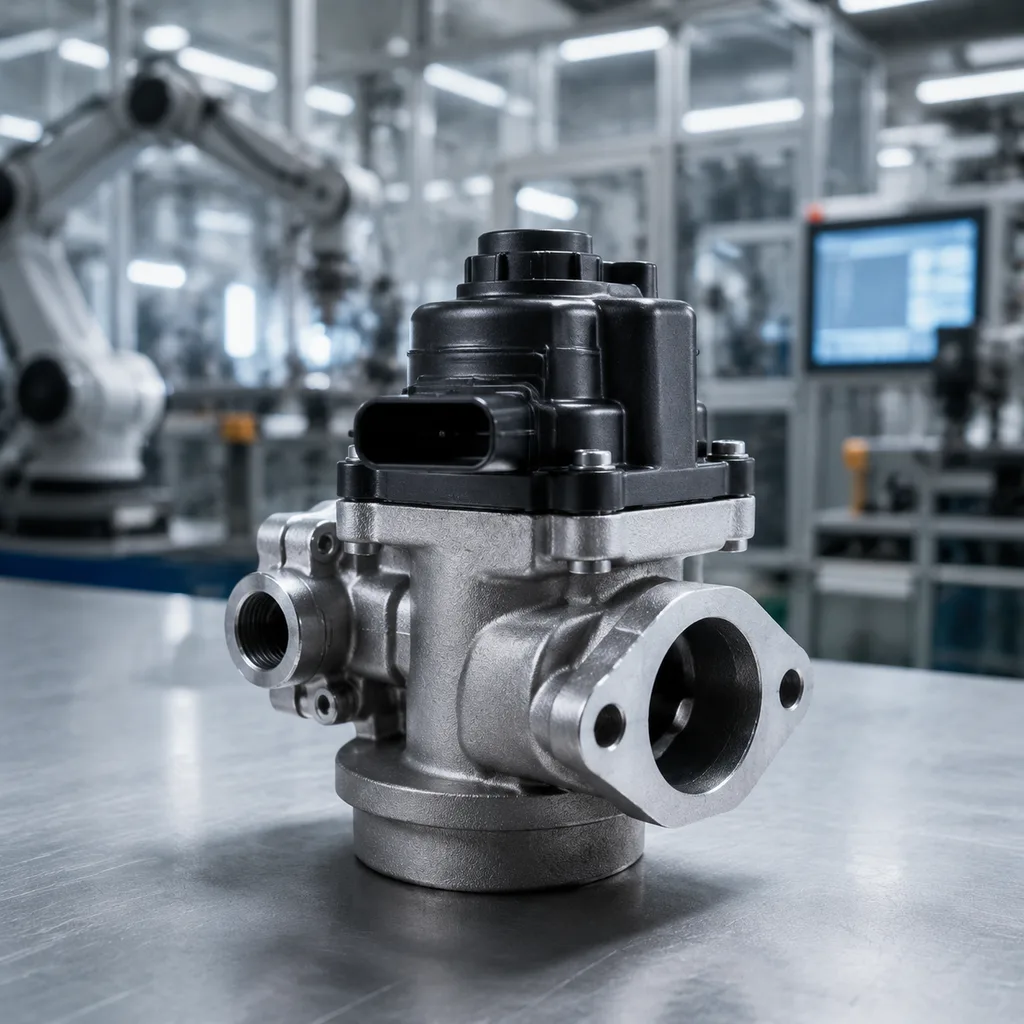
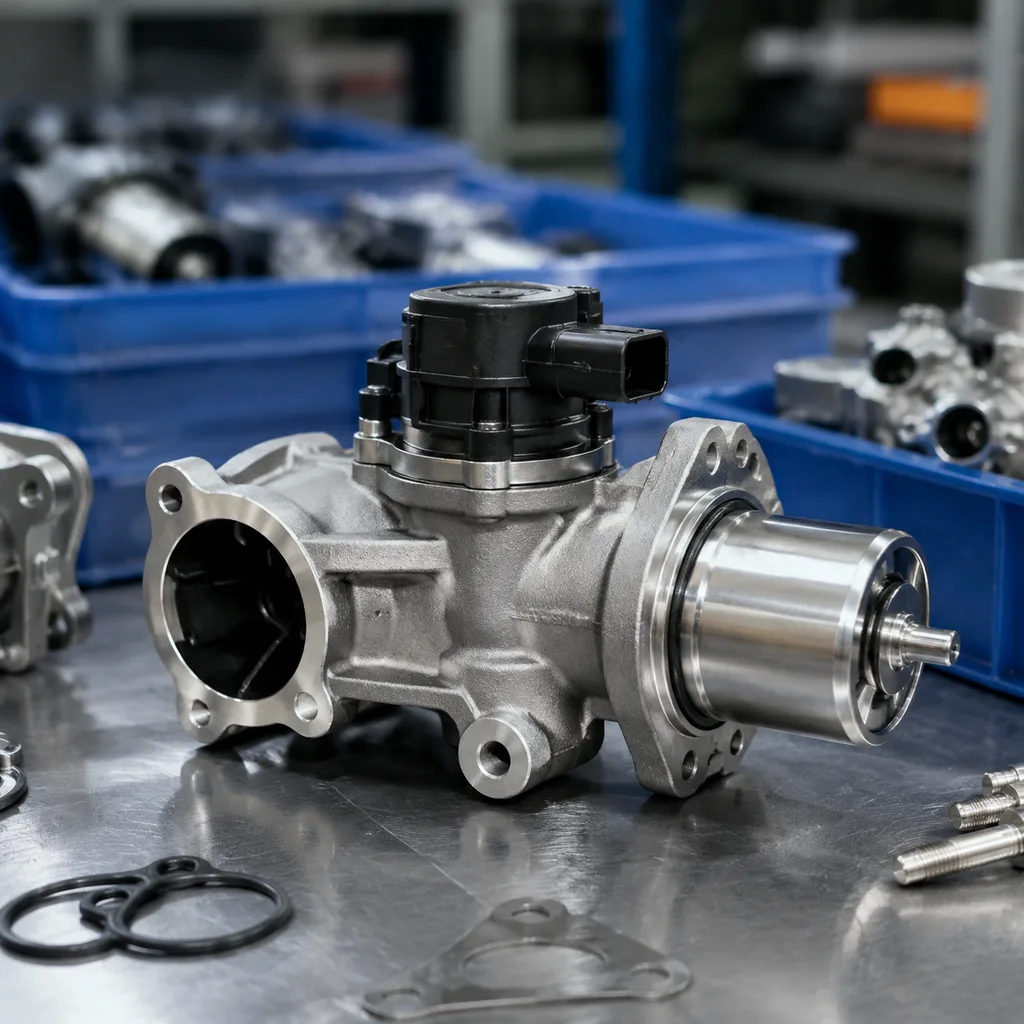
Sourcing an EGR valve for Jaguar applications is not just a matter of finding a part that bolts to the flange. The real commercial risk sits in sealing stability, connector clocking, actuator travel, hot-gas resistance, soot tolerance, and the valve’s ability to maintain calibrated flow and closed-position leakage control over repeated duty cycles. A serious egr valve jaguar oem supplier review should therefore begin with fitment evidence, critical dimensions, and process control, not price or catalogue interchange alone. Driventus supplies EGR valves and related engine components for B2B programmes under IATF 16949:2016 and ISO 9001:2015 controls. Driventus is an independent aftermarket manufacturer; Jaguar and other brand names are referenced for fitment identification only. For procurement teams, the practical question is whether the supplier can provide a drawing or measurement report, material traceability, functional test criteria, actuator and connector checks, packaging rules, and a release plan that matches your MOQ, label format, and shipment schedule. Start with the catalogue, confirm the application against a sample or drawing, then align the part with quality documentation, carton specification, barcode data, and claim-handling rules before issuing a sample order.
What to verify before you place an order
Use a structured check before you buy. The aim is to separate a visually similar EGR valve from a controlled part that can pass inbound inspection shipment after shipment.
Check
What to confirm
Risk if missed
Mounting pattern
Hole pitch, flange thickness, gasket land width, bolt clearance, dowel or locating features
Leakage, uneven seal compression, cracked flange, or installation rework
Gas path
Port diameter, port depth, flow direction, valve seat profile, soot exposure zone
Restricted flow, sticking, insufficient exhaust recirculation, or emissions-system faults
Transit damage, warehouse picking errors, delayed distribution release
</tr></thead><tbody> </tbody></table>For an egr valve jaguar oem supplier search, the first control point is application data rather than vehicle branding. Match the valve body, actuator type, port angle, gasket face, connector position, bolt pattern, heat shield envelope, and mounting clearance to a confirmed sample or drawing. If no sample is available, ask for clear multi-angle photos, measured drawings with critical-to-fit dimensions, and a controlled cross-reference file that identifies the vehicle application, engine family, fuel type, emissions configuration, and production range.
Define the acceptance method before samples leave the factory. State whether the pilot part will be checked by dimensional inspection, bench actuation test, leak test, vehicle installation, diagnostic scan, or a combination of those controls. A useful sample report should record flange dimensions, connector orientation, pintle movement, closed-position leakage result, gasket specification, and visual condition after packing. This avoids a familiar sourcing problem: a sample looks correct on the bench, but later proves unsuitable because the connector angle, heat shield clearance, pin layout, or gasket compression does not match the target Jaguar application. Review our catalog and our quality system before you release a pilot order so the technical and commercial checks move together.
Fitment control and dimensional matching
EGR valves often fail procurement review because the dimensions are close, but not controlled. Buyers should ask for a dimensional report that covers critical-to-fit features, not just overall length or a catalogue reference. On Jaguar-fit EGR valves, small differences in flange flatness, actuator clocking, connector angle, port centreline, or gasket land width can create installation stress, exhaust leakage, or harness interference even when the part appears interchangeable.
Key inspection points include:
Flange flatness, sealing face finish, and gasket land width
Bolt-hole diameter, position, centre-to-centre spacing, and thread or sleeve clearance
Port diameter, port depth, port centreline, and flow direction marking
Actuator orientation, connector clocking, and harness clearance in the installed position
Gasket material, compressed thickness, profile, and full land coverage
Connector keyway, terminal alignment, terminal plating, retention force, and seal integrity
Heat shield position, bracket geometry, and clearance to nearby hoses, manifolds, and wiring
If your programme uses OE sample parts, document the sample chain and compare every shipment against the same inspection points. The sample should be photographed, labelled, and linked to the inspection report so teams do not confuse an engineering reference, a sales sample, and an approved production sample. For Jaguar programmes, the priority is repeatable fitment across production lots, not a one-off sample that happens to install correctly.
A controlled application file should include the part reference, engine or platform notes, dimensional checkpoints, electrical interface data, actuator test criteria, gasket specification, packaging requirements, and any buyer-specific labelling rules. Where drawings are available, define inspection tolerances for critical characteristics and identify which features require 100% checking versus lot-based sampling. Once this file is approved and maintained, the same data can support aftermarket distribution, workshop supply, e-commerce listings, fleet maintenance, and regional catalogue expansion without changing the physical interface. It also gives the buyer a firm basis for claims, because any disputed shipment can be checked against approved criteria instead of being judged only by visual comparison.
Materials, durability, and standards
An EGR valve works in a hot, contaminated environment. Exhaust gas, soot, condensate, vibration, and repeated thermal cycling all attack the assembly. The body, seat, shaft, spring, actuator housing, connector, gasket, and seal stack must survive that duty without exhaust leakage, pintle sticking, feedback signal instability, or actuator stall. A low-cost part may pass a simple installation check and still fail in service if the material selection, coating, sealing system, or validation plan is weak.
Typical procurement questions include:
Is the valve body stainless steel, cast steel, plated steel, or aluminium alloy, and what surface treatment is applied?
Is the seat material specified for repeated hot-gas exposure, soot abrasion, and condensate corrosion?
Are the shaft, spring, and return mechanism protected against corrosion, heat relaxation, and fatigue?
Are seals and gaskets rated for the expected engine-bay temperature, oil mist, exhaust condensate, and vacuum or pressure cycling?
Is the actuator tested for stroke consistency, response time, feedback signal range, and recovery after heat soak?
Is the connector housing material suitable for engine-bay heat, moisture, salt mist, and vibration?
Are gaskets supplied with the valve, and are replacement gaskets controlled by material, profile, and compressed thickness?
Durability evidence does not need to be elaborate, but it does need to be specific. Ask whether the supplier performs air leak checks, functional actuation checks, closed-position sealing checks, visual inspection of machined sealing faces, connector retention checks, terminal inspection, and lot-based dimensional inspection. For higher-volume programmes, buyers can request additional validation such as thermal cycling, vibration exposure, salt-spray review for exposed metal parts, hot-soak actuation, or extended actuator cycling. Each test should connect to a known field risk: leakage, sticking, poor return, signal drift, connector failure, corrosion, or transit damage.
For compliance and documentation, ask for material declarations aligned to REACH (EC) No 1907/2006 and RoHS where the buyer's market requires it. Where a programme needs emissions-system validation language, ECE R-83 is a relevant reference for light-vehicle exhaust emissions context, while the finished aftermarket part still needs to match the buyer's local regulatory and catalogue requirements. For related polymer seals and connector materials, weathering checks can reference SAE J2527 where applicable. Internal quality control should sit under IATF 16949:2016 and ISO 9001:2015, with lot traceability, inspection records, nonconformance handling, corrective-action records, calibration control, and change-control records available on request. That gives the buyer confidence in both the physical part and the process behind it.
MOQ, lead time, and supply planning
Procurement decisions usually turn on schedule discipline. A stable EGR valve supply programme should define the minimum order quantity, first-sample lead time, production lead time, release method, inspection hold point, and packing format before the first shipment. This matters even more when Jaguar-fit EGR valves sit inside a broader engine-parts assortment, because catalogue launches and distributor replenishment depend on predictable availability by reference number.
A practical buyer checklist:
1. Confirm forecast volume by engine family, model year, market, emissions configuration, and reference number. 2. Agree sample quantity, sample cost, sample freight, and approval method. 3. Define whether approval requires dimensional inspection, bench testing, leak testing, vehicle fitting, diagnostic scan, or customer sign-off. 4. Confirm MOQ by reference and whether mixed references can share one production or shipment plan. 5. Confirm carton count, inner protection, connector protection, barcode format, country-of-origin marking, and label language. 6. Define whether gaskets, bolts, installation leaflets, customer labels, or anti-counterfeit labels are included. 7. Agree whether mixed references can ship in one container, one pallet build, or one consolidated export order. 8. Set re-order point, safety stock, production buffer, inspection window, and port-of-entry timing. 9. Confirm claim-handling rules, replacement policy, photo evidence, test evidence, and documentation required for quality disputes.
Lead time is more than a factory number. It includes sample preparation, buyer review, packaging approval, label artwork, production queue, incoming material inspection, machining or assembly, final functional checks, export packing, customs documentation, and vessel or air-freight timing. If a buyer changes carton artwork, barcode data, country-of-origin wording, or pallet requirements after production starts, the commercial release can slip even when the valves themselves are ready. Packaging and labelling should therefore be treated as part of the technical release, not as an afterthought.
If you also source pistons, crankshafts, gaskets, water pumps, or turbochargers, it can be useful to consolidate engine-component sourcing through our engine components page and align release timing across parts. That reduces inbound fragmentation, improves container planning, and makes export packing more predictable for distributors, repair-chain buyers, fleet maintenance groups, and regional wholesalers.
How Driventus supports Jaguar programmes
The strongest supplier position is not a brand claim. It is a documented process that lets a buyer audit the part, the inspection method, the packaging rules, and the shipment record. For a Jaguar-fit EGR programme, Driventus starts with the application match, then builds the commercial supply plan around the approved specification.
Driventus can support:
Application matching against customer samples, verified drawings, VIN-based fitment data, or controlled cross-reference data
Dimensional checks for flange geometry, port alignment, connector position, heat shield clearance, and sealing surfaces
Controlled sampling for pilot orders, catalogue listings, distributor launch programmes, and repair-chain evaluation
Material and compliance documentation, including declarations required for regulated B2B supply chains
Custom labels, carton artwork, barcode rules, pack counts, and buyer-specific markings through custom manufacturing
Multi-market export requirements for the EU, UK, US, Canada, Australia, and Brazil
Cross-functional supply documentation for distributors, OEM/Tier-1 programmes, wholesalers, and repair networks
Repeat-order support using the same inspection points, packaging specification, lot code format, and traceability rules
For buyers, this closes the gap between technical fitment and commercial release. A sample order should not be a disconnected event; it should create the baseline for production approval, warehouse receiving, catalogue listing, and future re-orders. When the accepted sample, inspection report, label format, carton specification, and traceability method are connected, the buyer has a practical control file for every later shipment.
If your team needs a repeat order path, document the acceptance criteria once, then keep the same dimensional, functional, labelling, and packaging rules for each production lot. That is the cleanest way to keep inbound quality stable while protecting margin, service levels, and customer confidence. Driventus can review the target Jaguar application, confirm the required documentation, and prepare the sampling route before full procurement release.
Frequently asked questions
Use a verified OE sample, VIN-based application data, or a controlled drawing set. Then compare flange geometry, port alignment, connector type, pin layout, actuator orientation, gasket face, heat shield clearance, and actuator response. Driventus is an independent aftermarket manufacturer; brand names are referenced for fitment only.
Request dimensional data, material declarations, lot traceability, inspection records, sample approval notes, functional test criteria, change-control records, and packing details. For regulated programmes, ask for evidence aligned to IATF 16949:2016, ISO 9001:2015, REACH (EC) No 1907/2006, and any market-specific material restrictions.
Sample approval, drawing confirmation, tooling status, release volume, validation requirements, incoming material availability, export packing, and packaging artwork are the main drivers. Clear specifications and a stable forecast usually reduce delays more than any other action.
If you need a Jaguar-fit EGR programme with controlled samples, documentation, and export packaging, review the specification with our team and request a quote at [request a quote](/contact.html).