EGR valve · 2026-06-22

EGR Valve Iveco Wholesale Sourcing for Importers

EGR valve Iveco wholesale sourcing fails when buyers treat the part as a simple shape match. The connector may lock. The flange may fit. The valve can still leak, respond slowly, trigger fault codes, or arrive with no batch trail when a warranty claim lands six months later.

A stronger sourcing programme starts with decisions that can be measured: which references are fast movers, which require sample matching, which need 100% actuator and leakage testing, and which packaging format will survive sea freight and warehouse handling. Importers also need documentation that can support customs checks, customer audits, and warranty containment.

Driventus Auto Parts manufactures engine and powertrain components in Taizhou, Zhejiang, and supplies B2B buyers in Europe, the UK, North America, Australia, and Brazil. For Iveco light commercial, medium-duty, and heavy-duty EGR valve programmes, the practical approval path is clear: confirm fitment data, test actuator sweep and feedback, define leakage limits, lock packaging, and maintain traceability from component lots to cartons. Driventus is an independent aftermarket manufacturer; brand names are referenced for fitment only.

Start with the sourcing decision: coverage part, fast mover, or development item?

Not every EGR valve reference should be sourced the same way. A high-volume daily-moving SKU needs stable cost, safety stock, and repeatable end-of-line testing. A low-volume coverage part may need flexible MOQ and clear catalogue control. A reference with uncertain fitment, unusual connector geometry, or no confirmed sample should be treated as a development item, not a normal quotation.

For Iveco applications, buyers should first separate part numbers by vehicle platform, engine displacement, emission stage, mounting geometry, actuator type, connector layout, cooler interface, and gasket face. A shared spreadsheet is usually better than a message thread. Include verified OE-style cross-references, supplier references, buyer SKU numbers, annual quantity, target market, and packaging format. Final approval should still rely on drawings, samples, or buyer-approved technical data, not catalogue images.

Driventus supports distributors, wholesalers, repair-chain supply teams, and Tier-1 sourcing teams that require repeat shipments rather than one-off spot buys. Buyers can review related engine and emission-control items through our catalog or the engine component range at /products/engine-components.html.

Before an RFQ, classify each SKU:

  • Fast mover: price-sensitive, needs stable stock, clear MOQ, and repeat production planning
  • Medium-volume reference: requires good cross-reference control and periodic replenishment
  • Low-volume coverage part: may need flexible production grouping and realistic MOQ expectations
  • Problem replacement: linked to a known warranty issue, requiring attention to leakage, sticking, or actuator behaviour
  • Development reference: requires sample matching, tooling review, fixture setup, or new validation checks

Useful sourcing inputs include annual demand by SKU and market, first order quantity, monthly call-off expectation, current supplier defect rate, required packaging, Incoterms preference, target safety stock, sample quantity, and documentation requirements. For egr valve iveco wholesale projects, this classification prevents a common mistake: asking one price and one MOQ logic to fit every reference in the programme.

Failure modes that should shape the approval test plan

An EGR valve regulates exhaust gas recirculation into the intake system to help manage combustion temperature and emissions performance. In diesel commercial vehicles, it works against soot, heat, vibration, condensate, pressure fluctuation, and frequent actuator movement. That environment creates predictable failure modes. Use them to build the approval plan.

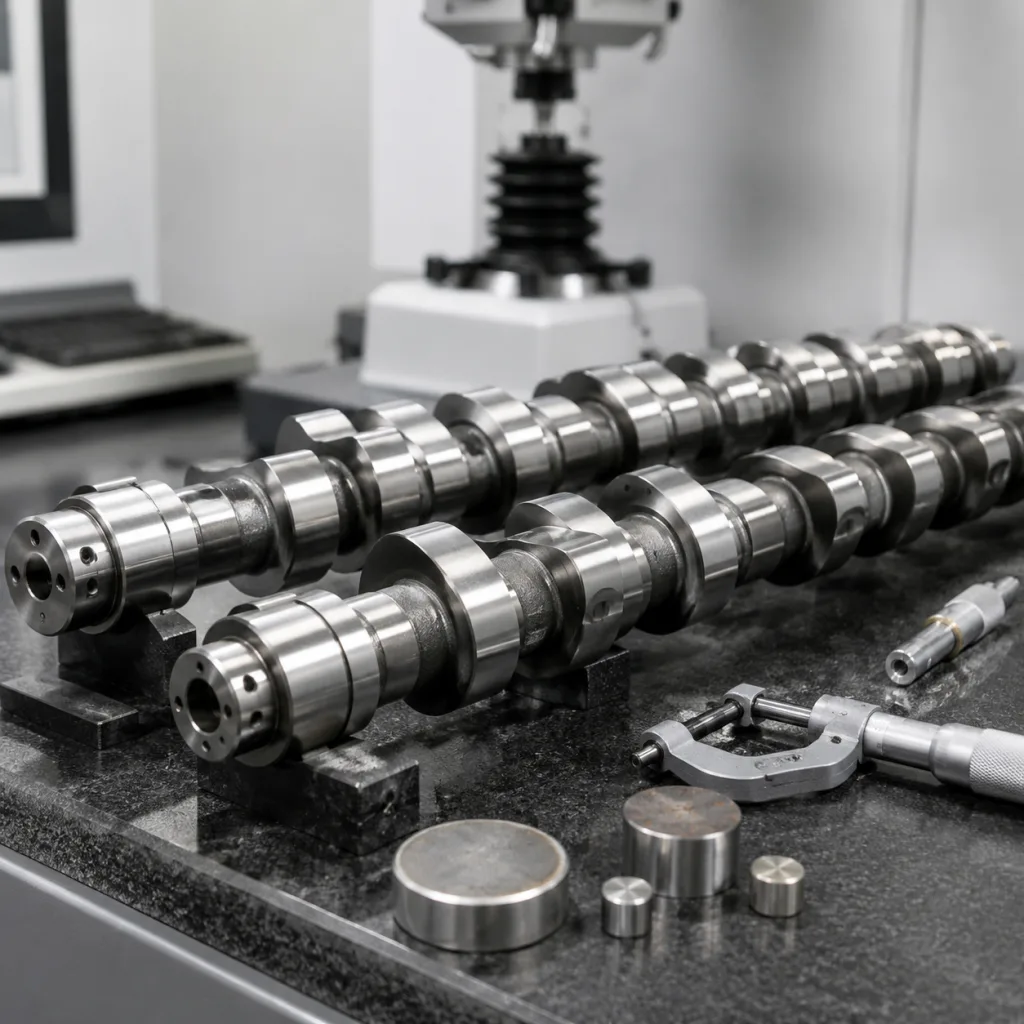
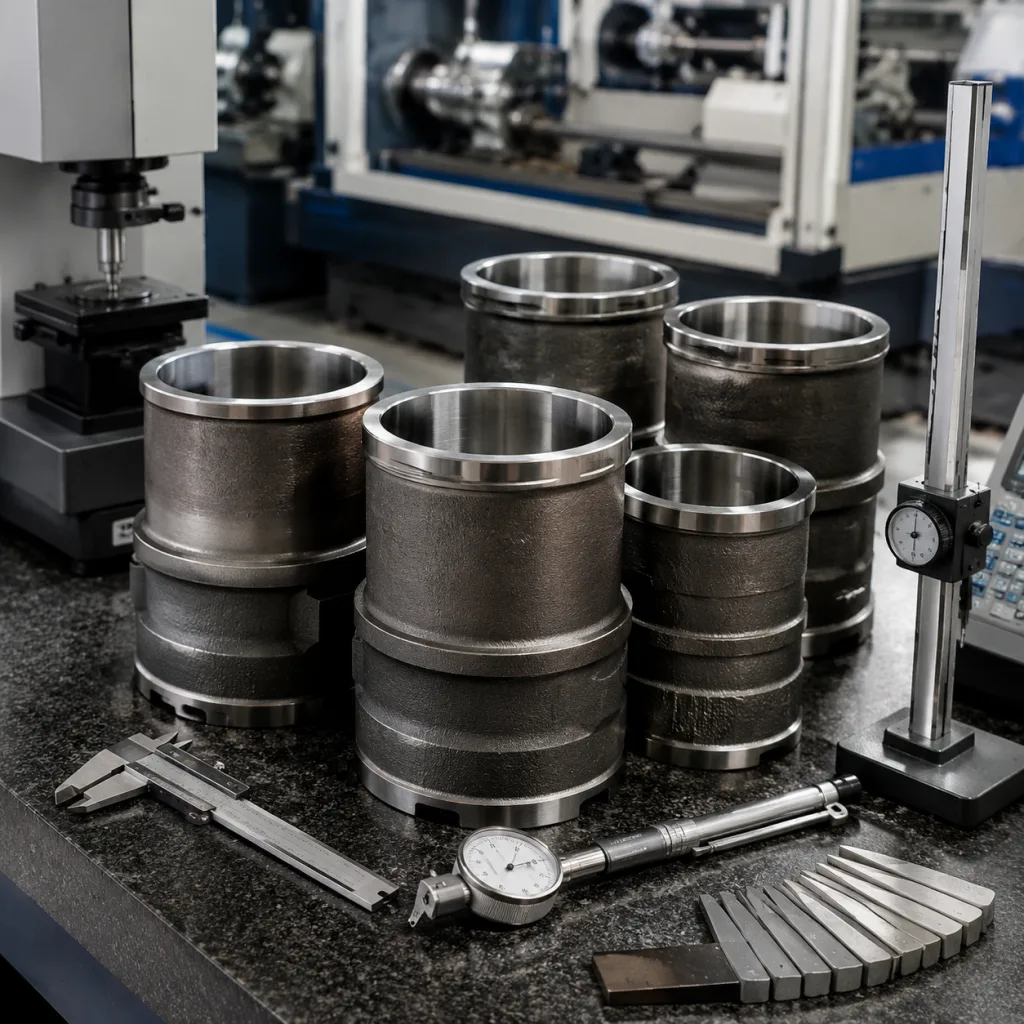
</tr></thead><tbody> </tbody></table>For egr valve iveco wholesale purchasing, samples should be compared with the existing approved part. Visual similarity is not enough. Dimensional inspection may use callipers, connector gauges, thread gauges, height gauges, or coordinate measuring equipment where required. CTQ points normally include flange datum, port diameter, bolt-hole centre distance, connector orientation, gasket groove depth, actuator clearance envelope, and cooler interface.

Electrical testing should verify actuator sweep, sensor feedback, connector compatibility, and communication behaviour where applicable. A practical sample pack may include 3 to 10 initial pieces depending on SKU risk. At minimum, check installation fit, connector lock, actuator movement, closed-position leakage, and return behaviour after repeated cycling. For higher-risk references, add a short bench endurance run, heat-soak check, and post-test leakage comparison.

Emission-related replacement parts may be used in vehicles subject to regulatory frameworks such as ECE R83 for light-duty emissions in relevant markets. Aftermarket parts are not automatically approved by the vehicle manufacturer. Buyers should therefore focus on correct fitment, stable function, validation evidence, and documentation that matches the intended engine system and market requirements.

Audit the process, not only the finished valve

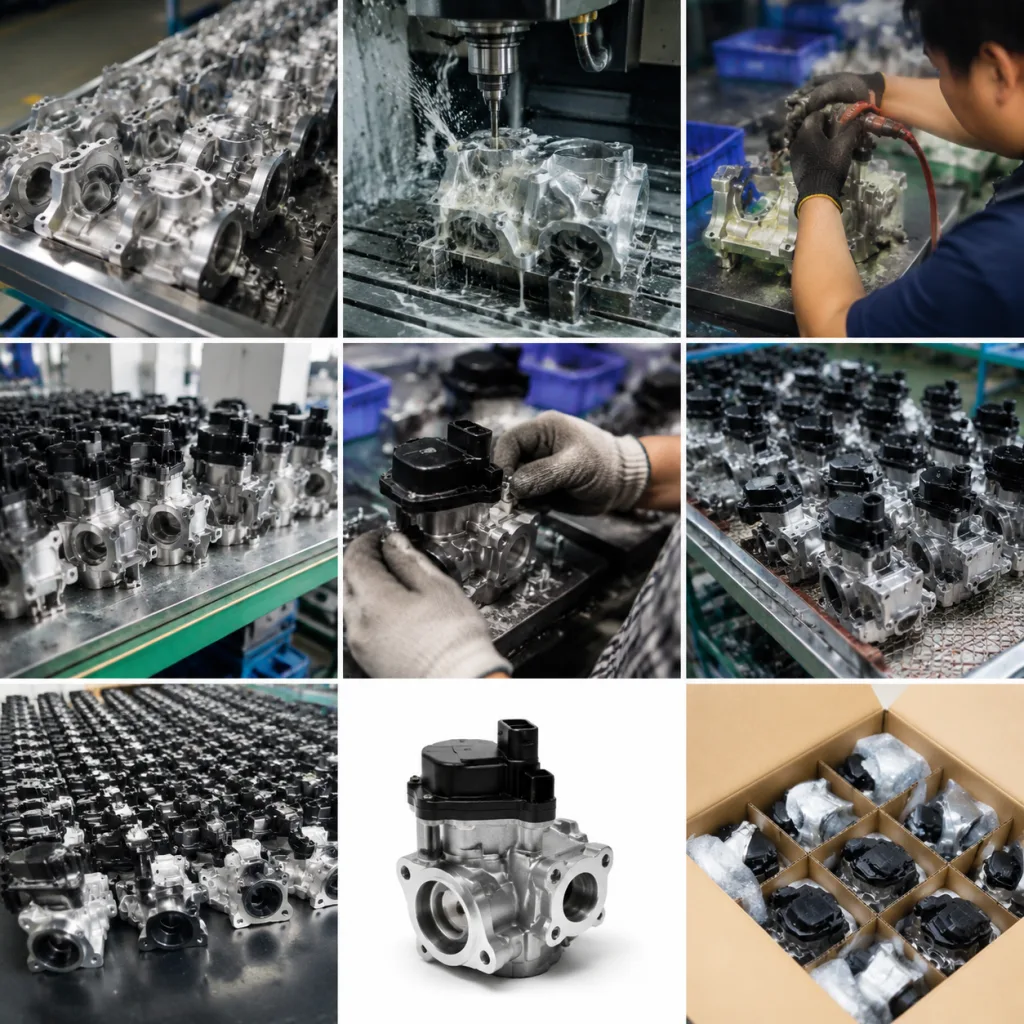
A finished EGR valve can pass a sample check and still fail in repeat production if the factory process is weak. The audit should follow the part through the plant: incoming materials, machining, cleaning, assembly, calibration, final test, packing, and batch record control.

Driventus operates under IATF 16949:2016 and ISO 9001:2015 quality management frameworks for automotive production controls. Buyers can review our quality system as part of supplier pre-qualification.

A useful factory audit asks direct questions:

  • Are castings, machined bodies, shafts, seals, springs, electronics, motors, and connectors inspected on arrival?
  • Can component lot numbers be linked to finished goods and carton labels?
  • Is the process flow defined from machining and deburring to cleaning, drying, assembly, calibration, and final test?
  • Are inspection frequency, sampling method, responsible staff, and acceptance criteria written in the control plan?
  • Are gauges calibrated and clearly marked at the workstation?
  • Is first-article inspection required for new or revised SKUs?
  • Are torque, press-fit depth, valve movement, connector orientation, and sealing surface condition checked in process?
  • Are actuator operation, sealing, and leakage tested at end of line where applicable?
  • Are non-conforming products physically segregated?
  • Is there an 8D or corrective-action process for repeat defects?
  • Has packaging been checked for drop, crush, moisture, and transport handling risk where required?
  • How long are inspection reports and production data retained? Many B2B aftermarket programmes expect 3 to 5 years.

For EU and UK buyers, material declaration requests may include REACH (EC) No 1907/2006 screening for substances of very high concern. Depending on the customer profile, buyers may also request RoHS-related material information, conflict-minerals statements, or packaging compliance data. For North American, Australian, and Brazilian importers, customs data accuracy matters: country-of-origin marking, HS code consistency, invoice wording, net and gross weight, carton count, and declared part references should be checked before shipment booking.

Driventus can provide inspection reports, production batch references, and agreed documentation packs for repeat orders. For ongoing egr valve iveco wholesale supply, define the inspection level before production: for example, 100% functional testing for actuator and leakage, plus AQL sampling for appearance, labels, dimensions, and packaging. That removes guesswork when a receiving inspector finds an issue.

Audit the process, not only the finished valve

MOQ, lead time, and price: compare the landed-cost scenarios

A low unit price is not automatically the lowest-cost supply option. EGR valve sourcing should be compared by landed-cost scenario: MOQ, lead time, packaging, accessories, testing scope, air-freight risk, warranty exposure, and cash tied up in slow stock.

Failure mode What usually causes it What to verify before approval Procurement risk if missed
Installation leakageFlange distortion, poor gasket face, incorrect bolt-hole positionCritical mounting dimensions, flange flatness, gasket interface, port alignmentWorkshop rejection, exhaust leakage, repeat returns
Valve stickingSoot sensitivity, burrs, contamination, weak shaft finish, poor cleaningCleanliness, valve movement, return behaviour, repeated cyclingFault codes, unstable idle, premature failure
Closed-position leakagePoor seat machining, seal inconsistency, assembly variationLeakage under agreed pressure; batch test recordsExcessive recirculation and emissions complaints
Actuator faultMotor, gear, sensor, connector, or calibration issueStroke, response, feedback signal, connector lock, abnormal noiseLimp mode, diagnostic trouble codes
Heat-related degradationWrong material, weak seals, insufficient actuator protectionMaterial grade, seal specification, heat shielding, heat-ageing planEarly actuator failure or sticking
Warranty investigation delayNo batch link between unit, carton, and component lotsBatch number, production date, inspection record, carton labelSlow containment and wider claim exposure

</tr></thead><tbody> </tbody></table>MOQ and lead time depend on SKU complexity, actuator type, packaging specification, order mix, and whether tooling or fixtures already exist. Custom housings, connectors, surface treatments, or private-label packaging add time for drawing confirmation, pilot production, artwork approval, and validation.

For egr valve iveco wholesale programmes, a 3 to 6 month rolling forecast improves material planning and reduces emergency air freight. Importers with multiple branches should standardise SKU naming, barcode rules, carton labels, and receiving instructions. Consolidating compatible engine components in one shipment may lower landed cost, but emission-control parts still need protection from moisture, dust, crushing, and impact during sea freight.

Price is usually driven by actuator type, casting and machining complexity, electronics content, gasket or service-kit inclusion, testing time, packaging, order quantity, and exchange-rate exposure. Ask whether the quote includes gaskets, screws, caps, neutral boxes, buyer labels, palletising, inspection reports, and export cartons.

A simple reorder model helps. If a SKU sells 40 pieces per week and total replenishment time is 8 weeks, demand during lead time is about 320 pieces. Add safety stock of 120 to 160 pieces, and the reorder point becomes 440 to 480 pieces. This is more resilient than waiting until the shelf is nearly empty and then paying for rushed production or air freight.

When to use custom manufacturing or private label supply

Custom manufacturing is useful when the buyer needs more than a standard neutral-box replacement. That may mean controlled packaging, connector sourcing, surface finish, gasket kit configuration, label format, or technical file alignment. It is also the right path when the reference cannot be confirmed confidently from existing data.

Driventus provides custom manufacturing for qualified B2B programmes, including buyer-specific labels, carton design, service kits with gaskets, and technical file alignment.

A strong custom request includes at least some of the following:

  • Original sample or approved aftermarket sample with reliable service history
  • 2D drawing with critical dimensions and tolerances for flange, ports, bolt holes, shaft, and connector position
  • 3D data for housing or actuator interface development where sample measurement is not enough
  • Electrical specification for actuator and position feedback, including connector pinout if available
  • Required validation plan and service environment assumptions: temperature, vibration, soot exposure, and duty cycle
  • Annual forecast and launch timing, split by trial, pilot, and regular order quantities
  • Packaging artwork, barcode rules, carton-marking requirements, and pallet configuration

A typical development route is technical review, sample measurement, feasibility confirmation, quotation, prototype or sample preparation, buyer testing, pilot production, and production part approval. If tooling, machining fixtures, or test adapters are required, separate tooling cost from piece price. Confirm ownership, maintenance, and replacement terms in writing.

Driventus does not claim approval or endorsement by any vehicle manufacturer. Brand and model names are used only to identify fitment. Products are supplied as independent aftermarket parts according to agreed drawings, samples, inspection criteria, and applicable quality procedures.

For private-label distributors, packaging can create as many claims as the part itself. Define carton strength, label position, barcode readability, desiccant use, inner protection, pallet height, and container loading method before mass shipment. Practical specifications may include individual polybag or protective sleeve, dust caps on ports, gasket pack fixed inside the box, 5-layer export master carton for heavier SKUs, readable EAN/UPC or buyer barcode, and pallet height limits for warehouse racking. Sign the packaging specification during the pilot order, not after the first container arrives.

When to use custom manufacturing or private label supply

RFQ Q&A: what to send, what to ask, and how to compare offers

A good RFQ should let the supplier identify the exact configuration, flag uncertain references, and quote the real supply conditions. A vague RFQ produces a vague price, followed by revisions.

What should the buyer send first?

  • Vehicle application range and engine information, if available
  • Verified OE-style cross-reference numbers
  • Photos of the old part from multiple angles, including connector, flange, ports, labels, and gasket face
  • Annual volume, first-order quantity, and expected repeat order frequency
  • Target market: EU, UK, US, Canada, Australia, Brazil, or other destination
  • Packaging requirement: neutral, buyer brand, service kit, or bulk pack
  • Required certificates, inspection reports, material documents, and test records
  • Preferred Incoterms and destination port or warehouse
  • Sample approval process, sample quantity, and required test duration
  • Warranty handling expectations, claim evidence required, and defect reporting format
  • Customer-specific labels, barcodes, carton dimensions, palletisation, or mixed-container rules

What should the buyer ask each supplier to confirm?

Ask for MOQ per SKU, sample cost, tooling or fixture cost if any, mass-production lead time, payment terms, included accessories, packing standard, inspection scope, and quote validity period. Also ask whether actuator and leakage tests are performed on every unit or by sampling.

How should urgent projects be handled?

State the priority clearly: price, lead time, validation depth, packaging readiness, or immediate availability. This allows the quotation team to separate available items from references that need sample matching, engineering review, or tooling assessment.

Buyers can request a quote with sample photos, reference numbers, and forecast volume. For egr valve iveco wholesale procurement, a complete RFQ can reduce quotation revisions from several rounds to one focused technical clarification call.

Frequently asked questions

Provide verified OE-style cross-references, clear photos, connector details, flange view, estimated annual volume, first-order quantity, packaging requirement, and destination market. If available, include an approved sample or drawing with critical dimensions. This reduces the risk of quoting a similar-looking but incorrect valve.

Yes. For qualified wholesale programmes, Driventus can support neutral packaging, buyer-labelled cartons, barcode requirements, service kits, and agreed documentation. Packaging artwork, label data, carton specifications, pallet requirements, and pilot samples should be approved before mass production.

No. Driventus is an independent aftermarket manufacturer; brand names are referenced for fitment only. Products are supplied according to agreed drawings, samples, inspection criteria, and applicable quality management procedures.

For EGR valve sourcing, send your reference list, sample photos, annual forecast, target MOQ, destination market, and packaging requirements for review. Contact Driventus to discuss a wholesale supply plan at /contact.html

Request a Quote
Scenario Buyer action Supplier output Timing and quantity logic
Active reference RFQProvide cross-references, photos, target volume, and destinationQuotation, MOQ, lead time, packing proposal2 to 5 working days for active references; longer if sample matching is required
Sample approvalConfirm sample list and test requirementsPre-shipment inspection and sample dispatch2 to 5 pieces per SKU is common; active samples may be ready in 7 to 15 days
Pilot orderApprove packaging, labels, carton marks, and inspection levelSmall-batch production and batch reportOften 50 to 200 pieces per SKU, depending on fixture status and component availability
Repeat orderShare rolling forecast and safety-stock targetScheduled production and export shipmentTypical production lead time is 30 to 45 days after deposit and artwork approval for active items
Annual programmeAlign price, forecast, and warranty handlingCapacity planning and periodic reviewBest pricing usually requires quarterly or semi-annual forecast visibility