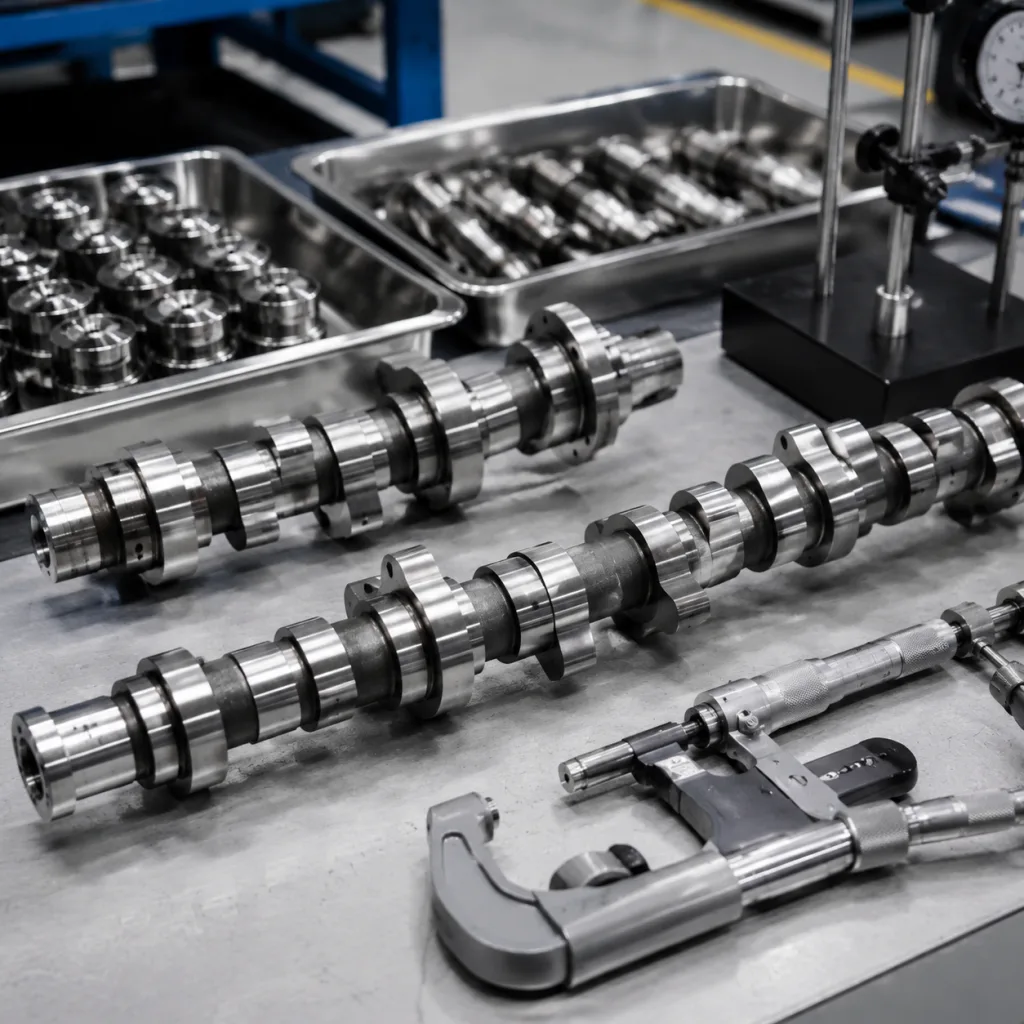
Camshaft for Mercedes-Benz C-Class Aftermarket Replacement
A camshaft for Mercedes-Benz C-Class aftermarket replacement is a precision valve-train component, not a commodity casting. Fitment alone is not enough. Buyers need confirmed journal size, lobe geometry, phase position, hardness, surface finish, and traceable production records. Small deviations can create noise, timing faults, poor drivability, sensor errors, or premature wear.
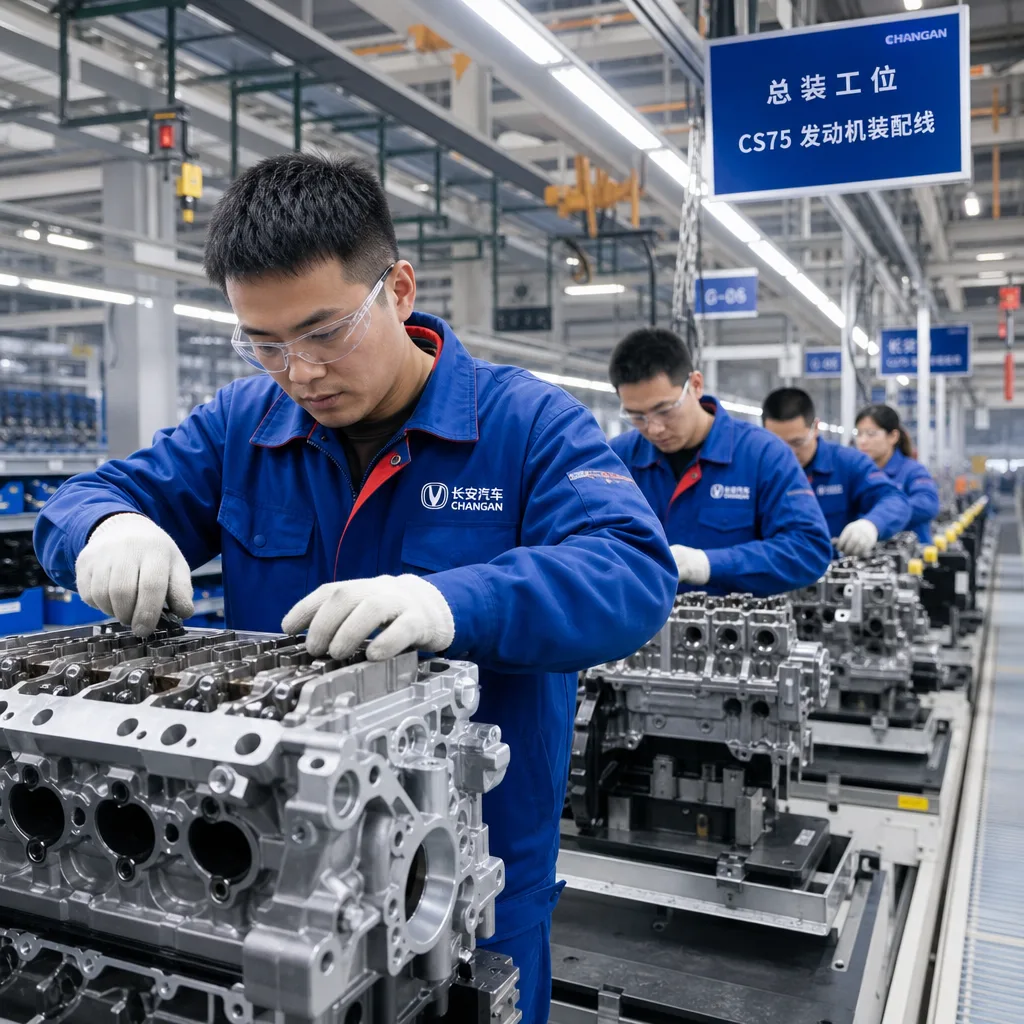
Driventus manufactures engine and powertrain components in Taizhou, Zhejiang, with production controls aligned to IATF 16949:2016 and ISO 9001:2015. This guide explains what procurement teams should check when sourcing replacement camshafts for C-Class applications, including OE-equivalence criteria, inspection methods, validation records, compliance expectations, MOQ and lead-time logic, and supply planning. Driventus is an independent aftermarket manufacturer; Mercedes-Benz and other brand names are referenced only to identify vehicle fitment.
How to tell a true replacement from a part that only fits on paper
A replacement camshaft has to reproduce the original function within controlled limits. Shape alone is not the test. The lobe profile governs valve opening, lift, duration, overlap, combustion stability, idle quality, emissions behaviour, and valve-train noise. If the geometry is off in the wrong place, the engine may assemble cleanly and still run outside the intended timing window.
For C-Class applications, buyers often cover multiple petrol and diesel variants across different model years and markets. Those engines can use different camshaft position sensor targets, bearing layouts, oil-feed details, variable valve timing interfaces, and intake or exhaust arrangements. A shaft that physically fits one head may still be wrong if the phase relationship or trigger geometry does not match the engine code.
Lock the application before approval. The sourcing file should define:
Engine code, model year, and vehicle application range
Intake or exhaust camshaft position, including handed features where applicable
Variable valve timing interface, such as vane, sprocket, or actuator connection details
Sensor trigger geometry and phase position, checked against a master fixture
Journal diameter, bearing width, oil hole, and oil groove configuration
Lobe lift, base circle, ramp geometry, nose radius, and phasing
Thrust face dimensions and end-float control features
Surface hardness, case depth, and hardness pattern consistency
Cleaning level, rust-prevention oil, VCI paper, and export corrosion protection
Packaging protection for sea freight, warehouse handling, and courier delivery
OE cross-reference data is useful, but only as a fitment map. It is not proof of approval. Driventus can support catalogue mapping against buyer-supplied references, including OE-style numbering formats used in the buyer’s database, but no approval, endorsement, or original equipment supply relationship with a vehicle manufacturer is claimed.
The dimensions and material data that actually decide service life
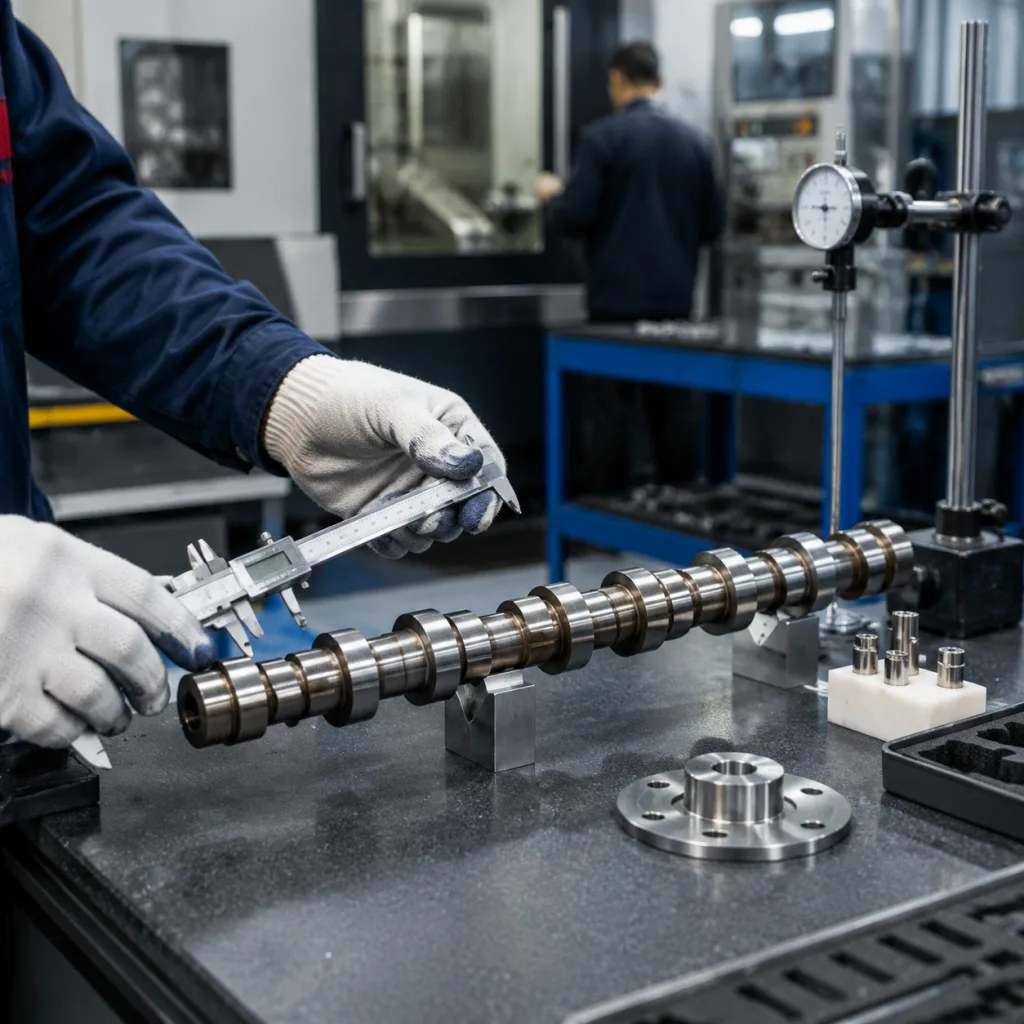
Camshafts should be bought against measurable controls. Drawings, gauges, approved samples, and inspection fixtures matter more than appearance. Procurement teams should ask how the supplier controls dimensions during rough machining, heat treatment, straightening, profile grinding, journal grinding, deburring, washing, and final inspection.
Control item
Typical procurement check
Practical target or tolerance logic
Why it matters
Journal diameter
Micrometer, air gauge, and roundness inspection
Often controlled within 0.01–0.03 mm subject to drawing
Oil film stability and bearing fit
Lobe lift and base circle
Profile measurement, cam analyser, or CMM scan
Lift variation commonly reviewed within ±0.02–0.05 mm
Valve lift, duration, and timing accuracy
Lobe phasing
Fixture, cam analyser, or CMM verification
Angular deviation commonly reviewed within ±0.5°–1.0° if specified
Correct relationship between cylinders and timing reference
Runout and straightness
Dial indicator on V-blocks or centres
Typical acceptance may be 0.03–0.08 mm depending on length
Noise, vibration, oil film consistency, and bearing load
Surface hardness
Rockwell or Vickers test, depending on material
Chilled or induction-hardened areas often verified by location
Wear resistance at cam-lifter or cam-follower contact
Effective hardened depth
Section test or approved process validation
Process-specific; usually validated during PPAP or sample approval
Resistance to rapid wear after break-in
Surface finish
Roughness measurement on journals and lobes
Journals and lobes commonly require low-Ra ground finish
Lubrication, friction, and break-in behaviour
Timing feature position
Dedicated fixture or CMM verification
Checked against datum and master sample
Correct cam/crank synchronisation and sensor signal
Oil holes and grooves
Visual and dimensional inspection
100% presence check, burr-free edges
Oil delivery to loaded surfaces
Cleaning level
Visual check and contamination control
No loose abrasive, chips, casting sand, or wash residue
Protection of bearings, lifters, and oil galleries
</tr></thead><tbody> </tbody></table>Material choice is just as important as profile accuracy. Common camshaft materials include chilled cast iron, ductile iron, forged steel, and assembled steel designs, depending on engine architecture and production route. The material has to match the heat treatment, grinding process, and surface finish. A hard surface with weak core support can crack or spall. A strong base material with inconsistent profile grinding can create timing error, high contact stress, or noise.
Useful requests for the supplier include material grade, heat number or melt traceability where available, hardness test method, case-depth evidence if critical, and confirmation that grinding burn is controlled by wheel dressing, coolant flow, and operator inspection. Driventus manages camshaft production through controlled machining, heat treatment verification, profile grinding, cleaning, corrosion protection, and final inspection. Buyers can review related engine parts in our catalog and the engine component range at /products/engine-components.html.
A practical validation route before the first sale
For a camshaft for Mercedes-Benz C-Class aftermarket replacement, validation should combine laboratory inspection with application-level checks. A distributor does not need to repeat engine development, but it should require evidence that the part is dimensionally accurate, materially stable, and repeatable from batch to batch.
A clean launch path usually looks like this:
1. Map the application and freeze the target engine code, intake/exhaust side, and OE-style reference. 2. Review drawings or a master sample against critical dimensions and datum points. 3. Inspect the first article with full measurement, hardness, and profile data. 4. Run a pilot lot to confirm consistency after machining, heat treatment, and grinding. 5. Test packaging for export damage, moisture, and handling risk. 6. Release the part only after the buyer signs off the report set and lot controls.
Recommended validation package:
Initial sample inspection report with critical dimensions, datum scheme, and measured values
Material certificate or chemical composition verification by batch or melt where available
Hardness test report at defined lobe, journal, and thrust-face locations
Effective hardened depth evidence, where required by the material and process
Profile measurement against approved drawing or master sample, with lift curve comparison
Lobe phasing, trigger feature, and timing reference verification in degrees or fixture result
Runout and straightness inspection record before and after grinding where relevant
Surface roughness report for lobes and journals, including Ra values and sampling locations
Magnetic particle, dye penetrant, or crack detection where applicable
Cleaning and corrosion protection confirmation, including rust-prevention method and shelf-life target
Packaging drop, compression, or vibration assessment for export shipments
Installation and handling notes for sensitive surfaces, if needed
Where emissions-related function is influenced by valve timing, buyers should recognise that poor camshaft geometry can affect combustion quality and diagnostic behaviour. Regulations such as ECE R83 set emissions requirements for vehicles. Component suppliers should focus on producing parts that do not disturb the intended engine function when the correct application is selected and the part is installed according to service procedures.
After validation, batch consistency matters more than the first sample. A first article can pass while later production drifts if process controls are weak. Production control plans, gauge calibration, operator inspection frequency, process capability review, lot traceability, and change control are as important as the initial approval sample. A practical control plan may use 100% checks for visible damage, oil holes, trigger features, and packaging; sample checks for dimensions by production interval; and full layout inspection for first lot, engineering change, tooling change, or long production gap.
Which documents matter in procurement reviews, and which ones are just noise
Procurement teams should ask for documentation that proves process discipline and shipment-level traceability. For engine components, the useful record set is usually a combination of quality management evidence, inspection reports, controlled process steps, and change communication. One certificate is never enough.
Driventus operates under a quality system aligned with IATF 16949:2016 and ISO 9001:2015. These standards support process control, risk management, corrective action, supplier control, calibration, and traceability. They do not replace part-specific validation, but they create a structure for repeatable production and practical problem resolution.
For camshafts, buyers normally want:
Incoming material checks
Heat-treatment records
Grinder setup approval
First-off inspection
In-process measurements
Final inspection
Packing list and lot-number linkage to cartons
For international import programmes, the following may also be needed:
Material declarations for REACH (EC) No 1907/2006, when applicable
Packaging and labelling specifications with barcode, part number, lot number, and country of origin
Country of origin documentation and invoice/packing list consistency
Batch traceability by production lot, heat-treatment lot, and inspection lot where practical
Inspection reports linked to shipment quantities and purchase order number
Non-conformance and corrective action procedure, including 8D format if required
Engineering change notification process for material, tooling, process, or sub-supplier changes
Private-label artwork control, carton marking rules, and approval samples
If the buyer has its own drawings, samples, or performance criteria, Driventus can review feasibility through custom manufacturing. That matters for private-label ranges, market-specific packaging, or programmes where the buyer controls the specification and approval process. Any cross-reference remains for fitment identification only. Driventus is an independent aftermarket manufacturer; brand names are referenced for fitment only.
Failure modes that drive returns, noise claims, and warranty cost
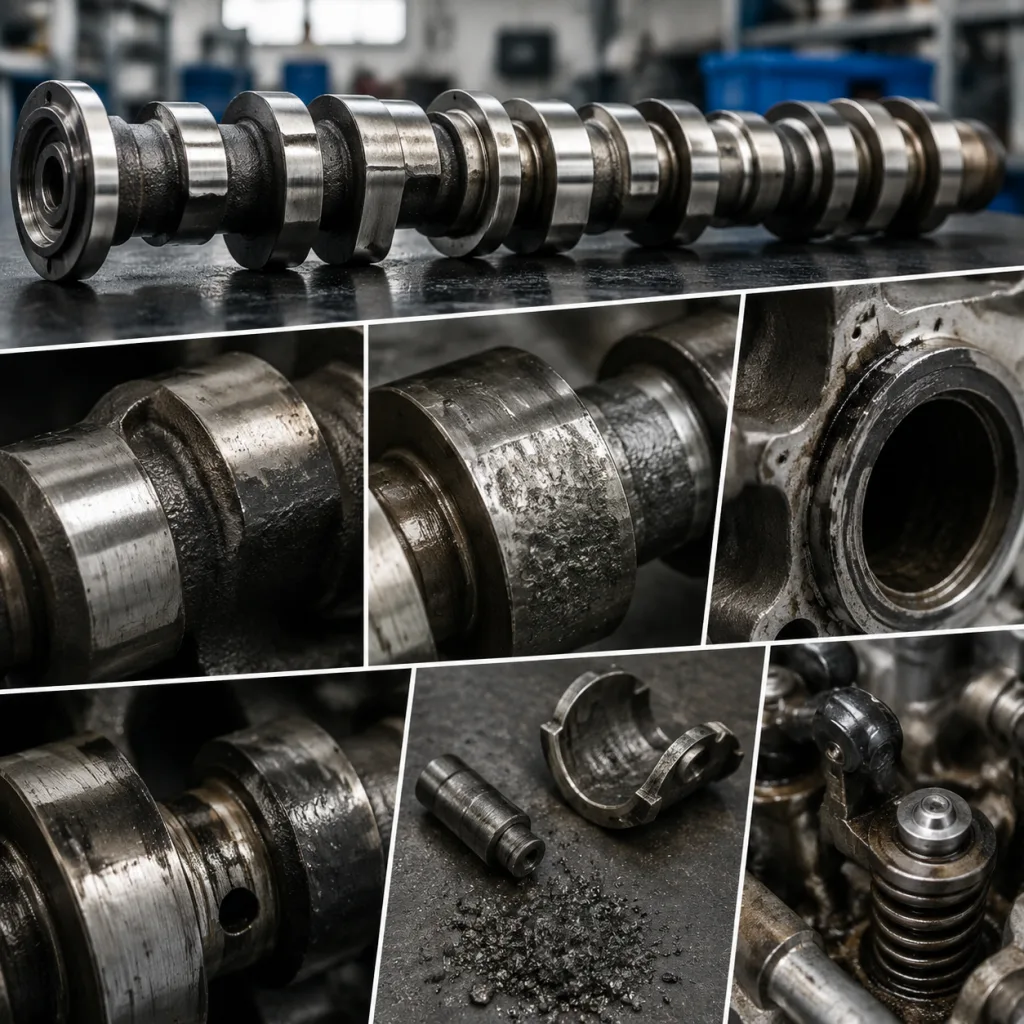
Most camshaft warranty claims are not caused by the camshaft alone. The surrounding engine system often creates the failure. That matters to procurement, because return rates and workshop confidence are shaped by what happens after sale, not only by the incoming inspection report.
A technically correct part can fail if it is installed with worn mating components, poor lubrication, or the wrong timing procedure. For C-Class applications using variable valve timing or sensitive cam position sensing, even a correct part may trigger faults if timing adaptation, chain condition, oil pressure, or actuator condition is ignored.
Common installation-related causes of failure include:
Incorrect camshaft for engine code, model year, market version, or intake/exhaust position
Reuse of worn followers, rockers, tappets, hydraulic lifters, cam caps, or bearing bridges
Incorrect timing chain, belt, guide, tensioner, sprocket, or actuator installation
Inadequate assembly lubrication during first start and dry cranking after installation
Contaminated oil after previous engine damage, turbocharger failure, or timing-chain failure
Incorrect torque sequence on cam caps, bearing bridges, or cam carriers
Failure to follow service information for variable valve timing systems and relearn procedures
Mixing old and new valve-train parts without checking contact patterns and oil supply
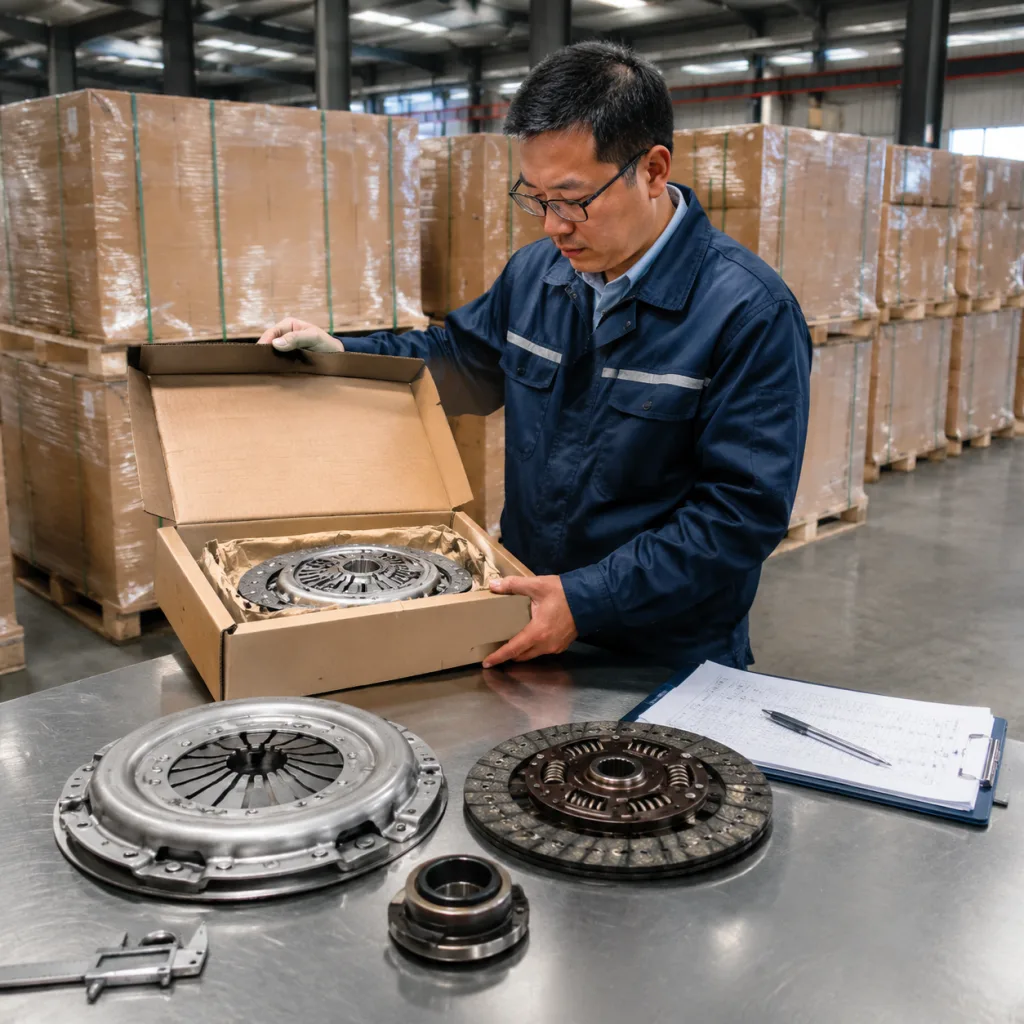
Good packaging helps, but it does not solve bad installation. The product pack should still make application control easy. Useful details include clear intake/exhaust identification, engine-code references, batch coding, protective sleeves, end protection, rust-inhibiting packaging, and installation notes where appropriate. Packaging must protect lobes, journals, thrust faces, and timing features from impact marks during sea freight, warehouse handling, and parcel delivery.
A sensible export pack may use individual anti-rust bag or VCI wrap, foam or molded end supports, reinforced inner carton, master carton, pallet edge protection, and moisture control for long ocean routes.
Returned camshafts should be checked for oil starvation marks, abnormal follower contact, overheating colour, scoring, pitting, corrosion, incorrect installation evidence, and fracture origin before root cause is accepted. That reduces avoidable debit notes and helps separate product defects from installation or engine-system issues. High-volume repair networks should agree photo requirements, mileage after installation, oil-pressure evidence, related parts replaced, diagnostic codes, and sample return rules before launch.
How Driventus supports aftermarket camshaft programmes from RFQ to shipment
Driventus supplies B2B engine and powertrain components to aftermarket distributors, wholesalers, OEM and Tier-1 supply chains, and multi-location repair networks. For camshaft sourcing, the useful conversation starts with application data, annual volume, target market, validation level, packaging format, and documentation required at shipment.
A strong RFQ normally includes:
Vehicle model, engine code, year range, and target market
Intake/exhaust position and quantity per engine
OE-style cross-reference list from the buyer’s database
Sample part, drawing, or approved master sample, if available
Target annual demand, first order quantity, and release schedule
Required inspection documents, compliance declarations, and PPAP-like records if needed
Private-label, neutral, or Driventus packaging requirements
Carton, pallet, barcode, and labelling requirements
Destination port, preferred Incoterms, and shipping mode
Warranty handling expectations and return inspection process
Lead time depends on inventory, machining capacity, inspection requirements, and packaging format. For stocked or frequently produced references, shipment may be possible after order confirmation, final inspection, and export packing. For batch production, buyers should usually allow time for material allocation, machining, heat treatment, grinding, inspection, and packaging. New development takes longer because sample confirmation, tooling or fixture needs, validation scope, and the buyer’s approval cycle all affect the schedule.
MOQ and price should be discussed by reference and process route, not as a single catalogue number. Established references with shared material and existing fixtures can often support lower MOQs than new or low-demand references requiring dedicated gauges, heat-treatment setup, or packaging artwork. Unit price is affected by material grade, heat-treatment method, grinding time, inspection frequency, rejection risk, order quantity, carton design, private-label printing, and document package.
The easiest way to improve pricing and lead-time stability is to consolidate multiple camshaft references into scheduled releases, approve neutral cartons for early shipments, and forecast 3–6 months of demand.
Buyers evaluating a camshaft for Mercedes-Benz C-Class aftermarket replacement can request a quote with engine codes, target references, sample availability, expected order quantities, inspection requirements, destination port, and packaging format. A technical review can then confirm fitment scope, tolerance expectations, documentation needs, MOQ, lead time, and commercial feasibility.
Frequently asked questions
No. Driventus is an independent aftermarket manufacturer; brand names are referenced for fitment only. Cross-references are used to identify application compatibility and do not indicate approval, endorsement, or supply to a vehicle manufacturer.
Verify engine code, model year, intake or exhaust position, valve timing interface, lobe profile, phasing, journal dimensions, runout, hardness, case depth, surface finish, oil-feed features, and packaging protection. Buyers should also request sample inspection reports, validation records, and batch traceability before launching the range.
Yes. Driventus can review drawings, samples, application data, target tolerances, inspection plans, and validation requirements for custom camshaft programmes. Feasibility depends on material, profile complexity, tooling or fixture needs, testing scope, target market, MOQ, and forecast volume.
For application review, validation documents, MOQ, lead time, and export pricing, send your target references, engine codes, packaging needs, destination port, and annual volume to the Driventus team. Start a technical sourcing discussion at /contact.html