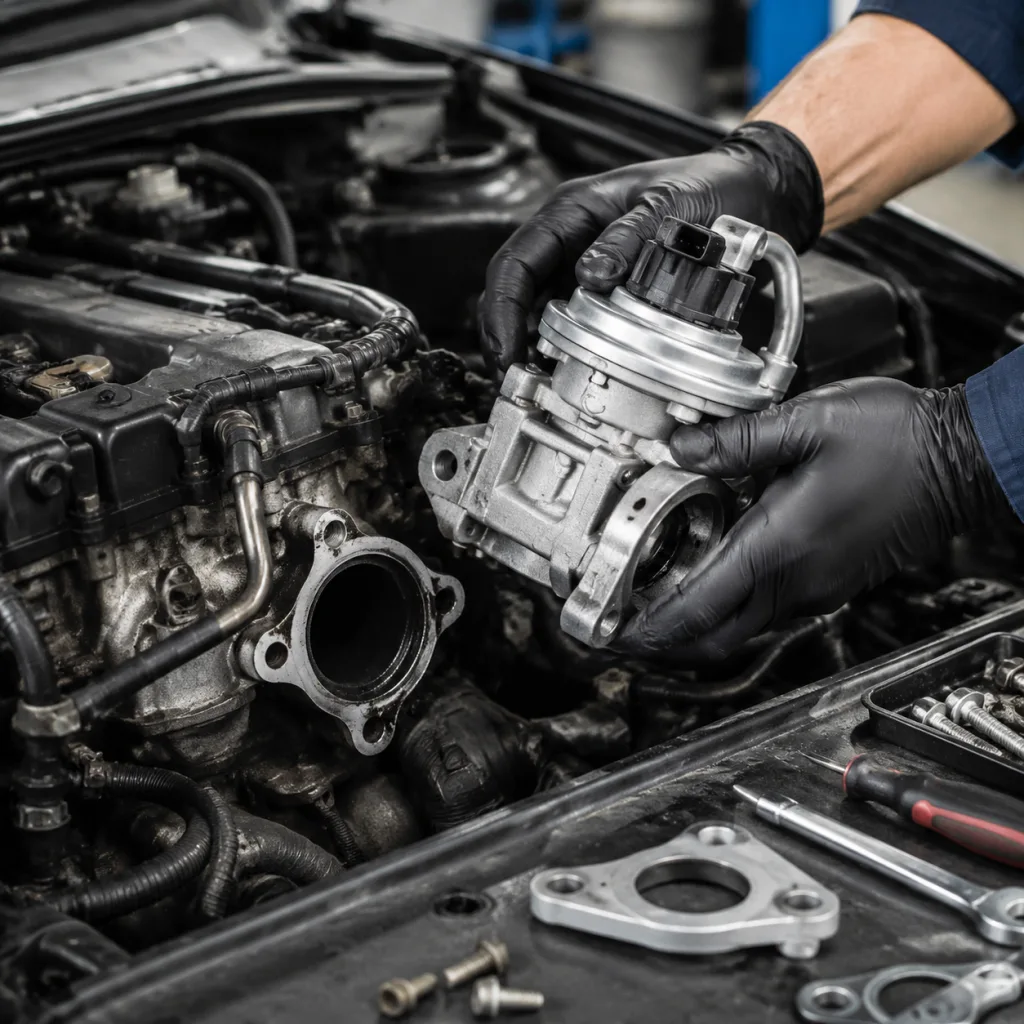
Buying an `EGR valve Honda manufacturer China` is a sourcing decision, not a catalog lookup. The real question is whether the supplier can hold fitment, flow, and traceability across repeated orders. For aftermarket distributors, repair chains, and OEM or Tier-1 buyers, the failure modes are familiar: mismatch at the flange, unstable connector fit, emissions complaints after installation, and long lead times when the supply base is thin. Driventus is based in Taizhou, Zhejiang, and manufactures engine and powertrain components for export markets in Europe, North America, Australia, and Brazil. We operate under IATF 16949:2016 and ISO 9001:2015, and we support B2B customers who need controlled sourcing, traceable production, and practical part validation. Driventus is an independent aftermarket manufacturer; brand names are referenced for fitment only.
How to qualify the part before you quote it
The first filter is fitment, not price. Honda EGR valves can change by engine code, model year, mounting pattern, connector type, and calibration, so the sourcing file should lock down:
OE cross-reference, when available, such as `OE 18710-...` style references supplied by the buyer
Port count, port spacing, flange thickness, bolt-hole diameter, and gasket land width
Electrical connector layout, pin count, terminal pitch, and CPA/lock style for electronically controlled units
Valve body material, stem finish, seat hardness, and gasket interface
Nominal operating range, opening response, and leak integrity limits
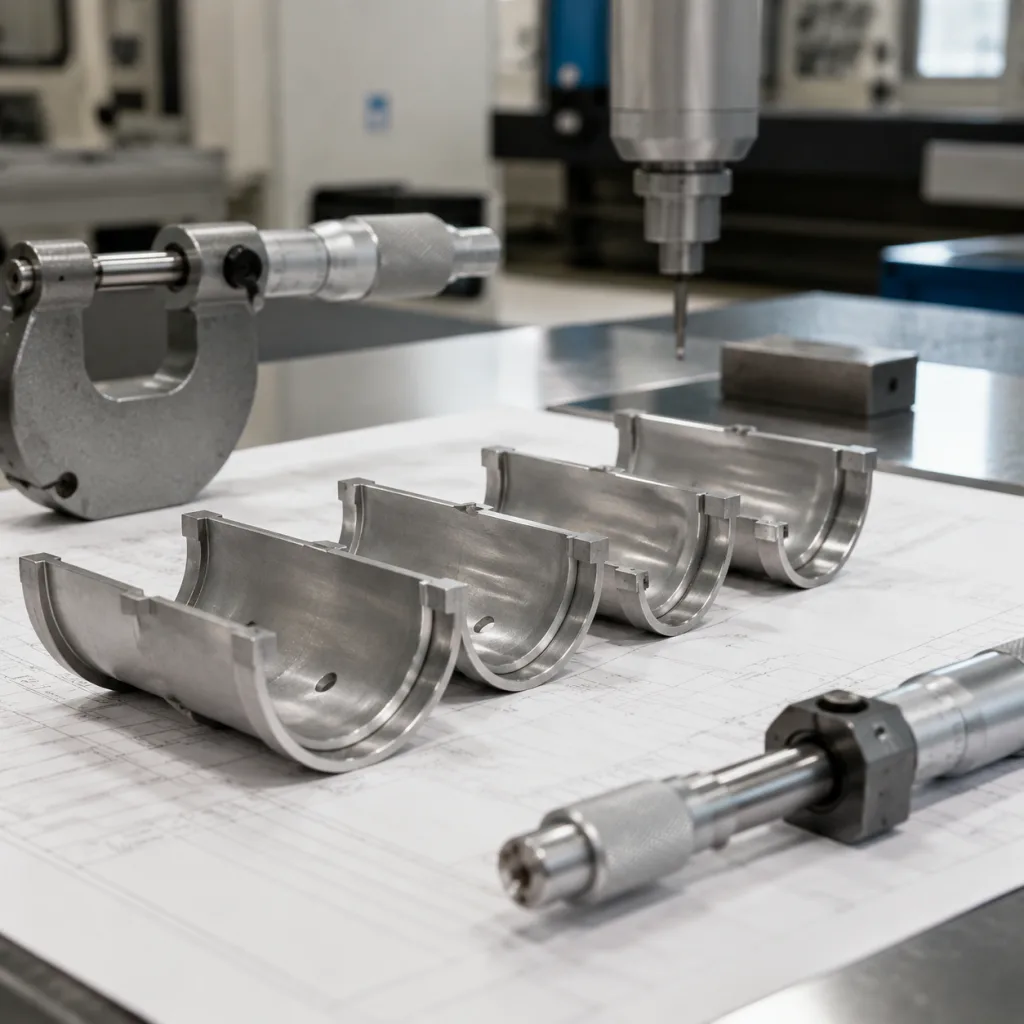
Ask the supplier for drawings, photos, and measured data before sample approval. A proper quote should be built from a 2D PDF with critical dimensions marked, a 3D file if available, and at least one physical sample or OE benchmark. If you are comparing suppliers across regions, the advantage of a Chinese manufacturer is not lower standards; it is tighter control of the component chain when the factory can document dimensional repeatability and incoming material control. For new programs, a practical tolerance target is `±0.10 mm` on machined sealing faces, `±0.20 mm` on mounting features, and `±0.30 mm` on connector housings unless the drawing calls for tighter limits.
Spec sheet: what a serious RFQ must include
A usable request-for-quote package needs functional and commercial data in the same file. Use this as a baseline when you compare offers from an EGR valve supplier in China:
Item
What to confirm
Application
Honda engine family, model year, OE reference
Construction
Cast aluminium, stainless steel, or mixed body
Seal points
Gasket face finish, seat geometry, leakage limit
Electrical interface
Connector type, pin map, actuator style
Testing
Flow, leakage, cycle life, thermal resistance
Compliance
IATF 16949:2016, ISO 9001:2015, REACH (EC) No 1907/2006
Packaging
Label traceability, carton quantity, pallet spec
Commercials
MOQ, target price band, lead time, sample charge
</tr></thead><tbody> </tbody></table>For regulated markets, material declarations matter as much as dimensions. Buyers often request REACH documentation for metal and polymer content, especially when an internal restricted substances list applies. If the part is for a fleet programme or retail programme, ask for batch traceability and sample retention from the first production lot. The RFQ should also state annual demand, first-order quantity, required incoterm, and whether the buyer wants a neutral box, branded carton, or barcode-ready label. For OEM-style control, request PPAP-style dimensional reports, material certificates, and incoming inspection records for critical components.
Where these projects fail in production
Most sourcing problems show up after the drawing is approved. The common failure modes are predictable:
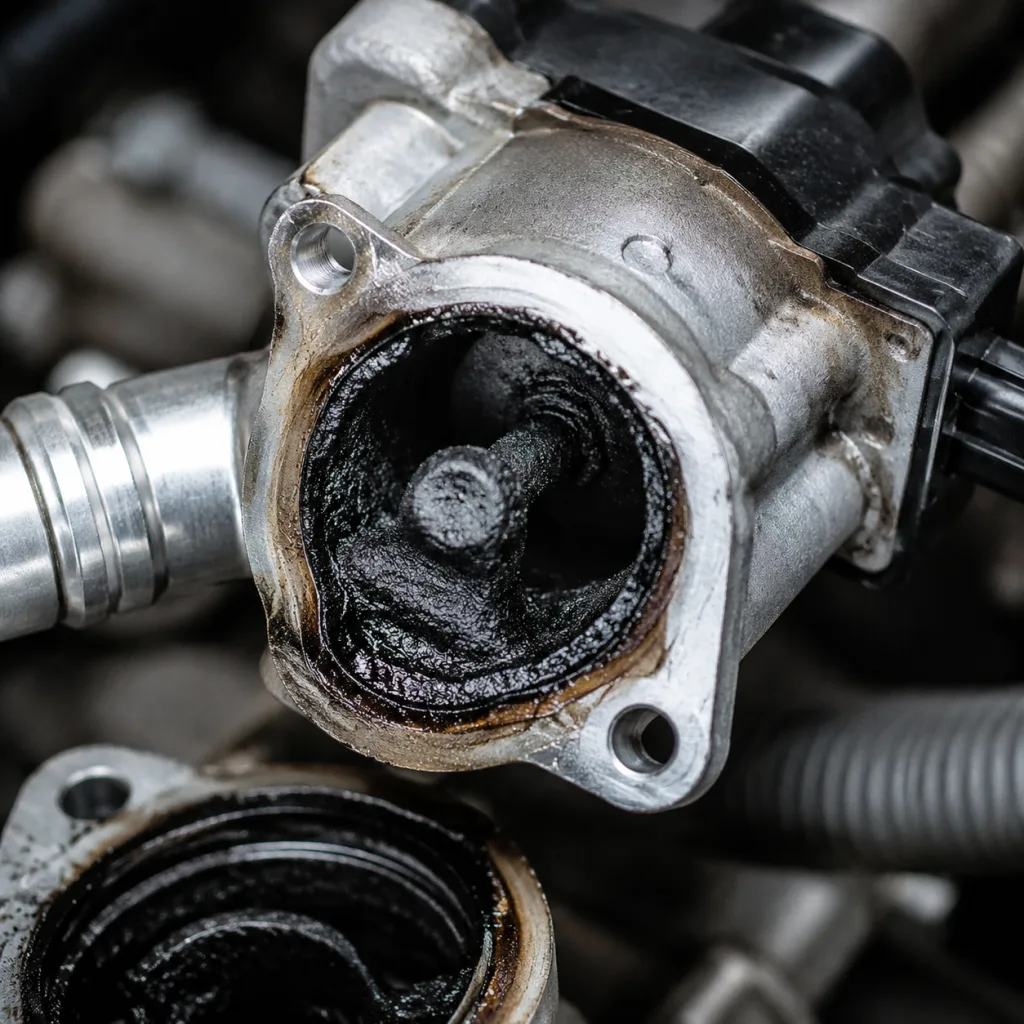
1. The valve fits the housing but the electrical connector needs rework. 2. The sealing face is dimensionally close, but leakage rises after heat cycling. 3. The sample passes, while bulk production drifts because process controls were not locked. 4. The carton and label are correct for one market, but not for the buyer’s warehouse flow. 5. The part is cross-referenced too broadly and ends up covering multiple Honda variants with different calibration needs.
That is why validation has to be part-level, not paper-only. If the buyer supplies an OE sample, the manufacturer should compare critical dimensions and operating behaviour against that reference. Buyers should also ask for the written control plan, inspection frequency, and corrective-action path before they place a first order. Typical benchmark values include leakage of no more than `20–30 cc/min` at the agreed test pressure, cycle durability of `20,000–50,000` open-close events depending on program level, and heat soak exposure up to `200–250°C` for short-duration stress checks where the design and seal stack allow it. ECE R-83 may be relevant where the customer is reviewing emissions-related system compatibility, while SAE J2527 is commonly cited in durability and environmental testing discussions for related components.
Validation steps that should happen before release
Validate the part, then validate the supply chain. A supplier should support these checks before release:
1. Dimensional inspection against the approved sample and drawing. 2. Leak testing at the specified pressure range. 3. Functional cycling under heat exposure. 4. Connector fit and harness retention check. 5. Vehicle-level confirmation on the target Honda application.
For aftermarket EGR valves, the practical benchmark is simple: does the unit install without rework, and does it hold performance after repeated thermal cycles? That answer matters more than a polished sample box. The supplier should provide a written test method, calibrated equipment list, and pass/fail criteria before first sample approval. If the programme is emissions-sensitive or platform-sensitive, add a comparison against the OE reference so you can see where the risk sits before mass production starts. A supplier that cannot describe its validation method in plain language is usually not ready for volume.
Why China can work here, and when it does not
China is not a quality shortcut when the supplier is controlled properly. It is a manufacturing base with a deep machining and assembly ecosystem, which can help with cost, capacity, and lead-time management. The procurement question is not whether the country can make the part; it is whether the factory can keep the part stable.
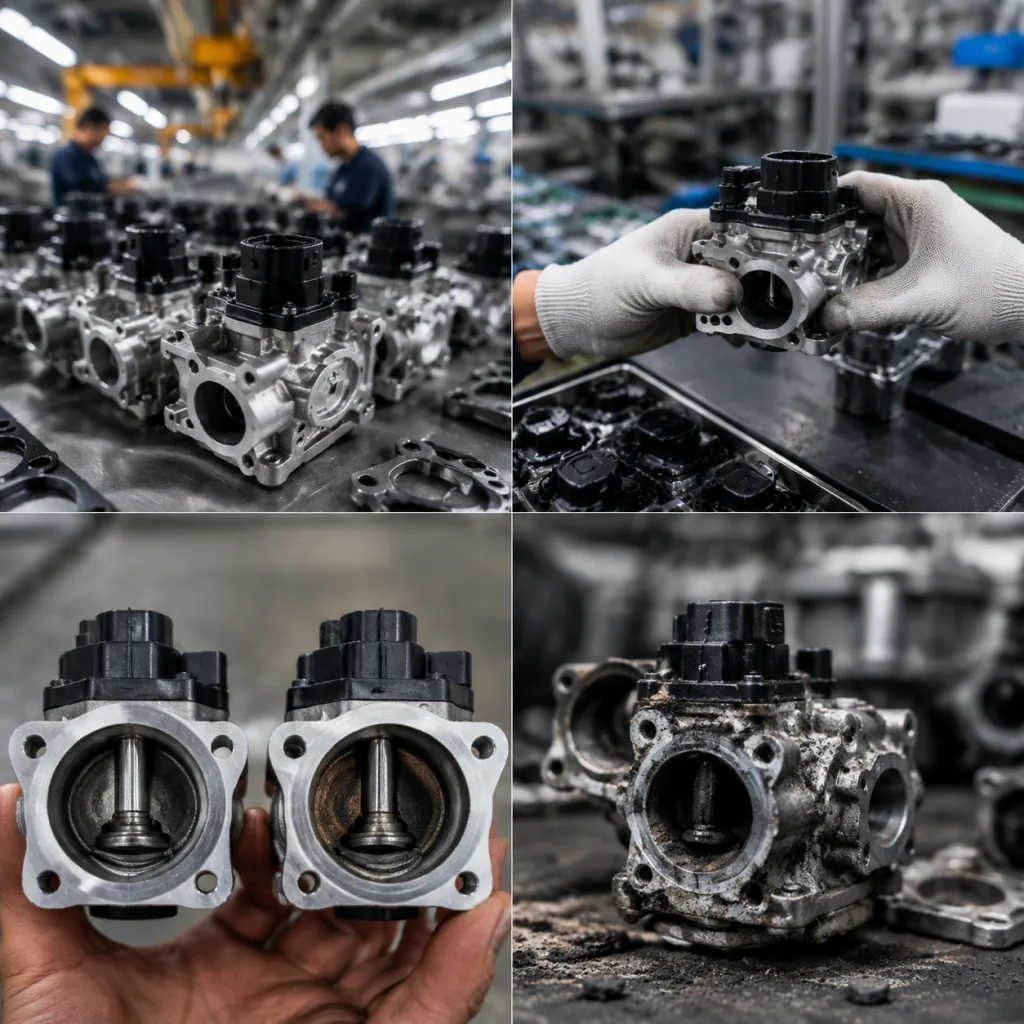
Driventus supports this with vertically integrated production for engine components, inspection equipment, and export documentation. For buyers, that reduces interface risk because casting, machining, cleaning, assembly, and final inspection sit within one supply chain. That matters when you need stable replacement parts for multiple SKUs, or when a regional distributor needs repeat orders with the same fitment and label format. It also helps control response time: a stable supplier can usually quote samples in `7–15 days`, tooling or engineering changes in `2–4 weeks`, and mass-production lead times around `30–45 days` after approval, depending on volume and packaging complexity.
If your programme extends beyond one EGR valve reference, review our catalog and the broader engine components range to align the part family with adjacent items such as gaskets, water pumps, and turbocharger-related assemblies. Ask whether the factory can hold raw material lots, castings, and finished goods under the same traceability code so that any claim can be isolated quickly.
Commercial terms that decide the winner
The lowest unit price is often the wrong winner. Compare offers on the terms that affect launch risk and landed cost:
MOQ by reference and by colour/label variant
Lead time for tooling, samples, and first bulk shipment
Warranty and claim handling process
Carton and pallet configuration for warehouse efficiency
Audit availability for factory visits and supplier qualification
For private-label or platform supply, custom manufacturing is useful when the buyer needs packaging changes, logo-free cartons, or application-specific labelling. If the programme is new, ask for a sample approval plan and a clear escalation path for any dimensional deviation. A supplier with a defined quality system should be able to show process records, inspection frequency, and corrective-action handling without delay. For commercial planning, buyers usually want an MOQ that matches the part’s complexity: simple replacement references may start at `100–300 pcs` per SKU, while variants with custom packaging or multiple connector styles may require `300–500 pcs` or more. Price should be evaluated on a landed basis, not just ex-works; ask for quotes at `1,000`, `3,000`, and `5,000` units so you can see scale breaks, and confirm whether the price includes pressure testing, label printing, and export cartons. A good supplier will also state whether sample units are free, chargeable, or credited against the first order.
Driventus can support RFQ review, sample development, and production planning for B2B orders. If you need a sourcing proposal, request a quote with the OE reference, annual volume, target market, and required incoterm so the technical team can return a fitment review, recommended MOQ, and lead-time schedule.
Frequently asked questions
Yes, if the buyer provides the OE reference and application data. We verify fitment against drawing, sample, and connector details before quoting a production route, and we can flag tolerance risks where the housing or mounting pattern differs from the reference sample.
We work under IATF 16949:2016 and ISO 9001:2015, and can provide inspection records, material information, and batch traceability based on the programme requirements. For export or private-label orders, we can also supply packing lists, carton labels, and lot identification records so buyers can manage claims and replenishment.
Yes. Through OEM-style support we can adjust labels, cartons, and packing specifications for distributor or fleet programmes, subject to order terms and approval samples. Typical options include neutral cartons, barcode labels, multilingual packaging inserts, and carton quantity changes tied to MOQ and price tier.
If you are sourcing a Honda-fit EGR valve from China, send your OE reference, target quantity, packaging needs, and target price band to start a technical review at /contact.html.