EGR Valve Dimensions: Procurement Framework for Fit, Sealing and Validation
EGR valve dimensions decide whether a part bolts up cleanly, seals under heat, clears nearby hoses and shields, and reports the correct actuator position to the ECU. A catalog match is not enough. A valve can appear suitable by application list and still fail because the flange is bowed, the bolt-hole pattern is shifted, the pintle travel is short, the cooler-side port is misaligned, or the connector points into the harness path.
For distributors, OEM service programmes and repair-chain buyers, dimensional control is a warranty-risk issue as much as a fitment issue. The practical question is not “What is the overall size?” It is “Which interfaces must match, how are they measured, and what evidence proves repeatability?”
This guide gives sourcing teams a more structured way to review EGR valve dimensions for passenger cars and light commercial vehicles. It covers drawing controls, common failure modes, material and thermal effects, incoming inspection, RFQ content and validation beyond the drawing. Driventus manufactures EGR valves and related engine components in Taizhou, Zhejiang, under IATF 16949:2016 and ISO 9001:2015 systems for export customers.
Start With the Interfaces, Not the Outside Shape
A good EGR valve drawing does not treat the part as a simple block with length, width and height. It identifies the interfaces that create risk: the sealing face, bolt pattern, gas ports, valve-seat relationship, actuator envelope and connector orientation.
Use a fixed datum structure before comparing supplier reports. One practical approach is datum A as the primary sealing face, datum B as the main bore or port centreline, and datum C as a locating bolt hole or machined side face. Without agreed datums, two suppliers can measure the same part differently and both claim conformance.
Interface to control
What to measure
Why buyers should care
Typical control logic
Overall envelope
Length, width and height at body, actuator and connector
Confirms clearance near intake manifold, cooler, turbo pipe, heat shield and harness
±0.5 mm for machined references; ±1.0 mm for non-critical cast cover areas
Mounting flange
Thickness, flatness, sealing-face width and gasket land
Controls gasket compression, installation load and exhaust leakage
6–12 mm thickness typical; 0.05–0.15 mm flatness; gasket land width often ±0.20 mm
Bolt pattern
Hole diameter, centre distance and true position
Prevents bolt bind and installation mismatch
Hole diameter often ±0.10 mm; true position commonly Ø0.15–0.30 mm to datums
Gas ports
Bore diameter, port spacing, seat angle and port alignment
Affects flow, restriction, sealing and cooler-side fit
Bore ±0.05–0.15 mm; port centre distance ±0.10–0.20 mm; chamfer controlled by gasket type
Pintle or valve plate
Closed height, full stroke, stop position and seat contact
Affects metered exhaust flow, leakage and ECU response
Stroke tolerance often ±0.10–0.30 mm; closed leakage verified by test, not dimension alone
Connector interface
Pin count, keyway, latch position and clocking angle
Avoids harness interference, misconnection and latch damage
Clocking angle commonly ±2° to ±5°; mating connector gauge recommended
</tr></thead><tbody> </tbody></table>For high-volume programmes, control functional dimensions from machined datums rather than casting edges alone. Cast surfaces can move within normal process limits. Machined datums give both buyer and supplier a repeatable reference for flange, port and bolt-hole relationships.
A buyer-side drawing should also mark critical characteristics, inspection frequency, gauge type and acceptance method. This matters commercially. If the quotation does not include the required machining controls and inspection workload, the first samples may look inexpensive but cost time during approval.
Where Dimensional Matches Usually Fail
Most EGR sourcing problems are not caused by one missing overall dimension. They happen at the boundary between fit, sealing, electrical connection and actuator movement. The table below shows where to look first when comparing a candidate part with an OE reference, approved sample or customer drawing.
Failure mode
Dimensional trigger
Field or approval symptom
Buyer-side prevention
Flange leak
Poor flatness, narrow gasket land or thickness variation
Define clocking angle, latch clearance, harness pull direction and no-go zones
Early sticking
Shaft clearance reduced by coating, soot or heat distortion
Slow return, high current, position error
Check bore, shaft, coating thickness and post-contamination movement
</tr></thead><tbody> </tbody></table>Useful sourcing data is specific. “Same as sample” is too vague unless the sample is measured, controlled and retained as a golden reference. “No leakage” is also weak unless pressure, medium, time, temperature and allowable decay or flow are defined.
Typical specification ranges can support early screening, but they are not universal approval limits. Many light-vehicle valves use aluminium alloy die-cast housings such as ADC12 or A380, with stainless steel or heat-resistant inserts around the hot gas path. Flange thickness is often 6–12 mm on aluminium housings, while integrated cooler interfaces, steel flanges and heavy-duty designs may require 10–18 mm. Sealing-face flatness often sits around 0.05–0.15 mm. Machined gasket faces commonly use Ra 1.6–3.2 µm, unless an O-ring, coated gasket or metal-to-metal interface requires another value.
Valve stroke is especially application-specific. Many passenger-car and light-commercial EGR valves fall around 3–8 mm of travel, but procurement should confirm closed position, learned position, full-open position, response time and sensor output together. A valve that is dimensionally close but electronically inconsistent can still fail validation.
Driventus is an independent aftermarket manufacturer. Brand names and OE references, when used, identify fitment families only and do not imply vehicle manufacturer approval. If controlled drawings are unavailable, treat the first RFQ stage as reverse-engineering and feasibility review, not production release.
Material and Heat Effects That Change the Measured Part
Room-temperature dimensions are only the starting point. EGR valves work in hot, contaminated exhaust conditions with soot, condensate, acid residues and repeated thermal cycling. Material choice and coating thickness can shift the same dimensions that looked acceptable during first inspection.
Aluminium housings reduce weight and machine efficiently. Stainless steel is often used near the valve seat, shaft, fasteners or hot gas path. Plastic covers and actuator housings must hold connector geometry after heat ageing, vibration and exposure to under-hood chemicals. Each material solves one problem and can create another if the dimensional plan is incomplete.
A focused thermal review should answer these questions:
Does the sealing face remain within the drawing flatness limit after heat cycling?
Does the shaft, pintle or valve plate lose stroke after soot exposure?
Does the actuator cover deform enough to move the connector latch or cover-to-body gap?
Does the connector retain mating force and latch engagement after temperature, vibration and harness-load testing?
Do coatings reduce bore diameter, tighten shaft clearance or interfere with gasket seating?
Do fasteners, springs and exposed steel parts show red rust, blistering or condensate damage after agreed corrosion testing?
For EU and UK importers, material declarations may be requested under REACH (EC) No 1907/2006 and customer compliance processes. For regulated vehicle programmes, buyers may also request evidence relevant to emission-system durability expectations, including vehicle-level requirements linked to ECE R-83 where applicable. These frameworks do not replace a drawing. They define the compliance context around it.
When comparing quotations, confirm whether the price includes heat-ageing validation, salt-spray checks, coating-thickness reports and post-test dimensional measurement. These items affect sample cost and lead time, but skipping them can leave a dimensional risk hidden until installation or warranty review.
Build the Inspection Plan Around Risk
Incoming inspection should not try to remeasure every feature on every delivery. That wastes time and still may miss the features that cause the largest failures. A better plan separates critical-to-fit characteristics from supporting reference dimensions, then uses the same datum structure as the supplier report.
First-Article Approval
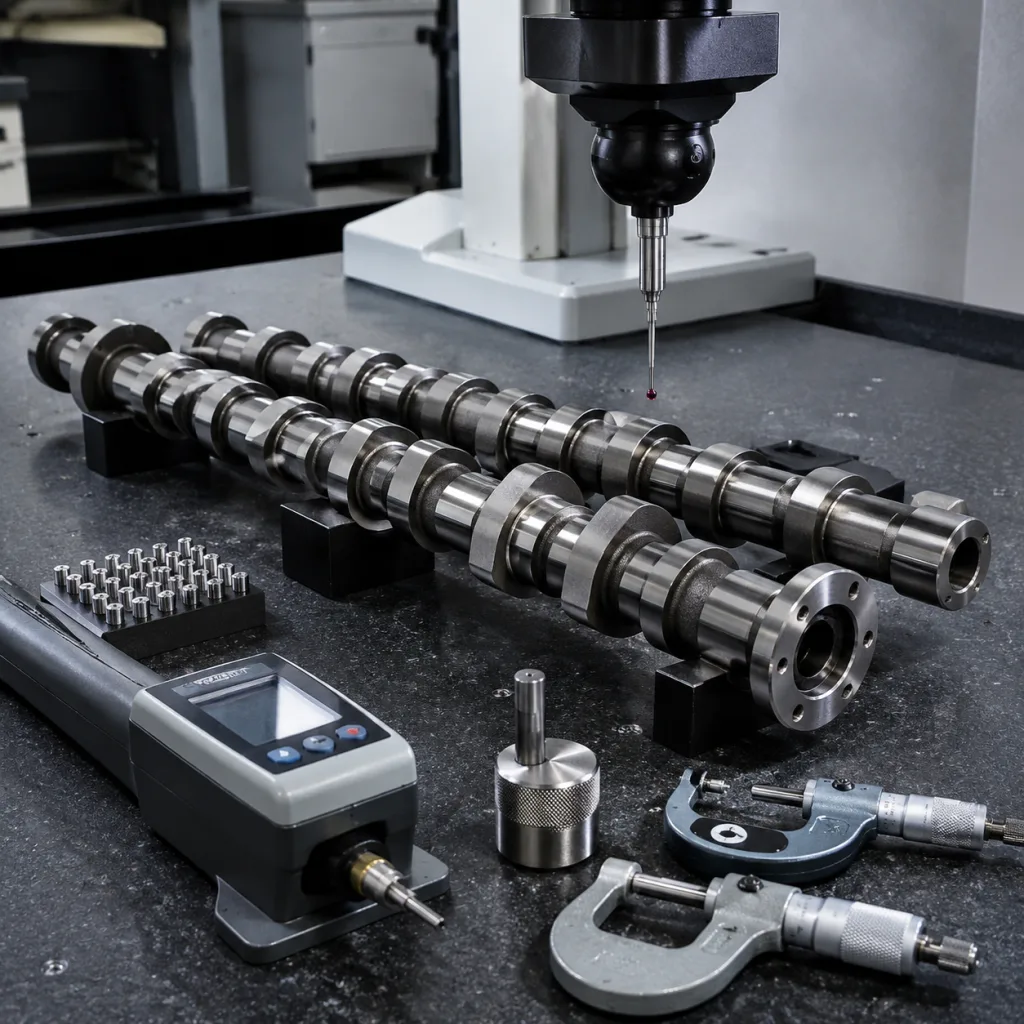
For first-article approval, request a complete dimensional report against the agreed drawing. The report should show the characteristic number, nominal value, tolerance, measured value, inspection tool and sample number. Do not accept pass/fail marks for critical egr valve dimensions. Ask for actual values: flange flatness in millimetres, bolt true position in millimetres, port bore in millimetres, stroke in millimetres, leakage at defined pressure and connector clocking in degrees.
A practical first-article submission often uses 3–5 pieces per casting cavity, machining fixture or assembly line. If two cavities and two connector suppliers are used, the sample plan should cover each combination that can enter production. Boundary samples are helpful where cast shape, connector clocking or port blending can affect installation without producing an obvious pass/fail result.
Capability expectations should be agreed before mass production. For stable machined characteristics, buyers often request Cpk ≥ 1.33 on critical dimensions after process run-in. Safety, emission-critical or customer-specific programmes may require a higher threshold.
Routine Batch Control
Once the process is stable, routine receiving checks can be reduced. Common batch controls include flange flatness, bolt-hole position, port diameter, actuator stroke, connector mating and leak rate. One practical plan is 5 pieces per lot for dimensional interface checks, 100% supplier end-of-line functional and leakage testing, and tightened sampling after any tooling repair, cavity change, process deviation or complaint.
Attribute checks should use calibrated gauges where possible. Variable data should be retained for features that affect sealing or ECU-controlled flow.
Driventus production controls are managed under a documented quality system aligned with IATF 16949:2016 and ISO 9001:2015. Typical B2B review records include incoming material inspection, machining inspection, end-of-line functional testing, leakage testing and batch traceability. When required, buyers can request control plans, measurement system analysis, gauge R&R data and capability data for defined characteristics.
For repeat orders, traceability should connect casting batch, machining date, actuator batch, test result and packing date. That makes a field issue easier to isolate without blocking all inventory.
RFQ Package: What to Send Before Asking for Price
An application list helps identify a fitment family. It rarely gives enough information to confirm packaging, sealing interfaces, connector clearance and inspection cost. If the RFQ is thin, the quotation will either contain assumptions or trigger repeated clarification.
Send the data that lets the supplier judge the part as a manufacturing programme, not just a catalog match.
RFQ item
Why it matters
Commercial impact
Existing sample or 3D scan
Confirms real interface geometry when drawings are unavailable
Defines tolerances, datums, surface finish and inspection requirements
Reduces sampling loops and avoids quoting against incomplete dimensions
OE cross-reference, if available
Helps identify the fitment family without claiming vehicle manufacturer approval
Speeds catalog matching and standard-item feasibility review
Annual volume and release schedule
Determines tooling, machining fixture, test capacity and batch planning
Drives MOQ, cavity count, inventory plan and unit price
Test requirements
Aligns leakage, stroke, electrical, thermal and endurance validation
Higher validation depth increases sample cost and approval lead time
Packaging standard
Prevents flange damage, connector deformation and actuator impact during transit
Export packaging, separators and drop-test requirements affect carton cost
Target market documentation
Clarifies REACH, material declaration, labelling or customer audit needs
Compliance documents should be included in the quotation scope
</tr></thead><tbody> </tbody></table>State the commercial assumptions early. For existing catalog items, MOQ may depend on current inventory, packing configuration and scheduled production. For non-stock or custom EGR valve dimensions, MOQ is usually driven by casting, machining, actuator and connector purchase quantities.
A realistic RFQ sequence is: confirm fitment family, review drawing or sample, quote tooling if needed, produce prototype samples, complete dimensional and functional approval, then release pilot and mass-production lots. Very small first orders may need a higher sample or pilot-batch price because the supplier cannot spread setup, inspection and purchasing costs across stable volume.
For aftermarket programmes, procurement teams can compare available EGR valve families in our catalog. If a standard item does not meet the required interface, Driventus can review custom manufacturing options based on drawings, samples or agreed performance requirements.
Indicative timelines depend on complexity. Catalog-item confirmation may take a few working days. Sample-based dimensional review can take 1–3 weeks. New tooling and validation commonly take several additional weeks. Full approval timing depends on the customer test plan. Fitment references are used only to identify application compatibility, not to claim vehicle manufacturer approval.
Q&A for Validation Beyond the Drawing
Is dimensional conformity enough to approve an EGR valve?
No. It is necessary, but it does not prove leakage performance, actuator response, position feedback, contamination resistance or durability. A valve can meet static measurements and still stick after soot exposure or lose connector retention after heat ageing.
Which validation checks should be in the plan?
A balanced plan normally includes:
dimensional reporting for all drawing characteristics, with actual values for critical egr valve dimensions;
air-leakage or pressure-decay testing at defined pressure, temperature, medium, test time and maximum allowable flow or decay;
actuator stroke and response-time measurement, including closed stop, learned stop and full-open position in millimetres;
position-feedback verification across the operating range, including sensor voltage or digital signal limits at key positions;
thermal cycling and vibration exposure, followed by repeated checks for flatness, stroke, leakage and connector retention;
soot or contamination simulation for moving parts, with sticking, return error and torque or current-rise limits agreed before testing;
electrical connector mating, retention and continuity checks, including pin alignment, latch function and harness pull direction;
packaging drop or transit checks for export shipments, with no flange denting, connector deformation or actuator-cover cracking after test.
Should unrelated standards be cited to make the file look complete?
No. Standards for unrelated product categories, such as brake or friction test procedures, do not strengthen an EGR qualification package. Buyers should focus on drawing conformity, emission-system relevance under ECE R-83 where applicable, environmental exposure, electrical performance and supplier quality management under IATF 16949:2016.
What should procurement request from suppliers?
Ask for a validation matrix. It should show the test name, sample quantity, acceptance criteria, report format and whether the cost is included in the unit price, sample charge or separate engineering fee. That format makes quotations easier to compare and prevents validation scope from being negotiated after samples are already late.
Frequently asked questions
Mounting flange flatness, bolt-hole true position, port diameter, port spacing, actuator envelope, valve-seat relationship and connector orientation are usually the most critical. These dimensions control sealing, installation and harness clearance. They should be measured against a controlled drawing or approved sample, with typical controls such as 0.05–0.15 mm flange flatness, 0.15–0.30 mm bolt-hole positional tolerance and connector clocking within a few degrees where the application requires it.
Yes. Driventus can review physical samples, 2D drawings or scan data for dimensional matching, tooling assessment and inspection planning. For production approval, a controlled specification, test requirements and agreed validation plan are still recommended. Sample-based projects normally start with measurement, feasibility and quotation before tooling, prototype samples, pilot lots and mass-production release.
Importers may request material declarations under REACH (EC) No 1907/2006. The requirement depends on the sales channel, destination market and customer compliance process. Driventus can support documentation review for applicable export programmes, including material declarations, customer-format compliance forms and traceability records where required.
For drawings, samples, annual volume review, MOQ guidance or export documentation, contact Driventus to [request a quote](/contact.html).