BMW-fitment EGR valves sit in a difficult aftermarket category: high demand, tight interfaces, hot exhaust flow, and little tolerance for inconsistent calibration. A low unit price does not help if the valve sticks after installation, the connector does not lock, the gasket kit is wrong, or the carton label breaks warehouse scanning. For egr valve bmw wholesale programmes, the stronger sourcing question is: can the supplier repeat the approved sample across batches, references, packaging formats, and replenishment orders? A useful RFQ should name the target OE references, annual volume, first order quantity, destination market, required accessories, packaging format, sample needs, and inspection records. Driventus manufactures engine and powertrain components in Taizhou, Zhejiang, and exports to more than 60 countries. We support B2B supply with cross-reference management, private-label packaging options, batch documentation, and repeatable fulfilment for importers and distributors. Driventus is an independent aftermarket manufacturer; brand names are referenced for fitment identification only.
Start With the Fitment Decision, Not the Model Name
BMW EGR valve demand usually follows diesel parc concentration, emissions-service frequency, and distributor SKU strategy. Model names alone are too blunt for wholesale sourcing. The same buying request can involve different engine families, connector layouts, valve body shapes, cooler interfaces, actuator types, and kit contents.
Build the first sourcing decision around a fitment matrix. It should connect each requested reference to the commercial and technical facts that decide whether the part can be supplied repeatedly:
Vehicle application, model year range, engine code, displacement, and fuel type where supplied by the buyer
OE and aftermarket cross-reference format, including full part numbers, supersessions, and left-hand or right-hand drive notes where relevant
Valve type: vacuum-actuated, electric motor-actuated, sensor-feedback type, or integrated EGR module
Connector pin count, keyway position, terminal spacing, harness exit angle, and lock-tab direction
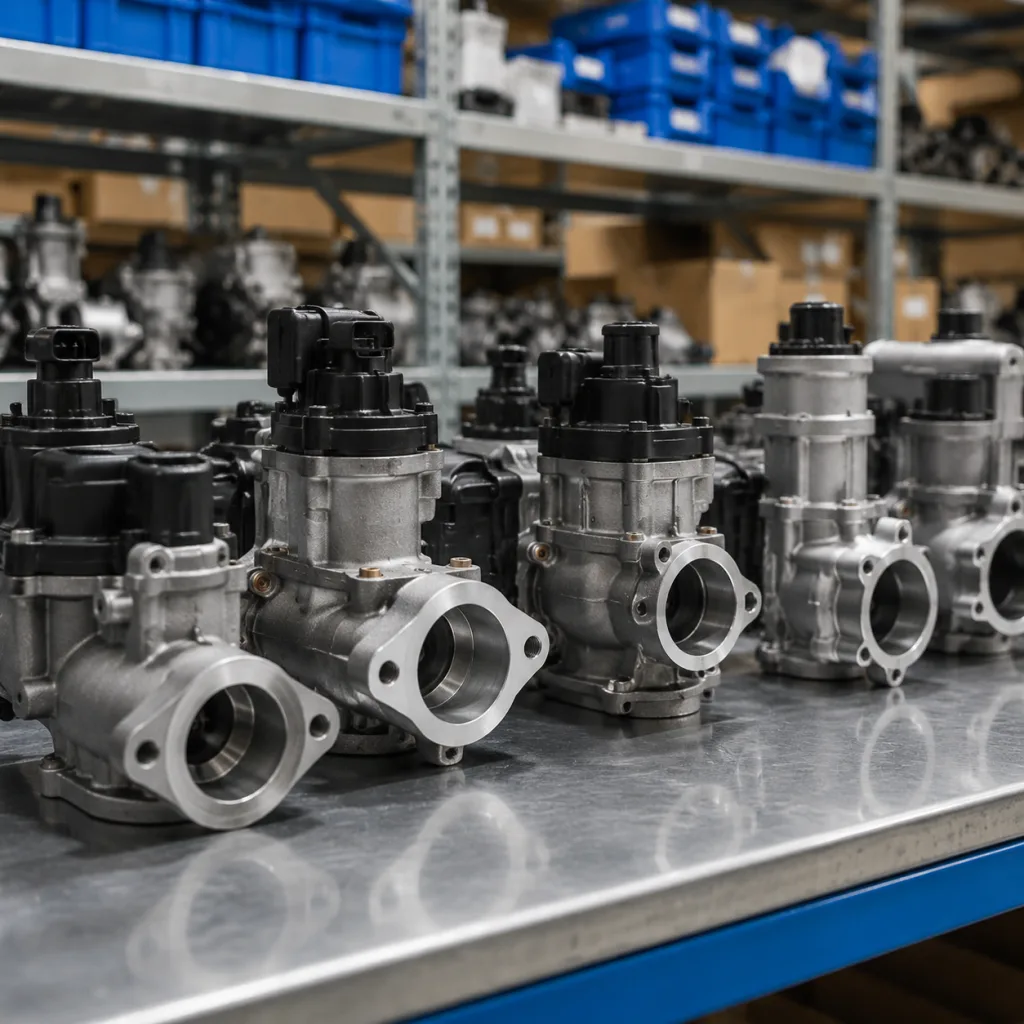
A practical range plan often separates SKUs into A, B, and C velocity groups. Fast movers may support 300-500 pieces per reference per shipment. Slow-moving or newly introduced references may start at 50-100 pieces after sample approval if tooling and components are already available. Avoid mixed-SKU cartons unless every inner box has a scan-readable label and the packing list identifies quantity by reference, batch, and carton number.
Buyers can review current engine-related coverage in our catalog and the broader engine component range at /products/engine-components.html. Driventus can also consolidate EGR valves with gaskets, water pumps, turbocharger components, pistons, and other engine parts to improve container utilisation and reduce fragmented purchasing.
Where Wholesale EGR Valve Orders Usually Fail
Most EGR valve sourcing problems do not appear in the quotation. They appear after the first approved sample, when a revision changes, an actuator is substituted, a gasket kit is packed incorrectly, or a label update breaks warehouse intake. A supplier should therefore be qualified on control points, not sales claims.
Failure mode to prevent
What to verify
Buyer action point
Certificate does not cover real production
IATF 16949:2016 and ISO 9001:2015 certificates, audit scope, expiry date
Match certificate scope to EGR valve or engine-component production, not only trading activity
Request latest calibration dates and equipment identification on inspection reports
Traceability breaks at packing
Batch number, production date, operator or line record, packing batch
Require the same batch code on product label, inner carton, and inspection summary
Packaging creates claims
Carton strength, label format, barcode data, corrosion protection
Approve artwork, label field order, barcode type, and export-carton stacking method before mass packing
EU documentation is requested too late
REACH (EC) No 1907/2006 material declaration where requested
Confirm declaration format before EU shipment rather than after customs or customer audit questions
</tr></thead><tbody> </tbody></table>For pre-production approval, importers should request at least 3-5 sample pieces per reference. Use them for dimensional review, installation checks, and bench testing. For a first pilot order, a common inspection route is 100% functional testing plus AQL sampling for appearance, accessories, labels, and cartons. Typical AQL settings are 0 critical defects, 1.0 major defects, and 2.5 minor defects. Repair-chain buyers may set tighter limits for barcode accuracy, kit contents, and leak performance.
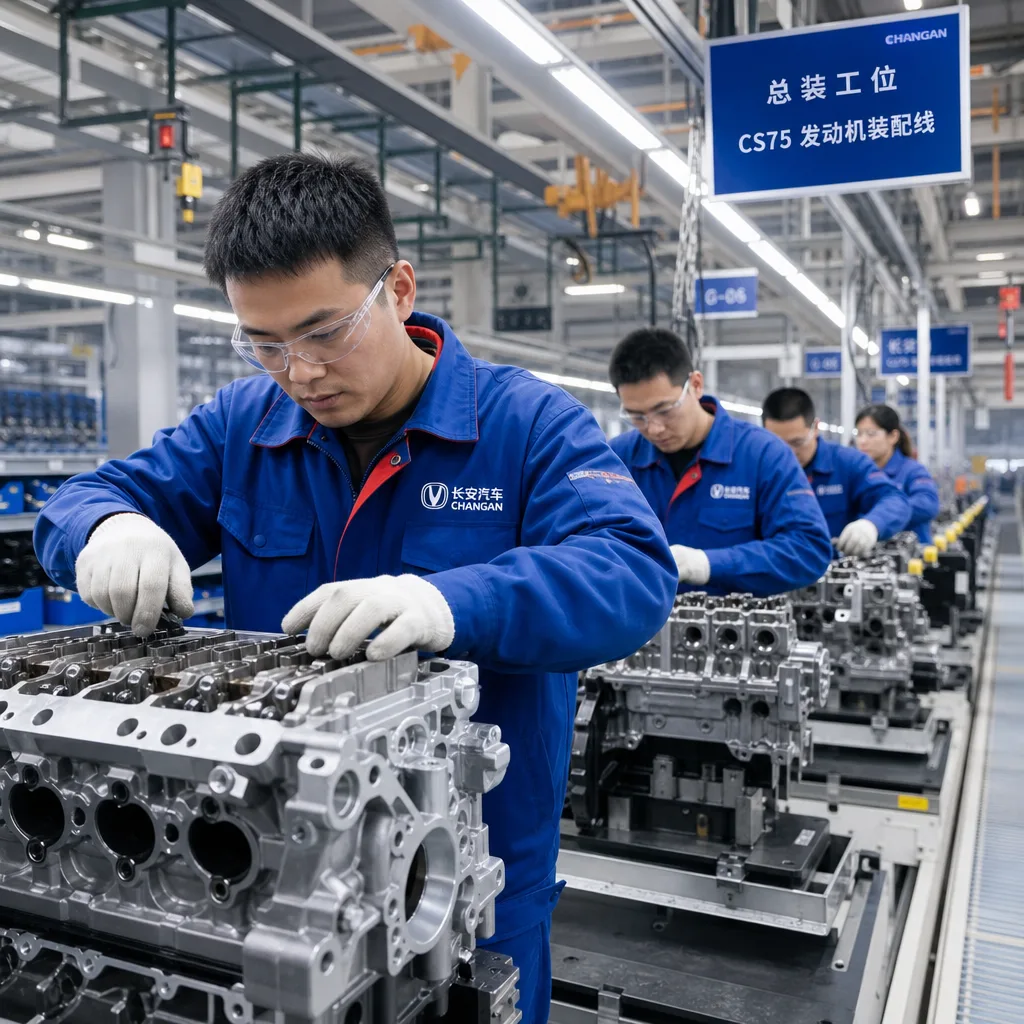
Driventus operates under a documented quality system aligned with IATF 16949:2016 and ISO 9001:2015. During supplier qualification, buyers can request process-flow charts, control plans, inspection templates, sample packaging photos, and batch-document examples at the RFQ stage.
Spec Deep-Dive: Tolerances That Decide Field Performance
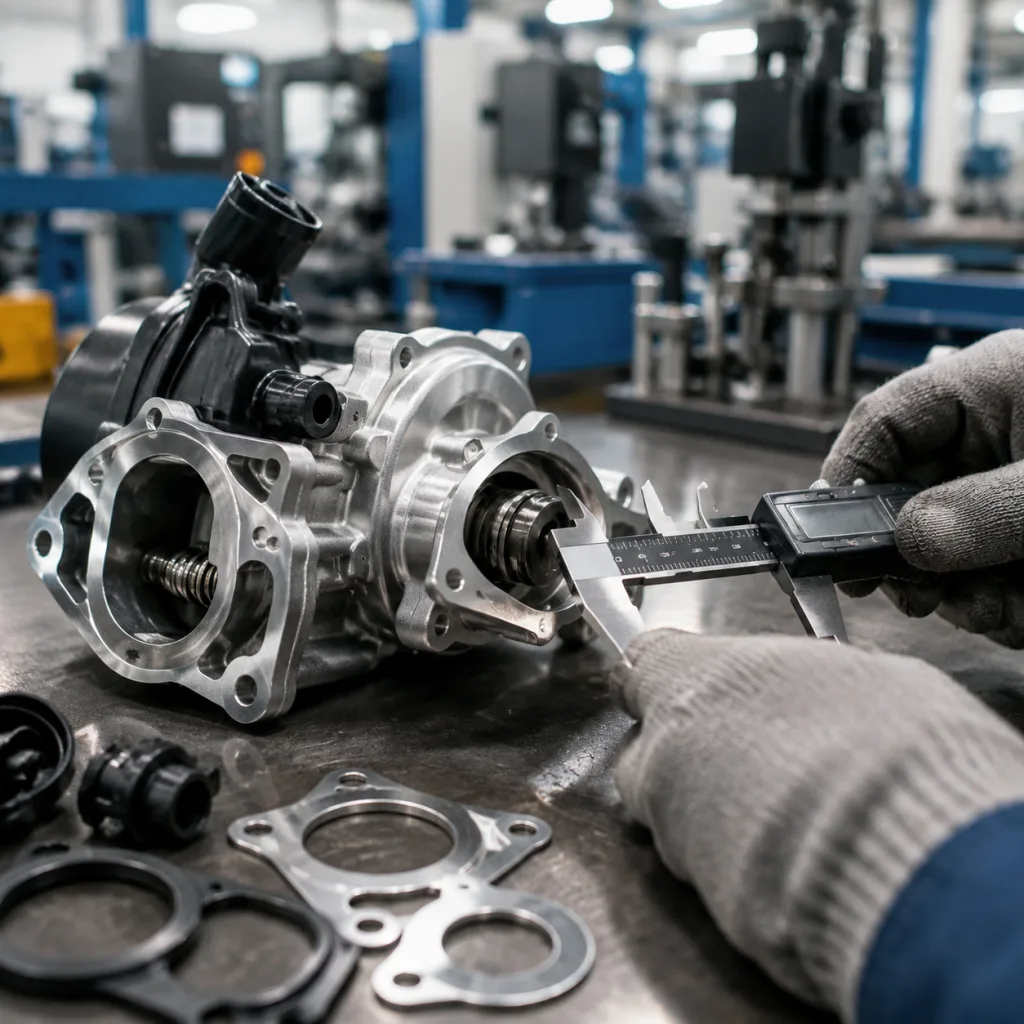
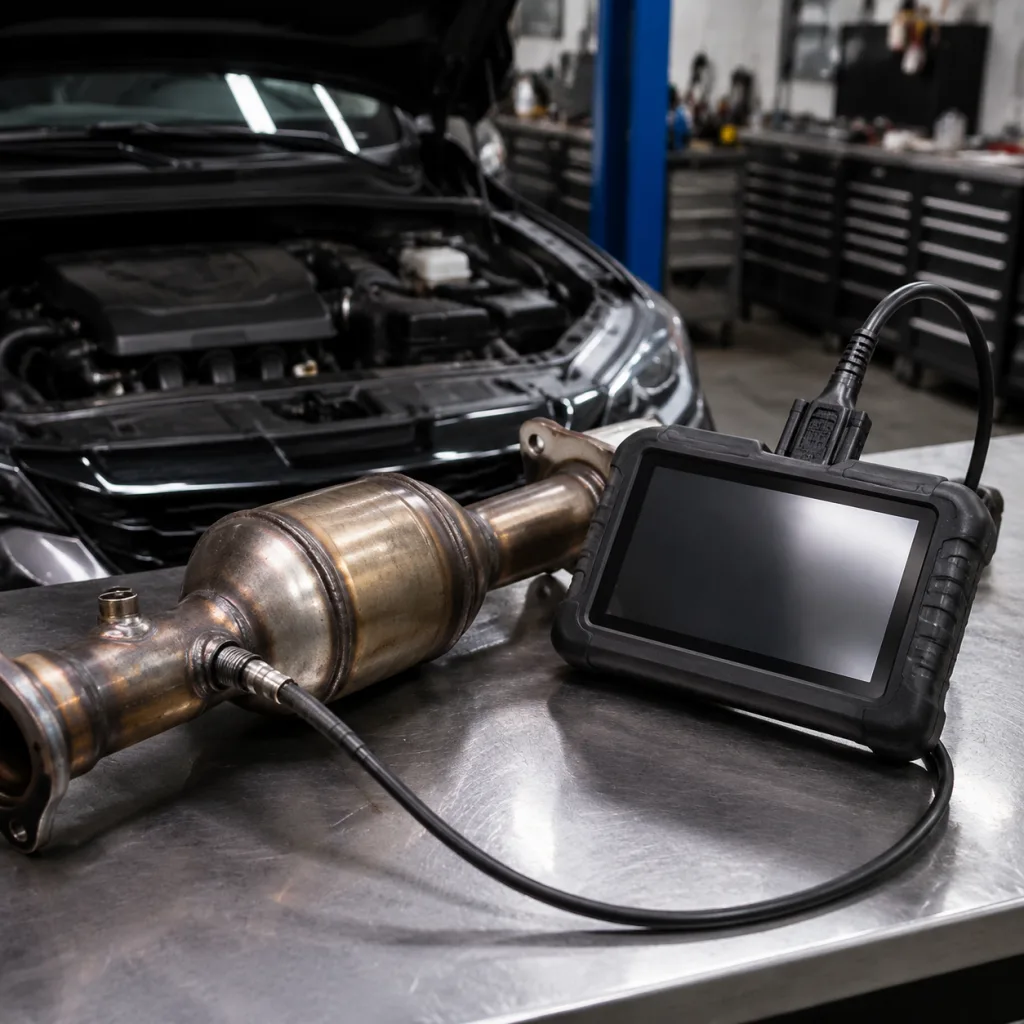
EGR valves operate in hot, soot-heavy exhaust flow. A small deviation can create sticking, leakage, sensor faults, or early returns. Do not approve a BMW-fitment reference by external appearance only. Check fit, travel, actuator response, sealing, connector compatibility, and material suitability for the engine-bay environment.
Critical inspection points include:
Mounting flatness: set a measurable flatness limit, commonly 0.05-0.10 mm across the sealing face depending on flange size and gasket design.
Mounting-hole position: verify centre distance, hole diameter, and thread engagement; many buyers use ±0.10 mm for key machined locations unless the drawing requires tighter control.
Valve seat sealing: define leakage under the agreed pressure and medium; record test pressure, hold time, temperature, and maximum allowable flow instead of accepting “leak tested” wording.
Valve travel: measure full-open and closed positions, smooth return, spring preload, and sticking after heat cycling or soot-contamination simulation where required.
Actuator response: check electric units for opening range, return position, response time, current draw, feedback-signal stability, and fault-code behaviour on a bench harness.
Connector integrity: match pin position, locking-tab strength, terminal plating, insertion force, housing material, and keyway profile to the intended harness interface.
Corrosion resistance: specify exterior plating or surface treatment for engine-bay moisture, salt exposure, and handling; salted-road markets often request salt-spray evidence or coating details.
Gasket compatibility: record gasket thickness and material in the approved kit BOM, and confirm it matches bolt load, gas temperature, flange geometry, and installation sequence.
Kit consistency: verify that every carton contains the agreed valve, gasket, label, and accessory set for the approved SKU, using checkweighing or packing-line checks for first shipments.
A buyer-ready approval file should include approved sample photos, dimensional inspection results, leak-test parameters, actuator bench-test records, connector close-ups, gasket BOM, packaging photos, and final label artwork. If the buyer has previous field failures, the RFQ should state the failure mode, return mileage, fault code, and photos of the failed interface. That helps the supplier validate the actual risk instead of testing only generic points.
Emissions-related vehicle systems are regulated differently by market. In Europe, type-approval requirements can involve UNECE emissions frameworks such as ECE R-83 for relevant light-duty vehicle categories. Aftermarket buyers should ensure that parts are sold for lawful repair use in the destination market, application data is accurate, and customer-facing claims do not imply vehicle-maker approval. Driventus does not claim approval, sponsorship, or endorsement by any vehicle manufacturer.
MOQ and Lead Time: Compare the Order Scenarios
EGR valve BMW wholesale projects should settle commercial terms before sampling. This is especially important when one order combines fast movers, slow movers, private-label cartons, and references at different development stages. MOQ depends on tooling status, stock position, actuator availability, gasket sourcing, carton artwork, and documentation requirements.
Use the order type to set expectations:
Sample order: 3-10 pieces per reference for dimensional review, installation trial, bench testing, catalogue validation, and packaging confirmation.
Pilot order: usually 50-200 pieces per reference, or a mixed batch across approved SKUs, for warehouse intake, barcode testing, first-market sales, and field feedback.
Regular wholesale order: often 300-1,000 pieces per fast-moving reference, or consolidated multi-SKU shipment based on carton specification, forecast, and replenishment cycle.
Existing developed SKU: normally lower MOQ and shorter lead time when components, gaskets, and standard packaging are available.
New or modified SKU: new casting, actuator change, special gasket kit, or buyer-exclusive carton may require higher MOQ to cover tooling, setup, testing, and printed packaging.
Price drivers: actuator type, casting weight, machining time, seal and gear material, 100% test requirements, packaging grade, inspection documentation, and shipment consolidation.
Documents to confirm: packing list, commercial invoice, batch traceability record, inspection summary, sample approval record, packaging photos, and material declaration when required.
As a working estimate, plan 5-10 working days for sample preparation when a developed SKU is available. Repeat production orders often need 25-45 days after deposit and packaging approval. New development involving tooling, actuator validation, or new carton artwork can take 45-75 days or more. Confirm these ranges during RFQ because actuator supply, gasket availability, factory loading, and holiday periods can change timing.
For private-label programmes, specify carton dimensions, minimum paperboard grade, label fields, barcode format such as EAN-13, Code 128, or buyer SKU barcode, country-of-origin wording, palletisation rules, and any retailer or repair-chain compliance requirements. Export cartons should state part number, quantity, gross weight, net weight, carton size, batch number, and destination mark where required. Repair-chain buyers may also require scan-readable SKU labels, consistent kit contents, and clear supersession handling to reduce branch-level picking errors.
Custom Reference Development, Step by Step
Some importers need more than catalogue supply. The requirement may be a new reference, revised gasket kit, alternative connector supplier, different actuator calibration, laser-marking format, or tighter inspection sampling. Driventus supports custom manufacturing for B2B buyers when technical data, sample parts, drawings, or reliable cross-reference information are available.
A practical development workflow looks like this:
1. Buyer provides target application list, sample, drawing, OE cross-reference, photos, annual forecast, target landed-cost range, and required packaging format. 2. Engineering team reviews geometry, casting structure, machining datum, materials, actuator requirements, connector interface, gasket stack-up, and test feasibility. 3. Quotation defines MOQ, unit-price basis, estimated lead time, tooling needs, packaging cost, validation scope, inspection level, and documentation package. 4. Samples are produced for dimensional, functional, sealing, electrical, surface-treatment, packaging, and fitment checks. 5. Buyer reviews sample report, confirms acceptable deviations, and returns written approval or a marked correction list. 6. Approved specifications, labels, gasket BOM, accessories, laser marking, and kit contents are locked before pilot production. 7. Pilot batch is produced with first-article inspection, in-process checks, 100% functional testing where agreed, and final packing verification. 8. Production batch is released with agreed inspection records, traceability data, packing photos, and shipment documents.
Expect a technical clarification stage before final price on new references. A missing connector photo, unclear supersession, or different cooler-side flange can change tooling, BOM, test method, and MOQ. Where reverse engineering is required from a supplied sample, the buyer should provide at least one unused part for measurement and, ideally, one used field-return part to show real-world failure conditions.
Factory audits can cover incoming inspection, machining control, assembly stations, leak-test method, electrical test equipment, calibration records, non-conforming material handling, warehouse segregation, and final packing. Remote audit support for overseas buyers can include video walkthroughs, certificate copies, production-flow documents, control-plan excerpts, equipment calibration evidence, batch inspection photos, and sample carton drop-test or stacking photos when required.
Long-Term Supply Q&A: Keeping Batches Consistent
The core long-term risk is simple: the shipment six months later does not match the approved sample. Causes vary. A sub-supplier changes. An actuator revision is mixed into production. A gasket is substituted. Test limits drift. Packaging data is updated without notice.
What should be locked before repeat orders? Approved samples, revision codes, drawings, connector photos, gasket BOM, label artwork, and reference photos for each active SKU.
Which technical limits should be agreed? Critical dimensions, sealing limits, actuator current range, feedback-signal limits, and electrical test method before mass production.
How should traceability appear on shipped goods? Batch numbers should appear on product labels, inner cartons, outer cartons, inspection summaries, and packing lists.
What changes need written approval? Actuator supplier, casting source, seal material, connector housing, gasket thickness, carton artwork, barcode data, and any fitment-affecting revision.
How should slow-moving SKUs be managed? Review them quarterly to prevent obsolete stock after supersession, catalogue correction, or demand shift.
What about EU documentation? Confirm REACH (EC) No 1907/2006 requirements before EU shipment and keep declarations linked to the shipped batch.
How should packaging revisions be handled? Record label and carton revisions so old and new formats are not mixed in one delivery.
A workable claim process should state response time, evidence required, and containment method. The buyer provides batch code, installation date, mileage, fault code, photos, and return quantity. The supplier checks retained samples, production records, leak-test logs, actuator-test data, and packing records for that batch. A target response time of 3 working days for initial containment and 7-10 working days for root-cause feedback is practical for many B2B programmes, provided parts and evidence are available.
For category buyers, the lowest landed cost usually comes from stable SKU selection, clear forecasts, controlled packaging specifications, and fewer emergency shipments. For sourcing engineers, the priority is repeatability: the part shipped months later must match the approved sample in interface, actuation, sealing, accessories, traceability, and labelling.
Frequently asked questions
Send the target application list, OE cross-reference if available, photos or sample details, estimated annual quantity, first-order quantity, packaging requirements, destination market, and required inspection documents. Connector photos, gasket interface images, label requirements, and any existing warranty concerns help reduce quotation errors.
Yes. Private-label packaging can be reviewed for wholesale and repair-chain programmes. Buyers should provide label layout, barcode format, carton dimensions, carton-strength requirements, country-of-origin wording, pallet rules, and any market-specific instructions before pilot production.
No. Driventus is an independent aftermarket manufacturer; brand names are referenced for fitment identification only. We do not claim approval, sponsorship, or endorsement by any vehicle manufacturer.
For MOQ, lead-time, sample availability, private-label packaging, technical tolerances, and audit documentation, please [request a quote](/contact.html).