EGR Cooler OEM Supplier: Sourcing, Quality, and Lead Times
For procurement teams, choosing an EGR cooler OEM supplier is a technical sourcing decision, not a simple unit-price comparison. The supplier has to control application interchange, stainless material grades, heat-exchanger core construction, weld or brazing consistency, leak-test records, packaging, and repeatable lead times across repeat orders.
Driventus supplies engine and powertrain components from Taizhou, Zhejiang, with production aligned to IATF 16949:2016 and ISO 9001:2015. Driventus is an independent aftermarket manufacturer; brand names and OE numbers are referenced only to identify fitment.
Before a quotation can be confirmed, buyers usually need to provide an OE cross-reference, engine code, cooler layout, key dimensions, expected annual volume, packaging requirements, destination market, and any local compliance documents. Useful dimensions include exhaust flange bolt spacing, coolant hose outside diameter, mounting-hole position, overall core length, sensor or bypass-valve provision, and bracket orientation.
For distributors, importers, repair-chain sourcing teams, and OEM programmes, the right partner should also support sample approval, stable re-orderability, clear engineering revision control, and audit-ready production records. That is what turns a single EGR cooler purchase into a manageable long-term supply programme.
What Buyers Should Specify First
Start with the exact application, not just the vehicle model or a partial part description. An EGR cooler can vary by engine code, emissions family, bracket layout, coolant port angle, exhaust flange pattern, bypass valve configuration, vacuum actuator type, temperature sensor provision, and gasket interface. Two coolers may look almost identical in photos but fail installation because a mounting ear, hose connection, or pipe angle is different by only 2–5 mm.
For sourcing teams, the fastest route is to pair the OE reference with a clear technical pack and a realistic forecast.
Field
What to confirm
Why it matters
OE reference
Full OE number, supersession, or application code
Prevents variant mismatch and wrong interchange
Engine data
Engine code, displacement, fuel type, model year, emissions level
Controls mounting, gas flow, and emissions-family fitment
Affects heat rejection, pressure drop, and packaging space
Performance targets
Coolant pressure, exhaust pressure, gas temperature, duty cycle, flow requirement
Drives wall thickness, core design, welding, or brazing specification
Sample evidence
Photos, 2D drawing, 3D file, or physical sample
Confirms hidden features before tooling or production approval
Logistics
Annual volume, MOQ target, carton spec, label format, pallet rule
Affects production planning, packaging design, and landed cost
</tr></thead><tbody> </tbody></table>It also helps to separate mandatory requirements from preferences. Mandatory items include fitment, sealing interfaces, pressure resistance, gas-side back-pressure limits, coolant-side leak tightness, and market compliance. Preferences may include carton branding, label format, pallet height, mixed-SKU container planning, or retail kit contents such as gaskets and clamps. Making that distinction early keeps the quotation focused and prevents non-critical revisions from slowing technical review.
If you are building a wider sourcing programme, review our catalog and the engine components section before you send a request. That helps align the part number, packaging route, and destination market from the start. It also allows Driventus to check whether the EGR cooler can be quoted alongside related engine components such as EGR valves, intake parts, sensors, thermostats, or water pumps, which can improve consolidation planning for repeat B2B orders.
Materials And Build Options That Affect Service Life
An EGR cooler works in a harsh thermal and corrosive environment. Exhaust gas brings heat, soot, condensate, sulphur and nitrogen by-products. The coolant side adds pressure pulses, vibration, and exposure to different coolant chemistries such as OAT, HOAT, or silicate-based coolant. Material selection therefore matters as much as external dimensions.
A reliable EGR cooler OEM supplier should be able to explain the tube material, shell construction, end-cap design, weld or brazing process, and how those choices support service life in the target application.
Common build variables include:
Tube and shell material grade, typically stainless steel such as 304, 316L, 409, or 444 depending on corrosion and temperature requirements
Tube wall thickness, shell thickness, and end-plate thickness defined against pressure and vibration risk
Core fin density, tube count, turbulence insert design, and exhaust-gas flow path length
Straight-through, U-flow, or bypass cooler layout depending on packaging and warm-up strategy
Vacuum, pneumatic, or electronically controlled bypass valve provisions where required
Brazed, TIG-welded, laser-welded, or hybrid assembly method depending on the cooler design
Gasket, O-ring, clamp, and seal stack-up for coolant and exhaust interfaces
Sensor boss thread, temperature sensor port, actuator bracket, or exhaust pressure tapping where required
Surface finish and corrosion protection on exposed steel parts and mounting hardware
For buyers, the central question is whether the build matches the duty cycle. A light-duty passenger vehicle replacement, a diesel commercial application, and a high-temperature emissions-control programme may need different stainless grades, tube geometry, and joint design, even when the cooler performs the same basic function. Poorly specified materials can lead to internal coolant-to-exhaust leakage, white smoke complaints, coolant loss, exhaust contamination, excessive pressure drop, thermal fatigue cracking, or bracket fracture at welded joints.
Where the programme requires a custom form factor, Driventus can support custom manufacturing from drawing review through sample approval. This is useful when a market needs a replacement cooler with OE-equivalent dimensions but a different packaging label, reinforced mounting bracket, sensor boss arrangement, gasket kit, or service-kit configuration.
For distributors and importers, the goal is not simply to match the visible shape. The part has to maintain stable exhaust flow, controlled back-pressure, reliable heat transfer, coolant-side sealing, and repeatable installation geometry under real thermal cycling.
Validation And Quality Control
A credible sourcing decision depends on documented validation, not verbal assurance. Driventus works within a quality framework aligned to IATF 16949:2016 and ISO 9001:2015, with traceability from incoming material to finished part. For EGR cooler programmes, buyers should expect dimensional inspection, leak testing, material verification, and process control over tube forming, welding, brazing, cleaning, final inspection, and export packing.
Typical controls include:
Incoming verification of stainless steel material certificates, gasket material, actuator parts, and supplier batch records
PMI or equivalent material confirmation where stainless grade control is contractually required
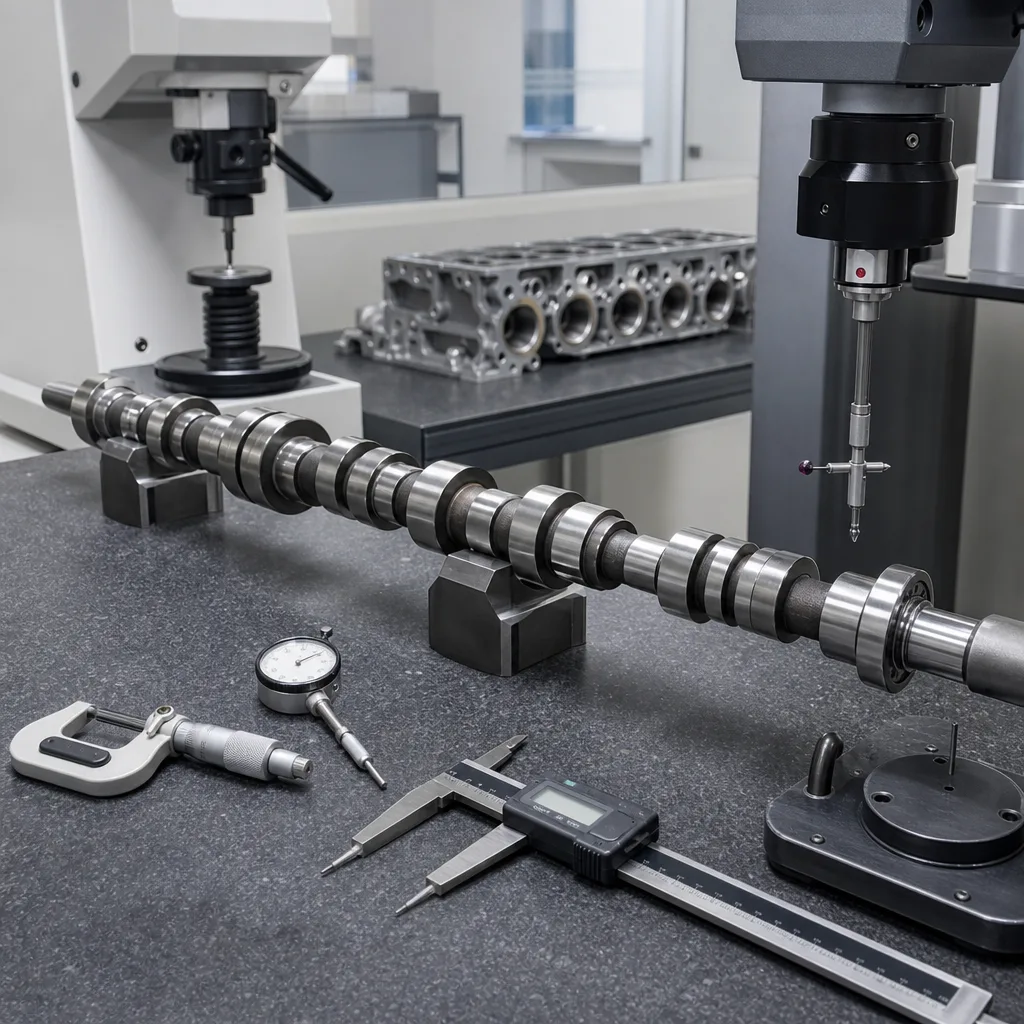
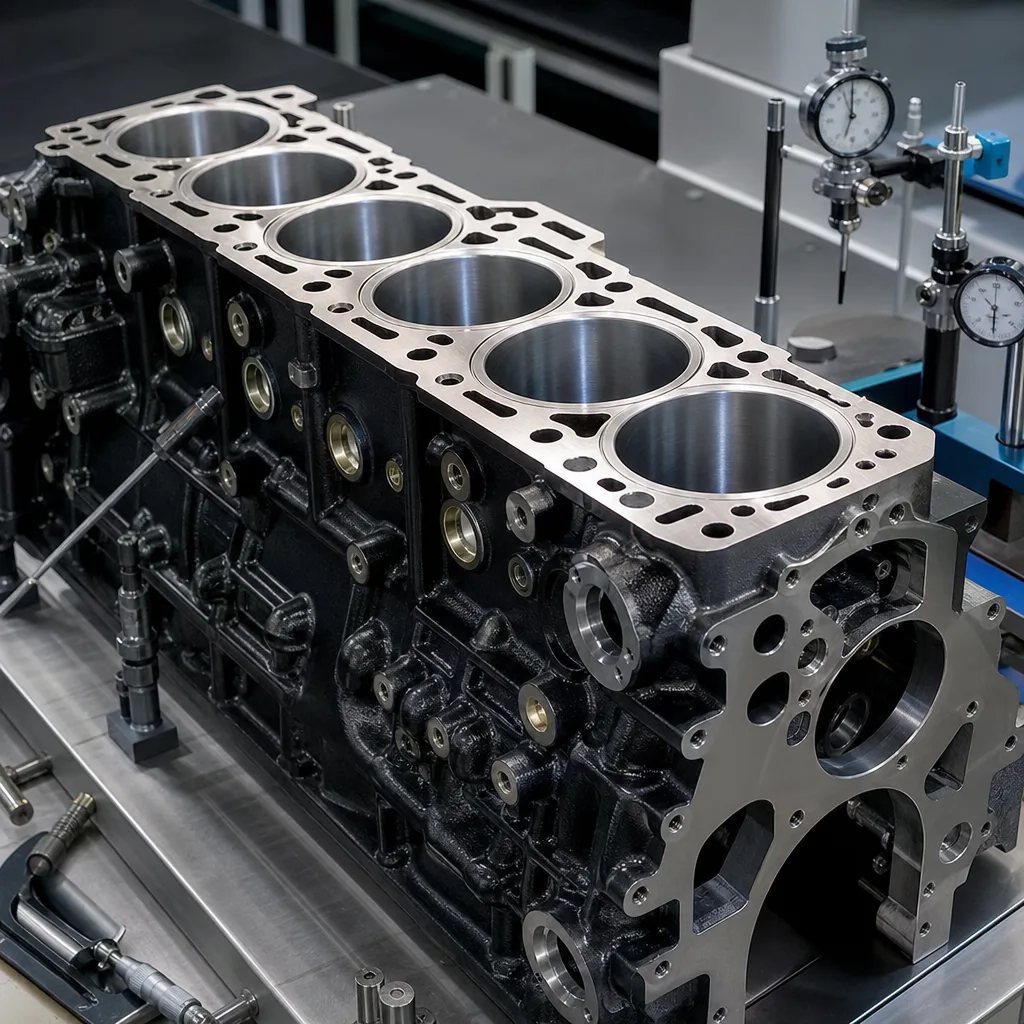
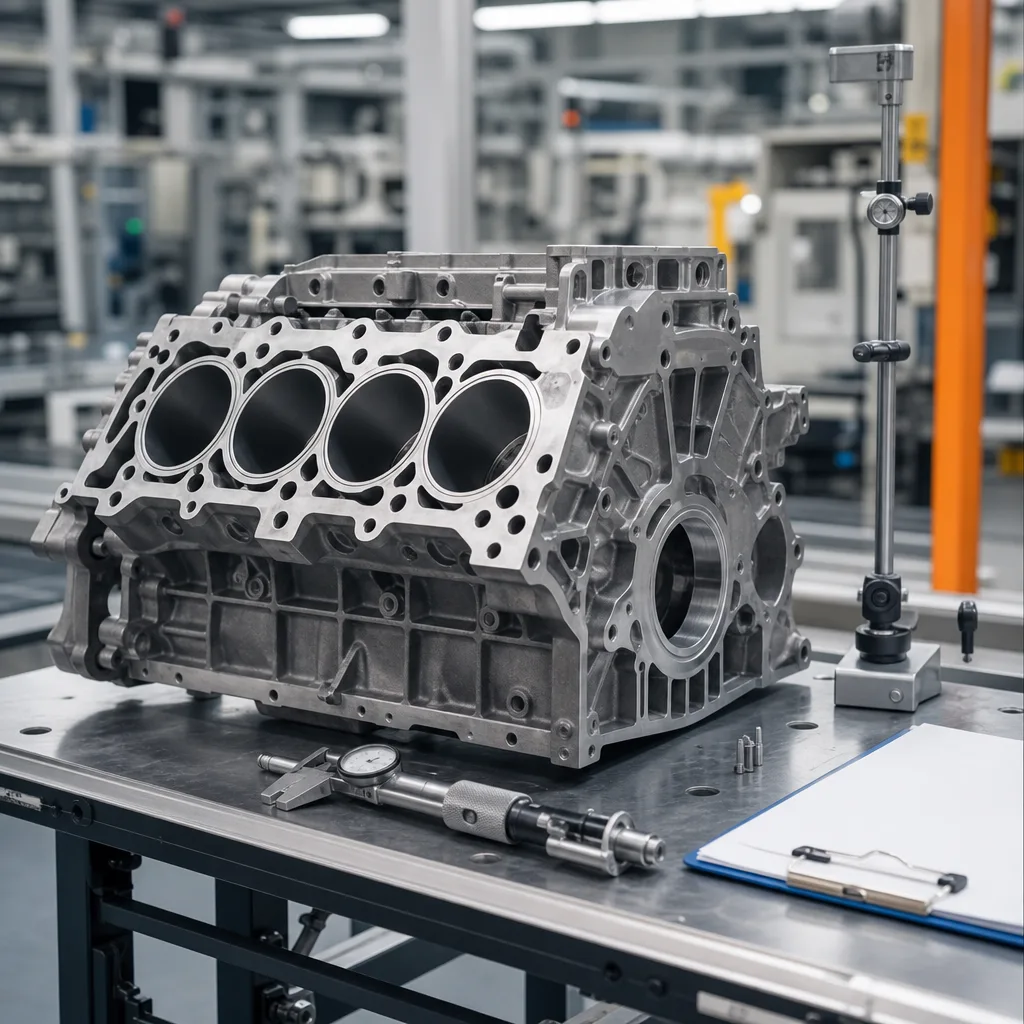
Dimensional checks against drawing, sample master, or approved reference part, including flange flatness and bolt-hole position
Fixture checks for brackets, flanges, coolant ports, exhaust ports, sensor bosses, and mounting points
Pressure decay, air-under-water, helium, or immersion leak testing according to the agreed production control plan
Separate coolant-side and gas-side leak checks where the cooler design requires independent circuit verification
Visual inspection of TIG welds, laser welds, brazed joints, tube ends, port surfaces, gasket lands, and sealing faces
Weld penetration, braze coverage, or destructive section review during validation or production approval when specified
Internal cleanliness checks where flux residue, weld spatter, or metal particles could affect coolant flow or installation
Corrosion, vibration, thermal shock, salt spray, or thermal cycling tests where specified by the buyer or programme plan
Packaging checks for export vibration resistance, moisture protection, carton strength, pallet stability, and label accuracy
Batch traceability records covering production date, material lot, inspection result, and shipment reference
For new or higher-risk applications, buyers may request sample inspection reports, test records, control plans, and PPAP-style documentation depending on channel requirements. A distributor may only need confirmed fitment, a dimensional report, leak-test evidence, and carton approval. An OEM or Tier-1 programme may require a more formal package covering drawing revision, process flow, PFMEA, control plan, MSA, capability data, material declarations, IMDS where applicable, and production trial records.
When a customer asks for compliance support, published standards should be used as the reference frame, not invented internal numbers. Depending on the target market and test plan, REACH (EC) No 1907/2006 may apply to restricted substances, RoHS may be relevant for electronic actuator or sensor content, and customer validation can reference ISO 16750 for road-vehicle environmental conditions, ASTM B117 for salt-spray exposure, or SAE and OEM-specific durability methods where appropriate.
The point is simple: the supplier should provide evidence that the cooler can be repeated, traced, audited, and shipped with the same specification over time.
MOQ, Lead Time, And Export Terms
MOQ and lead time depend on whether the part is a catalogue item, a private-label order, or a custom drawing programme. Buyers should ask for the commercial split before they send a forecast, because tooling status, stainless material availability, test scope, artwork approval, carton configuration, and destination documentation all affect schedule. A low unit price is not useful if the approval path is unclear or repeat batches cannot be planned with confidence.
Order type
Typical buyer input
Commercial impact
Catalogue replacement
OE reference, annual demand, destination market list
Usually shortest approval path and simplest re-order process
Private label
Artwork, barcode, carton spec, label language set
Adds packaging sign-off, print approval, and possible MOQ change
May require tooling, sampling, testing, and PPAP-style review
Mixed engine-component order
EGR cooler list plus related part families
May improve shipment consolidation and inventory planning
</tr></thead><tbody> </tbody></table>Lead time should be discussed in stages: technical confirmation, sample preparation, sample approval, packaging approval, mass production, inspection, and export booking. For catalogue parts, the route may be relatively direct once OE interchange and fitment are confirmed. For private-label or custom programmes, the timeline depends on how quickly drawings, samples, labels, gasket kits, and test requirements are approved by both sides.
A practical sourcing timeline often includes several gates: initial OE cross-reference review, dimensional confirmation against drawing or sample, prototype or pre-production sample, inspection report approval, packaging artwork sign-off, and production release. For custom cooler programmes, tooling for brackets, end tanks, flanges, or tube packs can become the critical path. If the buyer requires durability testing, thermal cycling, salt spray, or vibration testing before release, that validation time should be built into the purchasing plan rather than treated as an afterthought.
Export terms also need to be clear early in the discussion. Import managers should confirm Incoterms, carton dimensions, gross and net weight, pallet requirements, HS code review, documentation needs, and whether the shipment will move by sea, air, or consolidated container. For regulated or documentation-heavy markets, the supplier should also understand the buyer's requirements for commercial invoice detail, packing list format, country-of-origin statements, material declarations, restricted-substance documents, and any customer-specific labelling rules.
For import managers, the important question is not only unit price. It is supply continuity. A dependable EGR cooler OEM supplier should be able to state the revision status, batch traceability, reorder policy, export packing method, carton drop or vibration protection approach, and communication path for repeat forecasts. That is what protects landed cost when a programme scales across the EU, UK, US, Canada, Australia, Brazil, or other regional markets.
Why Driventus Fits B2B Sourcing
Driventus supplies directly into aftermarket distribution, OEM and Tier-1 channels, and multi-location repair networks. Each channel needs a different balance of documentation, packaging, forecast control, and commercial responsiveness. A repair-chain buyer may prioritise fitment coverage, stable availability, gasket-kit completeness, and clear labelling. An importer may need private-label cartons, mixed-SKU container planning, customs-ready documents, and consistent OE cross-reference data. An OEM or Tier-1 customer may require deeper process evidence, sample reports, controlled revision history, and formal change control.
The company exports to more than 60 countries, so export packaging, document packs, and part cross-referencing are built into the workflow rather than added after the order is placed. For an EGR cooler sourcing programme, that experience helps reduce avoidable delays around carton approval, market-specific labelling, mixed-SKU packing, HS code review, and application confirmation. It also supports buyers who need to compare OE references, aftermarket interchange, and physical samples before releasing a repeat order.
Use the quality system page if your team needs to review process control, certification, or audit expectations before a commercial discussion. Use request a quote when you already have the OE reference, engine code, annual volume, target price range, packaging requirement, and destination market. If your buying team needs a broader spend review, start from our catalog and map the EGR cooler family into your current engine-component sourcing list.
For procurement teams that need a steady, auditable, independent source, the value is consistency: OE-based interchange, controlled stainless materials, documented leak checks, repeatable weld or brazing processes, practical export support, and a responsive team for re-order and custom work. That is the practical basis for qualifying Driventus as an EGR cooler OEM supplier for long-term B2B supply.
Frequently asked questions
Send the OE reference, engine code, target market, annual volume, packaging spec, and any photos or drawings. Useful dimensions include flange bolt spacing, hose OD, bracket position, core length, and sensor or bypass-valve details. If you have a sample, include it so we can confirm fitment and commercial terms faster.
Yes. We can work from carton artwork, barcode rules, label language, pallet requirements, and packing ratios. Packaging is treated as part of the specification, with approval before mass production.
Yes. If the application needs a different bracket, port position, actuator provision, sensor boss, or core geometry, we can review drawings and samples, then define tooling, sampling, validation, and inspection scope before production.
Share your OE reference, engine code, target volume, packaging requirement, and destination market, and our team will review the best supply route for your programme through [request a quote](/contact.html).