Engine Block Infiniti Supplier: Sourcing Notes for B2B Buyers
When procurement teams look for an engine block Infiniti supplier, a catalogue match is only the starting point. The real requirement is proof: confirmed fitment, controlled casting and CNC machining, lot traceability, and export documentation that can stand up to supplier approval. With engine blocks, risk does not end with a part number in a database. Buyers need to confirm the engine family, cylinder bore and deck requirements, oil and coolant gallery layout, bellhousing and engine-mount interfaces, main-bearing cap configuration, machining datums, and the inspection method used before release.
Driventus manufactures engine and powertrain components in Taizhou, Zhejiang, and supplies B2B buyers across aftermarket distribution, OEM and Tier-1 channels, and multi-location repair networks. We work with buyers who need OE-fit parts, controlled lead times, repeatable inspection records, and commercial communication built for recurring programmes rather than one-off spot purchases.
Driventus is an independent aftermarket manufacturer; brand names are referenced for fitment identification only. For Infiniti applications, buyers commonly request OE part-number cross-references, engine-code confirmation, material declarations, packaging specifications, and validation against the target engine family. Our production operates under IATF 16949:2016 and ISO 9001:2015, with export-oriented quality controls and documentation support for EU, UK, US, Canada, Australia, and Brazil markets.
What procurement teams should verify first
Before comparing unit prices, procurement teams should make sure the supplier understands the exact Infiniti application being sourced. An engine block is a high-risk component: small changes in casting geometry, machining position, surface finish, or gallery cleanliness can affect assembly, sealing, lubrication, cooling, NVH, and service life. A reliable engine block Infiniti supplier should therefore start with fitment and boundary-condition verification, not a broad catalogue claim.
Begin with the application data. Buyers should provide the engine code or engine family, model year range, market region, transmission configuration where relevant, and any existing OE, aftermarket, or legacy reference numbers. For Infiniti applications, this can mean separating closely related Nissan/Infiniti engine families, displacement variants, and market-specific revisions. Some enquiries include OE-style or legacy cross-reference formats. We use those references only when they are already part of the enquiry or fitment data, and we do not claim manufacturer endorsement. Brand names and part references are used only to identify compatibility requirements.
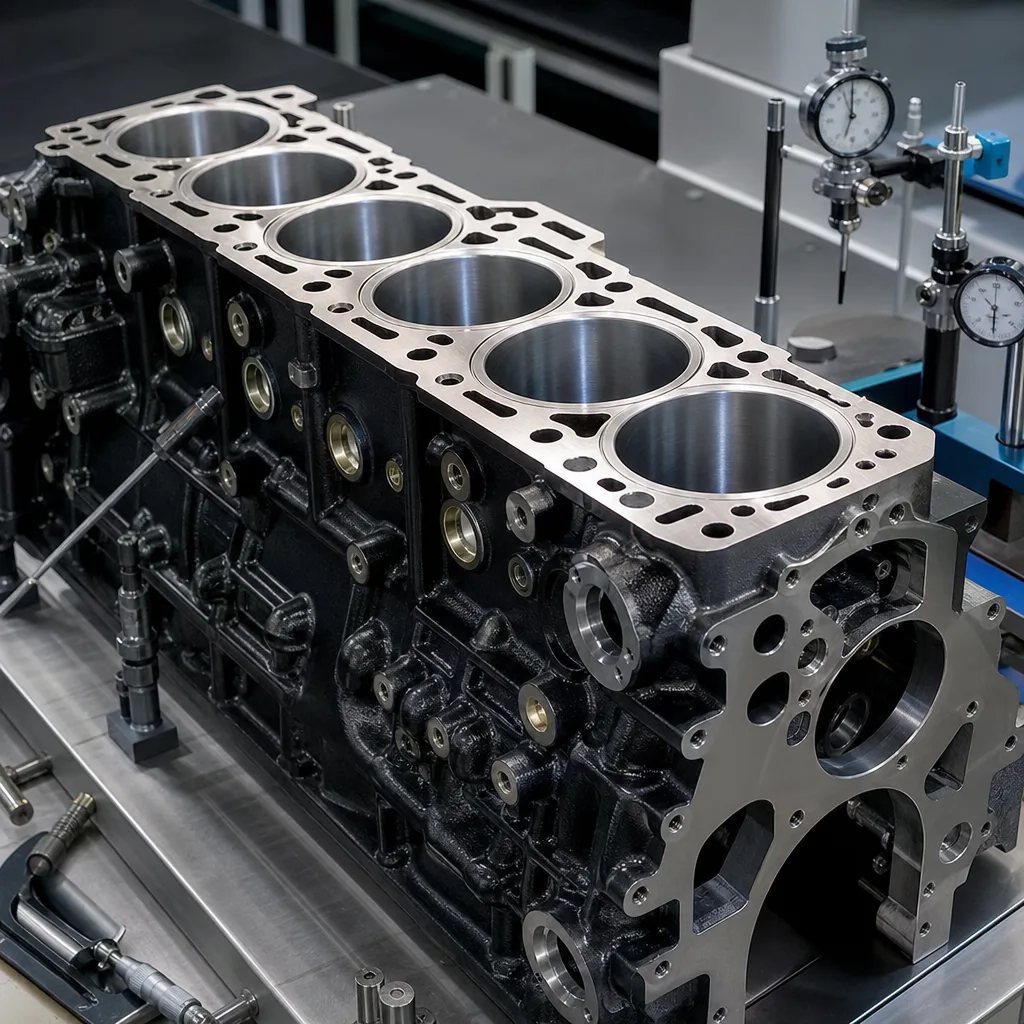
Next, define the technical boundary of supply. Is the requirement for a raw casting, a semi-machined block, a fully machined bare block, or a block supplied with plugs, dowels, liners, main caps, bearing cap bolts, core plugs, oil-gallery plugs, or other auxiliary hardware? That answer affects pricing, inspection scope, packaging, and warranty handling. For a fully machined block, the quality plan should normally cover cylinder bore diameter, roundness and taper, deck flatness, deck surface roughness, main bearing housing bore alignment, thrust-face condition, threaded-hole quality, oil/coolant gallery breakthrough, and gasket-surface finish. For a raw casting, attention shifts to casting integrity, alloy grade, hardness range, wall-thickness allowance, porosity control, and machining stock.
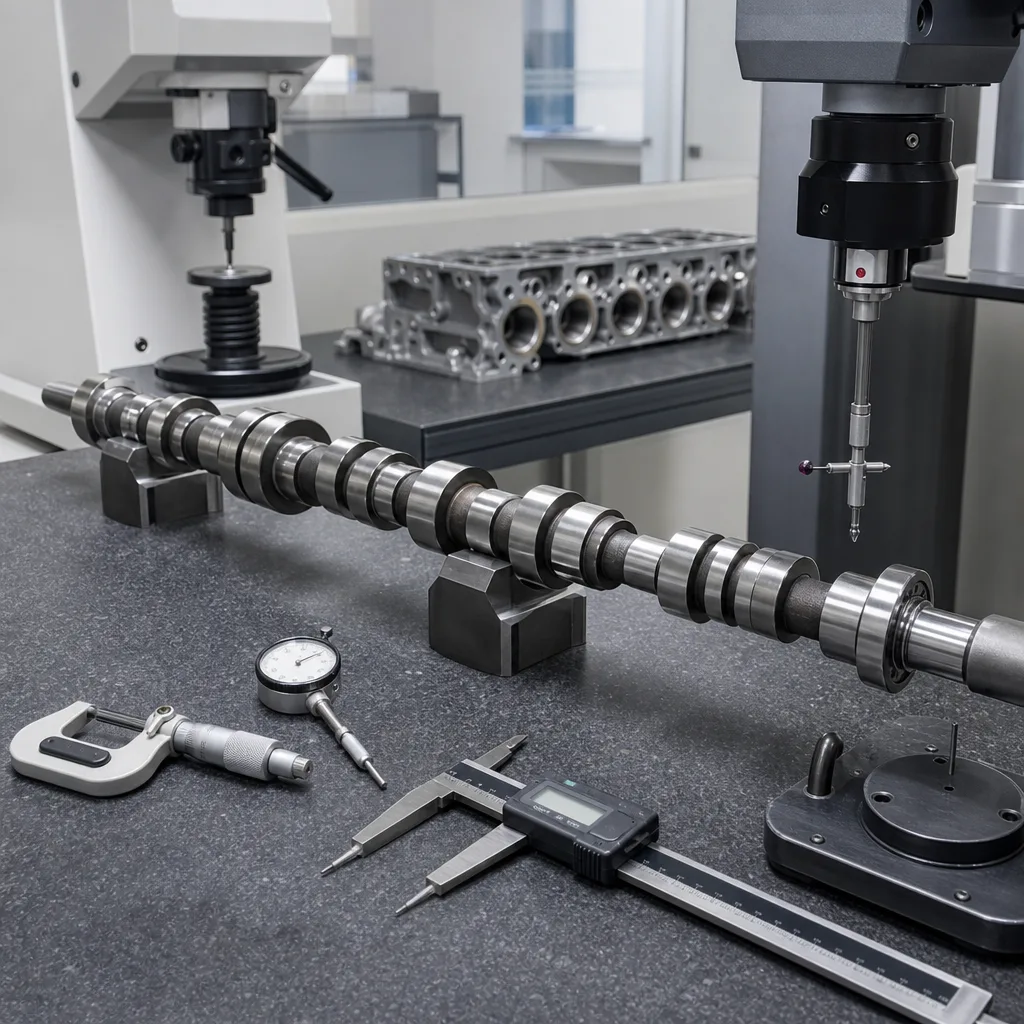
Buyers should also ask what dimensional and material evidence will support approval. Where drawings are available, the RFQ should call out critical-to-quality characteristics and tolerances. Where drawings are not available, engineering can work from benchmark samples, 3D scan data, machined-surface photos, casting marks, and engine-code data, but release should still be based on measured results. Typical inspection tools include CMM measurement for datum-related features, bore gauges for cylinder and main-bearing bores, surface-roughness testers for deck and gasket faces, thread gauges for tapped holes, pressure or leak testing where required, and visual/endoscopic checks for galleries and casting defects.
Finally, clarify the approval path before bulk shipment. B2B buyers should confirm whether the supplier can support sample inspection, dimensional reporting, material declaration, batch traceability, revision control, and nonconformance response. If the buyer serves distributors, repair chains, or fleet maintenance networks, packaging and labelling also need early agreement, including export carton strength, pallet configuration, barcode labels, part-number labels, batch coding, and any private-label requirements.
The practical test is simple: can the supplier match the engine application, document the inspection, control the casting and machining route, protect the block in transit, and ship on the required schedule? A documented answer to those points is worth far more than a general statement about catalogue coverage.
Production capability and lead-time control
A supplier audit should show whether the factory can trace parts back through the casting batch, process route, inspection record, operator or machine batch where applicable, packing record, and shipment. For an engine block programme, traceability should connect raw material or casting lot information with heat or melt records where available, machining operations, in-process checks, final inspection, packing records, and export documents. Driventus operates to IATF 16949:2016 and ISO 9001:2015. These standards do not replace buyer-specific PPAP, sample approval, or incoming inspection requirements, but they do provide a structured base for controlled production and repeatable release.
Production capability needs to be assessed across the full process, not just the finished block. Buyers should review casting consistency, machining stability, fixture and datum strategy, tool-life control, gauge calibration, inspection frequency, nonconforming-product handling, and corrective-action procedures. For engine blocks, commonly reviewed characteristics include cylinder bore geometry, deck surface condition, main bearing housing alignment, oil gallery and coolant passage integrity, mounting-hole location, thread quality, gasket-surface flatness, and cleanliness before packing. Where the buyer requires a defined inspection report, the RFQ should state the measured points, sampling plan, tolerance source, and preferred report format.
For machined blocks, repeatability depends on controls that may not be visible in the final part. The audit should cover machining centre capability, fixture repeatability, cutter offset management, coolant filtration, deburring method, washing and drying process, rust-prevention method, plug installation controls, and protection of machined faces during handling. Dimensional checks are normally divided between in-process controls for bore, deck, and datum features, and final inspection before packing. Buyers may request full-dimensional reports for samples and agreed sampling for mass production. If the programme requires a PPAP-style submission, the RFQ should specify the level and content expected, such as process flow, control plan, FMEA, dimensional results, material records, and capability data for critical dimensions.
Lead-time control depends on more than nominal factory capacity. Procurement teams should ask about material availability, casting tooling status, CNC fixture status, sample timing, approval timing, machining queue, packaging procurement, export booking, and the supplier’s ability to support phased deliveries. For new programmes, the timeline normally includes technical review, quotation, sample or pilot production, dimensional and material inspection, buyer approval, mass production, final inspection, packing, and shipment. For repeat orders, lead time can be stabilized through forecast sharing, blanket orders, agreed safety stock, or scheduled call-offs.
Driventus supports export-oriented B2B supply, so documentation and logistics planning are handled as part of the production programme rather than left until the end. Depending on destination and buyer requirements, documentation may include commercial invoice, packing list, inspection records, material declarations, batch identification, carton and pallet details, shipping marks, and buyer-specific compliance forms. For markets such as the EU, UK, US, Canada, Australia, and Brazil, buyers should state customs, labelling, restricted-substance, wood-packaging, or other compliance requirements at the RFQ stage.
The best way to reduce sourcing risk is to align the quality plan and the delivery plan before placing the order. That means agreeing on the inspection standard, acceptance criteria, sampling method, photo evidence if required, packaging method, incoterm, delivery window, and escalation contact for engineering or commercial questions.
How to request pricing and commercial terms
Engine block pricing depends on alloy and casting route, casting yield, machining cycle time, supplied hardware, inspection level, packaging method, order quantity, and programme maturity. A raw or semi-machined casting will not price the same as a fully machined block with installed plugs, protected machined faces, detailed dimensional reporting, and customized export packaging. To receive a useful quote from an engine block Infiniti supplier, the RFQ should make both the technical and commercial scope clear from the beginning.
A complete RFQ should include the engine code or engine family, target application, annual volume, first-order quantity, destination country, required certification pack, and whether sample submission is needed before mass production. If the buyer has drawings, 3D data, benchmark samples, inspection standards, or known critical characteristics, those should be included. If drawings are not available, photos of the current part, close-ups of casting marks and machined surfaces, bore and deck identification, and existing OE or legacy reference data can help engineering confirm the likely fitment path.
A strong RFQ also states:
- Requested incoterm, such as EXW, FOB, CIF, DAP, or DDP where applicable
- Target ship date and required delivery window
- First sample quantity and sample approval process
- Expected annual volume, order frequency, and forecast horizon
- Supply scope: raw casting, semi-machined block, fully machined bare block, or block with specified plugs, dowels, caps, liners, or hardware
- Packaging type, carton strength, pallet requirements, anti-rust protection, machined-face protection, and label format
- Required inspection report format, measured points, tolerance source, and sampling plan
- Material declarations, restricted-substance declarations, or other compliance requirements
- Whether private labelling, neutral packing, or customer-specific branding is required
- Whether partial shipments or phased releases are allowed
- Warranty, claims-handling, replacement expectations, and evidence required for field claims
Commercial terms should address payment method, currency, tooling or development charges where applicable, minimum order quantity, quotation validity, and whether prices are linked to material, energy, exchange-rate, or freight changes. For distributors and repair networks, it is also useful to discuss forecast visibility, replenishment planning, SKU consolidation, and whether multiple Infiniti/Nissan engine variants can share packaging, labels, inspection templates, or logistics planning.
For a faster quotation, send photos of the current part, dimensional drawings if available, and the OE or legacy reference data. If the programme includes multiple engine variants, one enquiry can cover the full set. That allows engineering to confirm compatibility, identify shared casting or machining requirements, and price the project more efficiently before sample approval and mass production.
If you are ready to review terms, request a quote and include the engine family, annual volume, sample requirements, inspection requirements, packaging needs, destination market, and preferred incoterm.
Frequently asked questions
Yes. We supply B2B aftermarket engine blocks for defined fitment applications. Driventus is an independent aftermarket manufacturer; brand names are referenced for fitment identification only.
Depending on the programme, we can provide dimensional inspection records, packing lists, material declarations, batch identification, and traceability records. Production is managed under IATF 16949:2016 and ISO 9001:2015.
Yes. Through our OEM and project support, we can discuss custom machining, supplied hardware, packing, labelling, anti-rust protection, and revision control for volume programmes. Submit the target specification through our contact page.
If you are qualifying an engine block Infiniti supplier for a current programme, send your engine code, volume, target market, inspection requirements, supply scope, and packaging details, and we will review the best sourcing option. Start here: /contact.html
Request a Quote