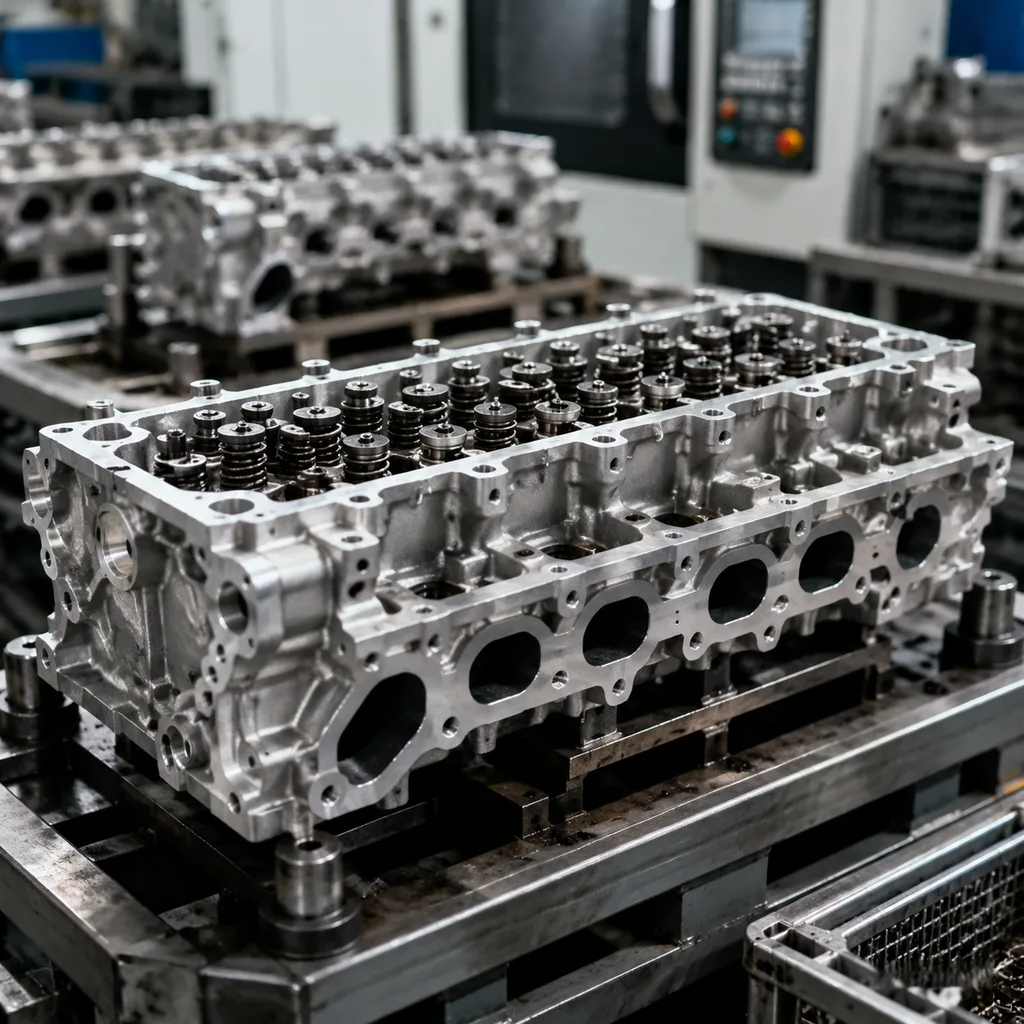
If you are sourcing an engine block Vauxhall OEM supplier for aftermarket distribution, Tier-1 supply, or fleet repair networks, the buying criteria are usually consistent: confirmed dimensional match, stable metallurgy, machining repeatability, and documentation that supports import and traceability. Driventus supplies engine blocks as an independent aftermarket manufacturer from Taizhou, Zhejiang, with exports to 60+ countries and quality controls aligned to IATF 16949:2016 and ISO 9001:2015. Driventus is an independent aftermarket manufacturer; brand names are referenced for fitment only. For procurement teams, the key questions are lead time, MOQ, inspection depth, and whether the block is supplied bare, semi-finished, or machined to OE-equivalent interfaces. This article outlines the practical points buyers should verify before placing a sourcing order.
How to qualify the right block fast
Start with fitment, then move to process control. A Vauxhall-compatible engine block has to match the engine family, bore spacing, deck height, main bearing layout, oil gallery positions, coolant passages, and sensor boss locations. If you are using an OE cross-reference such as `OE 06A107065`, treat it as a fitment reference only, not a manufacturer approval claim.
Minimum checks before RFQ comparison
Engine code and displacement, verified against VIN and build year
Casting material, with target hardness and tensile requirements stated in writing
Machining state: bare, semi-finished, or fully machined
Bore diameter, bore centre distance, and deck flatness tolerance, plus measurement method
Main bearing tunnel alignment and cap or insert inclusion
Surface protection and packing method for freight
Packaging standard for sea or air shipment, including pallet and carton requirements
If the supplier cannot state these items clearly, the quote is not comparable. In practice, buyers also ask for first article inspection data, material certificates, and dimensional reports before volume release. For finished bores, many programmes work to ±0.01–0.03 mm on bore diameter, 0.03–0.05 mm on deck flatness, and 0.02–0.04 mm on main bore alignment, depending on the engine family and rebuild strategy.
What supply format actually fits your programme?
The right supply form depends on where machining happens and who owns the quality risk. A bare casting gives local machine shops maximum flexibility. A semi-finished block reduces machining time without removing all downstream control. A fully machined block is usually the best fit for repair chains, distributors, and remanufacturers that need faster turnaround.
Supply form
Best fit
Why buyers choose it
Bare casting
Local machine shops
Lowest unit cost, full finishing control
Semi-finished block
Regional remanufacturers
Less machining time, critical faces already controlled
Fully machined block
Repair chains and distributors
Faster assembly, lower rework risk
Block with fitted plugs
Export spares programmes
Less prep time at receipt
</tr></thead><tbody> </tbody></table>Driventus can also support customer drawings or OE samples through custom manufacturing. For programme planning, it helps to decide early whether you need stock replacement, repeat tooling, or private-label packaging, because MOQ and lead time shift with each model. If you are building a broader engine line-up, the catalog and engine components range can be used to align blocks with pistons, gaskets, crankshafts, and water pumps.
Where quality failures usually start
Most block issues are not visible at first glance. They show up when machining, cleaning, or assembly exposes weak control. That is why a serious engine block supply programme needs documented process checks, not just a final visual inspection. Driventus operates under IATF 16949:2016 and ISO 9001:2015, with export-oriented inspection routines for B2B buyers.
Documentation buyers should expect
Material certificate or heat lot traceability
Incoming casting inspection record
Dimensional inspection report for critical features
Surface finish and flatness checks where specified
Packing list with batch identification
Country-of-origin and commercial invoice data
First article inspection report and sample approval record
Nonconformance record for any approved deviation
Common failure modes include bore taper, main bore misalignment, porosity near sealing faces, thread damage after machining, and debris left in coolant or oil passages. If the block is intended for remanufacturing or fleet use, sample approval is more useful than paper-only review. Buyers can review the quality system before qualification, then define which features are 100% checked, which are sampled, and what happens when a bore, thread, or gasket face falls outside spec.
Lead time and MOQ: what moves the numbers
Commercial terms often change more than buyers expect. MOQ is affected by casting family, machining content, and whether tooling already exists. Lead time is usually shorter for an established programme and longer for new development or first-order sample validation.
Factors that extend lead time
New tooling or fixture design
Engineering samples and approval rounds
Special packaging or private-label requirements
Freight mode, destination port, and Incoterms
Traceability and test-report requirements
The safest way to compare quotes is to freeze the technical spec before price negotiation. Otherwise, one supplier may quote a raw casting while another quotes a fully machined block, and the numbers look comparable when they are not. A practical RFQ should ask for MOQ, sample cost, target production lead time, and estimated sea-freight-ready date in one message. If you need a quotation for a Vauxhall application, use request a quote with the engine code, sample photos, drawing files, annual volume, and target delivery window.
Validation step-by-step before release
Validate the block against the full rebuild stack, not in isolation. The block has to work with the piston set, gasket set, crankshaft, bearings, and coolant routing used in the application. That means the key checks go beyond cylinder bores.
A practical release sequence 1. Confirm engine code, displacement, and OE cross-reference. 2. Review the supplier drawing or sample against critical dimensions. 3. Check machining state and confirm which features are finished. 4. Verify bore size, roundness, deck flatness, and main tunnel alignment. 5. Dry-assemble with the intended crankshaft, bearings, and cylinder head. 6. Confirm thread integrity, oil gallery cleanliness, and coolant passage openness. 7. Approve sample-installation feedback before volume release.
When a customer is running a repair programme across multiple branches, standardising the block specification reduces returns and fitment disputes. It also makes technician training and inventory planning easier. For that reason, many procurement teams prefer one supplier that can support both stocked replacements and customer-specific variants under the same control system.
Answers buyers usually need upfront
The fastest decisions come from clear answers, not broad promises. If the block is going into a fleet repair or remanufacturing programme, buyers usually want to know three things immediately: whether the part is a fitment match, whether the supplier can hold the dimensional spec consistently, and whether the documentation will satisfy import and internal QC.
Common buyer questions
Is Driventus an OEM-approved Vauxhall supplier? No. Driventus is an independent aftermarket manufacturer; brand names are referenced for fitment only.
Can you supply engine blocks to drawing or sample? Yes, subject to technical review and tooling confirmation.
What quality standards are used? Production and control systems are aligned to IATF 16949:2016 and ISO 9001:2015.
For procurement teams, the cleanest buying process is simple: define the engine code, specify the machining level, request the documentation package, and validate the sample before volume release. That is the quickest way to avoid mismatch, delays, and rework.
Frequently asked questions
No. Driventus is an independent aftermarket manufacturer; brand names are referenced for fitment only.
Yes. Driventus supports customer drawings and reference samples for suitable programmes, subject to technical review and tooling confirmation.
Production and control systems are aligned to IATF 16949:2016 and ISO 9001:2015, with inspection records available for export orders.
If you are sourcing a Vauxhall-compatible block for distribution, remanufacturing, or fleet repair, send your engine code and volume target for review. Start here: /contact.html