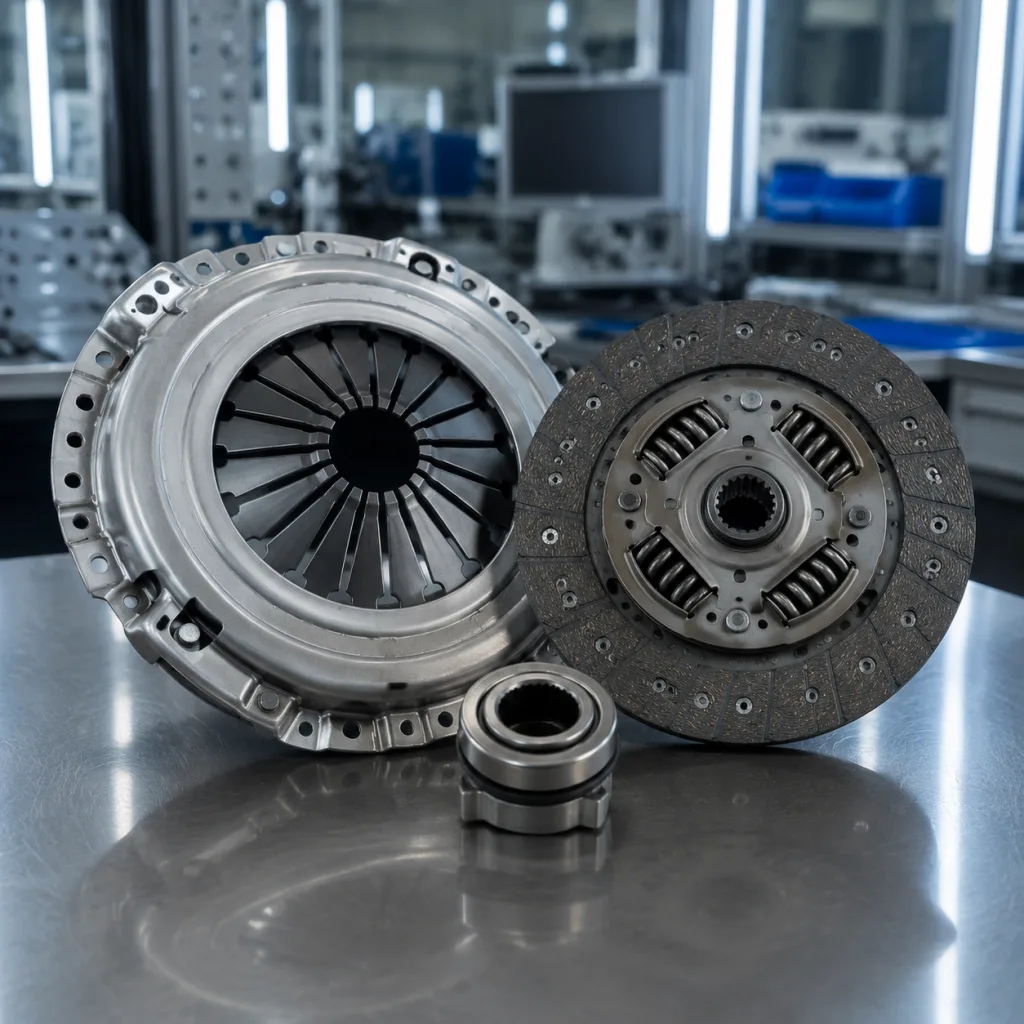
Clutch Kit Skoda Supplier: Sourcing Guide for Buyers
For procurement teams, choosing a clutch kit Skoda supplier is less about catalogue breadth and more about fitment control, traceability, and repeatable lead times. The parts must align with the target platform, clutch diameter, spline count, release system, and torque capacity without creating rework at the assembler or workshop. For aftermarket distributors, fleet repair chains, and importers, the main risk is not price alone; it is dimensional variation, weak packaging control, and inconsistent batch documentation. Driventus supplies clutch kit programmes for B2B buyers from Taizhou, Zhejiang, with IATF 16949:2016 and ISO 9001:2015 systems in place. Driventus is an independent aftermarket manufacturer, and brand names are referenced for fitment only. Buyers can compare products in [our catalog](/products.html), review the [quality system](/quality.html), and use [custom manufacturing](/oem-services.html) when catalogue coverage is not enough.
Start with fitment, not price
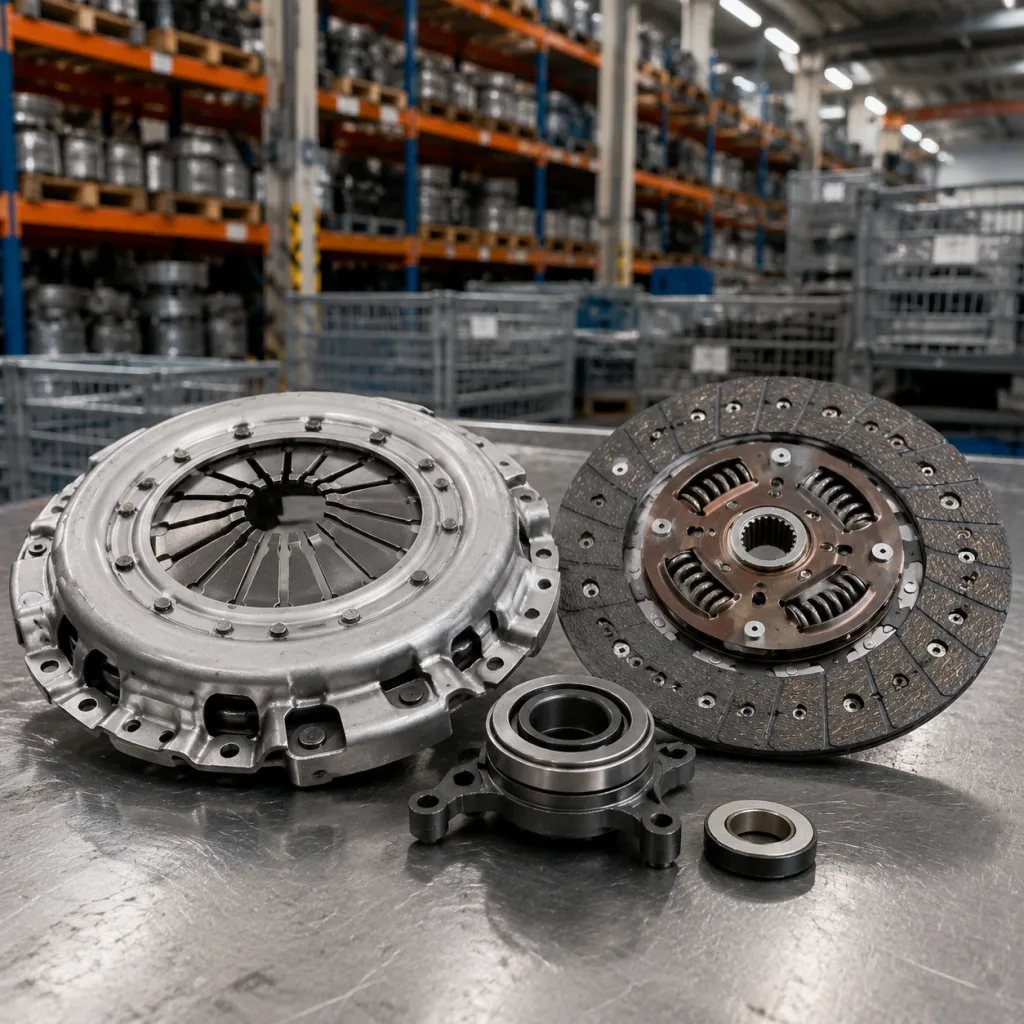
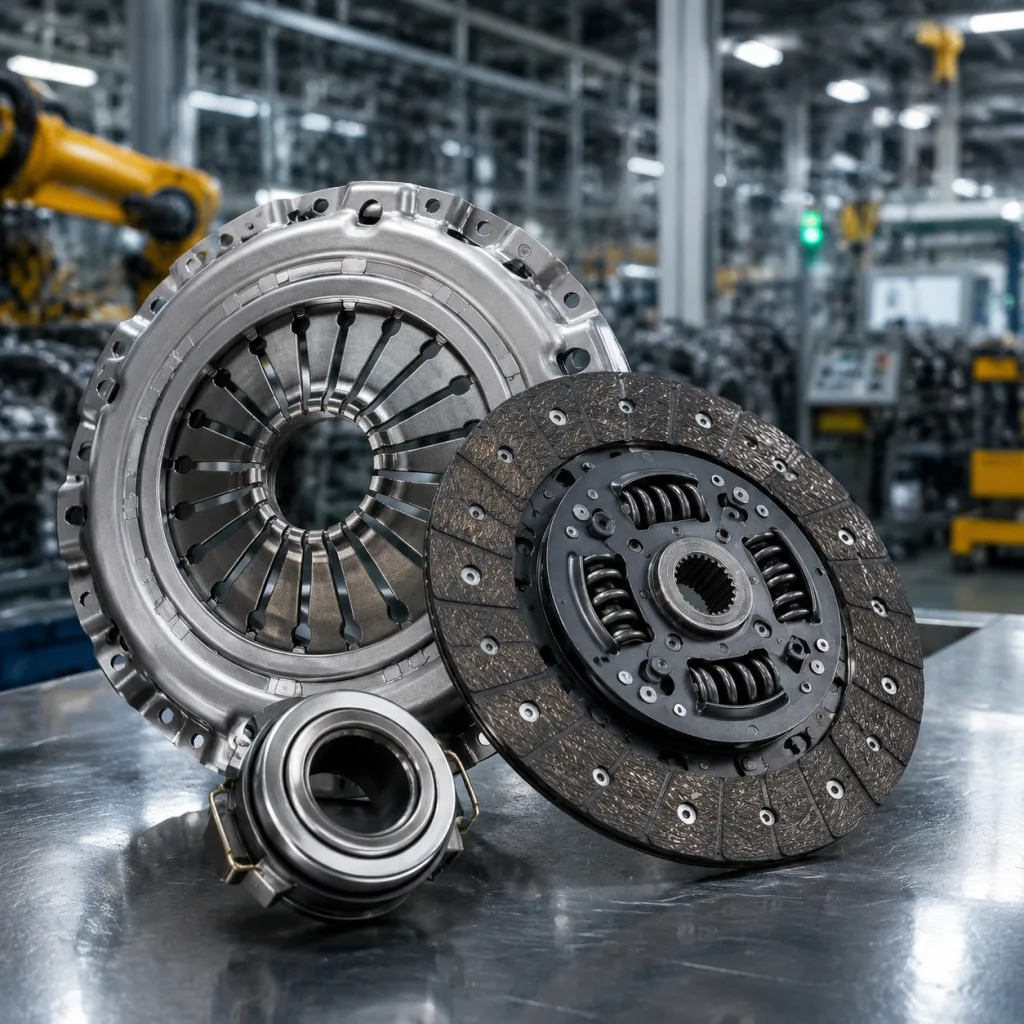
A sourcing decision should begin with application control. For a clutch kit, confirm the vehicle platform, engine code, transmission type, flywheel design, and whether the package includes a pressure plate, driven plate, release bearing, alignment tool, and bolts.
Before RFQ, verify:
OE cross-reference and platform coverage
Disc diameter, hub spline, and friction lining type
Pressure plate clamp load and release travel
Packaging barcode, label format, and batch traceability
Country of origin and customs document set
For Skoda applications, the same model family can carry different clutch sizes across engine outputs and gearbox variants. A supplier should provide a clear application list and state where OE 06A107065 or similar cross-references are used for fitment confirmation. Buyers should also request critical dimensions in millimetres, including disc diameter tolerance, spline major/minor diameter, and pressure plate cover height, so receiving inspection can verify the lot before stock is booked.
Where landed cost usually breaks
Unit price is only one part of landed cost. Procurement should model consolidation, inspection, reject risk, and inbound delay together. A lower quote can become the expensive option if the supplier ships mixed references or fails incoming inspection.
Factor
What to confirm
Buyer impact
MOQ
Per reference, per kit type, per carton
Inventory exposure
Lead time
Sample, pilot, and mass production
Replenishment planning
Packing
Master carton count, pallet pattern
Freight efficiency
Documentation
COO, invoice, packing list, test report
Customs and QA
Traceability
Batch code, date code, lot control
Recall containment
</tr></thead><tbody> </tbody></table>Ask the supplier to quote in three bands: sample order, pilot order, and steady-state production. A workable commercial offer should state sample MOQ at 1-2 sets for fitment approval, pilot MOQ at 20-50 sets for line validation, and production MOQ by reference or family at 100-300 sets depending on tooling and packing. For price logic, request breakpoints at 100, 300, and 500 sets so the buying team can compare delivered cost rather than nominal unit cost. For programme work, ask for a stable replenishment window and a written tolerance for dispatch quantities, ideally within -0 / +5% on bulk orders and 0 / +2 units on carton counts. If the supplier cannot hold carton counts or label consistency, the receiving team absorbs that cost.
Quality proof that actually matters
A clutch kit supplier should show process control, not just final inspection. For automotive buyers, the baseline expectation is an audited quality system, controlled gauges, and retained records for critical dimensions. Driventus operates under IATF 16949:2016 and ISO 9001:2015.
Validation points commonly reviewed by buyers:
Disc runout and face parallelism
Hub spline fit and torsional dampening consistency
Pressure plate flatness and spring force stability
Release bearing noise and rotation check
Corrosion resistance on treated steel parts and fasteners
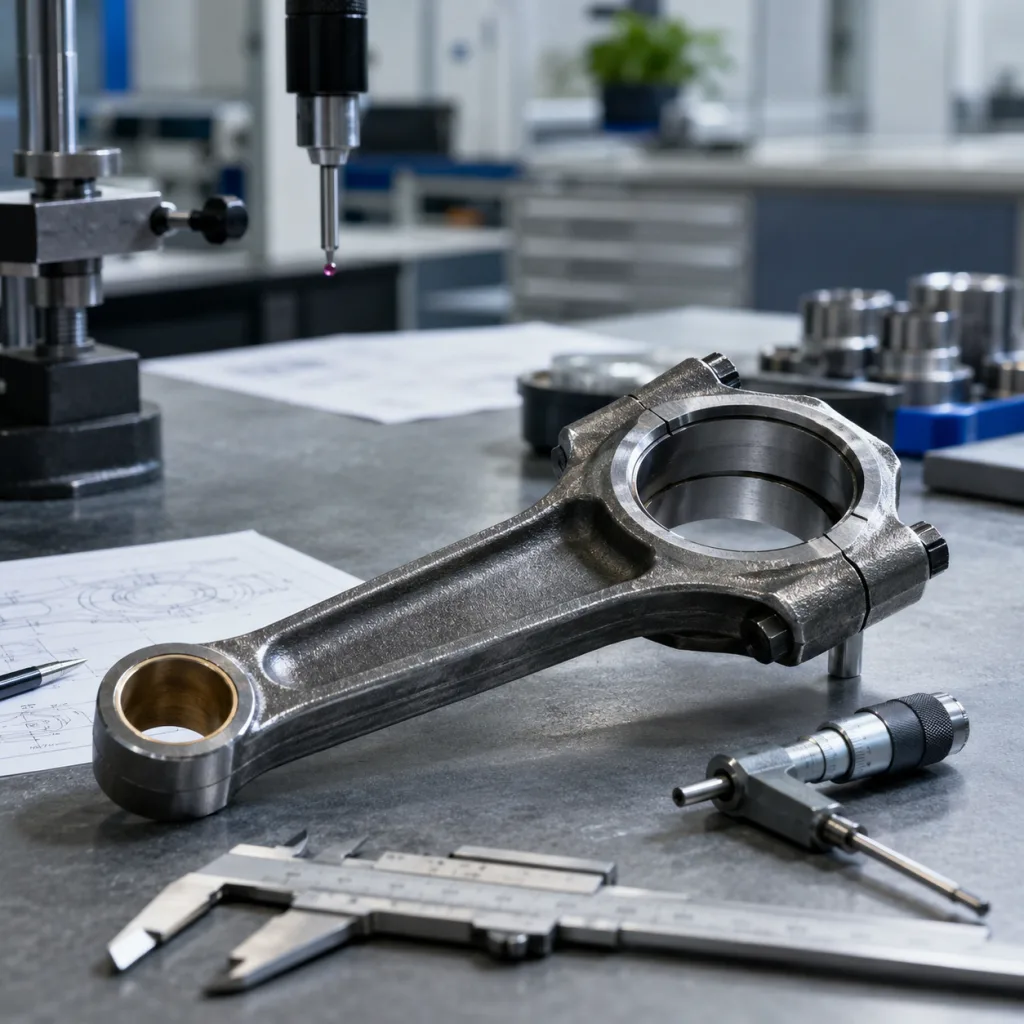
Buyers should ask for a dimensional report against agreed tolerances, not just a pass/fail statement. Typical acceptance asks for disc runout within 0.3 mm TIR, friction facing thickness within ±0.15 mm, spline fit checked against the mating shaft with no binding, and pressure plate clamp force recorded against the control sample. For durability comparison, many buyers ask for documented bench testing and road-simulated cycles aligned to internal acceptance criteria, often 50,000-100,000 engagement cycles depending on market segment. Where a specific OE claim is not made, the supplier should state that clearly. If a buyer serves multiple markets, it is also prudent to check material declarations for REACH (EC) No 1907/2006 where applicable.
Build the supply plan around lead time
Sourcing teams usually need two supply modes: fast-moving aftermarket replenishment and planned programme supply. Those modes should be separated in the commercial offer.
A practical supplier response should cover:
Sample lead time and approval path
Pilot batch quantity
Standard MOQ by reference or family
Normal production lead time after order confirmation
Container loading plan for export orders
For distributors, availability across high-rotation references matters more than oversized one-off offers. For OEM and Tier-1 programmes, consistency of revision control matters more than spot pricing. Ask the supplier how engineering changes are controlled, how superseded part numbers are managed, and how replacement stock is segregated from active production. A realistic schedule is 7-15 days for samples, 20-30 days for pilot runs, and 30-45 days for repeat production after deposit and artwork approval, with sea freight added separately. If a quotation promises unusually fast delivery, confirm whether stock is finished goods, made-to-order, or partial assembly only.
When custom manufacturing wins
Catalogue stock is not always enough. Some buyers need a clutch kit with a different clamp load, alternate friction material, revised packaging, or local-market labelling. In those cases, custom manufacturing can reduce aftermarket overlap and improve sell-through.
Typical reasons to move to a custom programme:
The target application has fragmented OE references
The distributor wants private-label packaging
The market requires a special instruction sheet or barcode format
The buyer needs a tailored kit content set
Before moving to custom, define the technical brief with a target disc diameter, lining material, clamp load window, and carton specification. For example, a buyer may require a 200 mm kit with organic facing, cover load within a defined band, and export carton markings in the local language. Driventus supports custom manufacturing for qualified B2B accounts through custom manufacturing. This is useful when the procurement brief demands dimensional matching, controlled packaging, and a repeatable supply schedule across multiple shipment cycles.
How to compare suppliers without guesswork
A short list should be scored on evidence, not claims. Request sample sets, current certificates, dimensional sheets, and recent export references. A factory audit should include inspection equipment, segregation of raw material lots, and how final pack is verified before dispatch.
Scorecard criteria:
Application accuracy across the listed Skoda references
Evidence of IATF 16949:2016 and ISO 9001:2015
Sampling response time and documentation quality
Packaging integrity and export readiness
Willingness to support technical clarification after shipment
Add a simple weighted scorecard so the team can compare bids consistently: 30% fitment accuracy, 25% quality records, 20% commercial terms, 15% logistics, and 10% after-sales support. For inbound acceptance, specify tolerance checks on carton count, label readability, and part number match, plus a sample inspection AQL such as 1.0 for critical defects and 2.5 for major defects if your internal SOP uses that framework. If you need broader engine and drivetrain coverage, review our catalog and the adjacent engine components range to align sourcing across multiple part families. Procurement teams often reduce admin load by consolidating suppliers where fitment, traceability, and QA documentation are consistent.
Frequently asked questions
Start with OE cross-reference, kit content, transmission fitment, MOQ, lead time, and the quality documents available for review. Ask for batch traceability, packaging details, and the nominal dimensions with tolerances for disc diameter, spline fit, and release bearing specification as well.
Yes. Custom manufacturing is available for qualified B2B accounts when the brief requires alternate packaging, labelling, or revised kit content. Use the contact route to share specifications, target volumes, carton requirements, and any artwork or barcode standards.
No. Driventus is an independent aftermarket manufacturer, and brand names are referenced for fitment only. The focus is dimensional match, quality control, documented tolerances, and export supply.
If you are qualifying a clutch programme or need a quotation for a current reference, send your specification pack and target volume through [request a quote](/contact.html). Include the target monthly demand, preferred MOQ, required lead time, and any packaging or label rules so the quotation can be matched to your buying process.