EGR cooler · 2026-06-20

EGR Cooler Cadillac Wholesale Supply Guide

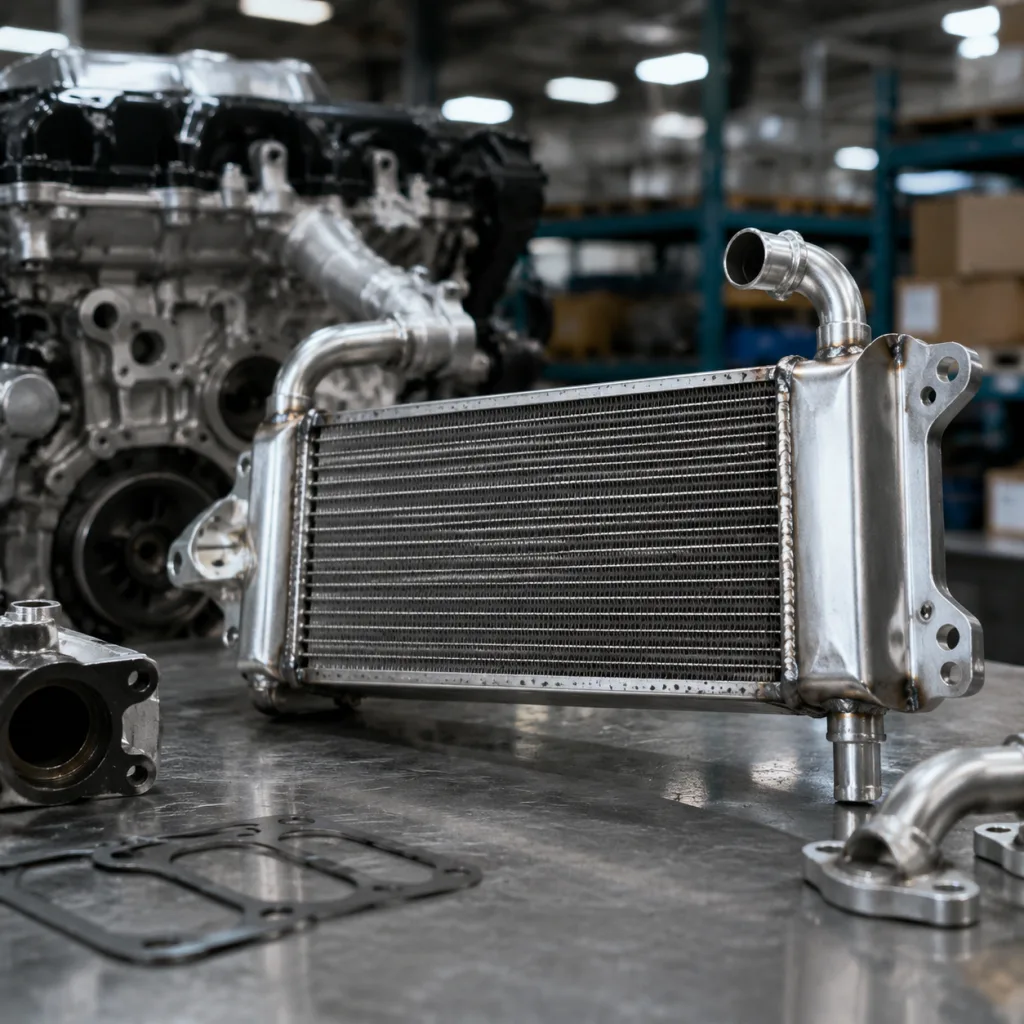
For buyers sourcing an `egr cooler cadillac wholesale` programme, the priorities are fitment control, thermal durability, and stable supply. Driventus manufactures engine and powertrain components in Taizhou, Zhejiang, with export coverage in 60+ countries and quality management aligned to `IATF 16949:2016` and `ISO 9001:2015`. That matters when comparing suppliers for aftermarket distribution, repair chains, or OE-level remanufacture support. Driventus is an independent aftermarket manufacturer; brand names are referenced for fitment only. For procurement teams, the practical questions are specific: does the cooler match the OE envelope, what are the tube, tank, and braze specifications, what test regime is used, and how quickly can the factory support replenishment. This guide covers the sourcing checks, acceptance tolerances, MOQ logic, and lead-time decisions that reduce returns and support repeatable purchasing decisions.

Fitment checks that prevent wrong-SKU orders

Before placing a wholesale order, confirm the application, mounting pattern, coolant and exhaust port geometry, gasket interface, and installation envelope. EGR coolers run hot, cycle often, and fail fast when the geometry is off by a little. Small dimensional errors can trigger leakage, restricted flow, heat-soak damage, or poor sealing.

For procurement teams, the first pass should include:

  • OE cross-reference: confirm the target OE part number, engine code, and emissions calibration.
  • Dimensional match: check overall length, flange thickness, port spacing, bracket location, and end-tank orientation.
  • Tolerance targets: ask for a drawing with critical-to-fit dimensions, typically controlled to ±0.2 mm to ±0.5 mm on sealing and interface features depending on the part.
  • Material specification: verify stainless steel grade, braze alloy, gasket composition, and any coating or passivation process.
  • Pressure and leak test data: request documented pass/fail criteria, test pressure, dwell time, and allowable pressure drop.
  • Packaging: ensure corrosion protection, dunnage, and carton strength are suitable for export.

If your team manages multiple references, keep a master fitment sheet and tie each SKU to the vehicle generation, engine family, emissions package, and service bulletin history. That reduces mix-ups across regions and model years and makes reordering faster when demand moves between channels.

Cost drivers behind wholesale pricing

Wholesale pricing for EGR coolers is shaped by tooling status, batch size, material thickness, welding or brazing process, test scope, and packaging. A low unit price can hide higher reject rates if the part is not validated for thermal shock, pressure retention, or flow restriction. Buyers should build landed cost from the commercial terms below, not just the ex-works unit quote.

</tr></thead><tbody> </tbody></table>For distributors, the best commercial structure is usually a forecasted rolling order with agreed call-off windows, a target safety stock, and a quarterly review of sell-through. That gives the factory stable scheduling and gives your team predictable inventory coverage. If demand is uneven, ask for tiered pricing by lot size so you can compare 25, 50, 100, and 200 unit breaks before committing.

Quality checks buyers should insist on

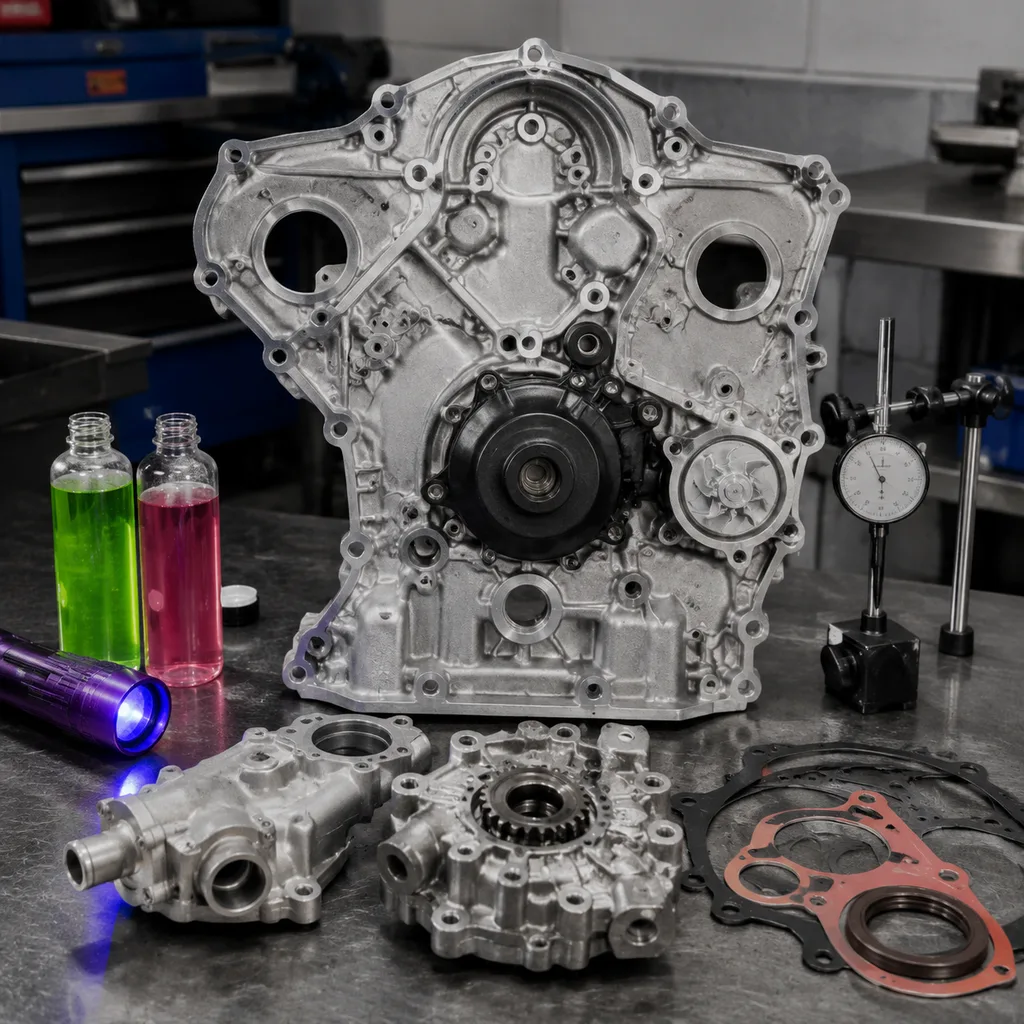
EGR cooler performance depends on tight control of weld integrity, passage cleanliness, seal surfaces, and thermal expansion behavior. Driventus builds under an `IATF 16949:2016` and `ISO 9001:2015` framework, which supports traceability and repeatable process control for B2B buyers. Depending on the application, buyers should also ask for evidence of material compliance against `REACH (EC) No 1907/2006` where required for EU supply.

Typical checks include:

  • Helium or air leak testing at a defined pressure, commonly with a pass criterion of zero visible leakage and pressure decay within the agreed limit.
  • Flow verification to confirm the cooler is not restricted, with acceptance tied to the OEM reference or an approved benchmark sample.
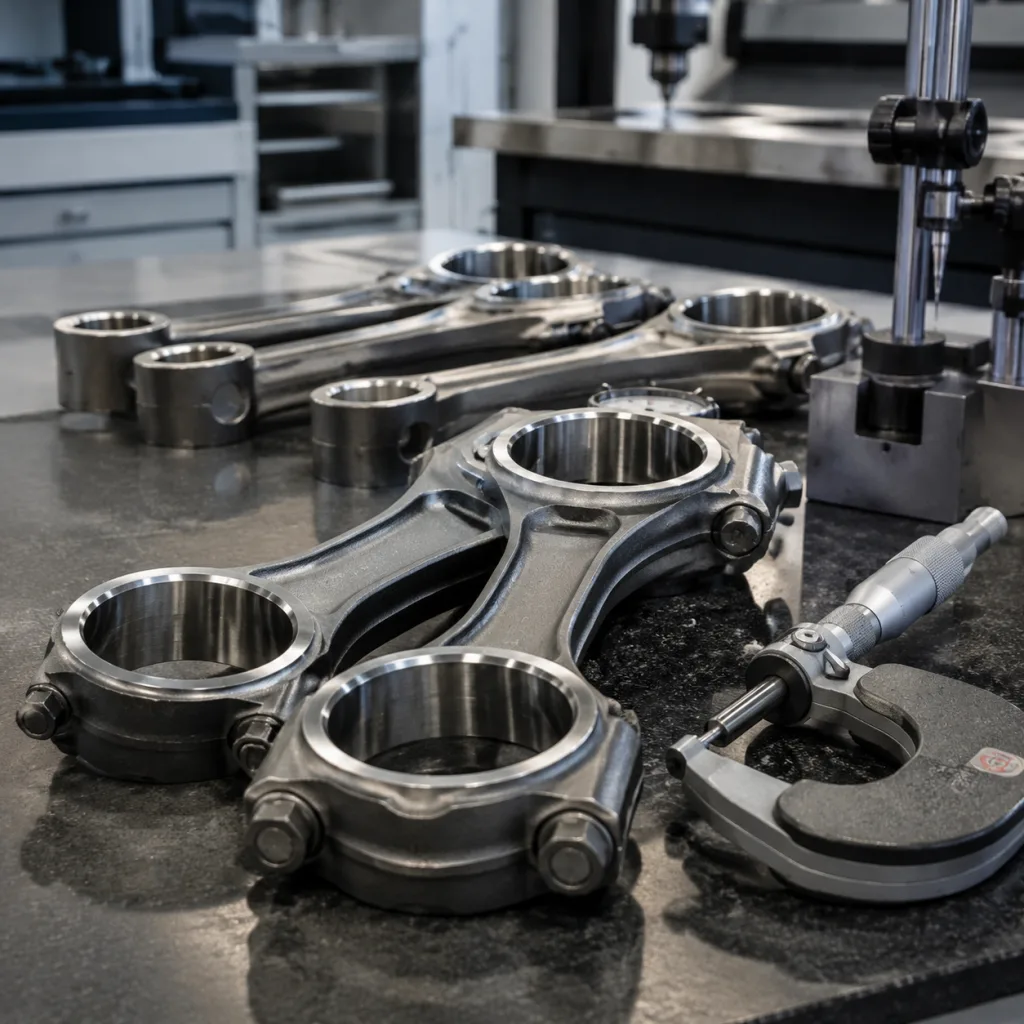
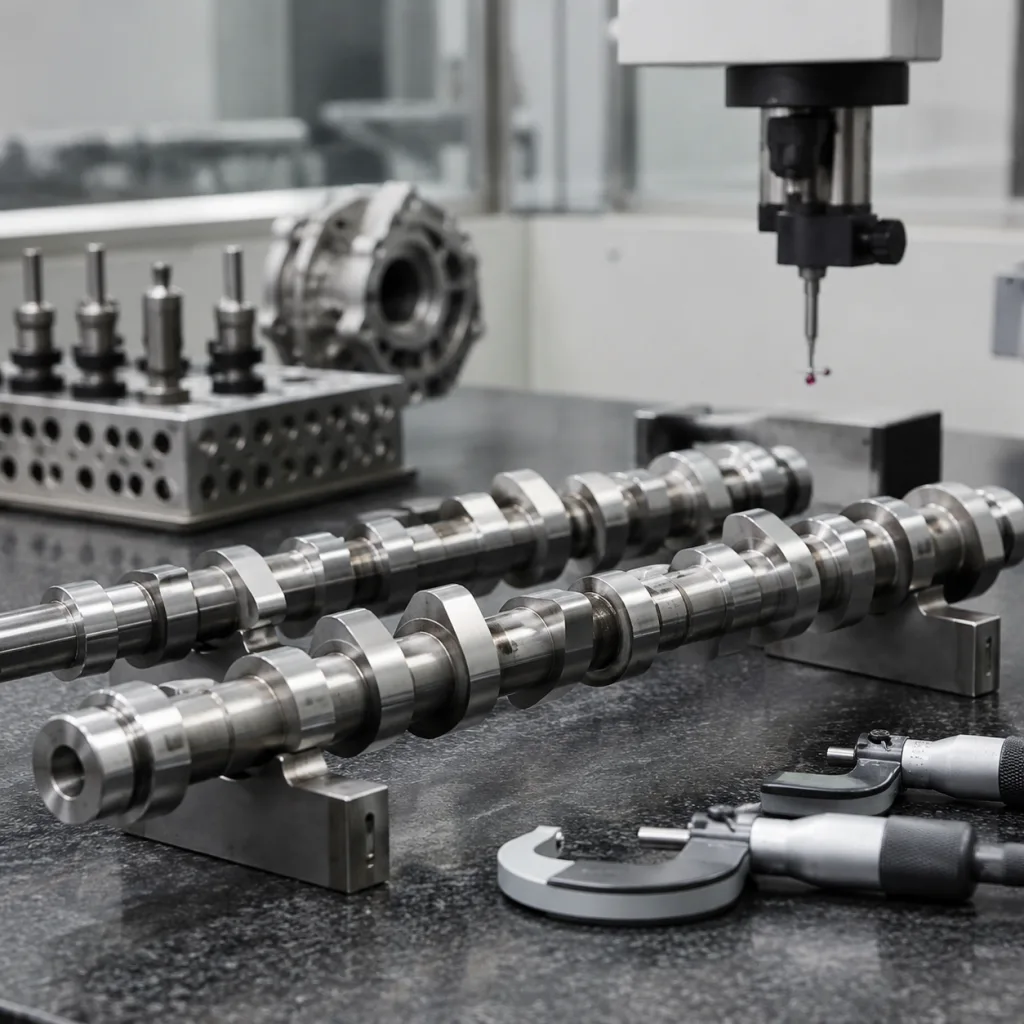
  • Dimensional inspection of mounting faces, port alignment, and gasket land flatness.
  • Visual inspection for brazing defects, burrs, weld porosity, oxidation, and distortion.
  • Corrosion-risk review for external coatings, fastener interfaces, and end-cap finish.
  • Traceability records that tie lot code, material batch, and inspection results to each shipment.

For procurement, request the factory control plan, incoming material certificates, first-article data, and final inspection report before the first production release. For regulated or high-volume programs, ask whether the supplier can keep retained samples and provide an escalation path for field failures. For a broader view of procedures and documentation, see our quality system.

Cadillac fitment: where programmes usually go wrong

Cadillac applications can span multiple engine families, model years, emissions calibrations, and platform revisions, so fitment control is more important than vehicle branding. The safest wholesale approach is to work from OE part-number cross-references, engine code, emissions package, and mounting geometry rather than model name alone. This matters when the same platform is sold across North America and export markets.

For multi-location repair chains and distributors, we recommend three control points:

1. Verify the OE reference against VIN-derived application data and the current catalog revision. 2. Match the cooler to the connected gasket set, pipework, bracket set, and hardware pack. 3. Confirm there is no interference with adjacent components such as the intake manifold, valve cover, turbo plumbing, or heat shield.

When reviewing a sample, check the sealing surface for flatness, the port centerlines for symmetry, and the installed clearance against the vehicle package. If the application has known service pain points, ask the supplier whether the design includes reinforced brackets, revised wall thickness, or upgraded corrosion protection. If your purchasing team needs broader coverage across engine hardware, review our catalog and the engine component range at [/products/engine-components.html].

Cadillac fitment: where programmes usually go wrong

When a custom cooler makes more sense

Custom manufacturing makes sense when the OEM reference is discontinued, the target market has unusual emissions packaging, or your customer needs a private-label programme with controlled branding and documentation. In those cases, the objective is not cosmetic similarity. It is dimensional equivalence, stable process control, and clear traceability.

Driventus supports custom manufacturing for B2B buyers that need:

  • Alternative material grades for corrosion resistance or thermal durability.
  • Modified bracket positions, port offsets, or wall thickness for platform variants.
  • Packaging and labelling tailored to regional distribution or channel-specific compliance.
  • Batch documentation aligned to internal supplier audits and receiving standards.
  • Prototype, sample, and PPAP-style review steps before volume release.

A practical custom workflow starts with the OE reference, target annual demand, drawing or sample unit, and the acceptance criteria for fit and performance. From there, the factory can confirm tooling impact, sample timing, and whether the project should move through engineering validation before mass production. If you are comparing suppliers for a private-label line or a regional programme, review the available scope for custom manufacturing. When the part is ready for commercial launch, use request a quote to start the specification review.

Frequently asked questions

Yes. Driventus supports B2B wholesale supply for aftermarket distributors, OEM/Tier-1 customers, and repair networks. Fitment is managed through OE cross-reference, engine code, and application data, with production terms set around MOQ, lead time, and forecasted replenishment.

You can request dimensional data, inspection records, test results, traceability information, packaging details, and commercial terms such as MOQ, lead time, and shipment schedule. For regulated markets, ask for material compliance evidence where applicable.

Yes. If your application needs a variant for packaging, material, or labelling, the OEM-services team can review drawings and commercial requirements for a custom programme, including sample timing and production release criteria.

If you are building a Cadillac EGR cooler supply programme, send your OE reference, annual forecast, and target landing price for review. We will check fitment, documentation, MOQ, lead time, and commercial terms at /contact.html.

Request a Quote
Factor What it changes Buyer impact
MOQSetup cost and batch efficiencyTrial orders may start at 20 to 50 units per SKU; repeat supply often prices better at 100+ units
Lead timeProduction queue and packingStandard builds often need 25 to 45 days after deposit; repeat orders with available materials can shorten to 15 to 25 days
Validation scopeLeak, pressure, thermal cycle testsMore test coverage lowers return risk and warranty exposure
Packaging specVCI, tray, carton strengthExport-ready packing reduces transit damage and claims
DocumentationTest records, traceability, compliance filesSpeeds receiving, vendor approval, and customs clearance
Payment termsDeposit, balance timing, currencyChanges cash flow and effective landed cost