A visible coolant leak at the front of an engine is often recorded as a water pump failure, but the oil pump assembly, front cover, timing case, and crankshaft seal area can complicate the diagnosis. For distributors, repair chains, and procurement teams, the commercial risk is not only one failed vehicle. The larger risk is ordering the wrong replacement part, approving an incomplete repair kit, or accepting a pump assembly that does not control sealing, flatness, and pressure stability over the service interval. This article provides a diagnostic walkthrough for cases described as water pump leak oil pump assembly complaints. It covers symptom separation, likely failure modes, inspection points, and sourcing criteria for replacement oil pump assemblies. Driventus is an independent aftermarket manufacturer; brand names are referenced for fitment only.
Symptom Separation: Coolant Leak, Oil Leak, or Mixed Contamination
Front-end engine leaks are frequently misreported because coolant and oil can travel along the same cast surfaces, splash shields, and timing cover ribs. Before replacing an oil pump assembly or water pump, the workshop should confirm the fluid type, leak path, and operating condition.
Typical observations include:
Coolant trace below the water pump weep hole: often points to water pump mechanical seal wear.
Oil film around crankshaft seal or pump housing joint: may indicate front crank seal damage, housing porosity, or gasket compression loss.
Milky oil or pressure loss: requires immediate investigation for coolant-oil cross-contamination, not only an external leak.
Leak only after thermal soak: suggests gasket relaxation, housing distortion, or uneven bolt load.
Leak under high engine speed: may relate to oil pressure regulation, crankcase pressure, or seal lip instability.
A water pump leak oil pump assembly complaint should be treated as a system-level issue. The root cause can be in the pump, the mating cover, the gasket, the sealant process, or incorrect installation torque. Procurement teams should request failure data from repair sites before authorising part substitution.
Common Root Causes Around the Oil Pump Assembly
The oil pump assembly is normally responsible for oil pick-up, pressure generation, pressure relief, and front sealing interfaces. Depending on the engine architecture, it may be integrated into the front cover or mounted behind the crank pulley. When coolant leaks are reported nearby, the fault is often outside the oil pump itself, but the assembly can still be affected during removal and refit.
Symptom reported
Probable cause
Inspection method
Replacement implication
Coolant dripping from pump area
Water pump seal or housing gasket failure
Pressure test cooling system, inspect weep hole
Replace water pump and associated gasket
Oil leak at lower front cover
Oil pump housing gasket or crank seal
UV dye, clean-and-run inspection
Replace gasket, seal, or full assembly if wear is present
Low oil pressure after leak repair
Relief valve sticking or rotor wear
Mechanical pressure gauge test
Replace oil pump assembly
Oil and coolant residue mixed externally
Fluid migration across timing cover
Degrease, run to temperature, re-check path
Confirm source before ordering parts
Repeat leak after installation
Distorted mating face or wrong torque sequence
Straightedge, feeler gauge, bolt audit
Replace housing or revise installation process
</tr></thead><tbody> </tbody></table>For B2B buyers, repeated leakage claims often come from incomplete failure descriptions. A warranty return labelled only as “front leak” is not enough. Request photographs after cleaning, measured oil pressure at idle and rated speed, and confirmation of coolant pressure-test results.
Inspection Procedure Before Replacement Approval
A structured inspection reduces unnecessary part replacement and improves claim acceptance between repair networks, distributors, and manufacturers.
1. Clean the area fully. Remove oil and coolant residue from the front cover, oil pan edge, water pump perimeter, and crank pulley area. 2. Identify fluid type. Use coolant dye or oil dye where required. Do not rely only on colour, as aged coolant and oxidised oil can appear similar. 3. Pressure-test the cooling system. Follow the vehicle service pressure range. Observe the water pump weep hole, gasket line, thermostat housing, and hose joints. 4. Check engine oil pressure mechanically. Dashboard warnings are not diagnostic. Measure pressure using a calibrated gauge at cold start, hot idle, and increased engine speed. 5. Inspect crankcase ventilation. Excessive crankcase pressure can force oil past the front seal and be mistaken for pump housing leakage. 6. Check mating surfaces. Look for scoring, corrosion, impact marks, sealant residue, or bolt-hole pull-up. 7. Record bolt condition and tightening sequence. Uneven clamp load can create local leakage even when the gasket is correct.
For fleet and chain repair programs, Driventus recommends adding these points to the job card. It supports clearer returns analysis and helps procurement teams define whether a full oil pump assembly, gasket set, or adjacent water pump component is required.
Replacement Criteria for Oil Pump Assemblies
When diagnosis confirms oil pump wear, housing leakage, or pressure instability, replacement criteria should be specified beyond simple fitment. A low-cost assembly with inconsistent rotor clearance or poor sealing flatness can create repeat failures and vehicle downtime.
Key procurement checks include:
Housing material and casting integrity, including porosity control.
Rotor material, hardness, and tooth profile consistency.
Relief valve spring load and free movement.
Machined surface flatness on gasket and seal interfaces.
Front crankshaft seal bore concentricity where applicable.
Compatibility with specified gasket, O-ring, or liquid sealant process.
Packaging that protects machined faces during sea freight and warehouse handling.
Relevant quality and compliance references for export programs may include IATF 16949:2016, ISO 9001:2015, and REACH (EC) No 1907/2006 for substance management in applicable markets. Oil pump assemblies are not normally certified by emissions regulations as standalone parts, but they can affect engine durability and warranty outcomes.
Driventus manufactures engine and powertrain components in Taizhou, Zhejiang, including oil pump assemblies, water pumps, gaskets, pistons, crankshafts, and turbocharger components. Buyers can review related engine components in our catalog and our process controls under the quality system.
Validation Tests Buyers Should Request
A replacement assembly should be validated for pressure output, sealing integrity, and dimensional stability. The exact test plan depends on application, annual volume, and market risk, but procurement teams should ask for documented controls rather than verbal assurances.
Suggested validation package:
Dimensional inspection: critical mounting points, gear/rotor clearance, seal bore diameter, dowel locations, and gasket face flatness.
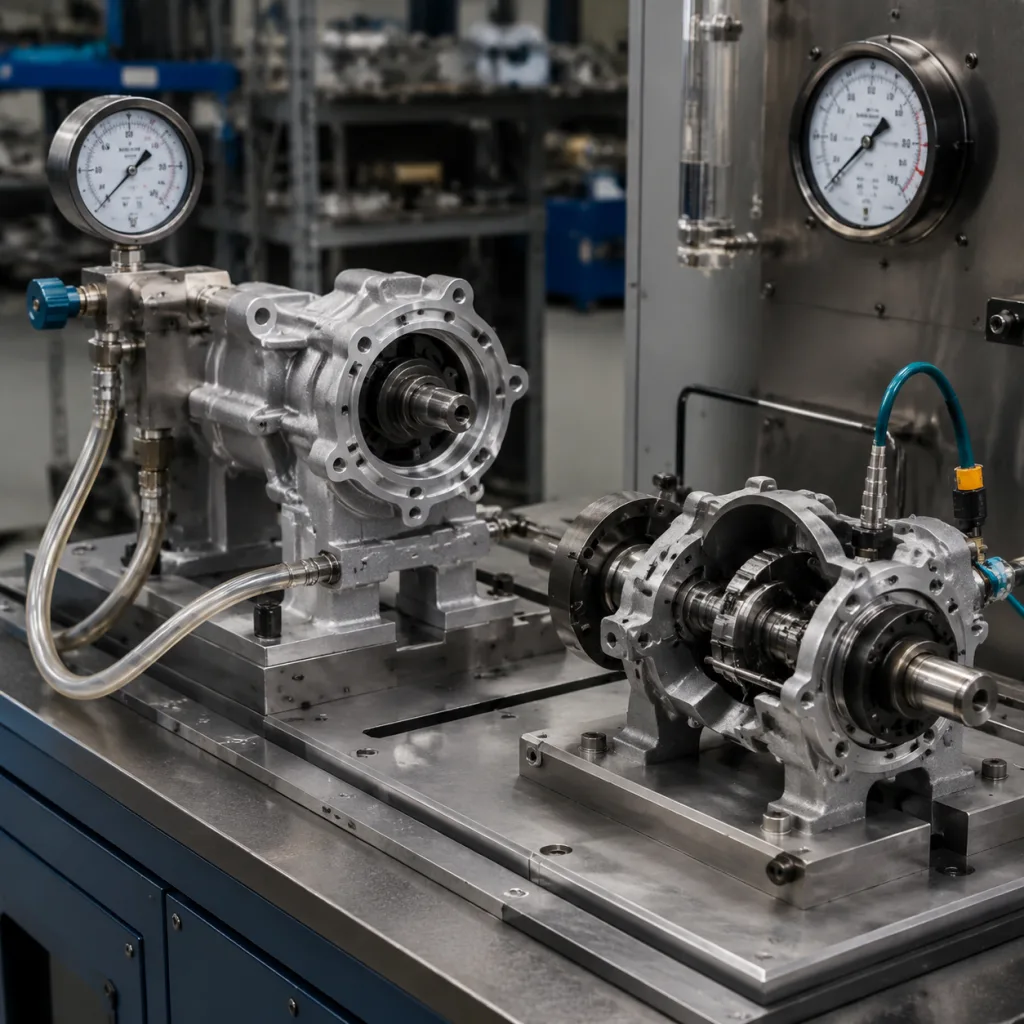
Pressure-flow test: oil output across defined speed and temperature conditions.
Relief valve function test: opening pressure, repeatability, and return movement.
Leak test: housing porosity and assembled sealing zones.
Material verification: alloy grade, hardness where relevant, and coating or surface treatment confirmation.
Endurance or bench cycling: for high-volume programs or repeated field complaints.
Packaging drop and corrosion protection checks: important for export shipments and long storage cycles.
For OE part-number cross-references, distributors often work with generic references such as OE 06A… or OE 11251… when mapping applications. These references should be used only for fitment identification and must be checked against engine code, production date, and installed pump type. Driventus is an independent aftermarket manufacturer; brand names are referenced for fitment only.
Sourcing and Claim Prevention for Distributors
For a water pump leak oil pump assembly issue, the sourcing decision should consider the full repair environment. If workshops frequently remove both components during timing service, a distributor may need coordinated availability of oil pump assemblies, water pumps, seals, and gasket kits. This reduces partial repairs and lowers the chance of repeat labour claims.
Useful supplier questions include:
What is the normal MOQ for the target application group?
Can the factory provide dimensional reports for first-article samples?
Are pressure-flow test records available by batch?
How are machined faces protected in packaging?
Can the supplier support private label packaging and barcode requirements?
Is reverse engineering available when samples show design variation?
What is the lead time for regular orders and urgent replenishment?
Driventus supports aftermarket distributors, OEM/Tier-1 programs, and multi-location repair chains with standard catalog items and custom manufacturing for application-specific requirements. Where buyers have recurring leakage data, sample parts, or inspection reports, our engineering team can review the failure mode before quoting. To discuss drawings, target applications, MOQ, and validation requirements, request a quote.
Frequently asked questions
An external coolant leak does not normally damage the oil pump directly, but coolant can contaminate belts, seals, connectors, and timing cover areas. If coolant enters the engine oil, the repair becomes urgent because bearing and pump rotor wear can accelerate quickly.
Replace the assembly when there is confirmed low oil pressure, rotor wear, relief valve sticking, housing damage, sealing face distortion, or repeat leakage from the pump body. If only a gasket or crank seal has failed, full assembly replacement may not be necessary.
Request dimensional inspection reports, pressure-flow test data, material confirmation, leak test records, and evidence of quality management under IATF 16949:2016 or ISO 9001:2015. For regulated markets, also ask about REACH (EC) No 1907/2006 substance controls.
If your team is investigating repeat front-engine leaks or sourcing oil pump assemblies for a repair program, Driventus can review samples, drawings, and target volumes before quotation. Contact us through /contact.html