Dual Mass Flywheel Subaru Wholesale: Sourcing Guide
Sourcing a dual mass flywheel for Subaru applications at wholesale level is a fitment, quality, and supply-chain decision—not just a price comparison. Buyers need controlled OE cross-references, stable dimensions, verified mass and balance characteristics, traceable materials, and packaging that survives international transport. For distributors, repair networks, importers, and programme buyers, the largest commercial risks usually come from incorrect applications, weak validation, unclear change control, and unreliable lead times.
Driventus is an independent aftermarket manufacturer based in Taizhou, Zhejiang. Brand names are used for fitment reference only. We supply engine and powertrain components to buyers in 60+ countries, with production aligned to IATF 16949:2016 and ISO 9001:2015 quality-management expectations. This guide explains what to confirm before placing volume orders, how to compare supplier claims, and where a factory audit or documentation review can reduce procurement risk for a dual mass flywheel Subaru wholesale programme.
What wholesale buyers should verify first
The first sourcing step is application control. A dual mass flywheel is not a generic clutch-related wear item that can be selected by vehicle badge alone. For Subaru platforms, buyers should confirm the engine code, transmission family, model-year range, crankshaft interface, starter engagement, and clutch system compatibility before discussing bulk pricing.
Key checks for buyers:
OE cross-reference matched to the exact application, not only the vehicle make
Engine code, transmission code, production range, and market version confirmed
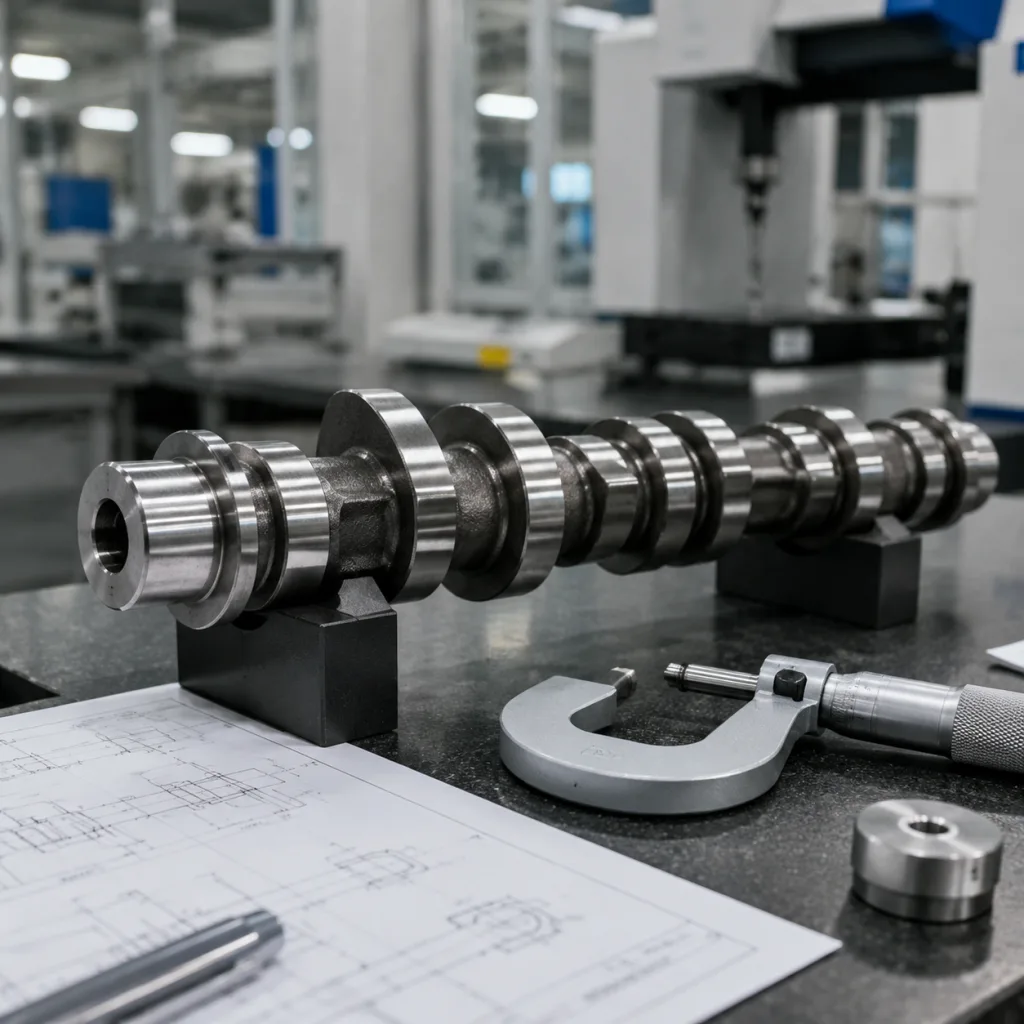
Dimensional drawing reviewed before sampling or tooling approval
Mass, offset, ring gear position, and crank bolt pattern checked against the original part
Material, heat-treatment, and batch-traceability records available where applicable
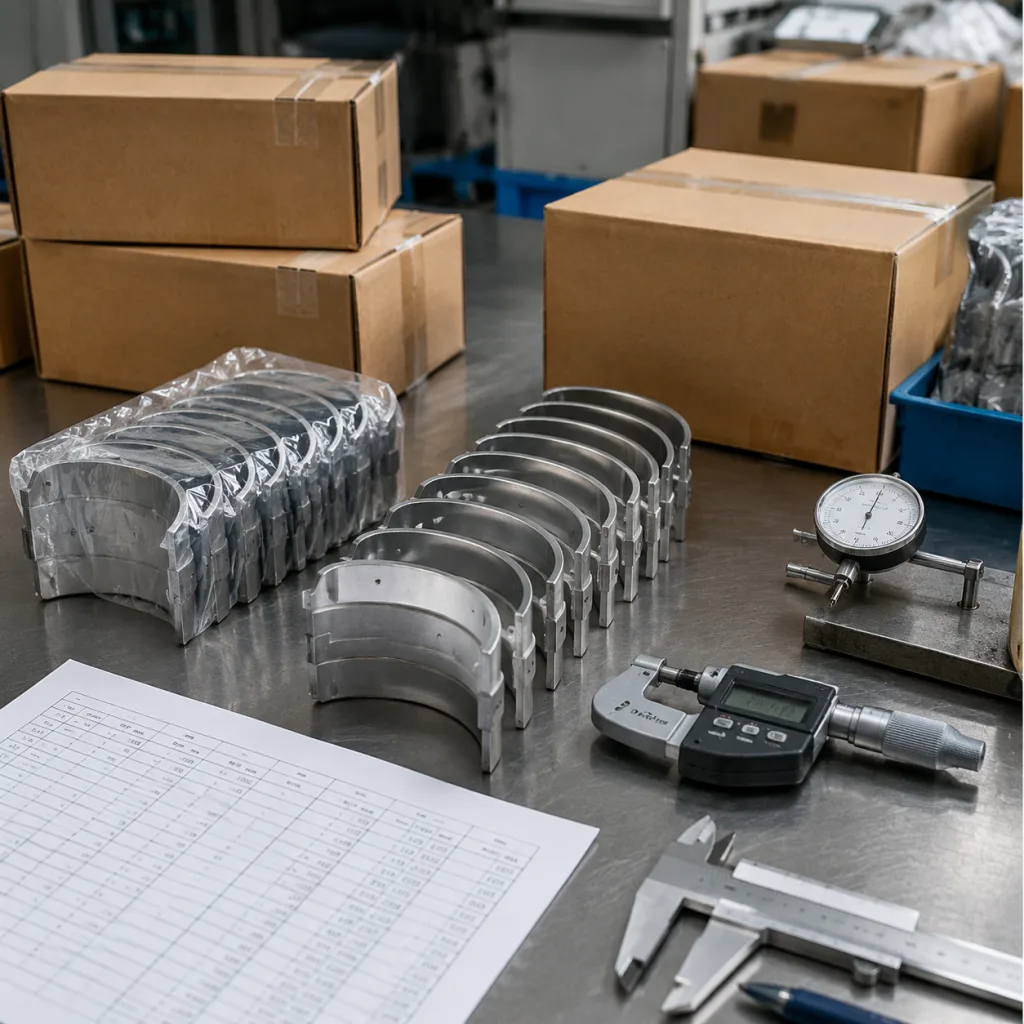
Packaging, labelling, barcode format, and carton quantity agreed for warehouse intake
If a supplier cannot state the OE reference and fitment basis clearly, the order should not move to production. Ambiguous application data often leads to returns, delayed repairs, and duplicate inventory. For catalogue review and part-family screening, see our catalog.
Typical specification points for purchase orders
A clear purchase order reduces disputes at receiving and helps the supplier control production against measurable requirements. The part should be defined by geometry, mass properties, interface details, inspection criteria, and packaging expectations rather than by a short commercial description alone.
Item
What to specify
Application
Subaru engine family, transmission type, model range, and OE cross-reference
Diameter
Outer diameter in mm and any critical stepped diameters
Bolt pattern
Pitch circle diameter, hole count, thread or clearance details, and pilot depth
Ring gear
Tooth count, gear position, chamfer direction, and starter engagement location
Mass
Assembly weight and rotating inertia target where specified
Runout
Maximum allowable total indicated runout on critical faces
Axial and radial play
Allowable movement range for the dual mass mechanism, if specified
Surface finish
Friction surface condition and machining requirement
Material
Casting, forged steel, spring, and friction-related material details where applicable
Balance
Dynamic balance requirement and inspection method at final assembly
Corrosion protection
Oil, phosphate, coating, or export-preservation requirement
Packaging
Individual protection, carton strength, pallet plan, and label format
</tr></thead><tbody> </tbody></table>For buyers standardising several SKUs, specification discipline is as important as price negotiation. This is also the point where a supplier’s quality system should be reviewed. IATF 16949:2016 and ISO 9001:2015 are useful references for process control, traceability, calibration, corrective action, and document retention.
Lead time, MOQ, and supply planning
Wholesale procurement depends on replenishment reliability. Before approving a sample, ask for nominal lead time, minimum order quantity, monthly capacity, standard carton quantity, and the supplier’s escalation process if demand changes. For slow-moving or highly specific applications, buyers should also confirm whether the product is made to stock, assembled to order, or produced only after a confirmed purchase order.
A practical buying structure is:
1. Verify application data, OE reference, and market coverage. 2. Review the drawing and approve a pre-production sample against measurable criteria. 3. Confirm monthly demand, MOQ, carton quantity, and pallet configuration. 4. Lock packaging, labelling, barcoding, and private-label requirements if needed. 5. Agree on safety stock, reorder points, and lead-time assumptions. 6. Define how engineering changes, supersessions, and supplier process changes will be communicated.
For aftermarket distributors, a stable MOQ can be more valuable than the lowest unit price because it protects cash flow and warehouse space. For repair chains, consistent lead time matters because a delayed flywheel can keep a vehicle in the bay and disrupt technician scheduling. For OEM and Tier-1 channels, the supplier should be able to explain change-control rules, revision management, and PPAP-style documentation expectations, even when formal PPAP submission is not required.
Validation testing and compliance documents
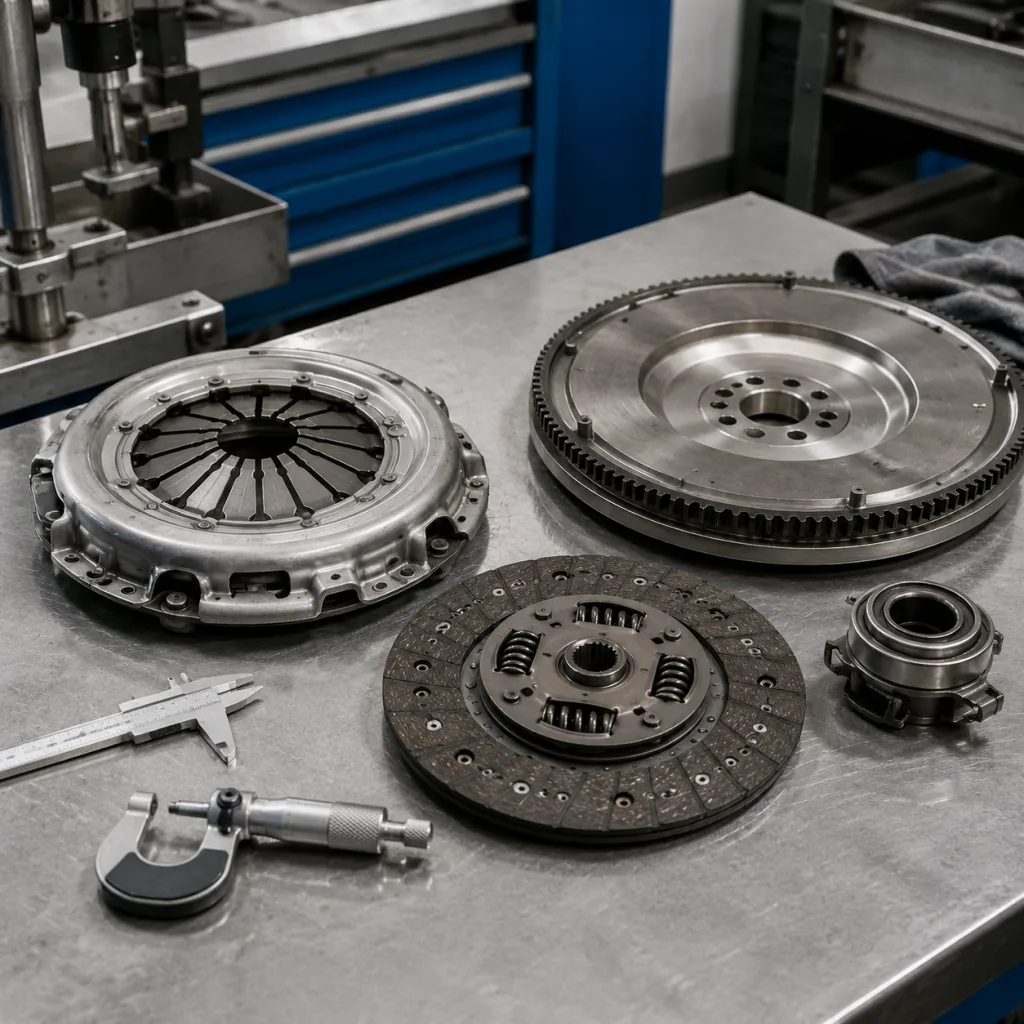
Validation should cover fit, function, durability, and shipment readiness. A dual mass flywheel must interface correctly with the crankshaft, starter, clutch, and transmission while maintaining acceptable balance and runout. Buyers commonly request dimensional inspection records, runout checks, balance reports, material certificates, hardness or heat-treatment records where applicable, and packaging-drop or transit-protection evidence for export programmes.
Useful references include:
IATF 16949:2016 for automotive quality-management discipline
ISO 9001:2015 for controlled quality systems and documented processes
REACH (EC) No 1907/2006 for chemical-compliance screening in the EU
ECE R-83 where broader powertrain or vehicle-platform compliance context is relevant
SAE J2527 when corrosion or environmental exposure testing is part of supplier validation
A supplier should distinguish between routine production checks and type-validation tests. Routine checks may include dimensions, visual inspection, runout, balance, and packaging verification. Type validation may include durability, environmental exposure, or more detailed material and mechanism testing on sampled parts. That distinction matters when comparing volume suppliers because two quotations may look similar while the validation depth is very different.
Why factory audit matters in this category
Dual mass flywheel supply involves machining, balancing, assembly, inspection, and packaging risks that cannot be judged from a catalogue photo. A factory audit helps buyers confirm whether the plant can hold tolerances at scale, whether measurement equipment is calibrated, and whether incoming inspection, in-process control, and final inspection are properly separated.
Audit points to review:
CNC machining capability, fixture control, and calibration records
Balance equipment, inspection frequency, and acceptance criteria
Traceability from raw material or batch lot to finished part
Heat-treatment or surface-treatment records, if applicable
Assembly controls for springs, damping elements, fasteners, and friction interfaces
Nonconformance handling, corrective action closure, and rework approval rules
Final packaging protection against corrosion, impact, and transit damage
Change-control process for drawings, materials, suppliers, and production methods
Driventus manufactures in Taizhou with vertical integration across key engine and powertrain parts, helping reduce handoff risk and improve response speed during development or issue resolution. Buyers seeking custom manufacturing should request drawing review, sample approval, inspection-plan confirmation, and a documented change-control process before tooling or production release. Brand names are referenced for fitment only.
Commercial fit for distributors and repair networks
The right wholesale arrangement depends on how the buyer sells, stocks, and services the product. A repair network may prioritise application accuracy and quick replenishment, while an importer may need private-label packaging, mixed-container planning, and stable documentation for customs clearance. A distributor building Subaru coverage needs both catalogue discipline and inventory discipline.
Aftermarket distributors need consistent carton counts, predictable replenishment, clear SKU labels, and cross-reference data that sales teams can use confidently.
Multi-location repair chains need application accuracy, short replenishment cycles, and packaging that protects the part until installation.
Importers and programme buyers need stable lead times, export documentation, pallet planning, and repeatable quality from batch to batch.
OEM and Tier-1 buyers need traceability, controlled revision status, process capability evidence, and formal change management.
For Subaru coverage, buyers often manage several part numbers across similar engines, transmissions, and model years. That makes cross-reference discipline essential. If a supplier can document the fitment basis, confirm OE references where applicable, and separate confirmed applications from look-alike parts, procurement risk drops substantially. When you are ready to review sample availability, target volumes, or dual mass flywheel Subaru wholesale pricing, request a quote.
Frequently asked questions
Yes. We confirm application data against engine code, transmission family, production range, and OE reference before sample release. Brand names are referenced for fitment only.
Request dimensional drawings, inspection reports, material or heat-treatment records where applicable, balance data, packaging details, and compliance documents aligned to the destination market.
Yes. We support private-label, wholesale, and custom programmes with drawing review, sample approval, controlled change management, and OEM-service coordination.
If you are building a Subaru fitment programme or consolidating suppliers for dual mass flywheel sourcing, we can review drawings, samples, OE references, and target volumes. Contact us here: /contact.html