Dual Mass Flywheel Nissan Wholesale Sourcing Guide
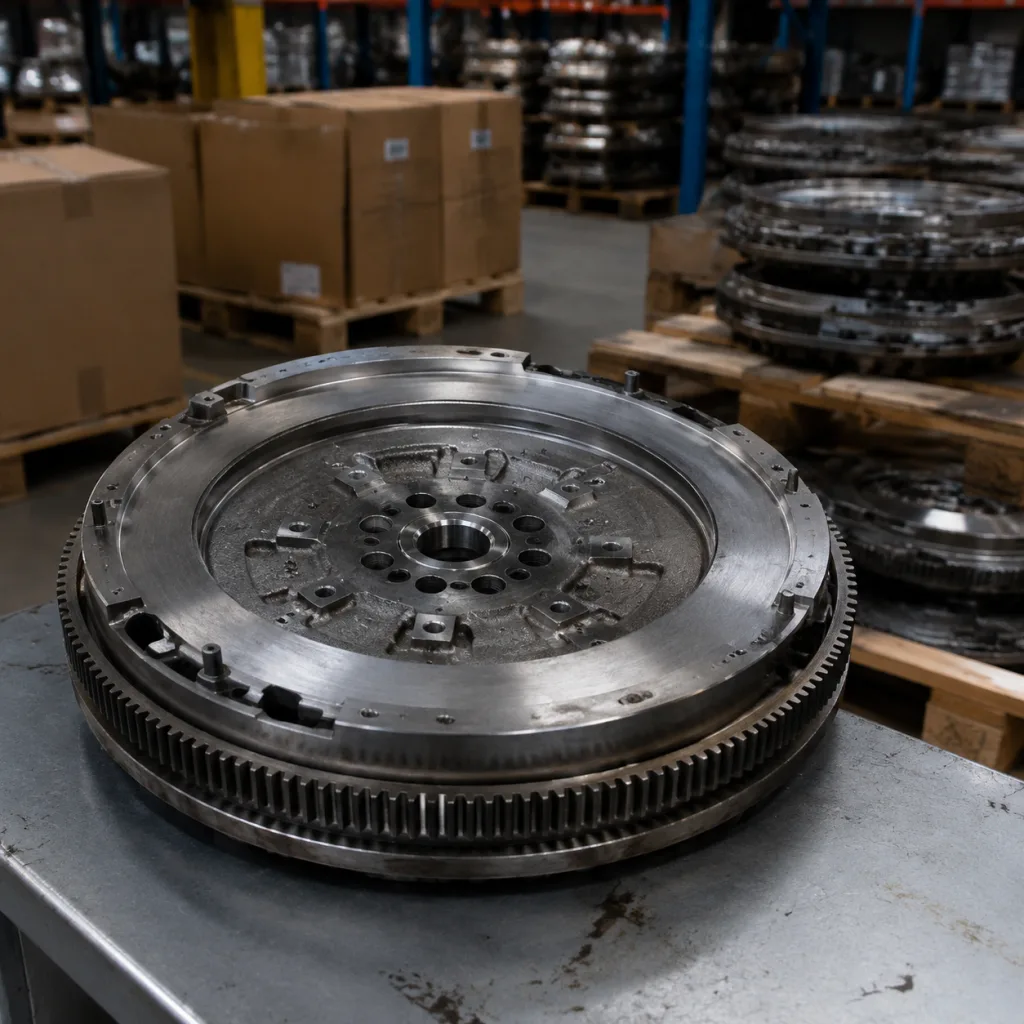
Buying a Nissan-fit dual mass flywheel at wholesale level is a warranty decision as much as a purchasing decision. The part is heavy, application-specific, and sensitive to small changes in axial height, rotational free play, balance, ring gear position, and damping calibration. A low unit price can disappear quickly if a shipment creates starter noise, idle rattle, clutch release complaints, or carton damage during ocean freight.
For distributors, importers, and repair-chain buyers, the stronger approach is to treat each SKU as a controlled driveline assembly: confirm fitment scope, lock reference data, validate samples, and connect MOQ with packaging, lead time, and inspection evidence. Most aftermarket DMFs fall around 10–18 kg, but the risk is not weight alone. It is the combination of crankshaft interface, clutch cover pattern, ring gear geometry, spring stage feel, and export handling.
Driventus manufactures engine and powertrain components in Taizhou, Zhejiang, and exports to more than 60 countries. Production and inspection processes are managed under IATF 16949:2016 and ISO 9001:2015. This guide reframes dual mass flywheel Nissan wholesale sourcing as a practical decision process: what to verify, where failures start, how to approve samples, and what data makes an RFQ quoteable.
Start With the Fitment Decision: Broad Coverage or Lower Warranty Risk?
A Nissan-fit DMF programme often crosses passenger car, light commercial, petrol, and diesel manual-transmission applications. The same vehicle name may use different driveline hardware by engine family, transmission, model year, production market, or emission generation. That is why the first decision is not price. It is range architecture.
A distributor may want one SKU to cover a wider application group and simplify inventory. A repair-chain buyer may prefer narrower coverage if it reduces comeback risk. Both strategies can work, but only if the coverage rule is written before carton artwork, barcode data, and purchase orders are released.
Use this decision framework when building a dual mass flywheel Nissan wholesale range:
Define application mapping by engine code, model year range, transmission type, clutch diameter, drive configuration, and market
Treat OE references, such as OE 12310… formats, as identification references only unless a formal drawing or approved sample is agreed
Confirm crankshaft flange diameter, bolt circle diameter, bolt quantity, thread clearance, and hole position tolerance; critical hole positions are commonly controlled within ±0.10 mm on approved drawings
Verify clutch cover fixing pattern, dowel location, friction surface working diameter, and step height; the friction face should be checked at multiple points for roundness and machining consistency
Check starter ring gear tooth count, outside diameter, chamfer direction, heat-fit seating, and radial runout; many drawings set runout targets at ≤0.20 mm for stable starter engagement
Confirm axial height, pilot bearing interface, sensor trigger compatibility where applicable, and clearance to bellhousing and clutch cover
Compare rotational free play, stop angle, spring stage feel, and damping direction against the reference part
Decide packaging format, pallet quantity, barcode type, rust-prevention method, carton burst strength, and country-specific labelling before pricing is finalised
For RFQ comparison, keep every supplier on the same application list and inspection package. One quote may look cheaper because it excludes private-label cartons, anti-corrosion bags, sample validation, or pre-shipment inspection support. That is not a like-for-like comparison.
Driventus is an independent aftermarket manufacturer; brand names are used for fitment reference only. Buyers can review broader powertrain coverage in our catalog before preparing an RFQ package.
Where DMF Programmes Fail: Process Controls That Prevent Noise, Misfit, and Returns
A dual mass flywheel is not a plain machined plate. It is a torsional damper built from primary and secondary masses, arc springs, friction control elements, grease, rivets or fasteners, and a starter ring gear. A small process change can alter idle noise, launch feel, hot restart behaviour, shutdown vibration, or clutch engagement.
This is where weak wholesale programmes usually fail: the buyer approves a part by photo, then discovers that the assembly behaviour is different from the reference part. Dimensional evidence is necessary. Functional evidence is necessary too.
For Nissan-fit wholesale programmes, Driventus controls these production stages:
Process stage
Why the buyer should care
Typical control point
Raw casting or forging intake
Material variation can affect strength, machining, and balance
Chemical composition, hardness, supplier lot, and visual defect checks
CNC turning and drilling
Axial stack and bolt alignment depend on stable datum control
Datum-based inspection, mounting-face flatness, hole position, and surface finish
Heat treatment or local hardening where specified
Wear life and ring gear durability depend on hardness control
Hardness range and case-depth verification according to drawing
Ring gear heating and assembly
Poor seating causes starter engagement complaints
Tooth count, chamfer direction, seating height, interference fit, and runout
Spring and damper assembly
Torsional response depends on spring batch and grease control
Spring batch traceability, grease weight, angular travel, and stop position
Riveting or fastening
Loose joints can appear after torque pulses
Rivet head height, torque setting, press force, and visual crack check
Dynamic balancing
Imbalance creates driveline vibration and claims
Balance grade and correction record defined by internal drawing, commonly checked at production batch level
Final inspection
Shipment acceptance needs traceable evidence
Visual, dimensional, functional rotation, marking, and packaging sampling
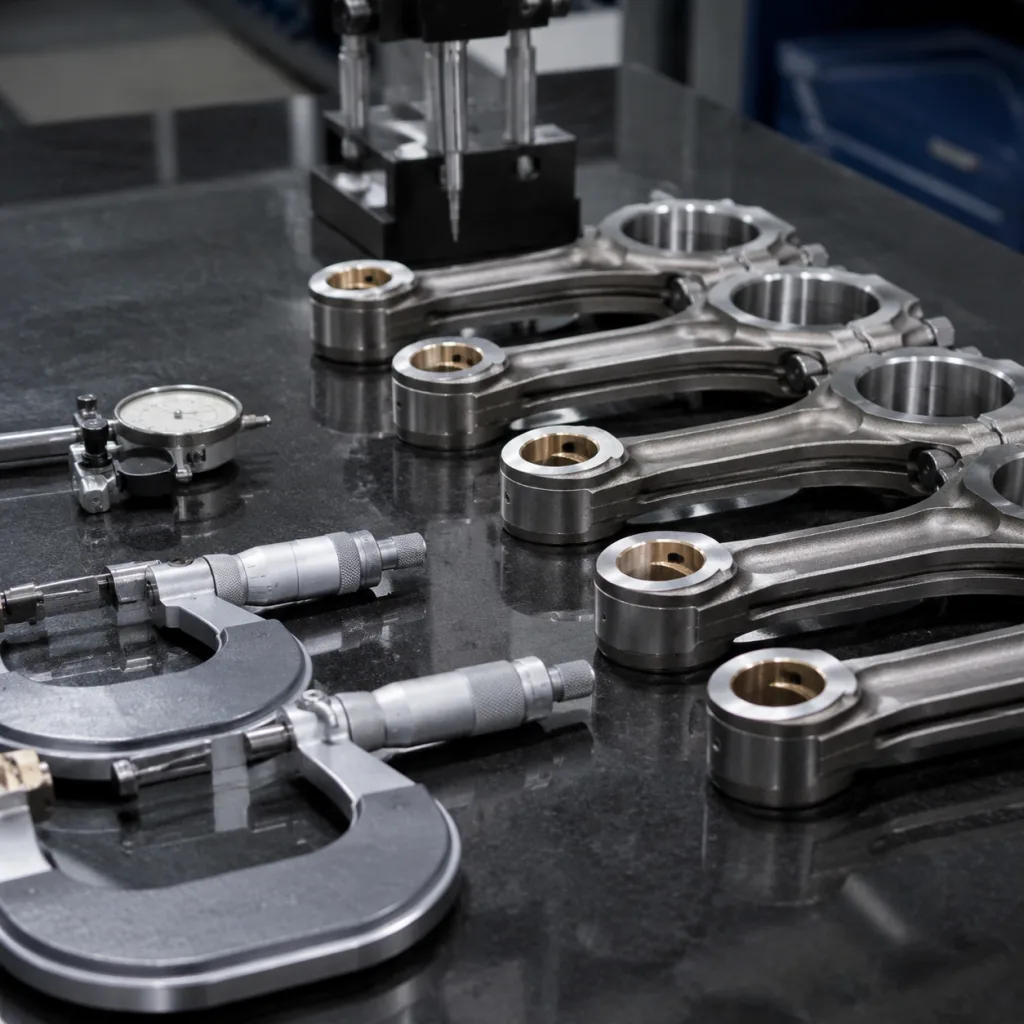
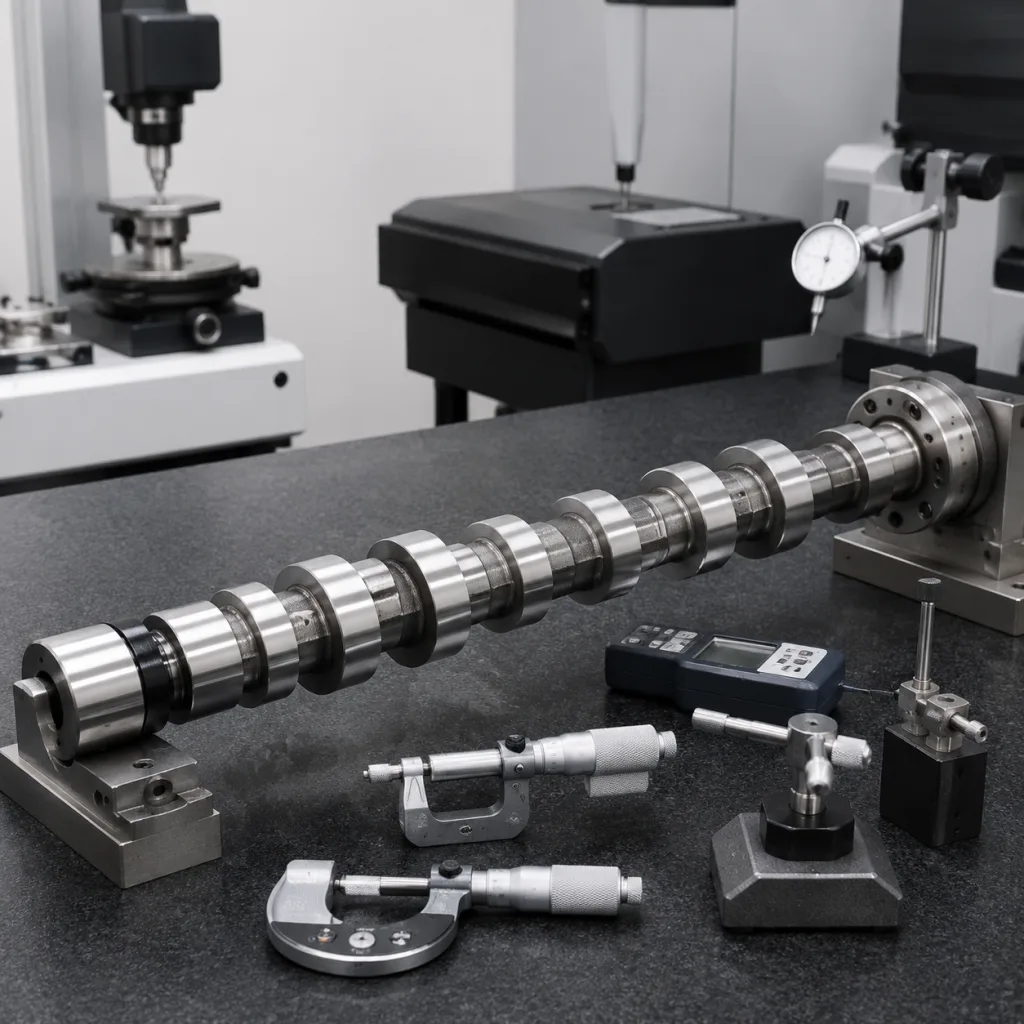
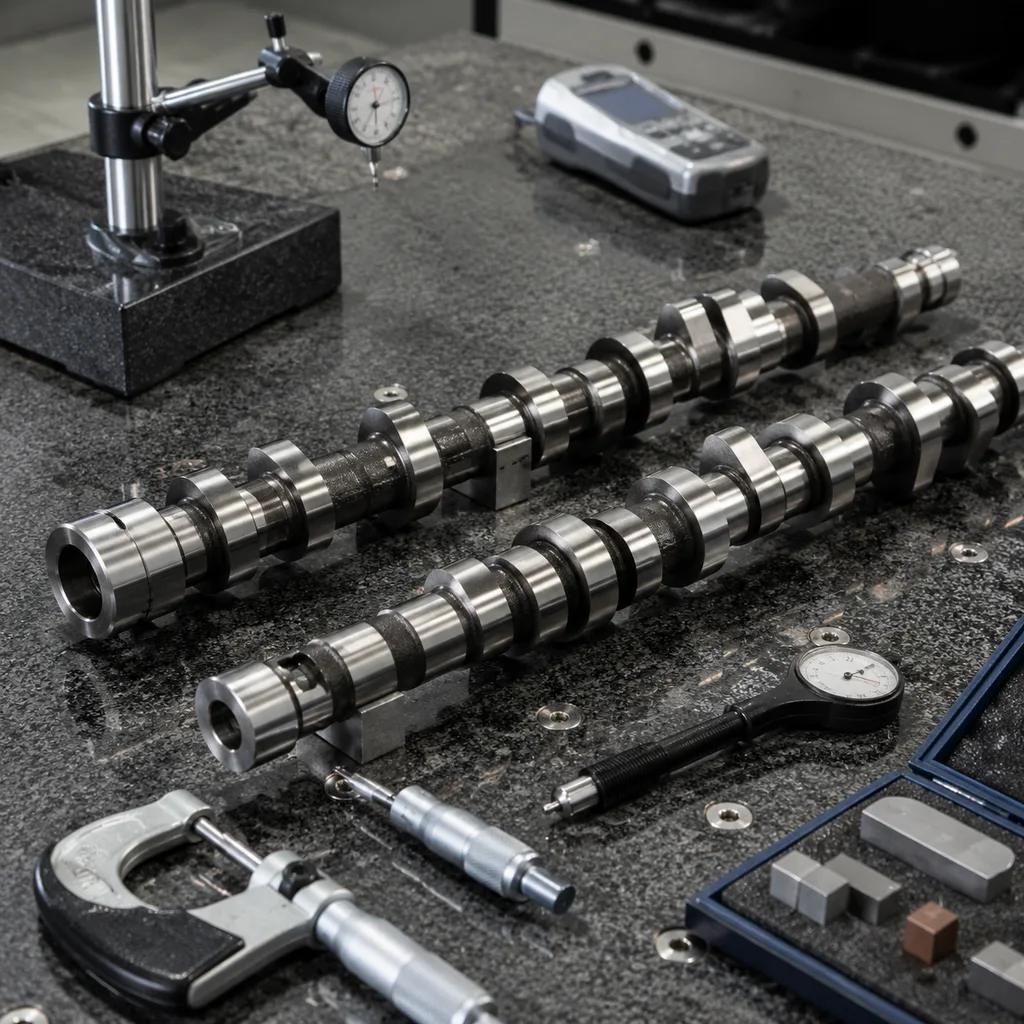
</tr></thead><tbody> </tbody></table>Critical dimensions should be tied to datums that match vehicle mounting conditions. Common buyer-requested characteristics include mounting-face flatness, total axial height, friction surface runout, crank bore diameter, bolt circle diameter, ring gear radial runout, friction surface roughness, and rotational free play. On typical aftermarket drawings, critical machined diameters are often held around ±0.02–0.05 mm, while assembly values such as free angle and damping torque are controlled by the approved reference specification.
Quality planning follows IATF 16949:2016 and ISO 9001:2015, including document control, batch traceability, nonconforming-product handling, gauge calibration, layered process checks, and corrective-action procedures. For regulated chemical obligations in export markets, material declarations can be prepared with reference to REACH (EC) No 1907/2006 where applicable to the buyer’s market and product scope.
Technical teams can review our quality system when planning a supplier audit, control-plan review, or pre-shipment inspection.
MOQ and Lead-Time Planning by Scenario, Not Guesswork
DMF sourcing works better when sample, pilot, and regular orders are treated as different scenarios. The part is heavy. Tooling and fixtures may be SKU-specific. Packaging must protect the ring gear, friction face, and carton structure during storage and sea freight. Freight cost per piece can change sharply with carton size, pallet height, and mixed-SKU density.
A practical plan normally looks like this:
Sample order: 5–20 pieces per reference for fitment, bench, and installation checks; add pieces if destructive testing or multiple repair-chain branches are involved
Pilot order: 100–300 pieces per SKU to validate sell-through, claims rate, barcode scanning, warehouse handling, and carton strength
Regular order: consolidated pallet or mixed-container shipment by regional demand; fast movers can be planned as full-pallet quantities while slow movers are combined by family
Safety stock: 8–12 weeks for high-moving SKUs, adjusted by sailing time, customs clearance, local distribution time, and the claim-return cycle
Forecast horizon: 3–6 months for private-label or custom programmes, and longer when new tooling, special cartons, or buyer-specific damping characteristics are required
Lead time depends on SKU maturity. Existing references generally move faster because drawings, gauges, and assembly settings are already confirmed. Modified references take longer. New development takes the longest because the programme must pass drawing review, sample build, validation, packaging approval, and production scheduling.
As a planning rule, existing SKUs may require 30–45 days after deposit and artwork confirmation. Modified references may require 45–70 days. New development can require 75–120 days. These ranges depend on material availability, inspection requirements, and order size, so they should be confirmed in the quotation.
Price should also be broken down. Unit cost is affected by casting or forging weight, ring gear specification, spring set, balancing time, machining complexity, inspection level, order quantity, packaging, and Incoterms. Private-label cartons, anti-rust bags, foam inserts, reinforced export cartons, and third-party inspection may add cost, but they can reduce transport damage and warehouse rejection.
For dual mass flywheel Nissan wholesale enquiries, provide target annual volume, first order quantity, destination port, preferred Incoterms such as EXW, FOB Ningbo/Shanghai, or CIF destination, packaging requirements, and any inspection standard used by your warehouse or market. Better input produces a quote that can actually survive production planning.
Sample Approval Step by Step: From Bench Data to Road Test
A photo match is not sample approval. For a dual mass flywheel, the buyer needs evidence that the part fits, rotates, damps, balances, and survives normal handling. Decide in advance which checks are done by the supplier, which are done by a third-party laboratory, and which are confirmed during installation trials.
A disciplined sample approval flow should include:
1. Confirm crankshaft mounting face, centre bore, bolt hole diameter, and bolt circle against the reference part or approved drawing. 2. Measure friction surface diameter, step height, total axial height, clutch cover mounting height, and pilot bearing interface with calibrated tools. 3. Check ring gear tooth count, outside diameter, chamfer direction, seating height, and radial runout; record at least three measurement positions where possible. 4. Verify rotational free play, angular travel, damping direction, and stop position against approved drawing limits; record hot and cold observations if your internal standard requires it. 5. Inspect grease leakage, rivet condition, spring-window condition, friction surface finish, machining marks, rust protection, and handling dents. 6. Confirm clutch cover bolt pattern, dowel positions, thread engagement, and compatibility with the intended clutch kit and release system. 7. Conduct trial installation with the intended clutch kit, starter motor engagement, release bearing travel, and bellhousing clearance. 8. Record noise, vibration, and harshness observations after cold start, warm idle, low-speed pull-away, engine shutdown, reverse engagement, and road test. 9. Retain one approved master sample and one production control sample with date, batch number, and signed approval label.
For third-party laboratories, a test plan can include dimensional inspection reports, hardness testing, runout measurement, surface roughness measurement, balance check, salt-spray or humidity exposure for packaging validation, and functional rotation checks. Sampling can follow the buyer’s AQL plan. For heavy rotating parts, many importers apply tightened checks to critical dimensions and standard sampling to visual packaging defects.
If a buyer has a specific internal standard, Driventus can review it during RFQ. We do not claim approval or endorsement by any vehicle manufacturer. Programmes requiring altered damping characteristics, private tooling, or market-specific packaging can be discussed through custom manufacturing.
Factory Audit Q&A for Import Managers
A certificate is useful. It is not a complete audit. For dual mass flywheels, import managers need to see how the supplier controls heavy rotating assemblies in daily production, not only how the quality manual is written. The audit should follow the part from incoming material to finished export pallet and include at least one live process observation.
What certificates should be checked first? Review valid IATF 16949:2016 and ISO 9001:2015 certificates, scope statements, surveillance status, and process coverage. The certificate scope should match the manufacturing activities being audited.
How is material traceability proven? Ask for incoming material inspection records, heat numbers, supplier qualification files, and the nonconforming-material quarantine process. Lot traceability should connect raw material to finished carton.
Which production controls matter most? Review CNC capability for critical dimensions and mounting faces, including control charts or recent capability studies where available. Check work instructions for spring assembly, lubrication, ring gear installation, riveting or fastening, balancing, marking, and final inspection.
What gauges and equipment need calibration evidence? Check micrometers, height gauges, bore gauges, torque tools, runout fixtures, balancing equipment, hardness testers, and weighing scales. Calibration status should be visible and current.
Where can mixed parts or assembly variation enter the process? Look closely at grease control, spring batch traceability, ring gear heat-fit method, temperature control, and prevention of mixed parts at assembly stations.
How should packaging be audited? Review drop resistance, corrosion protection, carton compression strength, edge protection, and palletisation method for 10–18 kg individual parts. Packaging weakness can create claims even when the part itself is correct.
What claim history should be reviewed? Ask for corrective-action records for fitment, noise, imbalance, starter engagement, grease leakage, and transport damage claims. Good suppliers can explain root cause, containment, and prevention.
For EU, UK, North American, Australian, and Brazilian importers, audit evidence should also cover export packing lists, commercial invoice consistency, HS code confirmation by the buyer’s broker, country-of-origin marking rules, and carton labelling requirements. If the buyer operates a multi-location repair chain, agree the warranty return flow before the first regular order, including photo evidence, mileage at failure, installation record, clutch kit used, and return-part disposition.
For long-term programmes, repeat a shorter process audit after the first mass-production shipment and whenever the SKU moves to a new line, fixture, or packaging design.
RFQ Data That Separates a Real Quote From a Placeholder Price
A vehicle model name is not enough for accurate pricing. Nissan applications can vary by engine, transmission, production year, and market. Missing data often creates sample revisions, wrong ring gear geometry, or carton artwork changes after production planning has already started.
Include the following RFQ data when possible:
Target application list by model, engine code, displacement, fuel type, year range, transmission code, drive configuration, and market
OE cross-reference format, such as OE 12310…, if already used in your system, plus interchange numbers from your existing catalogue
Reference sample photos showing both faces, ring gear, crank side, clutch side, bolt pattern, dowel locations, labels, and any sensor features
Measured data if available: total height, friction surface diameter, crank bore, bolt circle, bolt count, ring gear tooth count, and approximate weight
Required annual volume, first-order quantity, target reorder frequency, and whether the SKU is fast-moving or range-completion stock
Target price logic, if applicable, separated by sample price, mass-production price, tooling or development cost, and packaging requirement
Destination country, destination port, preferred Incoterms, importer documentation needs, and broker requirements for HS code confirmation
Packaging type: neutral, Driventus, or private label; also specify carton dimensions, barcode type, pallet height, pallet weight limit, and carton language
Inspection documents required before shipment, such as dimensional report, material declaration, balance record, pre-shipment photos, or third-party inspection report
Any restricted substances declaration needed for REACH (EC) No 1907/2006 compliance review or other market-specific documentation
This information allows Driventus to confirm whether an existing SKU is suitable or whether drawing review and sampling are needed. It also keeps MOQ and lead-time assumptions realistic instead of reducing the discussion to a generic unit price. Buyers can request a quote with their application file, target quantity, and preferred shipment schedule.
Frequently asked questions
MOQ depends on whether the SKU is existing, modified, or newly developed. As a planning guide, samples may be 5–20 pieces per reference, pilot orders are often 100–300 pieces per SKU, and regular wholesale supply is normally planned by pallet or mixed-container quantity. Annual forecast, packaging type, and destination market affect the final MOQ.
Yes. Private-label cartons, barcode labels, and pallet marks can be reviewed during RFQ. Buyers should confirm artwork, carton strength, corrosion protection, label language, pallet height, and barcode format before mass production to avoid shipment delays or warehouse rejection.
No. Driventus is an independent aftermarket manufacturer; brand names are referenced for fitment only. Parts are developed for aftermarket replacement programmes and supplied according to agreed drawings, specifications, inspection requirements, and approved samples.
For sourcing teams building a Nissan-fit dual mass flywheel programme, Driventus can review your application list, MOQ target, tolerance requirements, lead-time plan, and packaging specification. Send your RFQ details through /contact.html