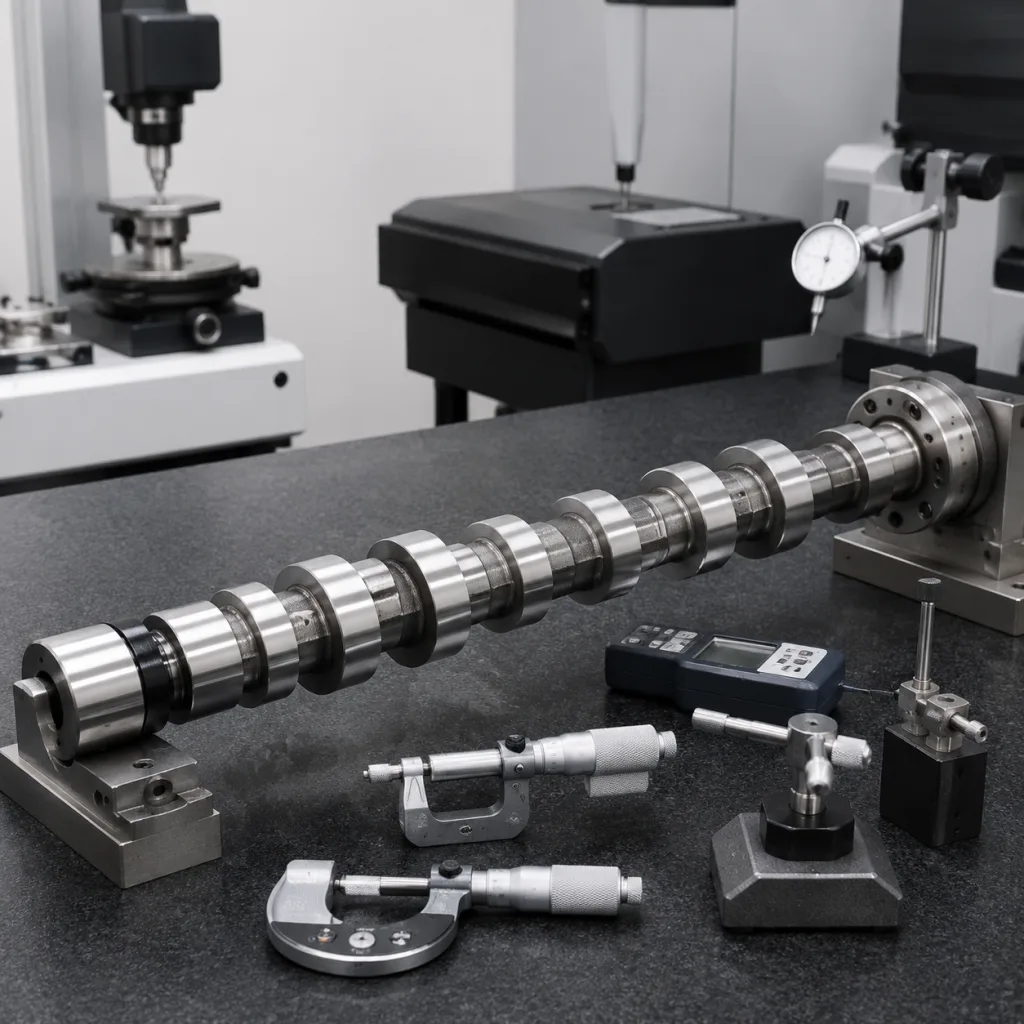
A camshaft Lexus aftermarket replacement programme fails when it is bought as a catalogue item instead of a timed, hardened, measured engine component. The part may fit the cylinder head and still create cold-start noise, unstable idle, oil-pressure complaints, diagnostic codes, warranty labour, or dead inventory caused by weak cross-reference control. Driventus manufactures engine and powertrain components in Taizhou, Zhejiang, with process controls aligned to IATF 16949:2016 and ISO 9001:2015. This sourcing guide gives procurement teams a sharper approval route for aftermarket Lexus camshafts: what to measure, where failures start, how to validate samples, how to control fitment data, and how to discuss MOQ, lead time, packaging, and documentation without hiding engineering cost inside piece price. Driventus is an independent aftermarket manufacturer; brand names are referenced for fitment only.
Decision point: are you buying a profile, an interface, or just a listing?
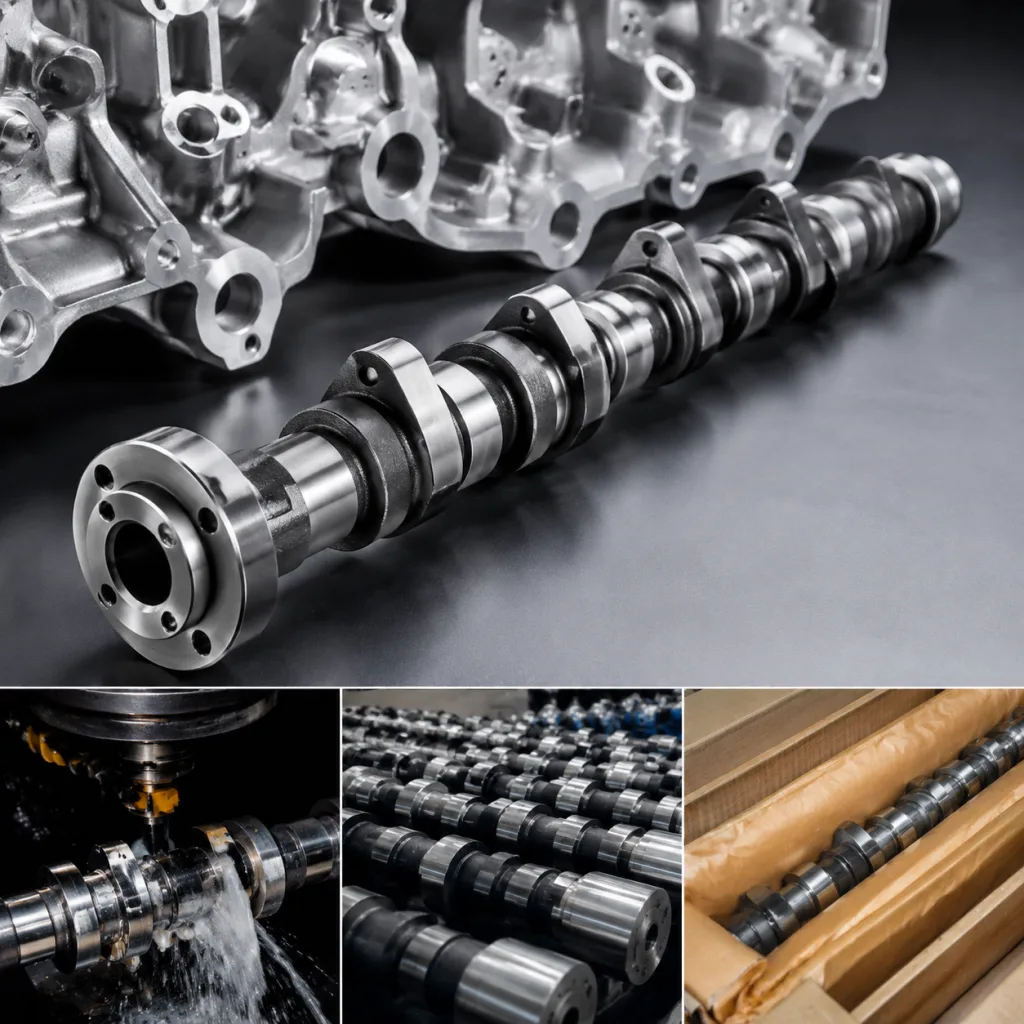
Start with the function. A replacement camshaft must reproduce the working geometry of the original part family, not merely appear in a catalogue line. For Lexus petrol engines, the controlled features usually include lobe lift, base circle diameter, journal diameter, thrust-face width, dowel or keyway position, sensor trigger geometry, and oil-feed layout. On engines with variable valve timing, the drive end matters even more. Phaser seating, bolt-hole position, locating-pin angle, and trigger features can shift valve timing enough to cause idle instability or diagnostic trouble codes.
Use application data as the entry point, then verify it against drawings, retained samples, or measured OE references. Model, engine code, and year range are not enough for a volume programme. A buyer-ready approval file should state the engine code, intake or exhaust position, production date range, camshaft overall length, number of journals, number of lobes, drive-end type, trigger-wheel pattern, oil-hole count, and any buyer-supplied OE-style reference used only for identification.
If no drawing exists, measure at least 3 new or serviceable reference samples where possible. Then lock one approved master sample for quotation, first article approval, and dispute resolution. Buyers should ask for inspection data on every critical-to-function dimension and confirm whether machining, heat treatment, cleaning, preservation, and final inspection are controlled internally or by approved subcontractors. Driventus supports replacement programmes through application review, sample comparison, and batch traceability. Buyers can review related engine parts in our catalog and decide whether camshaft sourcing should be combined with followers, timing components, gaskets, or oil-control parts.
Failure modes hiding inside “fits Lexus” claims
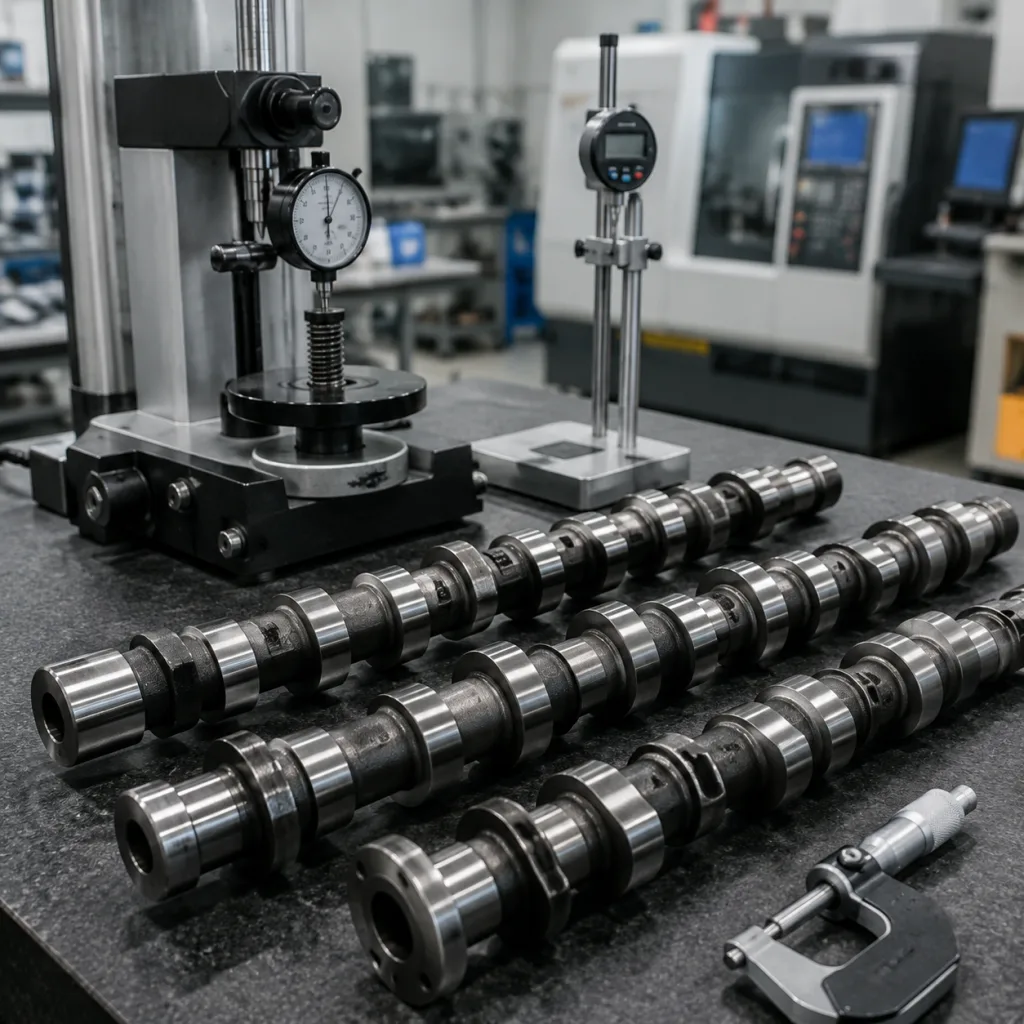
Many camshaft problems are discovered only after assembly. That is why incoming inspection should focus on the dimensions that control valve timing, oil film, bearing load, and noise. A small error in lobe position, journal finish, or oil-hole alignment can show up as tappet noise, uneven idle, misfire faults, accelerated wear, or seizure during the first service interval.
Control point
Buyer target or typical tolerance band*
Procurement relevance
Typical verification method
Journal diameter
±0.010–0.020 mm against approved spec
Bearing oil film and seizure risk
Outside micrometer, air gauge
Journal roundness
≤0.005–0.008 mm
Oil pressure stability and bearing life
Roundness tester
Lobe lift
±0.020–0.030 mm
Valve opening, output, emissions behaviour
Cam profile measuring machine
Base circle diameter
±0.020 mm
Lash, follower preload, noise
Cam profile measuring machine
Lobe phase angle
±0.25–0.50° cam angle
Timing accuracy across cylinders
CMM or rotary profile inspection
Overall runout
≤0.030–0.050 mm
Bearing load, NVH, installation complaints
Between-centres runout check
Surface roughness, journals
Ra 0.20–0.40 μm
Friction, oil retention, bedding-in
Contact profilometer
Surface hardness, lobes
Commonly 50–60 HRC or agreed HV equivalent
Wear resistance at follower interface
Rockwell or Vickers hardness test
Oil-hole position
±0.20 mm or gauge pass/fail
Lubrication reliability
Pin gauge, fixture, visual inspection
</tr></thead><tbody> </tbody></table>*Final tolerances must follow the approved drawing, master sample, material route, and engine family. The figures above are sourcing targets for RFQ structure, not universal OE specifications.
For camshaft Lexus aftermarket replacement sourcing, Driventus recommends approval against a retained master sample and a control plan covering each critical-to-function dimension. Define AQL or inspection frequency before placing the order. One launch route is 100% runout and visual crack inspection, followed by lot sampling after 3 stable batches. Another is 5 pieces per lot for full profile measurement, with one retained production sample from each batch. Where drawings are unavailable, reverse engineering should include multiple sample measurements to account for wear, remanufacturing history, and production variation.
Spec deep-dive: material route, hardness, and surface finish
Camshafts are not interchangeable just because their external shape looks close. Common aftermarket routes include cast iron, chilled cast iron, forged steel, and assembled camshafts using separate lobes and shafts. The correct route depends on contact stress, follower type, lubrication conditions, oil quality in the target market, and the original design. Do not move from chilled cast iron to a cheaper process unless follower compatibility, hardness profile, and wear-test evidence support the change.
A practical buyer specification should include:
Material grade or agreed equivalent based on the reference sample, with chemistry confirmed by spectrometer for launch batches.
Heat-treatment method, such as induction hardening, chilling, carburising, or nitriding where applicable.
Hardened layer depth targets, commonly 1.5–3.0 mm for induction-hardened lobes unless the drawing states otherwise.
Lobe and journal hardness range, recorded by batch, with test locations defined away from functional sealing or contact areas where needed.
Surface roughness limits, typically Ra 0.20–0.40 μm on journals and Ra 0.40–0.80 μm on cam lobes unless the reference requires a different finish.
Magnetic particle inspection or equivalent crack inspection after heat treatment and straightening.
Burr control at oil holes, keyways, dowel holes, and sensor features.
Rust prevention method, export shelf-life target of 6–12 months, and packaging compatibility with sea freight humidity.
Driventus applies process routing controls for rough machining, heat treatment, straightening, finish grinding, deburring, cleaning, oiling, and preservation. The quality system is structured around IATF 16949:2016 and ISO 9001:2015 principles, including control plans, inspection records, corrective action, and traceability. For EU and UK programmes, buyers may also request material declarations to support REACH (EC) No 1907/2006 supply-chain obligations where relevant to articles, coatings, corrosion inhibitors, labels, and packaging.
Step-by-step release path before the first container
Do not move from sample approval straight to a container shipment. A safer release path is staged: RFQ data review, dimensional approval, metallurgical confirmation, pilot installation feedback, and controlled first-batch inspection. This keeps one cheap sample from becoming an expensive field problem after labels are printed, warehouse stock is loaded, and parts are distributed across branches.
Useful validation steps include:
Full dimensional report against drawing, master sample, or agreed inspection plan, with actual measured values rather than pass/fail only.
Metallurgical check for microstructure, hardness, case depth or chilled depth, and decarburisation risk.
Profile overlay comparison against the approved reference camshaft, including lift curve and lobe centreline.
Runout and straightness inspection before heat treatment, after heat treatment, and after final grinding.
Oil-hole cleaning verification using air blow, borescope, weight check, or white-cloth residue review for launch batches.
Trial assembly check for thrust clearance, phaser fit, sensor clearance, and bolt engagement where reference components are available.
Packaging drop or vibration review using export carton weight, divider strength, end-cap protection, and anti-rust bag integrity.
First-article inspection report for each part family, revision, and private-label packaging version.
For new part numbers, buyers commonly approve 5–20 sample pieces before a pilot lot, depending on engine risk and market size. A conservative sequence is 5 sample pieces for dimensional and metallurgical approval, 20–50 pieces for pilot installation or branch feedback, then 100% inspection of critical dimensions on the first mass-production lot. For high-volume programmes, sampling should reflect application risk and previous lot stability. Buyers may align internal acceptance with ISO 9001:2015 purchasing controls and their own PPAP-like approval expectations. Driventus can support custom manufacturing where a distributor or Tier-1 buyer needs controlled drawings, private-label packaging, or application-specific inspection reports.
Scenario: one engine family, three ways to create returns
Cross-reference control is one of the fastest ways to lose margin in Lexus replacement camshafts. One engine family may share architecture across markets while using different cam profiles, phaser interfaces, sensor targets, journal widths, or oil-feed arrangements. The wrong consolidation can create returns even when the part looks similar and installs without force.
Build the sourcing file around facts that can be checked: vehicle make reference, model range, engine code, production period, camshaft position, market region, drive-end type, VVT/phaser interface, sensor trigger design, and any OE-style reference provided by the buyer only when it is already part of the customer dataset. Driventus does not claim approval or endorsement by any vehicle manufacturer.
For multi-market distributors, catalogue data should separate left-hand and right-hand drive fitment only where it affects service parts. It should also identify emissions-related or production-date differences where applicable. Do not merge intake and exhaust camshafts under one commercial reference unless lobe profile, phaser interface, sensor feature, and oil-feed layout are confirmed identical. A useful rule: quarantine any proposed consolidation until at least two data sources and one physical comparison support it.
Standards such as ECE R-83 may influence vehicle emissions compliance at system level, but a replacement camshaft supplier should avoid unsupported claims that a component alone certifies a vehicle. Fitment references should remain factual, documented, and reviewable, with revision dates on catalogue files so sales teams do not quote from obsolete cross-reference sheets.
Q-and-A checklist for price, MOQ, and supplier readiness
Before issuing a purchase order, test whether the supplier can support the technical and operational requirements of the programme. The lowest unit price is rarely the lowest landed cost if the part creates installation disputes, warranty labour claims, or mixed inventory. Discuss MOQ, price, and lead time together because camshafts involve material procurement, heat-treatment batch economics, grinding setup time, inspection time, and packaging configuration.
Key sourcing questions:
Can the supplier provide batch inspection reports for lobe lift, journal dimensions, hardness, surface roughness, oil-hole position, and runout?
Are machining, heat treatment, cleaning, rust prevention, and packing controlled under one quality plan with lot traceability?
What sample route is required: reference sample only, drawing review, 5-piece approval sample, or pilot lot before mass production?
What MOQ applies by part number, and is it driven by raw casting/forging quantity, heat-treatment batch size, or private-label packaging?
How does price change at 100, 300, 500, and 1,000 pieces per part number, and are inspection reports, labels, or special cartons included?
What is the normal lead time for samples, first production, and repeat orders after approval?
Are cartons labelled with part number, batch number, quantity, gross weight, net weight, country of origin, barcode, and importer-required markings?
Can the supplier maintain cross-reference discipline across different Lexus engine variants and lock revisions after approval?
As a planning guide, low-volume or new-development camshafts may require an MOQ of 100–300 pieces per part number when tooling or special blanks are available. Mature numbers with shared material routes may be practical at 50–100 pieces. Private-label cartons normally require artwork confirmation and may need 300–500 sets to avoid high packaging cost per unit. Typical timing is 15–30 days for sample preparation after data confirmation, 45–75 days for first mass production depending on material and heat-treatment queue, and 30–60 days for repeat orders when blanks, labels, and inspection plans are already approved.
Driventus supplies aftermarket distributors, wholesalers, OEM/Tier-1 buyers, and multi-location repair chains in more than 60 countries. For camshaft Lexus aftermarket replacement projects, share the application list, target annual volume, target landed-cost range, inspection expectations, packaging artwork, destination market, and any retained sample requirements at the enquiry stage. This reduces quotation ambiguity, separates engineering cost from piece price, and shortens validation time.
Frequently asked questions
Verify lobe profile, journal dimensions, runout, hardness, oil-hole position, drive-end interface, sensor features, and application data. A sample should be compared with the approved reference before pilot or volume release.
Yes. Driventus can support private-label packaging, batch labels, barcodes, and buyer-specific inspection documentation, subject to MOQ, order volume, artwork confirmation, carton testing needs, and regulatory marking requirements.
No. Driventus is an independent aftermarket manufacturer; brand names are referenced for fitment only. Any OE-style references are used for identification and cross-reference control only.
If you are building a camshaft Lexus aftermarket replacement sourcing file, share your application list, samples or drawings, inspection requirements, packaging needs, and target volumes to [request a quote](/contact.html).