Dual Mass Flywheel for Land Rover: China Manufacturer Guide
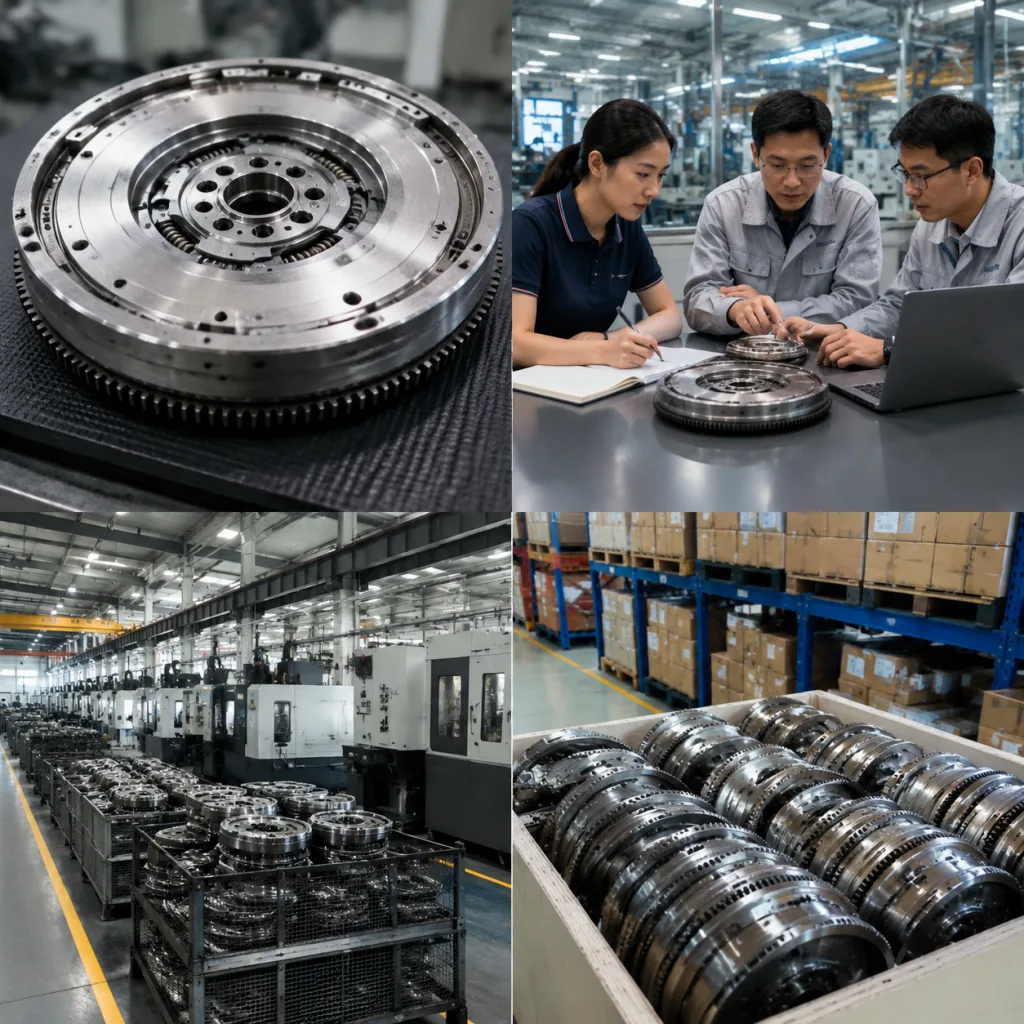
Procurement teams sourcing a dual mass flywheel for Land Rover applications need more than a price list. They need dimensional control, consistent damping performance, stable supply, and documentation that supports incoming inspection. Driventus is a vertically integrated Chinese manufacturer in Taizhou, Zhejiang, supplying engine and powertrain components to aftermarket distributors, OEM and Tier-1 buyers, and multi-location repair networks in more than 60 countries. We manufacture under controlled processes aligned with IATF 16949:2016 and ISO 9001:2015, with traceable production records and export packaging designed for international logistics. Driventus is an independent aftermarket manufacturer; brand names are referenced for fitment only. For buyers comparing suppliers, the key questions are fitment coverage, batch consistency, MOQ, validation data, and how quickly a factory can support OE cross-references such as OE 06A107065 when the application calls for them.
How to qualify a Land Rover flywheel without guessing
The first filter is fitment, not price. A dual mass flywheel has to match the original assembly’s bolt pattern, pilot interface, ring gear position, offset, inertia window, and starter engagement geometry. For Land Rover programmes, also confirm engine code, gearbox type, clutch kit pairing, and whether the target is OE-equivalent life or an economy line.
Minimum procurement checks
Vehicle platform, engine code, and transmission model
OE cross-reference where available, such as `OE 06A107065`
Flywheel mass, free rotational angle, and damping curve
Runout, parallelism, and mounting-face flatness
Packaging method for corrosion protection and transit impact
Buyer-ready spec targets
Critical mounting-face runout: ≤0.08 mm TIR
Parallelism between friction and mounting faces: ≤0.05 mm
Ring gear concentricity: ≤0.10 mm TIR
Fastener hole position tolerance: ±0.15 mm
Static balance after assembly: within 15 g·cm or better, per drawing requirement
Free rotational angle: verify against OE sample window, typically within ±2° of approved master sample
Damping torque curve: within ±8% of approved sample at test points
If a supplier cannot name its measurement method, inspection frequency, or acceptance window, receiving rejection risk goes up fast. For launch programmes, ask for first-article data, a control plan, and a PPAP-style submission even when PPAP is not contractually required.
What separates a factory source from a broker
Driventus supplies dual mass flywheel programmes as a manufacturer, not a trading company. That matters when buyers need lead-time control, engineering change handling, and repeatable batches. It also changes the sourcing conversation: factory access, process records, and change approval become part of the quote, not afterthoughts.
Sourcing point
What to confirm
Why it matters
MOQ
Per part number and per packaging spec, typically 50–200 pcs for stocked programmes and 300+ pcs for custom builds
Affects inventory risk and landed cost
Lead time
Tooling status, raw material stock, and machining schedule
Prevents stock-outs during programme start
Traceability
Heat, batch, and process records
Supports warranty and complaint analysis
Audit access
Factory visit and document review
Reduces supplier qualification risk
Change control
Written approval before material or process changes
Protects dimensional stability
Price logic
Sample cost, tooling amortization, and volume breaks
Clarifies landed-cost planning
</tr></thead><tbody> </tbody></table>Typical commercial structure is simple: samples are quoted separately, tooling is charged once for new or heavily modified references, and unit price drops by volume tier. Ask for pricing at 100, 500, and 1,000 pcs so you compare container economics, not just carton economics. For urgent replenishment, confirm whether ready stock can ship in 7–15 days; for standard production, 25–45 days is a more realistic planning window depending on machining load and raw-material availability.
Our catalog covers engine and powertrain parts, and the quality system page explains the controls used for production release and traceability.
Inside the part: materials, tolerances, and checks that matter
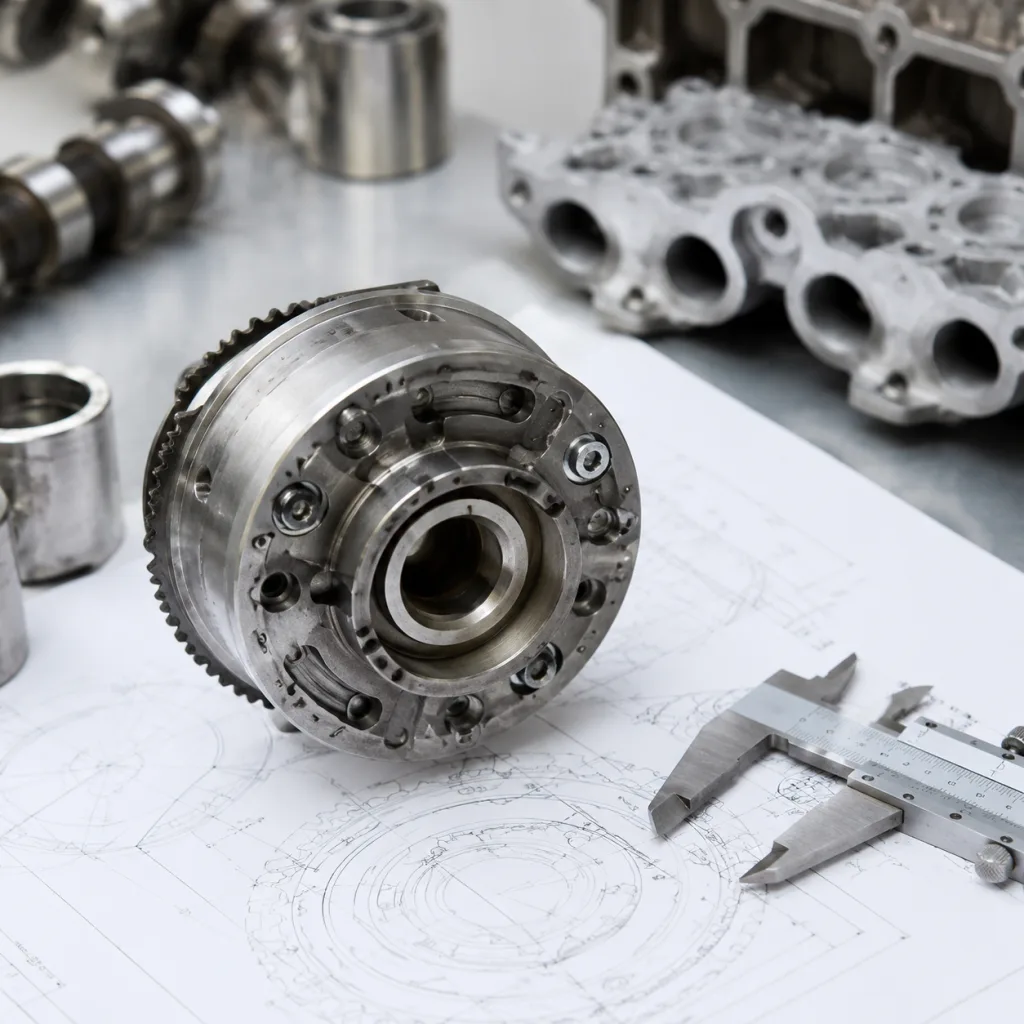
A dual mass flywheel is a dynamic assembly, so the material stack, spring pack, lubrication strategy, and friction interfaces all affect NVH behaviour and durability. Ask for the steel grade used in the primary and secondary masses, the heat-treatment route, and the sealing method that retains lubricant while excluding contamination.
Typical verification items
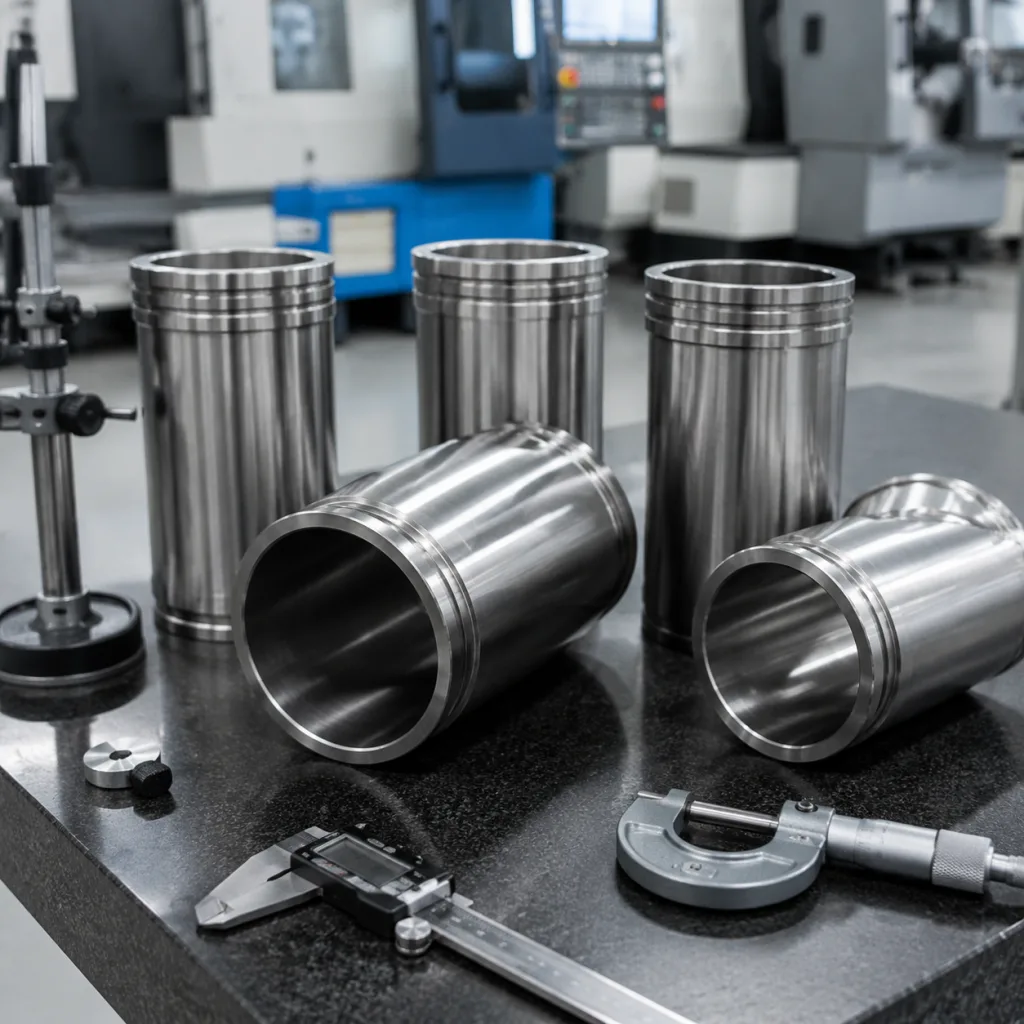
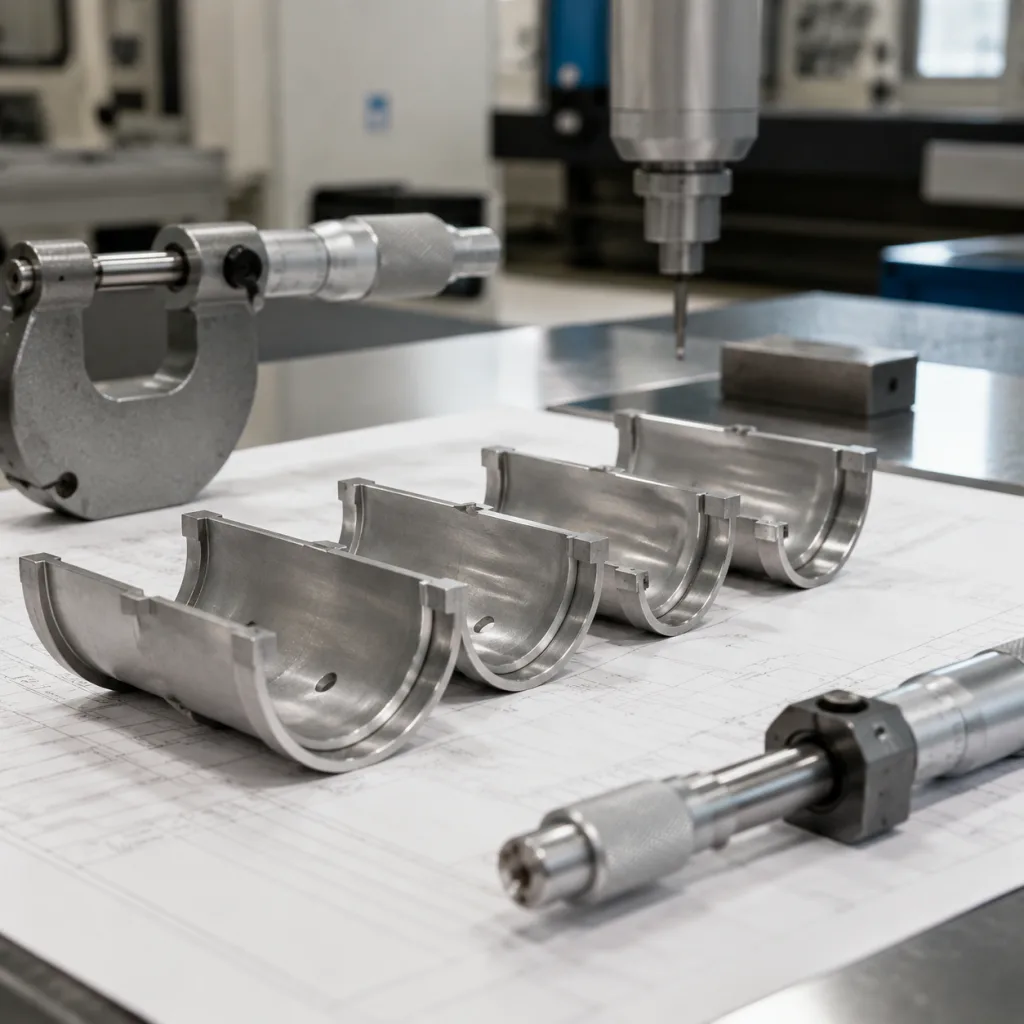
Dimensional inspection on critical faces and diameters
Static balance and rotational smoothness checks
Damping travel and angular displacement measurement
Surface finish on clutch-contact and mounting surfaces
Corrosion protection and salt-spray validation where specified
Process detail a buyer can act on
Raw material should be verified by mill certificate and heat number before machining
Machined faces should be inspected at in-process and final stages, not only after assembly
Spring preload and damping torque should be checked against a master sample or drawing-defined curve
Assembly lubricant fill quantity should be controlled by weight or volume with recorded tolerance
Final packaging should include rust inhibitor, cavity protection, and a carton drop-test standard for export lanes
Recommended quality checkpoints
Incoming material hardness: per material spec, typically verified on every heat
Machining Cpk target: ≥1.33 on critical dimensions after process stabilization
Final runout audit: 100% on launch lot, then lot sampling by AQL or agreed control plan
Surface roughness on friction faces: Ra 1.6–3.2 μm where the application requires stable clutch engagement
Corrosion protection: 240-hour salt-spray reference when the programme specifies export or humid-climate durability
For programmes that require additional validation, published standards may be used as references in the test plan, including IATF 16949:2016, ISO 9001:2015, REACH (EC) No 1907/2006, ECE R-83 where applicable to vehicle emissions-related system context, and SAE J2527 for corrosion testing references when specified by the buyer. We do not invent approval claims; the goal is controlled process and documented test data.
How a China manufacturer supports procurement teams
Procurement managers usually need three things from a supplier: stable output, fast technical response, and packaging that survives export handling. Driventus supports those needs through in-house manufacturing in Taizhou, Zhejiang, and a vertically integrated supply chain for engine and powertrain parts. That reduces handoffs between casting, machining, assembly, and final inspection.
If your project needs a private-label release or a special fitment package, our custom manufacturing service can support drawing-based development, sample approval, and controlled change management. For programme qualification, we can provide dimensional data, material declarations, and lot-level traceability to help your internal approval process.
A practical buyer workflow is: submit OE reference, sample or drawing, annual usage forecast, target packaging spec, and quality documentation needs; receive a fitment review and preliminary quotation; approve samples; then lock the production control plan and delivery schedule. If the part is a first-time release, expect one sample round plus one correction loop if the application data is incomplete. For repeat business, the fastest path is a frozen reference sample and a confirmed inspection sheet.
Driventus is an independent aftermarket manufacturer; brand names are referenced for fitment only.
When replacement should include more than the flywheel
For Land Rover servicing programmes, a dual mass flywheel is often replaced with the clutch kit, release bearing, and associated fasteners. That reduces repeat labour and limits the risk of mismatch between worn and new components. Buyers should confirm whether the target customer expects a direct OE-equivalent replacement or a repair solution optimized for cost and availability.
Bundle planning should include
Flywheel
Clutch disc and pressure plate
Release bearing or concentric slave cylinder, if applicable
Bolts and alignment hardware
Installation instructions for workshop use
Replacement decision logic
Replace the flywheel when free play exceeds the OE window, damping noise is present, or the friction surface is heat-checked
Bundle the clutch set when mileage is high or the transmission is already removed
Add fasteners whenever the OE manual specifies one-time-use hardware or torque-to-yield bolts
Stock repair kits separately from flywheel-only SKUs to match different workshop budgets
For purchasing teams, it helps to quote three kit configurations: flywheel only, flywheel plus clutch kit, and full installation kit. That structure usually reveals the real price spread between a low-ticket repair and a lower-return, lower-risk complete job. If you are building a wider engine-parts programme, see our engine components page for related sourcing options.
Frequently asked questions
Yes, where the application data is provided. We work from OE cross-references, drawings, samples, and vehicle details. Driventus is an independent aftermarket manufacturer; brand names are referenced for fitment only.
Typical documents include dimensional reports, material declarations, batch traceability, and production inspection records. For launch and tender programmes, we can also provide sample approval records, control-plan summaries, and carton specifications when required.
Yes. Through our OEM service, we can support custom packaging, label requirements, and controlled release processes for distributor or workshop programmes. Minimum quantities usually depend on print setup and carton specification, so we recommend quoting packaging separately from the part price.
If you are sourcing a dual mass flywheel programme and need a direct factory response, send your fitment list, target volume, inspection requirements, and preferred packaging format. Start here: /contact.html