Dual Mass Flywheel Hyundai Wholesale: Supplier Guide
Buying dual mass flywheel Hyundai wholesale parts takes more than matching a part number to a price. The real risk sits in the details: OE cross-reference, engine code, transmission code, spline count, clutch disc diameter, torque capacity, dynamic balance, packaging, and whether the supplier can hold the same quality from batch to batch. For fleet repair chains, distributors, and importers, the failure mode is familiar. A flywheel that looks correct on paper can still trigger comebacks, labor costs, warranty disputes, and chargebacks once it reaches the workshop.
Driventus supplies dual mass flywheel assemblies for selected Hyundai applications through a controlled manufacturing process in Taizhou, Zhejiang. We support sourcing with dimensional verification, material traceability, lot-level inspection, and supplier documentation under IATF 16949:2016 and ISO 9001:2015. Driventus is an independent aftermarket manufacturer; Hyundai and other brand names are referenced for fitment identification only. This guide explains what buyers should confirm before placing a wholesale order, which technical data matter most, how to compare supplier offers, and how to build a repeatable Hyundai flywheel purchasing program from China.
What wholesale buyers should verify first
For procurement, the first step is to confirm the exact application, not just the vehicle model or model year. Hyundai applications can change by engine family, market region, emission calibration, gearbox code, clutch kit pairing, and production date. A dual mass flywheel that fits one diesel or petrol manual-transmission variant may be wrong for another version sold under the same model name.
Key checks before RFQ:
- OE cross-reference: confirm the OE number format and any supersession history, and check whether the number refers to the bare flywheel or a complete assembly
- Engine code: verify the full engine designation, displacement, fuel type, and market-specific calibration where known
- Transmission code: confirm the manual gearbox variant, bellhousing interface, and whether the clutch kit is original-equipment style or aftermarket replacement
- Spline count and pilot diameter: a mismatch here blocks installation or causes clutch alignment problems
- Flywheel mass and inertia: the wrong value can change drivability, clutch engagement feel, idle stability, and vibration behavior
- Starter ring gear tooth count: check against the original unit so starter engagement remains correct
- Bolt pattern and offset: confirm crank flange pitch circle, installed height, fastener specification, and release-bearing working position
- Clutch pairing: confirm disc diameter, pressure plate bolt pattern, friction face depth, and whether the buyer intends to source the clutch kit separately
A wholesale buyer should also ask whether the supplier has incoming inspection records, final balance data, traceable lot identification, and packaging control. Those details matter when the product is sold into workshop networks or regional distribution. They help prevent mixed applications, reduce installation disputes, and give the buyer evidence to review if field feedback appears after the first shipment.
Why technical validation matters on dual mass flywheels
A dual mass flywheel is not a generic wear part. It is a tuned assembly designed to reduce torsional vibration between the engine and driveline. The two-mass structure, arc springs, friction interface, grease, bearing or bushing support, and stop limits all work together. If the spring pack, friction torque, working angle, or damping curve is outside specification, the result can be noise, judder, gearbox rattle, difficult take-up, premature clutch wear, or early failure under load.
Validation should cover:
1. Static dimensions against the OE sample or approved drawing 2. Crankshaft mounting face runout and clutch mounting face runout, typically checked against an agreed limit such as 0.10 mm or tighter where the application requires it 3. Rotational balance at the defined test speed and tolerance class 4. Spring preload and angular deflection range 5. Friction torque consistency across the operating angle 6. Heat resistance of the working surfaces and friction face stability after thermal cycling 7. Surface finish, flatness, and hardness on the contact faces 8. Ring gear tooth profile, hardness, and press-fit security 9. Grease retention, sealing condition, and resistance to contamination during storage and transport 10. Functional noise check after simulated movement where the test plan requires it
For export supply, the documentation package should also address REACH (EC) No 1907/2006 when the destination market requires chemical compliance evidence. The buyer may request test records aligned to SAE J2527 where surface durability verification is relevant, although the exact test plan should match the product design and commercial agreement. For fitment claims, do not ask the supplier to overstate certification. Use only verified application data, controlled test results, and clearly defined aftermarket fitment references.
Technical validation also protects the buyer's commercial position. If a field claim occurs, a complete inspection file makes it easier to separate incorrect installation, wrong clutch pairing, transport damage, and manufacturing nonconformity. Without that evidence, every complaint becomes slower and more expensive to resolve.
How Driventus supports Hyundai wholesale supply
Driventus is set up for B2B supply rather than retail replenishment. That matters when buyers need stable repeat-order quality, controlled labeling, carton marking, pallet planning, and consistent communication across quotation, sampling, production, inspection, and shipment. For dual mass flywheel Hyundai wholesale programs, the goal is not only to ship parts once; it is to create a supply route that can be repeated without rechecking every detail from zero.
Our catalog is available at our catalog, and selected powertrain items are also shown on engine components.
For wholesale programs, we can support:
- OE sample matching and drawing review
- Application confirmation using OE reference, engine code, transmission code, and target market
- Dimensional inspection of critical interfaces such as crank mounting face, clutch face, ring gear, offset, and bolt pattern
- Batch traceability by lot number for production and shipment records
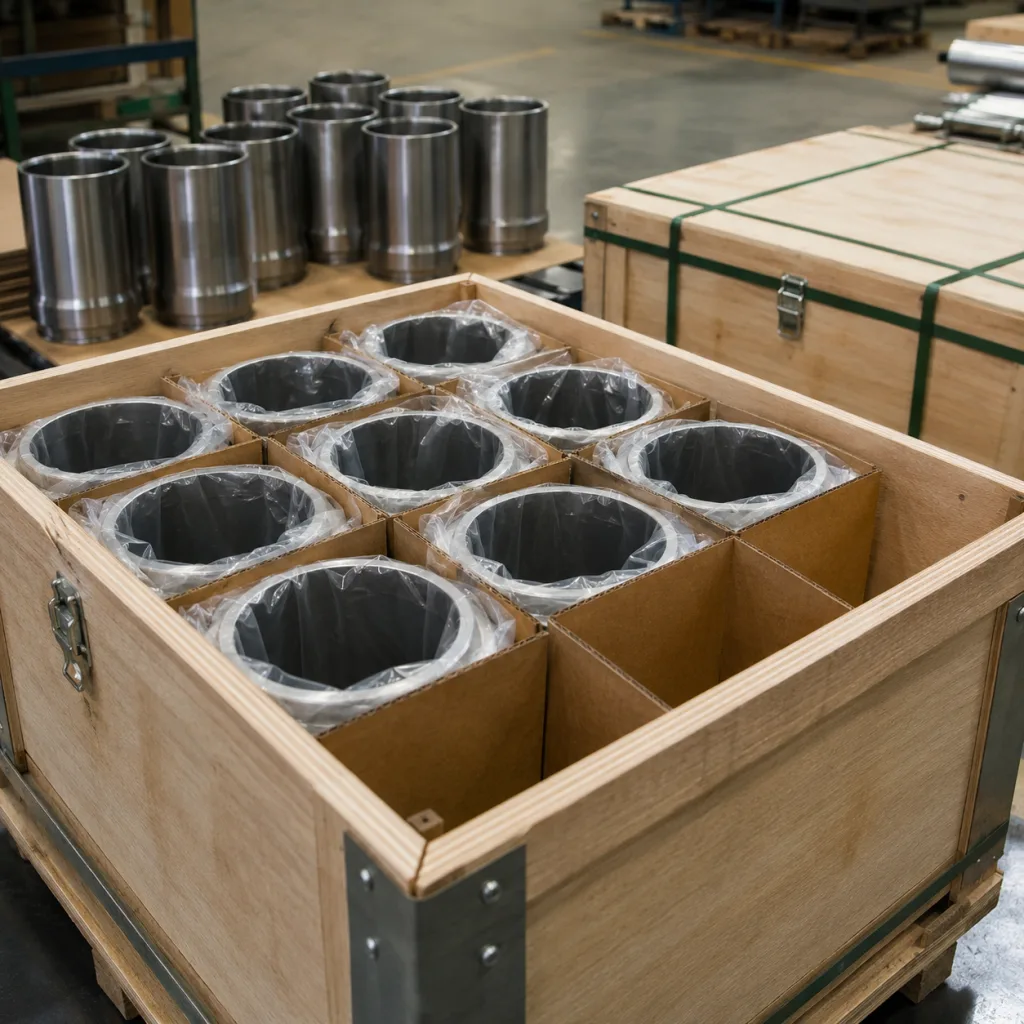
- Packaging specification for distributor warehousing, including inner protection, carton strength, labels, and pallet configuration
- Private-label and box-print coordination through custom manufacturing
- Inspection reports for factory audit files and first-shipment approval
- Review of new part feasibility when a requested Hyundai application is not yet in regular production
Typical commercial terms depend on the application and order size. MOQ is usually set by production batch, carton configuration, raw material allocation, and whether existing tooling is already available rather than by a fixed universal number. Lead time depends on tooling status, current production load, inspection requirements, and whether the part is made from existing process capability or requires a new validation run.
For buyers managing several Hyundai references, Driventus can also help separate active, obsolete, superseded, and sample-only items before the RFQ is finalized. This reduces duplicated quotations and makes it easier to forecast cartons, pallets, and shipment consolidation.
Comparison of supplier options for procurement teams
Procurement teams often compare several supply channels before choosing a dual mass flywheel Hyundai wholesale partner. Each option can be useful, but the right choice depends on the buyer's volume, target market, warranty exposure, and need for repeatability.
| Supplier type | Strength | Risk | Best use case |
|---|---|---|---|
| Trading company | Fast quotation, broad item search, flexible communication | Limited process control, less visibility into inspection and batch history | Spot buying, urgent replacement, early market testing |
| Local remanufacturer | Short transit, local service access, lower minimum order | Variable core quality, limited scale, possible inconsistency between rebuild batches | Small regional programs, temporary supply gaps |
| Component assembler | Competitive pricing, narrow process focus | May depend on outside machining, heat treatment, or ring gear supply | Price-sensitive programs with strong incoming inspection |
| Vertically integrated OEM/aftermarket plant | Better process control, traceability, engineering review, more stable repeat production | Requires technical review, clearer forecasting, and more structured approval | Distributor programs, fleet channels, multi-market supply |