Cylinder Liner Packaging Requirements for Export Buyers
For export buyers, packaging is part of product conformity, not a cosmetic add-on. A cylinder liner can leave the factory within dimensional tolerance and still fail in use if the bore rusts, the flange chips, or the lot code is lost during a 30–60 day sea route. Procurement teams should define cylinder liner packaging requirements export buyers can verify before the first production lot, then confirm them during sample approval, pilot shipment, and pre-shipment inspection. The main controls are anti-corrosion life, part-to-part separation, carton compression strength, pallet stability, label durability, and document traceability. For export programmes, these controls should match the liner weight, bore finish, route humidity, storage time, container loading plan, and warehouse handling method. Driventus is an independent aftermarket manufacturer; brand names are referenced for fitment only. The same approach applies whether you buy from [our catalog](/products.html), need [quality system](/quality.html) documentation, or require [custom manufacturing](/oem-services.html) for a private label programme. The checklist below sets out what sourcing teams should specify, price, inspect, and freeze before placing export orders and before signing off the packing standard.
Why packaging matters in export supply
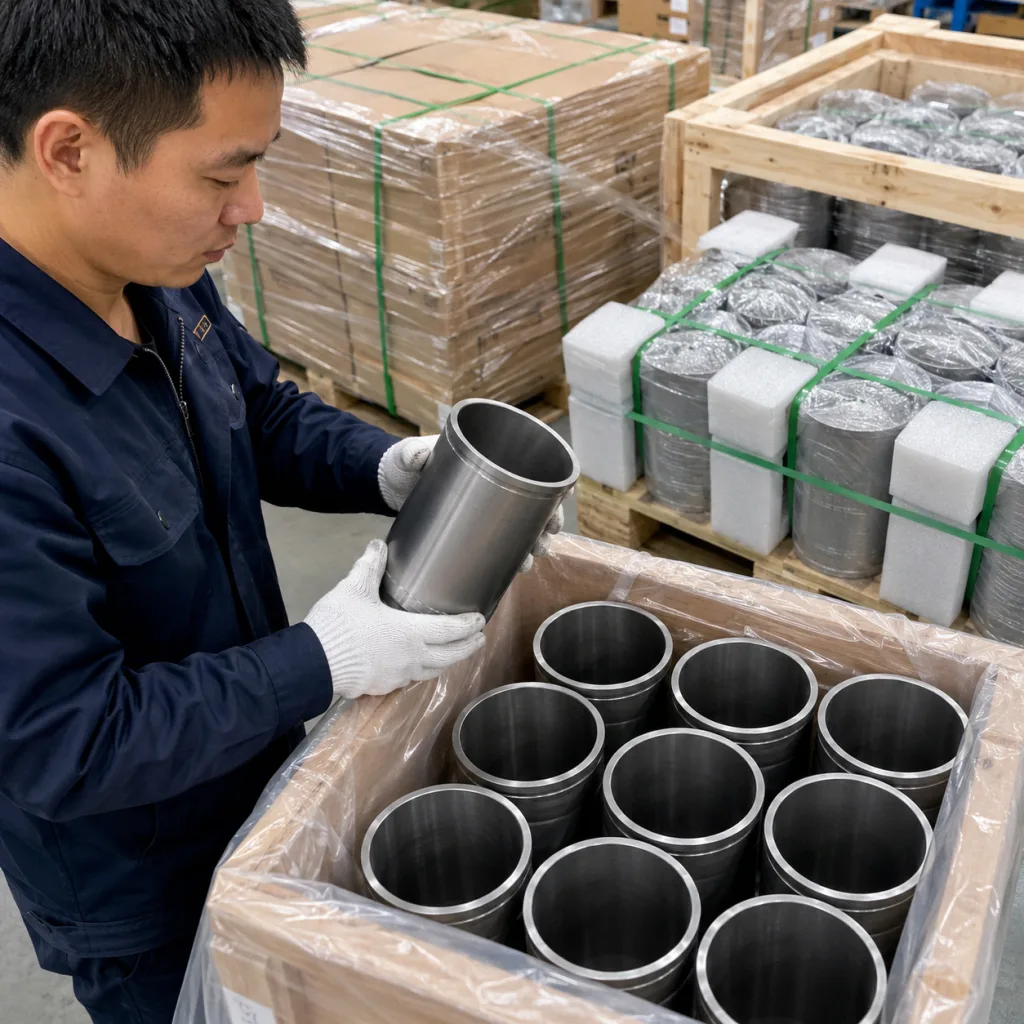
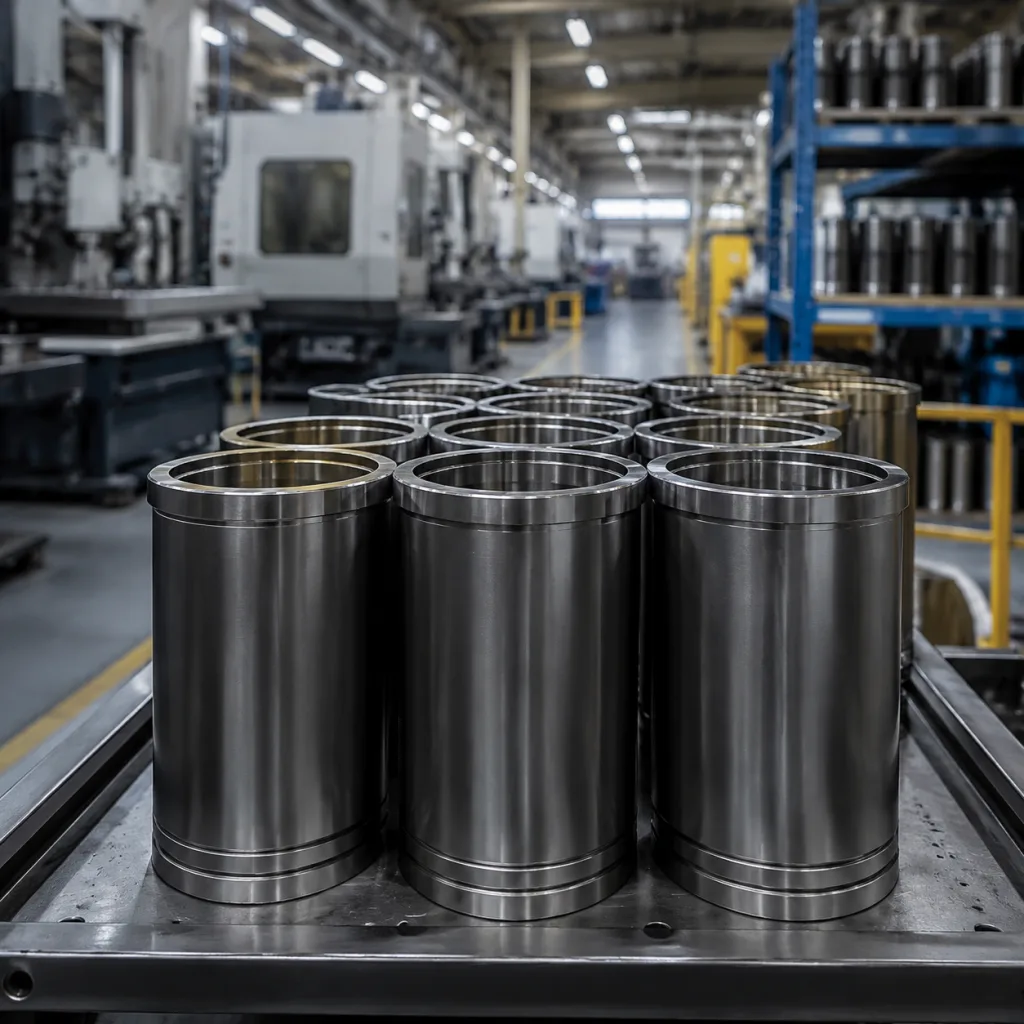
Cylinder liners are machined ferrous parts with exposed surfaces that can corrode quickly if preservation and sealing are weak. During export, the pack must protect bore finish, flange faces, and outer diameter surfaces from moisture, impact, vibration, and fretting. It must also preserve lot identity from factory dispatch to warehouse receipt, including mixed-SKU pallets and partial carton picks.
For B2B buyers, the practical risks are predictable and measurable:
Rust spotting after 72–120 hours of humid storage, especially on uncoated bore and flange surfaces
Edge damage when liners over 3 kg contact each other during vibration or container handling
Mixed lots caused by labels that omit batch number, production date, or carton sequence
Carton collapse when gross weight exceeds board strength or pallet stack limits
Claims delays because carton marks, packing list, invoice, and inspection report do not match
Write the packaging standard into the purchase order, approved sample record, and control plan. For normal aftermarket export, a buyer should define an acceptance target such as no visible red rust, no flange dents, no bore scratches visible under normal inspection light, and 100% readable carton labels at destination. For high-risk sea freight or long storage, specify a preservation period such as 90, 180, or 365 days and ask the supplier to confirm the oil, VCI bag, desiccant quantity, and sealing method used to achieve it.
Define the export packaging specification
A usable specification should state the pack format, preservation method, gross weight limit, pallet pattern, and documents. Keep it measurable and tied to the route, because a 7-day truck shipment and a 45-day ocean shipment do not need the same moisture barrier.
Control item
Recommended buyer requirement
Surface protection
Rust preventive oil film or VCI treatment with stated protection life, commonly 90–180 days for sea freight and longer if warehousing is planned
Cleanliness before packing
Parts dry and free from chips, grinding dust, fingerprints, and water marks before oiling or bagging
Sealed PE/VCI bag or wrapped single part; bag thickness commonly 0.06–0.10 mm depending on liner weight and edge risk
Moisture control
Desiccant and humidity indicator card for sea freight, tropical lanes, or storage over 30 days; define quantity by bag/carton volume
Secondary pack
5-ply or 7-ply export carton, no free movement, void fill where required, and carton burst/compression rating agreed before mass production
Carton weight
Practical manual-handling limit normally 15–25 kg gross per carton unless the buyer approves mechanical handling
Outer unit
Heat-treated export pallet or plywood case, corner boards, edge protection, stretch wrap, and PET/PP strapping
Pallet limits
Define pallet footprint, stack height, gross weight, and whether double stacking is allowed in warehouse or container
Marking
Part number, description, quantity, lot number, carton number, origin, gross/net weight, PO number, and barcode if required
Documents
Packing list, commercial invoice, inspection record, material/COA if required, fumigation or ISPM 15 declaration when wooden pallets are used
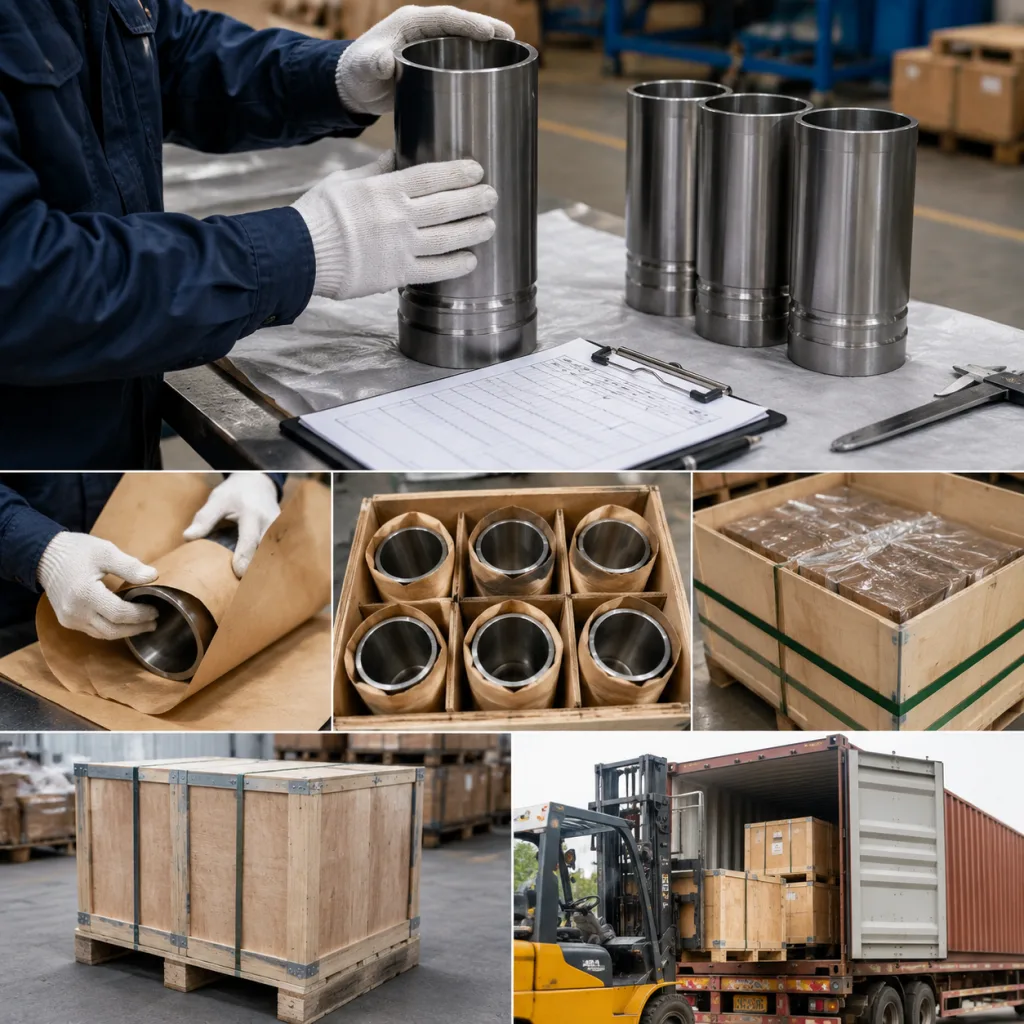
</tr></thead><tbody> </tbody></table>For standard export cartons, require a drawing or packing instruction that shows liner orientation, quantity per carton, divider layout, carton size, label position, pallet pattern, and wrap/banding method. If the lane includes long ocean transit, monsoon humidity, port dwell, or unconditioned storage, ask for desiccant plus a 5%/10%/15% humidity indicator card inside the sealed barrier bag or master carton. If the buyer has warehouse automation, add barcode symbology, minimum label size, scan direction, and scan grade; many buyers specify Code 128 or QR, 300 dpi printing, and at least one label on the long side plus one on the short side.
Price the packaging as a line item during RFQ. A low unit price can disappear if the supplier later adds VCI bags, stronger cartons, desiccant, pallet corners, or private-label printing. For comparison, ask suppliers to quote three pack levels: domestic carton, standard export carton, and sea-freight corrosion pack. MOQ logic should also be visible: printed cartons often require a minimum print run, private-label labels may require a lower MOQ, and molded trays may need tooling plus a higher order volume to amortise cost. For repeat sourcing, lock the approved pack level to the part number, customer code, or packaging revision.
What to check before shipment approval
Use a pre-shipment checklist that combines product and packing controls. This avoids the common problem where part dimensions are accepted but packaging is not. The inspection should be done after final packing, not only at the workbench, because vibration risk, label visibility, and pallet stability are only visible in the finished shipping unit.
Inspection points
Verify part count per inner pack, carton, master carton, and pallet against the packing list
Check that each liner is protected against bore-to-bore, flange-to-flange, and OD-to-OD contact
Confirm that anti-rust oil, VCI bag, desiccant, and humidity card match the approved packing instruction
Open sample cartons to check for loose movement; as a rule, the liner should not shift freely when the carton is tilted
Confirm label legibility after tape, stretch wrap, corner boards, and banding are applied
Review moisture protection for sea freight, high-humidity lanes, or storage over 30 days
Inspect pallet quality, ISPM 15 marking if wood is used, stretch-wrap overlap, strapping tension, and load stability
Match PO, part number, lot number, carton marks, packing list, invoice, and export documents before release
Set an acceptance plan before inspection. For example, inspect at least the square root of total cartons for packing condition, or use the buyer’s AQL plan with zero tolerance for wrong part number, missing lot label, wet carton, red rust, broken pallet, or unsealed moisture barrier. Record carton gross weight, pallet gross weight, packed dimensions, and photos of inner pack, closed carton, pallet label, and loaded pallet. These photos become the reference for the next order and make freight or warehouse claims easier to resolve.
Buyers should also confirm that internal pack materials do not shed fibres, react with rust preventive oil, or leave residue on machined surfaces. If the programme includes barcode scanning, test the code format with the buyer’s scanner before mass shipment. Driventus aligns packaging control with its quality system, and can adapt pack standards for route, pallet size, private-label cartons, and customer warehouse rules.
Packaging standards to cite in procurement
Packaging itself is usually defined by buyer specification, but the associated control system should reference recognised standards, handling rules, and material regulations where relevant. The goal is not to list every standard; it is to make inspection evidence clear enough that the buyer, supplier, forwarder, and warehouse apply the same acceptance criteria.
Useful references include:
IATF 16949:2016 for automotive quality management, change control, traceability, and serial supply discipline
ISO 9001:2015 for documented process control, inspection records, nonconforming output control, and corrective action
ISPM 15 for heat-treated or fumigated wooden pallets and crates used in international shipments
REACH (EC) No 1907/2006 for material compliance declarations in the EU, including packaging chemicals where applicable
RoHS or customer restricted-substance rules if labels, inks, films, VCI materials, or coatings are included in the buyer’s compliance scope
ASTM D4169 or ISTA-style distribution testing when the buyer requires simulated vibration, compression, drop, or handling validation
ASTM D3951 as a general commercial packaging reference where no customer-specific automotive packaging rule exists
ECE R-83 only when the liner is part of an engine-related validation programme subject to emissions context
SAE J2527 if corrosion or durability testing is being tied to environmental exposure verification
Do not overstate compliance. State exactly what was checked: packaging specification revision, visual condition, corrosion protection, carton strength, labelling, palletisation, moisture control, and transit suitability. If a customer needs a bespoke carton, tray, returnable rack, or kitting layout, use custom manufacturing to define the pack as part of the part number, packaging code, or order flow. Any change in carton board grade, bag material, divider design, label layout, pallet type, or quantity per carton should trigger buyer approval before shipment.
How to build a buyer checklist for repeat orders
Repeat orders should use the same packaging master unless the route, SKU mix, storage time, warehouse process, or customer label requirement changes. A stable specification reduces claims, incoming inspection time, and repacking labour at destination.
Recommended checklist:
1. Confirm liner material, finished surfaces, unit weight, rust sensitivity, and anti-corrosion method. 2. Set the inner pack count, carton quantity, carton dimensions, and maximum carton gross weight. 3. Define divider material, bag type, desiccant quantity, humidity card requirement, and sealing method. 4. Define pallet footprint, pallet pattern, stack height, pallet gross weight, and double-stack permission. 5. Require part number, lot number, quantity, PO number, carton sequence, and origin on every unit pack or master carton as applicable. 6. Add barcode content, label size, label location, and scan test if the buyer’s warehouse uses automated receiving. 7. Require photo approval for the first three shipments or until the buyer confirms stable incoming results. 8. Revalidate packaging after any carton supplier, VCI material, tray, label, pallet, container route, or freight mode change.
For large programmes, buyers should request production-equivalent samples packed exactly as freight will ship, not hand-packed samples in temporary cartons. That gives a realistic check on movement, marking, moisture barrier integrity, and damage resistance before volume release. Lead-time logic should include packaging procurement: plain export cartons may add only a few days, printed private-label cartons can add 1–3 weeks after artwork approval, and molded trays, plywood cases, or special pallets can extend the first shipment further. If the pack format needs to support mixed SKUs or retailer-ready kitting, tie it to a written drawing, revision level, and approved golden sample.
Common mistakes and how to avoid them
The most common export failures are not technical. They are specification gaps that appear only after cartons are stacked, shipped, opened, or scanned at destination.
Loose liners in oversized cartons cause flange dents, bore scratches, and oil film loss
Too much weight per carton causes crushed corners, split tape, and unsafe manual handling
Omitted desiccant or unsealed VCI bags lead to surface oxidation during ocean transit
Handwritten marks, weak ink, or labels under stretch wrap create mis-picks at destination
Non-ISPM 15 wooden pallets can delay customs clearance or force repalletising
Mixed revisions of carton layout break warehouse receiving and claim traceability
Unpriced private-label packaging causes late RFQ changes, MOQ surprises, and shipment delay
Avoid these issues by approving a pack standard once, then controlling revisions with the same discipline used for dimensions, material grade, and inspection gauges. A practical PO clause can state: no change to pack quantity, carton grade, preservation material, label content, pallet type, or pallet pattern without written buyer approval. For cost control, compare suppliers on landed cost, not only ex-works unit price: stronger cartons, VCI film, desiccant, labels, pallets, cube utilisation, and container loading density all affect the final result. Driventus can support export pack development alongside product sourcing through our catalog and order-specific documentation. Driventus is an independent aftermarket manufacturer; brand names are referenced for fitment only.
Frequently asked questions
Include rust preventive oil or VCI protection, individual part separation, sealed inner bags where needed, rigid export cartons, pallet stability, durable labels, and documents that match the shipment exactly.
Not always. It is most useful for sea freight, humid climates, port dwell, or storage over 30 days. The decision should follow route risk, storage time, and whether the liner is sealed in a moisture barrier.
Yes. Carton size, artwork, labels, barcode content, tray layout, kitting, and pallet pattern can be adapted to the buyer’s warehouse and retail or distribution workflow. MOQ and lead time should be confirmed during RFQ.
If you need a written export pack standard for cylinder liners, review the options in [our catalog](/products.html) and send your packing requirements, route, MOQ, target lead time, and pallet rules through [request a quote](/contact.html).