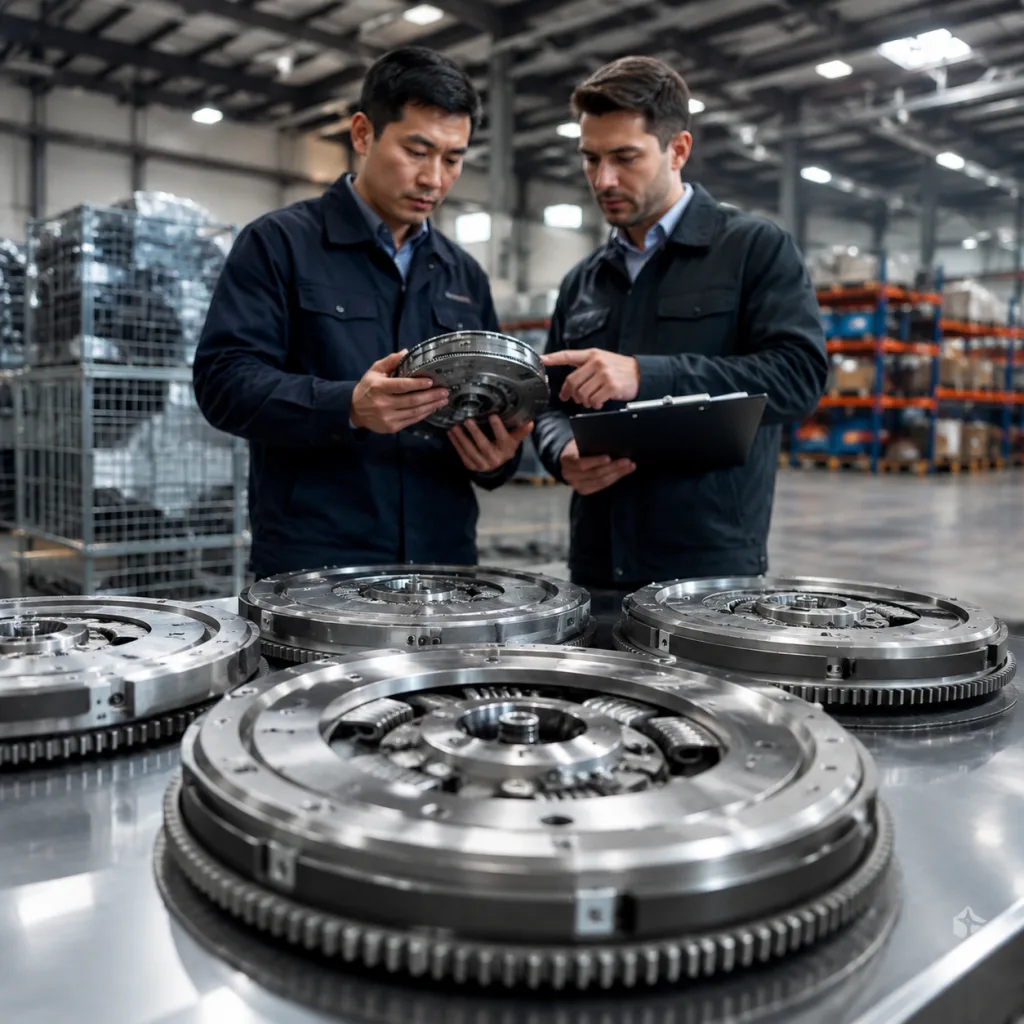
Dual Mass Flywheel Hyundai OEM Supplier Sourcing Guide
A Hyundai-fitment dual mass flywheel is not a commodity disc. It is a tuned damping assembly that has to sit correctly between the crankshaft, clutch cover, starter, release system, gearbox input shaft, and the engine’s torque curve. One wrong assumption—bolt PCD, ring gear tooth form, free angle, grease fill, or overall height—can turn a clean-looking part into a noisy warranty problem.
For distributors, Tier-1 sourcing teams, and repair-chain category managers, the practical question is not “Who can quote a flywheel?” It is “Which supplier can repeat the approved sample, document the batch, pack it for export, and support reorders without changing hidden components?” Driventus manufactures engine and powertrain components in Taizhou, Zhejiang, under IATF 16949:2016 and ISO 9001:2015 certified production controls. We support B2B aftermarket, OEM, Tier-1, and multi-location repair programmes exporting to the EU, UK, US, Canada, Australia, and Brazil.
This guide is written for teams qualifying a dual mass flywheel Hyundai OEM supplier. It covers the sourcing decisions that prevent delays: RFQ data, manufacturing controls, compliance records, MOQ planning, validation tests, and supplier qualification steps. Driventus is an independent aftermarket manufacturer; brand names are referenced for fitment identification only.
Decision Gate: What Must Be Locked Before the RFQ?
Start with the data that can stop a project cold. Model name is not enough. The same Hyundai nameplate can carry different engines, transmissions, clutch layouts, starter positions, and regional specifications. A useful RFQ should identify the vehicle platform, production years, engine code range, gearbox code, fuel type, torque rating, clutch diameter, crankshaft bolt pattern, ring gear geometry, target market, and replacement channel: passenger car, light commercial, fleet repair, repair-chain service pack, or remanufacturing supply.
If an OE part-number cross-reference is used, keep it in fitment form such as OE 23200… or OE 4150…, then support it with a drawing or approved sample wherever possible. Cross-references help shortlist an application; they do not prove geometry, damping behaviour, or regional compatibility. When no drawing exists, send one approved sample plus clear photos of both sides, the crankshaft interface, clutch mounting face, ring gear, pilot bore, dowel positions, and any visible markings.
The RFQ should also set measurable targets. Include nominal clutch diameter in mm, number and PCD of crankshaft bolts, ring gear tooth count, flywheel total height, pilot bearing bore, dowel quantity, target weight range, maximum face runout, required balance class, and torque-angle curve if available. Private-label programmes need a second layer of detail: carton size, label layout, barcode format, pallet height, gross-weight limit, language requirements, and warehouse handling rules. If packaging is discussed after price, the quotation is already incomplete.
For a sourcing programme, Driventus normally requests:
Application list by market, production year, engine code, and gearbox code
Engine displacement, fuel type, torque rating, and transmission type
OE cross-reference, where available, in the buyer’s preferred format
Approved sample, drawing, or benchmark brand reference for comparison
Annual volume, first call-off quantity, and expected reorder cadence
Packaging format: neutral, distributor brand, bulk service pack, or repair-chain pack
Destination port or warehouse location, Incoterms preference, and shipment mode
Required documentation, including inspection reports, material declarations, certificates, and PPAP-style files if needed
Buyers reviewing our catalog can shortlist related engine and powertrain parts, then use custom manufacturing when drawings, samples, or private-label specifications are required. This helps consolidate several clutch and flywheel references under one import plan before tooling, sampling, or artwork approval begins.
Failure Modes: Where Dual Mass Flywheel Consistency Breaks
A dual mass flywheel can pass a visual check and still fail in service. The common weak points are not cosmetic. They sit inside the assembly: primary mass, secondary mass, arc springs, grease, bearings or bushings, thrust elements, friction washers, rivets, cover plates, and ring gear. Variation in one of these areas can show up later as idle rattle, harsh engagement, starter noise, grease leakage, heat fade, poor damping angle, or short service life.
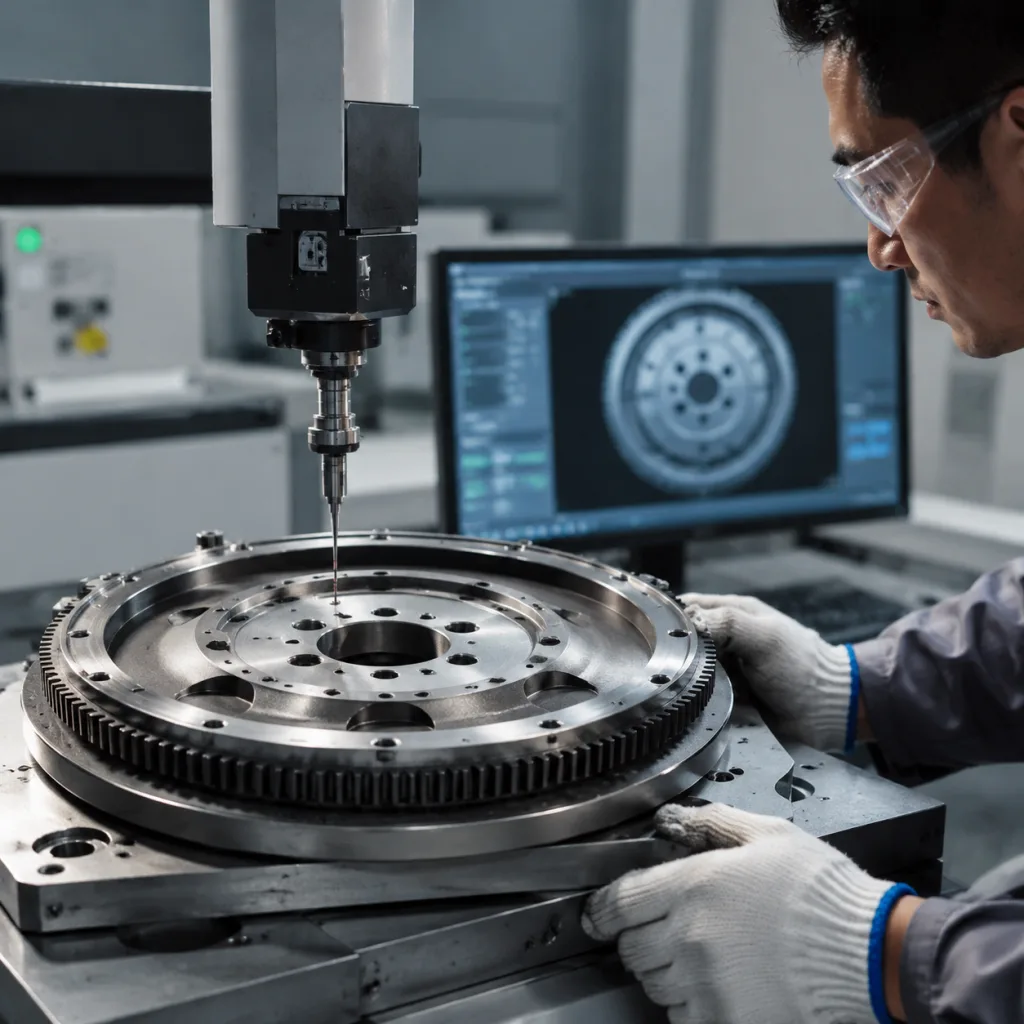
That is why buyers should audit the process route, not just the finished surface. Critical controls include steel traceability, CNC turning accuracy, heat-treatment verification, spring-rate sorting, grease filling weight, rivet forming, dynamic balance, and end-of-line torque-angle testing. The supplier should define critical-to-quality dimensions and maintain batch records linking material lots, machining steps, assembly parameters, and final inspection results.
For typical Hyundai-fitment replacement programmes, buyers often specify face runout around 0.05–0.10 mm, crankshaft bore tolerance within drawing limits such as H7/H8 where applicable, bolt-hole positional checks by fixture, and dynamic balance acceptance in a defined g·mm range or to an ISO 21940 grade agreed with the customer. The exact values should be agreed before sampling, not negotiated after the pilot order.
Failure risk
Procurement check
Evidence to request
Material variation
Heat number traceability, material grade, hardness range, and defect inspection
Material certificate, incoming inspection report
Dimensional mismatch
Face runout, bore diameter, bolt pattern position, friction face finish, and overall height
Spring rate, free length, damping travel, spring grouping, and preload consistency
Spring test record, assembly sheet
Grease leakage or damping fade
Grease mass, contamination control, washer material, and friction surface condition
Assembly parameter record
Loose or distorted assembly
Rivet height, forming pressure, seating condition, and torque where fasteners are used
Assembly inspection sheet
Vibration at speed
Residual unbalance, correction location, and recheck result after correction
Dynamic balancing report
Noise or poor torque response
Free angle, rock angle, torsional stiffness, and torque response
Functional test report
</tr></thead><tbody> </tbody></table>A dependable dual mass flywheel Hyundai OEM supplier should be able to show these records during PPAP-style review or customer audit, even for independent aftermarket supply. The point is simple: each shipment must follow the same controlled route as the approved sample. Ask how nonconforming parts are segregated, whether balance correction is recorded by serial or batch, and whether changes to springs, grease, friction washers, bearings, or ring gear suppliers trigger customer notification before shipment.
Compliance Reality Check: Which Records Actually Matter?
Driventus operates under IATF 16949:2016 and ISO 9001:2015. These standards matter because they frame process control, corrective action, supplier management, internal audit, and change control. They do not replace part-level validation. A certificate tells you the system exists; inspection and functional records show whether the specific flywheel programme is controlled.
Buyers should confirm that the manufacturing site—not only a trading office—is covered by the certificate scope. Check the expiry date, issuing body, product scope, and address against the quotation and packing documents. Our quality system supports customer audits, batch traceability, and inspection record retention. For export programmes, Driventus can provide documentation packages aligned with destination market requirements, including material declarations where applicable.
Avoid certificate shopping. Dual mass flywheels are not normally certified under vehicle emissions or brake standards such as ECE R-83 or SAE J2527; those standards apply to other systems. Requests for unrelated certificates slow approval and create false confidence. Better evidence is technical: torsional damping data, rotational integrity checks, dimensional compatibility, material traceability, change-control records, and packaging durability.
For European importers, REACH (EC) No 1907/2006 related material information may be relevant for restricted-substance obligations. Packaging can also be specified for recycling marks, pallet treatment, moisture protection, barcode labels, carton burst strength, gross-weight limits, and warehouse handling rules.
Recommended audit evidence:
Valid IATF 16949:2016 and ISO 9001:2015 certificates for the manufacturing site
Process flow chart, control plan, and critical-characteristic list
Failure Mode and Effects Analysis, where required by the customer
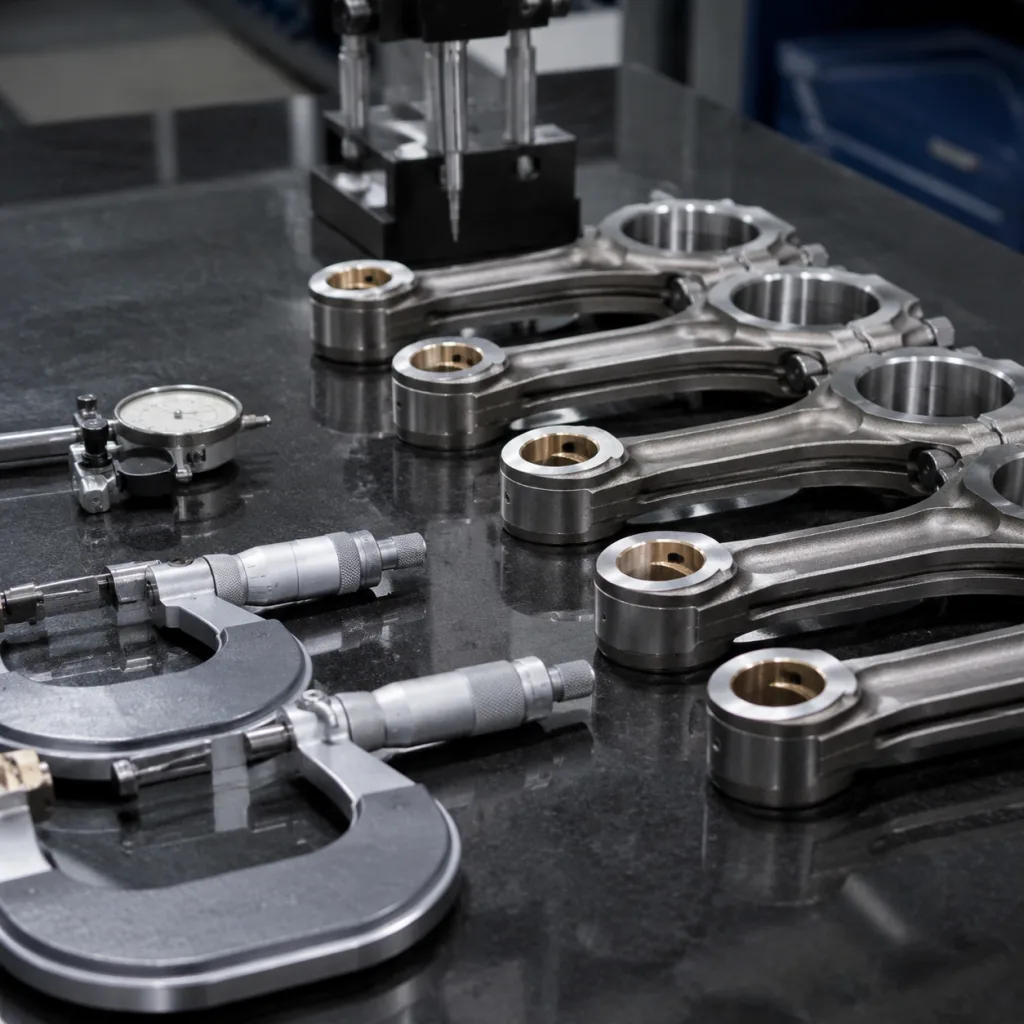
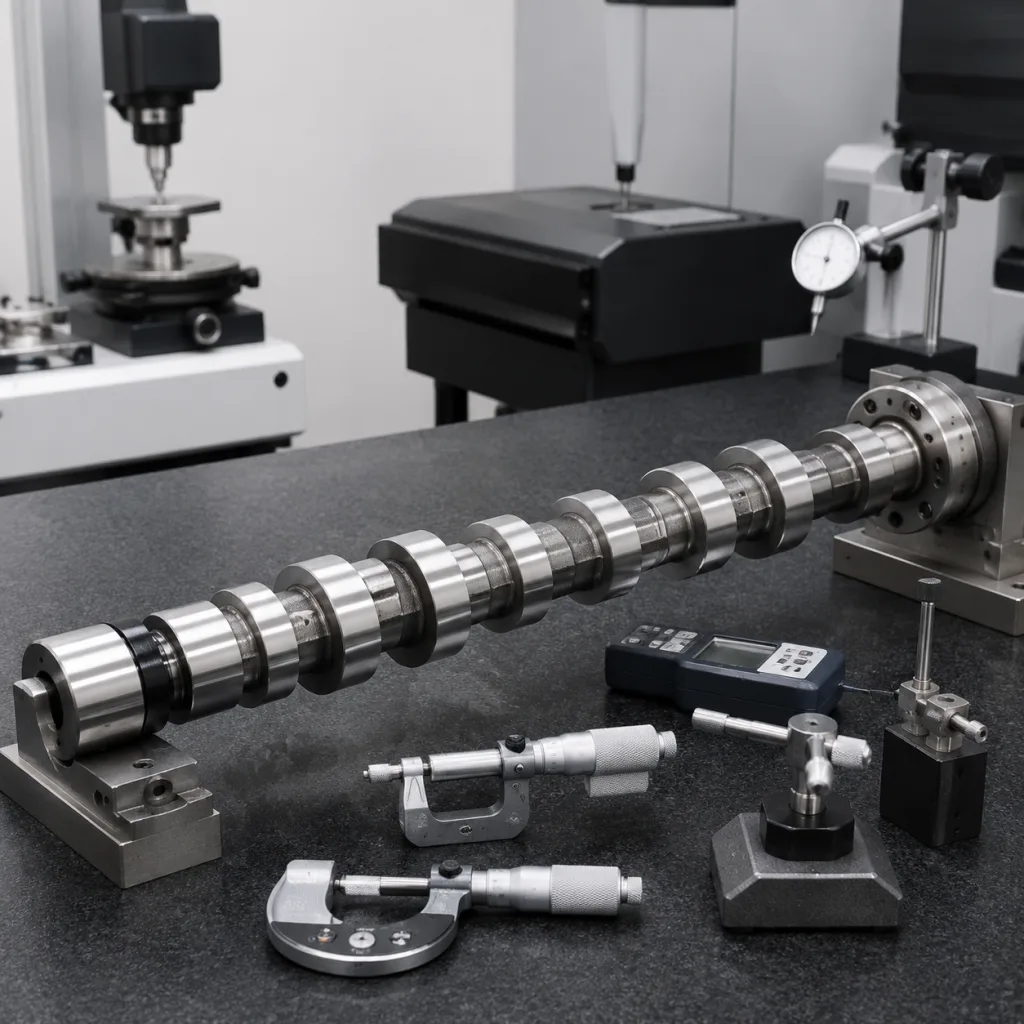
Gauge calibration list, measurement system records, and balance-machine verification method
Sample inspection report against agreed drawings, including dimensional, balance, and torque-angle data
Material certificates for steel, springs, grease, friction washers, bearings, and ring gears where applicable
Change-control procedure for materials, tooling, gauges, production location, and sub-suppliers
Non-conformance and 8D corrective action examples with containment timing and root-cause closure
Packaging specification, label approval, pallet plan, and export carton test evidence where requested
MOQ and Lead Time: A Planning Model, Not a Guess
MOQ is not a fixed slogan. It is the result of component economics, tooling status, packaging format, inspection workload, documentation requirements, and whether the order can be combined with other powertrain SKUs. A stocked Hyundai-fitment reference may support a smaller first order. A new part with private-label packaging and validation requirements will not.
Split the purchasing plan into three stages: prototype sampling, pilot production, and mass production. This keeps cost, timing, and approval responsibilities visible. It also prevents a common sourcing mistake: treating a new drawing-based dual mass flywheel like a stocked commodity part.
Existing references may be planned by finished stock or a scheduled production lot, often from 50–100 pieces per SKU when packaging is standard and parts are available. Private-label runs often move toward 100–300 pieces per SKU because cartons, labels, and pallet marks must be purchased and controlled separately. New drawing-based items may require 300–500 pieces or more after approval because tooling, gauges, spring sets, and fixtures must be amortised across a stable launch volume. Final MOQ is confirmed after Driventus reviews the application, sample or drawing, destination, packaging, and annual forecast.
Price normally moves with steel weight, machining time, ring gear specification, spring-set complexity, bearing or bushing design, balance correction rate, validation scope, packaging, and documentation level. A heavier diesel flywheel with complex damping and tighter balance requirements will not price like a simpler petrol reference. When comparing quotations, ask whether sample testing, private-label cartons, export pallets, inspection reports, and special documents are included. A low unit price can hide the missing work.
Programme type
Typical MOQ driver
Indicative lead-time factor
Existing aftermarket reference
Finished stock or scheduled production; often 50–100 pcs/SKU for standard packaging
Shorter when inspection and packaging are standard; commonly 2–4 weeks if stock or near-term production is available
Private-label order
Carton, label, barcode, and pallet specification; often 100–300 pcs/SKU
Added time for artwork approval and packaging procurement; commonly 4–6 weeks after artwork confirmation
New drawing-based item
Tooling, gauges, springs, fixtures, and sample validation; often 300–500+ pcs/SKU after approval
Longer due to trial machining, functional testing, and approval loops; commonly 8–12 weeks for development before mass production
Multi-SKU distributor shipment
Consolidation and mixed-pallet planning across part numbers
Depends on batch alignment; allow extra time when slow-moving SKUs are combined with fast-moving references
Repair-chain service pack
Barcode, kit contents, label language, store delivery schedule, and replenishment cadence
Depends on forecast stability; blanket orders with monthly call-offs reduce rush cost and stock risk
</tr></thead><tbody> </tbody></table>For annual contracts, Driventus recommends a 3–6 month rolling forecast with firm purchase orders for the first shipment window. This helps reserve machining capacity, balance-test capacity, and critical purchased components such as springs, bearings, ring gears, grease, and cartons. Buyers can request a quote with annual demand, target first shipment date, destination, Incoterms preference, and packaging requirements to receive a practical MOQ, price structure, and lead-time proposal.
Spec Deep-Dive: Tests That Prove More Than Fitment
Fitment is the first check, not the final approval. A dual mass flywheel has to withstand repeated torsional input, high rotational speed, thermal cycling, clutch engagement loads, and export handling. The validation plan should match risk: existing reference, sample-based development, drawing-based development, order volume, and destination market.
For a direct replacement programme, dimensional matching and functional testing may be enough. For a custom programme, add endurance, thermal, rotational, and teardown checks before release. Define the acceptance criteria before samples are made. Otherwise, sample review becomes subjective: one engineer accepts the noise, another rejects the backlash, and the launch stalls.
Important validation items include:
Dimensional inspection of crankshaft interface, clutch mounting face, dowel holes, ring gear, pilot bore, total height, and bolt pattern
Face runout and axial clearance measurement, with acceptance limits agreed before sampling
Static and dynamic balance verification, with residual unbalance recorded before and after correction
Free angle, rock angle, torsional stiffness, and torque-angle curve checks against approved sample data
Grease leakage inspection after thermal cycling, including visual check around rivets, seals, and cover plate joints
High-speed spin testing according to the agreed customer method, normally above maximum service speed with a safety margin
NVH comparison against an approved sample, including idle rattle, take-up noise, and rotational backlash feel
Clutch cover trial assembly to verify dowel fit, bolt engagement, friction face contact, and release clearance
Ring gear engagement check for tooth count, chamfer direction, starter mesh condition, and concentricity
Packaging drop or vibration check for long-distance export shipments, especially for single-piece cartons over 12–18 kg
For approval samples, define both sample quantity and report package. A common route is 3–5 pieces for dimensional and functional review, then 20–50 pieces for pilot installation, warehouse handling, and market feedback before a full container or scheduled batch. New developments may also need endurance cycling, thermal shock, corrosion exposure on external surfaces, and destructive teardown after testing to inspect spring wear, grease distribution, washer condition, and rivet integrity.
Where buyers provide an approved sample, Driventus can benchmark damping characteristics and visible construction details. If only an OE cross-reference is available, we recommend confirming with physical samples before large-volume release, especially for programmes covering multiple markets or engine codes. Driventus does not claim approval or endorsement by any vehicle manufacturer. Fitment references are used to help professional buyers identify application scope and replacement compatibility.
Qualification Scenario: From First Enquiry to Repeat Orders
Picture the common case: a distributor wants to add Hyundai-fitment dual mass flywheels to an existing powertrain range. The first quote request includes several references, mixed target markets, private-label cartons, and a first shipment date. The fastest path is not to quote everything loosely. It is to separate existing references from sample-based and drawing-based projects, then qualify each group with the right evidence.
A practical qualification route is:
1. Share application data, OE cross-reference format, engine and gearbox codes, annual forecast, and destination market. 2. Confirm whether the item is an existing reference, a sample-based development, or a drawing-based project. 3. Review technical feasibility, MOQ, target price range, estimated lead time, Incoterms, and documentation scope. 4. Approve drawings, critical dimensions, torque-angle targets, balance criteria, packaging artwork, and inspection criteria. 5. Receive samples with dimensional, balance, material, and functional test records. 6. Complete pilot order evaluation, installation feedback, warehouse handling review, and corrective actions if required. 7. Lock the control plan, packaging specification, batch traceability method, and shipment inspection checklist. 8. Move to scheduled production with forecast review, lot-level records, and pre-shipment inspection.
During audit, follow the part. Start with incoming steel and move through machining, heat treatment, spring and damping assembly, grease filling, riveting, balancing, functional testing, packing, and warehouse staging. Do not stop at the showroom or finished-goods area. Ask direct questions: how are spring batches matched to assemblies, how is grease mass verified, how often is the balance machine checked, what happens when torque-angle data drifts, how are mixed SKUs separated, and who approves a change in ring gear, bearing, or friction washer supplier.
These questions reveal whether the supplier can maintain consistency after the first approved sample. For distributors already buying pistons, crankshafts, gaskets, water pumps, or turbochargers, dual mass flywheels can be added to a broader powertrain sourcing package. This can improve container utilisation, reduce supplier-management workload, and align documentation across related engine and drivetrain components. Buyers can review our catalog and discuss custom manufacturing for application-specific requirements.
Frequently asked questions
Yes. Driventus supports neutral packaging, distributor brands, and repair-chain packaging subject to MOQ, artwork approval, barcode rules, carton specification, and destination market requirements. Fitment information can be printed according to the buyer’s approved data. Driventus is an independent aftermarket manufacturer; brand names are referenced for fitment identification only.
Typical documents include IATF 16949:2016 and ISO 9001:2015 certificates, process flow, control plan, material records, dimensional inspection reports, balancing reports, torque-angle or functional test records, packaging specification, and change-control records. REACH (EC) No 1907/2006 related material information can be discussed for European import programmes.
No. Driventus does not claim approval or endorsement by any vehicle manufacturer. We supply independent aftermarket and custom-manufactured powertrain components using buyer-provided drawings, approved samples, or fitment data.
If you are evaluating a dual mass flywheel Hyundai fitment programme, send your application list, engine and gearbox codes, OE cross-references, forecast, target first shipment date, destination, Incoterms preference, and packaging needs. Our team will review feasibility and respond with sourcing options at /contact.html