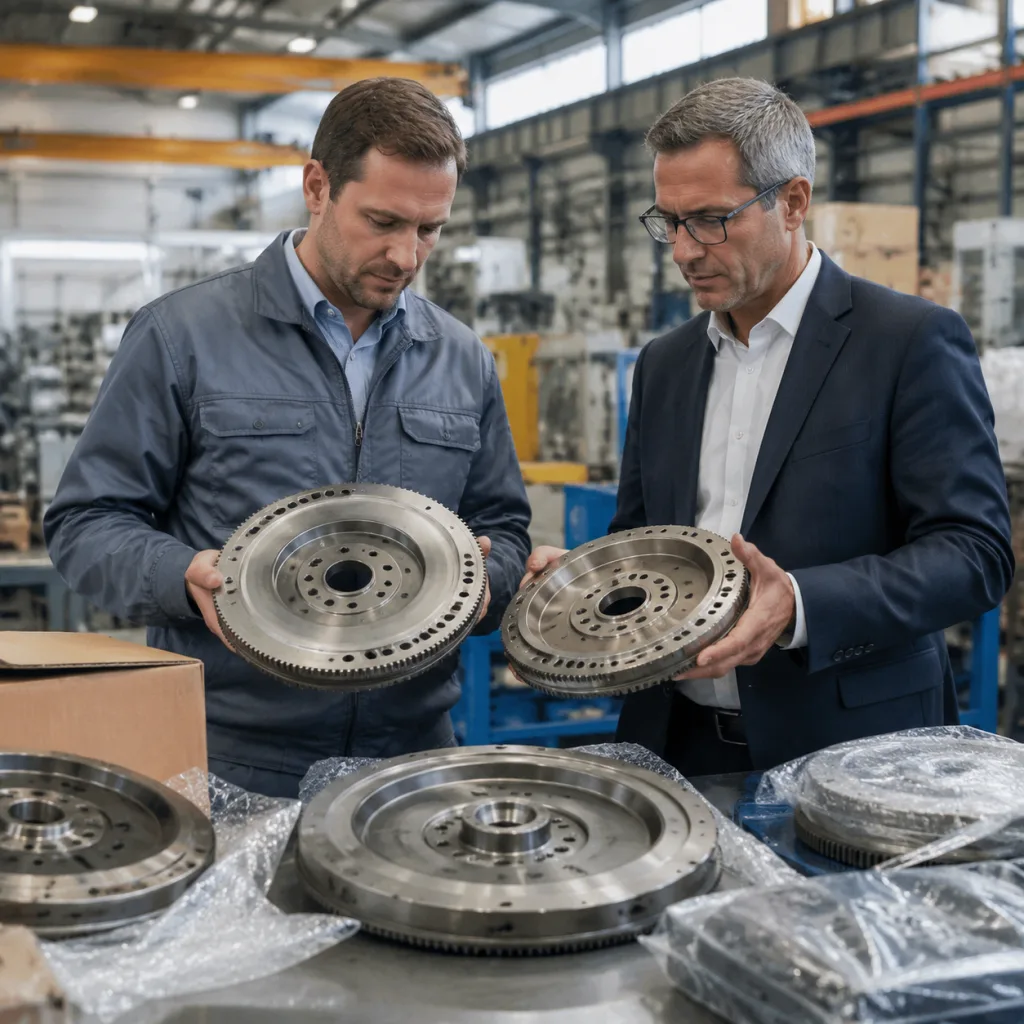
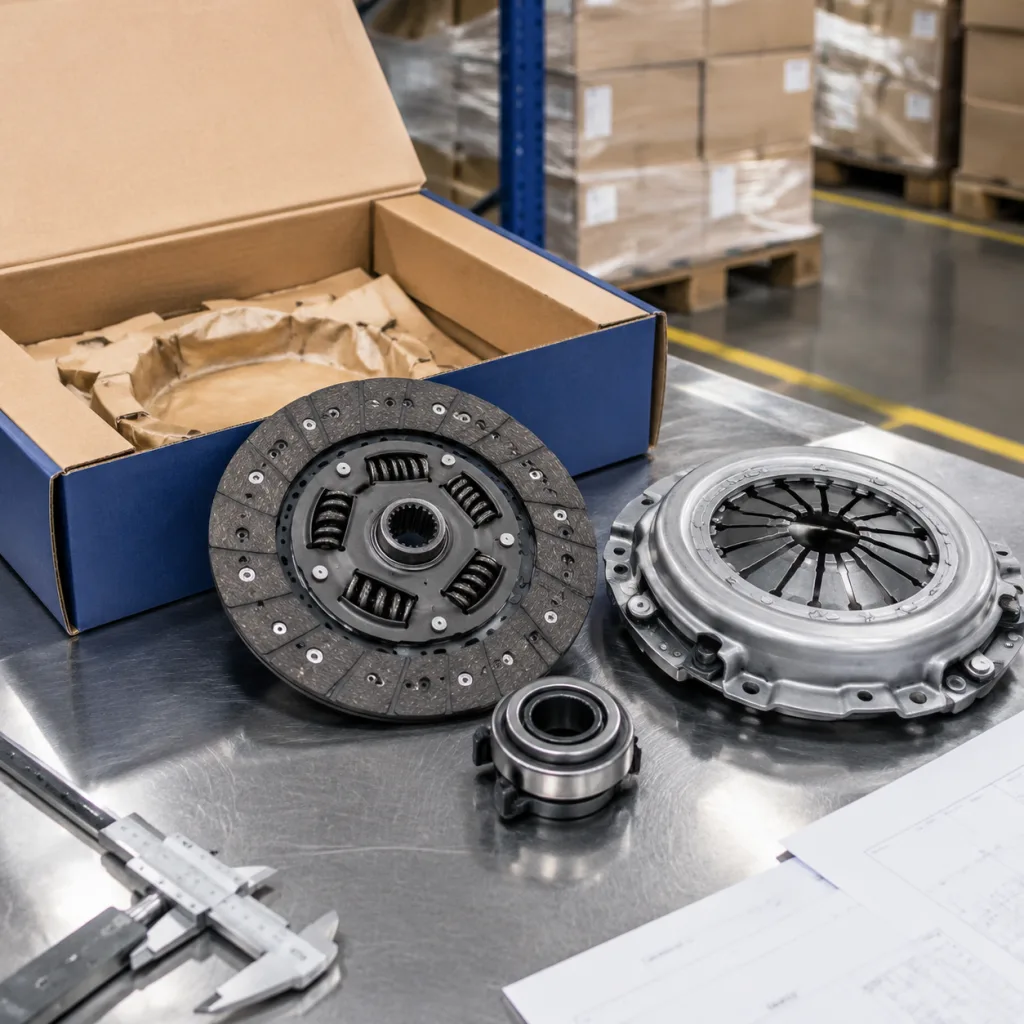
Procurement teams evaluating a `dual mass flywheel Honda supplier` need more than a part-number match. They need stable quality, repeatable dimensions, traceable materials, and a factory that can support audit requests, volume planning, and controlled packaging. For Honda applications, the critical checks are OE-reference fitment, torsional damping performance, runout limits, and whether the supplier can hold specification across production batches. Driventus is an independent aftermarket manufacturer; brand names are referenced for fitment only. We supply B2B buyers in the aftermarket, OEM, and repair-network channels with parts built under `IATF 16949:2016` and `ISO 9001:2015` controls. This article explains what to verify before awarding supply, how to compare factory capability, and where lead-time and MOQ decisions affect total landed cost.
How to qualify a Honda flywheel source
When qualifying a `dual mass flywheel Honda supplier`, start with evidence, not claims. Ask for the OE cross-reference, dimensional drawing, material declaration, and current production control plan before you move to price. For Honda fitments, buyers should confirm crankshaft bolt pattern, starter ring gear specification, offset, overall mass, and clutch interface dimensions.
Minimum supplier checks
OE cross-reference shown in `OE 06A...` format only when applicable to your programme
Material traceability for cast iron, springs, friction surfaces, and fasteners
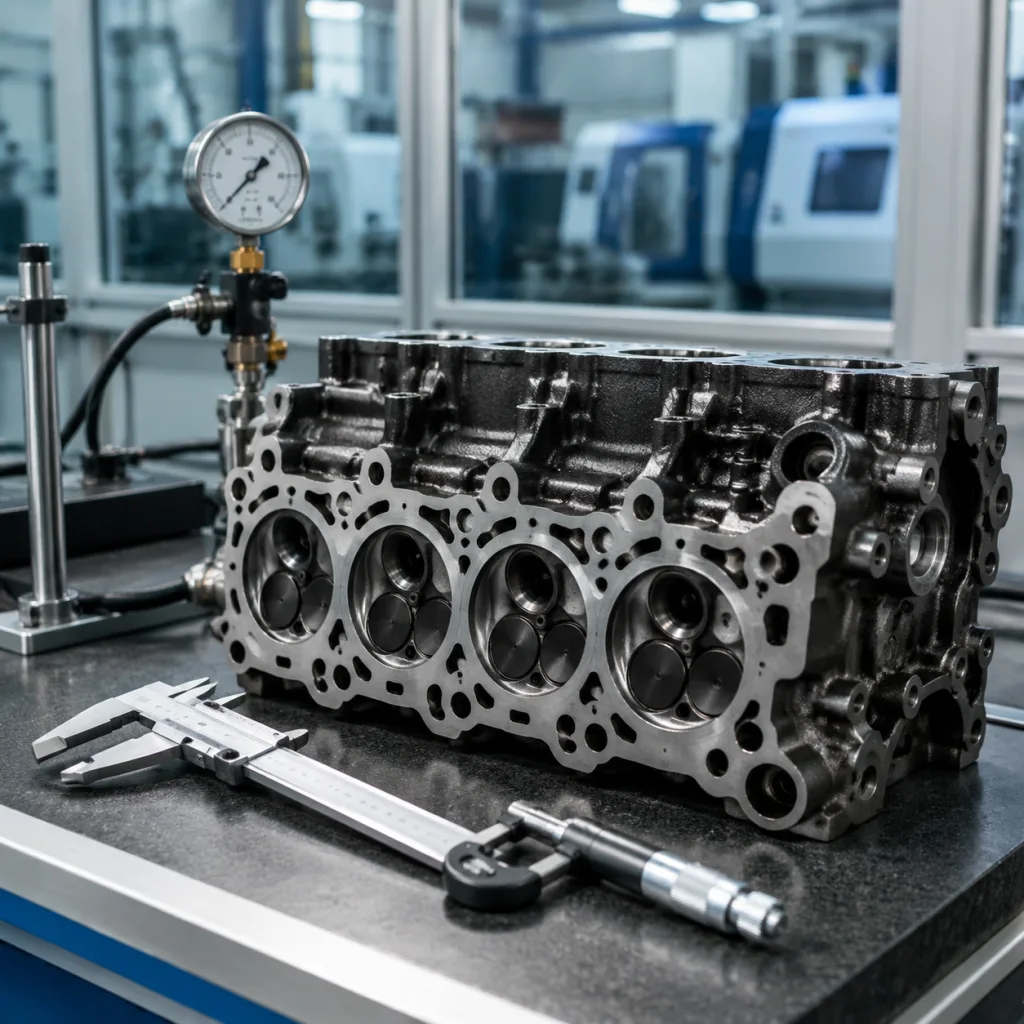
Dimensional inspection report with measured runout and axial play
Production certification to `IATF 16949:2016` and `ISO 9001:2015`
Packaging standard for sea freight, pallet loading, and corrosion protection
Documented lot traceability and incoming inspection release criteria
If your programme includes emissions or material compliance reporting, ask for declarations aligned with `REACH (EC) No 1907/2006` and any market-specific chemical restrictions.
Where small spec gaps create failures
Dual mass flywheels are mechanical assemblies, so minor deviations can become drivability complaints. The common failure modes are usually predictable: excess free play, poor balance, wrong face runout, weak damping, or packaging damage that goes unnoticed until installation. Buyers should compare the supplier’s measured values against the OE target, especially on spring rate, rotational free play, and face runout. If the part is used in a repair network, ask whether the unit was validated with the intended clutch cover and release system.
Specification item
What to confirm
Why it matters
Outer diameter
OE match within drawing tolerance
Affects starter engagement and clutch geometry
Bolt pattern
Hole count, PCD, thread class
Prevents installation issues
Static balance
Production balance limit stated
Reduces vibration and NVH risk
Axial free play
Measured at room temperature
Indicates damping pack condition
Surface hardness
Friction face and wear zones
Supports service life consistency
Corrosion protection
Coating or oiling method
Protects transit and storage
</tr></thead><tbody> </tbody></table>For engineering sign-off, many buyers also request confirmation against relevant test methods such as `SAE J2527` for corrosion exposure or internal torsional validation protocols. Where the end market requires it, document compatibility with applicable vehicle inspection rules and local emissions-service requirements.
Compare supplier offers without chasing the lowest price
Use a structured comparison rather than ranking on price alone. The cheapest unit cost can become the highest landed cost if balancing data, packaging, or lead-time reliability are weak. A `dual mass flywheel Honda supplier` should be able to show where cost comes from and which controls are included.
Comparison checklist
Fitment evidence: OE reference, application list, and drawing revision
Delivery evidence: realistic lead time, buffer stock, and shipping lanes
Commercial terms: MOQ, sample policy, and payment conditions
Support evidence: engineering contact, change-control process, and audit access
For replacement programmes, request sample units and validate them on the target clutch and transmission set before volume release. For distributor programmes, ask for carton counts, pallet-height limits, and barcode requirements so inbound handling stays efficient. If you are building a sourcing shortlist for Honda applications, the decision should come down to documented specification control, responsive communication, and repeatable delivery performance.
Plan lead time, MOQ, and landed cost
For B2B sourcing, the right commercial structure depends on demand profile. Distributors usually need stable stock and smaller release quantities. OEM and Tier-1 buyers often trade larger MOQ for tighter control over PPAP-style documentation, packaging, and delivery windows.
A practical supplier should state:
Standard MOQ by part number or application family
Sample lead time and pilot-batch lead time
Mass-production lead time after tool approval or model release
Incoterms offered, especially `FOB`, `CIF`, and delivered terms for high-volume lanes
Spare-parts replenishment strategy for slow-moving Honda references
Lead time is often driven by machining capacity, spring-pack assembly, dynamic balancing, and final inspection capacity. If the factory can only quote a low price without a realistic schedule, that is a risk signal. A good supplier will separate part cost, packaging cost, and test cost so you can compare true landed cost across bids.
What to expect from the factory audit packet
A sourcing decision should include a document review and, where possible, a factory audit. For a dual mass flywheel programme, audit the machining line, assembly controls, measuring equipment, and traceability flow from incoming material to packed carton. Confirm that the supplier can retain records for lot genealogy and customer complaints.
Ask for these documents
Certificate copies for `IATF 16949:2016` and `ISO 9001:2015`
Control plan and process flow chart
First article or dimensional inspection report
Material certificate for key metallic components
Packaging specification and label format
Warranty and claim-handling procedure
If the part family also includes related engine components, review our catalog and quality system pages for the documents we normally provide to B2B buyers. Driventus is an independent aftermarket manufacturer; brand names are referenced for fitment only.
Why integrated manufacturing reduces risk
A vertically integrated plant reduces handoff risk. For flywheels, that matters because machining, heat-treatment coordination, balancing, and final assembly must stay aligned. When those steps are split across too many vendors, tolerance drift becomes harder to control.
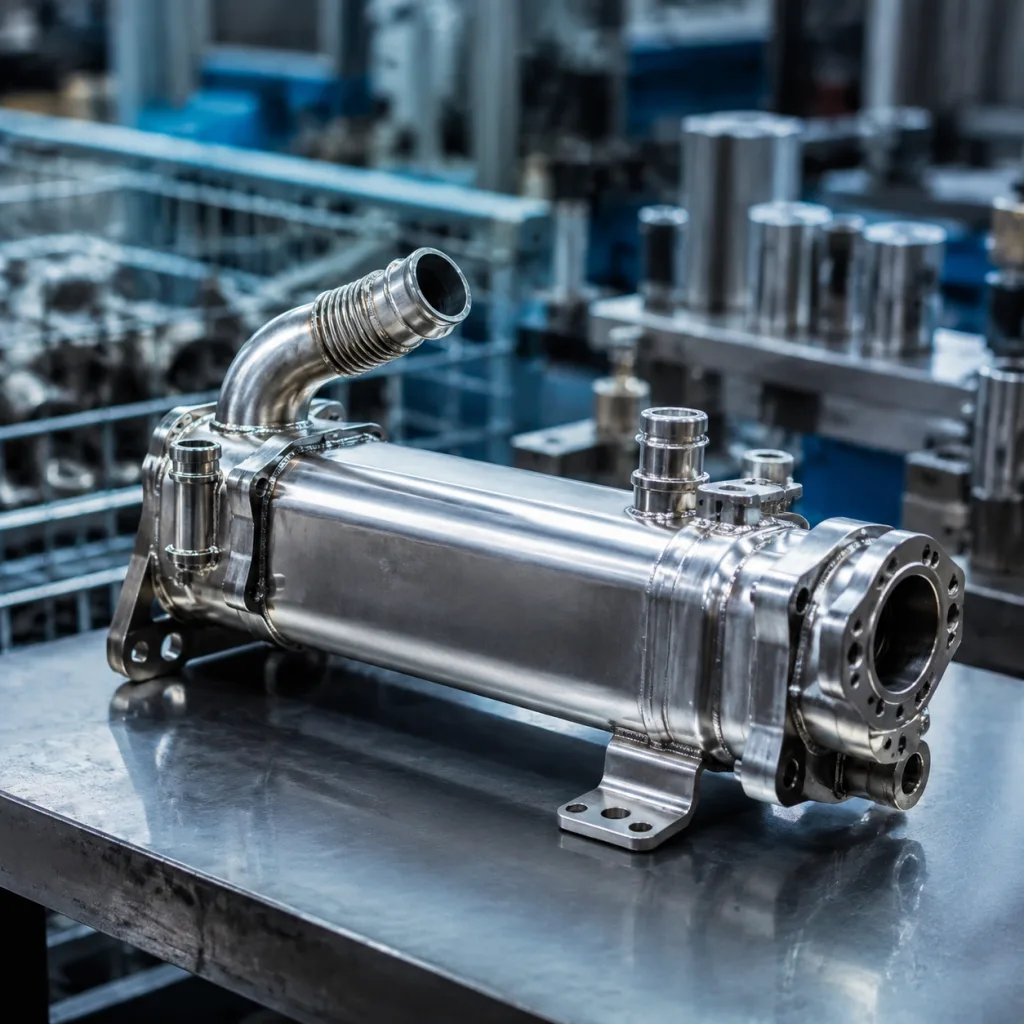
Driventus manufactures engine and powertrain parts in Taizhou, Zhejiang, with export supply to more than 60 countries. For buyers, that means one sourcing contact for a broader programme, including pistons, crankshafts, gaskets, water pumps, turbochargers, and related powertrain assemblies. If your category plan includes consolidation, our custom manufacturing service can support application-specific drawings, private-label packaging, and controlled release schedules.
For teams building a multi-SKU programme, it is also useful to review our engine components category when pairing flywheels with adjacent rotating or sealing parts.
Quick questions buyers ask before award
If you are building a sourcing shortlist for Honda applications, use a short Q-and-A with each bidder and compare the answers side by side. The goal is to separate real capability from generic catalog language.
Can you confirm OE fitment by drawing and application data?
Can you show measured runout, free play, and balance control?
Can you hold packing, labeling, and pallet standards for export?
Can you support sample approval before volume release?
Can you keep the same spec across repeat batches?
For replacement programmes, this step often exposes weak suppliers fast. The best `dual mass flywheel Honda supplier` will answer directly, share documents quickly, and explain exceptions before they become problems.
Frequently asked questions
Yes, where the application is confirmed by drawing and fitment data. We reference brand names for fitment only and do not claim vehicle-maker approval or endorsement.
Typical documents include certification copies, dimensional reports, control plans, and packaging details. We can also discuss custom manufacturing requirements for private-label or programme-specific supply.
MOQ and lead time depend on the part number, production schedule, and packing requirements. For quoted programmes, we provide a commercial proposal with release timing and shipment terms.
If you are qualifying a new supply line or replacing an existing source, send your application details and target volumes. Contact Driventus for a quote at /contact.html.