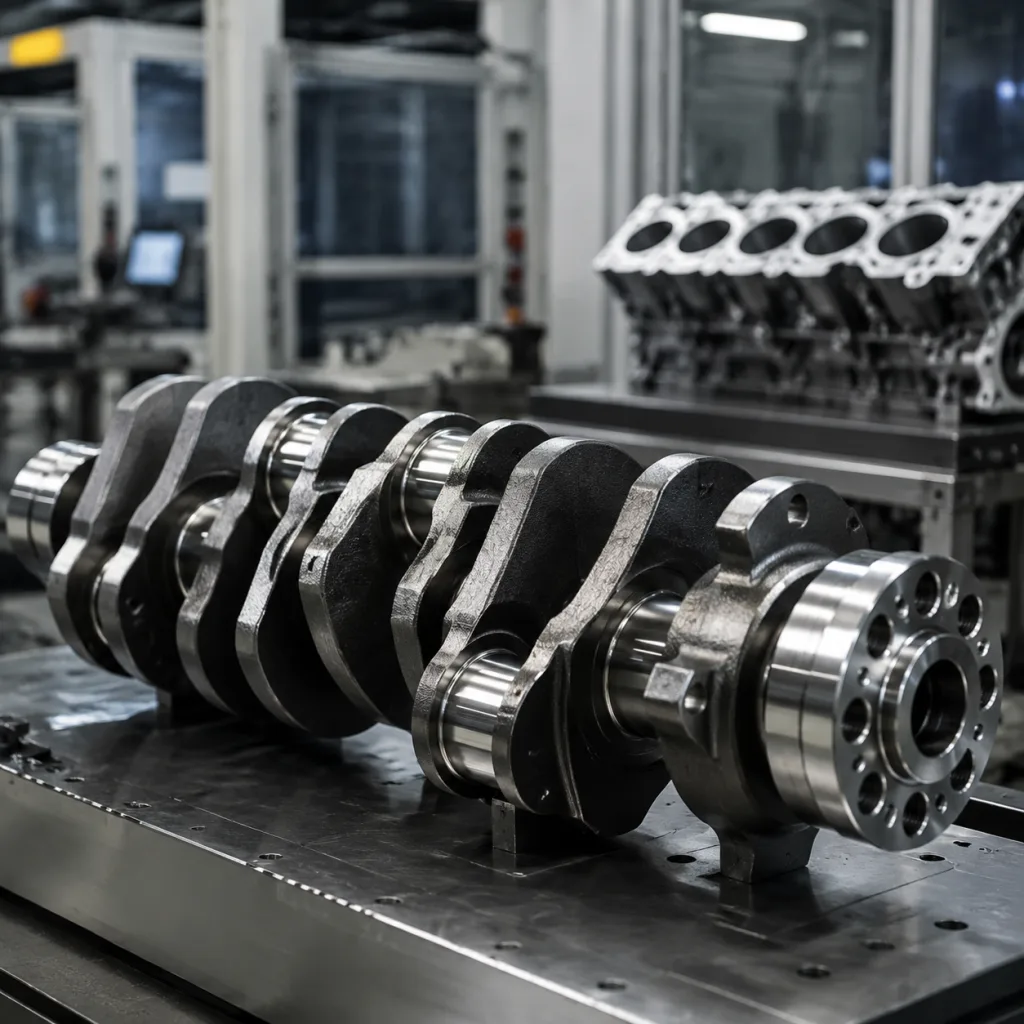
Dual Mass Flywheel Cadillac Manufacturer in China
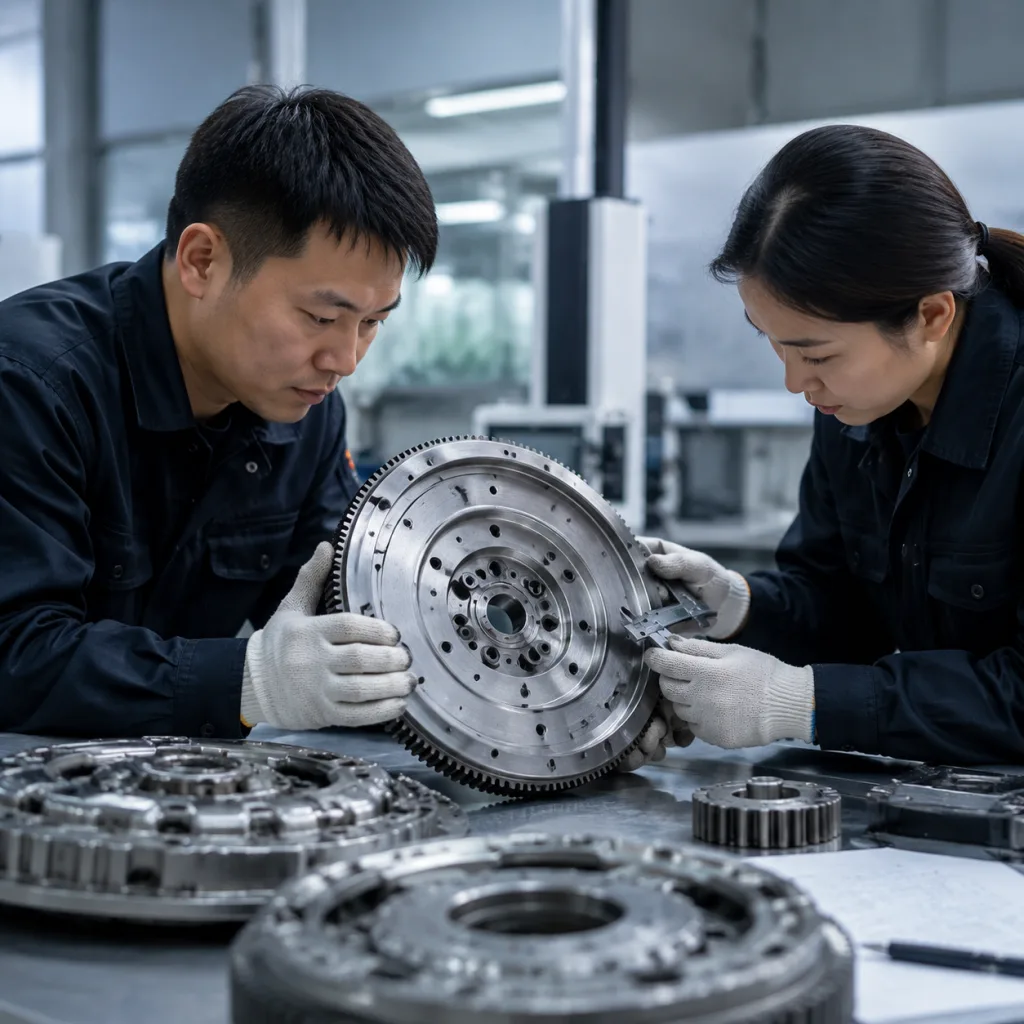
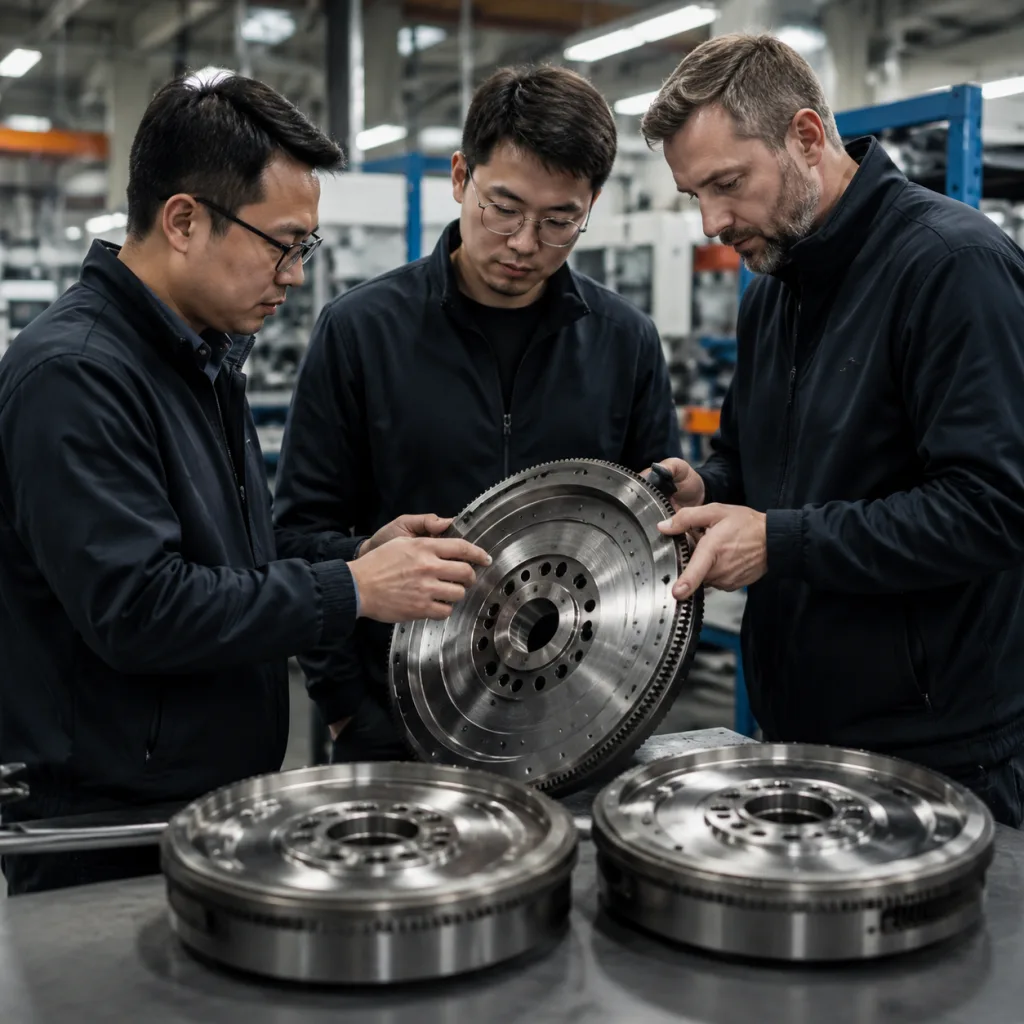
A dual mass flywheel for Cadillac applications is a precision driveline component, not a commodity casting. Buyers need torsional damping performance, stable friction surfaces, correct ring gear geometry, and batch traceability before placing volume orders. Driventus Auto Parts manufactures engine and powertrain components in Taizhou, Zhejiang for aftermarket distributors, wholesalers, OEM/Tier-1 projects, and repair chain programs. For import managers searching for a dual mass flywheel Cadillac manufacturer China, the key sourcing checks are measurable: drawing control, balancing capability, steel and friction material verification, packaging, MOQ, and response time for fitment data. This article explains how we support sourcing teams with dual mass flywheel development, validation, audit preparation, and export supply. Driventus is an independent aftermarket manufacturer; brand names are referenced for fitment only.
How to Qualify a Cadillac Fitment Request
Cadillac applications are not interchangeable just because they share a platform name. The first sourcing decision is whether the request is a direct replacement, a private-label range item, or a sample-led development job.
Start with the fitment boundary. A buyer-ready RFQ should state the vehicle model, year range, engine code, transmission code, OE cross-reference if available, clutch kit compatibility, ring-gear tooth count, and the target annual volume. If any of those items are missing, the quote may still be possible, but the risk of rework goes up.
In practice, we ask for the engine and transmission combination first. That is where most fitment errors start. Flywheel depth, starter engagement, ring-gear offset, and bolt pattern can all change within the same nameplate family.
A physical sample helps more than a long email thread. If a sample is available, we prefer one clean unit plus photos of the front face, rear face, bolt circle, and OE marking area. For dimensional quoting, the sample should be undamaged and matched to a verified reference drawing.
Driventus reviews the application data against drawings, sample measurements, and interchange information before quoting. We do not claim approval or endorsement by Cadillac, General Motors, or any vehicle manufacturer. Cross-references are used only to confirm dimensional and application compatibility.
For buyers expanding a clutch or driveline line, related items can be reviewed in our catalog. Custom drawings and packaging formats can be discussed through custom manufacturing.
What Actually Makes the Part Fail
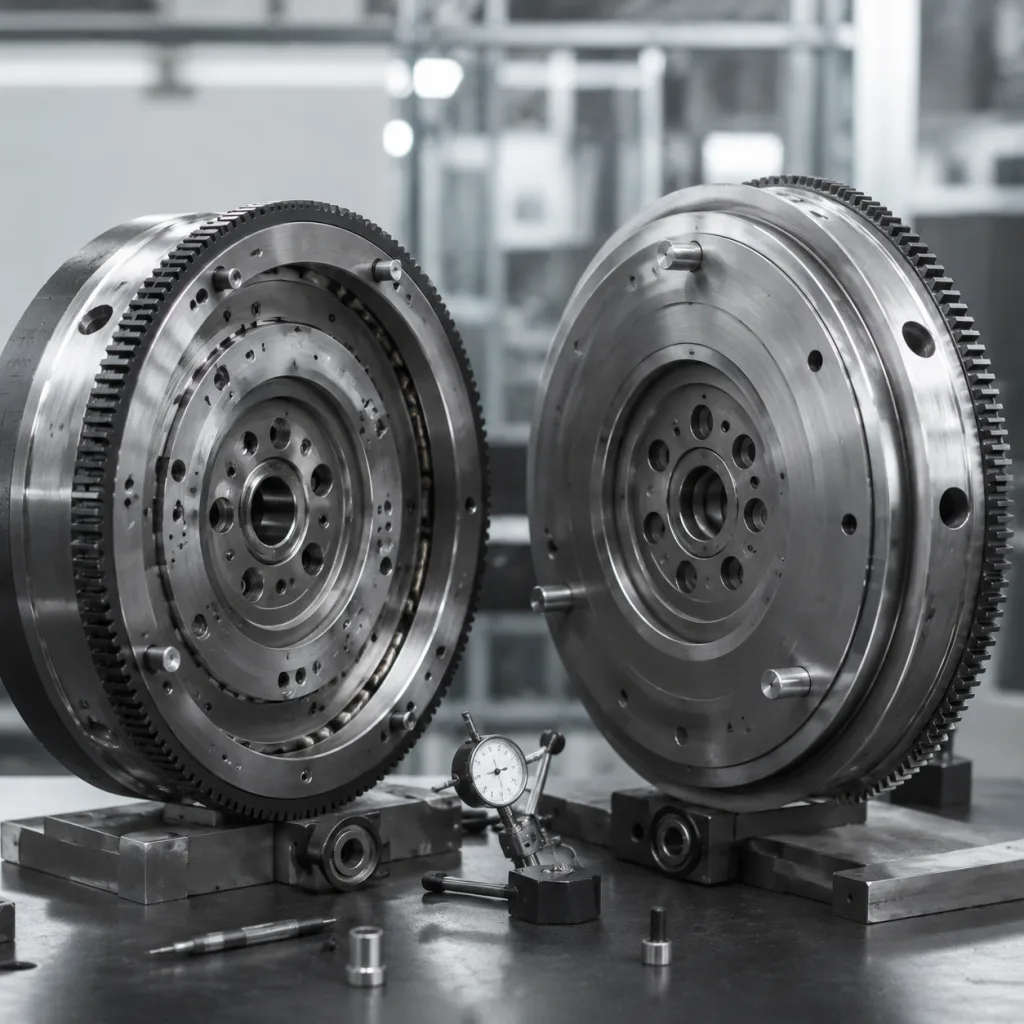
A dual mass flywheel is a damping system, not just a heavy disc. It combines primary and secondary masses with arc springs, bearing or bushing elements, grease, friction control features, and a starter ring gear. If one detail is off, the result can be noise, vibration, clutch judder, starter engagement issues, or early clutch wear.
That is why the spec has to be read as a failure-prevention document. The most important checks usually include steel verification, machining datum control, heat-treatment review where applicable, dynamic balancing, axial and radial runout, angular free-play verification, and grease fill control.
For procurement teams, the useful question is not “Can you make it?” but “What do you control, and how do you prove it?” Typical checkpoints include:
- Friction face runout, controlled to the drawing and process capability
- Ring-gear radial runout, checked with fixture gauges and batch records
- Static and dynamic balance, recorded with the correction method
- Angular free play, verified with torsional travel fixtures
- Axial end play, checked to preserve damping without excess movement
- Surface roughness and flatness, confirmed before corrosion protection
- Tooth geometry and ring-gear alignment, checked for starter consistency
| Control item | Typical verification method | Why it matters |
|---|---|---|
| Crankshaft mounting face | CMM, height gauge, or fixture check | Prevents stack-height mismatch |
| Ring gear position | Gear runout and tooth profile inspection | Supports starter engagement consistency |
| Friction face | Surface roughness and flatness check | Reduces clutch bedding variation |
| Dynamic balance | Balancing machine with batch records | Limits driveline vibration risk |
| Torsional travel | Angular displacement test | Confirms damping window |
| Bolt holes and pilot bore | Go/no-go gauges and dimensional report | Reduces installation complaints |