cylinder sleeve · 2026-06-06

Cylinder Sleeve Skoda Supplier: Sourcing Notes for Buyers

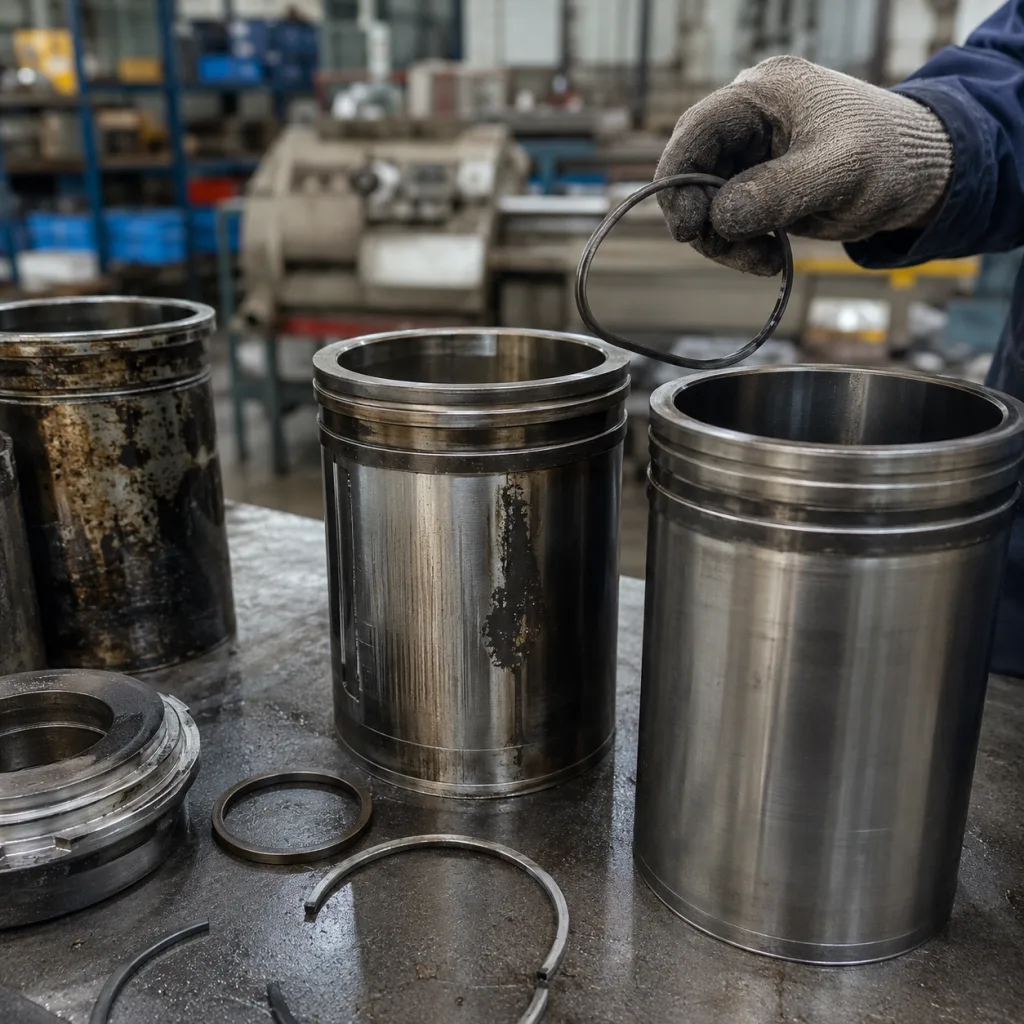
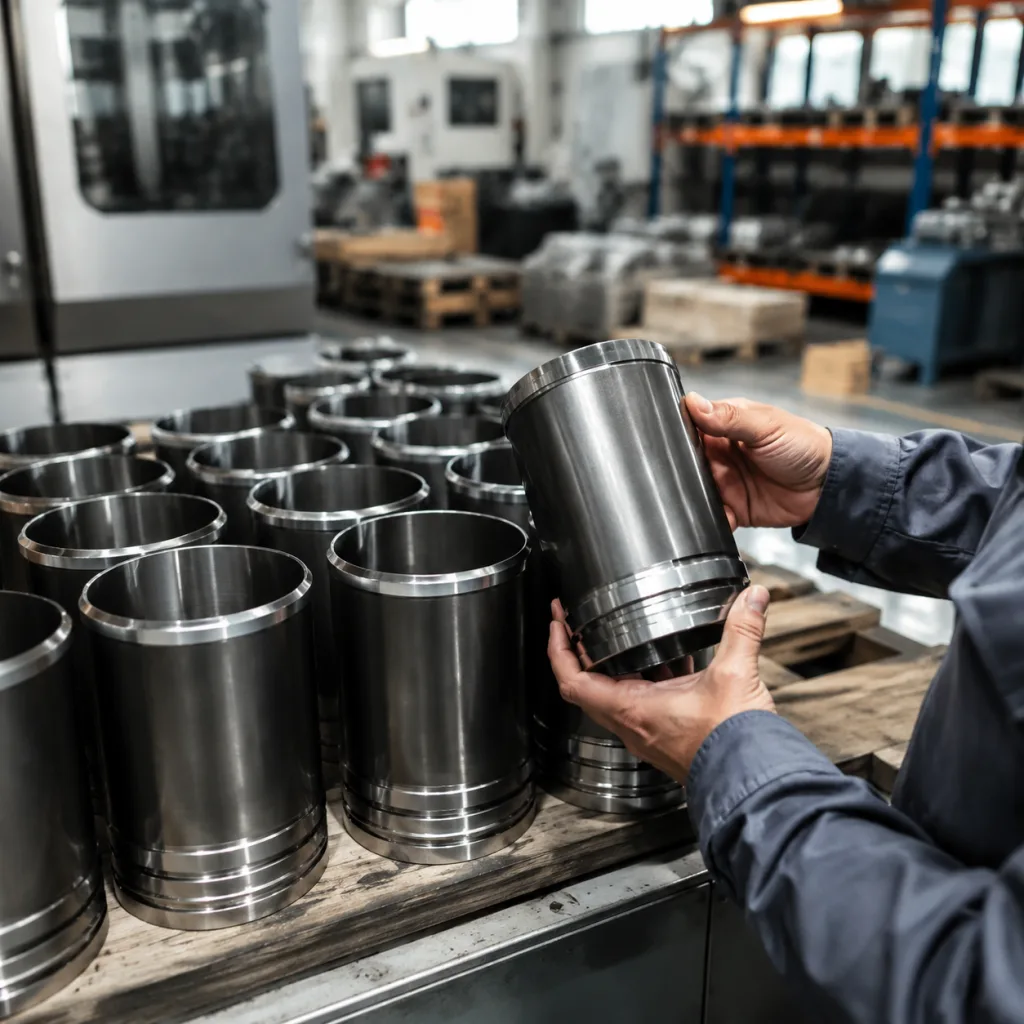
Buyers looking for a cylinder sleeve Skoda supplier usually need more than a simple part-number match. In practice, they need repeatable bore geometry, verified metallurgy, traceable inspection data, and a supplier that can support samples and pilot lots before volume release. Driventus supplies cylinder sleeves for engine rebuild and powertrain programmes with export-ready documentation, controlled manufacturing, and clear communication on lead time, MOQ, and packaging. Driventus is an independent aftermarket manufacturer; brand names are referenced for fitment only. For procurement teams, the real questions are specific and measurable: will the sleeve hold bore geometry after finish machining and installation, can the batch be repeated reliably from one order to the next, and can the supplier provide records suitable for IATF 16949:2016 and ISO 9001:2015 workflows, plus REACH (EC) No 1907/2006 declaration support where applicable? The sections below focus on the specification points that matter before an RFQ is issued, so buyers can compare suppliers on technical evidence rather than generic sales language.

What to define before you send an RFQ

A cylinder sleeve should not be sourced from a drawing title alone. For Skoda-related engine programmes, buyers should define the exact sleeve type, the parent block condition, the machining route, and the acceptance criteria before requesting quotations. Without that detail, one supplier may price a rough-cast or rough-machined blank while another quotes a finish-bored and honed sleeve, making the prices impossible to compare fairly.

Start by fixing the fitment data and the intended production use. The RFQ should state whether the part is for rebuild, remanufacture, or first-install application, because bore allowance, OD tolerance, and finish requirements change with the use case. It should also clarify whether the sleeve will be shrink-fit or press-fit into an existing block, used as a repair insert after block machining, or supplied into a broader engine programme where final boring and honing will be completed by the buyer.

Use this checklist in the RFQ:

  • Sleeve type: dry, wet, or flanged dry sleeve
  • Material: e.g. pearlitic alloy cast iron, centrifugal cast iron, or other agreed metallurgy
  • Machining state: rough bore, semi-finished, finish bored, or fully honed
  • Dimensional controls: OD, ID, wall thickness, flange dimensions, concentricity, roundness, cylindricity, and straightness
  • Surface requirements: Ra/Rz after honing, plateau finish target, and cross-hatch angle if specified
  • Installation basis: target interference fit, block bore condition, and assembly method
  • Quantity structure: sample lot, pilot batch, production batch, and annual forecast
  • Packaging: VCI protection, individual separators, rust preventive oil, and export carton marking
  • Application context: rebuild, remanufacture, aftermarket replacement, or programme production
  • Approval basis: sample approval, first article inspection, PPAP-style submission if requested, or drawing-only release

It also helps to set the non-negotiables early. If the block has already been machined, the buyer should specify the required interference range, often expressed in hundredths of a millimetre, along with any limits on wall thickness, counterbore depth, or finished deck position. If the sleeve is for the repair market, clarify whether the engine family includes multiple bore variants or oversizes such as +0.25 mm, +0.50 mm, or +1.00 mm. When cross-referenced catalogue coverage is needed, start with our catalog and the broader engine components range so the sourcing team can decide whether the part should come from standard stock or be handled as a controlled custom item.

Dimensions and materials buyers should compare

The biggest sourcing risk is rarely the nominal size itself. It is the consistency of the sleeve after casting, stress relief or heat treatment, finish machining, honing, and handling. A cylinder sleeve can match a drawing nominal and still create service problems if bore geometry shifts during processing, if metallurgy varies from batch to batch, or if the interference fit becomes unstable after installation. For that reason, buyers should compare suppliers on measurable output, not just catalogue references or verbal fitment claims.

A capable supplier should be able to explain how material choice affects machining allowance, thermal stability, and the final inspection result. That includes how the sleeve behaves after rough machining, whether the OD stays stable after heat exposure, what stock allowance remains for finish boring and honing, and how tool wear is monitored. In serial production, bore drift of only a few microns can influence roundness, surface finish, and piston-to-bore clearance long before any issue becomes visible.

Typical buyer checkpoints include:

</tr></thead><tbody> </tbody></table>For many automotive sleeves, buyers commonly request finish-bore tolerance in the low hundredths of a millimetre, roundness and straightness limits in the micron range, and honed surface roughness roughly around Ra 0.2-0.8 µm depending on ring pack and finishing route. Exact values must follow the drawing and application, but a competent cylinder sleeve Skoda supplier should be comfortable discussing these controls in technical terms rather than vague generalities.

If the buyer needs non-standard geometry, custom manufacturing is usually the right route. In most cases, that is faster and more reliable than forcing a near-match from stock, especially when a small dimensional compromise could affect compression height, piston clearance, oil control, or installation load. During supplier evaluation, ask for both nominal and tolerance data, then compare those numbers with the actual inspection method being used. A supplier that checks only the finished bore, but not the OD, wall section, or flange features, or cannot show how variation is controlled from batch to batch, is not a safe option for a programme that depends on repeatable fitment.

Quality evidence that procurement teams should ask for

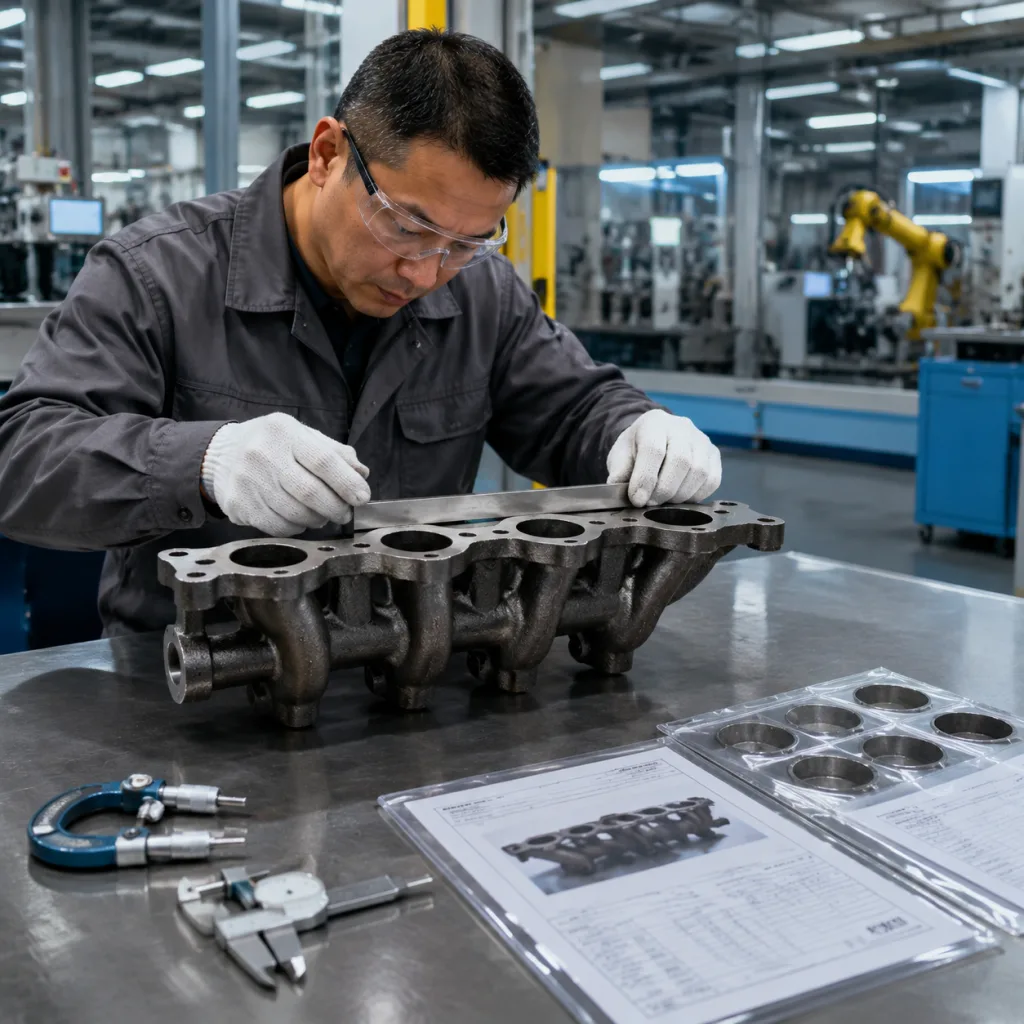
A supplier claim on its own is not enough. Procurement teams should ask for objective evidence tied to the batch, the drawing revision, and the inspection plan. For cylinder sleeves, the most useful records usually include material certificates, incoming chemistry checks, dimensional inspection reports, hardness results, microstructure verification where specified, and final packing confirmation. If a supplier cannot produce those records quickly, it often points to weak process control or poor document retention.

Driventus operates under a documented quality system aligned with IATF 16949:2016 and ISO 9001:2015. For export programmes, that matters because it supports traceability, nonconformance handling, corrective action, calibration control, and document retention in a repeatable way. It also gives internal quality teams a clearer basis for building an approval file around measurable records rather than assumptions. Where material declaration is relevant, REACH (EC) No 1907/2006 should be confirmed for the supplied configuration, especially when the sleeve enters a regulated downstream supply chain.

For validation, buyers often request:

  • First article inspection against the agreed drawing and revision level
  • Batch traceability to melt, cast lot, or production lot
  • Material certificate with chemistry range and base material identification
  • Hardness results, typically Brinell for cast iron sleeves unless otherwise specified
  • Metallographic or microstructure checks when wear behaviour is critical
  • Bore, OD, length, flange, and wall-thickness measurement records
  • Gauge identification, calibration status, and inspection method
  • Packaging and label traceability by carton or lot
  • Sample approval photographs or controlled measurement images
  • Nonconformance and corrective action procedure if any result falls outside tolerance

The inspection package should reflect the risk level of the programme. For a one-off rebuild order, a basic dimensional report may be sufficient. For production release, it is better to request a fuller package that covers the measurement method, sample size, control frequency, gauge resolution, and the revision status of the part drawing. Buyers should also confirm whether the supplier measures after final honing and deburring, and whether final checks are repeated before packing. That point matters because edge damage, corrosion, or handling marks can undo an otherwise conforming machining result. If your internal approval file requires more than a datasheet, ask for samples and a controlled pilot lot before volume release so fit, finish, and documentation can be verified together.

MOQ, lead time, and export packing

Choosing a supplier is also a logistics decision. A technically correct sleeve can still turn into a poor purchase if the MOQ is too high, the quoted lead time is unrealistic, or the packaging does not protect machined surfaces during international shipment. Buyers should separate engineering lead time from production lead time and confirm whether the MOQ applies per size, per drawing, per order line, or per shipment. That distinction becomes important when a programme includes multiple bore variants or when the buying team wants to stage orders instead of taking full-year volume at once.

A practical commercial discussion should cover:

  • Sample lead time for dimensional approval and any tooling or pattern requirement
  • Pilot batch lead time after drawing sign-off
  • Production MOQ by reference number or by size variant
  • Reorder lead time for repeat lots based on approved revision
  • Standard lot size, safety stock policy, and capacity per month if relevant
  • Pallet configuration, carton count, and gross/net weight per package
  • Anti-corrosion treatment for sea freight, including VCI paper, VCI bag, or protective oil
  • Bore and flange protection, sleeve separators, and anti-chip packing method
  • Label format for barcode scanning, part number, quantity, lot number, and country of origin
  • Whether mixed part numbers can ship in one consolidated export batch
  • Destination-specific documents such as packing list, commercial invoice, certificate of origin, and material declaration support where agreed

Packaging should be treated as part of the product, not an afterthought. Cylinder sleeves can rust, chip, bruise, or lose edge condition if they are packed loosely or without separators. Buyers should ask how the supplier protects the bore, OD, and machined faces during transit, and whether the packing method changes for air freight versus sea freight. Good practice is to keep sleeves separated so metal-to-metal contact does not damage honed or finish-machined surfaces, while carton and pallet design should limit movement under vibration.

If a project is working to an urgent schedule, ask for staged delivery instead of a single bulk dispatch. That lowers receiving risk and gives the buyer an early checkpoint on fit, finish, and packaging before the balance of the order ships. For Europe, the UK, North America, Australia, and Brazil, shipping terms should be agreed early so carton, pallet, fumigation, or label issues do not appear only after the first inspection lot arrives.

How Driventus supports Skoda-related programmes

For buyers who need a cylinder sleeve Skoda supplier with strong export discipline, Driventus can support drawing review, sample submission, repeat production, and packaging aligned with warehouse intake rules. That can be valuable for aftermarket distributors, OEM and Tier-1 supply chains, engine rebuilders, and multi-location repair groups that need the same part quality across repeated orders. The aim is not simply to manufacture a sleeve. It is to help the buyer release a part into a controlled sourcing process with clear revision control, repeatable acceptance criteria, and workable commercial terms.

In a typical programme, Driventus can review the incoming drawing or sample, confirm the required material and finishing route, and align the inspection plan with the buyer's approval workflow. If the target is a rebuild market, the focus is usually on fitment, installation consistency, and a serviceable bore finish. If the target is production or remanufacturing, the emphasis moves toward batch repeatability, traceability, process capability, and packing discipline across multiple shipments. That distinction matters because a sleeve that performs well in a one-time repair kit may still need tighter documentation and process control before it is safe to reorder at scale.

The sourcing workflow is straightforward:

1. Send the drawing, sample, or target fitment data. 2. Confirm material, dimensions, machining state, and inspection points. 3. Review tolerance feasibility, including bore allowance and interference target. 4. Approve the sample lot or pilot batch with dimensional records. 5. Release the production schedule and packing specification. 6. Lock the reorder process against the approved revision and traceability rules. 7. Reconfirm lead time, lot identification, and shipment marking before repeat supply if the application is sensitive.

This process is designed to reduce avoidable rework. Buyers who begin with the correct drawing revision, fit specification, and sample path can usually reach stable production faster than those who leave key details until after the first shipment. If you need a narrower part scope, use our catalog first; if the programme calls for a unique geometry, finish, or tolerance set, move to custom manufacturing. When the specification is ready, request a quote with quantity, target lead time, destination port or warehouse, and any approval documents your quality team needs for release.

Frequently asked questions

We need the drawing, sample part, or fitment specification, plus the material request, quantity, target lead time, and destination. It is also important to state sleeve type, machining condition, and whether you need rough, semi-finished, finish-bored, or fully honed supply. If you have an existing rebuild or OE reference, include that as a cross-check, but final quotation should still follow the dimensional and material specification.

Yes. Buyers often start with samples or a pilot lot to confirm bore size, OD, hardness, surface finish, installation fit, and documentation quality. That is the safest route when the engine block condition, machining route, or final assembly process is not fully standard. Pilot quantities also allow quality teams to validate inspection records before any volume commitment.

Yes. Custom sizing is available when the drawing, sample, or target tolerances are defined. We review geometry, material, machining allowance, and finishing requirements before confirming the production route, inspection plan, and packaging method. If the application involves a special flange, non-standard length, oversize bore step, or tight interference target, a custom route is usually the most reliable option.

If you are sourcing sleeves for a Skoda-related engine programme, send the drawing, quantity, machining state, and target lead time and we will review the fitment and commercial terms. [Request a quote](/contact.html).

Request a Quote
Item What to specify Why it matters
Outside diameterNominal OD, tolerance band, and interference targetControls block fit, heat transfer, retention force, and risk of block distortion
Inside diameterFinished bore size or machining allowanceAffects piston clearance, ring seal, oil consumption, and rebuild accuracy
Wall thicknessMinimum and nominal wall sectionInfluences rigidity, heat flow, and resistance to cracking during press-in
Length and flangeOverall length, flange OD, flange thickness, seating face flatnessPrevents deck mismatch, liner movement, and sealing issues
MaterialAlloy cast iron grade, chemistry limits, and casting routeImpacts wear resistance, machinability, thermal conductivity, and dimensional stability
HardnessDefined range, commonly reported in HB or HRC equivalentInfluences wear life, scuff resistance, and machinability during final sizing
MicrostructurePearlite/ferrite balance, graphite form, chill depth if relevantLinks directly to wear behaviour and finish-honing response
Surface finishHoned Ra/Rpk/Rvk targets and cross-hatch angleSupports ring seating, oil retention, and controlled break-in
Roundness and cylindricityMaximum permitted variation, often in micronsReduces localised wear and improves sealing consistency
ConcentricityBore-to-OD or bore-to-flange relationshipAffects uniform wall thickness, load distribution, and assembly quality