Cylinder Sleeve Opel Wholesale: How Buyers Compare, Qualify, and Reorder with Fewer Claims
Buying **cylinder sleeve Opel wholesale** is not mainly a price exercise. It is a control exercise.
A low quote can disappear fast once you factor in out-of-round parts, unstable metallurgy, rust in transit, mixed labels, or a replenishment order that suddenly takes twice as long as the trial shipment. For distributors, rebuilders, and private-label importers, the better question is simple: which supplier can keep the part consistent across batches and keep the programme stable over time?
That means defining the commercial and technical inputs before RFQ stage. Buyers should specify dry or wet sleeve type, requested material grade, hardness window, OD/ID tolerance, semi-finished or finish-honed condition, inspection sampling level, neutral or private-label packing, and target Incoterm. Once those points are fixed, quote comparisons become useful. Without them, most offers are just incomplete price sheets.
This article looks at cylinder sleeve Opel wholesale sourcing from the angles that matter in real procurement: what to screen first, where failures usually start, how lead time and MOQ affect landed cost, what to audit, and how to avoid cross-reference errors on repeat orders.
Driventus is an independent aftermarket manufacturer; brand names are referenced for fitment only.
Start with the decision screen, not the unit price
For cylinder sleeve Opel wholesale purchasing, the first filter should answer one question: can this supplier define and control the part clearly enough to make pricing meaningful?
Before negotiating price, buyers should confirm fitment scope, sleeve type, process route, machining condition, and inspection method. If those basics are vague, the supply risk is already high.
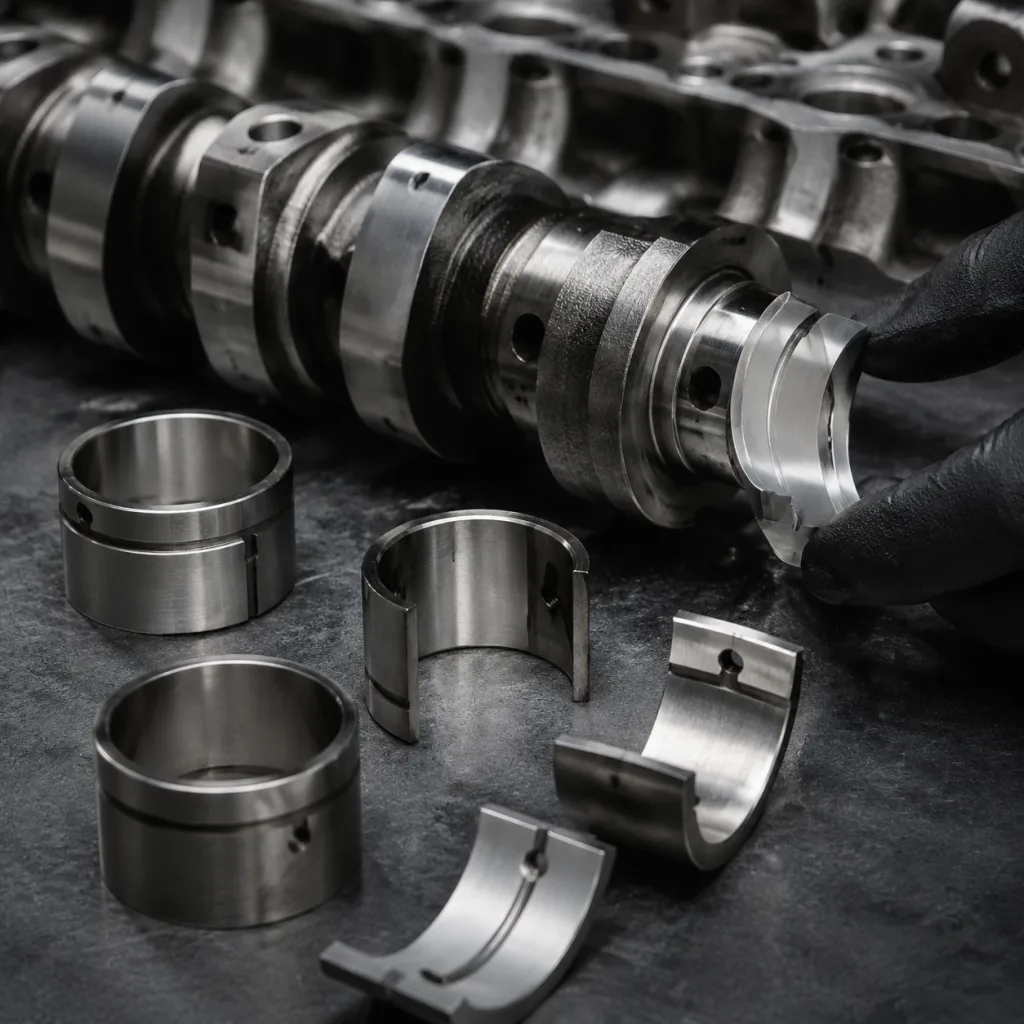
A capable supplier should be able to state whether the sleeve is dry or wet, centrifugally cast or machined from tube stock, semi-finished or finish-honed, and which dimensions are checked before packing. They should also be able to show where casting, machining, honing, and inspection happen.
A useful first-pass checklist includes:
Material grade: commonly alloyed cast iron such as high-phosphorus pearlitic iron or equivalent wear-resistant grades, with controlled hardness typically in the 180-260 HB range unless the drawing specifies otherwise
Dimensional control: bore, outer diameter, flange dimensions where applicable, wall thickness, roundness, cylindricity, and surface finish, with tolerances often controlled to ±0.01-0.03 mm on finished critical diameters depending on part size and machining condition
Honing condition: semi-finished for local boring and honing, usually leaving 0.20-0.50 mm ID stock, or fully finished for a direct assembly workflow
Batch traceability: heat number, lot code, inspection record, and packing label linkage, ideally maintained down to each carton and pallet
Corrosion protection: rust-preventive oil, VCI bagging, desiccant where needed, and export-suitable carton lining for 30-60 days ocean transit
Documentation: dimensional reports when requested, material certificates, hardness results, and inspection summaries tied to shipment lot number
Ask for a short process map as well. A serious supplier can usually walk through raw casting receipt, rough turning, stress relief where applicable, finish turning, bore machining, honing, deburring, washing, rust prevention, final inspection, and packing.
Outsourced operations are not automatically a problem. Hidden outsourced operations are. Buyers should know which steps are in-house and which are subcontracted.
If the supplier handles multiple engine platforms, a structured cross-reference file also matters. It reduces ordering mistakes, especially on older Opel applications with regional aftermarket variation. For broader engine hard-part coverage, buyers normally review our catalog or the engine component range at /products/engine-components.html.
Where sleeve programmes fail: the technical issues behind claims
Most supply problems do not start at goods receiving. They start upstream, inside the process.
Cylinder sleeve performance depends on material quality, machining stability, and installation fit. In wholesale programmes, the goal is not getting one acceptable sample. The goal is getting the same result batch after batch.
Common field failures usually trace back to a few preventable causes: bore wear, distortion, unstable interference fit, cavitation exposure on wet sleeves, or an unsuitable finish that delays ring seating. Those failures often begin with weak process control rather than with obvious visual defects.
Core technical checks
A sourcing specification should request at least the following:
Parameter
What to verify
Why it matters
Base material
Alloyed cast iron chemistry, microstructure, and hardness range
Influences wear resistance, thermal behavior, and machinability
OD tolerance
Supplier target, gauge method, and measurement temperature
Affects press-fit stability in the block bore
ID allowance
Semi-finished or finish-honed condition and stock left for local machining
Determines how much machining is required after receipt
Roundness/cylindricity
Measurement at multiple heights and clock positions
Helps limit oil consumption and uneven ring wear
Surface finish
Honing angle and Ra/Rz target
Supports ring bedding and lubrication film retention
Wall thickness
Min/max control around the circumference
Reduces local hot spots and distortion risk
Chamfer and edge quality
Burr-free lead-in and assembly edges
Helps prevent installation damage
</tr></thead><tbody> </tbody></table>For many aftermarket sleeve programmes, buyers will see benchmark controls such as:
OD tolerance: commonly ±0.01-0.02 mm on a finished press-fit diameter
ID semi-finished allowance: often +0.20 to +0.50 mm before final boring/honing by the rebuilder
Roundness: typically held within 0.005-0.015 mm depending on diameter and machining stage
Cylindricity or straightness over bore length: commonly within 0.01-0.03 mm
Surface finish after finish honing: often around Ra 0.4-0.8 μm with a controlled crosshatch angle in the 35°-50° range
Wall-thickness variation: controlled tightly enough to maintain uniform heat transfer, often within 0.03-0.08 mm around the circumference for critical sizes
If buyers want a finished sleeve, the final bore has to match the piston and ring pack strategy used in the rebuild process. That is why many importers still prefer semi-finished sleeves: they keep final sizing local and align it with their own machining standards.
A common workflow is straightforward: press in the sleeve, rough bore close to final size, let the block stabilize, then finish hone to the exact piston clearance required.
Process route matters too. Centrifugal casting is often preferred for sleeve blanks because it can produce denser structure and more consistent graphite distribution than lower-control routes. After casting, reliable suppliers usually machine OD and ID in stages, verify hardness by lot, inspect key dimensions with bore gauges and outside micrometers, and check honed roughness with a profilometer.
Some buyers go further during new-source approval and request microstructure photos or hardness maps. That is especially common in heavy-duty or high-mileage rebuild channels.
From a governance standpoint, IATF 16949:2016 and ISO 9001:2015 are still useful indicators of process discipline. They do not replace sample validation or incoming inspection, but they often correlate with better control-plan use and stronger corrective-action routines.
Comparing quotes properly: MOQ, lead time, and packaging trade-offs
In cylinder sleeve Opel wholesale buying, commercial comparison only works when the quote is broken into parts. Otherwise, a cheap offer can hide slow replenishment, weak packaging, or unrealistic MOQ assumptions.
A practical supplier should state minimum order quantity by SKU, by mixed order, and by any private-label packaging requirement. Buyers need that to model opening orders, test runs, and recurring replenishment without surprises.
A solid comparison usually covers:
MOQ: per SKU, per shipment, or per packaging design
Sample lead time: often shorter for existing tooling and standard machining routes
Mass production lead time: shaped by casting schedule, machining capacity, and packing queue
Safety stock options: useful for recurring distributor programmes
Container loading plan: carton strength, pallet dimensions, and shipping-mark control
For sleeves, packaging is not a side issue. It drives avoidable claims. Poor packing leads to rust, edge damage, and mixed-part receiving errors.
As a practical benchmark, many aftermarket suppliers quote along these lines for standard Opel-fit sleeve programmes already in production:
Item
Typical range in wholesale supply
Buyer note
Sample MOQ
2-10 pcs
Often available from existing stock or trial batch
Opening MOQ per SKU
100-300 pcs
Common for standard neutral packing
Mixed order MOQ
500-1,000 pcs total
Useful when testing several references
Private-label box MOQ
500-1,000 boxes/design
Artwork and carton print usually raise MOQ
Sample lead time
7-15 days
Faster if no new tooling is needed
Production lead time
25-45 days
Can extend to 45-60 days in peak season or if castings are not stocked
Approx. unit price logic
Lower at 500+ pcs/SKU and again at 1,000+ pcs/SKU
Price depends on weight, machining stage, and pack type
</tr></thead><tbody> </tbody></table>When building an RFQ model, separate price into at least four lines: piece price, packaging cost, tooling or setup cost if any, and freight basis.
This is where quote comparison gets more interesting. A semi-finished sleeve may look cheaper ex-works than a finish-honed sleeve, but the buyer then carries local machining cost and scrap exposure. A finish-honed sleeve may cost more per piece yet reduce local processing time and simplify workflow. Neither is universally better. The right option depends on where the buyer wants process control to sit.
Packaging should also be specified in measurable terms. Common export practice is 1 pc per VCI bag, inner partition or sleeve separator to prevent metal-to-metal contact, 5-20 pcs per inner carton depending on weight, and master cartons kept within a safe manual-handling weight such as 15-20 kg. For ocean freight, buyers should confirm carton board grade, pallet fumigation status where required, stretch-wrap standard, and whether desiccant or sealed liner bags will be used.
When sourcing under customer artwork or tailored specifications, buyers usually need a supplier that supports custom manufacturing for box design, machining condition, and packing configuration.
Audit like a buyer, not like a visitor
A dependable source for cylinder sleeve Opel wholesale should be ready for either a remote audit or an on-site review. The most useful audits do not focus on presentation. They focus on evidence.
Specifically: process control, metrology discipline, subcontractor oversight, lot segregation, and response to nonconformance.
Recommended audit questions:
1. Are bore gauges, micrometers, roughness testers, and hardness instruments calibrated on a defined schedule? 2. Is there a control plan covering incoming castings, in-process machining, final inspection, and packing? 3. How are non-conforming lots identified, quarantined, and dispositioned? 4. Which operations are performed in-house and which are subcontracted? 5. Can the supplier provide retained samples or dimensional reports by lot? 6. How is rust prevention validated for sea shipment?
Importers selling into the EU and UK should also verify whether the supplier can support material disclosure where required under REACH (EC) No 1907/2006. For quality-management review, buyers may also want to examine the supplier's quality system, including traceability, corrective-action response, and inspection workflow.
Compliance here should be understood correctly. It does not mean vehicle-maker approval. It means the supplier can show controlled production, documented checks, and records that support importer due diligence in the aftermarket.
Buyers should ask for more than certificates on the wall. Useful evidence includes a calibration list showing instrument ID and next due date, a sample control plan, final inspection records from an actual shipment lot, nonconformance tags, and photos or video of quarantine area management.
If the supplier claims 100% inspection on certain dimensions, ask exactly what is checked and how it is recorded. In many real programmes, the more credible answer is 100% gauging on critical OD/ID dimensions with AQL-based sampling on secondary features.
A workable incoming and final inspection logic often looks like this:
Incoming castings: chemistry or supplier cert review, visual check for shrinkage or porosity, and dimensional spot checks
In-process machining: first-piece approval at machine setup, then periodic checks every 30-60 pcs or by time interval depending on machine stability
Final inspection: critical dimensions checked lot by lot, hardness verified per heat or per batch, roughness checked by sample frequency, visual inspection for burrs/rust/marking before packing
Shipment release: carton label verification, quantity reconciliation, and traceability confirmation between product lot and packing list
Complaint handling should be audited too. Ask what happens if a lot arrives with oversize OD, excessive taper, rust, or mixed labels. A strong supplier should define response timing, such as 24-48 hours for initial containment and 7-10 days for 8D or corrective-action feedback.
Repeat-order control: cross-references, SKUs, and supply KPIs
Many Opel sleeve programmes become difficult not on the first order, but on the fourth. That is when cross-reference mistakes, version drift, and replenishment assumptions start causing friction.
Opel demand often includes older engine families, regional application differences, and rebuild-led channels where original blocks stay in service for years. In that environment, cross-reference discipline is a core control point, not admin work.
Good practice includes:
Recording customer reference numbers and internal numbers separately
Linking each number to engine code, bore size, sleeve type, and machining condition
Flagging supersessions and obsolete references
Storing sample approval records against each active SKU
Confirming whether any cited reference is provided for fitment guidance only
If a buyer uses OE-style references during an inquiry, they should be presented in a neutral format such as OE 06A107065 only where the inquiry itself already cites that pattern. Final ordering should still be based on confirmed dimensions, engine application, and machining condition rather than on reference number alone.
For long-term programmes, a quarterly review of fill rate, claim rate, and lead-time adherence is usually more useful than a one-time price comparison. For cylinder sleeve Opel wholesale procurement, that is often what separates a stable source from a supplier that keeps generating reorder noise.
The most practical control tool is a master item sheet for each sleeve SKU. At minimum, it should list engine code, nominal bore, sleeve length, flange dimensions where relevant, dry or wet type, material grade, hardness target, machining condition, packing format, and latest approved drawing revision. If a buyer carries both semi-finished and finish-honed versions for the same application, those should be separate commercial SKUs, not a note buried in one line.
Buyers also benefit from setting supply KPIs at programme start. Typical B2B metrics include:
KPI
Practical target
Why buyers track it
On-time delivery
≥95%
Measures schedule reliability
Fill rate
≥97-98%
Reduces back orders and split shipments
Incoming defect rate
<0.5-1.0% by pieces
Shows process stability
Claim closure time
<10 working days
Limits customer-service drag
Forecast accuracy review
Monthly or quarterly
Helps casting and machining planning
</tr></thead><tbody> </tbody></table>For forecast-driven accounts, buyers should share at least a 3-month rolling forecast and identify A-items that require safety stock. In return, the supplier should state whether cast blanks are held in stock, whether machining is make-to-order, and what reorder point triggers production.
That level of programme detail prevents a common problem: a supplier quotes a short first-order lead time from stock, then needs much longer on replenishment because casting lead time was never built into the promise.
How Driventus handles a cylinder sleeve Opel wholesale enquiry
Driventus supplies engine and powertrain components for B2B buyers and supports distributor, OEM-service, and repair-chain procurement projects. For cylinder sleeve Opel wholesale enquiries, the process usually starts with the drawing or sample, then moves through application confirmation, machining-condition alignment, and packing and inspection review before bulk production begins.
Buyers typically engage on the following points:
Existing application coverage and drawing review
Sample development and dimensional confirmation
Neutral or private-label packing options
Export carton and pallet specification
Batch traceability and inspection records
Production scheduling for repeat orders
Where the requirement falls outside the standard range, the project can be assessed through custom manufacturing. Buyers looking to compare related engine hard parts can also review our catalog. If you are preparing a sourcing round for Opel-fit sleeve supply, the most efficient next step is to send target annual volume, dimensional requirement, and preferred Incoterm through request a quote.
A typical project flow is straightforward:
1. RFQ review: buyer submits drawing, sample, reference list, annual demand, and target market 2. Technical confirmation: sleeve type, material, hardness, machining allowance, and inspection checkpoints are aligned 3. Quotation: pricing is issued by SKU with MOQ, sample cost if applicable, lead time, packing basis, and trade term such as EXW, FOB, or CIF 4. Sample approval: dimensional report and physical sample are reviewed before bulk release 5. Mass production: casting allocation, machining, final inspection, and export packing are scheduled 6. Repeat-order management: forecast sharing, safety-stock discussion, and lot traceability are maintained for replenishment
For buyers comparing offers, the most useful RFQ package usually includes nominal dimensions and tolerances, whether the sleeve is semi-finished or finish-honed, annual quantity by SKU, packaging requirement, destination port, and whether private-label cartons are required. With that information, the quote can reflect realistic machining time, packaging cost, and freight assumptions instead of a headline unit price that later changes.
Driventus is an independent aftermarket manufacturer; brand names are referenced for fitment only.
Frequently asked questions
MOQ depends on whether the part comes from an existing programme, requires custom packaging, or needs non-standard machining. As a practical range, buyers often see sample quantities of 2-10 pcs, opening MOQ of 100-300 pcs per SKU for standard items, and mixed-order MOQ of 500-1,000 pcs total. Private-label cartons usually increase MOQ because printed packaging has its own setup and order minimum.
That depends on the rebuild process and the buyer’s machining capability. Semi-finished sleeves usually leave about 0.20-0.50 mm ID stock for local final machining, which gives machine shops more control over piston clearance and final hone pattern. Finish-honed sleeves can reduce processing time, but they should only be used when piston, ring, and assembly requirements have been fully validated and the buyer is confident in the supplier’s bore tolerance and surface-finish control.
At minimum, buyers should request dimensional inspection records, material information, batch traceability details, packing specifications, and confirmation of the plant’s management system, such as IATF 16949:2016 or ISO 9001:2015 where applicable. For new-source approval, it is also useful to request hardness results, sample photos, carton and pallet details, and a clear statement of MOQ, lead time, and Incoterm.
If you are qualifying a new source for Opel-fit cylinder sleeves, send your drawing, sample, annual volume, machining condition, tolerance requirement, and packaging specification to Driventus for review. Contact our team here: /contact.html