A clutch kit Mini replacement program should not be approved from catalogue fitment alone. The costliest failures usually start earlier: a release bearing that sits 0.5 mm off target, a cover load that drifts between lots, a driven plate offset copied from the wrong gearbox variant, or a carton label that sends the right part to the wrong bay. Mini applications can be sensitive to release travel, flywheel condition, spline accuracy, and installation alignment, so buyers should treat the cover assembly, driven plate, release bearing or concentric slave cylinder, pilot components, and hardware as one controlled system. Before a purchase order is released, define the fitment scope, critical dimensions, inspection frequency, sample approval rules, MOQ, price breaks, lead-time assumptions, packaging format, and change-notification triggers. The sections below turn those controls into a sourcing framework for OE-equivalent aftermarket kits, with focus on dimensional verification, friction consistency, validation testing, traceability, export packaging, and warranty handling. Driventus supplies clutch and powertrain components for B2B channels, supported by IATF 16949:2016 and ISO 9001:2015 management systems. Driventus is an independent aftermarket manufacturer; brand names are referenced for fitment only.
Start With the Interchange Decision, Not the Vehicle Badge
A Mini clutch kit cannot be selected safely from model name alone. The buyer needs to lock the application by engine code, gearbox type, production month and year, flywheel design, release mechanism, market version, and target torque range where relevant. Within one platform, there may be different torque ratings, spline counts, pressure plate heights, flywheel formats, and release bearing designs. The RFQ should therefore split dual-mass-flywheel and solid-flywheel references, hydraulic concentric slave cylinder kits and conventional release bearing kits, and 5-speed versus 6-speed gearbox variants.
A complete replacement kit normally includes:
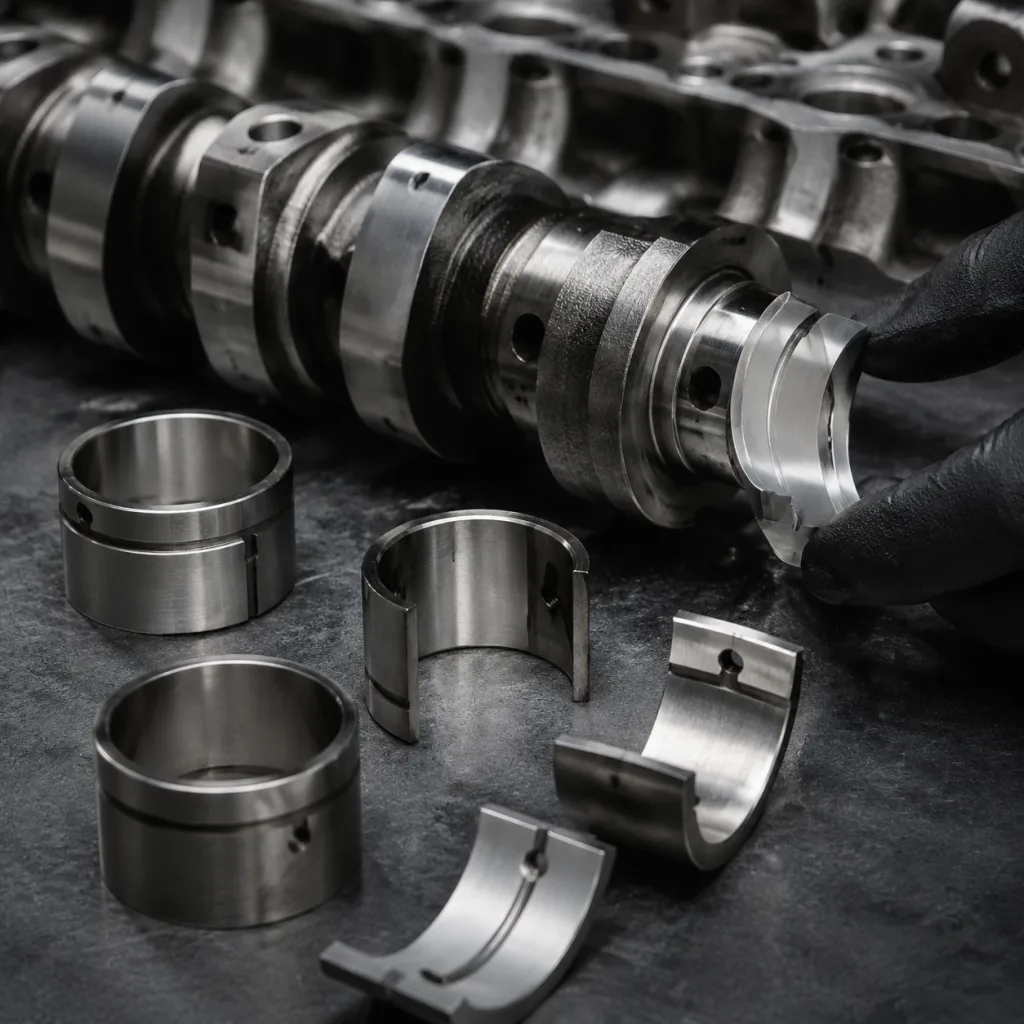
Clutch cover assembly with diaphragm spring, matched to the approved installation height
Driven plate with confirmed outside diameter, hub spline, damper layout, and offset
Release bearing or concentric slave cylinder, depending on application
Pilot bearing or bushing where specified by the reference application
Alignment tool where required by the sales channel or repair-chain program
Bolts or installation accessories when included in the reference kit, with grade and coating defined
Batch-labelled packaging with application, barcode, cross-reference, and production lot data
Treat OE part-number cross-references as fitment references, not proof of vehicle manufacturer approval. References such as OE 06A… or OE 11251… may be useful inside procurement databases, but they must be backed by sample checks, catalogue review, and dimensional evidence. Driventus validates cross-reference tables against sample parts, catalogue data, and dimensional inspection reports before release. A practical interchange file should include reference number, kit contents, disc diameter, spline count, gearbox family, release type, supersession status, and excluded applications.
For range planning, group kits by platform, engine family, gearbox, driveline architecture, and release system rather than by badge. This reduces duplicate SKUs and prevents near-identical kits from being stocked as if they interchange. High-turn references can justify printed inserts, individual cartons, and local-language labels. Slower references may be better handled through neutral packaging or consolidated MOQ programs to avoid inventory that moves once and then sits.
Failure Modes Hidden in the Dimension Sheet
A clutch kit Mini replacement order should be controlled by a drawing, approved sample file, or inspection sheet. Small dimensional errors create large workshop problems. Stack height variation can cause drag. Wrong driven plate offset can prevent clean engagement. A release bearing interface that looks acceptable on the bench may become noisy under load. Do not rely only on catalogue descriptions; request dimensional data from production samples.
For first article approval, measure at least 3 kits per reference. For mass production, apply the agreed AQL or a fixed plan such as 5 pieces per lot for critical dimensions plus 100% visual and content inspection before packing.
Check point
Typical procurement requirement
Risk if uncontrolled
Driven plate outside diameter
Match reference sample; commonly controlled within ±0.30 mm
Slip, drag, or housing interference
Hub spline count and major diameter
Confirm count, pressure angle, fit, and go/no-go gauge result
Installation failure or input shaft damage
Cover bolt pattern and dowel position
Verify on fixture; hole position typically within ±0.20 mm
Misalignment, vibration, or failed installation
Cover assembly stack height
Measure against approved range, often ±0.40 mm from golden sample
Drag, poor release, or excessive pedal travel
Clamp load
Test at specified installed height; typical control band ±8–10% by kit type
Slip, heavy pedal feel, or rapid wear
Release bearing height
Match cover finger position; typically controlled within ±0.30 mm
Drag, noise, over-travel, or bearing overload
Plate runout
Control on rotating fixture; common target ≤0.50 mm TIR
Judder and uneven wear
Friction thickness
Lot-control grinding; common tolerance ±0.15 mm per facing set
Short service life or engagement harshness
Cover finger height variation
Inspect after assembly; common target ≤0.50 mm spread
Uneven release and pedal pulsation
Disc balance
Check where specified; residual imbalance limit agreed by diameter
Vibration and gearbox input noise
</tr></thead><tbody> </tbody></table>If you buy from more than one supplier, standardise the approval pack. At minimum, require dimensional reports, material declarations, performance test summaries, packaging drawings, inspection criteria, and a retained golden sample. Use the same file for pilot lots and repeat production; otherwise the approved sample becomes disconnected from bulk supply.
Freeze critical-to-fit dimensions after PPAP-style approval. Any change to tooling, facing supplier, bearing supplier, diaphragm spring, or coating should trigger buyer notification before shipment. Driventus can align kit data with distributor catalogue structures through custom manufacturing, including private-label packaging and regional application files.
Spec Deep-Dive: Friction Code, Load Curve, and NVH Controls
A kit that bolts on can still fail commercially. The driver may feel judder. The workshop may report clutch drag. The vehicle may leave with a squeal during release. Those issues often come from the system: facing material, torsion damper, diaphragm spring, pressure plate machining, cover stamping, and bearing condition.
Ask for more than a generic product description. The procurement file should include the production friction code, facing thickness target, rivet specification, damper spring layout, cover load curve, and release bearing grease grade. These details make it possible to compare pilot samples with replenishment lots.
For Mini applications used in urban driving, common complaints include low-speed judder, squeal during release, high pedal effort, clutch drag after installation, and vibration during take-up. Some are caused by installation errors, contaminated friction surfaces, worn dual-mass flywheels, or poor bedding-in. Others are supplier-controlled: friction material variation, spring heat treatment, plate runout, cover load, and finger-height consistency. Where no customer standard exists, require supplier data from the current material batch and compare it with the approved golden sample.
Key engineering controls include:
Stable friction coefficient across normal operating temperatures, with batch-to-batch variation reviewed against the approved material code
Rivet depth control, commonly ≥0.30 mm below facing surface where design permits, to protect usable lining life
Torsion spring selection matched to engine torque and gearbox input characteristics
Hub and damper design reviewed for backlash, free angle, stop angle, and durability
Diaphragm spring heat treatment and load testing at the specified installed height
Pressure plate surface finish controlled, commonly Ra 1.6–3.2 µm unless otherwise specified, to reduce bedding-in instability
Cover assembly balance and finger height consistency where applicable
Release bearing grease specification, seal integrity, axial clearance, and rotation noise control
For EU market access, material declarations may need to consider REACH (EC) No 1907/2006. Buyers can also request restricted-substance evidence for coatings, greases, friction materials, packaging inks, and anti-corrosion treatments. This is not paperwork for its own sake. If a field issue appears, lot coding should allow the buyer to trace facing batch, spring heat lot, bearing batch, cover stamping date, and final assembly date.
Driventus does not claim endorsement by any vehicle manufacturer. Kits are engineered as independent aftermarket replacements, with brand names and platform references used only to identify fitment.
Approval Sequence: From Reference Sample to Pilot Lot
Validation should answer one question: will the same kit fit, release, survive handling, and repeat in production? The test plan does not need to copy every OE development procedure, but it should verify the risks that create distributor claims. For a new reference, use this sequence: reference sample measurement, drawing confirmation, first prototype inspection, functional bench test, pilot lot, buyer approval, then mass-production control plan release.
Recommended approval evidence includes:
Static clamp load test at defined installation height, with nominal load and tolerance stated on the report
Release load and travel curve measurement, including release point and over-travel margin
Driven plate burst test to an agreed safety margin, commonly above maximum operating speed plus reserve
Torsional damper function, backlash, free-angle, and stop-angle inspection
Axial runout and parallelism measurement before packing
Cover finger height and lift uniformity check at specified release travel
Bearing rotation noise and drag torque inspection after inbound inspection and final assembly
Thermal cycling of cover assembly where required, with post-test clamp load comparison
Fitment trial on reference flywheel and gearbox interface, including bolt pattern and spline engagement
Corrosion-resistance checks for exposed metal surfaces where specified, such as 48–96 hour neutral salt spray for agreed coatings
Packaging drop and vibration checks for export handling, including master carton and pallet configuration
Final box-content inspection against the bill of materials, with 100% verification for kit contents
For repair-chain supply, the first-install experience matters as much as the bench result. A missing accessory bag, poorly protected concentric slave cylinder, unclear label, or mispacked release bearing can stop a bay and create a claim. Validation should therefore cover the carton, label, insert, accessory bag, and packing method. Content-control photos, weighing checks, and barcode scans help prevent wrong-part shipments. A final pack weight tolerance can be set by reference so missing bolts or accessories are detected before dispatch.
Driventus operates under IATF 16949:2016 and ISO 9001:2015 aligned quality system. Control plans, incoming inspection, in-process checks, final inspection, traceability records, and corrective action documentation can be provided according to contract requirements. For new applications or customer-specific kits, buyers can request pilot approval before full production release. A useful pilot order is large enough to test the packing method and process capability, not just show samples; many B2B programs use 50–200 kits per reference depending on SKU value and market risk.
Landed-Cost Scenario: When the Cheap Kit Becomes Expensive
Assume two suppliers quote the same clutch kit Mini replacement reference. Supplier A is cheaper on FOB price. Supplier B costs more but has stronger cartons, better label control, lower observed claim rate, and clearer batch traceability. If one wrong kit reaches a workshop, the labour dispute, return freight, diagnosis time, and customer credit can exceed the unit-price saving from a full carton. That is why importers and wholesalers should compare landed cost per saleable kit, not just the purchase price.
Confirm these items before purchase order release:
Minimum order quantity by kit family and packaging type; standard references may start from 100–300 kits, while private-label packaging often needs 300–500 kits or a combined packaging MOQ
Lead time for standard range and new-tooled applications; stocked or repeat references may ship in 30–45 days, while new development or private-label programs can require 60–90 days after sample approval
Price-break logic by annual volume, shipment batch size, carton type, accessory content, and inspection level
Labelling language requirements for EU, UK, US, Canada, Australia, Brazil, or other target markets
Batch number format, traceability period, and label placement on inner box, master carton, and pallet
Kit content list, accessory bag specification, and installation note requirements
Sample approval procedure, golden sample retention, and change notification rules
Warranty analysis process for returned parts, including photos, installation data, mileage, and failure symptoms
Availability of technical notes for high-risk applications, including flywheel inspection and bedding-in guidance
Incoterms, export carton marking, certificate of origin, packing list, invoice, and documentation requirements
Driventus can supply neutral packaging, distributor private label, or project-specific packaging subject to artwork and compliance review. Application data can be structured for TecDoc-style cataloguing, ERP import, marketplace uploads, or customer-specific cross-reference lists. Buyers can review broader drivetrain and engine part coverage in our catalog. For private-label launches, allow time for dieline approval, barcode verification, print proof approval, master carton testing, and final pack photos before shipment.
Repeat supply needs change control. If the friction material, bearing supplier, diaphragm spring specification, grease, coating, or cover stamping changes, the buyer should receive notice and, where agreed, pre-shipment samples. Warranty rules should define claim window, required evidence, acceptance criteria, disposition of returned goods, root-cause report timing, and corrective action due date. A common target is initial response within 5 working days and 8D or corrective action closure within 30 days when parts are available for analysis.
Buyer Q&A Checklist Before Range Rollout
Use the final approval meeting to ask direct questions. If the answers are vague, the program is not ready for full rollout.
1. Have we confirmed the application scope by engine, gearbox, production range, market version, release system, and flywheel type? 2. Have all major dimensions been compared against reference samples, drawings, or approved inspection sheets, with tolerance bands recorded? 3. Have we verified driven plate spline, hub offset, damper layout, lining specification, rivet depth, and runout? 4. Have we reviewed cover assembly clamp load, release curve, finger height, lift uniformity, and stack height data? 5. Have we checked the release bearing or concentric slave cylinder interface, protection, seal condition, grease specification, and box location? 6. Have we requested material and chemical compliance information required by the destination market? 7. Have we approved carton labelling, barcodes, batch coding, installation notes, carton strength, and pallet loading? 8. Have we defined claim handling, return analysis, evidence requirements, credit rules, and corrective action timing? 9. Have we confirmed certification status, audit access, production control plan availability, inspection records, and traceability period? 10. Have we placed a pilot order before full range rollout where the application, supplier, or packaging format is new?
Do not stop at sample approval. Measure at least one pilot lot and one mass-production lot against the same inspection sheet. The point is to prove that normal production repeats the approved fitment, release, and performance characteristics. Retain one golden sample per approved reference, one signed inspection report, one packaging approval record, and one copy of the label file used for production.
Driventus is an independent aftermarket manufacturer; brand names are referenced for fitment only. Procurement teams can request a quote with target applications, annual volume, packaging requirements, label format, Incoterms, inspection requirements, and reference samples where available. To speed quotation, include expected order quantity per shipment, annual forecast, target market, kit contents, private-label needs, and any required price ladder such as 100, 300, 500, and 1,000 kits per SKU.
Frequently asked questions
Provide vehicle application, engine and gearbox details, production year range, flywheel type, release system, required kit contents, packaging format, annual volume, shipment quantity, Incoterms, and any OE-style cross-reference such as OE 06A… or OE 11251… if used in your catalogue.
Yes. Driventus can support neutral or private-label packaging, subject to artwork approval, carton testing, barcode requirements, and agreed minimum order quantities. Private-label MOQ is usually higher than neutral packing because printed cartons, inserts, and labels must be produced and controlled by batch.
Validation can include dimensional inspection, clamp load testing, release curve checks, plate runout measurement, bearing noise inspection, fitment checks, corrosion review, batch traceability, and final packaging inspection under the agreed control plan.
If you are reviewing clutch kit sourcing for Mini applications, share your target references, annual volume, shipment quantity, tolerance requirements, and packaging needs with Driventus. Our team can check fitment scope and quotation details at /contact.html