cylinder sleeve · 2026-06-07

Cylinder Sleeve Mitsubishi Supplier: Sourcing Guide

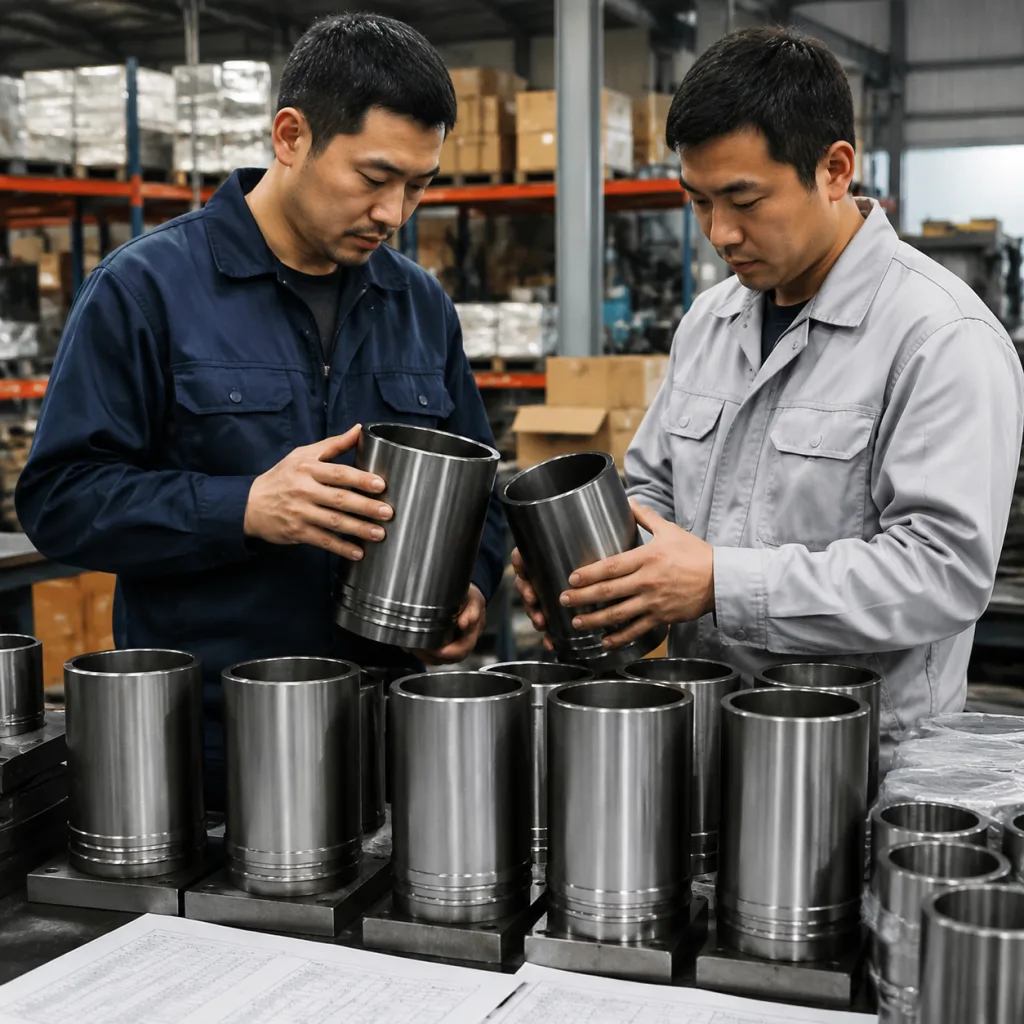
Selecting a cylinder sleeve Mitsubishi supplier is not just a matter of matching bore size or catalogue number. Procurement teams need sleeves that meet the required alloy specification, hardness range, surface finish, and dimensional tolerances for reliable rebuild or production use. For Mitsubishi applications, the key checks usually include OE cross-reference support, engine-family coverage, wet or dry sleeve design, and the supplier’s control over cast iron metallurgy, machining, honing, and final inspection. Driventus is an independent aftermarket manufacturer; Mitsubishi and other brand names are referenced for fitment identification only. We manufacture engine and powertrain components in Taizhou, Zhejiang, and export to 60+ countries under IATF 16949:2016 and ISO 9001:2015 quality systems. This guide explains what to verify before RFQ, how to compare suppliers, and which documents matter for fleet, distributor, OEM, and Tier-1 sourcing teams.

What buyers should check first

Begin with application control before catalogue breadth. A qualified cylinder sleeve Mitsubishi supplier should be able to identify the relevant engine family, confirm whether the design is wet or dry, and support OE-style cross-reference workflows where they apply to the application. In many Mitsubishi engine programmes, the main sourcing risk is not the sleeve listing itself; it is inconsistency in wall thickness, flange geometry, outside diameter, bore allowance, and finish-machining practice.

Procurement checklist

  • Engine model, displacement, and application notes
  • Wet or dry sleeve design
  • Sleeve material grade and heat treatment route, if applicable
  • As-cast and finish-machined dimensions
  • Bore size, roundness, taper, and straightness limits
  • Flange height, flange thickness, and seating surface requirements
  • Surface finish and plateau-hone requirement
  • Pack quantity, MOQ, and lead time
  • Packaging method for sea freight, warehousing, and mixed-pallet handling

If a supplier cannot answer these points clearly, the part number is not ready for production sourcing. For B2B purchasing, early clarification prevents sample mismatches, block-fit issues, and avoidable quality claims after the first shipment.

Material, machining, and dimensional control

Cylinder sleeves are commonly produced from controlled cast iron grades because the component must combine wear resistance, machinability, thermal stability, and compatibility with piston rings. During supplier review, ask for the material specification, chemical control method, hardness range, and machining controls used from rough turning through final honing. A credible supplier should be able to provide inspection records for bore diameter, outside diameter, overall length, flange thickness, perpendicularity, concentricity, and surface finish.

</tr></thead><tbody> </tbody></table>For rebuild programmes, dimensional repeatability is often more important than a nominal catalogue size. Small variation can affect block fit, heat transfer, coolant sealing on wet sleeves, piston-ring seating, oil consumption, and long-term durability. If you are comparing suppliers, request PPAP-style documentation or equivalent process evidence, even when the project is not formally managed as an automotive PPAP submission.

Certification, compliance, and audit readiness

Supplier qualification should include quality-system evidence, process control, and export compliance. Driventus operates under IATF 16949:2016 and ISO 9001:2015 systems. For international sourcing, buyers may also request REACH (EC) No 1907/2006 declarations where applicable, especially when the programme serves the EU market. Where durability or environmental exposure is part of the validation plan, ask whether the supplier can support relevant test data or customer-specified endurance methods for the intended application.

A factory audit should cover:

  • Incoming material inspection and material release criteria
  • Furnace, casting, and heat-control records where applicable
  • Machining-centre capability and tool-wear monitoring
  • Honing process control and surface-finish verification
  • Final inspection gauges, calibration status, and measurement-system discipline
  • Traceability from heat number or lot number to finished sleeve
  • Nonconformance handling, containment, and corrective action process

Use our quality system to review the controls used across production. Buyers who need special packaging, private label supply, or application-specific engineering support can also review custom manufacturing.

MOQ, lead time, and sourcing model

Most procurement teams need a supplier that can support scheduled demand, trial orders, and occasional spot buys without changing the quality baseline. MOQ and lead time depend on tooling status, engine-family volume, raw casting availability, machining capacity, and packaging requirements. For standard sleeves, a stable MOQ is usually easier to maintain when the supplier controls the process from casting through finish machining. Vertical process ownership also shortens escalation time if a tolerance, surface-finish, or packaging issue appears during first article approval.

Typical commercial questions to ask:

  • What is the MOQ per part number, sleeve size, or engine family?
  • What is the normal lead time for stocked and made-to-order items?
  • Can the supplier reserve safety stock for recurring releases?
  • Are mixed-pallet or consolidated shipments possible for distributors?
  • Can carton labels, barcodes, and pallet marks match warehouse requirements?
  • How are engineering changes, packaging revisions, or superseded references controlled?

For buyers managing multiple depots, predictable lead time is often more valuable than the lowest unit price. A supplier that provides consistent packaging, stable documentation, and clear replenishment schedules reduces receiving errors, urgent air shipments, line interruptions, and warranty disputes.

How to compare Mitsubishi sleeve suppliers

Do not compare quotations only by unit price. A lower price may reflect looser machining tolerances, reduced inspection frequency, weaker traceability, outsourced processes, or a slower complaint cycle. A practical supplier scorecard should place technical evidence and commercial terms side by side so that purchasing, engineering, and quality teams can evaluate the same facts.

Buyer check What to confirm
MaterialCast iron grade, chemistry control, and lot traceability
HardnessStable hardness range across production lots
Bore finishHoned surface suitable for ring seating and oil retention
GeometryRoundness, taper, straightness, and flange control
FitInterference or clearance target by engine family and block design
TraceabilityLot marking, inspection records, and retention method

</tr></thead><tbody> </tbody></table>A strong cylinder sleeve Mitsubishi supplier should make it easy to connect the application requirement with the manufacturing process and the inspection record. If you need catalogue coverage beyond sleeves, review our catalog or the broader engine components range. For programmes that require a defined drawing, private specification, localisation support, or dedicated packaging, custom manufacturing is the right starting point.

What to include in your RFQ

A complete RFQ reduces back-and-forth and makes supplier quotations easier to compare. Include the engine code, part description, target annual volume, forecast split, packaging requirements, and any OE reference or internal reference used by your team. If your company sells into multiple markets, state whether the sleeve must satisfy EU, UK, US, Canadian, Australian, Brazilian, or other documentation expectations.

RFQ minimum data

1. Engine family, displacement, and application notes 2. Drawing, sample photo, or key dimensions 3. Wet or dry sleeve design and any flange details 4. Required material, hardness range, and surface finish 5. Target MOQ, first order quantity, and annual volume 6. Required certificates, inspection reports, and traceability records 7. Shipping terms, destination port, and consolidation needs 8. Label, carton, barcode, and pallet requirements

Driventus supports B2B sourcing for aftermarket distributors, OEM/Tier-1 suppliers, and multi-location repair chains. We do not claim vehicle-manufacturer approval or endorsement. We support fitment-based supply with documented quality controls, repeatable production, and export experience.

Frequently asked questions

Yes. We support fitment-based supply for selected engine families and can review drawings, samples, and OE cross-references during RFQ. Brand names are referenced for fitment only.

Buyers can request dimensional reports, lot traceability, material information, and quality-system evidence under IATF 16949:2016 and ISO 9001:2015, subject to programme scope.

Yes. For drawing changes, packaging requirements, or application-specific specifications, use our custom manufacturing service and we will review feasibility before quotation.

If you are qualifying a cylinder sleeve Mitsubishi supplier, send your drawing, target volume, and application details for review. Start here: /contact.html

Request a Quote
Criterion Strong supplier Weak supplier
Application dataEngine-family specific with cross-reference reviewGeneric fitment only
Process controlControlled casting, machining, honing, and inspectionOutsourced steps with limited visibility
Quality evidenceIATF 16949:2016 / ISO 9001:2015 systems and recordsBasic inspection only
DocumentationDimensional report, material information, lot traceabilityPacking list only
Supply supportMOQ planning, lead-time planning, and replenishment optionsIrregular availability
Engineering supportSample validation, drawing review, and change controlNo formal review or change-control process