When buyers search for a cylinder sleeve Lexus manufacturer China, they are usually deciding between speed, fitment risk, and repeatability. The right supplier is not the one with the broadest claim; it is the one that can prove dimensional control, traceability, and stable lead times for the exact engine family.
For engine rebuild and powertrain programmes, a sleeve is a precision part. Bore size, wall thickness, flange geometry, material grade, and finish all affect installability and service life. Driventus supplies cylinder sleeves to B2B customers in aftermarket distribution, OEM and Tier-1 channels, and repair-network procurement. We work to documented inspection plans and export to more than 60 countries. Driventus is an independent aftermarket manufacturer; brand names are referenced for fitment only.
If you are sourcing for a Lexus application, start with the engine code, the OE cross-reference, and the sample report—not the sales pitch.
Decision first: what matters before you price a Lexus sleeve
Before comparing suppliers, lock the technical target. A Lexus cylinder sleeve programme usually fails when buyers start with price, then discover the sample belongs to the wrong engine family or the fitment method was never defined.
Confirm the engine code and OE reference before you request samples.
Confirm whether the sleeve is dry, wet, or semi-finished for local machining.
Define the critical dimensions: bore, outer diameter, overall length, flange thickness, and top land height.
Agree the tolerance target and the inspection method before production.
Ask for material declaration, heat-treatment data if applicable, and batch traceability.
A practical buyer spec sheet normally includes bore diameter to ±0.01 mm for finish-machined sleeves, outer diameter to the press-fit requirement, and flange thickness and overall length to ±0.05 mm unless the block design needs tighter control. For sample approval, ask for three pieces from the same lot and require actual measurements, not nominal values only. If the application uses an OE cross-reference such as `OE 06A107065`, keep that reference on the enquiry record and verify every dimension against the sample set.
This is the fastest way to reduce quote noise and eliminate avoidable rework. Driventus can support those checks through our catalog and our quality system.
Spec sheet essentials for RFQs and approvals
Specification control is the difference between a usable quote and a guess. Buyers who define the sleeve clearly get faster responses and fewer back-and-forth revisions.
Item
Typical buyer request
Why it matters
Sleeve type
Dry / wet / flanged
Defines install method
Material
Alloy cast iron or specified equivalent
Affects wear and machinability
Bore tolerance
±0.01 mm on finish-machined bores, or per drawing
Controls piston clearance
OD tolerance
Typically ±0.01 to ±0.03 mm depending on press fit
Controls block retention
Surface finish
Honed Ra 0.8–1.6 µm or semi-finished
Impacts final machining
Coating / corrosion protection
VCI bag, oil film, or as required
Storage and shipping stability
Traceability
Lot code, heat number, and inspection record
Supports claims handling
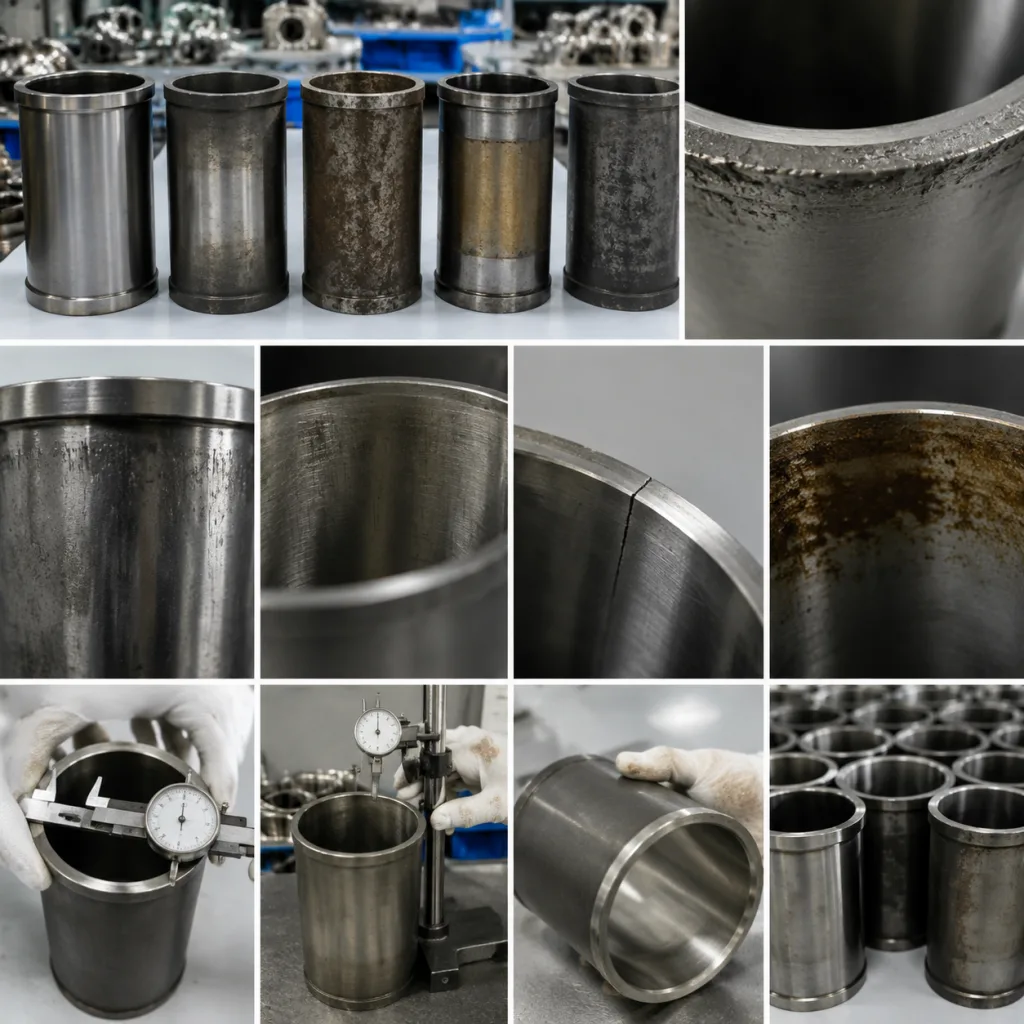
</tr></thead><tbody> </tbody></table>For incoming inspection, many buyers specify 100% visual control plus sampling for key dimensions under AQL 1.0 or tighter, with micrometers, bore gauges, and CMM verification for first-article approval. A useful process pack should include material certificate, hardness range, and a dimensional report for the first batch. If the programme needs tighter process discipline, ask whether the supplier’s measurement plan follows IATF 16949:2016 methods and ISO 9001:2015 documentation discipline. That does not replace vehicle-level validation, but it gives procurement a real basis for comparison.
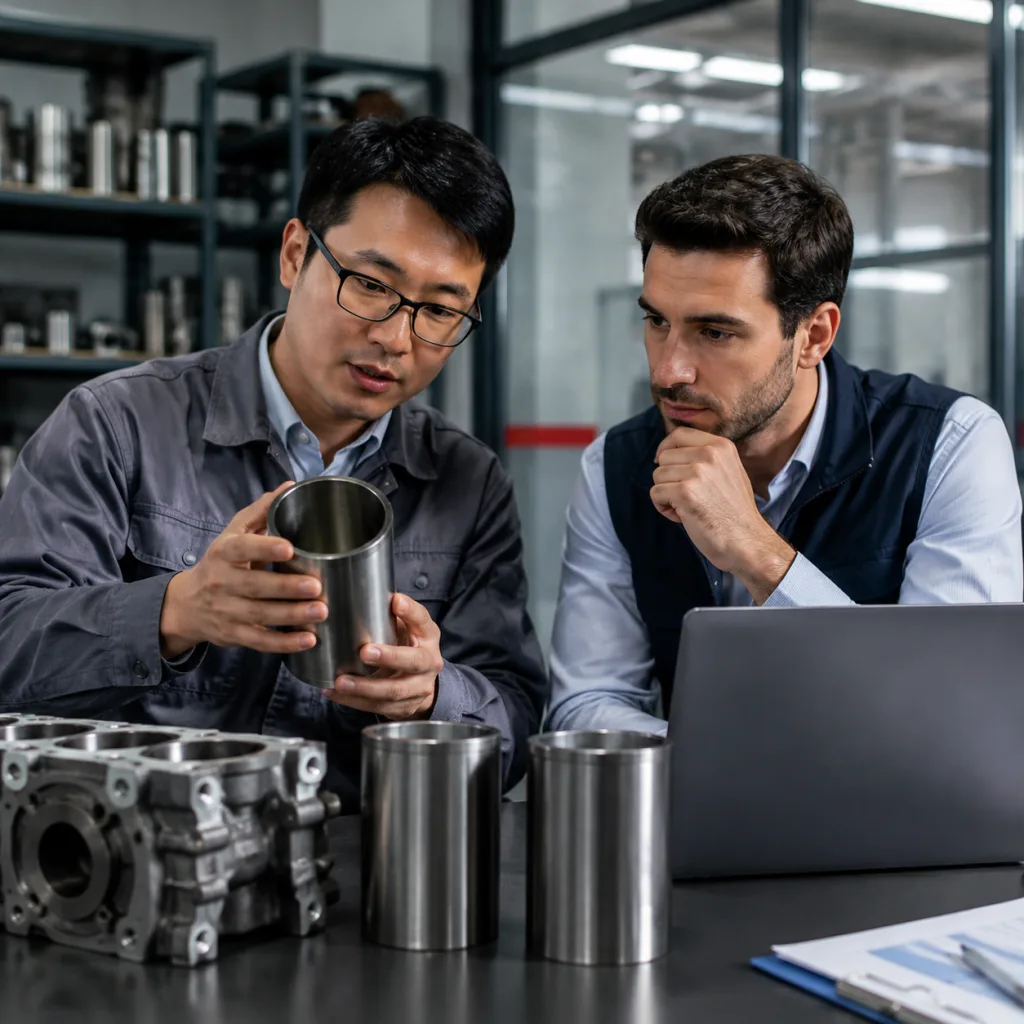
If your team needs engineering support for sleeve adaptation, custom manufacturing is the right route.
Common failure modes in sleeve sourcing
Cylinder sleeves are often rejected for the same small set of reasons. The part is usually fine; the sourcing process is not.
1. The drawing is incomplete, so the factory fills gaps with assumptions. 2. The sample is matched to the wrong engine family. 3. The press-fit target is not aligned with the block condition. 4. Packing and corrosion protection are not specified. 5. The corrective-action response time is never agreed.
To reduce risk, separate the sourcing cycle into three timing windows. Sample lead time is often 7–15 days for stocked or semi-finished references. Pilot quantity is commonly 2–4 weeks after sample approval. Repeat production is typically 20–35 days depending on machining load, surface treatment, and export packing.
Commercially, ask for price breaks at 100, 500, and 1,000 units so the landed-cost model reflects scale instead of a single quote point. A common buying pattern is a 10–20 piece validation lot, then a 50–100 piece pilot, then annual demand only after fitment and gauge checks pass.
For export programmes, buyers should also consider REACH (EC) No 1907/2006 if the sleeve enters the EU supply chain with restricted-substance controls. For certain emission-related or engine-adjacent projects, request validation references against relevant test methods such as SAE J2527 where corrosion or durability exposure is part of the qualification plan, and confirm any vehicle-level requirements separately.
Driventus keeps commercial and technical discussions separate so buyers can review fitment, price, and compliance without confusion.
What a China-based supplier should be able to answer
A capable supplier should answer operating questions quickly, without hand-waving.
What is the MOQ for a single sleeve reference and for a mixed order?
What is the usual lead time for samples, pilot lots, and repeat production?
Which inspections are recorded in-process, and which are final?
Can the factory support private-label packaging for distributors?
Can engineering changes be handled without restarting the whole project?
In practice, MOQ should track machining setup, not marketing language. For a standard sleeve with existing tooling, a workable MOQ may be 50–100 pieces. For a new reference or diameter range, it is often 200–500 pieces because tooling, gauge, and first-article cost must be recovered.
Buyers should also ask for a clear split between unit price and setup/tooling charges, plus the quotation basis: EXW, FOB, or CIF. That matters more than most first-round quotes admit. On repeat orders, a clean price ladder helps procurement understand whether the lower unit cost at 500 pieces is real or just an accounting artifact.
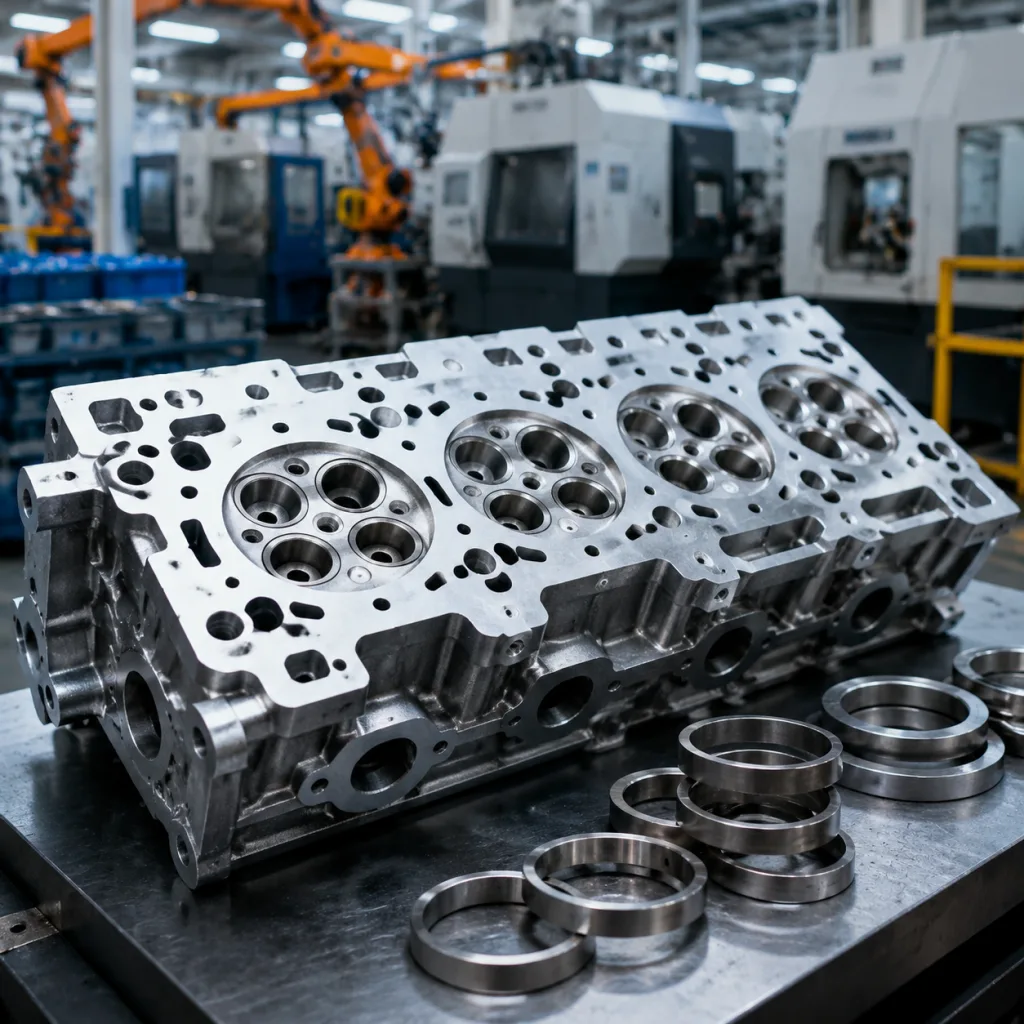
Driventus’s advantage is vertical integration. That shortens the path from drawing review to production release and reduces handoffs between machining, inspection, and export packing. It also helps programmes that need a stable re-order path for repair chains or regional warehouses.
If the sleeve is one part of a broader engine package, review our catalog and the related engine components range to consolidate sourcing.
How to run the quotation request step by step
A complete RFQ usually gets a faster and more accurate response. Keep it simple, but do not leave out the technical limits.
Vehicle or engine application and year range
OE reference if available, for example `OE 06A107065`
Sleeve type and required dimensions
Material, finish, and packaging requirements
Annual volume, trial volume, and target delivery window
Destination market and any compliance documents needed
To improve the first quote, include the target tolerance, inspection standard, and acceptance plan. For example: bore ±0.01 mm, OD per press-fit drawing, first-article report required, and production sampling at 1/50 or AQL 1.0. If you need a costed sample path, ask for separate pricing for sample pieces, pilot pieces, and mass production, because sample pricing is often higher due to manual inspection and one-off setup.
If the project needs a technical revision, attach marked drawings and photos of the failed part or the block bore. That helps engineering determine whether the issue is wear, distortion, or a previous repair fitment error. Driventus can support custom requests through custom manufacturing and commercial follow-up via request a quote.
FAQ: quick answers for procurement teams
Q: Can you supply small MOQ orders for a Lexus sleeve project? A: Yes. MOQ depends on the sleeve reference, material, and machining stage. For pilot orders, we usually work from sample approval and a defined forecast so buyers can test fitment before scaling. For stocked or semi-finished references, a pilot lot may start at 10–20 pieces, while new-tool or new-reference projects often need 200+ pieces to cover setup and inspection.
Q: Do you provide inspection records with the shipment? A: Yes. We can supply batch traceability and dimensional inspection records aligned to the agreed control plan. Buyers should specify the required data set in the RFQ, including which dimensions need 100% checks, which can be sampled, and whether first-article results must show actual values for bore, OD, length, and hardness.
Q: Do you sell directly to end consumers? A: No. Driventus sells B2B only, to distributors, OEM and Tier-1 channels, and repair networks. Driventus is an independent aftermarket manufacturer; brand names are referenced for fitment only.
Frequently asked questions
Yes. MOQ depends on the sleeve reference, material, and machining stage. For pilot orders, we usually work from sample approval and a defined forecast so buyers can test fitment before scaling. For stocked or semi-finished references, a pilot lot may start at 10–20 pieces, while new-tool or new-reference projects often need 200+ pieces to cover setup and inspection.
Yes. We can supply batch traceability and dimensional inspection records aligned to the agreed control plan. Buyers should specify the required data set in the RFQ, including which dimensions need 100% checks, which can be sampled, and whether first-article results must show actual values for bore, OD, length, and hardness.
No. Driventus sells B2B only, to distributors, OEM and Tier-1 channels, and repair networks. Driventus is an independent aftermarket manufacturer; brand names are referenced for fitment only.
If you need a cylinder sleeve supplier for a Lexus application, send the engine code, OE cross-reference, target quantity, required tolerance, and desired delivery window. We will review the specification and respond via /contact.html.