Cylinder Liner Volvo Supplier for B2B Sourcing
A capable cylinder liner Volvo supplier is not proven by a matching reference number alone. The real test is whether the factory can repeat the same bore geometry, flange height, seal-groove accuracy, wall thickness, hardness, surface finish, and export protection from one batch to the next.
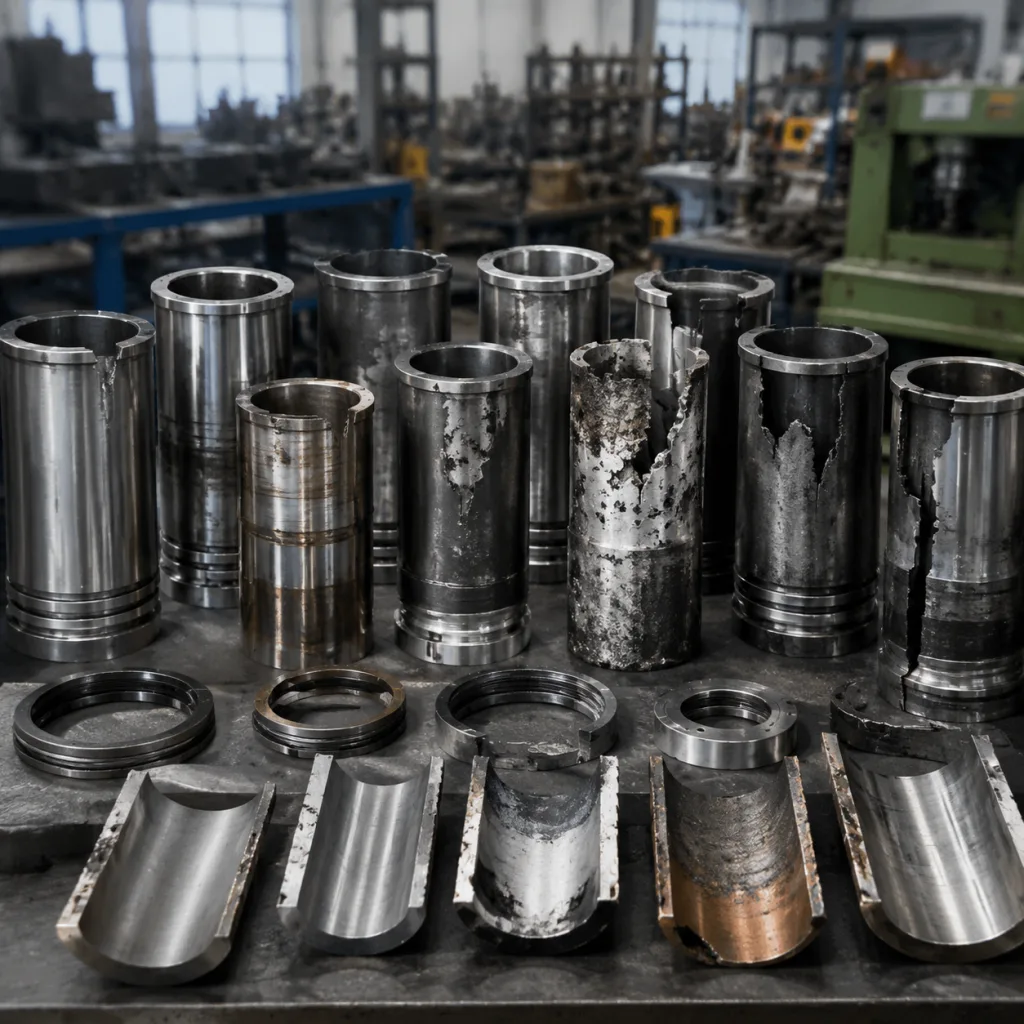
That matters because liner variation rarely stays isolated. Poor protrusion control can disturb head-gasket sealing. Rough or inconsistent honing can delay ring seating. Weak rust prevention can damage finished bores before the cartons reach your warehouse. For importers, engine-parts distributors, fleet repair channels, and private-label buyers, those risks become warranty claims, urgent replacements, and margin loss.
Driventus Auto Parts manufactures wet and dry cylinder liners in Taizhou, Zhejiang for aftermarket distribution, fleet repair supply, and buyer-specific programs. We support Volvo-fit applications by buyer specification, sample, drawing, or OE part-number cross-reference where available. Driventus is an independent aftermarket manufacturer; brand names are used only for fitment identification.
Use this guide as a sourcing framework: what to verify, where failures usually start, how to compare supply options, which tolerances deserve attention, and what evidence to request before approving production.
Approval decision: prove control before negotiating volume
Start supplier approval with the question that affects warranty cost most: can the factory repeat the same liner under production pressure? A low unit price is useful only if casting, machining, inspection, traceability, and packing remain stable after the first sample order.
Ask the supplier to quote against a controlled specification sheet, not only a photo or short OE-style reference. The approval file should connect the application, material, dimensions, inspection method, packaging, and complaint process.
Use these checks before releasing volume:
- Certification scope: Verify IATF 16949:2016 and ISO 9001:2015 status, then confirm the scope covers casting control, machining, inspection, traceability, packaging, and customer complaint handling.
- Application control: Record engine family, wet or dry design, flange style, seal-groove count, nominal bore, overall height, and finished or semi-finished status. If a buyer system already uses an OE-style reference such as OE 06A107065, include it as a cross-reference, not as the only specification.
- Material control: Review grey cast iron grade, alloy additions, hardness range, heat treatment records where applicable, and agreed material test reporting. Many aftermarket liner programs use pearlitic grey cast iron controlled around HB 190–240, but the drawing or approved sample should set the final range.
- Dimensional capability: Request historical data for bore diameter, outside diameter, flange thickness, roundness, cylindricity, surface roughness, and groove geometry. For finished liners, buyers often control bore tolerance within 0.01–0.03 mm, roundness within 0.01–0.02 mm, and flange thickness within 0.02–0.05 mm where protrusion is critical.
- Traceability: Require batch control from raw casting through machining, final inspection, packing, pallet label, invoice, and shipment documents. A practical rule is one traceable lot code per casting or machining batch, with carton labels linked to the final inspection report.
- Corrective action: Confirm containment, 8D reporting, rework segregation, root-cause analysis, replacement shipment timing, and credit-note handling. Useful targets are 24–48 hours for containment confirmation and 5–10 working days for a formal 8D report, depending on defect complexity.
Driventus maintains a documented quality system for incoming inspection, process control, final inspection, traceability, and customer complaint handling across engine and powertrain components.
Supply-scope comparison: wet, dry, kit, or private label
Not every Volvo-fit liner RFQ describes the same buying problem. One distributor may need finished wet liners with seals and retail cartons. Another may need semi-finished dry liners for a machine shop network. A fleet buyer may care more about batch consistency and fast replenishment than carton branding.
Define the supply format first, then compare price.
| Supply item | Common buyer requirement | Procurement note |
|---|---|---|
| Wet cylinder liner | Finished bore, flange, sealing grooves | Confirm liner protrusion target, O-ring groove width/depth, chamfer angle, and seal material |
| Dry cylinder liner | Finished or semi-finished bore | Confirm press-fit allowance, outside diameter tolerance, and block machining condition |
| Liner kit | Liner with seals or related consumables | Confirm seal count, compound, hardness, included consumables, and packing label format |
| Private-label liner | Distributor branding and custom carton | Confirm artwork, barcode, MOQ, pallet mark, and country-specific labelling rules |
| Sample-based production | Reverse-engineered from buyer sample | Requires dimensional report, material check, trial sample, and buyer approval before mass production |
| Order type | Typical MOQ basis | Typical lead-time factor |
|---|---|---|
| Existing aftermarket item | About 50–200 pcs per SKU or one carton/pallet lot | Stock level, final inspection queue, packing requirement; often 15–30 days if castings are available |
| Mixed trial order | Lower quantity across multiple SKUs, often 10–50 pcs per SKU | Consolidation, mixed-carton control, label confirmation; often 20–35 days |
| Private-label order | Higher MOQ per SKU or carton-printing minimum, often 300–1,000 pcs across an agreed program | Artwork approval, barcode data, carton proofing, packing material production; often 30–45 days |
| New development item | Tooling, fixture, or casting minimum; usually quoted after drawing/sample review | Sample machining, dimensional report, buyer approval, testing, and PPAP-style documentation if required; often 45–90 days |
| Annual blanket order | Forecast plus scheduled monthly or quarterly releases | Capacity reservation, raw material planning, safety stock agreement, and shipment calendar |