Crankshaft Pulley Mercedes-Benz OEM Supplier Guide
A crankshaft pulley Mercedes-Benz OEM supplier is not qualified by cross-reference alone. The part has to keep belt alignment, hold hub geometry, control runout, and—on damper designs—maintain torsional vibration performance over repeated production batches. One weak dimension can become belt noise, premature wear, or an installation return.
Driventus supplies engine and powertrain components from a vertically integrated manufacturing base in Taizhou, Zhejiang. The company exports to more than 60 countries and operates under IATF 16949:2016 and ISO 9001:2015. For B2B buyers, that changes the discussion from “can you match this number?” to “can you prove the process, document the batch, and ship within my inventory plan?”
Driventus is an independent aftermarket manufacturer; Mercedes-Benz and other brand names are used only to identify fitment. The practical qualification question is simple: can the supplier deliver the same pulley, to the same controlled specification, after the sample order is forgotten?
Decision framework: qualify by engine system, not badge name
Start with the engine and belt-drive layout. Vehicle model names overlap across years, markets, and engine variants, so badge-led sourcing creates avoidable catalogue errors. A better first pass is to map each reference by engine code, pulley type, and accessory drive geometry.
Check these items before discussing price:
- Outer diameter, inner bore, offset, and groove count
- Belt profile and alignment against adjacent accessories
- Hub interface, bolt pattern, keyway, or pressed-fit geometry
- Simple pulley versus torsional vibration damper design
- Material grade, surface finish, and corrosion protection
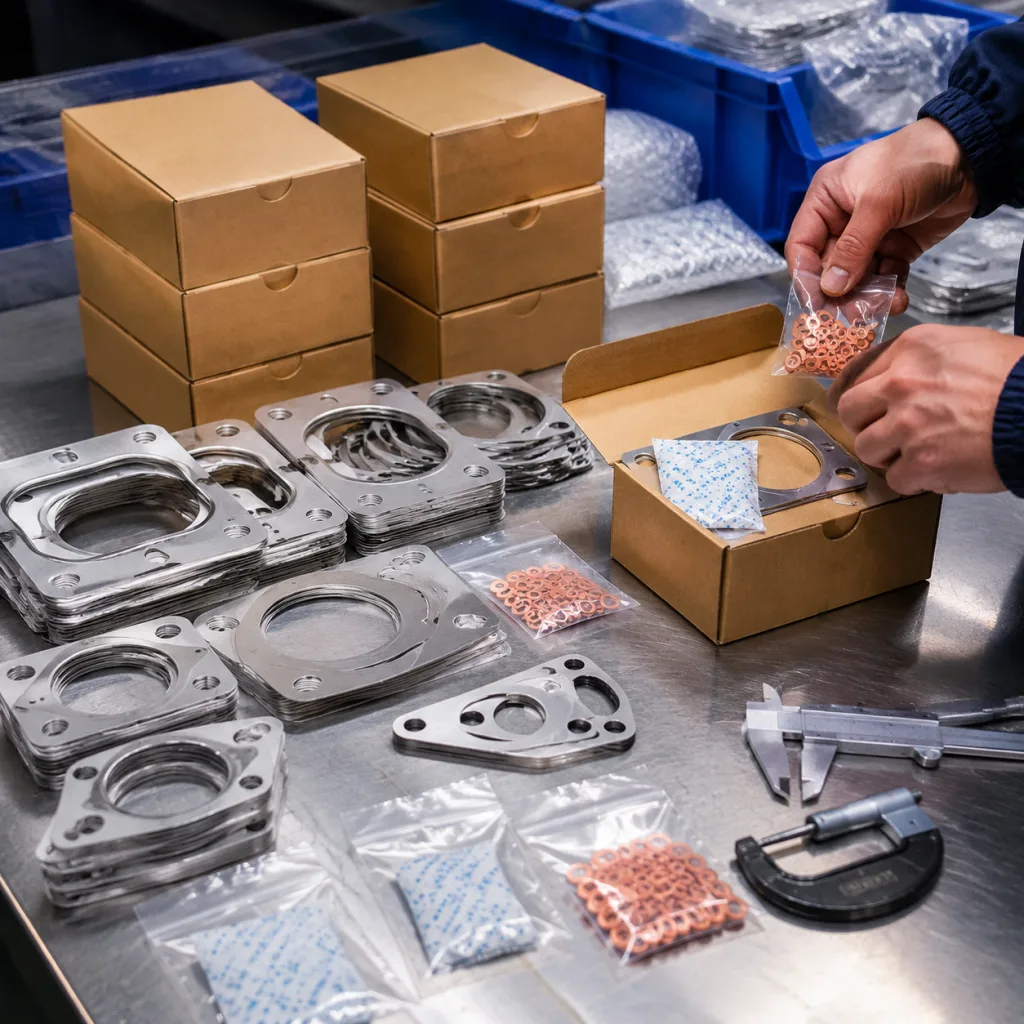
- Packaging label format for inbound traceability
For distributors, grouping by engine family can reduce duplicate SKUs and make reordering cleaner. It also helps identify where one controlled reference can serve multiple applications. For range planning, review our catalog and the engine-focused assortment in engine components.
Spec deep-dive: the dimensions that decide fitment and belt life
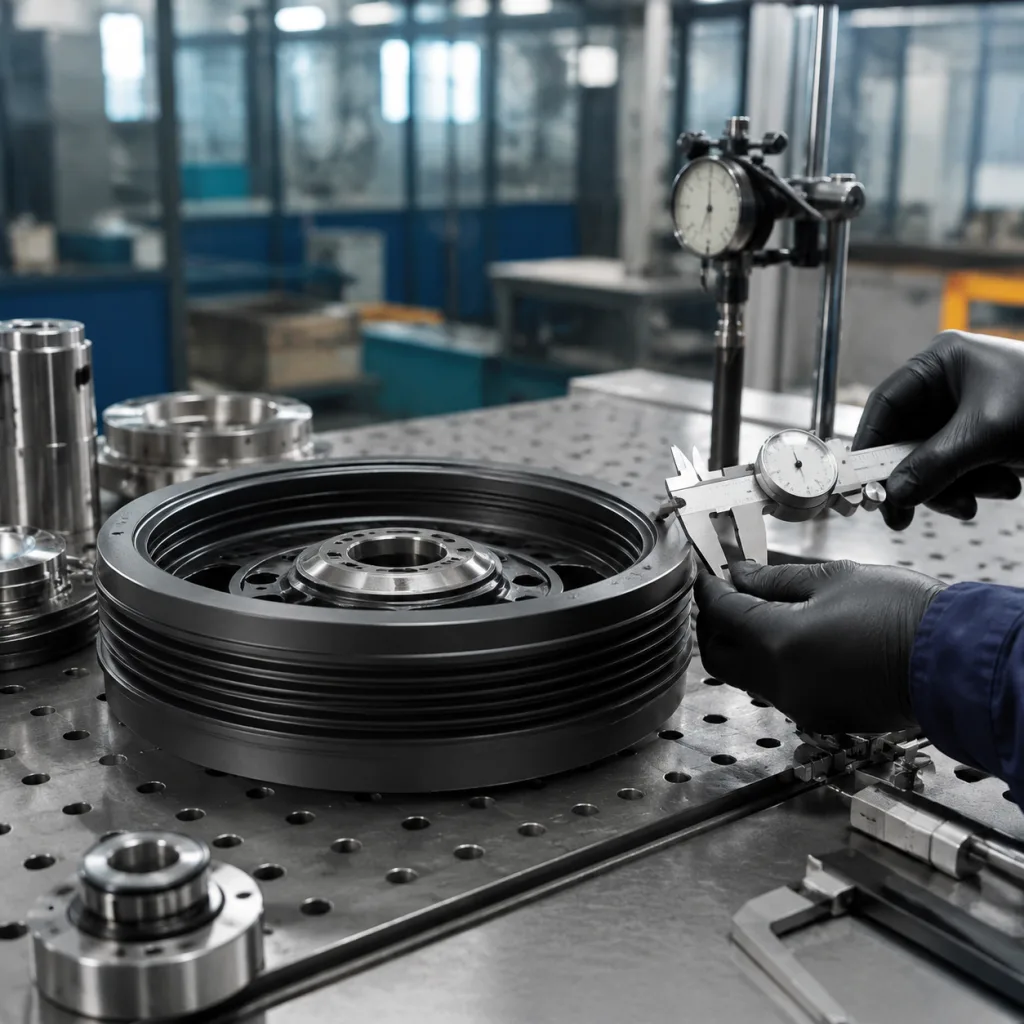
Crankshaft pulleys look simple until the belt starts walking. Small errors in runout, concentricity, groove geometry, or offset can create noise, edge wear, vibration, and customer returns. That is why the quotation should be tied to a drawing or approved sample, not only an OE-style reference number.
Material choice depends on the application. Some pulleys use cast iron or steel. Others use aluminium alloy with a bonded elastomer element for damping. In each case, the supplier should define the critical dimensions and the inspection method used to control them.
| Procurement item | What to check | Buyer risk if missed |
|---|---|---|
| Outer diameter | Belt path and accessory speed ratio | Tracking error or incorrect drive speed |
| Bore and hub fit | Press fit, bolt interface, or keyway within spec | Installation failure or looseness |
| Runout | Measured on a calibrated fixture | Vibration, belt noise, uneven wear |
| Groove profile | Correct belt engagement and pitch | Slip, squeal, accelerated belt wear |
| Face parallelism | Alignment with the accessory drive plane | Belt walk and pulley-side loading |
| Surface protection | Phosphate, paint, or coating system | Corrosion claims after storage or transit |