Cylinder Liner Seat Supplier: Sourcing Guide for Buyers
Choosing a cylinder liner seat supplier is a sourcing decision, not just a price comparison. The seat has to locate the liner correctly, hold concentricity through thermal cycling, and stay within the engine builder’s machining envelope. For procurement teams, the real filters are dimensional control, material consistency, traceability, and the factory’s ability to support repeat supply over the full programme life cycle.
Driventus is an independent aftermarket manufacturer; brand names are referenced for fitment only. As a Taizhou-based producer exporting to 60+ countries, we supply cylinder liner-related components under controlled processes aligned with IATF 16949:2016 and ISO 9001:2015. This article focuses on the decision points that matter before shortlisting a supplier: what data to request, where programmes fail, and how to separate a capable factory from a polished quote sheet.
For buyers, the objective is simple: reduce risk before the first purchase order is placed.
Decision Checklist: What to Confirm First
For a cylinder liner seat supplier, the first questions should focus on process control rather than catalogue size. Start with the dimensions that govern fit, then move to inspection method, lot traceability, and repeatability.
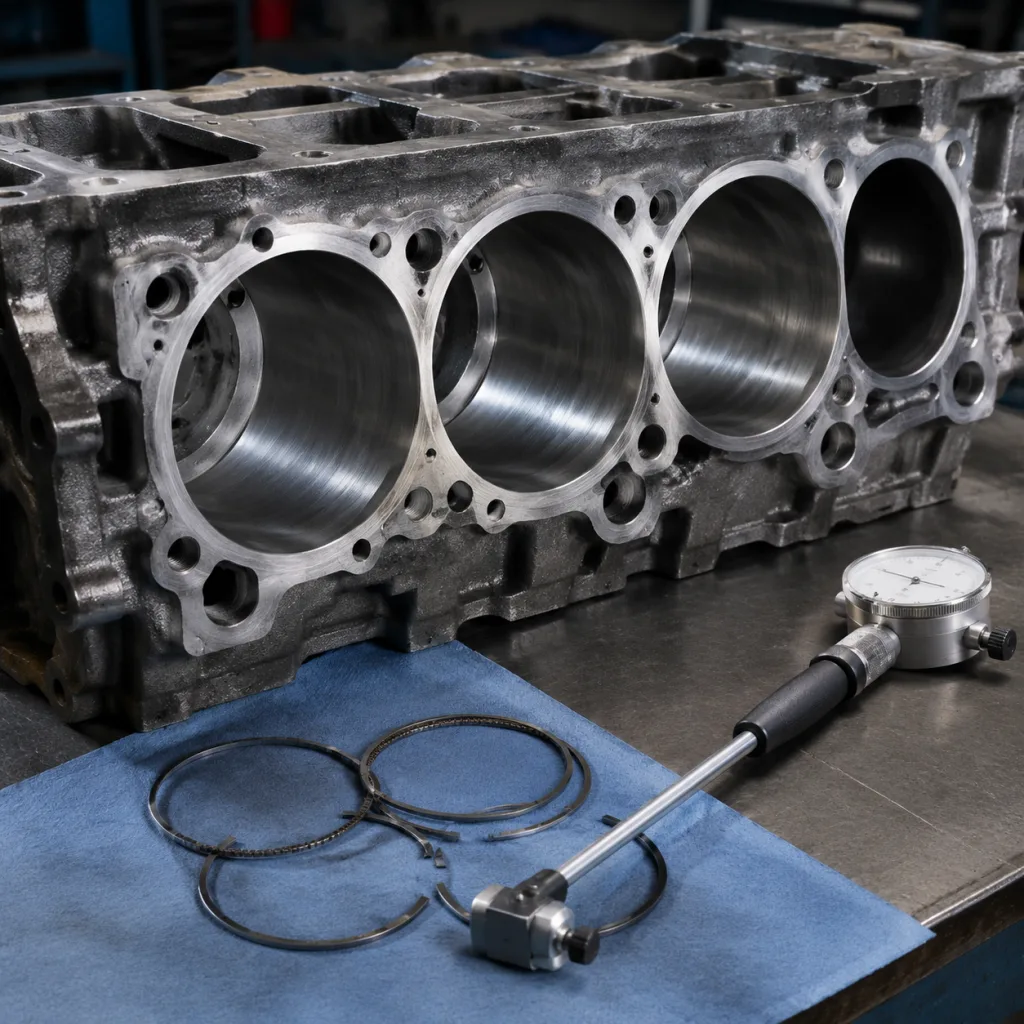
Ask for the actual controlled values, not general assurances. You want the nominal seat diameter, the tolerance band, the measured depth range, the bore-axis concentricity limit, and the flatness spec on the seating face. If the supplier cannot say whether a critical dimension is held to ±0.02 mm, ±0.03 mm, or another agreed limit, the part is not ready for release.
Key questions to ask:
What is the controlled tolerance on seat diameter and depth?
What is the bore-axis concentricity limit, and how is it measured?
Is seating-face flatness controlled on a datum fixture or coordinate system?
Which inspection records are retained by batch and lot number?
Can the supplier support OE 06A107065-style cross-reference requests when the application is known?
What is the normal MOQ for standard and custom parts?
What is the quoted lead time for sample, first order, and repeat order?
What is the incoming material spec, hardness range, and heat-treatment condition if applicable?
A qualified supplier should answer directly and back the claims with inspection data, material certificates, and packaging specifications. If the response stays generic, the sourcing risk is usually high.
Spec Deep-Dive: Dimensions That Drive Fit and Life
The seat must support liner retention and sealing without inducing distortion. That makes machining accuracy critical. Buyers should review the same dimensions an engine machinist would check during incoming inspection.
The useful way to source this part is to tie each feature to a practical acceptance number. Seat diameter is usually the first gate because it sets liner interference. Depending on the programme, buyers may see interference targets in the 0.01 mm to 0.05 mm range, with tighter or looser bands depending on base material, heat treatment, and thermal load. Seat depth often needs control within ±0.02 mm to ±0.05 mm because depth variation changes liner protrusion and head-gasket load. Concentricity is commonly checked against the bore centreline and should be stated in microns or hundredths of a millimetre, not as a vague “good alignment” note.
Item
What to verify
Why it matters
Seat diameter
Matches drawing and interference target, often within ±0.01 mm to ±0.05 mm depending on programme
Controls liner location
Seat depth
Within specified range, commonly ±0.02 mm to ±0.05 mm
Affects protrusion and head gasket sealing
Flatness
Measured on the seating face, often with a maximum deviation stated in mm
Reduces uneven load
Concentricity
Relative to bore centreline, often stated as TIR in mm
Prevents installation error
Surface finish
Documented by process, commonly Ra-controlled where required
Influences contact stability
Material condition
Casting, billet, or machined part, with hardness or heat-treatment state if applicable
Affects thermal response
</tr></thead><tbody> </tbody></table>If the programme requires custom geometry, ask for a controlled drawing review before tooling starts. At this stage, buyers should confirm the datum structure, critical-to-quality dimensions, sampling plan, and any machining allowances for finish operations at the engine plant. Driventus supports custom manufacturing when the application needs a non-standard seat profile, flange form, or machining allowance.
Evidence File: Quality Proof to Request
A sourcing file should include more than a certificate logo. Ask for current scope documents and batch-level traceability. Driventus operates under a quality system built around IATF 16949:2016 and ISO 9001:2015, which are the baseline references many industrial buyers expect.
For a cylinder liner seat programme, the buyer should request objective evidence that the factory can repeat the same control method over time. That usually means a sample report with measured values for diameter, depth, concentricity, and flatness; a list of the gauges used; and the calibration status of those gauges. If the seat is made from a specific alloy or cast base, ask for the material certificate by heat number and the traceability link from raw material to finished carton. If the supplier promises a Cpk target, request the actual process-capability study and the sample size used to calculate it. A real release package should show the numbers, not just the intention.
Evidence to request:
ISO 9001:2015 certificate with scope
IATF 16949:2016 certificate where applicable
Incoming material inspection records
In-process inspection plan and final inspection report
Lot traceability from raw material to packed carton
Nonconformance and corrective action procedure
Packaging standard and corrosion protection method
Gauge list with calibration status and expiry dates
First-article inspection report with measured values
Process-capability evidence for critical dimensions where available
If the liners or seats will operate in regulated markets, check material compliance pathways against REACH (EC) No 1907/2006 where relevant. For export programmes, also confirm whether the supplier can provide consistent labelling, carton marks, and commercial documents for customs clearance. Buyers should also verify whether the supplier can hold an agreed revision level and prevent unapproved drawing changes during production runs.
Commercial Model: MOQ, Lead Time, and Price Breaks
Buyers typically separate cylinder liner seat supply into three models: catalogue stock, made-to-order machining, and programme-specific development. Each model carries different commercial terms.
Stock supply: lowest setup cost, fastest shipment, and often the best fit for distributors and repair-chain replenishment.
Made-to-order: preferred when drawings are fixed but demand is intermittent.
Development supply: used when the application needs a new geometry, a new tolerance stack, or a trial run before release.
Commercially, the buyer should not treat MOQ as a fixed number until the process route is known. A stocked standard item may be sold from 20 to 100 pieces per line item depending on packing configuration, while a custom-machined item often needs a larger opening order to offset setup, fixture, and inspection cost. For programme parts, the MOQ may be tied to a pilot run of 30 to 200 pieces, followed by a repeat batch once the drawing is frozen. The right question is not only “what is MOQ?” but “what MOQ applies to standard, sample, pilot, and repeat production, and what changes once tooling is amortised?”
Lead time should also be split by phase. A realistic quote should show sample lead time, first-batch lead time, and repeat lead time separately. For example, a stock item may ship in 3 to 7 working days if inventory is on hand; a made-to-order batch may need 15 to 30 days after drawing approval; and a development part may take 30 to 45 days if fixtures or extra inspection are required. Buyers should ask whether lead time begins at PO receipt, drawing approval, deposit payment, or final sign-off, because that difference affects procurement planning.
Typical sourcing questions:
1. What is the minimum order quantity for each model? 2. What is the sample lead time and approval process? 3. Can the supplier commit to repeat batches with the same inspection method? 4. Is packaging suitable for sea freight and long warehouse storage? 5. Can urgent replenishment be supported after the first tooling release? 6. What is the price break at 100, 300, and 1,000 pieces? 7. Is the quote based on EXW, FOB, or another delivery term? 8. Are tooling, fixture, and inspection charges separated from unit price?
For buyers managing multi-country inventory, the safest approach is to define a stable drawing, agree the inspection method, then lock commercial terms around batch size and replenishment cadence. A clear quote should also show how price changes with annual volume, because a stable programme often shifts from prototype economics to repetitive production economics after the first two purchase orders.
Factory Audit: How to Catch Failure Modes Early
A factory audit should confirm that the part is made in a controlled process, not assembled from opportunistic subcontract work. For a cylinder liner seat, the process chain matters as much as the drawing.
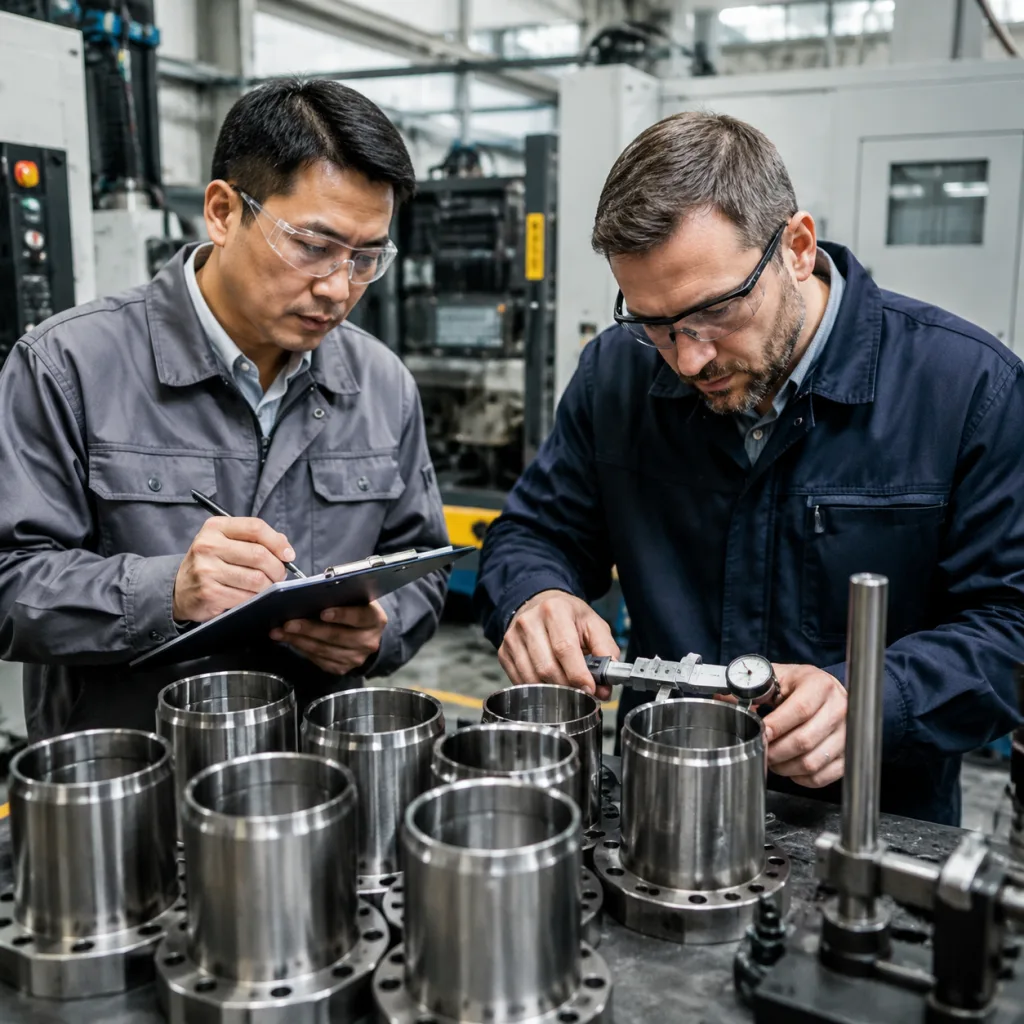
The fastest way to spot risk is to look for failure modes, not slogans. Ask how the factory prevents thermal distortion after heat treatment, how it controls fixture wear, how it separates rework from first-pass stock, and how it handles gauge drift. If the production route is stable, the factory should be able to show the machining sequence, fixture controls, gauge points, and final cleaning method without hesitation.
Check these points during qualification:
CNC capability and fixture repeatability
Calibrated gauges with current records
Incoming material identification
First-article approval workflow
Final inspection sampling frequency
Segregation of conforming and nonconforming stock
Export packing and humidity protection
Traceability code format tied to lot, date, and machine
Re-inspection rules after rework or hold status
Cleaning and rust-prevention process before carton sealing
When possible, request photographs or video from the actual production line, plus a sample marked with the intended traceability code. If the application is tied to a known OE reference, ask for an OE 06A107065-style cross-check only for fitment alignment, not as an endorsement. Buyers should also ask for the inspection fixture drawing or fixture description, because fixture repeatability is often the difference between a stable seat and a borderline seat that passes only on the first few pieces.
Driventus supplies B2B buyers in the EU, UK, US, Canada, Australia, and Brazil, and can support audits from distributors, OEM/Tier-1 sourcing teams, and repair-chain buyers. That support is most useful when the buyer needs a release package, a repeat-order control method, and a documented packing standard that can be used across several warehouses.
Sourcing Strategy: When to Consolidate Adjacent Parts
Procurement teams often reduce risk by consolidating adjacent engine components with one supplier when the quality system is stable. That does not mean every part is identical; it means the same controls are applied across machining, inspection, traceability, and logistics.
For buyers building a broader engine programme, it can be efficient to align the cylinder liner seat with related items from our catalog and, where relevant, the broader engine components range. This helps standardise supplier audits, document review, and inbound inspection routines.
The commercial advantage is consistency: one reporting format, one corrective-action path, and one packaging standard. The technical advantage is fewer interface surprises when the seat, liner, gasket, or water-jacket-related parts must work together on the same platform. Consolidation also helps buyers negotiate better batch pricing, because the supplier can combine setup, inspection, and logistics planning across multiple SKUs instead of treating each line as a standalone run.
A good consolidation plan should still keep part-level controls separate. The buyer should maintain individual drawings, revision status, critical dimensions, and acceptance criteria for each part number, even if the supplier, warehouse, and commercial terms are shared. That approach keeps purchasing simple without blurring technical responsibility.
Driventus is an independent aftermarket manufacturer; brand names are referenced for fitment only.
Frequently asked questions
Check tolerance control, traceability, certificates, sample lead time, MOQ, and whether the supplier can provide batch inspection records. If possible, review the actual machining and final inspection process. For critical programmes, also confirm the allowed concentricity, depth tolerance, and packing method before issuing the first PO.
Yes. Custom geometry is usually handled through drawing review, sample approval, and controlled production release. The key is agreeing the inspection method before tooling or batch production starts, including the target diameter, depth, concentricity, and any interference or finish requirements.
No. Driventus supplies aftermarket distributors, OEM/Tier-1 buyers, and multi-location repair chains. We also support programmes that need export packaging, traceability, and repeat supply, including pilot runs, replenishment batches, and long-term production support.
If you are shortlisting a cylinder liner seat supplier, send your drawing, OE reference, or sample requirements and we will review the fitment and supply path with you. Start here: /contact.html