For buyers searching for an egr valve citroen manufacturer china, the real question is not “who has the lowest quote?” It is whether the part will fit, validate, and keep moving through repeat orders without creating warranty noise. The same Citroën badge can hide different engine codes, connector layouts, emissions calibrations, and mounting patterns. That is why procurement needs fitment data, test evidence, traceability, and supply stability in the same review.
Driventus is an independent aftermarket manufacturer, and brand names are referenced for fitment only. We supply engine and powertrain components from Taizhou, Zhejiang, to distributors, workshops, and buying teams that need stable sourcing from an audited factory. This article focuses on the decisions that prevent mismatched parts, rework, and late deliveries, not on generic product descriptions.
Start with the fitment map, not the vehicle badge
When sourcing an EGR valve for Citroën applications, the starting point is the engine code and OE cross-reference, not the model name on the tailgate. The same vehicle line can carry different EGR designs across Euro 4, Euro 5, and Euro 6 variants.
Fitment data: engine code, year range, emissions stage, OE number, connector type, coolant or vacuum interfaces, and harness pin count
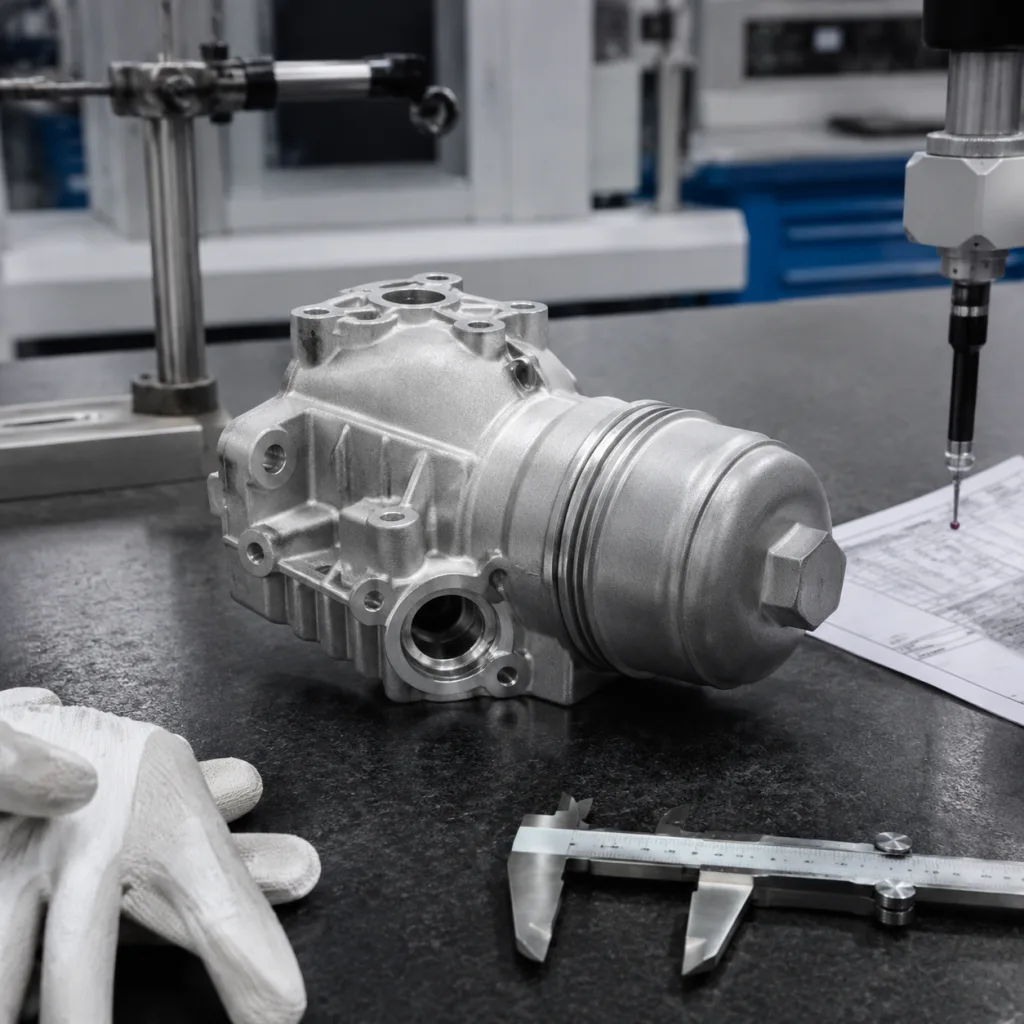
Dimensional control: flange face flatness within 0.10 mm, bolt-hole positional tolerance within ±0.20 mm, and sealing-face roughness matched to the gasket design
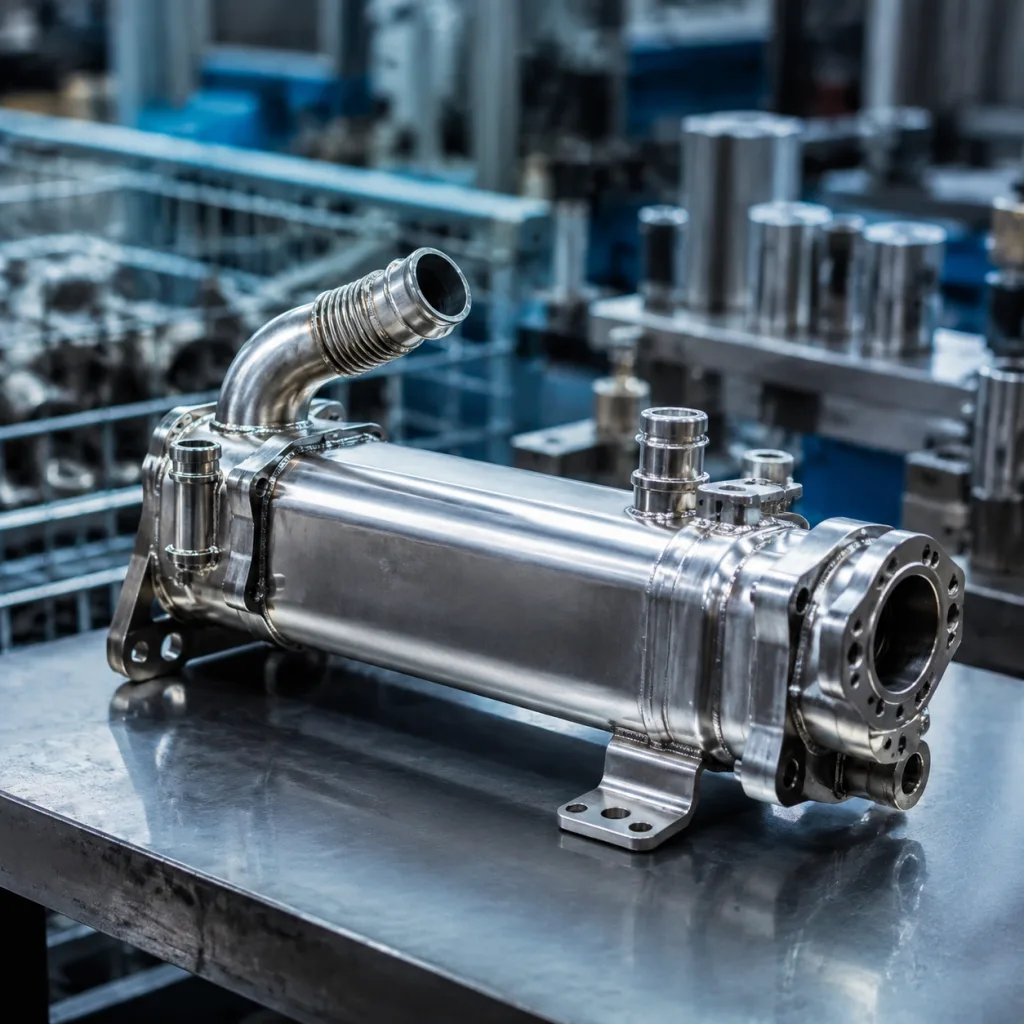
Construction: stainless steel or aluminium body, pintle or stepper-motor actuation, cooler compatibility where required, and gasket material matched to exhaust temperature
Procurement data: MOQ, sampling lead time, mass-production lead time, packaging method, carton labelling, and target annual consumption
Documentation: dimensional drawing, material declaration, traceability lot code, test report, and approved reference sample record
For procurement teams, the useful comparison is application by application. A part that looks right can still fail on connector geometry or calibration behavior. Driventus can support part matching through our catalog and engineering review. If you need a broader powertrain programme, see our catalog and engine components.
Where factories usually fail
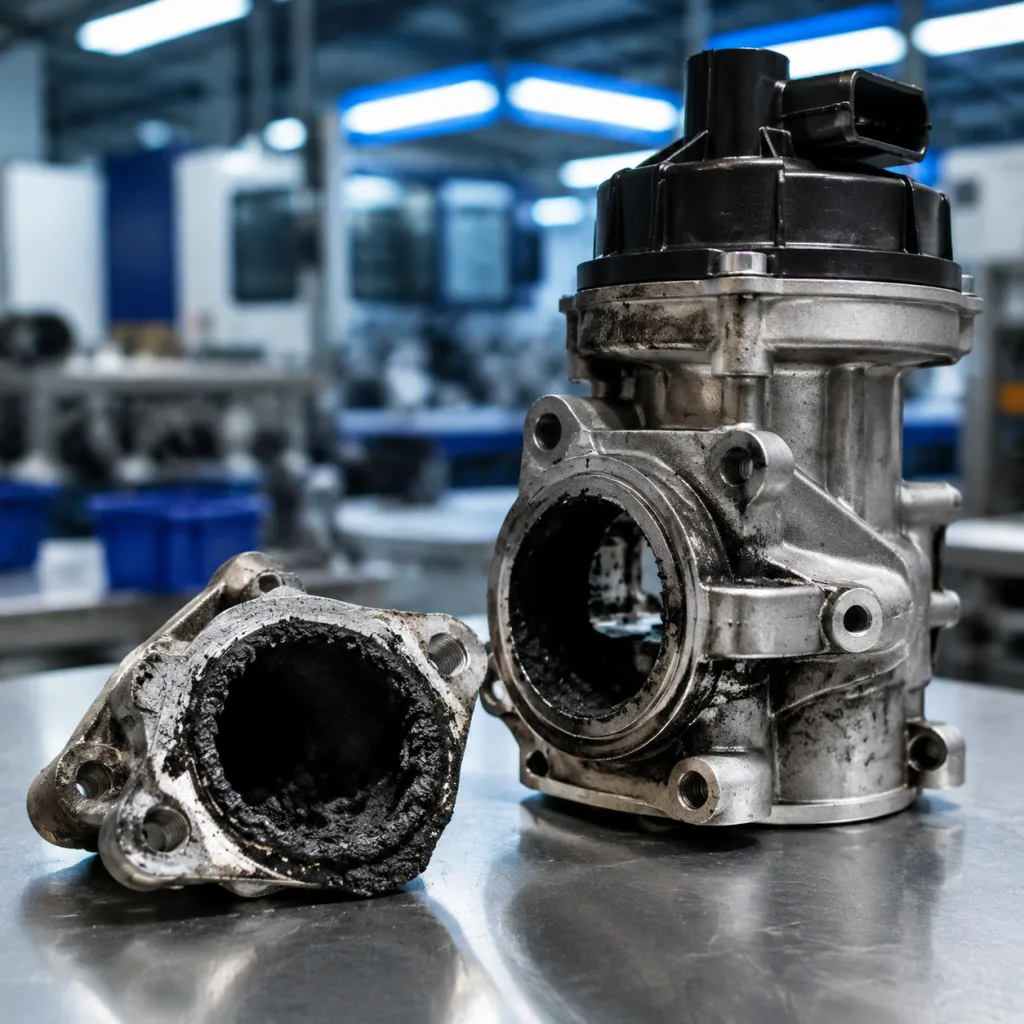
EGR valves tend to fail in a few predictable ways. The issue is rarely just “bad material.” More often it is weak process control.
Leak-test pressure, dwell time, and acceptance limit
Sticking
Slow response or valve hang-up under soot loading
Cycle-test method, contamination control, and lubrication policy
Connector issues
Intermittent signal loss or poor mating force
Terminal supplier, pin retention check, and gauge method
Thermal distortion
Warped sealing faces or casing movement after heat soak
Material grade, heat-cycle data, and flatness control
Traceability gaps
Hard-to-isolate complaints and weak recall response
Lot marking, batch record, and inspection linkage
</tr></thead><tbody> </tbody></table>A supplier should be able to show process control, not just product photos. For critical parts, ask whether the factory performs 100% end-of-line function testing and whether the test limits are written into the control plan. Driventus operates under an established quality system and uses documented inspection points across machining, assembly, and packing. For buyers comparing multiple factories, that evidence is usually more useful than a low opening quote.
Compare the test pack, not just the sample
For replacement supply, OE-equivalence means the valve fits, responds, and seals within the engine’s expected range. External shape alone is not enough.
Typical validation checks
Dimensional inspection against an approved sample or OE reference part, including flange thickness, bolt spacing, and connector keying
Connector and harness fit check with a mating force target that prevents loose engagement but avoids terminal damage
Open/close response test under controlled voltage or command input, with response time recorded from trigger to seat movement
Pressure or leakage verification at room and elevated temperature, using a defined test medium and fixed dwell period
Thermal cycling to confirm stability across repeated heat exposure, often 50-200 cycles depending on programme severity
Functional repeatability check after cycling to confirm baseline opening and sealing behavior
The key question is simple: can the supplier explain how the results were generated? A clean sample means little if the test method is undocumented or the acceptance criteria change from one batch to the next. If the part is destined for fleets operating under stricter emissions maintenance programmes, response curve consistency matters more than nominal appearance. Driventus can support custom manufacturing when the application requires a revised housing, connector orientation, or packaging specification. For validation packs, request the approved sample number, test fixture reference, and exact measurement units so repeat orders can be compared without guesswork.
Plan the order around lead time and SKU mix
Supply planning is where many sourcing programmes succeed or fail. For aftermarket distributors and multi-location repair chains, stockout risk is often more expensive than a modest unit-price difference.
Sample lead time: often 7-15 days after specification confirmation; new tooling, connector changes, or thermal-test requirements can extend this to 20-30 days
Production lead time: typically 25-45 days for standard programmes; large releases or raw-material shortages can push this to 50-60 days
MOQ: standard programmes may start at 50-100 pieces per SKU; customized packaging or revised tooling often needs 200-500 pieces per order
Pricing logic: quote should separate unit price, tooling if any, test fees if any, and packaging cost so buyers can compare true landed cost
Packing: individual box, labelled inner carton, master carton, and palletisation for export, with carton quantity fixed for replenishment planning
For Citroën coverage, consolidation is usually more efficient than splitting small orders across every engine variant. One sourcing programme reduces duplicate packaging setups and can improve forecast accuracy. A buyer can also lower risk by asking for a rolling forecast, for example 60 days firm plus 90 days tentative, and by locking a reorder point based on average weekly sell-through plus transit time. Driventus exports to 60+ countries and works with procurement teams that need repeatable replenishment for regional distribution.
Use the quote as a technical checklist
A quote should do more than state a price. It should let the buyer see whether the factory understands the application.
Buyer checklist 1. Confirm the OE cross-reference only when your source data already ties it to engine code, emissions stage, and connector type. 2. Verify engine code, model year, emissions stage, and mounting pattern against an approved sample or vehicle application sheet. 3. Request a dimensional drawing, material declaration, and inspection report with measured values, not just pass/fail statements. 4. Confirm certification: IATF 16949:2016 and ISO 9001:2015, plus REACH documentation for EU supply. 5. Ask for sample lead time, production lead time, MOQ, and the minimum reorder quantity at the quoted price. 6. Review packaging, labelling, export carton requirements, pallet count, and whether mixed-SKU consolidation is allowed. 7. Ask for warranty terms, claim handling process, and the threshold for chargeback or replacement approval.
If the sourcing programme needs private-label packing, mixed-SKU consolidation, or controlled revision management, Driventus can support the commercial setup through our request a quote channel.
Frequently asked questions
Yes. We support application matching by engine code, OE cross-reference, connector type, mounting geometry, and emissions stage. Brand names are referenced for fitment only.
Ask for IATF 16949:2016 and ISO 9001:2015 at minimum. For EU trade, also confirm REACH (EC) No 1907/2006 material compliance documentation, batch traceability, and end-of-line test records.
Yes. We support custom manufacturing for approved programmes, including packaging, labelling, specification adjustments, and controlled revisions after technical review.
If you are building a Citroën EGR valve sourcing programme, send your OE number, engine code, annual volume, target MOQ, and required lead time for review. Contact us at /contact.html