Cylinder Liner Mitsubishi Supplier for B2B Sourcing
A cylinder liner can pass a catalogue lookup and still fail in the engine bay. Bore geometry, flange seating, wall stability, metallurgy, surface finish, corrosion protection, and traceable records all have to survive the move from sample approval to the tenth repeat order.
That is the real sourcing question: can the factory reproduce the same Mitsubishi-fit liner, lot after lot, with evidence before shipment?
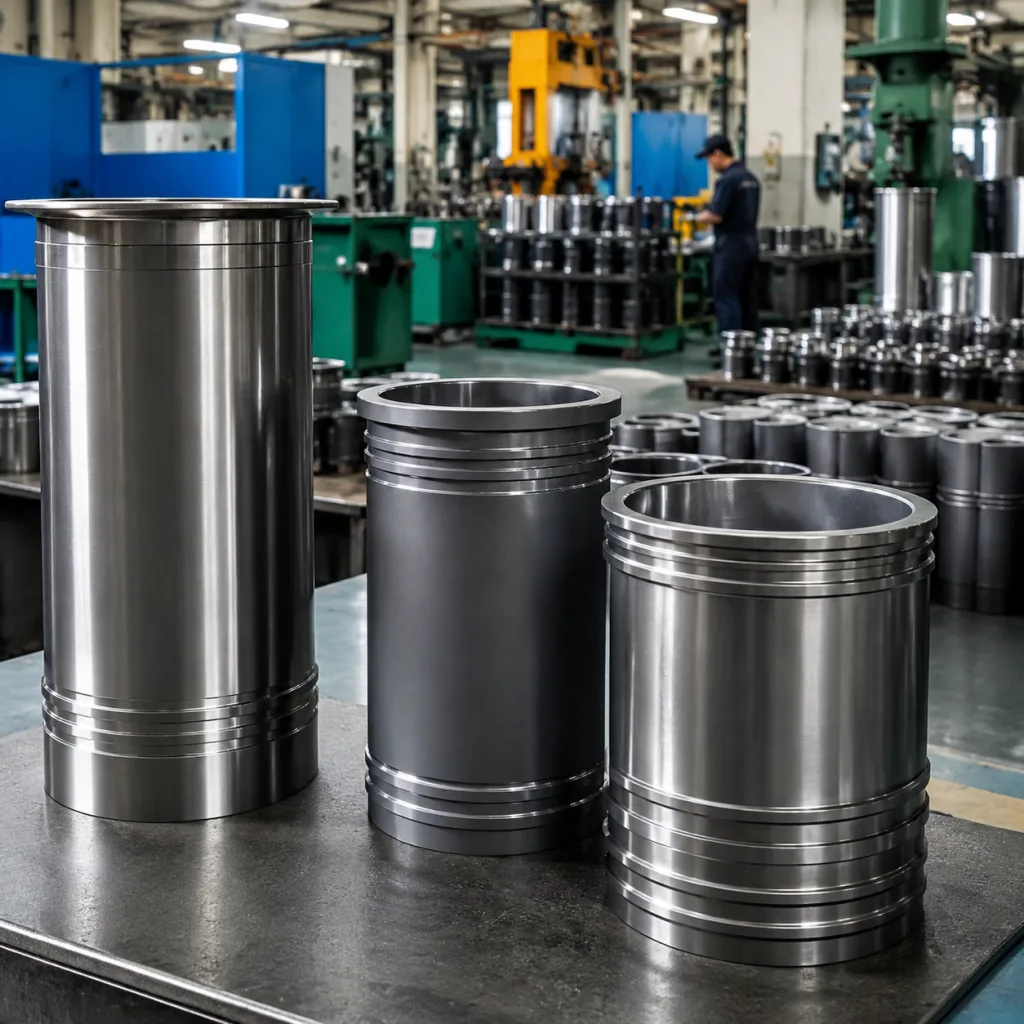
Driventus manufactures engine and powertrain components in Taizhou, Zhejiang, supplying Mitsubishi-fit cylinder liners for diesel and petrol applications used in passenger cars, light commercial vehicles, agricultural equipment, and industrial engines. Production is managed under IATF 16949:2016 and ISO 9001:2015 systems, with inspection records available for commercial review. Driventus is an independent aftermarket manufacturer; Mitsubishi and other brand names are referenced only to identify fitment compatibility.
Decision framework: screen the supplier before you compare prices
Start with risk, not the unit price. A cylinder liner is a precision engine component, not a cast sleeve that only needs to match a part number. After installation, it must hold bore roundness, transfer heat, support ring bedding, seat correctly at the flange or shoulder, and remain stable through thermal cycling and normal load.
A useful first screen for a cylinder liner Mitsubishi supplier should answer six questions:
Does the application match the process route? Confirm engine family, displacement, wet or dry liner type, flanged or non-flanged design, finished or semi-finished bore, piston-ring material, and whether the part is sold individually or as a matched repair set.
Is the material controlled by lot? Review centrifugal casting or static casting route, alloy grade, melt chemistry, hardness range, and microstructure consistency. For many grey cast iron liners, buyers commonly review hardness in the approximate 180-260 HB range, but the agreed drawing or sample standard should control acceptance.
Can machining capability be proven? Critical points include outside diameter, inside diameter, flange thickness, chamfer, seating face runout, wall thickness, and surface finish. Typical tools include bore gauges, outside micrometers, height gauges, plug gauges, roughness testers, and custom fixtures.
Can one carton be traced backwards? Heat number, machining lot, operator record, inspection report, packing list reference, and carton or pallet identification should connect. A workable standard is one traceability code per casting or machining lot tied to final inspection and shipment records.
Will the goods survive export handling? Documentation may include HS code support, commercial invoice, packing list, country-of-origin statement where applicable, and pallet labelling suitable for warehouse receiving. Cartons should protect oiled liners from abrasion, moisture, and mixed-reference errors during sea freight.
Is the compliance file usable? Evidence should align with IATF 16949:2016, ISO 9001:2015, and buyer-specific restricted-substance declarations where REACH (EC) No 1907/2006 is relevant.
Driventus supplies standard aftermarket references through our catalog and can review drawings, physical samples, cross-reference data, or inspection reports for controlled regional programmes. For an initial screen, request a sample inspection report showing at least bore size, OD, flange height, overall length, wall thickness, hardness, roughness, visual cleanliness, and packing method.
Specification deep-dive: the dimensions that decide fitment
Mitsubishi-fit applications vary by engine family, duty cycle, and market. A passenger-car distributor may need fast-moving sleeves with reliable replenishment. An industrial-engine buyer may need thicker-wall wet liners, tight flange-height control, and stronger corrosion protection for long-distance sea freight.
A strong enquiry identifies the application precisely: engine code, vehicle or equipment model, displacement, liner type, bore condition, and any existing aftermarket reference.
Sourcing item
Typical buyer requirement
Driventus control point
Liner type
Wet, dry, flanged, straight sleeve, finished or semi-finished
Drawing and sample confirmation before tooling release
Material
Alloy grey cast iron or application-dependent grade
Melt chemistry, hardness checks, and material review
Bore finish
Honed surface suitable for ring bedding
Roughness measurement, cross-hatch visual check, cleaning control
Dimensional tolerance
Buyer drawing, sample-based target, or agreed specification
In-process gauging and final dimensional inspection
Seating areas
Clean flange, shoulder, and chamfer geometry
Runout, flatness, burr control, and edge condition review
Packaging
Export cartons, set packing, or palletised bulk
Anti-rust oil film, sleeve protection, carton strength, and pallet marks
</tr></thead><tbody> </tbody></table>Do not approve a supplier on nominal bore alone. Confirm finished bore diameter, OD interference or clearance requirement, flange outside diameter, flange height, overall length, chamfer size, counterbore detail, and whether the buyer needs final-honed or semi-finished stock for local machining.
Finished bore tolerances often need control within hundredths of a millimetre. For wet liners, flange height, seating-face flatness, and perpendicularity can be even more important because sealing depends on them. Ask for measurements at top, middle, and bottom positions, and at 0°/90° orientation, so taper and ovality are visible before approval.
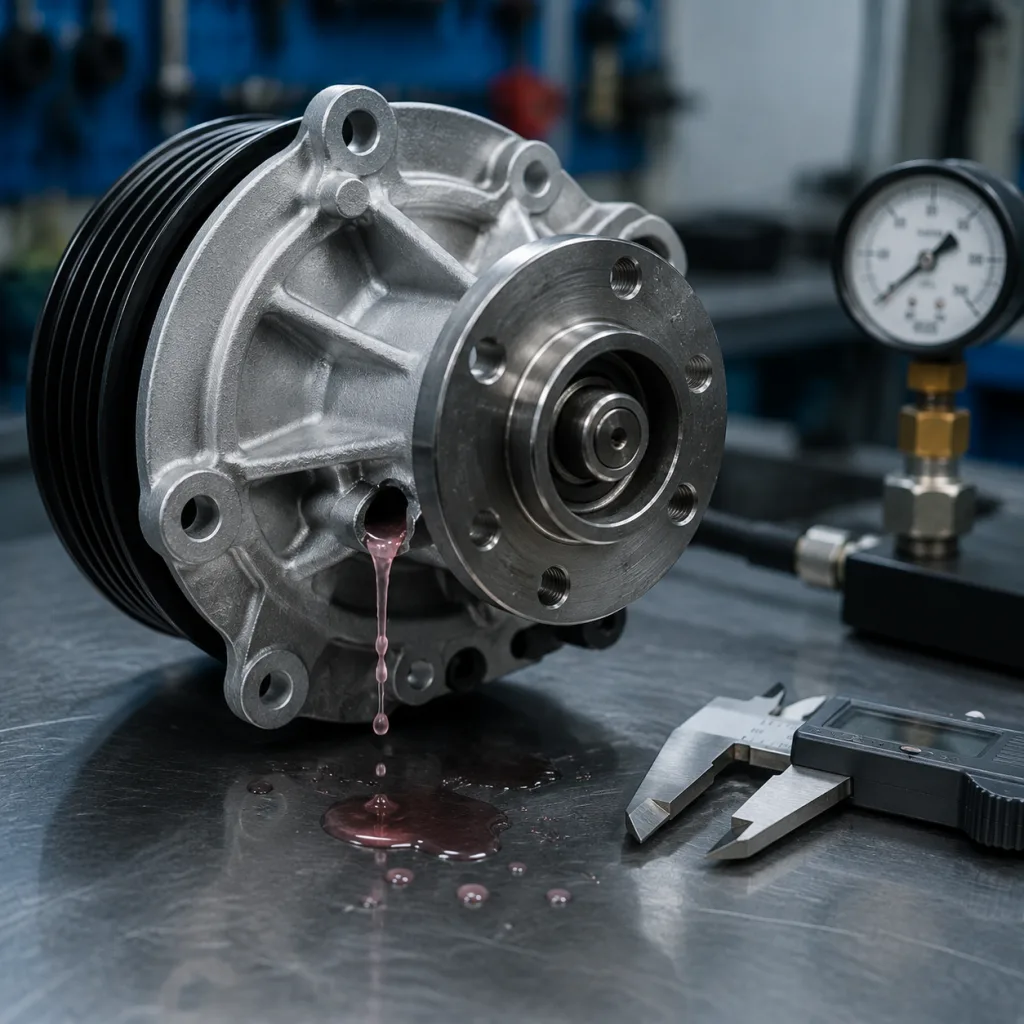
For complete engine repair programmes, buyers can also review related engine components, including pistons, piston rings, gaskets, crankshafts, and water pumps. Consolidating related parts can reduce mixed-container complexity and administrative work, but each component still needs approval against its own drawing, sample, inspection criteria, and packaging standard.
Planning scenarios: active stock, dormant tooling, or new development
Lead time is not one number. It depends on whether the liner is an active reference, a dormant reference with existing tooling, a sample-based development, or a fully custom drawing project.
Cylinder liner production may include casting, heat treatment where specified, rough machining, stress relief or ageing where required, finish machining, honing, washing, drying, anti-rust treatment, inspection, inner wrapping, carton packing, palletising, and final document preparation. Each step can affect timing.
Use the sourcing scenario to plan MOQ and schedule:
Existing active reference: lower MOQ, commonly 50-200 pieces per reference, or mixed with other engine-parts orders when carton and pallet consolidation is practical. Repeat production is often planned in 20-35 days after deposit and artwork confirmation, subject to order load.
Dormant reference with existing tooling: moderate MOQ, commonly 100-300 pieces, with extra time for tooling inspection, trial casting or trial machining, and renewed dimensional confirmation. Plan roughly 35-50 days before shipment-ready goods.
New sample-based development: higher MOQ, often 300-500 pieces or more depending on casting tooling, liner size, and machining fixtures. Sampling may take 25-45 days, with mass production scheduled after buyer approval.
Custom drawing project: project-based MOQ, with tooling, gauges, and fixtures quoted separately where needed. PPAP-style documentation, control plans, capability data, or special test records should be priced and scheduled before purchase order release.
Price logic usually follows casting weight, alloy specification, scrap allowance, machining time, honing requirement, inspection level, packing format, MOQ, and exchange-rate assumptions. A low unit price can become expensive if it excludes sample rework, anti-rust packaging, buyer labels, dimensional reports, or palletisation.
For landed-cost comparison, request pricing by reference and by quantity break: sample lot, MOQ lot, 500 pieces, 1,000 pieces, and annual blanket volume.
For stocked or repeat references, provide a 3- to 6-month forecast where possible. Forecasting helps reserve casting and machining capacity, supports raw-material planning, and reduces last-minute air-freight decisions. Multi-location repair chains may use annual blanket orders with scheduled monthly or quarterly releases to keep inventory predictable without forcing a single oversized shipment.
Driventus supports FOB Ningbo or Shanghai terms as well as other agreed Incoterms. Export cartons, neutral labels, buyer labels, barcode formats, pallet dimensions, and warehouse marks can be discussed during quotation. Buyers qualifying a cylinder liner Mitsubishi supplier should send engine details, annual volume, target port, packing requirements, document expectations, and any inspection standard with the first enquiry.
Audit failure modes: what usually goes wrong before a claim appears
Quality certificates matter, but they are only the starting point. The real question is whether the factory can prevent the common failures that become warranty claims, warehouse disputes, or delayed container releases.
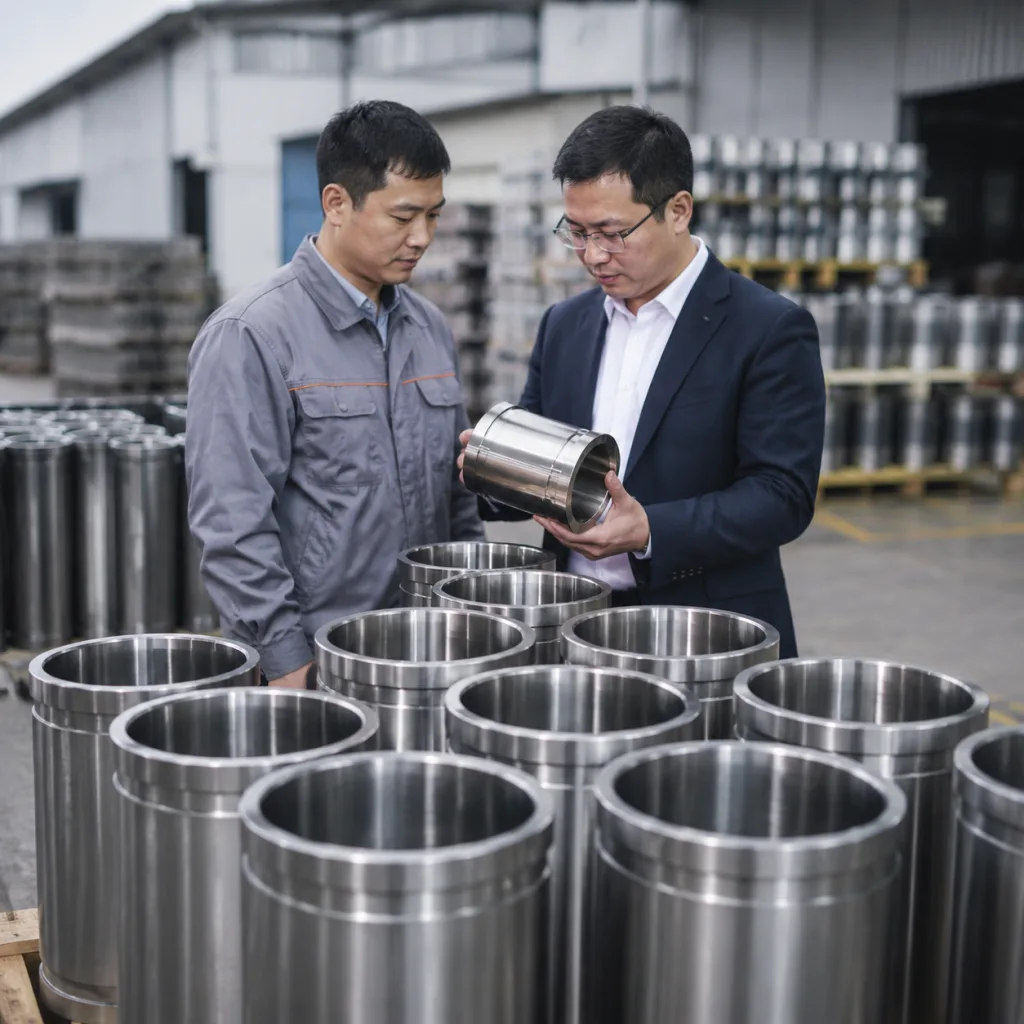
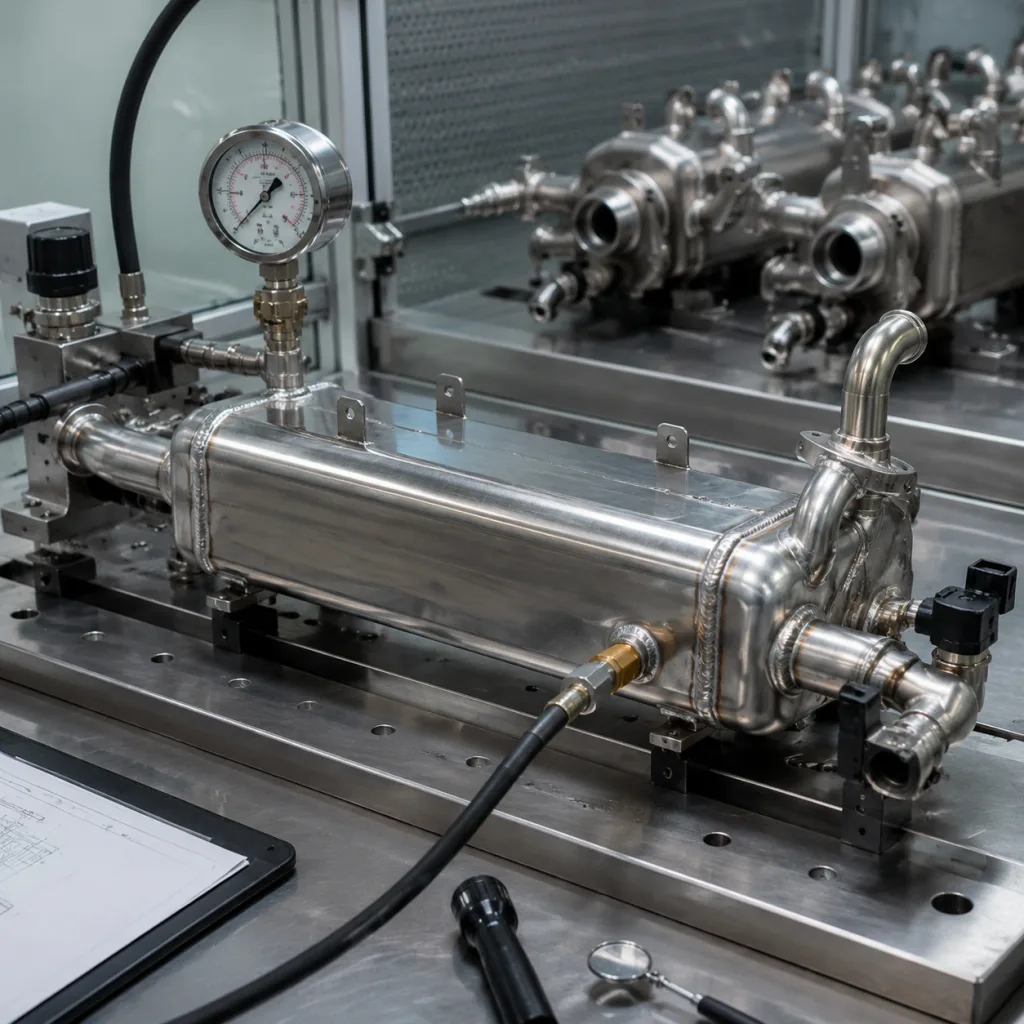
Driventus operates a documented quality system aligned with IATF 16949:2016 and ISO 9001:2015. For cylinder liners, the most relevant controls include incoming material verification, casting and machining traceability, calibrated measurement equipment, in-process inspection, final inspection, nonconforming-product handling, and corrective-action records.
During a factory audit, look for these failure modes and the controls behind them:
1. Traceability gaps: If a shipped carton cannot be connected to casting, machining, inspection, and packing records, containment becomes guesswork. A buyer should be able to select one carton code and trace it back to heat number, machining lot, final inspector, and packing date. 2. Uncontrolled measurement: Bore gauges, micrometers, height gauges, roughness testers, hardness testers, and related fixtures should be calibrated and recorded. Calibration status should be visible on instruments, with records showing due date, range, and acceptance result. 3. Process drift: First-piece, patrol, and final checks should document critical dimensions and surface requirements. Practical control plans normally define check frequency, such as first piece after setup, periodic patrol checks during machining, and final AQL or 100% checks for critical seating features. 4. Weak containment: Suspect or defective parts must be isolated when an issue is found during machining, inspection, cleaning, or packing. Check for red-bin segregation, quarantine labels, rework approval, and scrap control. 5. Silent process changes: The supplier should notify the buyer before changes to material, tooling, process route, inspection method, or subcontracted operations. For repeat programmes, unauthorized changes create fitment and warranty risk even when the part number remains unchanged.
For controlled programmes, Driventus can provide dimensional reports, material summaries, packaging photos, and pre-shipment inspection records. A useful dimensional report should show sampling quantity, measuring instrument, revision or sample reference, actual measured values, pass/fail decision, and inspector/date.
Where a buyer requires PPAP, IMDS-related material discussion, capability studies, or restricted-substance declarations, the expected document level should be confirmed before purchase order release. REACH (EC) No 1907/2006 may be relevant for EU importers assessing substances in articles and associated supplier declarations.
Source-change playbook for custom and private-label liner programmes
Not every buyer sources from a public catalogue. Some distributors own regional references. Some repair groups standardise engine overhaul kits. Some Tier-1 or programme customers need a controlled service component for a defined engine population.
Driventus supports custom manufacturing based on drawings, samples, test requirements, approved inspection criteria, or buyer-controlled cross-reference data.
For a custom or source-change project, use a controlled sequence:
1. Buyer provides drawing, sample, engine code, target annual volume, required tolerance class, and packaging requirement. 2. Driventus reviews manufacturability, material route, tolerance risks, tooling status, fixture needs, gauge availability, and inspection feasibility. 3. A quotation confirms MOQ, tooling cost if any, sample timing, production timing, commercial terms, document package, and whether samples are charged or credited against the first order. 4. Samples are produced, identified by lot, cleaned, oiled, packed, and inspected against the agreed criteria. 5. Buyer approves fitment, dimensional report, surface condition, hardness or material summary where required, and packaging before mass production.
Private-label supply can include neutral cartons, buyer artwork, barcode labels, batch coding, inner protection, set packing, and consolidated packing with related engine parts. For export planning, confirm whether the label must show part number, engine code, quantity, country of origin, gross/net weight, carton dimensions, batch code, EAN/UPC barcode, or customer warehouse code. Artwork should be frozen before mass packing; label changes after production can delay container loading.
Driventus does not claim approval, affiliation, or endorsement by any vehicle manufacturer. Fitment references are used only to help buyers identify compatible aftermarket applications.
When replacing an unstable source, Driventus can compare existing parts against samples and flag practical risks: flange height variation, excessive or uneven honing marks, inconsistent wall thickness, burrs at chamfers, poor seating-face finish, mixed references in one carton, insufficient anti-corrosion protection during ocean freight, or cartons that fail under pallet stacking.
Keep one approved sample, one signed drawing or inspection sheet, and one confirmed packing instruction as the master file for future orders. Without that baseline, every repeat order becomes a new negotiation over what “same as before” means.
RFQ Q-and-A: details that prevent slow quotations
What makes an RFQ fast to quote? Put technical, commercial, quality, and logistics details in one enquiry. Even partial information is useful if the buyer clearly states what still needs confirmation by sample or drawing review.
Which application details should be included? Engine code, displacement, fuel type, and application segment. Also state the liner type: wet, dry, flanged, straight sleeve, semi-finished, or finished bore.
What reference data helps most? Existing reference number, sample photos, drawing, old inspection report, or current supplier data. If key dimensions are known, include bore, OD, overall length, flange OD, flange height, wall thickness, chamfer, and target roughness.
What commercial information should be sent with the technical file? Required quantity per order, estimated annual forecast, destination country, destination port, preferred shipment mode, Incoterms, preferred currency, requested delivery window, and any payment or release schedule expectations.
What packing and document requirements should be stated upfront? Packaging format: individual carton, set packing, bulk carton, pallet, neutral label, or buyer label. Required documents may include certificate, dimensional inspection report, material summary, traceability record, packing photos, PPAP-style file, or third-party inspection.
What if the current liner has a quality issue? Send samples of failed and unused parts if available. Photos may show rust, broken flanges, transit damage, or obvious packing failures, but they cannot confirm bore geometry, hardness, material consistency, or seating-face accuracy. For failed parts, identify engine hours or mileage, installation condition, coolant or lubrication issue if known, and whether the failure appeared before or after running.
For repeat programmes, Driventus can build a controlled reference file so future purchase orders use the same drawing revision, packing instruction, labelling rule, and inspection plan. The most efficient RFQ format is one spreadsheet line per reference with quantity, annual volume, destination, packing, document requirement, and target approval date; drawings, photos, and reports can then be linked by file name to avoid part-number confusion.
Frequently asked questions
Yes. Driventus can discuss neutral packaging, buyer carton artwork, barcode labels, batch coding, set packing, and pallet marks. Confirm carton dimensions, label fields, barcode type, pallet height limit, and artwork approval timing in the RFQ so packing cost and lead time are accurate.
Driventus operates under IATF 16949:2016 and ISO 9001:2015 management systems. For specific orders, buyers may request inspection records, material summaries, traceability information, packaging photos, and restricted-substance declarations where applicable.
Provide engine code, liner type, reference number or drawing, sample photos if available, key dimensions, order quantity, annual forecast, destination port, packaging requirements, commercial terms, and document expectations. This helps confirm MOQ, lead time, tooling status, and inspection scope.
If you are qualifying a cylinder liner Mitsubishi supplier for distribution, repair-chain, or programme sourcing, send your RFQ details for technical and commercial review. You can [request a quote](/contact.html).