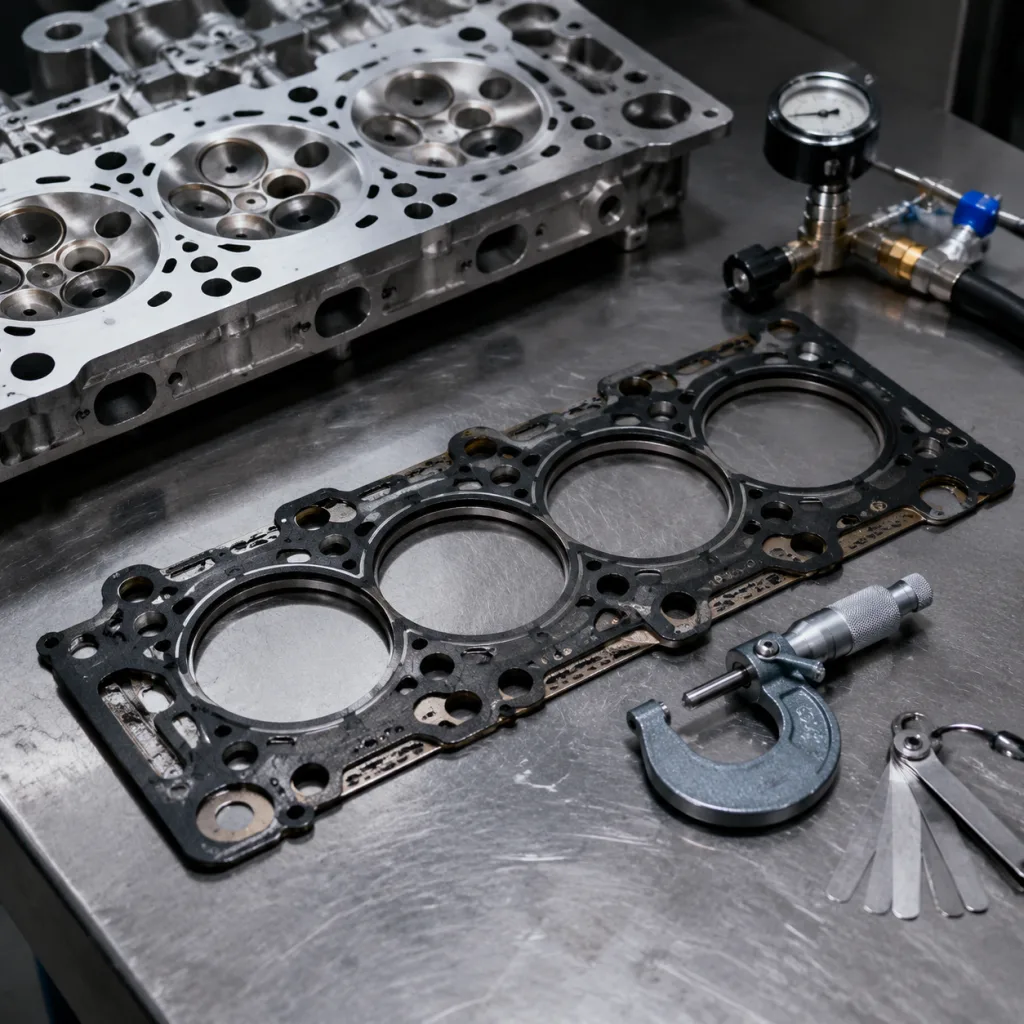
Cylinder liner Lexus wholesale sourcing is not a catalogue exercise. A liner may look correct on the shelf and still create problems in the machine shop: poor ring seating, high oil consumption, coolant leakage, installation damage, or early wear. The risk often starts with small numbers—0.02 mm of bore error, a weak seating face, inconsistent wall thickness, or a honing pattern that does not match the intended ring pack.
For importers, engine-parts distributors, repair-chain suppliers, and aftermarket programme managers, the better question is not “Who has this part?” It is: “Which supplier can repeat the same bore geometry, metallurgy, finish, packing, and export documentation batch after batch?”
Driventus Auto Parts manufactures cylinder liners and related engine components in Taizhou, Zhejiang for aftermarket distributors, wholesalers, OEM programmes, Tier-1 buyers, and repair-chain supply networks. Production is managed under IATF 16949:2016 and ISO 9001:2015, with inspection records available by batch where agreed. This guide explains how to structure a Lexus-fit cylinder liner sourcing decision, what to verify before quotation, where failures usually occur, and how to compare catalogue supply against custom manufacturing.
Driventus is an independent aftermarket manufacturer. Lexus and other brand names are referenced only to identify application fitment; no vehicle manufacturer approval or endorsement is claimed.
Start with the buying decision, not the part number
A repeat cylinder liner Lexus wholesale programme should begin with a decision file, not a price request. Before negotiating unit cost, define what the liner must do, how it will be installed, how it will be packed, and how claims will be investigated if a batch fails in the field.
The first split is simple:
Distributor stock: priority is stable fitment, reasonable MOQ, clean packing, and repeatable replenishment.
Repair-chain supply: priority is installation consistency, batch traceability, and low field-claim risk.
Machine-shop supply: priority is machining allowance, wall thickness, and predictable material behaviour.
Private-label or programme supply: priority is documentation, packaging control, drawing discipline, and change approval.
For the first enquiry, send samples, drawings, engine-code references, or OE-style cross-reference data where available. If a generic reference is used, format it clearly and avoid presenting incomplete information as confirmed OE approval; for example, use an identification note such as OE 11251… only as a starting reference. Driventus does not claim vehicle manufacturer approval or endorsement.
A technically useful enquiry should include:
Engine family and model-year range for fitment mapping
Dry, wet, or semi-finished liner requirement
Nominal bore and oversize options, commonly +0.25 mm, +0.50 mm, +0.75 mm, or +1.00 mm where the application supports oversize service parts
Flange diameter, flange thickness, body outside diameter, total length, chamfer position, and seating-face width
Installation method and any press-fit or seating requirements, including target interference if specified by the buyer or drawing
Surface finish target after honing or finish machining, such as Ra 0.20–0.60 µm with cross-hatch angle agreed for the ring pack
Material requirement: grey cast iron, alloy cast iron, or customer-specified grade, including hardness range where applicable
Annual demand, first order quantity, order split by reference, and destination port
Do not finalise price until nominal bore, OD, length, flange dimensions, material, finish state, quantity, and packing are confirmed. Each item changes machining time, scrap allowance, gauge use, carton configuration, and sometimes tooling. Buyers can review related engine parts in our catalog and the engine range on /products/engine-components.html.
Where cylinder liner programmes fail: the process controls that prevent it
Most liner problems are not caused by one missed final inspection. They come from process drift: a casting batch that machines differently, a worn honing stone, a flange face with burrs, a measurement method that changes by operator, or a packing choice that allows corrosion before the parts reach the distributor.
Driventus manages casting, rough machining, heat treatment where specified, precision turning, boring, honing, cleaning, anti-corrosion treatment, and packing through documented process controls. A typical route is incoming material verification, casting or blank control, rough turning, stress relief or heat treatment if specified, CNC finishing, bore machining, honing, washing, rust prevention, final inspection, batch marking, and export packing.
The key is to connect each possible field failure with a measurable control point.
Failure risk
Process feature to control
Verification method
Tight piston clearance, scuffing, or difficult assembly
Bore diameter
Air gauge, bore gauge, CMM where required; agreed tolerance often in the ±0.01–0.03 mm range after finish machining
Oil consumption or poor ring sealing
Roundness and cylindricity
Form measurement or multi-point bore inspection; buyer may specify limits such as ≤0.01–0.02 mm depending on application
Slow break-in, ring wear, or poor lubricant retention
Surface roughness and honing pattern
Profilometer measurement, with Ra, Rz, and honing-angle targets agreed before sampling
Premature wear or unstable machining behaviour
Hardness and material consistency
Brinell or Rockwell test, according to material plan; common cast-iron targets may fall around HB 180–240 unless otherwise specified
Coolant or combustion sealing concern
Flange and seating faces
Height gauge, flatness check, visual inspection, and burr control on oil/coolant-facing edges
Cracking, wear variation, or poor strength
Material structure
Metallographic inspection by batch plan, including graphite form and matrix check where specified
Distortion, heat-transfer variation, or machining breakthrough
Wall thickness
Ultrasonic check, section check, or dimensional inspection as specified; minimum wall limits should be stated on the drawing
</tr></thead><tbody> </tbody></table>For sourcing engineers, the critical characteristics are bore geometry, wall thickness consistency, hardness, microstructure, and sealing-surface quality. These characteristics affect wear rate, oil consumption, piston-ring seating, coolant sealing, combustion sealing, and installation reliability.
Inspection records can be structured around customer control plans. For larger programmes, Driventus can prepare PPAP-style documentation when agreed at the quotation stage, including dimensional reports, material evidence, and process-flow information. Buyers should state the sampling level: first-article full layout on 3–5 pieces, routine batch inspection by AQL, or 100% checks on critical bore and flange features. Our quality system is based on IATF 16949:2016 and ISO 9001:2015, with batch identification used for traceability from production to export shipment.
MOQ, lead time, and packing: a practical sourcing timeline
Cylinder liner Lexus wholesale enquiries usually fall into three commercial patterns: distributor stock orders, repair-chain replenishment orders, and private-label programmes. Each one has a different MOQ logic.
Existing aftermarket references with available tooling can normally be quoted at a lower MOQ than a new liner developed from a sample or drawing. As a working guide, existing references are often economical from 100–300 pieces per part number, mixed-container distributor orders from 500–1,000 total pieces, and custom-developed liners from 300–1,000 pieces depending on tooling, scrap risk, and inspection scope.
A realistic timeline looks like this:
1. Technical confirmation: 2–5 working days after receiving drawings, samples, or fitment data. 2. Quotation and MOQ proposal: 1–3 working days after technical review. Price normally changes with quantity breaks, for example sample lot, MOQ lot, 500-piece lot, and 1,000-piece annual call-off. 3. Sample production: commonly 20–35 days for existing tooling; 45–75 days if new tooling, foundry trial, or custom gauges are required. 4. Sample inspection and buyer approval: timing depends on test scope, shipping route, and buyer review speed. Dimensional reports should be reviewed before field or bench testing. 5. Bulk production: commonly 30–60 days depending on order quantity, material status, machining capacity, packaging artwork, and any third-party inspection booking. 6. Export documentation and shipment booking: 3–7 days after final inspection and packing.
Compare prices on the same specification. A finished honed liner with individual carton, VCI bag, barcode label, and 100% bore check does not share the cost base of a semi-finished liner shipped in bulk trays. Ask suppliers to separate tooling cost, unit price, sample charge, private-label printing, inspection surcharge, and freight terms. Only then can landed cost be compared accurately.
Packing is part of the specification, not an afterthought. Cylinder liners are heavy, machined components with corrosion and impact risks during sea freight. Driventus can supply oil-protected liners in individual cartons, separator trays, export master cartons, or palletised packaging. For humid routes or long transit times, anti-rust oil, VCI bags, desiccant, and moisture-resistant cartons can be specified.
Typical controls include keeping master cartons below about 20–25 kg where manual handling is expected, using edge protection on pallets, and applying stretch wrap plus straps for ocean freight. Importers should also confirm carton weight limits, pallet dimensions, barcode requirements, label language, and neutral or private-label artwork before production. These details affect labour time, warehouse handling, damage risk, and final landed cost.
Importer Q&A: documents, standards, and audit evidence
Do cylinder liners need emissions certification?
Usually, the purchasing file focuses on quality, material, dimensional, and trade-compliance evidence rather than standalone emissions certificates. Engine-system standards such as ECE R-83 may be relevant to complete vehicle emissions programmes, but a replacement liner itself is normally evaluated through dimensional conformity, material conformity, and agreed inspection evidence.
What should be in the supplier approval file?
A practical file may include:
Company profile and manufacturing process flow
IATF 16949:2016 and ISO 9001:2015 certificates
Material specification and chemical composition report, including C, Si, Mn, P, S, and alloying elements where applicable
Dimensional inspection report for first samples, with nominal, tolerance, actual value, gauge ID, and inspector/date recorded
Hardness and microstructure report where applicable
Surface roughness record after honing or finish machining, including measurement direction and instrument reference
Batch traceability method linking casting or blank batch, machining lot, inspection record, and shipment carton or pallet
Gauge calibration and inspection-equipment control records, preferably with calibration due dates visible on key gauges
Packing specification and drop/handling requirements if specified
REACH (EC) No 1907/2006 material declaration where requested for EU import files
Commercial invoice, packing list, certificate of origin, and bill of lading or airway bill
What should an audit check?
Factory audits should review calibration records, non-conforming product handling, traceability practice, operator work instructions, final inspection sampling, and corrective-action procedures. A remote audit can work for initial screening when supported by live video review and document checks. High-volume or private-label programmes benefit from an on-site or third-party audit before annual supply nomination.
How should claims be handled?
Define the process before the first bulk shipment. For repeat business, buyers should state the retention period for inspection records, the claim response window, and the evidence required for 8D or corrective-action reports. A workable claim process normally includes lot number, photos, measured values, installation context, quantity affected, containment action within 24–48 hours, and root-cause analysis after returned sample review where practical.
Catalogue liner, semi-finished liner, or custom build? Choose by scenario
There is no single best sourcing route. The right choice depends on demand stability, technical control, and how much local machining or differentiation the buyer needs.
Scenario 1: the distributor needs fast replenishment. Start with an existing liner reference from the Driventus product range. Catalogued parts can reduce tooling cost, shorten sample time, and simplify replenishment planning. This route is suitable when the buyer already has stable demand and needs reliable wholesale supply for common Lexus-fit engine applications.
Scenario 2: the machine-shop network wants final control. A semi-finished liner may be better. It allows local boring and honing, but the machining allowance must be clearly defined. Too little stock limits finishing options; too much can affect cycle time and wall-thickness safety.
Scenario 3: the market needs an obsolete or regional reference. Custom development from a sample may be appropriate. Driventus supports custom manufacturing using customer drawings, reverse-engineered samples, or controlled technical data supplied by the buyer. The approval process should define responsibility for drawings, tolerances, sample testing, and final sign-off before bulk production.
Scenario 4: an OEM, Tier-1, or controlled aftermarket programme has a drawing. Custom manufacturing from drawing provides the strongest dimensional control. Buyers should freeze the drawing revision before tooling, because changing bore allowance, flange height, or OD after trial production can require new fixtures or process validation.
Route
Best use case
Main advantage
Procurement note
Existing catalog liner
Distributor replenishment
Shorter lead time and lower development cost
Confirm fitment, material, and packing before order; typical MOQ is lower when tooling and gauges exist
Semi-finished liner
Engine machine shops or rebuild networks
Allows final boring/honing locally
Define machining allowance clearly, commonly leaving enough stock for local boring and honing without breaching wall limits
Custom liner from sample
Obsolete or regional applications
Supports differentiated range
Requires sample validation, reverse measurement, material check, and longer timeline
Custom liner from drawing
OEM/Tier-1 or controlled aftermarket programme
Strongest dimensional control
Requires drawing revision, tolerance agreement, special-characteristic marking, and inspection-plan approval
</tr></thead><tbody> </tbody></table>For wholesale buyers, the commercial decision should consider annual volume, tooling amortisation, stock rotation, claim risk, and the cost of field failures. Unit price matters, but it is not the whole cost. A liner that costs slightly more may still reduce honing rework, warranty returns, repacking labour, and emergency replenishment costs across a 12-month programme.
Repeat-order approval: score the supplier before signing the annual deal
Before awarding repeat cylinder liner Lexus wholesale business, buyers should score suppliers on measurable risk factors instead of FOB price alone. Use the checklist with a 6- or 12-month forecast so the supplier can reserve material, machining capacity, and export packing resources.
Recommended approval checklist:
Does the supplier manufacture the liners or only trade them?
Are IATF 16949:2016 and ISO 9001:2015 certificates current and verifiable?
Can the supplier provide material and dimensional reports by batch?
Are gauges calibrated and traceable to documented calibration intervals?
Are bore, flange, wall thickness, and seating dimensions inspected consistently?
Is microstructure or hardness testing available when specified?
Can the supplier maintain the same material grade and process route for repeat orders?
Can packing be adapted for long-distance sea freight and local warehouse handling?
Are private-label and neutral packaging separated from brand-owned trademarks?
Can the supplier support stable MOQ and lead time for 12-month forecasts?
Is there a clear corrective-action process for claims, including containment and root-cause review?
Are price validity, currency, incoterms, tooling ownership, and sample charges stated in writing?
Is there a clear rule for engineering changes, including buyer approval before any material, process, or subcontractor change?
For stronger internal approval, turn the checklist into a simple scorecard: technical capability, quality evidence, delivery stability, packing control, documentation, and claim response. A supplier with a slightly higher price but stronger traceability and process control may be the lower-risk choice for repeat distribution.
Driventus exports to more than 60 countries and supports B2B buyers with technical review, sampling, batch inspection, and export documentation. Brand names are used only to identify application fitment. Driventus is an independent aftermarket manufacturer; brand names are referenced for fitment only.
For a new programme, the most efficient route is to send the target part list, annual demand, destination market, and packaging plan so our engineering and export teams can confirm feasibility before quotation. Buyers can request a quote with samples, drawings, or fitment data.
Frequently asked questions
Please provide engine family, bore size, liner type, key dimensions, quantity, destination port, and packing requirement. Drawings or samples help confirm tolerances, surface finish, material, hardness, and whether the liner is finished or semi-finished. If only cross-reference data is available, use incomplete generic references such as OE 11251… for identification rather than as confirmed OE approval.
Yes. Driventus can supply neutral cartons, customer-labelled packaging, palletised export cartons, and anti-corrosion packing. Artwork, barcode format, label language, carton weight, pallet limits, VCI or oil protection, and master-carton layout should be confirmed before production release.
No. Driventus is an independent aftermarket manufacturer; brand names are referenced for fitment only. We supply aftermarket and custom-manufactured components according to agreed drawings, specifications, inspection plans, and quality requirements.
If you are building a wholesale cylinder liner range for Lexus-fit applications, send your part list, forecast volume, destination market, target MOQ, required tolerances, finish state, and packing requirements. Our team can review feasibility and respond with a sourcing proposal at /contact.html