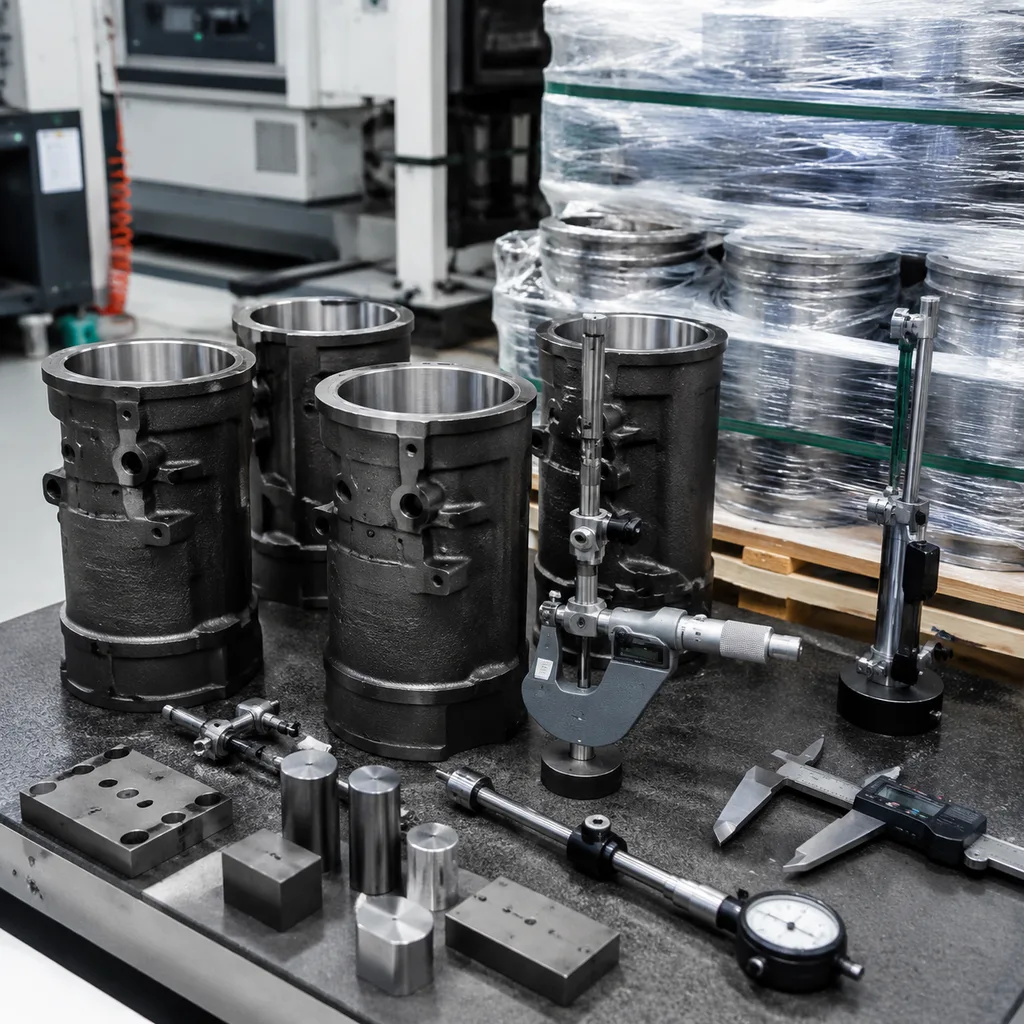
Cylinder Liner Fiat Manufacturer China: B2B Sourcing Guide
A buyer looking for a cylinder liner fiat manufacturer china source is usually not short of quotations. The harder task is separating a stable machining partner from a low-price sleeve supplier that cannot repeat the same bore, flange height or honing finish on the next order. For Fiat-fit applications, the sourcing file should answer a few direct questions: What material is being cast? Which dimensions are critical? How is protrusion controlled? What inspection evidence follows the batch? How will the liners survive export storage and sea freight?
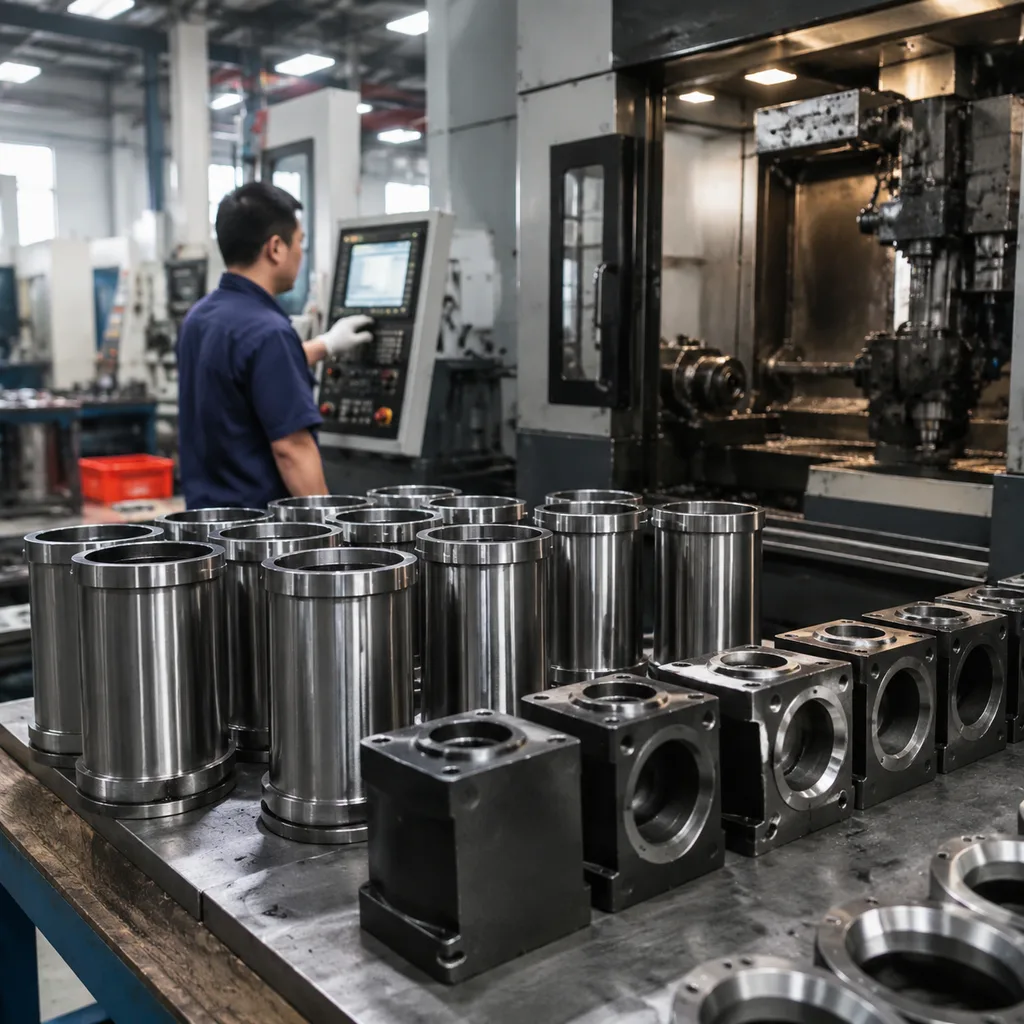
Driventus Auto Parts manufactures engine and powertrain components in Taizhou, Zhejiang, for aftermarket distributors, OEM/Tier-1 programmes and repair-chain buyers in more than 60 countries. For Fiat-fit requirements, we produce wet and dry cylinder liners from buyer drawings, physical samples or agreed cross-reference data. Batch inspection records can be supplied when specified.
Typical review points include 65–110 mm passenger and light-commercial bore ranges, dry or wet liner construction, flange/protrusion requirements, plateau-honed surface finish, packaging corrosion protection and dimensional repeatability across repeat purchase orders. Driventus is an independent aftermarket manufacturer; vehicle brand names are used only to describe fitment. The sections below reframe the sourcing process as decisions, failure risks and evidence to request before issuing a purchase order.
Start With the Fitment Decision, Not the Price List
A cylinder liner is a wear surface, a heat-transfer path and, in many engines, part of the sealing system that influences compression, coolant control and oil consumption. Treating it as a simple sleeve is where sourcing problems start. Before comparing unit prices, confirm what the liner must do in the engine.
For Fiat-fit programmes, Driventus usually asks buyers to anchor the inquiry with one or more of the following:
OE-style or aftermarket cross-reference numbers already used in the buyer’s system
Engine code, bore size, liner type and vehicle application notes
Technical drawing with tolerances, surface finish and material callout
Physical sample for measurement, confirmation or reverse engineering
Annual forecast by SKU and destination market
Packaging, labelling, palletisation and barcode requirements
The first decision is construction. Is it a dry liner, wet liner, flanged liner or semi-finished liner? Each choice changes the control points. The specification should state finished bore size, machining allowance if supplied semi-finished, OD fit requirement, flange dimensions, chamfer geometry and sealing-groove dimensions where applicable.
For common passenger and LCV programmes, finished bore tolerance is often controlled in the ±0.01–0.03 mm range when the drawing requires it. OD press-fit zones and flange height can be even less forgiving because small variation may affect block retention or cylinder-head sealing. The final tolerance must always follow the buyer drawing or approved sample, not a generic catalogue note.
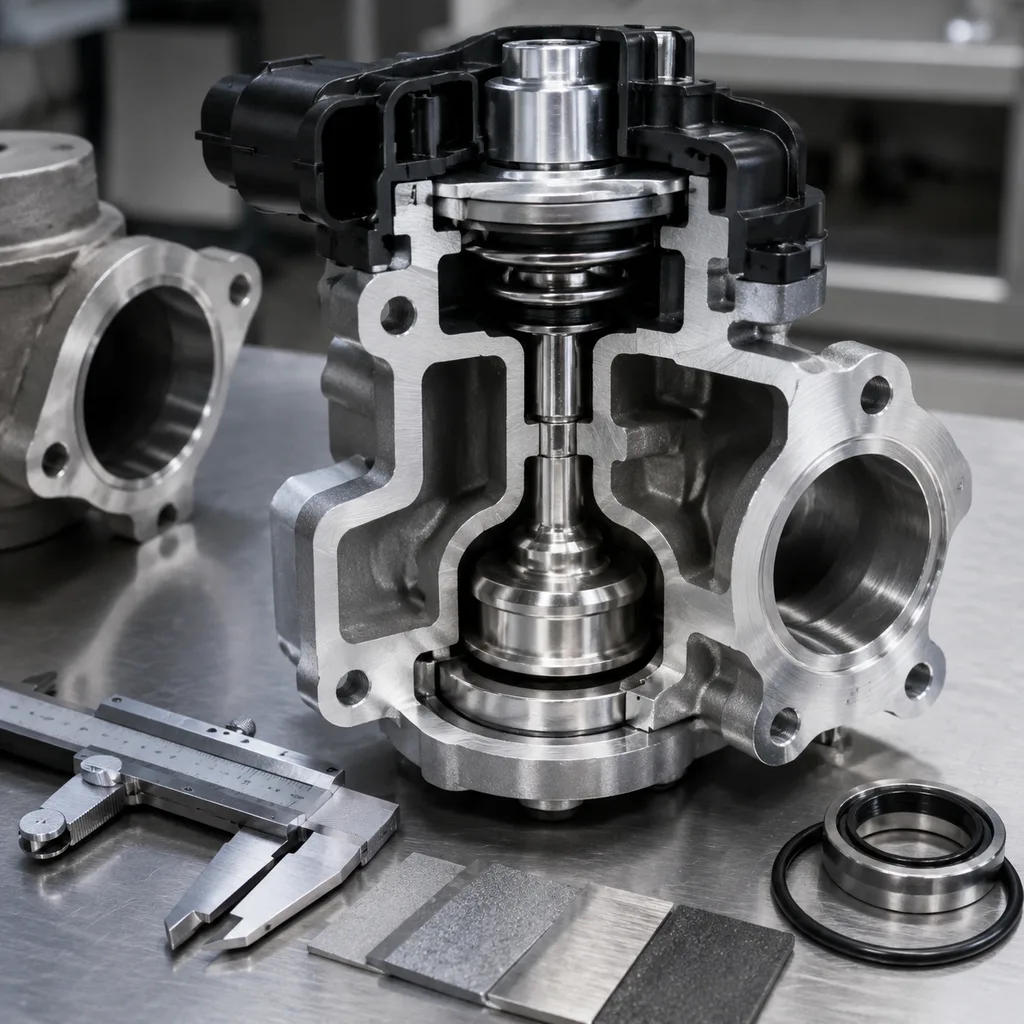
Sourcing teams can review related engine parts in our catalog, including cylinder liners, pistons, piston rings, gaskets and water pumps. When a required part number is not listed, Driventus can assess feasibility through custom manufacturing based on drawings, samples or confirmed specifications.
The commercial target is OE-equivalent function for the independent aftermarket or contract supply: correct dimensions, agreed material, defined inspection and repeatable delivery. We do not claim approval, sponsorship or endorsement by any vehicle manufacturer.
Where Cylinder Liner Orders Fail: Material, Bore Finish and Flange Control
Most liner problems are not mysterious. They usually trace back to one of five areas: incorrect material, unstable bore size, poor honing, flange/protrusion variation or weak rust protection. The controls below show where a buyer should look before releasing a production order.
Risk area
Typical sourcing requirement
Driventus control focus
Liner type mismatch
Wet, dry, flanged or semi-finished liner clearly defined
Drawing review and sample confirmation before quotation
Material drift
Centrifugal cast iron or alloy cast iron, often HT250/HT300-equivalent depending on drawing
Chemical composition, microstructure and hardness checks when required
Hardness outside range
Common control range about 180–260 HB, subject to material grade
Brinell hardness check by batch or agreed sampling plan
Ring seating problems
Plateau-honed bore surface for oil retention and ring bedding
Ra/Rz, cross-hatch angle and visual surface verification
Bore or OD variation
Buyer drawing or agreed specification dependent, commonly ±0.01–0.03 mm for finished bores
100% or AQL sampling inspection according to batch plan
Head sealing risk
Flange height and protrusion controlled within drawing limits
Height gauge, fixture inspection and protrusion-related checks
Export corrosion
Liners protected for long storage and sea freight
Moisture control, VCI packing, rust-preventive oil or sealed bags where specified
</tr></thead><tbody> </tbody></table>Dry liners depend heavily on outside diameter control, wall thickness uniformity and press-fit stability in the block. Wet liners add more variables: flange height, protrusion, cavitation resistance and sealing-groove geometry, because the liner is exposed to coolant.
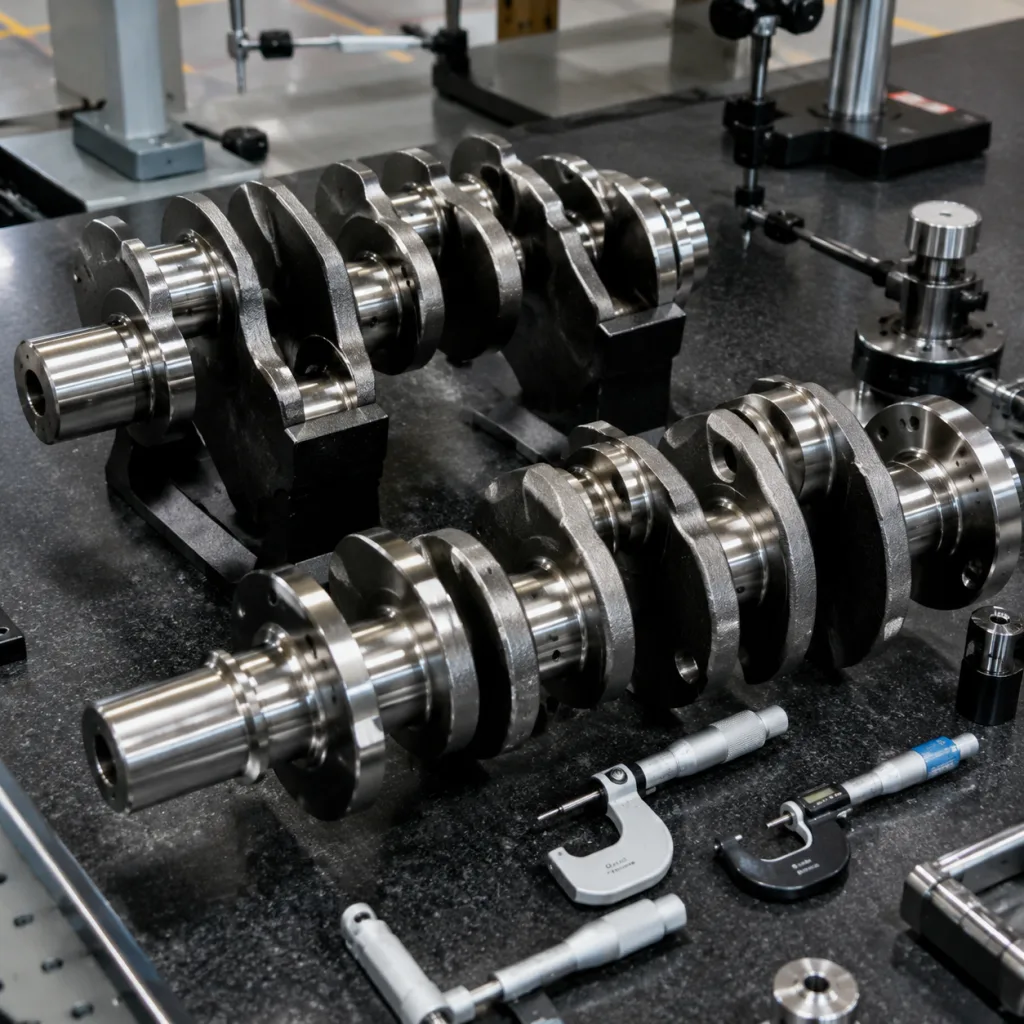
Common checks include hardness testing, dimensional measurement of inner diameter, outer diameter, wall thickness, flange width, flange height, shoulder squareness, chamfer angle and sealing groove position. Bore roughness is verified with a calibrated roughness tester, while cross-hatch is controlled through honing parameters and visual checks. A typical plateau-honed bore may target Ra around 0.4–1.2 μm and a 30–60° cross-hatch angle, but the drawing or ring supplier recommendation should set the final value.
A normal process route includes casting sourcing or centrifugal casting approval, stress relief where specified, rough turning, OD/ID machining, flange machining, groove machining for wet liners, finish boring, honing, deburring, washing, rust prevention, final inspection and packing. Critical-to-quality dimensions are locked into the control plan. Gauge choice follows tolerance: air gauges or bore gauges for ID, micrometers for OD, height gauges for flange features and fixtures for groove location.
For higher-validation programmes, buyers may request metallographic review, roughness reports, control plans, PPAP-style documentation, first-article inspection and retained samples. Driventus follows an IATF 16949:2016 and ISO 9001:2015 certified management framework. Material declarations can be prepared for markets requiring attention to REACH (EC) No 1907/2006, depending on contract scope, material content and destination requirements.
MOQ and Lead Time: Build the Order Around Tooling Status
The same part category can have very different commercial timelines. An active aftermarket SKU with existing tooling is one case. A new wet liner that needs casting development, fixtures and reverse engineering is another. Treating both as a 30-day commodity order creates missed launch dates.
For a cylinder liner fiat manufacturer china sourcing project, order planning should account for tooling status, raw casting availability, machining capacity, inspection level and packaging configuration.
Typical planning benchmarks:
MOQ: active aftermarket SKUs are usually quoted from about 100–300 pcs/SKU. Low-volume or mixed-SKU trial orders may be possible at 50–100 pcs/SKU when castings are available. New development normally needs higher commitment, often 300–1,000 pcs/SKU or an annual forecast that justifies tooling and fixture work.
Sampling: pre-production samples can be supplied after drawing confirmation, sample review or feasibility approval. Typical sample timing is 15–30 days for active tooling and 30–60 days when new casting, fixtures or reverse engineering are required.
Lead time: repeat mass production is commonly 30–45 days after deposit and packaging approval. First production for new items may require 45–75 days depending on casting lead time, machining trials and inspection documents.
Price logic: unit price is shaped by material grade, liner weight, finish-bore versus semi-finished supply, wet-liner groove complexity, inspection level, rejection allowance, packaging, MOQ and Incoterm. A 4 kg finished wet liner with private-label packaging and 100% dimensional inspection cannot be priced like a semi-finished dry liner packed in bulk.
Forecasting: quarterly or annual forecasts help stabilise casting procurement, machining slots and packaging inventory.
Incoterms: FOB Ningbo/Shanghai is common for consolidated export shipments; CIF, CFR and other terms can be discussed according to destination, shipment size and buyer preference.
Packing: neutral export packaging, buyer private-label packaging or bulk workshop packaging can be quoted. Carton weight is usually kept within handling limits, commonly 15–25 kg/carton, with palletisation for sea freight.
Import managers should look beyond first-order approval. The real test is the second and third purchase order: same drawing revision, same measurement method, same packaging protection, same inspection discipline. Ask how specifications are frozen, how engineering changes are controlled and how inspection data is linked to production batches.
Before comparing prices, align the drawing revision, target market, warranty expectations, packaging specification and inspection standard. Otherwise a fully inspected, corrosion-protected liner may be compared with a visually sorted commodity item that carries a lower unit price and higher after-sales exposure. If 100% inspection of ID, OD and flange height is required, the quote should show that cost clearly rather than remove it quietly during production.
Audit the Evidence Trail, Not Just the Workshop
A tidy production floor is useful. It is not proof of capability. A cylinder liner audit should test whether the supplier can measure what it machines, trace what it ships and react before a drifting process becomes a field complaint.
Recommended audit points:
Certification status under IATF 16949:2016 and ISO 9001:2015
Incoming inspection for castings and purchased materials, including chemistry, visual defects and hardness where specified
Control of rough turning, boring, OD grinding or turning, chamfering, groove machining, finish honing and washing processes
Calibration records for bore gauges, air gauges, micrometers, height gauges, roughness testers and hardness testers, normally traceable with due dates and gauge IDs
Roughness measurement method for the finished bore surface, including Ra/Rz reporting if required
Batch identification from raw material and machining lot to packed product, with labels that connect carton, pallet and inspection record
First-off, patrol and final inspection records, including reaction plans when a dimension trends toward tolerance limits
Segregation and disposition procedure for nonconforming liners, with red-tag area and rework approval rules
Corrosion-prevention checks where long export storage or humid transport is a risk, especially for 30–45 day sea freight plus warehouse storage
Packaging drop, compression or transport validation when required by the buyer
Corrective action records from previous customer complaints or internal defects
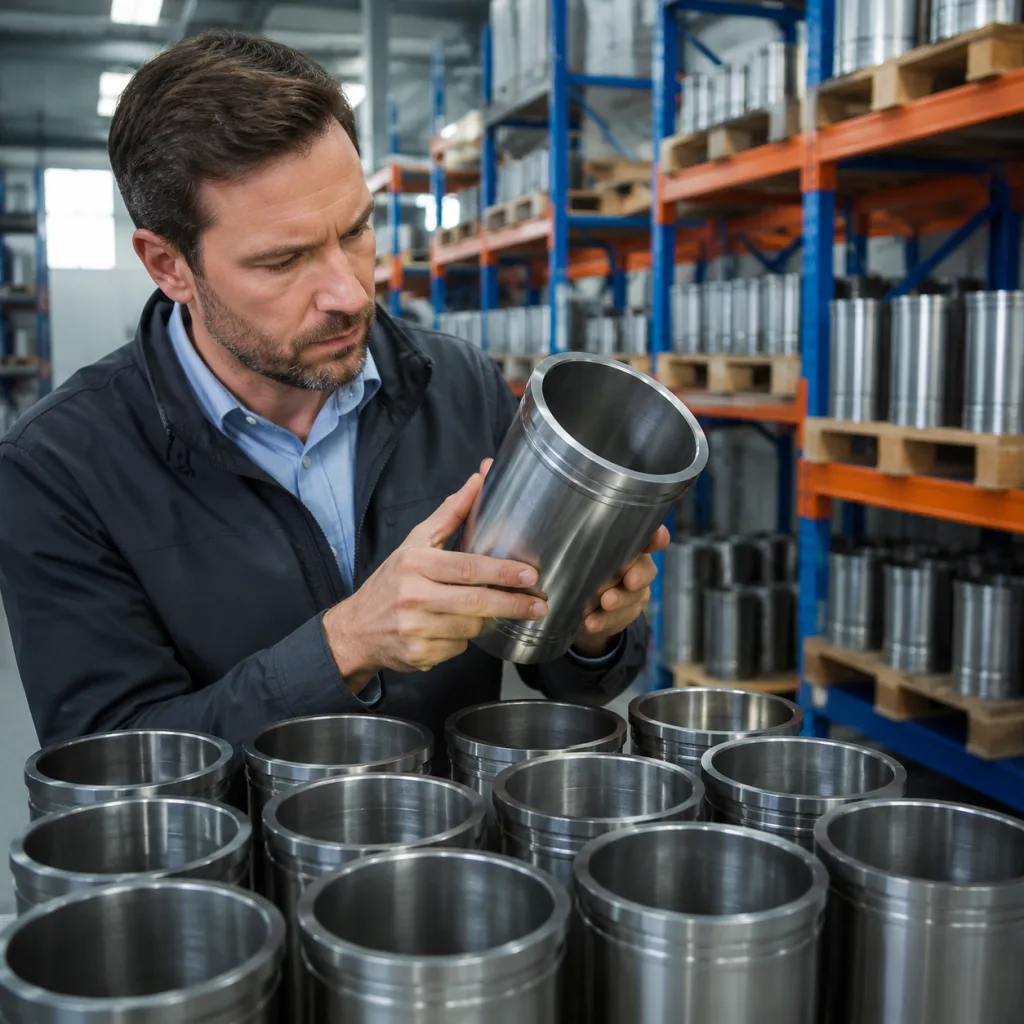
Our quality system is structured to support buyer audits, batch documentation and corrective action follow-up. For regulated, warranty-sensitive or private-label markets, buyers should request a sample inspection report before confirming mass production. A useful first-article report should list at least 5–10 pieces and cover ID, OD, wall thickness, flange height, groove position, hardness and bore roughness where applicable.
The audit should also examine engineering communication. Cylinder liners can fail in service because of wrong fitment, incorrect protrusion, unsuitable piston-ring pairing, poor coolant maintenance or installation error. Those factors do not remove the supplier’s obligation to deliver exactly to the agreed specification. If the physical sample, catalogue data and drawing disagree, the drawing or signed specification should control before the PO is released.
Cross-Reference Control for Export Buyers
Fiat-fit cylinder liner sourcing often involves several naming systems at once: distributor numbers, OE-style references, engine codes, catalogue data and physical samples. That creates a practical risk. One engine family may have multiple bore sizes, oversize repair options or wet/dry variants. A cross-reference that is almost correct can still cause returns.
Driventus can work with buyer-provided cross-reference sheets, but each programme should be confirmed against dimensions, liner type and application notes before shipment.
A solid procurement file usually includes:
Quotation with SKU, liner type, MOQ, lead time, currency, payment term and Incoterms
Technical drawing or signed specification sheet, including revision number
Material and hardness specification, such as cast-iron grade and HB range
Dimensional inspection report with sample size and tolerance limits
Surface finish record, if requested, showing instrument and measured Ra/Rz values
Packing list with carton dimensions, gross/net weight and pallet details
Commercial invoice and export packing documentation
Certificate of origin, where applicable
Compliance declarations requested for the destination market
Batch or lot traceability reference for after-sales management
For buyers operating in the EU, UK, US, Canada, Australia or Brazil, documentation requirements vary by customs broker, product category and customer contract. Cylinder liners are generally traded as engine parts, and HS classification should be confirmed by the importer or broker before shipment.
Cylinder liners are not certified in the same way as emissions systems or safety-critical vehicle assemblies. Still, engine-related sourcing benefits from disciplined traceability. Standards such as ECE R-83 relate to vehicle emissions performance, not standalone liner approval, so marketing and compliance claims should stay limited to part specification, quality-system status and available test evidence.
A practical export pack should connect the buyer SKU, Driventus internal item code, carton label, batch number and inspection record. This makes warranty screening faster if a distributor later reports installation issues, oil consumption, coolant leakage or abnormal ring wear.
Driventus is an independent aftermarket manufacturer; brand names are referenced for fitment only.
A Practical Inquiry Sequence for Fiat-Fit Liners
The fastest sourcing projects are not the ones with the shortest email. They are the ones with enough data to prevent rework. A request for “Fiat cylinder liners” is too broad because bore size, liner type, engine generation, wet/dry design and market-specific applications may vary.
Use this sequence before asking for final price:
1. List the application by vehicle, engine code and production year range. 2. Add OE-style or aftermarket cross-reference numbers already used in your system. 3. Provide a drawing, sample photos or physical sample availability. 4. Confirm finished bore size, OD, total height, flange dimensions, groove dimensions and required tolerance class. 5. State material grade, hardness range, roughness requirement and whether the liner is supplied finished or semi-finished. 6. Share annual volume estimate, first-order quantity and acceptable MOQ by SKU. 7. Confirm destination country and preferred Incoterm. 8. Define packaging, label, barcode and pallet requirements. 9. Specify inspection documents, audit format or approval process.
For distributors, Driventus can quote stocked or active-fitment lines from the engine components range. For OEM/Tier-1 or private-label buyers, engineering review can determine whether existing tooling is suitable or whether new development is needed.
The normal workflow is simple: inquiry review, drawing or sample confirmation, feasibility check, quotation, sample or first-article production, inspection report approval, mass-production PO, batch production, final inspection, packing approval and shipment booking.
If your team is comparing suppliers, ask each factory for the same data: material grade, hardness range, bore tolerance, OD tolerance, flange height tolerance, surface roughness method, inspection frequency, MOQ, sample lead time and mass-production lead time. Comparable inputs make total landed cost, quality risk and after-sales exposure much easier to judge. A supplier that gives numbers, assumptions and inspection evidence is easier to manage than one that only promises “standard quality.”
Frequently asked questions
Yes. Private-label packaging can be discussed for qualified B2B orders, subject to MOQ, artwork approval and destination requirements. The liner specification should be confirmed by drawing, sample or agreed cross-reference before production.
Driventus operates under IATF 16949:2016 and ISO 9001:2015 certified systems. Batch inspection records, control plans, hardness checks, roughness reports and other documents can be prepared according to the agreed order and customer audit requirements.
No. Driventus is an independent aftermarket manufacturer; brand names are referenced for fitment only. We supply parts to agreed specifications and do not claim approval or endorsement by any vehicle manufacturer.
If you are qualifying a cylinder liner fiat manufacturer china supplier, send your application list, drawings, target tolerances or samples for technical review, MOQ confirmation and pricing. You can [request a quote](/contact.html).